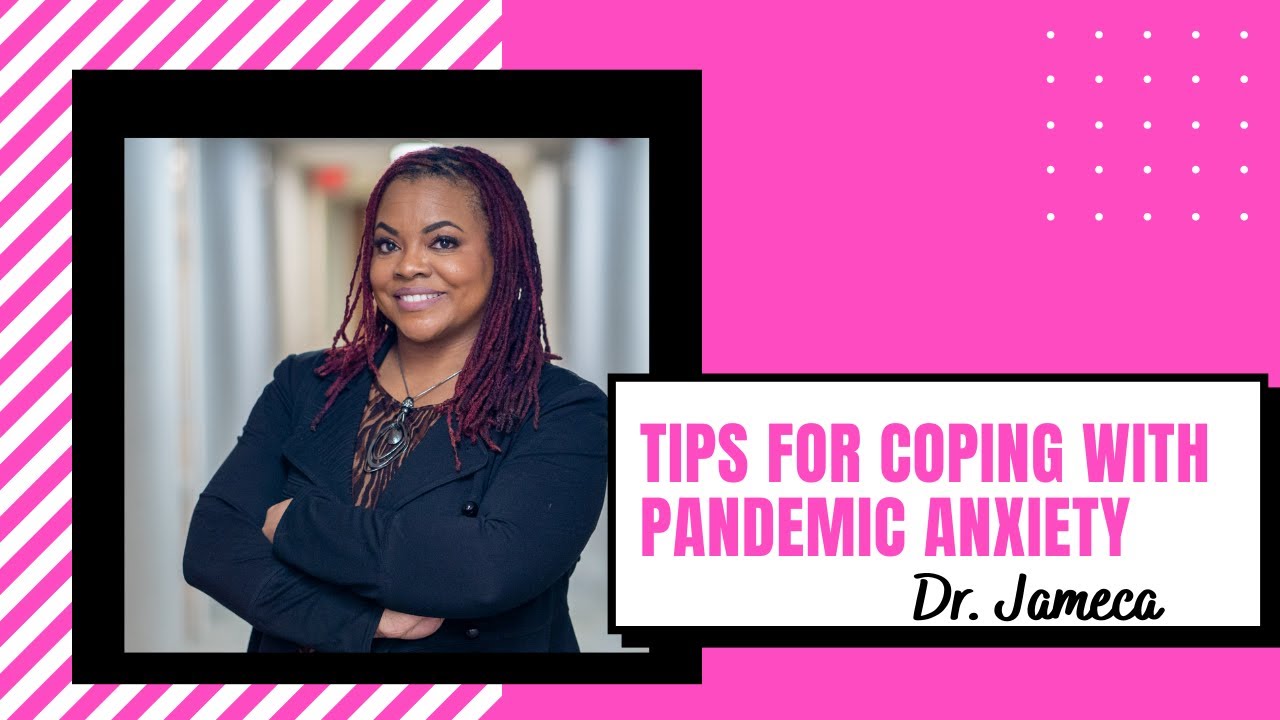
In this solo YouTube video, Dr. Jameca Cooper addresses the heightened anxiety many people have experienced during the COVID‑19 pandemic and offers practical, do‑it‑yourself strategies to manage it. She first normalizes the emotional response, explaining that uncertainty about health, work, and social connections over the past 12‑15 months is a common trigger. She then outlines five concrete self‑care tips: (1) obtain adequate sunlight or use a light‑therapy lamp to boost vitamin D, which supports mood, sleep, and concentration; (2) limit exposure to news media to reduce a constant stream of negative information; (3) increase daily physical activity to lower physiological arousal; (4) modify diet by reducing dairy, which she notes can exacerbate anxiety, especially in women; and (5) adopt a regular hobby to fill idle time, provide distraction, and foster a sense of control. Throughout, she emphasizes that these steps are simple, low‑cost, and can be integrated into daily routines, encouraging viewers to try them to achieve a calmer, more stable mental state during the pandemic. She also cross‑promotes her other mental‑health videos and asks viewers to subscribe.
Chapters
Hi, this is Dr. Jameca Cooper, and today we're going to talk about how to cope with anxiety during the pandemic. Make sure you check out my other videos that have to do with depression or anxiety during the pandemic for more information. So today what I want to talk to you about is how to deal with your own anxiety during the pandemic. Um, first I want to refer to my other information that talks about why people are experiencing more anxiety during the pandemic, and it's because of the great deal of uncertainty that we've all experienced in the past 12 to 15 months. So not knowing how long this will last, not knowing how to go about working from home, or if we're going to be working from home, or if we're going back to work in the office. Thinking about the health and well-being of our families and our loved ones, not being able to see them. All those things have really caused a great deal of anxiety for most of the country. So it's nothing new to mention anxiety. Lots of times when I say that, people who feel that they don't want to be associated with mental illness will say, "Oh no, I'm not. I don't feel any anxiety. I'm fine." But it's normal to feel anxiety because we all experienced that in the past year. It's all a big part of this adjustment and transition, so don't be alarmed or worried, or don't feel any type of stigma when you connect yourself with having any symptoms of anxiety. So today I want to talk about my tips for anxiety. In other words, things you can do at home. In other words, like a do-it-yourself type of way to decrease the levels of anxiety. The first thing I'm going to say is to make sure that you get adequate amount of sunlight. Um, if you live in a place like the Midwest where I live, we don't have a lot of sunlight except until now it's starting. But all this time, so for the past 9 months, it's been pretty gray skies and pretty dreary. And if you don't have natural sunlight to take advantage of, then you need to be able to purchase some sunlight. And on Amazon or anywhere, if you Google just sun lamps or sunlight or light therapy, these type of devices should come up. You can buy that, you can You can use it every day, either once a day in the morning, or once in the morning, once in the evening. In other words, it really gives you this feel of the natural sunlight that you would have if you had it outside. But it can help with your brain functions and sleep and mood as well. So the benefits of sunlight, because the one thing that we get from sunlight is vitamin D. The role of vitamin D is really lots of different areas. The one big area is mood. So by getting sunlight and vitamin D, it can really help improve your mood. Another thing that vitamin D is responsible for is your sleep. So when you don't have adequate levels of vitamin D, you can really see that your sleep is impacted. You could be sleeping less, or you could be waking up more frequently during the night. So, so far we have vitamin D, mood, and sleep. It can also impact your concentration. So that's a big reason why you need more vitamin D. So again, if you can't get it in the natural way in the area that you live, make sure that you purchase some type of sunlight for the light therapy that you can do for yourself to improve your anxiety. The second thing I would say is to watch less news. I find that the people I see in therapy who are the most anxious also tend to be the same people that watch a great deal of news. So for that reason, I would say either eliminate your news watching, which I found to be quite unreasonable and people are not willing to do that, but you can reduce the amount of hours a day that you watch news. I find that many of my patients watch news in the morning, 8:00 AM, 9:00 AM, noontime news, watch it again in the afternoon, maybe 5:00 or 6:00, and then again before they go to bed. And so what that does is create this constant stream of negative information. Or a constant stream of information that can make you worried and could make you apprehensive about the day and what's going on in the world. So just imagine having this constant feed of that coming into your life every day. Of course it would trigger your anxiety and make you feel afraid or worried or apprehensive about the future. So although it could be difficult for people to cut off the news because some level of curiosity is necessary, but if you can at least reduce that news to, I would say, 1 or 2 times a day, that would be beneficial. So, so far we have vitamin D, we have news. The third thing I would say is to increase your level of physical activity. What I find for my patients who experience anxiety is the more exercise they do, the better they feel. In other words, the more they exercise, the less they feel anxious. So for some people, I've heard them say that they have to run every day. They have to run 3 to 5 miles every day in order to not feel anxious during the day. For some people, they can get away with maybe a brisk walk or maybe 20 to 30 minutes of some sort of exercise that really gets their heart rate up in order to help their anxiety. So I would say if you're a person and you know for yourself that you experience high levels of anxiety, whether it's situational or genetic, then you need to make sure you invest the time every day to do enough physical activity to keep your anxiety at bay and so that it's manageable for you. The next thing I would say is to modify your diet. What I found for patients that experience high levels of depression and anxiety is that they really intake, uh, they really intake high levels of dairy. So dairy is a culprit in anxiety, and dairy is especially a culprit for anxiety for women because many times the dairy counteracts with the hormonal changes that occur with women, and it makes their anxiety a bit unmanageable. So dairy is one of those things that you can reduce in your diet, hopefully without any hiccups in other areas. Um, and then the last thing I would say as a tip would be to get a hobby. What I found is that individuals who have hobbies that they can really participate in and engage in on a daily or weekly basis, those people seem to have better and more manageable levels of anxiety. So in other words, without a hobby, sometimes it leaves too much free time in your life and too much freed up thinking space to think about things that are not helpful. But if you have a hobby and something that you can engage in every day for, let's say, at least an hour, sometimes longer a day, then that can really distract you in a way from some of the things that are going on in the country right now during the pandemic. So what are hobbies that you could get involved in? It don't have to— doesn't have to be anything that's really intense or something that you have to go and learn. It could be gardening for some people as the weather and the seasons change. It could be some type of fitness activity. It could be arts and crafts. It could be television, movies. It could be reading. Any of those things would be considered something that you can devote time every day to do so that you feel at least some level of control over your schedule, distraction from reality of the world, and maybe something that can also give you a level of peace and calm. And of course, at the same time, you're learning and producing probably some type of product. So these are all of my tips for how to reduce and manage anxiety during the pandemic. I hope that all of these can help you live a better life and to feel more calm and stable during the pandemic. Please make sure you check out my other videos that have to deal with anxiety and depression during the pandemic. And most of all, make sure that you subscribe.