Dr Jason Hawrelak - The Probiotic Advisor
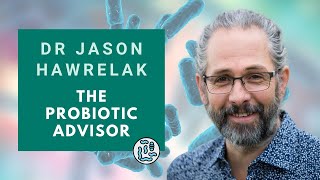
Interview (circa 2019) of Dr. Jason Hawrelak by Dr. Ron Ehrlich about the human microbiome, probiotics, prebiotics, and common digestive disorders. Key points: modern DNA-based methods uncovered many gut microbes and their roles; probiotics are live microbes given in adequate amounts that show health benefits (strain- and dose-specific); prebiotics are selectively fermented substrates (not all fibre); synbiotics combine both but must match strain and substrate; fermented foods contain live cultures but are variable and usually aren't labelled as probiotics unless clinically tested; proton pump inhibitors (e.g., Nexium, Lozac, Somac) can cause long-term microbiome disruption and are often overprescribed; antibiotics can cause long-lasting species loss—use targeted probiotics during antibiotic courses and prebiotics for months after to aid recovery; bowel frequency and transit time matter (medical normal: 3/week to 3/day; clinician preference: at least 1/day; ideal transit time ~16–24 hours); Bristol stool chart types 3–5 are normal; increasing dietary diversity (target ~40+ whole plant foods/week), color variety, moderate exercise and adequate sleep support microbiome diversity.
Questions this video answers
"A live microbe that, when administered in adequate amounts, confers the health benefit on the host."
Between 16 and 24 hours.
Three bowel movements per week to three bowel movements per day.
Types 3, 4 and 5.
Nexium, Lozac, Somac.
Chapters
Foreign.
Welcome to unstress. I'm Dr. Ron Ehrlich. Our relationship with bacteria is changing. Well, our knowledge and understanding is anyway. It's been an adversarial relationship for over a hundred years and with the advent of antibiotics and antimicrobials, along with products that promise to make our surfaces and bodies 99.9% antimicrobial and clean, as well as you'll hear of a very symptom based approach to common health issues, all.
Of those things, well, they're kind of changing.
We're learning that the majority of microbes are actually our friends and we need to learn more about them and how to look after them. My guest today is Dr. Jason Horolak. Jason is a naturopathic physician who has done both his honours and his PhD degrees in the area of intestinal dysfunction, microbiome manipulation and the clinical applications of pre and probiotics. He's also a herbalist. He has taught health professionals at both the undergraduate and postgraduate level for the past 16 years and is currently the senior lecturer and coordinator of the Evidence Based Complementary Medicine Program at the University of Tasmania School of Medicine. Jason has written extensively in textbooks and journals and specialises in the treatment of gastrointestinal disorders, both acute and chronic, such as irritable bowel syndrome and irritable bowel diseases like ulcerative colitis and Crohn's disease and much, much more. I hope you enjoy this conversation I had with Dr. Jason Horolak.
Welcome to the show, Jason.
Hey, thanks Ron. Thanks for the invitation to come and chat.
Now Jason, I'm picking up a very, very slight accent there and I know you're based in Tasmania and you've done your PhD, you've done a huge amount of writing. I wonder if you might just share with our listener a little bit of your journey to this point.
Yeah, sure. I sometimes forget I have an accent because I sound normal to me. But I did grow up in at a city called Calgary which is near the Rocky Mountains. So I grew up with that as my sort of local background and thinking that those beautiful turquoise colored rivers were the norm everywhere. Little did I know that they're actually quite the exception. And I had, I was one of those aspiring backpackers who was intent to travel around the world but didn't get that far. I got from Fiji, New Zealand, Australia and loved, fell in love with Australia and subsequently never left. And that was back in 1992. So I'm somewhat surprised. I've been in Australia longer than I was ever in Canada. But I still have, I think, a Canadian accent, strangely enough.
It's very soft. It's very soft. I was being picky.
That's all right. It's good. It's still there. This one from Canada today. And they assumed I was Australian right off the bat. Yeah. But essentially I fell in love with northern New South Wales, where I arrived a few days into Australia and lived up there. And was l enough to study up there. So that's where I did my original undergrad training, which was a Bachelor of naturopathy up at Southern Cross University. And then I had a lecture in my last year of my course. Talk about that was talking about dysbiosis and leaky gas. And it got me so excited and inspired that I approached Dr. Stephen Myers right afterwards and said, hey, I want to research this. I want to do my honors degree in this, and hopefully my PhD. And then that started my journey. So I started my honors degree back in 2000, which went for a year. And we did some research looking at the impact of a. Essentially we ran a clinical trial on patients with urethral bowel syndrome, and we gave them probiotics and prebiotics and herbal medicines to see what impact it would have on their essentially gut symptoms, but also what impact it would have on what we termed at the time microflora, which we now call the microbiota, and that subsequently flowed into a PhD. So I had it with lucky enough, in my opinion, to spend, you know, five or six years full time only studying the microbiota back way before it was a cool and trendy thing to be studying. It was pretty amazing to see the rise, the meteoric rise of that topic area because, you know, it's something that I loved and was passionate about back in, at that time, and there was a dedicated group of microbiome or microbiota researchers around the world that were, you know, numbered in probably 100 people. So you read all their papers and be familiar with all the topics and everything that was published every year. And just now it's just the rise in the last 15 years has just been huge. And it's. Now there's thousands of papers published a year on probiotics, prebiotics, and the gut microbiota. And we're linking microbiota to a lot more disease conditions than where we were originally. We always knew it had a pretty pivotal role in human health back in. The research was clear around that from the 1960s and 70s, but it wasn't widely discussed, but. But now it's being widely discussed and we're seeing it. It's far more important than what we even believed back then.
Yeah, medicine's not quick to jump on concepts. You said 1960s and 70s, the research was already out there. And I know people in the naturopathy world have been talking about leaky gut for many, many, many years and now with the term intestinal permeability, which is essentially the same thing, it's become kind of more medicalized, it's accepted.
Yeah, well it's amazing how much research there is out there on intestinal permeability now for type 2 diabetes, obesity, you know, these conditions that are so commonplace in western nations. And we're seeing ah, that there's actually a leaky gut component of these common conditions that still hasn't filtered through to your average medical doctor on the beat. But it's certainly there in research settings that would give another 10 years and you're more typical based practitioner will be on board with some of these concepts because as you said, it takes a while for it to filter down.
Yes, I first hit the journals in the 60s and 70s, but by 2030 it should be readily available in most GPS practices. Listen, you mentioned a lot there and some of that stuff I want to cover with you today. I thought we might start with microbes because there's something that people, whenever they hear the term microbes, they immediately go to infection, disease. That all comes to mind. But there's clearly, as we've just alluded to being an image change, a PR change in the last few years. Why are microbes now So I mean they always have been, but why are we recognizing them as being so important?
Yeah, that's a great question. And as someone that was involved with the field before, I suppose the great rise to prominence that it is now, I think the biggest shift behind that was with change in research techniques so we could see better what was there. From the late 1800s to the late 1900s we relied on a technique called culturing to look at the world of microbes and certainly to ascertain what was in our gut. And towards the late 90s, early 2000s research was coming out suggesting that this was insufficient or an inadequate technique to properly assess what was there. And then we essentially switched to using DNA type technology and open up a whole new world. And also we could see that the microbiota did change when we changed diets, it did change when we took antibiotics more than just for a week or two, but actually for months to years did change when we took other medications. And it really opened up the research became much more in depth and we could start making these connections between different disease states because we had technology that was sensitive enough to see the changes. I think that's the biggest change because we knew back in the 60s and 70s, 80s that the microbiota was important for autoimmune system function. And then that if you took out the microbes and they actually did this, they called germ free rats or germ free mice or nautobiotic models, where they essentially are born sort of sterile, they give them tons of antibiotics, they keep them sterile and put them in a bubble to mean that they can't grow microbes. And we what they observed then was that the thymus gland and the spleen would shrink, which are both important immune system organs. And they also found that the capacity of white blood cells to deal with invaders dropped dramatically. They just couldn't function properly. And if you'd introduce some poo back into those mice or rats, then those immune system functions would improve again. The thymus gland and screen would grow again back to normal size. So some of the things we knew about for a long time, but I think really from the early 2000s onwards, they started making this connection between not only immune system health and nutritional health in terms of B vitamins and vitamin K again that was known for a long time. But this connection between microbes and how they regulate metabolism, how they actually impact our mood, how they impact inflammatory milieu more generally. And I think that is perhaps the key thing that's really shifted things around because research has shown that the composition of the ecosystem that you have, the composition of your microbiota, really determines your inflammatory environment body wide, not just in the gut, but body wide. And that if you've got a predominance of certain species, then that this is a driver of inflammation. And as a health professional, we'd probably be hard pressed finding a disease state that is not associated or has inflammation as a key driver. And it turns out that these microbes are potentially one of, if not the key driver of that inflammatory cascade that's going on in the body. And conversely, if you have a different group of bacteria growing, you actually have an anti inflammatory driver. So these microbes are ensuring that your gut integrity is good and they're producing compounds that have anti inflammatory effects body wide and help modulate how your immune system responds.
So I mean, these culturing techniques that were commonplace at the time, I mean, correct. I mean we both have, we have anaerobic, aerobic and aerobic bacteria and it's reasonably Easy to culture aerobic because, yeah, they're out in the, they need air. But the challenge has always been anaerobes. Is that, is that part of the problem? Was that part of the problem in the culturing?
It's certainly part of the problem. And, and back in the, I think, late 1960s, there was a huge leap forward in microbiology because they developed anaerobic techniques and they, before that, they could only see a small amount of what was in the gut. You need some E. Coli, some lactobacilli, some microbes that could handle being exposed to oxygen aerobes. In the late 1960s, it developed anaerobic techniques and realized that we had no idea what was there. There's a huge week that they could find a whole bunch of new genera that they didn't know existed before. And similarly, in the early 2000s, there's another, even bigger leap to give us a insight as to what species compose people's gut ecosystems. And I think they have to, you know, isolate another 240 or 50 species that they've now existed before from the early 2000s onwards.
This was with the DNA testing.
Yeah, and you're right, it was essentially, even with the best anaerobic techniques we had at the time, we still couldn't grow these things because they are so sensitive to oxygen that even the tiniest exposure would kill them off. And culture depends on having a live microbe and feeding it the right food that it needs. And we can observe it and isolate it out from other competitive microbes and we can give it a name, et cetera, and describe what it does. But the change of DNA, taking spiders to see what was there, that was independent of having them alive when they exited into the toilet bowl, essentially.
Yeah. And I mean, this is taking gut microbiology to a forensic level really, isn't it?
Yeah, yeah. And certainly there's been evolution in tools that we're using from tools that would allow us to see what genus or genera were present to ones that can go down to the very strange specific aspects and tell us what genes are present. Even in microbes that we haven't named yet. And we don't know what they do, but we can see what genes are actually present. And really, I do DNA based microbiota assessment with many of my patients. We get this list of 100 different species that are there, the vast majority of which we still don't know what role they play and what they do because they've only recently been discovered, you know, and I think, God, another 10 or 15 years once researchers catch up to the backlog of research that needs to be done, we'll have a much better idea of the role of many of these different species.
And I'm guessing that the combination, it's a bit like environmental toxins, isn't it? These kind of tests one toxin at a time and determine how its effect is on human health. And that's very limited because that's not how we're exposed to environmental toxins. And the same would be true of the microbiome. Yeah, we could test one microbe at a time, but as soon as we add another one, then that's a combination. And we could certainly. You mentioned 250 that have just been identified in varying combinations. I mean, the research challenge is huge.
It is, it is because you're right, because how they, how one species reacts on its own is completely different. Potentially reacts with another species, let alone dozens or hundreds of species that you'd actually have in a more typical gut environment. So it is very complex. And these days there are thousands of researchers around the world trying to tease out these very same questions that we're discussing now.
Yeah, but there are some general principles. We know. I've heard the estimate of human cells to microbial cells that are commonly on our varying from twice the number of. There are twice the number of microbes to 10 times the number of microbes. Can you just clear up for me, Jason, what should we be saying when we make that statement?
That depends on whose paper you read. There's still debate and discussion around that. Between that you as a human being are 90% microbe and 10% non microbe would be the most commonly used ratio. But there are some more recent researchers are suggesting it at the other extreme end of that would be half. Half that you'd be half microbial cells, half non microbial cells to make up a human being. I think most people are generally believe that we're more microbe than we are non microbe as humans.
Yeah, yeah. Okay, now that's good because, you know, I heard the 10 to 1 story or, you know, 90% story and then I'd heard the 2 to 1 story and I thought there's quite a range. There isn'. I hope I want to get it right now. I wanted to also ask some basics now. You know, want to go back to gut microbiome or microbiome 101. People are familiar with the term antibiotic and actually experienced it from very early on in life. But we're starting, we're hearing the terms now prebiotic Probiotic. And I know you've even used the term symbiotic. Could we just give our listener a little bit of a definition of what those terms mean?
Yeah. Well, we can start with probiotic. Probiotic is a live microbe that, when administered in adequate amounts, confers the health benefit on the host. That's the strict definition that's been widely used probably the last decade. And there's a few bits that can be teased out from that because it's live, live microbes. So therefore, if you have a supplement that contains dead bacteria, it's no longer a probiotic at that point. And then the other aspect of that deficit is when it's administered in adequate amounts. So you actually have to have to have a therapeutic dose involved with this process too, because if you have below a certain amount, then the microbes might be alive, but they won't have a therapy defect. And then the last bit of that definition is it has a health benefit when you ingest it. And in some parts of the world they're very picky about this definition and that you can't call your supplement a probiotic unless you have human clinical trials showing that there's health benefits associated with ingestion. Wow. Now, here in Australia, we're not that picky about that, but in some parts of the world, some parts of Europe, it's like, no, you can call it a microbial supplement or active culture supplement, but you can't call it a probiotic unless you have human clinical trials showing that your exact formulation, the exact strains contained in your formulation, have a therapeutic effect. I find interesting that we've got quite loose definitions used from a commercial perspective here in Australia compared to elsewhere. Prebiotics are essentially the best way of looking at them, like a selective fertilizer. So it's a substance that is selectively fermented by beneficial microbes in the gut and generally one or limited number of species. So it's substance that is indigestible to humans, reaches the colon, the large intestine, where then is selectively fermented. So only certain microbes out of the hundred plus that might be present have got the right machinery to break down or digest those compounds. And as a consequence, when they consume it, they get an ecological advantage and their population will increase and then it can then change the environment locally because of their now larger territory that they hold in the gut. And then we tend to see that associated with health benefits as well.
So the prebiotic is not bacteria, but it's the fertilizer. It's what bacteria would feed on.
Yes, but it's selected. The selectivity is what defines a prebiotic versus a typical dietary fiber. A typical dietary fiber is not prebiotic that might feed 30 or 40 or 50 different species or more. That's still healthful and we still should be consuming lots of a wide diversity of fiber shapes and sizes, for sure. And that's how we get a more diverse, healthy ecosystem. But prebiotics are defined by those selectivity that there might be one or two species out of the hundred plus in your gut that actually can break this down and do their populations do grow, whereas the other populations don't. When you introduce a prebiotic into the.
Mix, going back to the probiotic, I'm often confused when I go into a health food store. Should I, you know, some are in the fridge and then some are on the shelf and I kind of logically I'm thinking, well, hang on, either they should be in the fridge or what's the difference? You know, when we have freeze dried and we have this, how do we make sense of that as a consumer?
Yeah. Now, most probiotic supplements are freeze dried and some strains have got a great degree of toughness that they can handle room temperature for years without losing any viability. But there are others that are actually far more sensitive to environmental conditions that we know if we want them to be alive when we consume them, we need to keep them in the fridge. And this is very much a strange specific trait. And these days, I mean, back in the old day, it was 20, 30 years ago, it was pretty random what microbes showed up in a probiotic supplement. There wasn't a great degree of systematic research that went into choosing that particular microbe to put into a supplement. And that's changed dramatically over the last 20 years. So these days, thankfully, most of the probiotic supplements out there have actually, the strains contained in them have actually gone through a battery of tests first before they were ever developed commercially. And that battery of tests would include, can they survive stomach acid, can they survive bile and other digestive secretions? Can they attach to your gut cells after you ingest them? Those basic criteria. But on top of that, they look to go, okay, can it survive at room temperature for a couple years so it doesn't need to be refrigerated? So there's a lot of strains that have hit the marketplace the last decade plus that actually were selected because they've got that hardiness, they can handle room temperature. So we can't necessarily assume that because a product is in the Fridge, therefore, it's better than one that's at room temper. It really depends on the quality of the strains. And most good companies would have actually selected the storage method based on the hardiness of the strain that's contained in the supplement.
And what does your. So, okay, we've got those probiotics in their various forms, live microbes, adequate amounts, health benefits. What are your thoughts when we kind of look at it, food versus supplements? You know, how do we. How do we wade through this for both. For both probiotic and prebiotic?
Okay, well, let's look at probiotics first. And I think the most recent definition of probiotics clearly separated out typical fermented foods that they said were essentially sources of live and active cultures and not probiotics. So they would put things like kombucha, sauerkraut, kimchi, kumis, kefir, all in that category that you. Yes, you get exposure to live, inactive microbes or cultures, but essentially they said they don't meet the definition, the strict definition of prolotics, because we don't. Because of the inherent variability you have with wild ferments in terms of numbers of microbes, species of microbes, strains of microbes, we can't actually guarantee it's gonna have any sort of therapeutic effect. Therefore, we won't call it a probiotic. So you've got this sort of more traditional ferments, which I still widely eat. I just want to say that they're not like, they're just. You can't rely on them for specific therapeutic effects in the same way you can a well defined, well characterized strain sound in probiotic supplements. But you do get some fermented foods where they actually add specific therapeutically active strains to their finished product. And so there'll be. For me, there's brands of yogurt that I call food yogurts, and there's medicinal yogurts. And medicinal yogurts essentially have been spiked with therapeutic strains of bacteria with clinical trials showing that they do things that have Therapeutic effects vs just food Yogurts that are just. They taste good. You're getting some microbes in varying amounts which would give a batch to batch, but still will have some general health benefit, like enhanced immune response, for example, but nothing very specific. And you'll find that even in the realms of kombucha that you can buy commercially, or kefir you could buy commercially. Around the world, some companies deliberately spike their products with a therapeutic strain on top of the wild ferments to ensure that it has a Therapeutic effect beyond just being a tasty fermented beverage.
So the thing that defines its, its claim to be a probiotic is its specificity as well, which is that that third criteria of providing a health benefit. A specific health benefit.
That's right. Because. Because a traditional fermented food like sauerkraut probably, you know, have live microbes when you're consuming it, because, you know, pick if you eat yourself, should be alive. And it should, based on research, have a therapeutic amount of microbes. With a teaspoon of sauerkraut is about 100 million lactobacilli, typically. But what you don't know is that the strain of lactose plantarum that's found in your sauerkraut, which would be different than the one that's found in mine, if it has any therapy defects, whether it'll survive gastric acid, bile, salt, whether it will compete against, you know, pathogens or bad bugs in your gut, we don't have that specific sort of data. Whereas with a good supplement we'd have that sort of data. So we'd know for sure that it can meet those basic criteria. But it might have an additional therapeutic effect on top of that, like decreasing inflammation in the gut or improving transit time for people who have got slow, slow chronic transit time, for example.
And the prebiotic, I mean, I've often, I've picked up a sauerkraut in the health food store. Organic sauerkraut looked very impressive. And then I read the fine print and it had been pasteurized and I thought, gee, that seems like a contradiction in ambiguities there. I mean, why would you pasteurize something that you want? But then maybe it's a prebiotic, just the fertilizer for the. Are those kind of fermented foods, could they be called prebiotics? Or is that not specific enough?
Not really, because what you've really done is pre digested the food first, which often means that there's actually less food for your indigenous populations than if you had it unfermented. So, you know, cabbage would probably feed your own microbes in your gut, better unfermented than versus fermented. So if you make a habit of sauerkraut, the microbes that have created cabbage and turned into sauerkraut, they've already pre digested and eaten some of the same compounds that otherwise your gut bacteria would eat. So the compounds that we tend to see most as classic prebiotics would be things like fructooligosaccharides or Inulin that we find in a range of natural food items from onions and garlic to asparagus, burdock root, dandelion roots, Jerusalem artichokes. So some of those foods are not so wildly consumed in the last hundred years, but used to be widely consumed by humans. And then we get galactooligosaccharides that we find mostly in legume and those compounds, essentially because of the shape of them, they're oligosaccharides, which means that they're in between a sugar and a fiber. In terms of size, fibers are much generally longer and or polysaccharides are much longer. And these are medium size. But humans don't have the framework or the machinery to break down those oligosaccharides. They reach the colon and there they're selectively fermented by those microbes that can utilize them, often microbes like bifidobacteria that people are quite familiar with with to other microbes that we're often not so familiar with because they've only recently been isolated and named. Species like Achermansia and Faecalobacterium prosnitzii that are really important key gut species that most people didn't even know exist that are fed by us consuming these prebiotic compounds. And you can also get them separated out into supplements. You can get fragilosaccharides as a powder or glycoligosaccharides as a powder, but you can in this case, eating the whole food that contains those things also will give you that prebiotic effect as long as you get it ingest a sufficient amount.
Okay, so. And synbiotics go and tell me a bit about that because that's an interesting one.
Yeah. So symbiotic. The idea is that you've actually combined a probiotic and a prebiotic together and then that should adjust enhance the survival of the supplemented probiotic strain in the gut because you're giving it a specific food source that it likes. I think the research has been mixed in terms of living up to its hype, but part of that has been issues with making sure that the exact strain used in your supplement can utilize that exact sugar that your prebiotic compound you're putting with it. And you would think that would be common sense, but you'd think wrong. Nice companies haven't bothered to do that. They just shove us a random probiotic microbe with some oligosaccharides and assume that it's going to be able to ingest that and enhance its survival characteristics in the Gut or have sort of additional therapy benefit. But that's not always clear from what we have commercially available. But you can, if you have certain amount of knowledge or a practitioner does, is combine, say, all right, take this probiotic, take this prebiotic, which will feed that one up, taking the same mouthful, and you should get enhanced numbers of that microbe for at least a short period of time whilst you're taking it.
Now, you've also spent a good deal of your professional life and research looking at digestive disorders. What are some of the common ones that we see in our society now? And what are some of those signs that people might have that they have these.
Yeah, that's good. Sort of a lot of questions there. In terms of my practice, I would say see irritable bowel syndrome patients or patients who were given that label of irritable bowel syndrome. IBS would probably make up the bulk of my practice these days. My job is always to try to tease out what that means for them and what the cause of their gut symptoms are, because the most common symptoms for that sort of condition are abdominal pain or discomfort, bloating, distension and changes in bowel patterns. So, like, might be constipation or it might be diarrhea. Those are signs more broadly that your gut function is not ideal, particularly pain, rec, tension, bloating and big changes in bowel patterns. So, you know, doing one bowel pattern a week, movement a week is a clear sign that things are not going well. And doing seven a day is a clear sign that things are not well. Also, having blood in your stool or mucus in your stool also signs that there's something amiss for the rock that needs to be investigated and treated.
Now, IBS is kind of a broad term, isn't it, really, that the kind of this needs to have been going on not just for a couple of days, but for a minimum of three.
Months, typically, with current definitions, yeah. Yes, it's more of a chronic condition that's for many people, episodic, but some people have got all day, every day as well. So that's variable per person. But it is very much an umbrella term that just if you have these symptoms, then we're going to label it as ibs. As long as you don't have these other, like inflammatory bowel disease or these other conditions, we sort of rule these ones out. That's what's supposed to happen anyway. But then it's really a matter of working out what the issue is, because many from seeing, you know, been treating IBS patients for 18 years that there's no one thing that's a problem for all IBS patients. And the challenge of the clinician is working out what's the driver of those symptoms for this individual patient who's sitting in front of you, because it'll be different from the next person with ibs.
And then these two terms sound almost so alike, but they are quite different. Ibs, irritable bowel syndrome, irritable bowel disease. Is that an umbrella term for those other ones like ulcerative colitis, Crohn's and all that, or are they separate?
Again, IBD or inflammatory bowel disease is quite different, and it does sound similar. Ibs, ibd, but they're quite separate because ibs, irritable bowel syndrome is a functional condition that we don't see associated in general with severe gut damage. That might be mild, minor degrees of inflammation, but it's defined as a functional condition. Whereas the inflammatory bowel disease is. Are often associated with generally more severe symptoms of frank blood coming out in your poo and doing severe pain and actual tissue damage and severe levels of inflammation. So the severity is much greater in general with inflammatory bowel disease. But the two key ones that fit that category, the most common ones would be ulcerative colitis and Crohn's disease. But you also get collagenous colitis and microscopic colitis and even some idiopathic colitis that we colon's inflamed, we don't know why. So often a diagnosis that people come with to my practice and then my role is to try to tease out why there is inflammation in their colon.
Yeah, I mean, one of the things I often kind of a message that I think is worth telling people is that each and every day your body sends you a report card and lets you know how you're doing. And the question is, do you listen to it or not? And you've mentioned bloating and wind, I guess, also and reflux and these. To some people, this is normal, but it's not, is it?
I mean, I would say wind is normal, too. The farting is totally normal. And you will fart more when you eat more whole plant foods. Everybody will produce more gas. What's not normal, which is a sign that there's something wrong, is when you get bloating and distension where your gut balloons out like you're nine months pregnant. Hey, that's a sign of dysfunction and something's not quite right. Pooing once every two or three days. Is dysfunctional. And even if you don't have symptoms here and now, besides just pooing every two or three days, it will probably lead to some negative sequelae later on and it should be addressed or at the earlier stages rather than waiting 20 years for colon cancer to develop. Or something along those lines.
Yes. So, okay. Passing of wind, that's okay. Tick that box. Bloating, not so good.
Reflux, indigestion, heartburn, those were certainly signs of something not going right. We shouldn't be having burning pain in our esophagus on a regular basis. Once a year if you have a big night out drinking, well, you'd expect that a few times a week. No, that's a sign something's abnormal and you should get a tough day.
And typically, and I think you would see this all the time of people coming into you that have suffered from it for a while. Of course, the typical approach to that in our western medical approach is take an antacid or take a protein pump inhibitor. They're huge selling products. What are some of the problems with that approach?
Well, I mean, it's fascinating the research that's come out the last four years plus, but there's been a lot looking at the microbiota consequences of proton pump inhibitors. You know, if you go back to some of the early research that was done on them, they were shown to be have antibiotic like effects back in the early days of development and people sort of forgotten that. The reason it's used as part of that sort of triple therapy to kill Helicobacter pylori, which is the main microbe that's involved with causing stomach ulcers for peptic ulcers more broadly. The main reason it's used is because it does kill H. Pylori, but we've forgotten that they have antibacterial effects. And we're taking this thing not just for two weeks, we're taking this medication daily for years and for many, many years in many patients. And what research has shown over the last four years is that it has an antibacterial like effect in the gut and it's killing off bacteria in the colon. And these people that have been on proton pup inhibitors for long periods of time, so these are the things that are often just prescribed in huge amounts for reflux, actually have similar damage to their ecosystem as if they've been on prolonged antibiotics for months, months at a time. It's actually caused massive shifts in diversity, extinctions of species occurring in the microbiota and decreased levels of a range of beneficial anti inflammatory species and an increase in levels of gut pro inflammatory species. It's really fascinating to see the tease out with what's been occurring in the colon that's a consequence of these meds and other things we knew for a while, like you had increased risk of osteoporosis and increased risk of pneumonia because all of a sudden your stomach, which is supposed to be essentially sterile because you've got this really strong stomach acid to kill any microbes that you ingest or to prevent any sort of backlog of microbes from from coming from lower down in the gut. When you take that proton pump inhibitor, it inhibits your stomach acid from being very potent at all. And research has found that these people that take them will often have molds, they'll have yeasts, and they'll have a whole range of bacteria growing in the stomach. And it's a pretty easy journey from the stomach into the lungs. So they're much greater risk of bacterial pneumonia, for example.
And for our listener who's sitting there thinking oh well yeah, protein pump inhibitors, that's no good, thank goodness, I'm only on Nexium or. So what are some common brand names that just to alert our listener to the fact that there are really quite common medication. What are they? I think Nexium.
I think Nexium's a big one. There's like 10 million prescriptions every year in Australia. 10 million?
It's a.
For a country of like 20 some million.
Yep, yep.
It's scary the amount that's being prescribed. But yet Nexium, Lozac, Somac are common ones. Most people that are prescribed a medication for reflux are taking a proton Pup inhibitor. They may not know it by that name. And some recent research was looked at whether people were taking them based on sound reasoning or good rationale. And the research was suggesting that between 25 and 70% of people that were taking proton Pup inhibitors here and now were doing so inappropriately and didn't need to be on them. So it may be something that's worth revisiting. Think of those alternatives based on the current data sets, because there's even linking it now with increased risk of Alzheimer's dementia, protein pump reuse. And that makes full sense if you think about the damage to the clonic microbiota that we're having as a consequence and the types of species that increase due to proponent pump reuse and their pro inflammatory byproducts which are being linked in other research to Alzheimer's disease. So it fits what you'd expect to happen in that situation.
Yeah. Another, I mean, you know, this report card that we keep getting every day is bowel movements. And you've just kind of said once every two, what is new normal? What does one, what would one consider? What would you consider given your knowledge that is normal bowel movement? Frequency and form. Frequency and form here, Jason, you can get specific.
Oh, can I? That's cool. And I'll clarify. For a medical perspective, they would say that three bowel movements a week is one extreme of normality through to three bowel movements a day. So if you're between three bandwidths a week to three bands a day, you'd fit normal and that would fit in that bell curve that most westerners would fit in within that spectrum. And that's why it's defined as normal. Now, from my perspective as a clinician and who's familiar with the gut area, that I would say someone who's doing a poo every two days is not great. You need to do at least one poo a day and ideally two or three. I think they, if you're eating a promptly whole food plant based diet with tremendous amounts of fibers and mixer fibers and polyphenols, Mediterranean style diet, you're going to be pooing generally two times a day would be pretty common. And certainly I'm concerned with patients who don't poo daily. And the other aspect of that is looking at what I call bowel transit time. And one of the things I get all my patients to do is a very simple home experiment of eating some corn on the cob, ensuring you don't chew it very well. Well, write down or put on your phone when you ate the corn, then look for it in your poo. And this is fascinating because you'll have some other patients that are doing a poo every single day. They've got no sort of obvious gut pain or discomfort that you'd think would be associated with constipation, for example. And they don't meet this definition of constipation because they're doing a poo every day. But it still took 10 days from that corn to go from their mouth to the toilet, pal.
Wow.
10 days. Wow. Despite the fact they were doing a normal poo daily, both in terms of form and frequency. Yeah. And I've had other patients were 21 days for the corn to go from toilet bowl and that's completely abnormal.
What is good bowel transit time? You know, bolus of food, how long should it Take ideally to pass down through the other end.
I would suggest between 16 and 24 hours is ideal. If it's below sort of 12 hours, it essentially goes through relatively quickly, which means you may not have absorbed all the goodness out of the food at that time point, and it's much quicker than that. Then you can see that you have to absorb much the goodness out of that food longer than 24 hours. It means you're just reabsorbing a lot of those compounds in your poo that you otherwise wouldn't be. But think of the one that's 10 days or 20 days. You're absorbing a lot of bacterial byproducts, but also other compounds that your body's trying to get rid of. Because one of the main elimination routes your body uses is essentially bile that comes out and supposed to be pooed out. And if you're sitting, it's got 10 days of brewing time in your colon, you're going to be reabsorbing some of those bits and pieces that your body's trying to get rid of.
So this concept of auto toxification, you know, like food that has sat in your gut for too long in that whole digestive system, reabsorbing toxins within the.
System is a reality, I think. I mean, I wouldn't necessarily define it as food being sitting around too long, but certainly the food, you know, the food breakdown product. Yes. Because you'll certainly be reabsorbing stuff. And we know that you reabsorb a range of compounds that your body was trying to get rid of by the bile, for example, you're going to absorb more bacterial byproducts, the negative pro inflammatory ones, when it's sitting around for that long. That's clear. So. So I think you need to be aware that on top of. Yeah. You should be doing a poo daily check to see how long it takes for stuff to go through your gut. Because that's not obvious. And when my patients have done it, they're like, I'm sure it's just 24 hours. I always poo poo daily. It's like, well, you can't make that assumption. Do the test, and then they're often surprised at the results. Like, well, how do I poo daily? And I had no Idea it took 10 days food to go from one end to the other.
Yeah. And corn is a good one, isn't it? Because it doesn't seem to matter how much you chew it, but there's corn.
Yeah. And it's because we lack the ability to break down cellulose. And those little corn nibs have got a little protective cellulose envelope around them. And us, as Westerners have sadly lost many of our cellulose digesting bacteria from our guts. So it will come out intact because we can't eat it. And a few of our microbes that we have as Westerners can consume that Salus envelope around the corn as well. Yeah. So it's pretty obvious.
I'm shocked to hear that three times a week is even on the normal range. It's just incredible. But listen, still on that subject because, you know, I know the Bristol stool chart and maybe we'll have links to this because this has raised people's, you know, interest, piqued their interest in the shape of the message that's in the toilet bowl. What do you think of the Bristol? You know, is that a good way?
I love the Bristol and I've got like a laminated poster I bring up for all my patients. The pick WebU is most closely representing what they do. So with the Bristol, what's defined as normal, as types 3, 4 and 5. And this is important to note because some people get really fixated on type 4, which is that sort of hard log, and if they do a type 5, they think that their gut's dysfunctional. I've had patients got no symptoms, nothing wrong with them at all. Great health. Who just do a type 5 poo twice a day, who think that there's some gut dysfunction because they're not doing one heart log daily. So it's important that we break down that misinformation that types 3, 4 and 5 are all normal and going poo one to three times a day is ideal.
Terrific. Oh, that's good. Gee. Now, I think that I really do. I really believe that report card is something we should be listening to. The other one is skin, because people often don't associate skin problems with digestive problems. And I'm sure most people who have been to see their skin specialists, their skin specialist may not have asked them very much about that. But there is a connection, isn't there?
Yeah, for a number of skin conditions, and I'd say that list is ever growing more obvious ones for those, you know, skin conditions associated with peliac, for example, dermatitis herpetiformis, I think it is for that one. But even the more common ones like psoriasis or atopic eczema, very common skin conditions that now are having a prominent link to gut dysfunction and permeability issues as well.
Yeah. Yeah, yeah, look now back onto the microbiome and the antibiotics. Antibiotics, in fact, you know, we know they affect bacteria and our microbiome and they have far reaching effects. Given what we know about the importance of all of these things.
Watch how, how should we be approaching.
A course of antibiotics? What do you think the best advice when someone comes into you and says, oh, my doctor or dentist has just prescribed Amoxil, 500 milligrams, 20 capsules, three times a day, what should I be doing?
I mean, just take a little step back first off. And I think the best thing that you as a consumer can do is actually verify that it's really, really needed and never ask for them. Because I think that can put pressure on practitioners and they feel like they should do something. And if they're not that familiar with the fact that that course of amoxicillin might wipe out certain species forever in your gut and it might take two years for things to normalize again from a gut dysfunction species perspective, they may be thinking, okay, well yeah, I know it's not super indicated, but I don't want to make you leave the office with nothing because they'll feel bad. They do want to help. There's that aspect to it. And we know for viral infections, I think there's some Australian data from Medical Journal Australia last year showing that 85% of Australians are prescribed antibiotics for viral bronchitis. We just got no chance of actually being remotely helpful for. So we need to make sure that they're actually needed for the indication that there aren't. They're oftentimes where they are, where they're life staging, limb staging, and we need to take them. And in that particular instance, then we should do our best to try to limit both the side effects that you're going to experience with them and also the level of damage that occur consequently to your ecosystem and then help restore it as quickly as possible to a healthier state. So there's a number of strategies we can put in place. One of the core aspects is taking the right probiotic during the antibiotics. And you see, I stressed a couple of components that not all probiotics help, only some do. We have plenty of research showing this and doing it during the antibiotics. So ideally you want to space it out by two or three hours from the antibiotic as much as you can, but you don't want to wait till afterwards. If you wait till afterwards, you're going to have increased side effects from the antibiotics and greater damage to your gut ecosystem. So it makes no sense to wait till afterwards. We've got 25 plus years of research showing clearly that if you take the right probiotic it will reduce the side effects, reduce the risk of antibiotic associated diarrhea, dramatically reduce the risk of, you know, overgrowth of pathogens like clostride difficile as a consequence of that, and limit the damage to the ecosystem. So it's a no brainer to do it alongside. Sadly, this research has only slowly filtering out and if anyone tells you that there's not enough evidence that probiotics should be used along antibiotics, they are sorry, ignorant of the current state of research. We've got meta analyses coming at our eyeballs showing that the right probiotic is useful in this situation. So it's pure ignorance in that case of what the research is saying. And then the other core aspect is doing prebiotics afterwards to help restore those very important anti inflammatory sort of gut healing species that would have been knocked around like Ccalibacterium, bifidobacteria, Akkermansia. Those are the ones and any other butyrate producing microbes that I'm really focusing on post antibiotics to help restore their populations quickly, those ones that are often knocked around. We know now that antibiotics is just not two weeks or four weeks, it's months for things to repair back to normal. And some species do go extinct with potentially every course of antibiotics in some people. So once they're extinct, there's not much we can do about that besides doing fecal transplants, which is another whole talk. But we can restore populations as long as they're survivors, we can nourish those survivors and bring them up to the point where they're healthy populations again. And that's where prebiotics for at least three months after antibiotics are key.
Yes, and that's interesting, the spacing out, because something like for example, amoxil is taken with meals three times a day. So in between those meals and maybe two hours after your dinner before bed, you would take a probiotic. Specific, specific being the key. Not just any, but specific.
Yeah, yeah, because we've got clear, clear data. Like there's a study done in the UK published four or five years ago where they gave 60 billion CFE or 60 billion bacteria, you know, two different types of lactobacilli, two different types of bifidobacteria. It didn't help at all. And yet you've got other research using pico probiotic called lateral spamnosis GG, that definitely works at, you know, a billion or 10 billion microbes per dose. Or another one called lacteals reuteri DSM17938 which I know is a very catchy name that works at 100 million per day, you know, and it's just like, wow, so the right one works even at 300 times less dose compared to just taking a random one at high amounts, thinking that a high potency multi strain one will fix the situation. It's not as simple as that. It's choosing the right one that has the right attributes for this scenario.
I mean the take home message here is a, if your doctor has said there's no evidence to support xyz, you know what they really mean or should be saying is they haven't read it. Number two, that this is very specific. So we do need a practitioner who is aware of the specificity of these probiotics and three, we need to continue the prebiotics for at least three months afterwards.
Yeah, and I would do, I agree with all those statements and certainly the second one in terms of the right probiotic. And I think getting advice from a health practitioner increases your chance. A probiotic literate health practitioner will increase the chance of actually getting the desired outcome because there's a good decent chance of missing if you're just randomly choosing products off the shelf, which is a waste of your money. We know there's certain products that will definitely help based on sometimes meta analysis level data. There's no doubt that they'll be helpful in your situation.
Yeah, and for the health practitioners listening to this too, I mean, is there a difference between, you know, when someone's on amoxil and someone's on erythrocyline and a tetracycline, say, you know, different types of antibiotics obviously require different probiotics.
One would think that would be the case. Sadly, we're lacking any sort of systematic investigation into the area. And so what we do have is studies where they've, you know, very pragmatic studies of giving people on a whole range of antibiotics and they give them the probiotic and it helps and it might be that it might help in three quarters of people and there's 25% of people it didn't work for and that would still be a very positive outcome in the whole trial. But you're right that there might be and systematic research into the future will hopefully define this in greater degree of which probiotic supplement is ideal to go alongside which antibiotic, because we don't have that sort of data at this time. But we do have with some antibiotics is some knowledge of the degree of microbiotic disruption that we get. So what species are mostly impacted by that antibiotic? That's collateral damage and that can help fine tune our use of prebiotics of going, okay, well I can give you the right fertilizer for these species that were really bashed around by this antibiotic horse. So that sort of data we've got, some of, it's again, it hasn't been done systematically to nearly enough detail in my opinion, but there's some data there. But the probiotic area is way behind in that respect and we may never actually get there in all honesty, because it takes so much money to run clinical trials and to run one with all the different courses of antibiotics, all different strains of probiotics. It's never going to happen.
Yeah. Now the other word, you know, we've done quite a few programs with farming and agriculture and of course I've done some stuff with oral health as well. And the oral microbiome is pretty important as well. And the one word that seems to come up in each of those situations is diversity. The more diverse, the more better, would you agree? Is that, is that the case with.
The gut microbiome for the colonic microbiota? Definitely. Yeah. There's no doubt. And if you asked 100 microbiota experts what defined a healthy ecosystem, all 100 would agree on diversity. They might disagree on some other points, but all would agree on importance of diversity. And we know from considerable research that's been done in the last probably five or six years that if low diversity or lack of microbial diversity is associated with increased risk of allergies and asthma in kids, increased risk of obesity, insulin resistance like from type 2 diabetes, dyslipidemia like high cholesterol, high triglycerides, autoimmunity and importantly just body wide inflammation. And you just look at that list I've just laid out, that's what we see as chronic western diseases that we see associated with this lack of diversity. And it's true that most westerners, if we compared us to hunter gatherer societies, we've lost a decent chunk of our diversity already. From three generations of antibiotics to C section of birth, to formula feeding, proton pump inhibitor use, never mind the western diet, which is not particularly good at feeding our microbiome, there are consequences and that's what we're seeing now.
Now look, let's just because we've talked about specificity and the importance of being specific about our probiotic and our prebiotic.
Antibiotics, but if the listener now just.
Giving our listeners something to go away with, if we were wanting to focus on establishing and maintaining their best microbiome, they could they want to feed their.
Friends, not their foes.
What would be a few tips you might leave them with to say this is my advice?
Yeah, the research thankfully is pretty clear on ways to improve diversity. The best way of improving diversity is increasing the diversity and types of whole plant foods you eat. That is by far the most effective way of improving diversity. Because we tend to see this idea that fiber is fiber is fiber. It's not fiber in broccoli is going to be different than the fiber found in spelt versus fiber found in black beans, for example. And we feed different microbes and we get different combinations of fiber shapes and sizes with different foods. So literature is clear that if we expand our diversity of food and I give my patients a target of 40 + Whole Plant Foods per week, not per day, but per week. That's just something that's achievable. And some patients go well beyond that, 50 and 60 per week, that they're getting the widest variety of shapes and sizes and types of dietary fibers and soluble fibers, insolubles, pectin, gums and mucilages possible. So that's the core aspect and also having wide color variety in your diet too. So food, you know, having purple carrots and purple potatoes and red carrots and red rice and black rice and black beans, getting that variety of color means you're getting a variety of compounds called polyphenols. And those polyphenols tend to also be used as a food source for our more for a range of, of beneficial species in the gut as well. So it tends to nourish up those species that produce antimicrobial or sort of anti inflammatory compounds for us, or gut healing compounds for us. In fact, when they eat those polyphenols, those blue compounds we find in blueberries or blackcurrants or blackberries, those sort of color compounds, we know that they're associated with a range of health benefits and antioxidant anti cancer properties. But we don't get that benefit until those polyphenols reach the colon where they work as a food source for microbes. They break that polyphenol down to a smaller component which we then absorb. And that's how we get the benefit from this food. So it's this lovely relationship that we have that we feed them and they nourish us as a consequence of that. So it's a wide Diversity, plant foods, a wide variety of color. Those are probably the core aspects from a diet perspective. Moderate amounts of exercise seems to help improve diversity scores as well. And getting seven hours or more sleep per night, which I'm not always good at doing, also improves diversity scores too.
Terrific. Wow. All of that music to my ears. Now listen, I just finally, I just want to take a step back from your role as a naturopath, you know, with all the research and reading you've done, because we're all on a health journey in our own lives. What do you think the biggest challenges are for people on their health journey in our modern world?
I mean, I'm going to look at it from my own lens, obviously, which is gut lens and gut bacteria lens. And I think the biggest challenge that I suppose I see clinically and around me in terms of the diseases that are on a rise in this society is protecting and nourishing the gut microbiota. Because when we don't do that, there are long term consequences. And as I said before, that's what we're seeing on a societal level with chronic disease now are the long term consequences of what Martin Blaser in New York calls the disappearing microbiota. That there are consequences of us losing key pivotal species that we've evolved alongside with. We're losing functionality that we didn't even know we had. We were so likened to the piece of actually researching it. So I think, I think protecting that ecosystem and optimizing that ecosystem is perhaps the biggest issue that I see currently.
Jason, thank you so much for joining us. It's been fantastic. I'm going to have links to your website and you've got such great resources as well, and you're out teaching all the time. But thank you for joining me today.
You're welcome. It's a pleasure having such a conversation. I enjoyed it as usual.
Yes, well, in case you thought all probiotics were made equally well, the importance of specificity should not be underestimated. You may need to actually consult a knowledgeable health practitioner, an integrative doctor, a naturopath or a nutritionist well versed in what that really means. I've often said that health practitioners, when I hear health practitioners or so called experts make a statement like there is no evidence to support X, Y or Z, what they really should be saying, in all honesty, is they have not read any evidence. There's a very, very big difference there.
The other thing is this daily report card.
Each and every day your body sends you a message, a report card on how what you are eating is affecting you. Bloating, reflux, constipation, diarrhoea, skin problems. They're all messages.
Now.
Protein pump inhibitors are an excellent example of how Western medicine approaches health. For example acid reflux. Take an antacid or nexium lowseq somac Problem solved. Well, not exactly. Listen to your body and respond accordingly. Find out the cause. Don't just settle for the simple or the management of the symptom, because after a few years, months or years, other problems will emerge. Now diversity is another word I love. Whether we are talking about the soil microbiome, the oral microbiome, or the gut microbiome, the more diverse, the more resilient and the healthier you will be. Rather than taking this adversarial approach to microbes, most of which are friendly, nurture your friends and build diversity. I think it's a great metaphor for the world in which we live and the people that make it up, but that's a whole other story. Well, we'll have links to that Bristol stool chart. Remember types 3, 4 and 5.
You're fine.
Don't forget to go onto itunes as well. Leave and review. If you have been enjoying this podcast, it helps get this message and what is that message? Take control of your health and be the best you can be. So until next time, this is Dr. Ron Ehrlich. Be well. This podcast provides general information and discussion about medicine, health and related subjects. The content is not intended and should not be construed as medical advice or as a substitute for care by a qualified medical practitioner. If you or any other person has a medical concern, he or she should consult with an appropriately qualified medical practitioner. Guests.
More from Dr.



Ep. 72 Interview Dr. Jason Hawrelak: The Last Microbiome Episode You Will Ever Need







