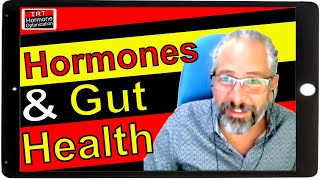
A short YouTube interview (part 2) where Dr. Jason Hawrelak discusses interactions between hormones and the gut microbiota. He explains how gut bacteria (e.g., beta-glucuronidase activity) can influence enterohepatic recycling of estrogens and how microbiota composition, gut permeability, and transit time affect hormonal reabsorption; he also notes the likely negative impact of endocrine-disrupting agricultural/processing chemicals and emphasizes custodianship of the microbiota across generations.
Chapters
Welcome to this video everybody. Next up is an interview I did with Dr. Jason Hauerlach.
Okay, great.
Dr. Hauerlach is a clinician with nearly 20 years experience working natural medicine and clinics. You can find out all about Dr. Hauerlach's publications and much more on Probiotic Advisor.com I'll leave the link under this video for now. Enjoy this interview. Do hormones affect gut health? Welcome to this channel. I am Dr. Steven De Vos, the lifting Dermatologist. And this is my bro, science hunting partner, Danny Bossa. If you want to learn more about the most cutting edge science based information in the world of hormone optimization, please like and subscribe.
Click the bell button to get notified.
I also invite you to join my other YouTube channel, the Lifting Dermatologist. The link you can find in the.
Description of this video I would say, I mean, and this is where I really haven't spent a lot of time looking into this specific area and I would say that we're probably a bit in the dark with the impact of exogenously supplied hormones and their impact. We certainly know gut bacteria can essentially influence your hormone status and that can be impacted by, you know, metabolic pathways in the colon like beta glucuronidase, which some bacteria produce, beta glucuronidase, which is enzyme, and then sort of re releases things like estrogens that can then be reabsorbed again and you get that enhanced enterohepatic recycling it's called. So I think there's certainly data around that and I think that microbiotic composition, you know, gut permeability and then colon transit time, you know, all will impact essentially the relative reabsorption of those hormonal products that your body's trying to get rid of. And certainly you can see improvement in conditions where you tend to associate with relative estrogen excess, for example, by changing the gut ecosystem, improving transit time, improving gut permeability. So there's certainly that. But I'm more or less aware of research and whether it's been done looking at the impact of, you know, giving some progesterone or estrogen or testosterone and what impact that has on gut bacteria. I imagine that when it is done and maybe it has and I'm just not aware of it, there probably will be changes. Yeah, because whenever we start looking, like any medication, we're starting to look at, ah, okay, that does have some impact. Little do we know and maybe the microbiota actually changes it into something that makes it active and certainly, you know, an area that I'M more familiar with is the impact of microbiota and her medicines. And we know that a lot of her medicines rely on those microbiota conversions for them to be active. And I think the more we're researching medications and their impact with the microbiota, we're starting to see more of that too. And that could mean that people become less impacted by certain medications or more impacted based on their microbiotic composition.
You probably realize that the testosterone levels are going down worldwide in men. They even adjusted the lab ranges for that. And most experts tell us that it is all about endocrine disrupting chemicals in our environment. Do they have any impact on our gut health? Because you earlier told me to avoid processed food and they contain a lot of endocrine disrupting chemicals like colors and so on.
Yeah, and I think there is certainly research looking at these agricultural chemicals that can work as, you know, endocrine disruptors and their impact on the gut market. But it's certainly not positive as you would expect. And I suppose it's another way in which they're essentially causing harm when they're ingested or exposed on the skin or breathed in, etc.
Anything more you want to add?
I think I covered the main things that were like for me that it's about really nurturing this microbiota organ, doing your best to protect it. Because I think it is really about custodianship for the next generations. Because what we know now is we can only sort of pass on. We pass on the ecosystem that we have to next generation. And if we've severely disrupted our ecosystem so that we, you know, maybe at birth we had this many, you know, species present, you know, by the time we're 20, this many, because we've had so many courses of antibiotics and so much western radish food, that's all we can pass on is this, that gets passed on to the next generation. Then they get exposed to antibiotics, they get exposed to western. It's a crappy diet and there gets narrower and narrow and each generation gets less. And I think it's. We really need to be aware of this custodianship that we have both for. I tend to think we have to be aware of our custodianship for the earth as well. But I think we need to be aware of this custodianship for the gut market product because we really want to do our best to pass on a healthy, robust, diverse ecosystem to the next generation. Because we've evolved with this symbiotic relationship with these microbes. And there's specific ancestral organisms that play pivotal roles in our health that we no longer have. And we need to do our best to maintain that relationship with, with these species as each futuration goes on. So that's probably my last. My parting message is look after those microbes.
Okay. Very interesting. Ju. Thank you so much, Dr. Jason Hauerlach, for your time and sharing your knowledge. Thank you.
You're very welcome, Steve. I'm glad to be here.
This video was actually part two of the interview I did with Dr. Jason Hauerlach. If you haven't seen part one yet, where I asked Dr. Howellach how to get a healthier gut biome, what supplements we can take, and if metformin would be an option, then click here. See you there.