The Hidden Link Between Your Microbiome and Mitochondria with Dr. Jason Hawrelak
Dr. Jason Hawrelak explains how gut bacteria shape your energy and brain health through three factors: how fast food moves through you, which microbes you have, and whether your gut leaks. Most probiotics are temporary visitors; fiber and plant foods create lasting changes that boost butyrate-producing bacteria and protect your mitochondria.
Questions this video answers
A live microbe that, when administered in adequate amounts, confers a health benefit.
About 100 million CFU (1×10^8) in clinical studies.
Examples given: 10 days and 26 days (for visible food particles like corn/quinoa to reappear in stool).
Rifaximin: roughly 50–70% effectiveness (varies by review). Rifaximin + partially hydrolyzed guar gum (PHGG): reported cure-rate increase from ~60% to ~87% in the cited study.
A Bifidobacterium strain (referred to as 1206) reportedly colonized ~30% of subjects for six months in a cited study.
Chapters
Most of us have a vague idea what probiotics are like, beneficial microbes, but I think the strict definition is live microbes that when administered in adequate amounts and confer a health benefit. And I think you could see that as having a few different components of that definition is one, they've got to be alive. So if you're having a supplement that contains dead bacteria and it can still be very helpful, but it won't be a probiotic at that point. In fact, it should be termed a postbiotic, technically speaking. The other aspect is that it confers a health benefit too. And there's certain parts of the world and certain research scientists in this field who take that very seriously. Whereas if you have a strain of lactose acidophilus or lactose rhamnosus that has no research on it at all, they wouldn't call it a probiotic. They'd be like, that's a bacterial strain that may or may not have any psychotherapy benefit.
Hey, this is Ari. Welcome back to the Energy Blueprint podcast. With me today is a very special guest, Dr. Jason Holmes Parlach. He is without a doubt one of the premier, most world class, most expert of the experts in the gut microbiome. So in a world of people, lots and lots of people who are claiming to be gut health experts, this is in my opinion, the premier gut health microbiome expert, one of them certainly in the world on planet Earth. He is not a public facing influencer where people in the general population would know him, but he is widely known among actual gut health experts and physicians and clinicians, conventional and functional medicine doctors who specialize in gastrointestinal and microbiome health. He is extremely well known and he offers coursework for those practitioners. He's often an educator to those gut health experts and training them in their knowledge of the microbiome. He's also a clinician, he's also a professor, he's also a researcher. He's written over 20 textbook chapters in actual clinical textbooks meant for training professionals in this domain of gut health and microbiome health and is really la creme de la creme of gut health experts. Let's get into this podcast on gut health and Microbiome Optimization with Dr. Jason Harlak.
Thank you for having me. That's. Thanks for those kind words too. Yeah, I'm humbled. I think it's the right word.
Yeah, yeah. So I think as a general starting point, broad question, maybe as an entry point, especially given this is the Energy Blueprint podcast, we could talk about the relationship between gut health and energy levels and some of the key mechanisms there, maybe the. The gut mitochondria access or any other aspects you want to talk about, the gut brain access, any of the sort of key mechanisms that you see linking gut health with energy levels.
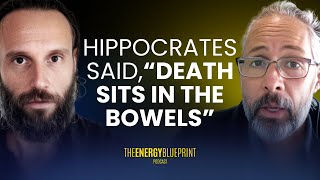
Okay, that's a great way of introducing the area, actually, because I think for me, when I'm looking at this and I'm looking at gut health in general is probably three components. Broad components I look at. Number one would be gut motility and how long it's taking food to go make its way through, and essentially around colonic motility, or more likely, lack thereof. So when people actually have fecal loading or constipation, because when we get the situation where fecal matter is in there for a fair period of time, and for some people, this can be 10, 15, 20 days, actually transit time from mouth to toilet bowl, as I tell my patients. And I think one of this is an easy thing you can test at home. And I think everybody should be totally onto this and be aware of this. But you can have some corn on the cob or some red quinoa, black quinoa, or even some green peas. Don't chew them particularly well. You know, don't choke, but don't chew them all that well. You want to be able to see them come out the other end. Just take note, write down when you actually ate it, keep track, and look at your bowel movements in great detail over the coming days and see when it starts coming through. And I've had patients who were doing a lovely type 4 stool, which is a Bristol stool, which some people would call the perfect poo, every single day, never missed a day. And it took 10 days for the corn at the other end. And I've had other patients who were only pooing every two or three days. It was 26 days before the corn came out the other end. And if you could imagine how much they're reabsorbing from that. And it's something that, you know, Hippocrates said death sits in the bowels, or since all disease is. Begins in the gut. And I think this is one of the concepts around that, is that when we have an older naturopath used to call this biotoxemia, in that we've got this sort of old fecal matter there that that's constantly leaking bacterial toxins into the system. That's one of the key things we look at, okay, is like looking at transit time. And if transit time is slow, then we're obviously absorbing through the colon mucosa a lot more of those toxins. And particularly what I'm referring to is endotoxins or often as lipopolysaccharide, which part of the gram, the cell wall, gram negative bacteria, which is a group of bacteria in the gut. So that's one, one consideration is that is transit time. Two is microbiome composition. And this is also feeds fits in with the endotoxin or liquid polysaccharide. Because the people's ecosystems can, they're all unique. You know, like my ecosystem will not look like yours. You could take like a thousand people and there'll be some similarities obviously, but there'll be market differences. And just like your fingerprint's unique, your microbiome signature is unique and more similar to your siblings and your mom, probably anyone else in the world, but still quite different. But within that individual composition there'll be certain ecosystem traits that you'd argue you'd see as pro inflammatory depending on that composition. And if your ecosystem contains greater amounts of what we call gram negative bacteria, but specific grouping of that called proteobacteria, they're much more problematic from an inflammatory perspective. 80% of the cell wall structure of gram negative bacteria is lipopolysaccharide or endotoxin. And this isn't the toxin that the bacteria is secreting it to make us ill. It's like we grow hair, we grow fingernails, it grows lipopolysaccharide. It's just what it does. And just when they die, they release that lipopolysaccharide into your gut lumen. Now some people only have like, you know, patients yesterday with a 0.4% Proteobacteria. And I have other patients who are 50% Proteobacteria to probably give the two extreme ends of that. And most people are, are in not in either the two extremes. But you know, the comp, the amount of protobacteria that's present has a huge, huge contributor to potential inflammatory load essentially because when you've got greater amounts of protobacteria present and other gram negative bacteria and there's other groupings like bacteroidetes or verrucomicrobia that also have endotoxin involved with, with that they grow too, but it's far less inflammatory. It's really proteobacter that we really clue in with because it's a super inflammatory compound. Yeah. So we look at that, the composition there and we know that lipopolysaccharide essentially works as a. It's an immensely pro inflammatory agent. It can cause damage to the gut itself, so cause a leaky gut. But when it reaches the circulation, this is where we know it can impact things like blood sugar regulation, negatively decreases insulin sensitivity, it can damage the blood brain barrier, it changes with neurotransmitters we produce. It causes inflation in the brain and it interferes with mitochondrial function. So we've got this situation where we've got these bacteria that are releasing these toxins and some people are releasing a lot more of those. And the certain dietary choices that we make that actually can enhance or decrease the absorption of that endotoxin as well. You'd see that you're having these mitochondrial poisons that you're absorbing 24 hours a day and then sometimes with certain meals you get a spike of lipopolysaccharide hitting the bloodstream. And that's termed endotoxemia now or metabolic endotoxemia to people. Bit more specific. So that's the other aspect is looking at microbiome composition from a pro inflammatory perspective. But then conversely we have other species in the gut that we would see as having the opposite effect of have producing anti inflammatory compounds and those have capacity to promote gut healing. So you might put, you know, species like most people are familiar with, like Bifidobacteria is one that we would see as having anti inflammatory gut healing qualities. There's others that are less well known, like Akkermansia. Eosinophilia is also a species that we see as helping promoting gut health and gut integrity and subsequently helps with blood sugar regulation and even helps determine your metabolic rate, which I think is super cool too. But there's another bigger group that we call beetrate producing species. And I think you can see butyrate is almost the counterpoint of lipopolysaccharide and that butyrate has a healing anti inflammatory effect in the gut. It is the main food source for your colon cells. And many people are kind of, we've been aware of that aspect of things for a long time. But I still think it's pretty amazing to think that we've evolved reliant on bacterial production of this compound to feed certain group of our cells that are really key for our good health. And the issue here is if we don't have enough butyrate producing species, we don't make that much butyrate as a consequence of that, that any butyrate we do make in the gut is avidly consumed by our colon cells and none of it reaches the body wide circulation. It's only when we make enough butyrate that it exceeds our colon cells capacity. That butyrate reaches the systemic circulation, floats through the area and there we get the anti inflammatory effects body wide of B ray and it has a healing effect on the blood brain barrier decreases neural inflammation and improves mitochondrial function, improves blood sugar regulation, improves metabolism. It's a pretty amazing substance actually. The more we research it, the more stunning we actually find that it is. And we've got these little factories in us, all of us do this. The population can vary dramatically too. From the lowest I've seen is 2% of an ecosystem being butyrate producing species. And the highest I've seen is like 65%. Again a huge variation there that can determine how much of an anti inflammatory effect we're getting from that microbiome versus the pro inflammatory effect that we get when it's more proteobacteria and more lipopolysaccharide. And I think the third thing to look at is gut integrity. So when the gut is what we call the leaky gut or intestinal hyperpermeability, we have more of the lipopolysaccharide that actually leaks through into our systemic body wide circulation and we get more of the negative aspects to our health. And essentially inflammation that goes everywhere. But people will have their own weak areas where I think that inflammation will become more manifest and that will differ a bit per person. Where some people with endotoxemia will start developing insulin resistance, some people start developing weight gain, people start, I think it's got a role personally with autoimmune conditions as well. Some people get brain fog. We know that endotoxins play are pretty pivotal role with something like Alzheimer's disease and cognitive decline. There's been some very cool research where they've done autopsies of the brains of Alzheimer's patients and they're super rich in endotoxin. And people who do not have Alzheimer's, it's not rich with endotoxin, it's not in their brains, nowhere near as degree. So I think it's really, it's to me it's those three areas that I'm always looking at. It's like what's gut integrity? Like what's the microbiome composition look like and what's your transit time? Because alterations in any of those three things can certainly play a pivotal role with essentially your inflammatory status. And I think that flows into cognitive function, that flows into just Level of energy, I would put to suggest two, for that matter. But then if people have got two out of three or three out of three not working well or are balanced, then we get major problems.
Yeah, good stuff. I want to mention on your number two point about short chain fatty acids and butyrate. I interviewed tatis Karazi and Dr. Dr. Kharazian recently, a few months ago, and he actually listed butyrate as his number one compound for brain health as far as supplements he was recommending. Yeah, I was a bit surprised by that. I was expecting maybe curcumin or polyphenols or, you know, something like that, centrofenoxine. Who knows vinpocetine. But he went with butyrate and he just raved about the effects on brain health in particular. And this is, you know, widely regarded as one of the world's top brain health experts who was saying that that's.
That's very cool. Yeah. And I remember there's a paper published, I think it was 2016, that was one of the earlier ones in a neurology journal talking about, how do we improve brain health? Let's give people fiber. That was pretty mind blowing. And I think seeing that in a mainstream neurological journal was great because it just means that, you know, it's. People, particularly the top research experts, are totally clued into this, but it's. Their message is seeping out. But I think that that's pretty amazing. They list that as the number one. And we just had. And I think it's so cool because we actually have be Right producing factories already there. We just have to make sure that we're feeding them to actually get that. That benefit.
Yeah, Actually, that's a point. I want to circle back to fiber and butyrate consumption later in the podcast. So let's talk about probiotics. This is a huge area of passion for you and something you know a ton about. And I've already learned a ton from you on this topic. Things that I didn't. I didn't know. You know, for example, the importance of strain specificity. I was kind of blown away by a lot of the research you presented on that topic, which is something I've historically kind of brushed off as unimportant. I thought it was mostly sort of a marketing gimmick that people say, oh, you know, this strain of lactobacillus rhamnosis versus that strain. Like, you know, they're the same species. How different could they possibly be? And I've seen from a lot of research that you've presented they are very different in many cases. So first of all, can you talk about what a probiotic actually means? And then I want to talk a bit about some common probiotic myths and then the strain specificity.
Yeah. So most of us have a vague idea what probiotics are like beneficial microbes. But I think the strict definition is live microbes that when administered in adequate amounts and confer a health benefit. I think you could see that as having a few different components of that definition is one, they've got to be alive. So if you're having a supplement that contains dead bacteria and it can still be very helpful, but it won't be a probiotic at that point. In fact it should be termed a postbiotic, technically speaking. The other aspect is that it confers a health benefit too. And there's certain parts of the world and certain research scientists in this field who take that very seriously. Whereas if you have a, a strain of lacticillus acidophilus or lactose rhamnosus that has no research on it at all, they wouldn't call it a probiotic. They'd be likely that's a bacterial strain that may or may not have any psychotherapy benefit. Yeah. So I think that's the other interesting aspect of that definition as well, as well as adequate amounts. And this is where this does differ a bit per strain, that there are some pretty amazing research on lateral Soluteri strain DSM17938 which is sold around the world as Biogaia. The research studies often use 100 million CFU, so called 100 million microbes. And it gets these great results and it's not good for everything, but it's good for a lot of different things. For viral gastroenteritis, preventing antibiotic associated side effects, even prevention of SIBO in people who take proton pump inhibitors. So decent spread of applications all at that very tiny dose where some people would go there's nowhere near enough. We have to give 100 billion 10 different strains to get any sort of impact. And it's like clearly not the case from research. And I think that's one of the probably flow into this particular myth that sometimes as a mythology that we have to give mega doses or it has to be mega high potency multi strain to get any sort of positive impact. And that's clearly not the case. And then we've got hundreds of research studies showing single strains even at relatively low potencies of 100 million or 1 billion microbes having therapeutic effects clearly in.
The literature very Very interesting. Okay, so as far as strain specificity, can you give a few examples of how that plays out in some specific studies about specific species of bacteria for specific outcomes?
Yeah. And this is an area like when I did my training, I trained it at my naturopathic training within the late 90s 90s, and they. We didn't cover strains really at all. It was kind of very superficially, and most of the stuff was talking about species. And it's only when I started delving into it, part of my PhD was like, you've become familiar with these new concepts of, you know, I delved into prebiotics, which I really knew, superficially delved into probiotics, and was like, oh, my God. There's actually dramatic differences in terms of characteristics or qualities, never mind therapy actions, strains within the same species. And for those people who are less familiar with the concept of strain, I think a good analogy here is like breeds of dog. You know, all dogs are Canis familiaris. They all have certain traits in common, but there are differences. But they're all the same species. Yeah. And with bacteria strains within the same species, we don't have the same physical characteristics that look different, but we know that we can subject them to different exposures and they will react differently, you know, like they can. Some. Some strains within a certain species will tolerate stomach acid and some won't. Some will tolerate bile, some won't. Some will attach to your gut, some won't. Some will stay in your gut for a few days, some will pass straight through, just to name a few of those sort of basic characteristics that we're often looking for with probiotics and that we already. We've known for a long time. You can go back to research in the 1970s that we're looking at this isolate 15 strains of lactose acidophilus, and this expose them to get stomach acid. And you could see even then that some strains could tolerate those things, some things did not. I think there was a study in 2010 where they took, I think it was 90 strains of lactose, I think for memory was fermentum. And they said, okay, let's expose these 90 strains to stomach acid, was exposed them to bile, and let's see how many tolerate both those things. Well, and I think it was from memory is 4% of those starting materials could actually tolerate stomach acid and bile to the point that they could there theoretically survive transit to the upper gut. The rest would have all died. Yeah, I think that's one of those clear examples. And there's looking at another species, lactose reuteri. And there's certain strains of lactose reuteri that can produce an antimicrobial compound called reuterin. And reuterine is kills, is effective against fungal pathogens, it's effective against bacterial pathogens. But we can't assume that all strains produce it because they don't. Only some strains do. Even if it has the name lactose reuteri, it does not mean it produces reuterine. And those strains that do not produce reuterin are very unlikely to have the same kind of benefits from a microbiome alteration perspective, either against fungal dysbiosis or bacterial dysbiosis as those that produce. And the strain that we know that's probably the biggest from the research basis is the one I mentioned before, the DSM17938, which is in Biogaia, which has got this cool study where they gave it to essentially kids who were taking a proton pump inhibitor, which is a class of medications that probably many of your listeners are familiar with. And gosh, a lot of people take in western nations, it's huge, but because it suppresses stomach acid output, so it's used to treat reflux disease, essentially, also peptic ulcer disease, but that's usually a shorter period of time. But for a high proportion of people who take this medication, they develop sibo, small intestinal bacterial overgrowth. And there's some debate about how much that is, whether it's 50, 60, 70% of these people will develop it, but it's pretty marked anyway. So this study was, okay, well, what happens if we give a probiotic alongside the proton pump inhibitor? Will it prevent SIBO from developing? And this is what the study did. They gave a placebo, they gave this particular strain of reuteri. And I think sibo developed in 56% of those in placebo group versus 6% of those in that probiotic group. And I think what's interesting here is that there is another study using a combination of two different probiotic strains at maybe 10 or 20 times the dose. Same, similar model. Let's give it to people taking proton pump inhibitors. It did not work. It didn't actually stop SIBO from developing. So it's not something that all probiotics do. But this particular strain we know produces reuterine, and reuterine works against fungal and bacterial pathogens and prevented the overgrowth from occurring, which I think is, you know, things that's pretty amazing and means we just have to make sure that the strains that we're choosing for tax has got the qualities and actions that we were after. One of the few studies that actually directly compared two different strains in the same study was for viral gastroenteritis, which is something that all kids end up getting, all of us will often get from our kids is when they bring it home from daycare. It's immensely common. This condition generally short lived but it can result in hospitalizations and dehydration and death in kids and often does still. Even the western nations because of the dehydration aspect, even though it's not, you know, directly causes death, it's more indirectly via dehydration. So having treatments that, that shorten the duration and decrease the severity are extremely welcome. So in this particular study they compared these two probiotic strains, same species, lactose rhamnosus one with Al rhamnosis GG one was lactose rhamnosis. Lactophilus gave these kids one either the two and the kids that took the LDG, they got better 24 hours sooner. And 24 hours is big. If you've got a kid that's got vomiting and diarrhea, you will notice 24 hours less of vomiting and diarrhea. Yeah. And it also enhanced secretory IGA production, one of the main sort of immune markers way that your immune system is dealing with pathogens like viruses in the gut, whereas the other lactophilus rhamnosis did not. You know, so and this is again same species, just different strains. And there's a lot more examples in terms of other characteristics that we could, we could go into as well. But I think it is very clear if you look at the literature, it's definitely not a marketing thing. And I hear you because I think there's a lot of producers and I think this is partly because industry promotes that idea. Some in industry do. Generally the companies that are using non supplements that don't have research yet. That's right. That don't list their strains or they use strains with no research base. So they don't want people to know about the strain specificity. They want to cloud the waters and they do that effectively. And this is something that I've been trying to bust for seriously 20 years. I've been trying to let practitioners, clinicians and the general public, but mostly I work with training clinicians disinformation so that they can really see through that. The cloudiness that's being put out there because the research is clear. If you look at it that there are generally big differences now for certain conditions it May not matter so much. Where maybe the similarities of their capacity of Bifidobacteria strains to produce acetate and that all of them probably will share within a given species, although there will still be differences in terms of how much they produce to certain food substrates. But they all produce acetate, for example. That might mean it for certain conditions it won't matter as much. And you might put, you know, maybe post antibiotics trying to, to restore a bit of gut health, something. Maybe it won't matter quite as much, you know, in that case because maybe just a change in ph, it's all that's required to help in that case. Now that said, it matters heaps when we're actually giving it alongside the antibiotics, you know, where we know that certain probiotics make no difference. Like there's this cool study that was published in the Lancet, you know, it's huge medical journal in terms of reach and how high it is from an impact factor perspective that use, I think it was 60 billion CFU of four different probiotic strains to try to prevent antibiotic associated diarrhea. And I think it had like over a thousand patients. It's like a big study, did not work, you know, yet we've got other strains where you can give. I'll go back to that. Lactose reuteride, DSM17938, 200 million CFU. It works to prevent antibiotic associated diarrhea. So we know alongside antibiotic strains definitely do matter. But there will be some applications where I think, you know, probably after antibiotics where we're just trying to get more change the PH of the environment to help indigenous populations that we want to support to grow back a bit more quickly. May not matter quite as much.
Got it. Okay. So the big picture summary of this is strain specificity, not just marketing gimmick often matters in a massive way and can be the difference between something working exceptionally well versus not working at all. Even within the same species. Sort of like a Doberman and a Chihuahua are the same species. One is a really good guard dog, one is not such a good guard dog.
That's exactly right. And some of this, you might have a catalog or something that's good for certain tasks but not good for other tasks. And that's what we tease out with research on these trains is that one is good for antibiotic stage diarrhea but completely useless for depression, or one might be good for animal diarrhea and not good for preventing urinary tract infections. You know, and then we've got that clear example of strains within species that are already out there. So I think that dog analogy is helpful in a couple of ways.
Absolutely. It was, it was helpful for me when you presented that. I was like, wow. Yeah, I never really have considered that they're all the same species and they are radically different as far as their function. I have a couple of Australian cattle dogs and they're built for a certain function and they're not good for a certain function. If I want a dog to, you know, if I'm laid out in bed or. Or I have an elderly person in my house who just needs a companion to sort of lay by their house by their side in an apartment all day. This is a really bad choice of dog for that purpose.
It is.
And I used to out running around all the time.
Yeah, I used to have a red kelpie and they're bred to run like 60km a day or something like that. And they're just like little battery cells. There's never run out of energy. So not good for keeping your elderly relative company. No, but very good for the other tasks. Definitely.
Yeah. And it might be worth mentioning. So you're the head of research of Probiotic Advisor. This is a company that I, that I learned about through you and I signed up for. And I have been absolutely amazed by that. I didn't know a tool like this even existed where I can go in and type in a particular.
Condition.
Like, for example, my two and a half year old, since we potty trained her, started suffering from some constipation and started going. Instead of going to the going.
Having.
A bowel movement every day, it became every two or three days. And so I can look up, oh, you know, probiotics specific to that function or probiotics specific to hand eczema or a milk, you know, antibiotic use. How do you minimize complications, Certain complications when you're on antibiotics and there's you. It brings up the search results of all the specific research on specific strains of probiotics that have actually been shown to be affected in that specific context. So it's an amazing tool that I didn't even know existed until I started taking your course.
Thank you. Yeah, it started off with. With just some paper documents that started seriously, like probably in 2001. I first started teaching. You know what, I started my research process and I first started teaching. It's like, okay, I want to pull together these resources and you know, in the end, with three different documents and they 30 pages long or 40 pages long, and it's like, okay, I need to put this into a searchable database. Bits of paper in the old way. But yeah, I think it's, we now have that capacity to really look at the research because the research has built up so much over the last 20 years that we can, we don't have to guess, we don't have to take the supplier's word for it, which is what many people were doing before is like, this company says it's good for this. No, don't look at the research. And this just makes it easier because yeah, you can do a search of Medline and I think we should still all be doing that frequently. But this is a tool that just makes things easier. These, you can just type in that condition. It brings up the strains and it tells you what products in Canada or the U.S. or Australia contain those strains just to again make things easier because that's. The added bit on top is like, yeah, this is a great strain, this great research study, but where, where do you get it? And sometimes those bits of information are not easy to come by.
Yeah, absolutely. Okay. So one other thing related to probiotics that I want you to speak to is colonization. I think this is also a widespread myth. You know, people have the assumption they take a certain probiotic and they think it goes in there and it just starts, you know, colonizing the intestinal tract and then starts reproducing. And so now you've got huge quantities of this particular species of bacteria. What is the deal with that? Is there any species that colonizes? And I know this is probably something that you could talk about for five hours, but how could you sort of simplify into a few minute long answer?
Simplify Generally, no, generally we don't, we don't get colonization from current generation probiotics. So we're talking about Lactobacillus strains, Bifidobacteria strains, even the E. Coli strains. We currently have Saccharomyces probiotics and I would say the bacillus type strains too, they don't permeate, colonized, they're all temporary visitors. And this has been clear for also like 40, 50 years. I think this is for me, the interesting thing is that, that there's this conception that, you know, one of the five R points is, you know, re inoculate and people think they can just take antibiotics or and then just pop a pill and everything will be replenished from that and forever onwards. And it's good to know that that's not true. It's rubbish. It does not happen because I think it makes you appreciate and care for that ecosystem differently when you know that it's actually one, it is unique, it's yours been passed down your family line and we should respect it as such. And two, that it's not as simple as that and it's not reality. If we wipe out our bifid bacteria, we can't replace it with one in the supplement, you know, it doesn't stay, you know, and again, you go back 40, 50 years. It's like a good strain, good probiotic strain will last a week or 10 days in there versus ones that just pass straight through or ones that die in the stomach or small intestine. And we've had studies showing this time and time again is we just don't get long term colonization as a general rule. There is the odd exception, there's the odd study. I think there's one using a strain of Bifidacterium, I think it was, ah, 1206, which isn't commercially available now, but that was able to colonize, I think in 30% of people for six months afterwards. But that is immense rarity because you can just, if you delve into literature, you'll find that they last for 5 days, 2 days, 10 days, 14 days. But you can see their populations just diminish. If you take daily stool samples, it goes down all that time. And you can investigate this yourself too. I mean you can do a stool test whilst you're taking that probiotic and then two weeks later do that same stool test and keep every other variable the same. And you'll see that maybe the bifactor was here and then no, not there anymore. It's pretty clear. And as someone that's done a lot of stool testing over the couple decades of my practice using accurate assessment techniques is you clearly see that they do not colonize in these patients. And I think it really cheapens the thought of the ecosystem and care of the ecosystem if we think it's easily replaced just by popping a probiotic pill. Because it's not.
What, what do you think of, and this is something I don't believe that I've heard you mention in, in the course. I believe it's bacillus subtilis 4 based probiotic that is in products from microbiome labs and they talk about it like it does colonize and that it sort of takes up residence there and also that it has an impact on, on modifying other species of bacteria that are present in the intestines. What, what do you think of Those claims about that, I mean, I think.
The latter one, I wouldn't. I mean we know that probiotics do have some impact on the guy ecosystem. Now I would put that in general as relatively minor. You compare that to changes in diet, you compare that to prebiotic usage. The alterations we get from a probot are relatively small. You know, they're not none often. And that can be bigger. Like if it's right after chemotherapy, right after antibiotics, you're going to get bigger changes from a probiotic usage in that case because the ecosystem is immensely disrupted and you know, it's more flexible in terms of how things shift at that point. But if you take someone who's a more stable ecosystem, you give them a probiotic, whether it's four based or otherwise, the impact will be relatively small. Not nothing but relatively small. But if you change their diet markedly, you give them a couple prebiotics, you'll see dramatic changes in that ecosystem. But in terms of the long term colonization, I haven't seen research to suggest that that's the case. Now it's possible that I've missed that study so showing that there's long term colonization. Again, doing lots of stool testing over the years, I can't even recall seeing bacillus showing up on stool tests very commonly at all. Whether people are taking that supplement, when people are taking that supplement. Which makes me, whereas I do see bifidobacteria, I do see lacrixilli, that populations do go up and down. If people are taking the supplement versus not that makes you think those show up on stool tests. Whereas I haven't really seen that with bacillus, which makes me less, at least at detectable levels, it seems less likely to me that would be occurring.
Okay, so you said a couple things in the last couple answers that I want to maybe clarify. So you said something really interesting, which is that kind of alluding to our microbiome is something unique to us as an individual, something passed down through the generations from our family. And along with this idea that we could take probiotics, but it doesn't really have much of an impact, they don't really colonize. It almost paints a picture of the microbiome as this sort of static, unchanging thing. But then on the other hand, you also alluded to like other factors, lifestyle factors, nutrition, prebiotics, things like that that do have a big impact on it. So how do we sort of reconcile the degree of plasticity of our microbiome? Is it highly changeable or is it sort of More it stays unique to us and it's this thing we get from our parents and we can't do much to change it.
There's a limitation with how much we can change it, I would say, because we will, we get gifted it from previous generations for sure. And there'll be unique strains get passed down your family line, which I think is amazing. And I think what's even more amazing is women's breast milk contains unique sugars. They're unique to her. That feed those family line Bifidobacteria, for example, that don't feed other bifidacter nearly as well. It's a pretty amazing process when we go into the finer details and you just get to really appreciate the uniqueness and nuances when you delve into it more. And it also makes you worry about alterations of that ecosystem to a far greater degree too, because, you know, it's not easily fixable. And you know, I think that thing of custodianship of your familial line of microbes, if you take that on board, it really changes your choices in life in terms of what you're going to do to that ecosystem. But yes, so we get it. We inherited this ecosystem and then we can change populations within that through dietary factors, lifestyle factors and medications. And medications like antibiotics we know can cause extinction events to that many people would argue that with every course of antibiotics, our ecosystem gets less and less diverse, so we can only pass on what we've got, you know, so, you know, I, I would be able to pass on less than what my mom passed to me, for example, sadly, because I was dosed tons of antibiotics when I was a kid. I grew up in the 70s where every single sniffle or cough or sneeze, they're like, take antibiotics, take antibiotics, take antibiotics. You know, it's really only when I was in my 18 when I kind of discovered. Moved out of home and like discover the world and discovered health, that was like, oh my, you know, I've had almost no antibiotics since then, you know, but it's like, yeah, so I can.
Still taste the amoxicillin if I just conjure the memory of every time I had a cold, I was given amoxicillin. Yep. The viscosity of it, the flavor of it, the pink look of it. Yeah.
Yes. Yeah, I know. I've got that clear. Very clear in my memory too, sadly. Yeah, there's this cool study published in GOT a couple of years ago where they were looking at one person's ecosystem essentially taking almost like daily Stool samples and the ecosystem was immensely stable without any change of diet or lifestyle. Gave them a single shot of in the blood, bloodstream, intravenous antibiotics. Nine species went extinct.
Wow. Even through the blood, through an injection. That's crazy.
Yeah. From a single dose of the antibiotic. And to me that was just like mind blowing that we can lose nine species from a single antibiotic exposure. And it caused massive disruptions in this ecosystem. In fact, there was a species that went from like 0.02% up to 96% the day afterwards that they hadn't even named before. And then they named it after themselves, as researchers often do, like Bork Falkii, ceftrioxyun or something like that. A very funky name. So that was one of the interesting things, like how much dynamics there was for the first week or two afterwards. It was crazy dynamic, that ecosystem. And settled into a new pattern a few weeks after that, a different pattern than was beforehand. But I think the thing for me is two years afterwards, still nine species were missing. Wow. And you're like, and how many antibiotic courses do we get? I had a child patient the other day that had 14. By the time they're three, um, and you're like, what's happened to their ecosystem? It's like we've narrowed it down so much. Yeah. So we have, we have things like that, we have proton pump inhibitors, you know, widely used class of medications that I mentioned before, increase SIBO risk hugely. But there, there are selective antibacterials too that they actually kill bacteria and they, they actually decrease the diversity of ecosystem dramatically. And we've got patient people taking these for years on the daily basis, you know, and again, we're just narrowing this, this population. So while we were gifted from our, you know, previous generations gets narrow and narrow in that situation. And we can obviously make certain proportional changes with dietary fact interventions or our dietary choices. Pre bladders can make pretty major shifts in proportions of microbes. You know, we know that, that we can have temporary increases in diversity by spending time in nature, you know, going out for a lovely hike in the woods or in the rainforest, organic gardening, all these things will temporarily boost diversity. And if we're doing it daily, then we get these lovely, you know, continual burst boosts of diversity that, that, that come with that. But they're generally just temporary visitors again. And I mean, it's not to say we don't pick up microbes because I think we've always picked up macros from a fecal oral route. You know, if you go Back before we had such clean water supplies is, you know, we were always picking up microbes from people upstream from us.
We were bathing in polio.
Yeah. Or bathing it, but in other people's gut bacteria. And if they didn't have gut diseases, it's like that's a good way of passing on microbes. You know, when I was visiting Sri Lanka, they have these amazing system of canals that were set up, you know, 1300 years ago that go for like hundreds of kilometers and. But people are out there, their feces and their laundry and stuff goes into that canal and it's the way it's been for a thousand years. And people downstream are bathing in that same water. And you know. Yes. If they've got giardia or salmonella or something, that's obviously going to be a bit problematic. And it is an occasion, obviously. But it's also way of passing on microbes. So there are ways of getting some species back in that we've lost, but it's really comes to feces exposure, whether that's accidental or whether that's intentional. When it comes to things like fecal transplants, where we can regain species in a more permanent way. That way.
Yeah.
I've been.
I've been to Sri Lanka and I've been to India and I've seen some of these scenes of people bathing and doing their laundry in a river with, you know, literally corpses floating through the river. And I picture this as something. And obviously sewage pouring into the river and things like that. I picture this as almost the opposite end of the spectrum of what we do in the west of giving, you know, the antibiotic courses that you were just talking about. You know, these are people being exposed to all kinds of crazy microbes on a daily basis, whether they colonize or not. There's exposure happening and immune training and. Yeah, who knows what. What other complex physiological responses there are to that exposure.
Yeah, totally. Thankfully, in Sri Lanka, I wasn't seeing the dead bodies downstream. That's another level of microbial exposure for sure. So.
One other thing I wanted to ask you was. Okay, so you've mentioned prebiotics a couple of times. How do we know when to use prebiotics versus probiotics if. If you're saying, you know, in general probiotics. It's interesting what you're saying in the sense that most people, I think, are under the impression that probiotics are really what matters. Probiotics are the things that I need to take that are really going to have an impact on my gut and most people in general, while this is trending in a good direction, most people in general have kind of brushed off prebiotics as unimportant, whereas what you're saying, it sounds almost like the opposite. So how do people know? How should they prioritize pre versus probiotics?
Yeah, and I think you're spot on there in that. And I think it is changing too, as I think you flagged too, is there's a growing understanding of the importance of fiber and prebiotics in terms of tools that we use to, to make more substantive shifts to the ecosystem. You know, and I don't want to come across as anti product probiotics because I'm not. I use probiotics every day in my clinical practice. But I think it's important that we frame what they do well and what they don't do. And if you're after, you know, optimizing your gut ecosystem, prebiotics are far, far more effective at doing that. They're far better at increasing levels of beneficial species and decreasing levels of what we call pathobionts or pathogens. Pathogens are, you know, people are more familiar with their bad bacteria. Pathobionts are ones that in the right amount are helpful to us, but when they overgrow, they're problematic and cause harm. And we've got a number of those in our gut. And what I love about prebiotics is their capacity to lower levels of pathobion and pathogens and at the same time increased levels of beneficial bacteria. And I think that selectivity of their impact on the ecosystem is just brilliant. So I have used them since I learned about them, really, which goes back to 2000, 2001. They've been a core part of my clinical practice since then. And they really have been core because I think their capacity to shift ecosystems in dramatic ways is you can see that you do the right stool test and you can see dramatic impacts after two months of use on a prebiotic. And if you took a probiotic for that two months, you would not see that there'd be some little shift. It's not to say that they, probiotics can help with speeding transit time, they can help with healing up a damaged gut, they can help with decreasing inflammation. There's lots of good reasons to give to use specific probiotics. But if you're after like shifting that ecosystem dramatically, prebiotics or a change in dietary approach will produce far greater shifts.
Very, very interesting. That's. That was a very strong statement that you made that I think if People really hear that it will blow a lot of minds and change a lot of perceptions and make people realize that prebiotics that they've really been neglecting and underappreciating the value of prebiotics. I know that that was even true of me prior to going through your course and I had already read a lot about prebiotics. I can supplement prebiotics. But I still was kind of blown away with how you sort of rate the magnitude of effect size in changing that microbiota.
Yeah. And I think if you. Yeah. And if you do lots of microbiome assessment with patients pre and post, you see it firsthand and you see how that correlates with shifts in their energy, their cognitive capacity and their gut symptoms. Yeah. And it can be dramatic. You know, I remember having, I've got one patient who when I started working with her, she was like essentially bedbound. You know, she could barely sit up, she couldn't feed herself. You know, she had to have people feed her. And then to working on a microbiome only level. Now I wasn't giving mitochondrial support or other things, just microbiome stuff. And we couldn't do much with diet because it was kind of restricted with. Because she wasn't in control of her food. You know, she was an institution and she just got institutional food which isn't good as you would know. So we just worked with prebiotics and some, probably some curcumin or something as an anti inflammatory as well. But most was with prebiotic work and geez, you know, I spoke to her just the other week and she is now in a wheelchair. She's going outside daily and she's able to feed herself, able to sit up and it's just like the difference for her that might sound like a relatively small thing. It was huge, huge in so many ways. And she's getting better at each progressing week or month. You know, things are more functionalities returning. And that to me is one of those cases that demonstrates the huge potential impact that we can get if we change the ecosystem. And her ecosystem was very dysbiotic, it had very high levels of proteobacteria and very low level which are rich with the endotoxin that we started off talking about and very low levels of beneficial anti inflammatory butyrate producers. So it was rife for the changing. And we did a follow up stool analysis and we reduced the proteobacteria by half and we increased beneficials pretty dramatically even though we weren't able to implant all the things because we had to do very tiny, tiny doses, stepwise increase because her system was so sensitive. But even within that context there was dramatic change. But you can see it, and I think that's the thing too is you can clearly see the impacts and how dramatic they could be by using a good stool analysis. Pre and post.
I want to talk kind of, I think a natural segue from what you just talking about. And you've made a couple allusions to the importance of fiber in the diet for maintaining the gut microbiome and prebiotics. So I'm curious, are you aware of the carnivore diet that is kind of trending in some circles right now? And I'm curious what your thoughts are on it.
Yeah, I, I think it's probably effective at reducing, you know, certain gut symptoms short term, like gas related symptoms because you, you essentially produce a lot less hydrogen gas when you eat only meat. Yeah, because it does get, does get fermented. In fact, it's called putrefaction. Putrefaction. When meat gets fermented in the gut and it just produces maybe one third the sort of gas levels what you get when you produce, you're fermenting fiber or carbohydrate sort of compounds. So I think it can definitely help with these symptoms. But I think there's a major trade offs with that because you've got to be aware that most if not all the beneficial species in our gut are fiber or oligosaccharide or carbohydrate consumers. And if you stop feeding them, their population dips. Not surprisingly, if you start feeding something, it goes down and at a certain point you're, you're going to reach the point of extinction. If you stop feeding things long enough and there's not enough food for them, their populations will eventually just go out and then it's impossible or really hard besides a fecal transplant to bring them back. And as someone who's worked with people that have been on the carnivore and are really unwell and try to get them back, it's really hard work because part of the other issue here is what they are feeding is like we know they're not feeding B. Right producers, they're not feeding bifidobacteria and that's really problematic. But what they are feeding is hydrogen sulfide gas producers because they quite like eating protein and they quite like eating bile. And there's a lot of that in the, reaching the gut in that kind of dietary approach. And hydrogen sulfide gas is, causes Kind of gut leakiness, but it causes also visceral hypersensitivity, which is the. When the nerves in the gut are hypersensitive. So you can start feeling even little bits of gas moving their way through, little bits of fiber compounds moving through, you start feeling it.
Logic. Logically, it would make sense then that there's a possibility that someone who adopts that kind of diet and then tries to reintroduce plant foods might be way more sensitive to them and then, and therefore kind of almost insidiously then even more convinced that those foods are harming.
Yes, exactly. Yeah. And this is, and this is where it's really hard to get people off of that because their gut has now become so inflamed and so they're such severe visceral hypersensitivity that even like a small, tiniest amount of a substrate fiber plant based food or that they used to tolerate fine or prebiotic actually causes them excruciating pain and discomfort. And it's like, okay, how do we work forward? It's really, really, really slow going because you have to try to do. This is where you might use supplemental butyrate. Yeah. Because we can't feed the butyrate producers yet because the degree of inflation is so severe. We have to use lots of gut anti inflammatories to get to the point where. And we have to use things that help with detoxification, hydrogen sulfide gas to try to initially before we can start introducing prebiotics to shift things more, more positively. But it's really tricky. And this is where I really worry about is that you know, for a week. Yeah, not a big deal. But you start doing this for months is you start making more longer term impacts to the ecosystem, but also just the, the, the environment and the inflammation level that are hard to come back from.
Do you think that there's a possibility as, as kind of along the lines of what you were talking about with antibiotics? There's a possibility of it sort of extinction events for certain species of bacteria that maybe you can never get back.
I would think. Yes, but it would probably be time duration dependent, you know. So again, for a short period of time, probably not extinction, the populations will just go down. But there'll be a point at which you'd expect there to be extinction events because if you just make sense, you can't, there'll be a consequence. And when I remember working with one person who is just eating two chickens a day, that's all this person ate. And looking at that gut ecosystem, it Was so high in hydrogen sulfide gas producers, so high in bile leaders who create secondary bile acids which are also pro inflammatory in the colon. And no bifidobacteria, no fecalibacterium. I think I'm surprised there was 2% of Bure producers in that ecosystem, which is, I think the lowest I've ever seen. Yeah. And through a lot of work we're able to expand things and eventually diet too, for that matter. But I still think that there are some species that will never recover tissues on that diet for long enough that I think there'd be extinctions and the diversity was never going to be as good as what it would have been otherwise.
Yeah. This seems, based on what you're saying, it seems like it has the potential to be a pretty insidious thing in the sense that a person might adopt this kind of diet and experience only benefits initially.
Initially and.
And therefore be convinced that this is. They've discovered the best way to eat and it's making them lose weight, they're feeling good, they have way less abdominal symptoms, GI symptoms. And. And they.
The.
The subjective conclusion from. From that feedback is I found the magic best human diet that is making me kick butt. And. And then only later will they start to develop all kinds of other problems which they probably will not then attribute to the diet that they are convinced is the best diet.
Yeah, no, I think you're totally spot on there.
Yeah. Okay, so the. Maybe the last 20 things I wanted to ask you about, the last thing that I want to cover is probably sibo. Sibo has become somewhat of a controversial thing. And I have personal friends on both sides of this who some people are in the mainstream functional medicine camp. They're diagnosing everybody and everybody with. With SIBO based on hydrogen breath tests. And then I have other friends. For example, Dr. Alan Christensen, who has written an article that was. Caused quite a stir in the functional medicine community, basically attempting to debunk SIBO as a thing and sort of. And he had multiple sort of lines of evidence and logic that he presented to essentially conclude that, you know, it's just the evidence doesn't support that SIBO exists and is a cause of IBS like symptoms and that sort of thing. So what do you. I know this is. I went through two hours of lecture of yours on this topic. So I know it's something you can.
At least three hours.
Enormous death. Yeah. But how would you sort of speak to the legitimacy of sibo and. And maybe problems with a lot of the testing that goes on with it.
Yeah, I mean I actually came from the very skeptic camp too, to be honest, because I was doing my PhD in the role of dysbiosis and irritable bowel syndrome when this first this idea and this is looking at clonic dysbiosis. And all the research was around colonic imbalance. And then this researcher, Pimental put out this idea of small intestinal bacteria playing a role and antibiotics may be helpful for ibs. And before that all the research was showing that antibiotics were a common cause of IBS occurring. So I was immensely skeptical when that first came up. So I will flag that because I'm like doesn't really fit the broader literature around that. And the only discussion of SIBO was really in before pimdal stuff was essentially in people that had short bowel. People had gut surgery, part of the small bowel removed and they would have raging sibo and they'd end up in hospital. There were cases of SIBO discussed in literature, but it was very much associated with abdominal surgery. That was the thing that we saw with sibo up until Pimental's ideas started coming forth. I was cautious and hesitant about it too because my area was IBS and it was dysbiosis. Those are my areas. So it's was like, you know, this was just. And also lactulose as a tool to diagnose. It was peculiar to me too because it was like I'm using lactulose as a prebiotic and we know it's a selectively fermented substrate that only some bacteria can eat and a whole bunch can't. So you're not going to see if those bacteria are present in a small bowel because they can't eat it. That's going to pass through. So as I'm skeptic, sensitive towards that as a diagnostic tool school as well. But you Fast forward to 2022. Here I am, I actually do believe in sibo and I do use breath testing and I treat patients with sibo and their IBS symptoms get better long term and you can cure people of their IBS symptoms, you know, so I think it's one of those for me an interesting journey that's gone along along the way as research has changed as you start trying different things clinically and seeing things now I don't use antibiotics to treat sibo. I use, you know, herbal selectively acting antimicrobials. I use probiotics, I use prebiotics. So a way of altering that ecosystem. But I think there Is for me, it's clear that there are people who do get overgrowth of bacteria in their small intestine. And we treat that and their symptoms go away. Not only gut symptoms, but some people have brain fog. They get fatigue, aches and pains. Those things go too. And I see this every single week in practice. So no matter how much somebody says, I don't think this condition exists, I would say I see it. I can do pre and post breath testing. And breath testing isn't perfect, you know, And I think if we rely solely on lactulose, we're actually getting false positives and we're getting a lot of false negatives. So which it's really problematic if we only use lactulose, which is, for me, one of the reasons I was so distrustful of lactulose as a diagnostic tool that I started using, I was always using glucose breath testing at the beginning, and I started using fructose breath testing, and then I started doing triple breath testing in every single patient I suspected of SIBO over the last 10 years. You can actually kind of start seeing patterns and start seeing which sugar substrates I think are more effective for diagnosing sibo. And I would actually argue from a clinical perspective that fructose is actually more effective, more accurate sugar than. Than other lactose or glucose. But I generally will do at least fructose and lactulose or all three if I really want to, to get the best chance of seeing if it's there or not. But what we can see is, let's say we have this early rise on fructose. So, you know, there's a breath gas spike at the 20 minute mark. Yeah. And it's extremely unlikely that fructose has reached the colon in 20 minutes. Is it possible? In some people, yes. But in most people in that situation, it's not the case. And then we can treat that person for that apparent bacterial overgrowth with those selectively acting herbal antimicrobials, pre and probiotic combinations, their symptoms go, we can do a retest, and they no longer have that spike in gas. At any time point, we get this objective data showing that that is no longer the case, and we get the subjective improvement of symptoms that go with that. And as I said, that's something that I see on a weekly basis. So I have a hard time thinking it doesn't exist when I see system areas like that. But I also share some of the concerns that people have about the broader SIBO field and that not everybody's got SIBO And I think I have issues too with saying everyone with IBS has got sibo and that's clearly not the case. And look at the. The data around that. And I still don't think we've got the ideal ways of diagnosing SIBO or defining sibo. I think there's still areas that are open for improvement. Yeah. But I do think there are people who have this early rise in breath gases on sugar substrates, breath testing, and parent gut symptoms to go with that. That when we treat that and the breath normalizes, the gut symptoms go away.
Okay, so you said something else in there that I want to flag is interesting. I think it was the case for me and it's the case for many, many functional medicine practitioners that I know that there is a general sort of fear over prebiotics when dealing with sibo because these people have this dysbiosis and bacterial overgrowth in the wrong place that's leading often to this reaction to certain kinds of prebiotic fibers. And the tendency in thinking, if I can generalize, is towards maybe like the elemental diet is towards reducing fiber and avoiding any fiber that could feed the bad bacteria and the bacterial overgrowth. And your course really presented a big shift in thinking because you pointed to all this research basically showing that certain prebiotics are actually highly beneficial and can help resolve sibo. So can you just speak to that maybe trend of thinking and why and why prebiotics are not something to fear?
Yeah, And I think we could even put probiotics in that too, in that the general consensus has been don't give probiotics in sibo because you're already just adding more bacteria to an already overgrown system. But then you look at the research data like it's very clear that probiotics are helpful. You know, there's individual studies, but then there was a meta analysis published a few years back that looked at just grouping all probiotics together, which I think is problematic. But it can still give a general idea about perhaps broad effectiveness. And there's, you know, 50% clearance rate of, you know, curing of SIBO with, with probiotic. And given that, you know, rifaxim, the main antibiotic used is like somewhere between 50 to 70% effective, depending on which systematic review you read. It's like, not markedly different than that. Yet. We still have people saying don't give probiotics because of a theoretical consideration, but they don't. Look at the research that says, look at the research. It's very clear. And there's some strains that have better efficacy than 50%. But that's just what then you get them all combined. And I think too you look at the research around prebiotics, it's like we know that let's look at partially hydrolyzed guar gum, which is a fairly unique prebiotic substance because it particularly targets butyrate producing species. I would say a little bit of bifidobacteria, but mostly butyrate producing species. We know if we give that alongside say rifaximin for the treatment of hydrogen dominant sibo that we improve essentially the cure rate from 60 some percent to 87% by using a pre product alongside the antimicrobial. And then we have methane overproduction which can happen in the small bowel or colon or both. And we know that giving partly hydrolyzed gargoyle decreases methane output with, with continued use. And following on from that, we know that other pre bottles can decrease methane as well, like galacto oligosaccharides can as well. Now we're kind of limited with there's not that much human research around tools to help decrease methane, you know, but we do have that one study with partially hydrolyzed guar gum and we have research on the, we'll go back to the Biogaia DSM17938 strain of lactose neuterite, which has been found to decrease methane output as well. So here we have these tools that some people would just say no, we can't use premium probiotics despite the fact we have clinical trials showing that they're actually helpful. And I think that's what I find frustrating, is that when people get stuck in very rigid thoughts around conceptions and theories that they can't accept the evidence that is being published and right there. And it just means that patients gets optimal care because of people being closed and too rigid and not open to new evidence when it comes up.
Yeah, fascinating stuff. Dr. Harlock, I really want to thank you for your time. This has been absolutely wonderful. Thank you for going over our hour of allotted time. And the last thing I want to ask you to wrap up with is if, and this is maybe a hard question, if you were going to generalize how to best take care of one's gut health, what would be your top three recommendations that you want to leave people with?
Avoid antibiotics as much as you can. Make sure you check if they're actually needed. They're still used far too often for viral infections. Wish they weren't, but they still are. Number one, two Eat predominantly plant based. It doesn't have to be completely plant based. It's mostly plant based. So you're getting and choose a variety of different plant foods. Yeah, so you're having legumes, whole grains, nuts, seeds, fruits, vegetables, multiple colors. Because that's what's feeding a diversity of microbes. Yeah. Because most of the species in there are fiber and polyphenol consumers. So if we're eating some purple carrots or eating some black rice, some black beans, we make sure we're feeding a wider diversity than if we're eating, you know, orange carrots only, brown rice only or white rice only, you know, so it's, it's, I think those things that are probably the most important. But I would actually tag on like exercise in nature as a way of making two things we know are important. One is getting moderate amounts of exercise is important for diversity and to. Being in nature is one of the, is another great way of increasing your, your diversity. So if you can join those two together of, you know, hiking in the world woods or running through the woods, that I think would be my third on that list.
Beautiful. Thank you so much. And the last thing is just where can people get a hold of you, follow your work, get in touch with you if they want to work with you or where, where do you want to send people?
I mean, Probiotic Advisor is a good port of call and that I've got a number of courses online, mostly get cared for practitioners but, but others for the health conscious general public as well. And then I've also practiced through Gould's Natural Medicine, which is a clinic in Hobart in Tasmania in Australia. Even though I don't actually live in Hobart now, it's all virtual these days. But I practice still because I think, and I'm still researching too and I think that I love all those aspects of things because I think they all feed it into each other really well. Is I think working with those patients and seeing the, the impact is immensely important. Trialing things you see in research and going. Does it work in the real world? How do we implement it in the real world to get the benefits? Because yeah, I think it's really important. But. Yeah, but I think.
Do you work with, with patients all over the world or just.
I do.
Okay.
No, no, these for the last, you know, five or 10 years has been mostly all over the world.
Yeah. Okay. So if somebody wanted to work with you one on one, they could contact you. Let's say they're in Canada or, or in the States or in Europe or something like that. And you could potentially have them get certain testing done and then you can evaluate them and evaluate the testing and then work with them.
Yeah, pretty much so. And I would say at least half my patient load is, is in North America or Europe now.
Yes, excellent. Excellent. Well, thank you again so much. On a personal note, I've really, really enjoyed your course and benefited hugely from it already. And thank you so much for coming on my podcast and sharing your wisdom with my audience. I'm really appreciative of everything.
You're very welcome. It was a lovely chat, actually. I enjoyed it thoroughly.
Hey, this is Ari again. I hope you enjoyed this episode and I think you probably can now see why I sought out Dr. Harlach to partner with him to create this program under my new brand, HumanOptimization.com why I made him the expert on gut health and microbiome optimization. Again, if this is an area you are interested in optimizing, which it should be, because again, we know that gut health and microbiome health connects with every aspect of our broader health. Our metabolic health, our brain function, our energy levels, our mitochondrial function, our body composition, our insulin sensitivity, our performance, our immune health, and so much more. More. If you are serious about optimizing your gut health and your microbiome health and you really want to learn the real science, no hype, no bs, no one size fits all sort of kill protocols and reseeding protocols, but just here's the actual real science of how to optimize your microbiome health. I really encourage you to go to humanoptimization.com and get the new course that we just launched with Dr. Harlock. I think you're going to be blown away by it, as always. You've got a 30 day refund policy so you can get access to the course. Try it out, see it for yourself, check out the whole thing, go through the whole course if you want. If you're not blown away by the material, feel free to ask for a refund. Of course, I want everybody who gets this course and all my products and programs to be blown away, to be more than satisfied, to feel like they got much more in terms of the value and the results that they got than what they paid for it. And that's why I give that 30 day refund window, to make sure that that's the case for you. And I think that even if you are a seasoned health geek like me, who has spent many years studying gut health and microbiome health, and you Think you know it all already. I think you're still going to learn a lot from this program. I can say that even for me, as somebody who's been studying health science for three decades and learning a lot from lots of gut experts, interviewing a dozen or so top gut experts on this podcast, even I learned a ton from Dr. Harlock in the coursework I did with him and in the course that he's produced for the Human Optimization brand. So I'm very confident you're going to be blown away, away by this and the value you get from it and how that's going to translate into practical benefits in your life. So go to humanoptimization.com grab yourself the course and enjoy it. Enjoy all the value that you get from it. You know, I think at the end of the day, what we're really talking about, when we're talking about optimizing our gut health and our microbiome health, is we're talking about, you know, how this is going to impact your metabolic health, how it's going to create subtle impacts, or maybe not so subtle, maybe very noticeable impacts and immediate impacts on your brain health and your mood and your brain function and performance, on your mitochondrial health and your energetic performance, your, how much energy you have and the broader landscape of things like immune health and metabolic health and risk of various diseases over time. You know, when you look at things on that sort of timeline, how many years of life can this potentially, this knowledge potentially add to my life and how much quality of life, how much life is in those years that I've added, you know, how much better mood and brain function and energy and metabolic health and vitality and better functionality and performance in all the systems of my, of my body have I added to my life span because of this information. And when you look at things that way, when you realize this is an opportunity to get essentially the distilled, practical, need to know information about how do you optimize your gut health and microbiome health from one of the world's top experts. I think it's really a no brainer. So go to human optimization optimization.com grab yourself the course and I think you're going to be very happy you did. Thanks so much for listening to this podcast. I hope you enjoyed it and I hope you will take the next step to check out the program with Dr. Harlak on gut health and microbiome optimization.
More from Dr.



Ep. 72 Interview Dr. Jason Hawrelak: The Last Microbiome Episode You Will Ever Need







