Tools to Assess and Modify the Microbiota - Dr. Jason Hawrelak
Dr. Jason Hawrelak explains what the gut microbiota does: trains immunity, makes vitamins, produces butyrate. Dysbiosis links to IBS, ulcerative colitis, autism, depression, obesity, and Alzheimer's. Antibiotics, PPIs, NSAIDs, and processed foods drive the loss, and diversity is disappearing across generations.
Chapters
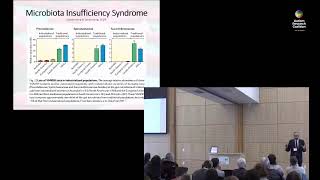
Now I'm going to apologize for my peculiar accent to start with. And I'm actually not truly an Australian. I grew up in Alberta. Don't hold it against me, I left as soon as I could. But I've lived in Australia the last 28 years, so I've got a bit of a morphed accent so I'll try to speak as Canadian as I can. And my discussion topic today is going to be the gastrointestinal microbiome and its importance to health. There's gonna be some relevance to autism specifically, but it's really trying to take the big picture here as well. And I was lucky enough to have this as chooses as a PhD topic or a research topic in 2000. So I've spent 20 years researching the gut microbiome well and truly before it was cool and the hot topic. So it's been really, it was a pleasure. I'm glad that I chose such a topic, but, but I had no idea at the time it was going to bloom in the way that it actually did. So the gut microbiota, back when I started, we call it the microflora or the gut ecosystem. And we've probably heard similar stats to this before, but 10 to the 14 living organisms, which is 100 trillion microbes, a lot. And this may be 10 times the number of cells that there is in the human body. And the reason why I say may is because we were all pretty fixed on this idea, but scientists being scientists a few years ago said no, let's have a discussion, debate around it. So now it might be 1/3 human cells versus 2/3 microbes. So we're still working out the final details, but you are still more microbe than you are non microbe. Thousand different species have been isolated from the human gut so far. And in general we live in a mutually beneficial symbolic relationship. If, if we're getting seven hours of sleep per night, if we're handling our stress really well, if we're exercising moderately consistently, if we're eating a prominently plant based rainbow type diet filled with fiber, if we're avoiding processed foods and food additives and food chemicals, if we're avoiding antibiotics, if we're avoiding proton pump inhibitors, if we're avoiding nonsteroidal anti inflammatory drugs, how many people can actually put up their hand and saying they're doing all those things? There's a few, but not many. And our system can tolerate some of those things, but you start combining those together, we get a state of dysbiosis where that ecosystem instead of Being beneficial for us is actually contributing to harm. Now, when I started out teaching this area, I was like, this is such an important organ, but very few people are talking about it. It's very much underappreciated. And I should really change this slide to becoming appreciated because I think most people in this room have at least heard of microbiome and at least some degree of its importance to health. But you go back 15, 20 years, very few people were talking about it outside some core researchers who said, this is important, we need to pay attention to it. If we were able to scoop out all those microbes and put them onto a scale, It'd be about 1-2kg in weight, which is similar in size and weight to your liver, which is your most metabolically active organ. And we now know that it actually exceeds the liver in terms of the types and functionality and the different tasks that it actually does for you. And there was a researcher back in the early 2000s from Sweden, Dr. Stig Begmark, who put forth this idea of the microbes we should be looking at as a microbiot organ. It plays critical functions in our body and we need to start paying attention to its importance. Now, some people have taken a step beyond the microbiota organs now describing humans as hollow bion. And I think in 10 years time, where all medical scientists are going to be talking about humans as beings that are composed of microbial cells and non microbial cells, rather than those bacteria growing here. And I'm human, it's like, no, what makes you human is a combination of those microbes and non microbes. So I think we're morphing towards that. Some definitions. Microbiota is a term I'm going to be using lots, which I think is less well known than the more catchy microbiome. But the microbiota are the microbes that are present in an environmental habitat. So there's going to be a microbiota in your toilet, in your sink, but we're going to be talking about the colon ecosystem. Predominantly microbiome is the microbes and their functions and their genes. So it's a much bigger picture. So a lot of what I'm talking about today is I'll be using the term microbiota, dysbiosis, disturbance or imbalance in the biological system, in changes in types and numbers that are actually causing harm. And the two terms on this page you might be more familiar with, that's probiotics, which are live microbes that when administered in adequate amounts, confer health benefits and Then prebiotics. And we're going to cover these definitions in much greater depth later on this afternoon. But as a substrate that is selectively utilized by beneficial bacteria and induces health changes. And that selectivity I've underlined for a reason, because it's important. And one thing that's often overlooked when people are discussing the concept of prebiotics, there's the human gut. And with a gut microbiota, it differs a lot as we traverse through the gut. So the stomach that bit there, we actually don't have many bacteria there. So we have maybe ten to a thousand bacteria per milliliter of stomach contents. Not many bugs. And those that are there are generally ones that we swallowed. So the ones that are in our mouth, we swallow about a liter of saliva per day. Sounds like a lot if you point that out. And each milliliter saliva has about 10 to the eight bacteria. So we're swallowing about 110 billion microbes per day from our saliva. And they go into our stomach. And thankfully, because of stomach acid, most is more cured in that time point. Hence why we have small numbers there. Move into the small intestine. And further down the small intestine, the numbers of bacteria increase and the diversity of the ecosystem increases as well. Because we're getting the same, those microbes from our saliva, but we're getting some colon bacteria that are sort of migrated more upwards. But we see the colon, the number of microbes substantially greater than anywhere else in the gut, the diversity of microbes substantially greater. And it's this when we're talking about the gut microbiome, gut microbiota researchers are generally referring to the colonic ecosystem because it's seen as the most important. And that's got a couple of factors. One is the sheer number of microbes that are present far outweigh anywhere else in the gut. 2 is the length of time those microbes have to communicate with gut cells and immune cells. Food is in your stomach, maybe 30 minutes. Food is in, essentially exits your small bowel, generally around 90 minutes. It can sit in your colon, depending on your transit time, from 12 hours through to three weeks. For some people, that's a lot of three weeks isn't good. But it's a lot of chance for communication to occur, for bacterial metabolites to be absorbed and interact with us. So what does our microbiota organ do for us? Why is this so important? We're going to cover these. I think a bit of an overview because I think it is hugely important for human health. We Know, it modulates the immune system. There's interesting research done, 1950s and 60s animal models, where they give them megadoses of antibiotics and they put them into a little sterile host, essentially eradicated their gut flora, made sure it couldn't grow back. What impact did it have? Well, it turns out that their important immune organs, like the thymus gland in the spleen, shrank. The ability of white blood cells to deal with invaders decreased by about 90%. Huge. They introduced essentially poo from rats back into it and mice. And all of a sudden, the thymus gland grew again, spleen grew, and the white blood cells started functioning normally again. We also know it plays a very important role for training your immune system to react to food, proteins and allergens and things properly. It's not normal to react to peanuts and kiwifruit and fish and anaphylactic type reactions that we're seeing more and more commonly these days. And that's because of that dysfunctional training that occurred in that early window where we had the wrong species present, which meant that the immune system did not get trained the way it's supposed to have. What we call normal gut motility also depended on the microbiome that if we actually change the composition of the ecosystem or even eradicate the microbes, gut motility stops. It goes extremely slowly. So we know the presence of microbes in the composition can alter how quick or slow gut transit time is, improves nutritional status. We know for a fair while that microbes have the capacity to produce B vitamins, but what we now know is they can produce vitamins B1, B2, B3, B5, B6, and folate in significant amounts in activated forms. And our colon cells, our large intestine, actually has pathways to utilize those vitamins. So we've evolved that capacity and that reliance on those microbes. But it depends on the composition, whether we're producing those vitamins or not. Vitamin K and even mineral absorption. Much of your absorption of calcium magnesium occurs in your colon. And how well you absorb that depends on the composition of that ecosystem. We heard that lovely talk about magnesium a bit before and going, okay, well, if your ecosystem is disturbed or dysbotic, you're not going to be absorbing the magnesium as well. As someone that has a more balanced, healthy ecosystem, you're not going to be producing the activated B vitamins that your system needs when their ecosystem is dysbiotic. And recent research over the last 15 years has shown that things like blood sugar control, insulin sensitivity very much tied into the microbiota. Composition. We now know that it can modulate brain neurotransmitters. When we eradicate the gut microbiota, brain function changes, that can happen directly. Some microbes actually produce things like serotonin, which is that sort of happy chemical. So some produce precursors, and some either drive inflammation or decrease inflammation. And we'll talk about that importance shortly. Xenobotic metabolism. Are many of you familiar with the term xenobotic? No. It's a very fancy term for foreign compounds. So there are good xenobotics and bad xenobotics to make it very simple. Pharmaceuticals research of the last couple years, and this is a, a booming area, is looking at how the microbes actually interact with pharmaceuticals. And this may explain why some people are more sensitive to medications than others. And some microbes are actually able to break down the pharmaceutical before it actually gets the chance to do its thing in certain people. For me, I use lots of herbal medicines in my practice, and a lot of herbal medicine constituents are entirely dependent upon microbiotic conversion for them to work. Things like saponins, polyphenols, polysaccharides, core components of a herb like ginseng. Most people here would have heard of ginseng before, correct? Well, if you don't have the right composition of microbes in your gut, ginseng is not going to do anything for you. It's really reliant upon that conversion. They eat those compounds, they convert them into smaller compounds, which we do absorb, that are biologically active to have effects. But when they eat it, they also grow. So when we're taking these herbal medicines, particularly ones that are traditionally been seen as nutritive and strengthening and building, like ginseng and codenopsis and Astragalus, for example, we know we're actually nurturing those beneficial gut species, and they're nurturing us in return by releasing those, making those compounds bioavailable and absorbable for us. But also dietary polyphenols. When we're eating cherries, berries, red grapes, acai, things like that, 90% of those dietary polyphenols are not absorbed. They reach the colon, they interact with the microbiota who convert them through to absorbable compounds. Again, it depends on whether they're there or not, whether they actually make those right conversions, colonization resistance. You know, we're exposed to microbes all the time. Most things we eat or drink will have certain degree, certain numbers of microbes on them, some of which are potentially pathogenic or disease causing. We know that we have an intact, diverse, healthy ecosystem. It's much harder for those pathogens to take hold, much harder for them to essentially take over some territory. You take a course of analytics beforehand, you expose you to pathogens. You could take 10 times less pathogens and have them take hold because there's no competition, there's space, there's food. And they also produce compounds like short chain fatty acids, things like butyric acid or butyrate that was Talked about by Dr. Fry this morning specifically that are key compounds for our gut health and for our gut cell health, like colon cells. Our large intestine has evolved complete reliance with 70% of its energy needs are met from bacterial byproducts. If you don't have those products being produced, your gut doesn't function the way that it should. That depends on what we feed the ecosystem and how much damage we cause to that ecosystem. We now know that weight management and metabolism are very much related to the microbiome. And I think importantly the microbiota, depending on its composition, is either contributing to or causing inflammation or it's decreasing inflammation. That's not just in your gut, that's everywhere in your system. And that to me should be a huge takeaway because we can modulate that ecosystem. So that has an anti inflammatory effect on your entire system, not just affecting gut or if the balance is wrong, we're actually causing inflammation throughout your system based on what's there. So I think we really can say a very quick overview that you can see that connection between the gut microbes that are here and, and all these other body systems that help you function properly and at the top of your game. But is this organ functioning incorrectly? In many Westerners you eat that sort of food, it certainly will. And that's where we move into dysbiosis, where there's an imbalance. This is a definition that myself and a colleague put out in 2004. And qualitative and quantitative changes in the flora, its metabolic activity or the local distribution that produces harmful effects on the host. Now what diseases do we associate with dysbiosis now? And when I started off in this area, it was relatively small list and it was generally gut related, you know. Yeah, we had things like antibiotic associated diarrhea. That makes sense. You take antibiotics, it changes the floor, you get diarrhea for sure. But people didn't think, some people still don't and some clinicians still don't, that alcohol related liver disease is actually caused by alterations in the microbiota. It's bacterial byproducts that are causing the Damage to the liver, the alcohol causes negative changes to the ecosystem, the alcohol causes damage to your guts, it becomes leaky, so you absorb more of those sort of toxic bacterial products. But it's still the bacteria that are the main driver that. But what I found extremely fascinating is this ever growing list of non gut conditions that are now being associated with quite good research in many cases with gut dysbiosis and obviously things like autism spectrum disorders on that list. But even things like anxiety, depression that you would not have necessarily seen associated with gut bacteria 5, 10, 15 years ago to things like Parkinson's disease, Alzheimer's disease, again you would not have necessarily associated them as a gut related condition years ago. Now there's two types of gut dysbiosis essentially there's what we call sibo, small intestinal bacterial overgrowth and there's colonic dysbiosis. And we're really going to be focusing a lot on clonic dysbiosis and that's really where most of the research is at has been focusing on. Although there certainly are conditions associated with sibo, but the overall importance of the clonic ecosystem is going to be the main focus and disruptions to that ecosystem. So I'm just going to run through some of those diseases that we highlighted before and look at some of the patterns that have been observed. Irritable bowel syndrome is quite common. We know that 15 to 20% of the people in this room would have IBS. So it is very common. Studies going back going okay, well people with IBS have different chemicals, gas dynamics. In people without IBS they produce more hydrogen gas for example. In healthy controls they produce different short chain fatty acids like a different ratio of butyrate propionate, et cetera. And the ecosystem itself seemed to differ. Earlier research found that they had lower levels of bacteria that you probably are familiar with, Bifidobacteria lactobacilli and then higher concentrations of a more pro inflammatory group of bacteria called Enterobacteraceae. Ulcerative colitis, less common condition, but it is common In Western nations vs non Western nations where it is immensely rare and its instances increased tenfold in the last 20 years. So what do we see there? They have a less diverse ecosystem compared to healthy controls. Lower levels of Clonic lactobacilli which we generally see as a beneficial bacteria, higher levels of sort of gut damaging and heroinhero E. Coli and low levels of two bacteria that you may not be so familiar with yet, but two species that I hope you grow to love over the course of the day. Faecala bacterium, prosnitzii and roseburea and those are key butyrate producing bacteria. And people with gastroitis have less, less than them. And research found that people even within that group of ulcerative colitis who have more of those butyrate producing bacteria respond better to treatment, whether that is dietary treatment or conventional medicine treatment. They have more of the sulfate reducing bacteria that produces hydrogen sulfide gas, which is a sort of a toxic byproduct when producing large amount that prevent colon cells from functioning properly. And there's also been some pretty exciting research about giving fecal microbial transplants or FMTs to treat ulcerative colitis, where they're essentially taking poo from healthy people, giving it to people with ulcerative colitis and their ulceratus goes away or it gets substantially better. Atopic eczema or atopic dermatitis. This interesting study where they looked at, they looked at a group of kids, they looked at their ecosystem and they followed them up to see which ones developed eczema, which ones did not. Those that developed eczema essentially had a dysbiotic ecosystem that had low levels of bacteria like Bifidobacteria that are sort of anti inflammatory gut healing and higher levels of species that are more gut damaging or have the potential to be so, like Bacteroides E. Coli in Clostridia. Plus we've had numerous studies showing that if you give the right prebiotic, the right probiotic, we can actually prevent eczema from developing in the next generation. Pretty amazing. And also treat it in people that have it now. So again, alteration of the ecosystem actually changes, you know, physical manifestations of allergic disease later in life, Alzheimer's disease. And this is going to be the new frontier, I believe. And I think there was a reading the newspaper, which is not a great source of information for such things, but there's a Chinese medication that just received approval that was based on a seaweed extract and it's essentially designed as a prebiotic to encourage the growth of beneficial bacteria. Use it to treat people with Alzheimer's and their cognition improved dramatically. Ah, okay. So you know, early stages yet, but it's amazingly exciting and it's interesting seeing these links now between certain bacterial populations that actually have the capacity to cause damage to both the gut, but also to the blood brain barrier and cause neuroinflammation. And I think this is specifically related to Alzheimer's in this slide, but I think it's much more broad than that too. Some of the drivers here, like LPS or lipopolysaccharide laser. There we go. It's also a driver. Yes, it's a driver in Alzheimer's disease, but it's also a driver in anxiety, depression, and some people would say conditions like autism. Well, it just happens to be a product that grows on the outside of many bacteria. Pick a group of bacteria called gram negative bacteria, and the proportion that that may be in someone's ecosystem can differ between 20% to 80%. And someone who has 80% obviously has a lot bigger inflammatory load, a lot bigger load of LPS in the gut. Kidney stones. Who would have ever thought that kidney stone would be linked to gut dysbiosis? But indeed it has. There's a particular bacteria that some of you in your gut will have. Will have in your gut, sorry, called Oxalobacter formogenes. It eats dietary oxalate, which we find in things like spinach for the most part, but also almonds and quinoa and a few other foods. But that's all it really eats, is dietary oxalate. When it's there, it eats the oxalate. It, you do not absorb it. When it's not there, you absorb it. And when you do absorb it, you have a much greater increased risk of kidney stones. But what I found fascinating as a clinician, because I've been a clinician for about 20 years now, too, is that there's lots of discussion in the blog issues and oxalate that were not discussed 20 years ago. And I think it's because we've done a very good job of eradicating or bacteriform genes in Western nations the last 20 years, because it's very sensitive to antibiotics. This is one study done in 2011 of people that had it at baseline. 63% of them went extinct after treatment for Helicobacter pylori, which is a pretty relatively common microbe that's involved with stomach ulcers. But it illustrates, and I think the commonality of giving antibiotic cocktails has increased dramatically. There'll be people who are taking antibiotic cocktails for Lyme disease or for a whole range of other conditions, Blastocystis dienteva and many more, that we weren't doing this 20, 30 years ago. We are giving you that a lot more now. And I think we're seeing some of the repercussions of ecosystem changes. Losses of that single species can have large repercussions. Obesity, antibiotics and obesity. And this makes sense when you think about the fact that, that in our food systems we give pigs and cows a lot of antibiotics because it makes them grow quicker. Yes, it helps protect them against infections because they live in unhygienic conditions, but the main reason is because they grow far quicker. Researchers eventually ticked to this and said, well, I wonder if we're giving our kids antibiotics. Does this relate to the obesity epidemic in some way? And it turns out that the research is pretty consistent around this, that when we give our young kids antibiotics, they're more likely to become, carry more weight into toddlerhood and later on now. And there was this brilliant study, which is actually a pretty, I'd say earth shattering study in the microbiome field done in 2006 that showed that the obese microbiome was transmissible. What this means is obesity could be transmitted from someone who had it to someone who did not have it by essentially giving them their poo. And they showed this quite clearly in this study where they have a very obese mouse. They got some of its poo and they gave it to this poor little guy who wasn't obese. And that's the outcome. And this was, despite no change in calorie input or output, they were not exercising less, they were not eating more. Calories stayed the same, exercise levels stayed the same. But you know, you get that massive change in actual body weight and body fat. So this is pretty groundbreaking because before we were thinking of gut bacteria for gut conditions, this is probably the first time we thought, whoa, it's got actually much bigger impact than we thought. The question was, can it go the other way? And there has been, there has been some preliminary positive research around that. So I'd say probably yes. Dysbiosis and depression, recent study, but they did a similar model, but this time they took feces from depressed people and they gave it in. So these little tubes to rats, they're like, okay, well can we transmit depression from these people to these rats? And lo and behold, they could end up with a sad little rat in the ability to experience pleasure. And they just started displaying anxiety like behaviors. But their neurochemistry actually changed. They stopped producing essentially as much streptophan, sorry, serotonin. Their gut transit time slowed down and they started becoming, they were more inflamed. This is all from just giving them the pooh from a depressed person. And before you think, maybe the rats just didn't like getting people poo, which is a fair consideration, they had a control group that got, got healthy, happy people's poo. They did not get depressed. So it wasn't just getting people's poo, it was actually getting it from depressed people that was the key factor. And yes, autism. This is one of many studies that have that have suggested a clear or a difference in ecosystem type between kids with autism versus kids that have not. A number of studies have been published over the years. Most have shown, not all that there is a difference between kids with autism versus their siblings or healthy controls, but studies to date have. Where they haven't shown as well is the same results per study, which is what we'd like to see. It's consistency that runs throughout the 15 different studies all showing the same thing and they haven't. And I think there's potentially a few reasons for that. One, studies to date have been small. If you're using 10 people, 15 people, 20 people, sometimes they're using people from China, sometimes India, sometimes Slovakia. So you know, you get different dietary patterns, other things that they are involved with that too. Sometimes they're comparing it to healthy controls, sometimes to their siblings who are probably on the same diet. So I think there's actually a number of things that mean it's hard to give firm conclusions to go that this is a autistic picture of dysbiosis that matches all people, because I don't think we have that sort of data. But I think the data does show that in general kids with autism have a different ecosystem than those without. Now, similarly to how we were able to transmit obesity, transmit depression, this research group was curious if we can transmit autism type behavior from autistic kids to mice and rats by doing a fecal transplant. Any guesses on the results? Yeah, autistic mice. So yep, they had some neurotypical children. They gave them their poo to these little germ free mice in this case, or they gave them poo from kids with autism disorders and they showed again that they had different sort of social communication skills and they developed repetitive patterns after the transplant. So yes, it does appear that whilst we can't necessarily define what an autistic dysphoric ecosystem looks like, we can show that you could actually pass along for a fecal transplant and conversely that there's evidence to show that a fecal transplant can actually improve autistic behavior and autistic gut function. Gut function also to kids. This was a 2019 paper which was a follow up study from a 2017 study where they essentially had kids with who are on the spectrum and they had gut dysfunction too, which is we know is extremely common. Couple weeks of Antibiotics, two weeks, then they gave like a colon flush and then they did essentially eight weeks of fecal microbial transplant. Either orally or rectally seem to make a big difference. The oral one was actually mixed in with chocolate milkshakes. So some people might argue it makes a difference versus getting a rectal depository instead. But what was interesting is that, yeah, like the first study they looked at eight weeks later, behavioral things had significantly improved, gut symptoms had significantly improved, but this was two years afterwards, behaviors were still improved and they actually seem to get better over time. Gosh, that's incredible. That by changing that there's a bunch of flow and effects that are long lasting by changing that gut ecosystem. So we looked at some of the diseases, some in more depth than others, that have now been linked with dysbiosis. Now how do we get dysbiosis? We'll look at that now. And again, I've got a limited time frame so I can't go into great as much details. I'd love to cover everything that's known to cause dysbiosis, that we'd be here for probably the whole day. But we know that some agents are particularly good at damaging that ecosystem. And perhaps not surprisingly, the top of the list is antibiotics. But each antibiotic is also different. And even within that, in terms of how each of you responds, will be a little bit different too, because we will each carry our own sort of antibiotic resistances to whatever we're getting exposed to to complicate it a wee bit. Now, early research using culturing techniques, and we're going to cover what that means later on this afternoon, suggested that quantitative changes may only look different for around 40 days afterwards. And we did a systematic review in the early 2000s. We grabbed every single study that looked at antibiotics and the impact on the gut microbiota brought it all together. And I was surprised at how little the impact seemed to be of antibiotics at that. Based on the data we had at that time point, using the technology we had with that, okay, two, three, four weeks afterwards, it seemed to look back to normal again, which was a bit surprising. But there was a study published, the Kilkenn study in 2002, suggested that maybe it looks normal, but for even almost a year and a half after a course of antibiotics, its functionality was different. Its ability to essentially break down those polyphenols that are those health promoting anti cancer compounds into something we can absorb is different for almost a year and a half after a course of antibiotics. And that gave hints that the technology we were using was too poor to actually see the changes that were really there. And that turns out to be the case. Now. When we started using molecular techniques from 2005 onwards, we started seeing that even a single course of antibiotics could cause dramatic shifts. Quindamycin 18 to 24 months after a single course, the ecosystem was still not the same. Mostly there, but not still not quite the same. He'll go back to where you take that sort of two antibiotics and a proton pump inhibitor. Four years the ecosystem did not look the same. So it's important to note that some organisms never recover and we're talking about localized extinction essentially. 2015 paper and I think I'll just read out the key thing about the quote. But the fecal microbiome was severely affected by most antibiotics for months. Health associated butyrate producing species became strongly underrepresented. Clearly even a single antibiotic treatment leads to long lasting detrimental shifts to the gut ecosystem. Single course. How many of our us and our kids are exposed to 1, 2, 3, 4, 5, 6, sometimes more courses, perhaps year. No wonder why we've got a despotic state of the population. I remember having one patient come to me, three year old, 30 courses of antibiotics by the time they were three. It's not uncommon. No, it's true. This was a great paper published in my all time favorite journal, Gut. Great name. What. So just published last year and it's a pretty cool study because they just were following a single person over time with sort of almost like daily fecal analysis to see what, what shifted and what, what stayed the same. And it was cruising along, not shifting at all because their diet lifestyle was the same. There's no real shifts. Until they gave a course of antibiotics by IV administration. Wasn't taken orally, it was given by iv. And all of a sudden this little species called Bork Foci, it went from 0.08% of that ecosystem up to 92% of what's there. And you might be curious how it got such a weird name. Look at the authors of the paper, Bork Falk, they just named it after themselves. In fact, we didn't even know that species existed up until they did this research paper. And it wasn't named until they actually did it. Thousand fold increase. Why did that happen? Because this microbe was resistant to that antibiotic, whereas the others weren't. Had tremendous space to grow into. But what's really important to me, nine species went extinct, nine species from that single course of antibiotics. So I like to tell my Patients that no Mulgadi ecosystem is like a tropical rainforest where every single niche is filled with life, lots of different species living together. Lovely harmony, balance. That's sort of after antibodies cocktail, particularly where there's not much surviving species, it comes back. Certain species that were there at 40, 50% of the ecosystem before, 20%, they will come back. But the ones that were there at low amounts before generally, often, sometimes will not. Like that person that lost nine species from that single course of antibiotics. Do we know the repercussions of that? No, because some of those nine species, we don't even know what they are, we don't know what role that they play, we don't know yet what that repercussion is. But we know that antibiotics have a number of impacts that can lead to increased susceptibility to infections, essentially by changing the ecosystem, which results in decreased immune system function. Not surprisingly, we start getting a lot more antibiotic resistant genes piling up in the gut. With the more antibiotics we take, we start changing how the immune system functions more broadly. We elevated inflammatory tone, a change in Treg th balance which can result in things like autoimmune diseases. And then we get this dysregulated metabolism where we get increased again inflammatory load and worsened insulin sensitivity. That leads to things like metabolic syndrome and type 2 diabetes, which again are very common. Other medications we need to be aware of are proton pump inhibitors. Now you may or may not know what that is, but it's the most commonly used classes of medications in North America and Australia is used to treat reflux heartburn. It's available over the counter even. What you may not know is that PPIs actually have antibiotic like effects in the gut. One of the reasons they were originally used to treat Helicobacter pylori is because it kills it. It turns out it kills a range of bacteria in our gut. Not just that. Unlike most antibiotics that we just take for a week or two weeks, the short term high, we're often taking this for months to years when people take them, sometimes multiple years. No one really knew about the impact on the gutta ecosystem until 2014 onwards when Ceto did their research and they found within seven days the ecosystem starts changing. There's a marked loss of diversity and only was partly reversed afterwards because again, once the species is extinct, it's gone. It is gone. Increased risk of sibo, increased risk of clostridioides to fissile infection. And I just flagged clostridiodes because it's just recently Had a name change from Clostridium difficile. Decreased levels of sort of beneficial bacteria like bifidobacteria in the gut. And again, 2016 study also showed lower microbial diversity, but seem to have a selective activity that encourages the growth of bacteria that we don't want, while getting rid of the benefit of bacteria we do want. That's not a good balanced ecosystem. And we also know that people that take proton pump inhibitors have increased risk of things like Alzheimer's disease. That's come out very recently with research. And that sort of ecosystem where you get lower levels of beneficial bacteria, lower levels of diversity, higher levels of Proteobacteria you would see as being a risk factor for Alzheimer's disorder because Proteobacteria have a hell of a lot of lipopolysaccharide or lps, which is that agent that has a capacity of damaging the blood brain barrier. Non steroidal anti inflammatory things like ibuprofen, for example, that most of us think of as causing gut damage. They do do that, but they also cause shifts in ecosystems, increased levels of endotoxins and increased levels of secondary bile acids, which cause gut damage and sadly lower levels of bifidobacteria and LAUGHTER Bacillus. Moving on to some foods, artificial sweeteners, which are becoming more and more commonplace. Sadly, what impact did they have on the gut storage? We looked at and we can see they had almost an antibacterial like effect on the gut ecosystem. This was looking at sucralose, specifically, lower numbers of total anaerobes and aerobes. And specifically there's beneficial groups of bacteria there and increased fecal ph, which essentially mean it. But decreasing levels of beneficial fermented bacteria results in a sort of alkalizing effect in the gut, which is not a good thing. Saccharin, increased levels of what we call pathobionts, species that cause harm in the wrong amount, and decreased levels of beneficial bacteria like Lactobacilli and Akkermansia. And interestingly enough, it actually causes glucose intolerance. So these people that are eating this, thinking that's going to help with their blood sugar control. It actually worsens blood sugar control, but it works in a different way by altering the ecosystem in the gut. Dietary emulsifiers, which sadly are very commonplace in our processed food society. Read labels, you'll find how common these compounds are. But carboxymethyl salose, polysorbon 80, they're good at making food textures more palatable for us Westerners. They're good at mixing like oil and water together so it can stick in some goop. Hence why we tend to see it widely used in ice creams. Impact of these agents, they decrease overall diversity of that ecosystem and again increase levels of pro inflammatory groups of bacteria like proteobacteria cause low grade gut inflammation and contribute to metabolic dysfunction. And it is not the ice cream you make at home that uses cream and sugar and fruit that doesn't contain it, but the stuff you buy from Safeway or Sobeys, like you know, $2 for this huge tub of ice cream has a lot of those things because it actually allows them to use vegetable and water and sugar and combine it to make ice cream. So we'll have to probably hold questions to the end, but I'm quite happy to get there. Environmental chemicals again I'm moving to them relatively quickly to try to give a spread of what we need to be aware of. But there's a lot of environmental chemicals we don't have a chance to through all of them. But I do want to flag these ones because they're relatively common in cleaning products and in toothpaste, diethyl phthalate, methylparaben and triclosan. This was a rat study but it showed that you know, they were using like amounts that humans could be exposed to if they're using the home caused shifts in that ecosystem. Again an increase in that Proteobacteria population, which is that sort of protein pro inflammatory group of bacteria. And importantly it actually have a bigger impact on adolescents, kids. Ecosystems are far more fragile, less stable, more easily influenced and damaged. That's a good takeaway. Now triclosan, which is a potent antimicrobial compound, is rife through toothpaste. And in that dose you get in the toothpaste that you swallow is enough to change the gut ecosystem. And it's not necessarily on the label of that toothpaste. But pretty much every single commercial toothpaste will contain triclosan. I'll touch on Roundup just because it's so commonly out there. Glyphosate. Another rat study where they gave it essentially during gestation to 125 days postnatally. And it did change the ecosystem. But primarily the next generation, not necessarily mums, which I thought was fascinating. And the biggest impact again was in the younger like pre pubertal age as well. But other persistent organic pollutants, other plasticizers have all been linked to changes in gut, et cetera ecosystem as well. So this is just a small snippet of Chemicals that we're exposed to that cause harm. And diet, even excluding those dietary additives, etc. That we're exposed to, are we eating diets that actually cause the dis body ecosystem? Some of us are definitely. And some of the ones on this list will be perhaps surprising because they're quite commonly discussed on the blogosphere. But like high protein, low carb, for example, we know this is a study done in humans, 2007, they found a 50% decrease in Bifidobacteria populations within just four weeks. And Bifidobacteria is really one of those clear beneficial groups of bacteria that we don't want to decrease by 50%. Also decreased butyrate producing species like Rose borea and eubacterium. Dr. Fry was talking about the importance of butyrate. It's an amazing substance. What we feed or don't feed our ecosystem determines whether we produce and how much butyrate we produce. Most of the compounds that feed our butyrate producing bacteria are in plant fibers and starches. You cut out plant fibers and starches, pickle resistant starches, oligosaccharides, your butyrate production goes down, your level of butyrate producing bacteria goes down, which is what we saw in this study. Ketogenic diet, also very popular on the blogosphere these days, increased populations of the sulfovibrio, which is a hydrogen sulfide gas producing species, it's a pro inflammatory species. Now this one sort of eats animal protein, so it wasn't surprising that its population goes up. Sometimes we get fixed that bacteria only eat sugar. That's completely wrong. Certain bacteria eat protein, certain bacteria eat bile, certain bacteria, a range of different fibers, and some eat sugars too. But I think sometimes people get the idea that sugar is the only thing that feeds bad bacteria in your gut. No, it's completely wrong. Low carb, high fat diet, again, significant reductions in bifid bacteria populations, decreased butyrate concentrations as well. So that's again a human study. But I do want to flag that both these meals are keto, but they're quite different as well. So I do think there's a capacity of doing a ketogenic diet if it's well indicated for a specific condition for a short period of time, that you can do it with one that's former based on bland food. But you need to make sure you're supplementing with additional prebiotics, additional fibers like psyllium and probably more to try to offset some of the damage you'd otherwise would get with Such a diet, and I don't tend to recommend you do it in diets, but I do know from research there are specific times and windows which they might have a application for, but I think we need to be cautious around them. And sadly, lastly, our diet, standard Western diet of things like what are they called? SpaghettiOs, we call it when I was a kid. Now, the standard Western diet we know is low in polyphenols. It's low in dietary fiber in total, but low in fiber diversity. You don't eat much of different sorts of plant food. We tend to be stuck with this eating wheat bread, maybe a banana and an apple. Not much diversity. Standard Western diet, high in processed foods, high in food additives, high in food chemicals, and it's low in what we would call microbiotic accessible carbohydrates and low in polyphenols. And this is important because this is what feeds the good guys in your gut. If you don't eat these things, you do not feed the good guys in your gut. And this is one of the main problems with the standard western diet is we don't eat much of those things. And I love this quote. The Sonderbergs are a microbiota research team in California. The Western diet starves your microbial cell. There's a few different concepts in there, but as I was saying before is that your microbes are immensely important for making you who you are. And if you don't feed them, those cells aren't being nurtured and nourished and there are repercussions. Now I also want to flag some natural medicines that are also capable of inducing dysbiosis too. We certainly talk about pharmaceuticals, etc. But I think we also need to flag certain and I put natural medicine in quotation mark for something called citrus seed extract. If many of you heard of citrus seed or grapefruit seed extract. Yeah, it's not natural. Despite the name, it is actually spiked with Ben, Thodium chloride, triclosan and methylparaben, which is why it works as an antimicrobial. If you take those antiseptics out of it, it does not work as an antimicrobial. So chewing on citrus seeds, not a problem. Taking a grapefruit seed extract is a problem because it's got these antiseptic compounds in it. And it seems like it's deliberately spiked because they seem to be changing the ones that they find in there now into different chlorinated compounds. So not good. When I did some research in my as part of my PhD looking at the impact of herbal supplements on the gut microbiota, it was in vitro test tube. Citrusy D extract was worse than the worst antibiotic because clindamycin, in terms of the breadth of bacteria that it killed, it was better at killing the beneficial guys than it was pathogens and so not recommended. But it's not natural. I think that's the key thing. I really want to get across that if you're going to be taking a synthetic antimicrobial, take antibiotics that at least in human clinical trial, you know what the impact is. Don't take these sort of hospital grade disinfectants that are used for topical purposes internally. Many of you heard of berberine? Well, it's an alkaloid found in certain herbs that's isolated out because it works as an antimicrobial, has impacts on blood sugar regulation as well. But often it's used as an antimicrobial. My research suggested it was not particularly selective. It was good at killing bifidobacteria. It's not a good thing. And my clinical experience with working with patients and stool testing suggests the same. It seems to decrease overall diversity of the ecosystem with continued use and targets bifidobacteria, which is again not a good thing. Enteric coated essential oils, you know, essential oils, we have to remember that they're very potent concentrated plant extracts. That it might be giant fields of oregano or oregano that go into making like one little drop, super concentrated. And yes, it does kill things very well, but it also can kill your beneficial bacteria. So we need to be cautious around that. Personally, I prefer using herbal tinctures of things like oregano or clove thyme, similar herbs, but in a less potent, less concentrated form. And I think we need to be very cautious around these biofilm vesting products too for a few reasons. One of which is that most of these formulations have got no tradition of use and don't have human studies showing the impact on the gut. You know, they're designed to break down bacterial biofilm. But what does that mean in the gut? Yeah, it does it in test tubes on pathogens. But do they test it against beneficial bacteria? No. And the thing is is that it's not like just bad guys live in biofilm. All the bacteria in your gut live in biofilm, including all your beneficial ones. So if you're breaking down biofilm, this is which is the sort of protective coating around beneficial bacteria, is that going to have a good outcome? Alright, so we've covered a fair bit of material that's looked at causations of dysbiotic ecosystem. And I love this concept from Martin Blaser from New York. He's brought up this idea of the disappearing microbiota hypothesis. Humans and our ancestors have evolved since most ancient times with a symbiotic microbiota. But through modern medical practices, lifestyle, dietary changes, this ecosystem is changing, sometimes to an extreme degree. We're now drinking chlorinated drinking water for the first time, chlorinated bathing water, which means we don't get exposure to microbes in the way that we used to. And there's pros with that too. Obviously somebody upstream in your creek had salmonella, they pooed it and you drank it. Well, we'd get salmonella. But if that person had a beautiful healthy ecosystem and you were exposed to their bugs, it was a way of replenishing your stock that you may have otherwise lost. You know, we know kids born by a C section are, have a different ecosystem sort of passed on to them. High rates of preterm and infant antibiotic use, again, have big impacts on that ecosystem because as I mentioned before, the younger you are, the more fragile and easily shaped your ecosystem is. There's a lot of species that are teeny, tiny amounts infants. And all it takes is of course, antibiotics to really wipe out a decent number of species that are then gone. Widespread antibiotic use throughout life, reduced breastfeeding rate. So we tend to often, as Westerns think of breast milk as a food. And yeah, it is a food for infants, but it also contains 100 plus species of beneficial bacteria that the mum is passing on to the next generation. Contains special prebiotic sugars called human milk oligosaccharides that are almost specific to the family line to help encourage that mom's bacteria that grow in the next generation. And we take that out of the mix, we can't possibly have such a diverse ecosystem anymore. And we're using tons of those antibacterial soaps and sprays and creams, particularly because we've got kids. We're like, we want to make sure it's clean. No. And they argue that the disappearance of ancestral indigenous organisms is not beneficial and has consequences. And we're living with those consequences and we're seeing those consequences now. Another image from Martin Blaser and team. And what I liked about this image, it kind of shows what's going on. So the previous generations, back before antibiotics, before sort of the sort of western diet, et cetera, and when essentially birth was a much more normal process of vaginal Birth, breastfeeding is like that. The vertical transmission of mom to the next generation happened very cleanly. We all had this replete ancestral microbiota that the mom passed the next generation. We were living in conditions where close proximity to other family members, less hygienic. So there was a lot of chance of mixing microbes. Might be in the bathroom playing with other kids or the creek playing with other kids. And there's a way of changing microbes around. Makes you think of a study that was just done in Japan. In the Japanese hot tubs, they're able to actually pass bacteria between each other, like bifidobacteria, whereas us in our chlorinated hot tubs cannot. And we had this evolution with these microbes so that when the right blend of microbes is there, our immune system is trained to function properly. You skip forward a few generations in time because we have a depleted microbiota that gets passed on from generation to generation. You can only pass on what you've got. And, you know, the previous generations maybe had a spread of this many. Maybe we're here now, but that's all we can pass on to the next generation. And every course of antibiotics they take, all the Western dietary protocol, antibacterial products, it gets diminished. That's what they can pass on to the next generation. But we can see that, that lack of. And we also have little chance of regaining microbes back because they don't get that contact with fecal material from other people like we used to in previous generations. So there's no way of repleting that microbiota. It's altered how immune system functions, which is why we're getting peanut allergies, fish allergies, why we're getting autoimmune diseases that are going through the roof. The Sonderbergs put it a little bit differently. They call it the microbiota insufficiency syndrome. And they've. I like what they call the vanish tax. What we in Western countries don't have anymore. And what's interesting with some of these bugs, like within the Spirocataceae and the Succinovirbonaceae, we don't actually know what they do. We don't know what they really are, but we don't have them. And our ancestors did, traditional cultures did. And they might make up 30% of that person of that generation, that class ecosystem, whereas they make up less than 3%. And they would argue we're seeing the repercussions of that now. So disappearing microbiota has consequences. Diabetes, Alzheimer's, depression, anxiety, rheumatoid arthritis, virus, et cetera. And what we'll talk about this afternoon is test to assess the health of that ecosystem and what tools we can use to try to bring it back into balance. And that's really it for me. And I think we'll probably save questions for later on. Yep. Cool. Thank you.
More from Dr.



Ep. 72 Interview Dr. Jason Hawrelak: The Last Microbiome Episode You Will Ever Need







