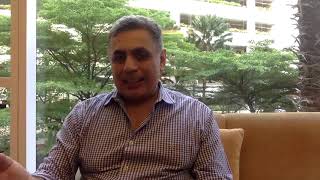
Dr. Allen Nazeri teaches doctors and dental teams how to present treatments without hard selling. His system covers the full patient journey from first contact through payment collection, and he says it has doubled or tripled production in practices that use it.
Chapters
Doctors often ask me, what do I cover in the communication sales training program.
Well, I actually go into depth about communicating with patients and I teach doctors and their teams how to become an effective communicator with their patients so they never have to sell anything to the patients.
What I teach them is a way of communicating with patients so they can collaborate with patients. When they have mastered these communication skills, the patients really tell them what they want to do and the doctors and the team really never have to sell anything.
But it's very important that we get our patients involved with the treatment. The old days are gone. When a doctor basically tells a patient what to do, patients often come to our offices and practice with more information than I typically can have because they can obviously search it on Google and Bing and they have a lot of information.
So the doctor of the future is one who can collaborate well with patients, can get the patients involved with their treatment, listen to them carefully, and be able to have the skills.
Necessary to do what the patient requests to do. Now, I know sometimes technically that's not possible. That is not what I'm talking about here. But understanding the entire sales cycle is absolutely important for doctors and their team members. So let me cover with you what I actually cover in my sales cycle. Well, the first thing I cover is about the contact you have with the patient.
That contact is absolutely important. It used to be 20, 30 years ago that the first contact was through the telephone. But now with all different social medias and different ways of patients being able to reach out to us, we have many different ways they can come to us. So how do we make that contact? An impressive.
Scenario for the patient, that the patient, as soon as.
They connect with us, they feel the difference. We discuss in details about emotional turn offs, what they are, and also the importance of elevator pitches, why elevator pitches are important.
So your team and yourself can all sound pretty much the same when explaining a dental procedure. We discuss about handoffs, why handoffs are important, why it is important for the entire team to be able to be involved in the sales cycle, to hand the patient off accurately to the next person. We go into depth of why handoffs are important. You know, increases patient safety, increases the communication, increases the trust between the patient and the team. Then we go to the next section which has to do with clinical assessment and discovery. And this is basically where I teach you how to ask good, proper, thorough questions and really understand the patient's problem before you can offer a solution.
If a patient tells you.
That.
They have been missing a tooth for 40 years. There's no way in the world.
If that patient has no problem missing that tooth, that you can sell an implant or a bridge to that patient. So don't even try it because you're going to come across as a hard sales hardcore salesman. What you need to understand is you need to ask good questions and discover the patient needs and wants and base your treatment plan based on that. It is that simple. You really don't have to do any sort of selling, but you do need to become comfortable with asking good questions. See, most doctors are comfortable telling patients what to do. They're not comfortable asking questions. They do not ask good questions to get great answers.
From there on, then we'll discuss about the presentation phase.
When do you present a complex treatment to a patient? Do you do it all on the first appointment or do you do it next appointment? What if the patient has a complex treatment but has already seen another dentist? Do you present it at that appointment or do you wait? See, I go into detailed scenario.
With our students so they can understand how they can apply it to their daily practice. What time of the day you present. It's important.
Where you present is important. Most doctors, they like to use their dental office.
And they do not have like a consultation area separately. Fine. But there are number of things you need to know so you do not kill that presentation.
Then from there on we discuss about objections. How do you handle patients objections? Well, patients objections come in many different ways. The most common ones are painful. Doctor, is this going to be painful? Are you going to hurt me? Because if it's painful, I don't want to get anything done. Time.
How long is this going to take? Do I have time? How many appointments do I need? Take off from work to get this done? And obviously money. So how do you handle these objections? And there are some objections that are totally unspoken of which are the most difficult objections of all. So we discuss how to handle these objections. Then we discuss about coming into an agreement with a patient and that is considered closing.
You can have all of the conversation in the world with the patient. But if the patient doesn't book an appointment and doesn't pay you, simply that has been the most expensive conversation. So you need to understand how to ask for a good appointment, how to book the appointment. And your team needs to understand how to collect.
Either the entire amount.
Or a large deposit. So it decreases your no shows and cancellations. So I go through all of these techniques to show you how a modern progressive practice must be run in today's economy.
We also Discuss about follow ups how do you follow up with patients? Why you need to follow up with patients whether they have already came to your office and paid you or they have not. Then we discuss about other techniques which can help.
You move your over the counter items such as bundling, upselling, cross selling, cross referrals. So the sales communication, training. It's about teaching you the techniques to communicate effectively with patients. We never have to sell anything, but you ask questions. The patients want to buy it, they buy it from you. If they like you, they would trust you and if they trust you, they will buy from you. As simple as that. So.
This work has been 30 years of my work, three decades of my work, fine tuning it and putting it into application in my everyday practice for many years. And I have taught this to dentists and doctors, plastic surgeons, other elective type doctors across the world and I know it works. Every time they take the time to learn the principles and apply it, I see their production doubles, triples. In some cases.
They end up having 10 times the amount of their regular production per hour. So I invite you to join me for either my three day boot camp and we can customize that for your office. We can provide you an online training for a three day boot camp or just order some of the videos that we have regarding these trainings so you can watch it at your own pace with your team and learn everything in detail. Thank you very much for your attention.