Top 20 Must Common Sense Customer Service for a Dental Practice | Dental Practice Management
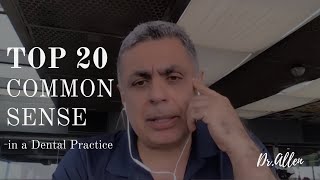
Dr. Allen Nazeri shares 20 customer service tips for dental practices, from answering phones promptly to using patients' names. He emphasizes staff empowerment and draws on lessons from a hotel stay in Yangon during the 40th Myanmar Dental Association meeting.
Chapters
Good morning, guys. This morning I want to talk to you guys about common sense in customer service. See, common sense is what separates professionals from amateurs. Everybody can say, you know, they have great customer service, but what it comes down to is, does your team have common sense when dealing with customers? See Nordstrom, which is one of the top customer service focused retail department stores in United States. Their employee manual is just the one page and basically it says, use your common sense in all of your interactions with customers. And that is so important. And I started realizing this.
You know, I realized it for a long time. But the reason I'm doing this video is because yesterday I checked into a hotel here in Yangon in Myanmar where I'm visiting for the 40th Myanmar Dental association meeting, which you know, is absolutely gorgeous hotel. I mean, they have some of the best hotels anywhere in the world. Five star hotel by the lakes, absolutely beautiful. I walk in, they are checking everyone's temperature and they're doing the little hologram thing to make sure you don't have coronavirus. Everyone in the hotel is wearing masks and gloves and everything else.
I'm booked to stay there for two, three nights. And I had had a couple of interactions with them which I think is, it could have gone a lot better by the employees just using plain good old common sense. For example, I asked one of the employees if I could get a mask from them because everyone was wearing a mask at the hotel that they're working there, the personnel and they're wearing gloves and everything else. So, well, sorry sir, we cannot provide you a mask. And this is a five star hotel where you spend a couple hundred dollars a night. And you know, so when people don't have common sense, it really affects the business and affects the customer service. I had also another interaction with them where I wanted to.
Change some foreign currency and to go and get registered for the dental meeting. Because I had to register for a dental meeting before I could actually.
Get the discount that comes with the dental meeting. But then I go to the counter and ask them and I'm all dressed up with a suit and everything, ask them, hey, you know, I want to convert, you know, 100 to US dollars. And they say, well, since you're not a registered guest, we cannot do it, you know, and they point me to an atm, which is far away and so forth to go get it. So anyway, when people don't use common sense, it's a big problem. And part of it is the manager's problem or the leaders of the company because they do not Explain policies made.
In the company, why those policies are there.
And they don't tell people, hey, you got to use your common sense. So what I decided to do this morning is I wanted to Write down.
Like 20 the top 20 common sense things that I notice when I visit dental offices and my clients so you can see which ones apply to your company and hopefully you can eliminate those from your, from your list, from your company. So let's go through them. Tip number one is answering phone on time. So this is a common sense. If the phone is ringing off the hook, nobody's answering it, it's a problem. So answer the phone on time. Not putting people, that's number two, not putting people on hold for a very long time. If you have to put people on hold, either ask for a long time, either ask them to call them back or go back and let them know they're going to be on call if it's okay with them to hold. Number three, this is a biggie, is not responding to emails and texts. As a matter of fact, this is one of the most unprofessional, unethical. I mean, it's the lowest standard when somebody sends you an email and you do not respond to them. This is absolutely out of international standards. This is absolutely impolite, where people have to follow up on the emails that they have sent. Number four is.
Not acknowledging people when they walk in at the dental office or at any professional office. You know, they're busy, we have phones ringing, got stuff going on. But you still have to take the time to acknowledge people when they walk in by just raising your hand, say hello, and so forth. Number five, not explaining why they have to wait. Sometimes when we have multiple doctors in a practice, some patients may have to go see a doctor.
And they may actually arrive later than the patient who's waiting. So I think it's a good idea to explain because.
A wait that is explained always seems definitely shorter. Number six, inform.
Patients if you're running late ahead of time so they don't come in and they just wait for you for, you know, a long time. Number seven.
Not touching other items in your dental operatory with your gloves. Okay, this is absolute. No, no. And sometimes I see, you know, people just picking up their phone or doing other stuff and then going back to the patient's mouth and using the same gloves. Number eight, sitting up patients when you're talking to them, not having them lay back and hover over them. If you're talking to them about something, procedure or financial matter, sit them up upright and take off your glasses and mask talking to them. Number nine.
Not calling the patient the same evening or next day, see if they're doing okay. Not following up somehow, assuming the patient is okay, Assuming that patient has no complaint. Number 10.
Charging people for piteous stuff like, you know, if somebody is spending a lot of money in their practice and so forth and they want a toothbrush, give it to them. Don't, don't be, you know, don't say, you know, this is going to be $1.50 or $2, you know. Number 11.
Asking patients to bring money to the appointment, that's also one of those non common sense things because people know they have to come and pay. So asking them is not good, especially if you're informing them about the fees. There's no reason to ask patients to bring their money to the appointment. Number 12.
Not empathizing with people when something goes wrong.
And really, empathy, empathy is what makes good customer service. And you should not just wait for bad things to happen to resolve the issue through your customer service. Just common sense. If you've been wrong someplace, just apologize. Just try to get it right before the patient actually leaves your practice. Number 13.
Not engaging with customers and building rapport. This I see a lot where patient comes in, they check in, but the front desk is busy doing their own stuff. There's no rapport building, there's no relationship building. They hardly even look up at the customer coming in. So not engaging patients into regular.
Conversation and so forth is one of those things that just all about common sense. Number 14, not being an active listener. So basically.
You know, you should be asking a lot more questions and understanding and clarifying the situation rather than talking and keep coming up with the solution for the patient. Number 15.
Putting other employees down in front of a customer. So if there's a problem, you know, blaming your system, blaming your, you know, your manager and all that in front of a customer. This is common sense. You cannot do that. You cannot treat people like that.
You know, whether it's in front of customer or other people. So, so if there's a problem, you need to deal with it on a private basis.
16.
Not thanking customers and saying thank you, please come again and welcoming them and also.
Wish them well on the way out. And that goes for everyone in the office, not just the doctor or the assistant who saw the patient. Number 17.
Common sense thing, not using your cell phone when you're talking to a customer, you need to give them undivided attention. Not looking at your cell phone, reading Your text, checking your messages while you're talking to them. That's a common sense thing. Number 18.
Not knowing how a customer needs to be addressed and, and basically assuming that they want to be called by their first name or Last name or Mr. And Mrs. So ask them, how may I address you? How may I call you? Number 19?
Just be excited. Have people that are excited to be at work. You know, I mean, Disney puts it in a good way. They say, you know, when you're on a stage, you put basically your theatrical hat on. So excitement is contagious in any environment. So be excited, be positive. Even though you have had the worst.
Day of your life or had problems at home, that's not a customary issue. So you really need to use common sense and try to feel and make yourself feel different. And number 20, use of the customer's name. At every occasion, a customer's name is golden to their ear. So it's very important that everyone in the office use the customer name and acknowledge them the way they want to be acknowledged and using it. So these are just some common tips. I hope you guys can add some other common sense tips to this video or comment below. I don't know where you guys going to end up watching this video, but if you, if you could add to the comment, that would be great. But remember, common sense is the foundation of any good customer service. And without empowering your people to use common sense.
It'S very easy for people in this fierce competition that every day, better offices, better businesses that are focused on customer service and trust training keep developing. This is Dr. Allen, if this is the first time you're reaching me, I help doctors and dentists to develop, scale and exit from their businesses successfully. If I can help you in any way, please feel free to contact me and I hope to see you guys at one of my courses soon. Thank you very much.
More from Dr

Growing Bigger vs. Growing Better: What Buyers Really Value | PRIME exits® #moneytips #learnbusiness



Can Your Business Survive Without You? | PRIME exits® #learnbusiness #growbusiness

Is Your Business Transferable? #exitplanning #millionairemindsetunlimited #business

The 5 Clocks That Determine When You Should Sell Your Business 👀 | PRIME exits® #exitstrategies



What Is an Exit Window? And How Do You Know Yours Is Open? PRIME exits® #businessgrowth #success

The Hidden Risk of a Partial Exit - PRIME exits® #billionaire #millionairemindset #success

The Hidden Risks of a Partial Exit Founders Need to Know | PRIME exits® #successmindset