Busy Brain and Stress: How to Quiet Your Mind and Support your Body and Mind to Recover
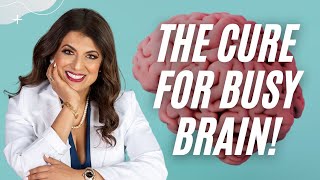
Dr. Romy Mushtaq explains busy brain, a pattern of neuroinflammation from chronic stress that causes attention problems, anxiety, and insomnia. She describes an eight-week Brain Shift protocol focused on sleep, hormones, inflammation, food, and technology, plus microhabits like sleep reset and digital detox to reduce neuroinflammation.
Chapters
Hi, I'm Dr. Donnie Wilson and welcome to How Humans Heal Today. I'm excited to introduce you to Dr. Romy Mushtaq. She is a board certified physician in neurology and integrative medicine and she specializes in understanding how stress affects us, especially in the workplace, and has studied over 17,000 people and found that one of the common patterns is what she refers to as the busy brain. In fact, now she has written a book called the Busy Brain Cure the Eight Week Plan to Find Focus, Tame Anxiety and Sleep Again. And you all, for listeners of the How Humans Heal podcast, know how much I like to talk about stress and how it affects us. So you can only imagine how excited I am to have Dr. Romy here with us today. Thank you for joining us.
Oh, Dr. Donna, it's such an honor to be here with you, especially someone who has also worked in this space as long as I have and really thank you to your listeners. I don't take their time that you and I get to talk in between their ears for granted. Honored to be here with all of you.
Thank you. And, and really it's, it's so cool that your book is out now and all of your research and, and being able to put these tools into. Finger into people's fingertips, you know, what can they do? So just talk us through a little bit more your work, because I know you. You work in corporate wellness and you've helped thousands of people in corporations to prevent burnout or recover from burnout. Tell us more. What is that like to work in corporate wellness? What does that look like?
You know, I think when I transitioned from traditional neurology and I was here in Florida and integrative medicine, seeing patients one to one, Dr. Dania, I felt kind of frustrated thinking, why am I waiting until people have gone like you to dozens of doctors, they can't find answers. They're hanging on a thread. In my practice, you know, I would often see people who are the perfect clean eaters and doing everything right and exercise and hormones are balanced and they were still having issues. I didn't call it busy brain back then, but I just remember thinking, I can't scale this. Number one as a businesswoman, but two, what if, if I was so bold and said, I'm going to go to corporate America and be like, hey, CEO Chro, like the way things are happening right now, you're going to kill your people. The stress can kill. I should know. It almost happened to me and I'm a brain doctor and it just started that way. My path started early on, talking, before it was a trend, mindfulness for stress management, meditation. I was healing teams through that. And then the global pandemic came and I wasn't this out of box speaker introducing the brain science of mindfulness anymore. And we were doing virtual talks initially in the pandemic until we opened back up. And I Learned really quickly. Dr. Donnie, nobody wanted to hear, eat berries, breathe. Everything is going to be just fine. There was something deeper going on and I had already started to research this concept of the busy brain and then it just came into fruition. Was the old paradigms of stress management that are really out there on social media or out there in a lot of the corporate wellness programs are completely out of date. In this post pandemic world. We have different patterns of stress and inflammation that have shown up. So I wanted to research it and I did. And then we found the cure. And so we've been taking so many companies this eight week protocol and it just came about like we need to write the book and share it publicly. And so you and I are here and the book has gone a global release from HarperCollins in multiple languages. And I really feel strongly that we can't put a band aid over burnout anymore. And you have to look at specific things that burnout can lead to. And in high achieving professionals, busy brain is such a common pattern. And I, I know we can make impact and talking to people about these symptoms. So thank you for asking.
Absolutely. And, and I want to just for people, you know, listening, what is, what are the symptoms of busy brain? I mean, we can kind of probably imagine like, okay, busy brain. We've all been there a little bit at some point or a lot at some, a lot of times. But yeah, what does that look like? The busy brain being busy is different.
Than a busy brain being busy. You know, we all have moments, myself included, where we feel busy and not productive. Right. A busy brain is a specific pattern of neuroinflammation in the brain that you and I can break down in a second. That when you have chronic stress or burnout that goes unchecked, specifically affects the limbic system and the hypothalamus of the brain and causes these triad of symptoms. Difficulty focusing all the way to adult onset ADD or adhd, attention deficit disorder and anxiety and insomnia, difficulty falling asleep or waking up in the middle of the night and difficulty going back asleep. So it's a hyperactive state of the brain that's been caused by sitting in chronic stress and inflammation and how do you know you have it? Well, one, we will put a link in the show notes to the busy brain test. It's for free. It's what we use to research 17,000 individuals who took the test. But two, what was really important that we found was people are stuck on what we call the stimulant sedative cycle. It's kind of like, girl, Donnie, don't talk to me in the morning until I have a cup of caffeine and I'm going to tell you it's a venti latte, but really it was three energy drinks, you know, swallowing down maybe aterall or Ritalin. And you can't focus during the day and you're getting anxiety so you keep having caffeine or maybe a little sugar for that false dopamine boost or that quick dopamine hit. And now you're wired and tired and so you go home. You heard Donnie and Romy on the podcast today. So you're like, I'm going to stand on self care and Sweep and everything Dr. Donney tells us about. And you can't shut down your racing, ruminating thoughts. So you're let me have a sedative like alcohol, a glass of wine or three. Or if you don't drink alcohol, maybe a prescription sleeping pill or anti anxiety pill. And that cycle will further fuel the inflammation that you wake up, difficulty focusing anxiety, rebound anxiety all over and then you need a sedative at night that's going to fuel that. So it's this vicious cycle of the stimulant sedative. And that's a busy brain.
Yeah, and I see that so often in practice. Exactly that. And, and, and I think that it's very common out there. In fact I, you know, we are so often now reaching for like you're saying these substances to just help us keep going because of course we have our job, we have our dead, we have our, you know, to do list.
Yeah, you, you're, you could be parents of young children while you're working full time or caregiving elderly. Like there's no shame. Like the people I serve are high achieving professionals. Like honestly, Dr. Dani, I don't know about your crowd, but not a lot of them are the entrepreneurs that figured out the four hour workweek. They love their jobs and maybe they spend four hours a week just on philanthropy work, you know, outside of full time jobs and parenting. Right. How about you? Is that what you see? I really have compassion.
Absolutely. Oh my gosh. For sure. I mean this is the Thing, it's just people who are trying to do to get by, to.
Make money for their families and run their businesses and even sometimes running non profit organizations. But you know, feeling like, hey, I've got to push myself to get through this list. And I think we, you know, to some degree, of course, we're kind of brought up to be these high achievers, high expectation and you're, we're doing wonderful work, but at the same time we're wearing ourselves out.
Yes.
And it can show up like you're saying in this, you know, what, what seems counterintuitive, being tired and wired at the same time and, but it absolutely can happen. And I, I want to dive in more to these concepts of neuroinflammation because I'm constantly talking about neuroinflammation and I love to get to talk about it with you.
Yeah.
And to say, you know, for other people to help to understand neuroinflammation because it's so sometimes right when we talk about a neurologist or something that's in their brain or nervous system, I think there's still a lot of concept that the brain is separate from the rest of our bodies and that we can't, we don't have access to create change in our nervous system. These are some of the myths right. From the past. What would you say about, you know, breaking these myths and.
Let's do that. Yeah. So, you know, in chapter one of the book, you're going to read the great story of how I started my great downfall as a practicing neurologist and doctor and researcher. And in that chapter you also get the story of my travel boyfriend, Delta Airlines, they gave me a behind the scenes tour of Atlanta Hartsfield Jackson Airport. And I describe that your busy brain center is like a airport traffic control tower at Atlanta Hartsfield Jackson Airport, the busiest airport in the world. And we forget that if a storm goes through Atlanta, which is very common between the months of April and September, that, you know, flights have to be grounded and can't land or take off until the storm has passed. Well, that's not only Atlanta Hartsville Jackson Airport, they're connected to a global airspace. So now flights all over the US In Asia, in the Middle east, in Europe and Africa are getting delayed and canceled. That's exactly the way our brain and body works. Our airport traffic control center, specifically in a busy brain is both your limbic system and hypothalamus have connections like the global airspace to the rest of your brain that affect your memory, your Mood, your vision, your sense of balance and the rest of your body. And so every organ system is affected, from digestion to breathing, immune system, hormones, all of it. And it can be a different pattern for everyone. When you have a busy brain, if these symptoms go unchecked, you're going to be like, oh, yeah, is that unchecked sugar diabetes? Is that part of a busy brain? And chronic stress? Yeah, that joint pain, why is that old injury in my back acting up from college sports? And that's all the long unchecked symptoms and that. And so it's a field that. I don't know about you, Dr. Donnie. I love learning. And I take it you are a sister in medicine. You do too. If I had all the time in the world, I'd go back for a PhD in psychoneuroimmuno endocrinology.
It's my favorite.
Right? Same. And I know you discuss it all the time on your podcast, and it's psycho is your mood and how you're processing emotions that can affect neuro. The structure and function of your brain, endo your hormones and immuno your immune system. And it's all linked. And that's how this happens. But there's like a specific thing that happens inside a busy brain that's beyond these old concepts that you hear so many people talking about when they're talking about stress management of, you know, elevated cortisol and the acute stress response. It's very different. And you and I know, and I think it's important to tell our listeners of chronic stress. And that's what I'm here to talk about.
Absolutely. And it's, it's so important because psychoneuro. Endocrine. Endocrine endocrinology can sound so complicated, but it's really to say that our bodies are all interconnected, that our, our mind and our body are one really. That it's all in. In a communication and that. And that when we're, of course, when we're under stress, which I think so many times, people dismiss stress because of course, sometimes we feel like we can't do anything about it when we're in our busy lives. But though just being human can disrupt these different signals, and the key is that we can do something about it. We can, we can reverse these imbalances that are caused by stress and that are causing this busy brain situation.
Yeah.
And I know that you've developed a protocol that they call the shift protocol. Right. To help.
Brain shift. Yep, the brain shift.
So tell us about that. Like, because I think as people understand that, okay, things are getting thrown off, yes, they can this busy brain and they can do the busy brain test. But now you're saying, hey, this is a protocol you've been using in your corporate wellness programs that's helping people. Tell us more about it.
I will. So you know, the first key is you said something Dr. Dandy I wanted to repeat because it's so wise is everybody walks around in today's world saying who isn't stressed out, who isn't burned out. I'm a neurologist. There's a practical side of me too. I want to give it a number and get a brain score. And so you take this for free. If your number is above a 30, we know you're starting to trend towards chronic stress and burnout. And the higher the score, the more likely you have physical symptoms. 82% of people that took our test have a score above 40. So this is what we were dealing with. And so these, like I said, eating berries and breathe wasn't going to work and we needed to get to the root cause. So brain shift. The shift is an acronym that covers five key areas that can be different for everyone that we get down to and treat. The root cause s in the shift is for sleep or your circadian rhythm. H is looking at hormones, specifically thyroid. And men and women in this particular busy brain protocol I is markers of inflammation. Looking at vitamin D3 methylation disorders, insulin. F is how we use food to fuel ourselves without going on a diet. There's not a cleanse in my book. We actually eat comfort food. And T is technology, the role of technology. So we look at all of those things and how when we're under chronic stress, they can become out of balance. And how we do microhabits or little brain shifts in an eight week protocol that stack upon each other to help heal them.
I love this, these concepts of a micro shift because so much of the time I find myself encouraging patients that making small steps actually still leads to big changes. So tell amiga it is.
You know, when I first started prac both when I was a neurologist, people would get this complex plan for me. And same in integrative medicine, right? We give people something for their mind, something for their spirit, their body. They would walk out and it was overwhelming and feels like a full time job to do those. And I, you know, I deal with high performing individuals that don't have the luxury to slow down right with their lives. And I thought what are simple microhabits that people can do that stack upon each other week by week over eight weeks. That can actually help help to calm and heal the neuroinflammation, reset the circadian rhythm, and heal all the downstream issues. So the first step, or week one, is to take the busy brain test and face the three evil cousins in our brain. Denial, rejection, and projection. I call them. When, when I have a busy brain, the voice of judgment shows up as my aunties. And people are going to have a lot of fun listening to my judgmental auntie is going, oh, what are you doing on such an important podcast like Dr. D, you don't have time for this. You're too busy. She's too smart. You know, the voice of judgment, imposter syndrome, lack of confidence, the voice that tells us you don't have time for anything, you're not good enough. That's what starts showing up for a busy brain. The second step in week two is we do the seven day sleep challenge, which are microhabits based on cognitive behavioral therapy for insomnia. And we have specific supplements that we've researched that we also give people. And Dr. Hany, I think these first two weeks are the magic because people are in, are in a group, they're doing this, they get a score, they've set an intention for hope of what they want to see improve. And then week two, we're getting them to reset their circadian rhythm and sleep right away. So we find within 10 days of doing this, typically seven to 10 days, people already see an improvement by 25% in their busy brain test score. But they're already now going back to work and saying, you know, I'm checking off more of my to do list. It used to be that I had multiple browser windows open on my computer and brain, and now I feel focused. So people are feeling better right away. And that's like one of the secret sauce is sleep is a foundation for everyone.
Well, and I love that you're really focusing on circadian rhythm because it is something that we, I think, so often lose track of when we're in our busy lives, in our busy brains, we lose, lose track of the fact that we're humans living on Earth. Yeah, to me, that's what the circadian rhythm kind of gets you to go, oh, wait a minute, I need to have a connection to nature and light and darkness. So maybe you can give us an example of how do you guide people to start connecting with their circadian rhythm.
Again, you know, so a couple of the microhabits we do for the people that work first shift. It's. We do different protocols for second and third shift workers, but is to set a regular time to go to bed and a regular time to sleep. We also know that a lot of people have already started this concept of, you know, let me be out in light in the morning if they're not in a cold, dark, snowy, wintry place. You know, as this book is coming out in January in this podcast, they may need a little extra help. And so we actually Recommend supplements such as 5 htp, 5 hydroxy tryptophan and magnesium glycinate to also help calm the neuroinflammation. And those are just examples in week two of the protocol of something that we start. Always, please talk to your primary care care provider before you start these supplements, especially 5 HTP. If you're on an antidepressant SSRI drug, you know, we have options in the book for you otherwise. And so those are just some examples of the. You download a PDF that comes with the book and it comes online and you download it and you just go through that for seven days. And here's a fun one that people are surprised that's on the list. Could you guess what it. It has to do with feng shui and looking what's underneath your bed and clearing everything that's underneath your bed. My feng shui teacher taught this to me and during the pandemic. And it was actually interesting that when you started to look at the psychology of clutter in the bedroom, it wasn't just what you could see, but what was on top and below your bed that made impact.
It absolutely does. I've looked at that research as well. And it's like we have to actually go into our bedroom during the day in order to clear out the clutter. You know, if we only just land in our bed when it's dark and we're tired and that's not the time to declutter, right? We have to go intentionally in and set up our bedroom.
And listen, if you're too busy because you're a parent and you're full time working, that's okay. It's like on the brain shift protocol, if night one, 30 minutes before bedtime, you're going to start to declutter. I give people grace, right? Because there is this immediate relief of releasing, you know, and that and, and that at least you're setting yourself up for subsequent nights. My folks, what I find is you're coming home from work or you're working from home and you have just a Little bit of quiet time for children or loved ones in the evening and then you're like, let me knock out a few emails. So my key is please don't take laptop, your work files, get your desk out of your work desk, out of your bedroom if at all possible. I mean, those things are key as the psychological triggers that your brain and body can feel. Looking at work in the bedroom.
Are you ready to discover your unique stress type? We're all affected by stress, but why fight it when you can master it? Take my free online stress type quiz today and conquer your burnout. We'll measure your energy, sleep, mood, focus and body to determine how your body is built to deal with stress. Then we'll work together to take precise action to help you get out of stress mode and become resilient to it. It's time to master your health. Let's go. It's so amazing, right when you, when it comes down to it that what's going on on the inside of us is completely related to what's going on on the outside. You know, to be able to say, hey, what's happening in my, on my bed, under my bed, around my bed? That's going to affect the way our nervous system allows us to sleep completely.
Yeah, the room is energy, right? There's energy in the room, there's energy from the colors that are around us and it aff us mentally and physically. So absolutely, we're, we're, you know, I.
Would say like we have a built in stress radar system and it's going to be picking up on our environment constantly. And so we need to, as we can become more aware of that and even make these little changes because you're right, if we, if we had a long to do list then it's just adding to our to do list. But if we can make, hey, today just make this one little change, look under your bed and see what you can change. Then it can, you know, little by little add up to big changes. And I, and I love that. And in fact for you as a neurologist to be saying, hey, this actually has an influence on the, the immune system and the neurology in your nervous system. That, that's, that's pretty amazing. And I love that you're talking about two of my favorites, five HTP and magnesium. Because as listeners will know from, from the podcast, 5 HTP is a precursor nutrient to serotonin. And then of course serotonin turns into melit, which is our sleep hormone. And so if we don't have enough of those nutrients, literally amino acids from protein in our diet that turn into serotonin and melatonin that help calm our nervous system and help us sleep better. But of course, we become depleted in serotonin and melatonin when we're under stress all the time. Right.
Yeah, it's a. It is, it's a little bit. You said it so well. And thank you for breaking that down into wonderful simple to easy terms. It's, you know, when we have inflammation and the, in the hypothalamus, the SCN nucleus, the entire cycle of producing when to produce 5 HTP and melatonin can be thrown off, you know, so it's not necessarily depleted. We find it's depleted if people are exposed to lights, especially blue lights, before bedtime. So that's week three of the protocol. We start to slowly introduce digital detox brain and then week four, brain pause during the day and at night as well. And those are the key things that we find. You know, serotonin is really important to modulate mood and memory as well, and that integration and melatonin, not only for sleep wake cycles, but really for everything in our circadian rhythm. And the way it should naturally go to your point is our serotonin and melatonin levels should just naturally rise after sunset in the evening to bring us a sense of calm and happiness and peace and joy. And they should just naturally not, not disappear, but just lower in levels a little bit and allow our natural energy hormones like cortisol, adrenaline, epinephrine to be elevated in the morning. And that's a sign of a healthy circadian rhythm. And it's not just about your sleep wake cycle, but it's about your digestion, your hormone cycle, your everything that you know is set by this biological clock in the brain. And that can cause a busy brain. So. Yeah, so that's like a very basic foundation in step one.
I love it. And I can see right away it's like for people to hear that, it's like these are creating real changes.
Yeah. Impact, major impact with large teams, like immediately. And I don't know about you, Dr. Dana, but when somebody can't use 5 HTP, you know, if they were my patient one to one, I would find a way to safely titrate up 5 HTP. Titrate down on an antidepressant if it's necessary. However, please don't use that. And I, we substitute L theanine instead. I don't know if there's something you do, but please avoid melatonin exogenously at all costs. I don't know as a, my naturopathic colleague, what else you would recommend? You know, I'm always respect all the, the recommendations of my naturopathic colleagues.
Oh, thank you. Yeah. I, what I do is I, first of all, I love to measure the level. So if someone has really been struggling and you've been wondering, hey, and maybe if you're on a medication and you're like, is this okay for me? Me, I would rather you work with, you know, a practitioner who can help guide you because using, using 5 HTP on your own, if you're not on a medication, I think is okay, but at a certain dose and, and if you are on a medication, it's. I'd rather guide you. And what I do is I like to measure the levels because I can measure serotonin levels and we can even measure melatonin. I do this information is, should be in everyone's hands and I really hope that. And at one point in time everyone can be measuring their, their cortisol transmitters.
Yeah.
Levels.
Yeah.
Point in the day. It's really necessary information. But you're right, there's a lot we can do even if a person's not able to.
Yeah.
To, to invest in a test.
Like see I, I'm that practical Indian auntie. Like what is covered under insurance? What is cheap and easy to do? You know, like.
And this is.
I learned from my aunties. But you know, in my world I have to, to.
Well, and this is the thing why one, when you're, you're starting with these base like the foundational things that then allow our. Because our bodies can make more. Our body knows how to make serotonin. Our body knows how to make melatonin.
Yeah.
Just need to give it the right signals. Which you're helping people to do with resetting circadian rhythm. Now your nervous system's actually getting this signal that you want to make melatonin. If you have light exposure, your nervous system doesn't even know you want melatonin. So we have to stop say, hey, I want darkness, I want melatonin. And then as long as the body has the precursor nutrients and the, the fact is that what we're talking about here, five HTP theanine, that comes from protein in our diet. So if we come back, and I'm sure this is part of what you teach people too, is if we come back in your food section. Right. We have to come back to eating food, including getting enough protein.
So the food, the food protocol is going to make you nervous. Dr. Donning, can I, can I you what the food protocol is? Yeah.
Okay.
I don't believe in diets or cleanses. Diet is a four letter word in our community.
And I speak it's dangerous because slippery slope.
Yeah. Because in our integrative functional medicine community, cleanses and diets are trendy. And you know, one year it's vegan, then it's keto and then it's paleo. And I want to say two things to that. One, it's psychologically very damaging, especially for someone that's already under stress and trauma. But two, I want to say this is a woman and a woman of color that comes from a, you know, underrepresented minority is the diets that are trending in the United States. I know this book and the podcast are going globally.
Don't have diversity, equity, inclusion belonging in mind. And as a doctor and chief wellness officer to a very globally diverse workforce, you know, we find that most of our employees can't relate to the eight to 10 foods that all the trendy, you know, diet plans that are, that are typically given by our integrative and functional medicine colleagues, that that's not sustainable, it's not affordable to most. And I too want to honor the foods of people's culture, their ancestry, their religions, stage our country of origin. So we actually tell people that comfort food is allowed. We celebrate when people are going through our program life with companies or in the community, what is the comfort food you eat? And comfort food is different than stress eating. When we put our circadian rhythm in check, the stress eating finishes. So stress eating is. I'm going to open the entire something sugary, something salty, like cookies, like potato chips, like ice cream and finish the whole thing to calm an emotion. And listen if you did that before listening to this podcast, Dr. Donnie and I are not going to judge you. But when you start the first few weeks of our protocol that stress eating goes away and I want you to eat comfort food. So if it's a child's birthday party and you want to have a cupcake, please do you know, if you, you know, I'm now the auntie in my family and learned and you'll find comfort food recipes at the back of our book. My grandmother's lamb biryani from India, Punjabi lamb biryani. I want you to enjoy that, whatever that food is for you. So the way we biohack the food and fuel is specifically for looking at neuroinflammation. We wanted people to avoid this combination, if you're eating a high glycemic food, do not combine it with caffeine. Pick one or the other. Because the interleukin 1 and 6 that elevate in the brain to cause inflammation will spike when caffeine is combined with white sugar, white flour, white potatoes, white rice, white bread. And so if you're going to go out to lunch and have one of those foods like pasta or white rice, then don't have caffeine. And please don't put sugar or those sugary syrups in your coffee. We ask that you try something low glycemic like monk fruit or stevia instead or non sweeteners. And that alone started to help people. They were now able to focus more because they weren't having that inflammation in the brain that was disrupting the dopamine regulation and the default mode network focus. Then week six, we say add one to two servings of healthy fat in every meal. So those two simple things have won us over because no one felt like they were on a diet. Nobody did. They got to go out and have a date night with steak dinner or child's birthday party or eat your cultural foods. And because we've reset their circadian rhythm, you're sleeping, you're not stress eating. You've minimized the sugar. Most people by the end of the protocol had dropped one to two pant or dress sizes and belly bloating and they were feeling focused. And you never went on a diet. People were like, I traveled to Texas and had barbecue with friends and I still lost weight. I love the brain shift protocol. So that was my unique take on it. And I, I don't know what you think about it. I know it's different from what's in our community, but I think it's brilliant.
I think it's something because I also see that, you know, when I think of my patients, the, the thing with the busy brain pattern is that a lot of times people are racing through the day from one meeting to the next, and they barely have time to stop and eat.
Oh my gosh.
Yes, they do. A trend of intermittent fasting more extremely. And what happens is I find that that perpetuates the busy brain.
You know. Agreed. We don't put people on intermittent fasting protoc right away without getting their labs. I'm with you. Yeah.
Because then it's just more. It's like the body's getting more of a stress signal from fasting too long or. And whether that's intentionally like trying to follow A, an intermittent fasting diet, or unintentionally because you're just too busy to grab something to eat, both of those end up perpetuating the pattern. And so, yeah, I believe too that the first step is just getting us to feed ourselves again. Like, how can I just.
But we don't even start that nutrition protocol until your five weeks into the program. One weeks, one through four is all about resetting your circadian rhythm. Seeing that the sugar cravings and stress eating typically have started to go down in people already.
Because a lot of times we're, we're craving sugar because we haven't slept and we're hungry or we're, we're, we're trying to get our energy back. So we go, oh, let me go for sugar. Because we know sugar creates a dopamine release and we know sugar, then it just becomes this roller coaster booster. And so once you can kind like, once you can like set, reset your circadian rhythm, it's a lot easier to.
I'm so glad you co signed on this, Dr. Donnie, because I was like, nervous. I'm like, I'm going up, up with my amazing naturopath colleague because like, I gotta tell you, there's some other holistic health podcasts. They started to like, talk over me. They're like, no, no, we're gonna put them on the diet. But I'm with you. And thank you so much for bringing up the intermittent fasting thing because, you know, in my community, what I see is people know intermittent fasting is good for you, so they set the right time wind in the window of eating is sugar, processed saturated fats, it's alcohol. So they're eating things that are just going to perpetuate a busy brain. And then to your point, they're starving for that 12 to 16 hours. And it's making the regulation of glucose and insulin not only in your pancreas and blood, but in your brain really challenging and it's making you feel worse. So thank you so much for that point.
I'm seeing more and more patients in my practice where I'm helping them recover from extreme intermittent fasting. And this is exactly what I see. And so it totally, to me, it's more like, how do we. I love that you're like saying, hey, let's get back to our circadian rhythm and then eating in a way that feeds us. And what's interesting about culture, cultural diets, because I've also do a lot of traveling and I love diets around the world. And so what I always see is that every culture, when you go back to the cultural basics of. Of feeding humans, there's gonna be healthy fats, as you mentioned. You know, how do we get these healthy fats? And there's always healthy proteins, and there's healthy fiber, carbs, not sugar. And so these essentially comfort foods and cultural diets have what we need in there.
And I want to give a specific example. Um, over the last decade, rice has been made an enemy in every single diet plan that's out there for every reason possible. And I remember, as a Chief Wellness officer, the most popular food in our employees was either rice or pasta. Having so many employees with cultural roots in Latin America, South America, Asia, and Middle east. And literally, they were like, doctor, please don't take the rice to away. And I was. I'm not. And now, you know, I didn't get to put this study in the book because the book went to the print and legal, but I'll put it in your show notes that there is actually new studies showing data from South Asia with basmati rice in East Asia with the jasmine rice, they have a healthier gut microbiome and weight management and less metabolic syndrome than here in the West. And here you were trying to take rice away from more than half the globe's population. Right. And that's just one example. So for all of our colleagues of Dr. Donnie's and mine that are listening is, please have cultural competency. You know, I've never got. I've only once in my career gotten a standing ovation in the middle of a lecture. And that was with this point that I just made about the lack of diversity, equity, inclusion, and the trauma that we cause with these diets and cleanses. And that was from the American Counseling Association. So. So literally, I just. Thank you for letting me share that on your podcast. I. I really want people to honor the foods of their people and their families and their religions.
Oh, for. Of course. And I think that that the more we. It's like trusting our ancestors. Trusting.
Yeah.
What they knew to put in our food. And instead of, you know, thinking that we have to constantly search for something new and trust.
Joy. Right. Even if it's, like, think of it. If it's your parent or grandparents or auntie's favorite family recipe, and you have a memory of joy with it because it was related, they would always make it on your birthday as a child. Like, I want us to have more joy in life, you know? Yeah.
Oh, my gosh. That's a beautiful sentiment. Is you Know, just, I think sometimes we, we lose track of even what that feels like and so be able to help show people help. Hey, find the joy in your food and then you find joy in other places in your life too.
I love that. What's, what's a food that brings you joy? I told you about my Nani's lamb Briani. How about you, Dr. Nani?
Yeah, well, the lamb Briani sounds really good to me.
Oh my gosh. I, I.
I mean one of my favorites is, is along the lines of like, I mean, even if you think of a Thanksgiving meal, right?
Yes.
And with Thanksgiving meal it's like to me I'm always like, why don't we do this all the time? Even for people around the world, you can have like, you know, if you just think of like, if it's not turkey, then it's some other, you know, chicken or, or poultry.
Yeah.
And then you're having, you know, this is with sweet potatoes, but it could be with any kind of potato girl vegetable.
Okay, we're inviting you to a M. Family Thanksgiving. We have about seven kind of potato D dishes. Scalloped potatoes, mashed potatoes, sweet potatoes. Like, I mean if there's a potato variety, we got you like, you know.
So if, even if people, because people usually think of like, that's a meal we look forward to. But we all in the United States, it's like once a year. But it's like, let's make that more.
Love that. Okay. For you it's a Thanksgiving meal and for me it's lamb Brianny. I love it. I, Yes, I can't wait to hear what listeners of both of this podcast tag Dr. Donnie and myself and, and let us know what your favorite comfort food is. It's just if you're not watching the video, her and I are just smiling ear to ear right now. And that's the feeling I want us to have when we brain shift.
Well, this is the thing is we know that gratitude, joy, love, these are emotions that are very healing to the nervous system, healing to the vagus nerve, resetting of our stress response system. So even just bringing our, allowing ourselves to feel those feelings is healing to.
Our, that it is. But you know, when you have a busy brain that can be difficult to access. And so one of the things I tell leaders is if, you know, look, you know, we do a busy brain test and someone has score above 30, don't shove gratitude down their throat. It, it can feel punishing. Like, okay, fine, I know I should be thankful for my health or my family. But right now something is happening in my brain and system. And so, you know, you start coming out and healing a busy brain and you've brain shifted it. When you're listening to Dr. Donnie and I and you can tap into that sense of love or joy or, or gratitude that we're talking about surrounding food or memories of our childhood or meals and, and really heal that root cause and, and brain shift and it opens up this path. I end the book with hope.
And be each other's hope holders with all that's going on in the world and start with asking, you know, what is it that I hope for my brain and my body.
And be mindful of that.
That's beautiful. It's beautiful to bring that mindfulness. And thank you so much that you're, you're really covering, you know, mind, body in the same book as a neurologist. And that's, that's an amazing thing.
Thank you so much. I appreciate it. I know this has also been a pathway you've been working on for a long time. So just geek out. When I get talk to a colleague who's, who's been treating patients and reading the research in the same fields as I do, it's such a joy for me to geek out with you. Me too.
Me too. I can't wait to stay in touch and I can't wait to share information with everyone. Anyone listening. Definitely check out the busy brain cure from Dr. Romy Mushtank and we'll be sharing more resources as she mentioned in the notes. And be sure to of course, like and subscribe and follow so that you don't miss the next episode of How Humans Heal. Thank you again so much for joining me today. Dr. Romy.
It's an honor. Thank you.
Thanks for listening to How Humans Heal. If you liked this episode, leave a.
Rating and a review.
And for more resources, visit drdani.com.
More from Dr.


#Hypothyroidism and Hashimoto's: How to Know if You Have It and What to Do Next






