Glutathione: Your Body's Best Defense Against Disease
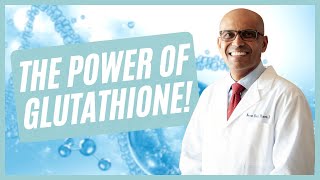
Dr. Nayan Patel discusses glutathione, the body's master antioxidant, and why oral and IV forms don't work well. He developed a topical delivery that reaches inside cells and mitochondria. A 2023 trial showed improvements in skin and immune markers.
Questions this video answers
28 years (stated in interview).
About 0.5 mL, approximately four sprays to a non-hairy area.
About 45 minutes (he reports peak blood levels observed at 45 minutes).
He began discussing it around 2007 and later obtained patents (mentions ~eight patents).
A 2023 human trial at Western University School of Medicine published in the Journal of Antioxidants (ex vivo blood work showing reduced oxidative load and increased cytokines over 72 hours).
Chapters
Hi and welcome to how humans heal. I'm Dr. Donny Wilson. In today's episode, I'm going to be talking with Dr. Nayan Patel. He is a pharmd, which means he's a pharmacist. He owns two compounding pharmacies. He's an author of the book Glutathione Fight Disease, Slow Aging and Increase Energy. He does all kinds of work in product development and research and he's here to share that knowledge with us. Thank you so much for joining us today. Nice. And I'm so glad you're here.
It's a pleasure of mine to be here today. So thank you for inviting.
I mean, I just know that being a pharmacist means you have a wealth of wisdom and experience, especially because you've been doing this for decades, right?
28 years now, yes. As a pharmacist and before pharmacist, I used to work in a compounding pharmacy even before that, since 1993.
Wow.
So it's been a. It's been a long time. I've been exposed to medications.
So. And you know something that obviously that you love and must love this concept of how can we help humans heal? Tell us more. Like what, what do you think it is that inspires you each day to be like, I want to research this, I want to learn more about how these substances can help us humans.
Well, the thing is, the most important part I learned decades ago is that we don't need any new medication because everything the body needs to survive on, we already have inside our body. Our job is just to identify those molecules, those chemicals that makes everything go and work and tickle and detoxify and rejuvenate and regenerate. If I can figure out those molecules and somehow enhance them, either by diet, exercise, nutrition, whatever it takes. And if you take a supplementations or medications to replace what we are already missing, that's my ultimate goal. And once I figured those things out, then the next thing is, okay, if I need to get those molecules inside my body, where does it need to go? Just by taking a peel by mouth, you assume the body knows what to do with it. No, it does not. It does not. Right. And so it needs clear instructions. Or sometimes we just need to have a system, a delivery technology that can deliver the molecule exactly where it's supposed to be. When we do that, that miracle happens until the time medication happens and then we have side effects and we have problems and the issues that we have.
Deal with all the time, oh my gosh. Well, I think that this is going to be surprising to some degree for people to hear a pharmacist say, hey, it's not just about taking more medications, is about how do we understand what our bodies need and how we can support that effectively. And actually, it doesn't surprise me because I grew up, as I shared with you, I grew up with a father. My father was a pharmacist. And so I grew up in the pharmacy. I grew up around this way of thinking. And so sometimes people say, well, how did I go from being the daughter of a pharmacist to becoming a naturopathic doctor? But listening to you describe that exactly explains why, because I grew up in a home where my father was constantly thinking the same way as a pharmacist. Like, what can we do to help prevent the need for medications? What can we do to support. Give our bodies the nutrients they need to function better and do what they're already built to do. And so I think it's because I heard that in my childhood that I inevitably went toward becoming a naturopathic doctor and thriving as a naturopathic doctor because I. Because of that same philosophy. Does that make sense to you?
Oh, absolutely. And not just yourself. I see so many doctors today. I have very well known cardiologists that used to do open heart surgeries. And in his late 20s, early 30s, and by the time he was 35 or 40, he'd give up surgeries making millions of dollars a year. I said, no, I need to go back and help the people before they come on my table in the first place. And so I think the world is looking for. People are looking for better answers.
They really want to take their own health in their own hands, but they have been misinformed or they have not been given proper information on how to do that. And I'm glad that you, as a podcaster, are bringing this knowledge out to people, because that's what we need. We need more people like you who's out there searching for those answers. And can we help people heal themselves?
Exactly. Exactly. Now, for anyone who's not familiar with a compounding pharmacy, maybe we just touch on that first. Because, I mean, there's the. The standard pharmacy and then there's a compounding pharmacy. And I find that a lot of times this is new information when I mention it to patients. So maybe you can describe it and what that looks like from your perspective.
So compound, if I may say in a nutshell from. From what it looks like at the face value, is the pharmacist making medications for you.
And you as a consumer might think, why do I need a pharmaceutical medication? I can just buy from the pharmaceutical companies. They know what to do because they've been doing this for years and they have all the systems in place and things like that. But a compounding pharmacist to me is not the guy that makes the medication. Guess what? Even in my pharmacy, all the medications are made by my technicians, right? The pharmacist is actually designing the medication. They're the one actually thinking what needs to be done. They're the one working with their physicians, trying to identify what the problem areas are and providing a solution for that. Not just by making the medication, but choosing the right chemical, choosing the right delivery system and choosing where it needs to go so that we can get it done correctly with the least amount of side effects or no side effects, if better. And so a company pharmacy is actually the person that is thinking for the patient, working with their physicians, identifying the problem, providing a solution and providing a solution that can deliver the medication in the most cost effective way to the site of application.
Yes.
That to me is what it is.
That'S so specific and it's so individualized, right? This means we can make a medication, a substance, even if it's a natural substance, into a form that's for that individual.
Right?
We don't have to just go based on the doses that the pharmaceutical company makes. We can say, hey, no, we want this specific dose for this person. And then we can make it without any of the other. Like a lot of times there's other ingredients in something that's pre made by the pharmaceutical company. But what if a person's allergic to that? Right? And then we can go, no, that's not, let's not include those allergic substances. Right?
The pharma companies are making in masses. So they have to, they have to make sure that the shelf stable. It has to last for long, long periods of time. It travels across the continent. Sometimes it has a lot of variations from heat and cold temperatures and things like that. When it's a custom made medications for the patient's specific odors, you can eliminate a lot of those fillers and, and chemicals that have that need to take account for all the different variations. Because you can literally make a medication for this patient for the short amount of time that they needed to and get rid of all the other chemicals that don't need to be there. So that's definitely a good point. But at the same time a combined pharmacy is making medications, patient Specific, because every patient is different. You can have two identical sisters in the same house, grew up differently, have different set of problems, the same problem with different set of solutions. And so identifying each and every individual needs is very critical. The most important part is not that the pharmacist can make the medication, but the pharmacist is actually able to identify the problem working with the physician that provides a proper solution. That to me, hey, if you don't know what the problem is, how are you going to fix it?
Exactly. It's so important. And that's where, you know, as a. As a naturopathic doctor, I, you know, I love doing the detective work and be like, okay, what do we actually need to address and how are we going to solve it? So if we then turn to talking about glutathione, which I know is one of your favorite things to talk about, and I love glutathione, too. Glutathione is something I've worked with in my practice with many, many patients for many years. And so I'm so glad that you're bringing the highlight to glutathione. You're like, it's here is this amazing substance that can do so much good. And as you mentioned before, it's something our bodies make, but we can help out with that. So maybe you can tell us a little more about. Okay, what is glutathione? Why is it so important? Why would we want to figure out a way to support our glutathione levels?
So it started from my company pharmacy, where I knew the solution was glutathione. I knew the solution was glutathione for a lot of my patients. And unfortunately, the medications that we had available were not working for my patients. And so you get discouraged. I said, I know that this is the right solution. Why is it not working? And it wasn't that I chose the wrong medicine. What I did not know is that the delivery method was not right. It needs to get intracellularly behind the cell membranes for it to. If I cannot get there, then you can have the best medication in the world. But if it doesn't get to where it's supposed to go, then it's useless.
Sometimes it's the case with gluten that doesn't absorb very well from the intestines. Right. So if you swallow it, it's not getting to your cells.
Forget intestines. I mean, intestines is an easy one because people can swallow pill or liquids or whatever, and people. It doesn't Just chews it apart and destroys the whole peptide. Gluten first of all is a tripeptide. It's a 3,3amino acid chain coming together. Glycine, glutamine and cysteine. 3amino acid chain coming together make into small peptide. And that's peptide body senses as a peptide. Body will chop it down and absorb the amino acids and makes its own glutathione on its own. It does not take the peptides from outside sources. So the other choice was, how about we inject it? Well, guess what? There's a study done in 1991 where they injected 10 patients with the glutathione. And all of them, not just one, all of them. The body broke down the glutathione into amino acids. They saw rise of cysteine in the blood, which is one of the amino acids. And that was used to make your own glutathione later on. And so even though we knew the answer was glutathione, glutathione by itself was not going to get absorbed into the system at all. Doesn't matter if you take any injections, inhaled solutions, a suppository or capsules or liquids, didn't matter whatsoever. Right. And so the question then becomes is that, well, if body just needs the building blocks, why can't you screw the building blocks? Right? Isn't that a good idea?
Yeah. Like you just said, those amino acids. Yeah.
And the answer is absolutely, that's correct. Right. So in the 1960s, FDA actually approved a medication called mucomist. It's a. Is. Is N acetylcysteine. It's one of the amino acids used to make your own glutathione. Hey, what a novel idea. But anyways, that was six. That was a long, long time ago. I can't even do my math anymore. Every 80 years ago, probably. But the thing is, that's already done. Right? So that was done. So why we talk about this glutathione business today again is because.
You can have all the cysteines in the world if that's all that, if that's the only thing you need to make glutathione, you'll be okay. But body needs to take those cysteine or the three amino acids, take two enzymes, two molecules of ATP, which is your mitochondrial energy, one molecule of NAD for electron transfer to make glutathione. What if you feel all the raw materials, which is amino acids, but no energy.
Not getting anywhere.
Not getting anywhere. And that's what we Know, we know as we start aging, our mitochondrial energy starts going low, ATP percent starts getting low. So you can take all the mucomist or all the N cysteines in the world or eat, all the diets are full of cysteine in the world, but your body is not going to meet all, meet up all the demands. And so, yes, it works to a certain extent. But I promise my patients that I want full remission of all your problems. And if I cannot get it there, I got a problem for myself. I said, no, no, no, I, I.
Know, I can see you're like, I can see you're like, that's not gonna like 10%, 20%. You're like, I want it better than.
This, I want better than that. And so my research started on glutathione, gosh, almost 25 years ago.
Made my first liposome technology product on glutathione. And like I suspected, it did not. Well, I didn't suspect it, it did not work. And then I figured out, of course that's not going to work because the body breaks it down, doesn't really matter, right? And so we, I was on this, on this journey for figuring these things out. But the question was, why glutathione, right? What diseases was it affecting? And.
I like your book about master your stress research, your health, right? The oxidative stress is actually linked to each and every disease in the world today. Every disease is, right. If oxid stress is the number one killer in the world today, the only way we can expand our health and health span and longevity is if we get rid of the disease, if we get rid of the problem that's killing us. Seventy years ago, the number one disease or number one reason why people died was infections. So you might say penicillin. But today you will not take penicillin for the rest of your life to survive. No, that's a bad drug, right? But at that time it was the best drug. Today, the best thing we can do for ourselves is to reduce our oxygen stress. And the number one thing we can do to do that part is improve the glutathione levels.
I love it.
I love how you're explaining that. And so what did you figure out is the best way to get it in then?
So again, we started the research on liposome technology did not work. We made the injectable forms. It worked a little bit, but not to the extent that I was very happy with it. So I made a lot of money selling injectable products, but I used that money wisely. I took the money and started my own research on a newer technology to deliver glutathione. And seven years later, we had a stable form of glutathione. In my lab, in my pharmacy, we had something ready. But at that time, it was like, taste awful. It was not very tasteful.
Is a sulfur base. So it's going to be sulfury, right? It's hard to work with that.
Exactly. So it was not the best tasting. But I didn't care about the taste. If something works, people will suck it up, right? So I was not worried about that. I was not worried about that part. But when I put it into through the mouth, it actually, it did not work. It was getting broken down. So I said, okay, what if I use a nasal spray? And I did that part. It worked, but it really had. The peach was so low, they was burning my nose. So. Well, that's not going to work for too long, right? Maybe people think for maybe a day or two, but if you do it every single day to burn your nose, I don't think that that's a good option.
You're not going to do it either?
No. So I said, nope, that's not going to work out either. So the only route left for me to work with was skin. But skin is a physical barrier. A physical barrier can only. You can only go through the skin if the size is small enough.
So I had a dilemma. I had to figure out how to get the size small enough, which is under 1nm, to get through your skin. Oh, gosh. More work, right? So we got to work and we got through the skin, but then we figured out that, well, the skin is okay. How to get through the cell membranes. That's my second technology or piece of thing we did. So we are dual technology, product of physical barrier, a chemical barrier bypass both of those things and actually delivered to the mitochondria inside your cells. Wow. And when we did that part, the results start clicking in like this. I said, there you go. That's what I was looking for. But when we first discussed this in 2007, it was way ahead of my time. There was nothing published. There's no literature out there. The technology is a brand new technology right now. We have currently about eight patents on it right now. And so this technology was so brand new that I had no idea what to do with it. So There goes next 14 years of my life trying to figure out how much to give you, how often to give you, how long can I give it to you for. Am I going to read results? How soon to get results? How long does sustaining. What are the side effects? What are the complications? Oh my God. I got way too many questions and answers at that point. But all the money that I was, I was making from, from selling an inferior product of glutathione I used to make a superior product for ourselves.
And so that's amazing the dedication that that takes and how amazing that you now have patents on the process of how to do this. And what, what you're saying is you developed a topical that you could put on your skin to get the glutathione not just through your skin but into your cells. Now I'm assuming you. How did you know it was working? You were measuring glutathione levels in the blood or something, or blood in the cells.
That was something that we did. One of the doctors I worked with immediately applied different doses of glutathione and measuring the levels out for the patients. And that's how we found out that the levels were actually getting intracellularly.
And the levels were increasing not geometrically, but like something like a plateau effect. So that's how I found out what the, what the actual dose was going to be. Because gluten is so expensive that you have. You want to find the most cost effective way to deliver this product.
Well, and also you only have so many body parts, you know, so you don't want to have to slather it over your whole body every day. So I'm assuming this is like a. You got it to be where it's like a reasonable amount. You. Right. Like you could just put. What would you, what do you suggest now? What is it that people need?
We say it's about half an ML, 0.5 ML, which is about four sprays. We have a sprayer bottle, so about four sprays. And you apply on any non hairy part of you of your body. So it can be your arms, your bellies, your back, your face, your necks, your legs, whatever the. Wherever there is. And the hair does not affect the efficacy of the product. It's just one of the molecules that we use is sugar, dextrins. Let's get a little sticky on your surface. So then it's just uncomfortable or if you have hair in that area. So that's about it. But otherwise you can put any non hairy part of the body and absorption is instantaneously like within 30 seconds to one minute. Just keep on rubbing it over, just rub until the whole thing is completely smooth and Dry and you're done.
So by that minute, even if you go wash your hands, it's already been absorbed.
So we recommend to wash your hands in 45 minutes. And the reason, the reason is because one of the physicians that, that we work with, he, what he saw in his, in his patient base is that at 45 minutes they saw the peak level in the blood.
Okay?
So hey, I know it's in the, I know it's already in your skin, so you're done. But when he saw the peak level at 45 minutes, I said, hey, what's the harm? Just wait for 45 minutes and then take a shower or wash it off or whatever. Right?
Yeah.
So that's what we recommend to everybody, that wait for 45 minutes and then you can just wash it off.
And I've tried your product and I was really amazed by it. Like, like to be able to. First of all, just the idea, when I first saw it, I was like, oh my gosh, this is brilliant that you could put. Because I already know that it's very difficult to get glutathione absorbed. And I can get some absorption from a liposomal oral product. And yes, sometimes people will choose, you know, like IV glutathione. But I can see in my clinical practice that my patients doing oral liposomal glutathione are getting improvements just as much or better than the iv. So I'm like, wait a minute, you know, why, why go through all of that effort with the iv? But then when I saw, oh my gosh, you can do a topical transdermal, your products and then it's absorbing right through your skin. I think that's. A lot of times we forget how much we can absorb through our skin. In fact, that's kind of a problem because we put so much stuff on our skin. If we, if we realize that we probably wouldn't put it on our skin, right? Like the skin is, can absorb a lot.
Skin can absorb a lot of products, especially if it's oil based product. And so you have to be very cautious and judicious as to how much stuff you allow your skin to get exposed to. It is definitely a good defense organ for our whole body, but at the same time, it does get damaged as well. And so the skin needs a lot of glutathione. So having applied glutathione through your skin, the skin gets, hallelujah, give me first.
Even the skin gets the glutathione first. So it's. What do you notice when people are doing what do they report back to you as they're using this over time?
Fine wrinkles, eight spots, blemishes. And you know, all this, the skin health itself, it gets, they start noticing all the texture, the tone, the firmness of your skin, the dullness of your skin improves all those things, I would say, I said, how come I don't notice any of those things? You know, I'm a guy, you know, my sensitivity is not that great when it comes to noticing every smaller intricacies. And so I don't notice those kinds of things. But the people that use the products, oh my God, they just say all kinds of things to us. But most of the, most of my clients are physicians and they're using this products for, for the benefits of improving glutathione levels. And once the thing is, gluten by itself doesn't do anything but what it does it allow. It frees up your body to do the work. It's like for example.
I always give this example, like, let's see, you, you have.
A very busy mom, right? A mom has people. Yeah, a lot of people. Mom has a job, right. A job's not enough. She comes home, well, she gets up in the morning, makes all the lunches for the, for the whole family, for the kids and the husbands and everybody else. Then she goes to work. Then she comes back and prepares the dinner, gets all the kids ready, gets the laundry done. I mean, being a mom is, I don't know, hats off to them. They're just, it's, it's more than a full time job.
And grandmas too, I'm realizing.
Grandma. Oh, gosh. Yeah. Now let's imagine, let's imagine that you take all the job away from mom.
Is it all, Everything's getting done. You said everything is, everything's gone away. Mom frees up. Do you think the mom's going to sit on the couch and watch tv?
Probably not, no, she's. No.
Gosh, no. Oh, no. She is going to figure out all the other things to do to make your house beautiful, make your life a blissful place, arrange vacations for all of us, and it does all kinds of things to enhance our life. Right? So glutathione to me, is that that thing that takes a job away from the body to do the work. It's an antioxidant. It's a massive detoxify. It conjugates, it helps liver detoxify the chemicals. Once you do that, the body kind of frees up. And when the body frees up it starts healing, rejuvenating, regenerating. All the things that you expect the body to do for you, even subconsciously is now happening for you.
Amazing. I call it a multitasker, right?
Absolutely. It's a multi tool.
It's a multitasking antioxidant. And even if you're, let's say applying glutathione on your arms, it's going to circulate around your whole body eventually, hopefully get to all your cells everywhere.
The thing is, the way the technology works is that every cells have something called lipid rafts. That's how we communicate from cell to cell communication. That's how you, you pick a finger and the brain knows right away, say oh my God, something take the hands off. Right. You think it's neurons, you think it's neurons. But then how do you transport nutrients from cell to cell too? Right. So it's all, there's a cell to cell communication that happens through lipid drafts. About the lipid drafts, there's something, receptors that we attach the glutathione molecule to. And that's how it gets inside your system, the body gets to your skin. It can travel from cell to cell, all of the body.
Wow. Wow.
That's, that's how it works. Yeah.
That's amazing. And, and especially like, are you also seeing a difference with like let's say the brain, you know, whether it's mental health related, you know, anxiety, depression and or dementia prevention. Are you seeing a difference with that, Dr. Wilson?
So you, you know this answer, but I'm just going to tell for to your audience that.
Our body is, our brain is literally 2% of your whole body weight. It's a very tiny piece of your whole body, yet it consumes 20% of all the oxygen that you breathe in every single day. The highest amount of oxidative stress or oxidation is in your brain.
So the brain requires the highest amount of antioxidants. Right. And so if you think about it, any brain related issues or diseases or concerns are generally irreversible.
That's what we for a long time.
And so if there's a way to detoxify and neutralize all the free radicals in your brain at a very young age, from starting at the age of 30 onwards, there's a possibility, there's a possibility that in the future we'll never have any brain diseases. And that's my hope again. But for that kind of a study I need a 50, 70 year studies. I'll be dead long before that. Right. But I'm hoping that somebody would take that challenge and, and make it happen for, for, for the next generation to come. Right.
I've done a lot of detoxes over the years and many of them made me feel a lot worse. Not only that, but I've had a lot of patients come in and tell me how after doing a detox they have a stomachache and headache and they can't sleep and they're feeling anxious and I'm like, I can't just recommend that my patients do a program that's going to make them feel worse. So I finally decided to design my own detox program. It's a 14 day detox program that's not like other detox programs out there in several ways. One is that I'm focused on helping you to get the toxins out in a safe and effective way using nutrients, antioxidants and supporting our natural detoxification pathways in the body. Also, I'm helping you to decrease your exposure to toxins by learning the ways that you've been exposed to toxins and how to change your day to day lifestyle to decrease your toxins over time. And I'm helping you to look not just at chemical environmental toxins, but also emotional and energetic toxicity. And yes, it's possible to accomplish all of this in 14 days. I have so many patients who have done the 14 day detox and report back to me how much better they feel. And I think it's also because I help you to know what to eat. You are getting adequate food that tastes good, plus protein shakes that I developed that are good for your body, that your body knows how to use these nutrients and take them in and use them to help you safely detoxify without feeling worse. Also, I help you to balance your blood sugar levels, get better sleep and introduce things like meditation, biofeedback and other types of stress recovery into your day to day routine. So I just am so excited about it. I want to make sure you know about this 14 day detox. I'm going to put the link, you can find it at drdani.com forward/detox-program but.
I'll also put the link below so.
You can find the 14 day detox program@drdani.com I look forward to guiding you through this detox so that you, you can actually feel better on your way to better health.
Yeah, yeah, I'm sure, I'm sure it would. And, and I, as you know, I focus on a lot on women's health and women who are Dealing with high risk HPV virus, which is 99% of cervical cancer, is caused by high risk HPV virus. And so I do a lot of thinking and researching and working with cases to be with this mindset of, okay, this was also something that we were thought, this can never go away. There's nothing we can do about it. Right? Same thing as, like, oh, there's nothing you can do to heal your brain. But yes, you. There's so much you can do to heal the cervix and to help your body address a virus, even a cancer causing virus, we can address it with our immune system and our microbiome and so on. And so I do so much work around this. And that's another reason why I, we work with so many different antioxidants for that purpose. Vitamin C, vitamin E, you know, all of them. Zinc, selenium. Those are all antioxidants. Right? All of these vitamins are antioxidants. And at the same time, we can also use glutathione as an antioxidant. So I wanted to ask you, what do you think about using glutathione to help women prevent cervical cancer?
All right, so there are about three questions in there. Answer one by one, every one of them. I'll listen to you very, very, very closely. So I have about three questions to answer. One is.
Viruses and prevention of viruses from proliferation. That's the first question. The second question you had was about antioxidants and how the antioxidant systems from outside sources work versus internal antioxidants. That's the second question you had.
Let's do that.
Yeah.
And the third question you asked me was, by helping build up your immune system, is it going to. Does it have any positive impact on reducing cancer load? All right, three questions. All right, let's start, let's start with one by one. So glutathione, as, as I said earlier, it is not, is not a, it's not a drug. Right. It's not an antiviral, it's not an antibacterial, it's not an anti. Anything. But what it does, it does, it removes the garbage out of your system, allowing the body to heal and better equip itself. And by doing so, we did a human trial in 2023 at the Western University School of Medicine. We didn't do the trial, of course, it was. The professor at the university did the trial and they published that trial into the Journal of Antioxidants. It was a three day trial in three days. They were able to reduce the oxidress down within like I think it was within four hours. Oxidative within four hours. Within one hour, within one hour they saw a reduction in the load of a Mycobacterium infection. Mycobacterium infection has no cure. Ran at this point, of course this was, this was they apply in humans. They drew the blood in a test tube, they infected the blood in the test tube with the mycobacterium. They didn't infect the human beings with mycobacterium of course, but the test tubes with the mycobacterium. They subducted the mycobacterium load within one hour. And as soon as they saw, yeah, that was fascinating. And when they saw that, they looked at it and said, oh wait a second, let's take more blood samples and let me see what happens over the next three days. Because it was only a three day trial. So they were measuring the blood one hour, four hours. And at 72 hours, at the 72 hour mark, they saw a profound increase of all the immune markers. They saw an increase in interleukin 2, the IL12, the TNF alpha, interferon gamma. These are all the cytokines that will, that were enhanced because there was a positive immune response. And so what, what the researchers concluded at that point was that glutathione by itself is not, not doing anything in terms of the immune system, but what it's doing is it's allowing your body to hyperactive his own immune system.
It's like an indirect result because the.
Body is not busy doing, the body's not busy doing the garbage work, right? Taking the antioxidants and taking the garbage out of the liver. And so the body was free and equipped to do this addition. So that is your first answer. Even though glutathione may not be antiviral, it has a positive impact by improving your own immune system and your own immune system will help reduce the load for the viruses down. And when you do that part, if the cancers are secondary to the viruses, those cancers can be pushed back to a later date. Maybe not at 50, maybe at 80, maybe 120. I don't know if it's, if it's, if it's, if it's after 280 years, I don't care, give me cancer.
Right?
But not before that, not before that. But that was the first thing, right? That was the first and the second answer. The third thing you asked me about is antioxidants. So I put antioxidants in three different bucket system. Three buckets. Bucket number one. Bucket number one is all the antioxidants that you take it from outside sources. Vitamin C, Zinc CoQ10, Vitamin E, Noni juice, monavie juice and this orange juice. And I mean this.
They're all over the place.
They are everything methylene blue right now the new thing is methane blue as a xanthine. There's so much products out there, they claim to be antioxidants. Just to let you know, not to get too technical, but vitamin C as a chemical is a pro oxidant. It is not an antioxidant at all. But it is the number one antioxidant sold in the world today. It is not even an antioxidant, it's a pro oxidant. Okay, chemically.
Chemically, how does it work?
How does it work? I'll share that with you as well. Okay. So I can put all the so called antioxidants in bucket number one. Bucket number two. A body produces three enzymes to deal with this oxidative stress issues. One is glutathione peroxidase is GPX for short. The second one is superoxide dismatase, SOD for short. And the third one is catalase. Right. If you don't know about catalase, that's the way you get gray hair when the catalyst increases. But it's a lot hydrogen peroxide graze your hair out. You need that to reduce oxidative stress down. If you don't have enough, you get gray hair, right?
Yeah.
So that's. Those are three things, right? Those are bucket number two, bucket number three. It's a non enzymatic molecule produced by human body is glutathione. Okay? Now I'm about to make a statement which is glutathione by itself is more powerful than bucket number two and one combined.
That's pretty powerful.
So I just want to let you know if you have, you know, in business they tell me that if you get stuck on an island, if you get this one piece of paper, would you know how your business is doing, Right? Yes. Tell me the revenue, tell me what the business is doing. See how the employees are doing, see if there's losses, anything like that. And how the. I'm done, right? I'm done. My business is flourishing. Keep me on, keep me on this island. If we have one thing you can do to protect your life. One thing to me is glutathione. That it is that powerful, right? Because it is by far the most toxic, most not toxic. It's the most abundant antioxidant produced by human body. But like all the other peptides that are out market today, like, people are injecting this, this peptide to get them for weight loss, right? Those are called bioregulators. They're. They're signaling molecules. They themselves does not do any work, but they tell your brain to stop eating. They tell your body to stop holding on the fats and things like that. Glutathione is not a bioregulator. Even though it can have some messaging systems out there, it is actually a worker bee. It reduces oxidative stress down by physically quenching all the free radicals, right? It's a massive detoxify by physically conjugating with all these chemicals and making them. Getting rid of it from your intestines of the liver. So is. It's not a regulator. It is actually a worker be that's doing actual work. Okay, so there's your three answers. Prevention, right? It's. It's not an antibacterial antiviral, but it helps the immune system build up. The third thing is the antioxidants. All the differences in the world would not compete with one mighty clear thio.
And here's the thing that comes to mind for me as you're talking that through is helping people to understand why is our glutathione such an endangered species? Why is it getting depleted? Right? Because you and I are here saying we're so excited about ways we can increase it, but the fact is it's getting depleted and bombarded every day, right?
It is getting depleted. It's because of our excessive usage. And where do you use up glutathione right now? I'll tell you. By the time you wake up in the morning and leave your house, like an hour and a half or two hours later, you expose your body to at least 70 different chemicals that your liver has to neutralize and detoxify and get rid of it in the. Throughout the day, you're probably exposing your body to about 2 to 300 different chemicals every single day. That's the first problem, right? Second thing, there's environmental toxins that you have no control over. Or maybe you have a limited control over that part. It's the area that you breathe in, right? If you're smoking, forget that part. You're on your own, buddy. Right? Because smoking alone is the most toxic thing you can do to deplete glutathione levels. If you drink alcohol, one drink of alcohol can deplete the gluten levels to zero for the next three to four hours.
Three to four hours?
Three to four hours.
Wow.
It'll take that much longer for body to regenerate because by the time when people are drinking alcohol, are they eating?
Yeah, they're eating too.
They're eating too. But not eating the right foods.
No.
Right. They're not eating the right foods. And so they're not going to replace the glutathione levels that fast. Right. And so alcohol can deplete those things. So there's expenses, expenses of glutathione that needs to be reduced. Right.
The second part is that as you age, the enzyme starts decreasing in your body. The mitochondria. The number of mitochondria starts decreasing. And even in the mitochondria producing ATP, it starts decreasing because it shows up in fatigue, energy levels, all those things. If you're dealing with women's and men's health, they'll tell you the number one problem is what? Tired and fatigue.
Yes. So common.
It's so common. Right. But if you don't have the mitochondrial energy, how the body's gonna make enough glutathione in the first place?
So then you're just stuck. It's a big traffic jam.
A big traffic jam. And then the third thing is that our diet is depleted of the three essential amino acids that we need. Well, I shouldn't say essential. The three amino acids that we need to produce glutathione, they're essential for glutathione. The essential for glutathione, but they're not called social amino acids because essential amino acids are the one we need to. For the building blocks for proteins and muscles and things like that. Right.
So we might not be getting enough glycine and cysteine.
So do those things. If you're increasing glutathione in your body, don't take my product first. First thing you do is reduce your expenses.
Yeah.
90% of time. 90% of time you're in either in your house, in your car, or in your office.
Right. Those three places you have full control over the air that you breathe in.
So make sure you have better quality of air that you breathe in. Number two, nobody accidentally drank any alcohol. Maybe on a. Maybe the cough syrup, because they did not know about it. Maybe. Right. But it was an active choice you made. Right. And I fly all over the world for talking speaking engagements all the time. And I maybe five, six in the morning and I'll be at the Airport. And guess what? I see people ordering alcohol. Six in the morning.
I know. It's really something, isn't it?
And the sign says that it's 5pm somewhere.
I said, but not here. It's something, but not here. Right? Who said that you had to drink at 5pm every day? Anyways. But anyways, that's a whole different story.
You can start making diet and lifestyle changes and already improve your glutathione because your body's going to keep on trying to make more. And like you have taught us, if you have the right building blocks, like if you have the right ingredients for the recipe, you can make glutathione. The problem is we're often missing parts of the recipe or we're missing the body's ability to turn it into glutathione. But if we can help our bodies out, they can, they can do it. I was going to ask you because you mentioned GPX and superoxide dismutase. And my understanding is that from under. First of all, there's the genetic variations too. Some people have. We can have variations in our glutathione processing genes and that can also affect our ability to. I use the word recycle glutathione because when I look at the metabolism, that's how I think about it is like use a glutathione molecule and then it can get recycled, right? It can, we can recycle it. But depending on our genetic variations and our co factor ability, you know, presence, our ability to recycle the glutathione.
There's two questions already in here.
Yeah, I'm good at asking questions. Are there two questions?
There's two questions in there. One is, is how does the body recycle this glutathione? And other thing is what genetic variations are that they can affect our gluten levels. So let me finish my first story. The three the ways to increase gluten levels is to stop the expenses.
Yes.
Number two is to have your diet rich of cysteine.
Yes.
If you do not know what cysteine is, go ahead and put in your favorite search engine or your AI robot. Give me cysteine rich food options. Vegans, carnivores, vegetarians, omnivores. I don't care what diet you follow.
C Y S T E I N E. Right, that's right.
Cysteine. Okay, so that's, that's the second option. And the third option is of course there's a product that's available that we make it which is a topical form of glutathione. Glutaryl is a brand name. You can use that and improve the levels 9 out of 10 times. People will do the first two things, but really say, you know, give me the product too, just so that I can. You can enhance the levels faster. That's, that's.
And I'm definitely going to, I'll put information with the notes about how to, about all of this. What things can you do to start boosting your glutathione naturally? And how can you find this product from Dr. Nayan that has his topical glutathione? Absolutely.
That's. So the thing is the, the second part, which is to eat the cysteine rich foods. What if you have a gene mutation, A specific gene mutations where you cannot conjugate, make your own glutathione, right? Oh my God. Have you heard a story where this guy was so healthy and all of a sudden within two years he died.
That disease, this cancer, that cancer, and it just gone. I have countless stories like those that it was completely healthy and one day he just passed away. Now if you're a gene mutation at a very early age in your life and it's expressing the gene mutation. Oh, let me, let me, let me, let me take that. Just because you have the genes does not mean you have the disease.
Right. It has to be expressing. I heard you say that.
The stress it causes you to express.
Like I have a lot of people, they come to, oh, I have, I have a, I have a, I have a BRCA genes part which is I have a breast cancer genesis. Do you have breast cancer? No. You have the genes that you're getting breast cancer, but you don't have breast cancer as of yet. So there's two differences. Okay, so just make sure you understand that part.
Yes.
If the gene is expressing at a very early on in your life as a young kid's easy to spot Right. Spectrum disorders, all kinds of problems and then you fix with some glutathione and off they go in there, they become a semi normal functioning human being. Right? That happens.
Yeah.
If you have the genes and if it's not expressing you, you will not know. If it's not expressing, you're fine. But if you have the genes that are expressing, oh my God, you need to have the glutathions on board instantaneously. Otherwise you just could go downhill really, really fast. Right. But in some cases these are the like gstm, gstp, ggt. These are all the gene mutations where you cannot conjugate, make your own glutathione. Now there are certain gene mutations like MTHFR or cmt, which is very, very, very common.
Variations in those patients, they can produce glutathione. They can. It's like having that mom that can do all the work. But now this mom has two families.
Oh my God. I can barely keep up with one family. What about if I have two families? It's out of question. That's what happens when you amputation for a gene mutation. Now the body cannot detoxify with methylation pathways.
Glutathione is detoxified by conjugation pathways. There could be different way of, different way of doing it. But since this is not working, the body goes, and please, glutathione, can you please help me get rid of this product too? I know it's not your job, but please, I need your help.
So now the glutathione's got extra work.
Now glutathione have extra work. So the glutathione goes, oh my God, I don't have enough glutathione in me. So the gene mutations, the gene variations, if they have those problems, please don't waste time. You can eat the foods, do everything correctly, but get on the supplementations immediately because that's going to be an absolute game changer for you for rest of your life.
And I wanted to point out, because you're talking about using glutathione in children, that it's safe to use this with, with children too.
Oh God. Oh yes. We have used it on a one month old baby. So we're using a one month old baby. We have used it 100 year old person, so it doesn't really matter.
Is there anything that someone should know? Maybe here's a situation where we need to be cautious about using glutathione or.
Oh, so there's, there's various theories out there and depending who, which doctor you listen to. And so far I have not come across any disease, any drugs that is contraindicated to use glutathione. Now being said that a lot of oncologists, they will prefer not to use glutathione with the chemotherapy, with the radiation therapies and things like that. And I'm not here to go against them at all, by all means. So you need to work with the oncologist to see if that makes sense or not. Just keep in mind, regardless on what disease you have, the body is trying to make enough glutathione on its own anyways. So if that's turned that off, that's.
Going to turn that off.
So if the body sends that it needs, it is going to try to produce as much as possible. And so this is only thing we are doing is enhance your own body's production. So we're not doing anything different than that. But that's again, that's, that's a choice that you have to make. And if I'd rather you work with your, with a, with a professional that understands your particular condition.
Yeah, that's a good suggestion. Of course, with an oncologist, they're definitely going to want to have input on what you're taking. And I'm curious about people who have maybe a sulfur sensitivity. What do you find with that?
So gluten is not a sulfur drug. It still smells like sulfur. It's not a sulfur drug. So it's a thiol group. It's a whole different group of. It smells like sulfur. It's a thiol group. So I have endless patients with sulfide allergies and sulfur allergies that take glutathione and absolutely no problem. In fact, this is a funny story. I have a whole bunch of families. I think they're either Koreans or, I'm not sure, Koreans or Asians. But anyways, Orientals. And they drink red wine flush.
Yes, flush.
Because they have sulfide allergies. I'm in California, so we have a lot of Koreans in my neighborhood. So I have a lot of, bunch of wines over there. And they get flushing. The, the, the, the face turns like a tomato reaction.
Yes.
And that's sulfide allergies. And of course they love the red wines, but they cannot drink it because they get the flushing symptoms. They always look for the sulfide free wines if possible, and so on and so forth. And so by using the glutathione, it actually detoxifies those chemicals outside your body. I have so many families that have come and told me that, hey, you know what? Now I don't get the flushing right away. It takes me at least two, three more glasses. So if they're just having one glass in the evening, they got no more flushing anymore. They just love it because of their reason. So it is absolutely massive detoxifier for you too.
Amazing. Oh my gosh. This has been such a wealth of information. I'm so grateful for you to come and share with us. Anyone who's listening who wants to learn even more about glutathione, I want to make sure you know about Nayan's book, the Glutathione Revolution. And I'll definitely put a link down below as well to the. The liposomal, the topical glutathione product that he's been referring to so that you know how to find it and you can try it.
It's not liposomal. Sorry?
It's not liposomal. Oh, don't scratch that for me. Ah, okay. So when. Because a lot of times we use oral or capsules, we see the term liposomal. But don't. This is not. How do you. How do you refer.
Liposomal is a very old technology. It's. It's done and it's done and dusted. It's gone now. Well, it's still there, but it's. It doesn't. It doesn't hold a promise. This is a brand new technology, is the first in the world. We use dextrin molecules to deliver nutraceuticals like these. It's the first in the world at this point.
What do you call it?
Dextrins.
It's just called dextrins.
Yeah, yeah. There's various different types of dextrins. There's polysaccharides, a bunch of sugar molecules.
Right.
And it's sweet.
So I could say a dextrin delivery.
Yes, yes. Oh, one thing we forgot. Dr. Wilson, we have one thing you forgot. Recycling glutathione.
Oh, yeah, yeah, we were talking about that.
Recycling glutathione. So. So glutathione short form is called gsh. Glutathione in your body as an antioxidant will. Will get rid of. Will accept it and positively negatively charged particle neutralizes the free radical. And then in. In this molecule, GSA becomes GS only. So two molecule of GS comes together and becomes GSSG molecule. That GSSG molecule is actually the oxidized form of glutathione. This oxidized form of glutathione circles in your body. It never gets rid of it until it gets energy sourced from vitamin C.
Vitamin C back to the vitamin C.
And that House, it gets regenerated back to glutathione again and becomes gsh. That's why vitamin C at low concentration act as an antioxidant and at high concentration acts as a pro oxidant. They use vitamin C injectables at high dosages to deal with infections and cancer protocols and things like that. Yes, but at low doses, it's an antioxidant. Trust me, vitamin C is not that smart of a molecule to have dual Properties. It does not have the dual properties. Yes. So it is actually a pro oxidant. At low concentrate, it revives the glutathione. And that's why you see the response as an antioxidant. It's coming from the glutathione itself.
So low dose, meaning like less than 2000 milligrams or less than 1000 milligrams. Less than 1000.
Because most people, they don't have enough glutathione. If they don't have enough glutathione, they don't need enough oxidized glutathione in the first place. Like in my case, I've been using glutathione topically for now, six, seven years in a row. I can take two, 3,000 milligrams of vitamin C and I can revive all my glutathione back to normal.
Yeah, right.
There are lots of oxidants glutathione in my body as well.
I Learned this from Dr. Paul Anderson, one of my colleagues.
And this is why it's so important for what I want to make sure everybody listening understands is what we're saying is, yes, get the dextrin delivery, topical glutathione, and also be taking in a low dose of oral vitamin C because then the vitamin C is going to help you recycle your new improved glutathione and keep it lasting longer. Is that a good way to say it?
Yes, it is. But just so that you don't have to spend extra money, our topic growth also has topic vitamin C in there.
It's in there already. You don't even have to take the extra vitamin C. No, all in one. Because you can absorb vitamin C through your skin too, then.
Well, the same technology we have delivered, we can do a bunch of products like those.
Amazing. Oh, my gosh. Okay, so I hope everyone listening understands how amazing this is where you can just now put this on your skin. You're getting the glutathione, you're getting the vitamin C that helps maintain your glutathione and recycle your glutathione. And so then you can be preventing all different health issues, the ones we talked about today and more. The endless list of health issues is, as Dr. Nayan said, is caused by the effects of stress. And the effects of stress on our cells is oxidative stress. The way to reverse that is with glutathione. So it's amazing. So thank you for coming to share this science. Really, you're a chemist. I see now I'm talking to a chemist at heart who understands all the chemistry of the human body.
Thank you for that. I appreciate that. But yeah, it's a lifelong passion for us and I hope I get to keep on working to create.
Different ways to deliver the molecules that we already have inside our body. So that's my goal.
Dr. Nayan, thank you so much again for joining us today at how humans heal. Dr. Nayan is PharmD and owner of aurawellness.com and that's where you can find more information about his glutathione product and more and also his book the Glutathione Revolution. So any of you who have not yet subscribed to How Humans Heal, I welcome you to subscribe so you don't miss the next episode. I'll see you then.
Thanks for listening to How Humans Heal. If you liked this episode, leave a rating and a review. And for more resources visit drdani.com.
More from Dr.


#Hypothyroidism and Hashimoto's: How to Know if You Have It and What to Do Next






