How to Transform Your Anxiety into Resilience
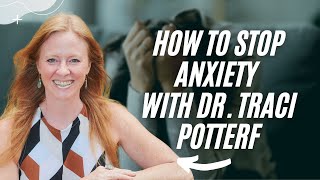
Dr. Tracy Potterith reframes anxiety as "nature's smoke alarm" triggered by mold, Lyme, heavy metals, and poor sleep, not genetics. She outlines a three-part fix: functional health detective work, lifestyle changes like sleep and movement, and nervous system rewiring through meditation and somatic practices.
Chapters
Hi, and welcome to how humans heal. I'm Dr. Donnie Wilson, and in this episode, we're going to be talking about anxiety and the mental health epidemic, as well as how we can redefine anxiety and really start to look at it in a different way. I have Dr. Tracy Potterith here with me today. She has a PhD in medical anthropology and is a functional practitioner helping people as an anxiety detective. Thank you so much for joining me today, Tracy.
Hey, Dr. Donnie. I'm so excited to talk about anxiety. I think it's a fun topic.
I know it's something to say that. Right. And I thank you for joining me. We see your background there in Hawaii, which is beautiful. What an amazing piece to help counteract anxiety and all of our stress in general. Um, now let's talk through a little bit. Like, I know that this is something that you've specialized in and experienced yourself. Maybe you can just tell us, like, what made you interested in helping with anxiety and becoming this detective. Helping people to redefine and become free of anxiety.
Yes. So it's kind of interesting because my dad was actually a psychiatrist, and. And so one thing I like, I share a lot is that, you know, I was taught that anxiety is a genetic chemical imbalance, and you just. Because you're. It's kind of feels like you're genetically defective and you just have to be on these medications the rest of your life. Like, those will fix it. Right? And maybe there was, like, talk therapy back then, but there wasn't. This knowledge of somatics and somatic healing and all that and all EMDR and all that wasn't really, like, something I was aware of. So I just thought if you had anxiety, that meant something was wrong with you and that there was no solution. So when I was 19, I had my first panic attack. And, you know, my dad offered me meds, and something in my soul couldn't do it, Donnie. Like, I just could not. Like, it was like this path. I don't know if it was pride or intuition. I don't know what it was, but I was like, I don't want this life sentence. And I was like, I'm not going to live like this. Like, I refuse to live like this. And I've got to figure something out. And for me, it took a really long. It was a really long, arduous, nonlinear path full of lots of suffering. And I eventually was able to figure it out, and I was. I just don't. Anxiety is some of the worst pain I've ever had. I've had physical injuries of all kinds. Anxiety is physical, by the way. Your mind and body aren't separate. I knew probably miss you wouldn't be listening if they didn't already have a sense of this. But yeah, I just, it took me a long time to figure out. And I thought, I don't want other people to have to go through what I went through. It was so painful. Like anxiety was more painful than pretty much any other thing I've had to do in my health. The level of suffering was so high. And I don't want people to suffer and I don't want people to feel like they're defective and it's just some genetic thing. So even if, even if anxiety, so called runs like, runs in your family, whatever that means, there are some genes that can, you know, with detox issues or vitamin D receptor issues, susceptibility toxicity. So there are some G things that can predispose.
But you can work around those things with a lot of functional medicine tools and lifestyle and nervous system rewiring. So a lot of people think, oh, it runs in my family. You know, people in my family have mental health and so it must be genetic. Well, also ideas and beliefs are in families. Eating habits run in families, trauma runs in families. And pretty much there's almost no family that doesn't have mental health issues. So that is just so ubiquitous. Right. And then the second thing is that people are like, well, I've had it my whole life. And so, like, it must be something I was born with. And so even if you've had it, you know, was triggered gestationally, you're from the time you're an infant, it still doesn't mean you can't fix it. It still doesn't mean you can't stop it. So I want to just demolish all these. If you understand what anxiety really is and you understand what works to stop it, then you can stop believing. You're trapped with this forever.
Oh my gosh, I'm so glad you're saying this and sharing your story and your wisdom because it's true. First of all, there's such an epidemic of stress and anxiety and mental health issues in general in the United States, but also many other areas of the world. And it's. I think a lot of it is because there is such a stigma about having mental health issues because we've been. We kind of think, oh, I don't. I'm afraid to tell someone else because they may reject me or think something negative about me. And so we end up not Accessing hell. And then it just perpetuates the situation of anxiety. Tell us more your perspective on the stigmatization of. Of anxiety and mental health issues.
Right. Yeah. It's like, I don't want people to think I'm crazy. I don't want to lose credibility. I don't want people think I don't have it together. Well, guess what? Like, no one really has it. Some people have it together more than others, but everyone's struggling with something. And, you know, I had this epiphany when I was in grad school. I was doing a. I was doing a joint program with UCSF Medical School and UC Berkeley Department of Anthropology. It was a medical anthropology program. And one of the things I was fascinated with was how indigenous people and people living a more traditional lifestyle when they start being either exposed to a lot of toxins through industry or starting to change their lifestyle and live in Eaton. Think like, you know, industrialized cultures. They started getting the same mental and physical illnesses. Something I share about a lot. And I realized that this isn't a genetic problem. This is a cultural problem, because we have a toxic cult. We've normalized this toxic culture that's trying to override nature. So we, we're starting to. We've made all these changes, and a lot of them are amazing. Like, I like to really celebrate that, you know, we're on different parts of the planet and we can be having this conversation and sharing it with people. I mean, there's so many amazing things that have come of technology, but we've really devastated our food. We've messed up our sleep. We're. We're like. We've made just moving and playing in our bodies become this, like, punishment. Like, I have to exercise to burn calories because I hate my body. You know, we're. You know, we're. We're losing mobility in our hips. We're not squatting anymore. We're not. We're drinking water that's missing all kinds of things that we would be getting if we're drinking from a spring. We're sterilizing our microbiomes, you know, where we're just. We don't have the microbial diversity that gives us resilience. That's a big thing. And our nervous systems are shot. And when you have a messed up microbiome and a dysregulated nervous system, poor nutrition, lots of stress, and you put that all together, your poor, sweet, brilliant, genius body is still going to fall apart and struggle not because you're defective, but because we are out of touch with the magic and the beauty of what we truly are, which is we are nature. We're not. Nature isn't out there. It's not outside my window. It's what we are. And until we start living as extensions of nature, and that's why ended as inner genius health, because do you have the genius of nature, the intelligence of nature in every human cell and every microbe cell and in your DNA. And when we expand our wisdom to look at the big, big picture of nature, then we start to see connections that I saw. One of the things that I think we romanticize about a lot of indigenous communities is their ability to see how things are.
And a lot of like western science is like we're dissecting things into smaller and smaller bits, which is really fascinating and I love it. I think there's nothing wrong with that, but we're losing those connections and we're not seeing. And like I think when you work in functional health or you're naturopath or you know, you see things, you, you see connections that your average person doesn't see. And that's why you become a detective, because you can help people make connections they wouldn't otherwise make. Trying to like Dr. Google it themselves.
And so true. I love being able to be that big picture and look for the patterns and look for the interconnections and then help solve from that perspective. I see we can solve so much more in terms of health issues when we look at it from that big picture and connectivity than if we're looking from the microscopic view. And I.
We have to go from the micro to the macro. Yeah, yeah.
I love that you're. What you're saying is essentially I hear you saying that anxiety is really a symptom of the distress, the disconnection.
Yeah, it's nature's smoke alarm, it's nature's wake up call. And so are all our symptoms. And I like to say that anxiety is how the brain says ouch. But so is depression, so is brain fog, so is fatigue. You know, that's how your brain says ouch. And we can't talk about. Your mind and body is separate. We've got, we don't even have the language to talk about what we are. Like we're more microbial than human. We are energy, we're frequency, we're like, we're all this amazingness and we have so much power to shape our biology, to shape our reality, to like connect to something beyond ourselves. And you know, and there's More and more science bridging, like science and spirituality bridging mind and body bridging all these disconnects. It's starting to, like, reconnect. So we like broke it down and dissected everything into tiny little parts. And now we're like, okay, how do we put it back together? I always think of a kid who wants to know how the radio works and so dismantles it into a million parts and then doesn't know how to put it back together. And we need to learn how to put it back together. And, and I love when we have an open enough mind that we can look at, we can look at quantum science, we can look at microbiome medicine, we can look at epigenetics, we can look at all these different realms, and how can we apply this cutting edge science that hasn't made its way into standards of practice in our medical system? We can do it now. Like, that's what I love about functional medicine is because we're like, at the forefront of taking cutting edge science and putting it into concrete steps that people can use in their daily lives now. And we don't have to wait for medical politics to catch it up. We have to practice ethically, we have to practice legally. But there's so much we can do legally and ethically within our scopes of practice. You know, that can really be a game changer and people need to stop putting medical hexes on themselves. My mom had Crohn's disease, and she was told she was going to have to have a colectomy, have her colon taken out with a colostomy bag put in permanently, and that she couldn't keep her colon and that, you know, she had to be on immunosuppressant drugs the rest of her life. And that's what turned me in the direction of functional medicine. At the time, I didn't even know what it was. I just knew I wanted my mom to keep her colon. And I was studying medical anthropology and I re, I was studying a lot about the politics of science and medicine and how, like, financial motivation drives so much decision making. That throws human welfare under the bus. That throws the planet under the bus, that throws workers in industry under the bus. And this isn't something happening at the level of doctors, at the level of practitioners or nurses or these people that are trying to, like, make it happen. This is happening at a very, like, executive level where people are so detached from the impact of their decisions that it's like they don't have to take Accountability for how it's hurting people. And I just learned how many studies aren't truly scientific because they're designed to yield very specific outcomes that support the financial interests of the people funding the research. Right. So. So that's something I really beneficial that I carry with me for medical anthropology, both the multicultural perspective, the cultural perspective of how we create a reality through culture and how we can change culture through change perception of reality and change behavior, but also like really being. Really being tuned into the politics of all this and to figure out how can we be creative and navigate and sidestep all this, where we're not at war with the machine, but we find paths forward, we look for openings forward that are allowing people to heal. And I know your clients, my clients, like, you know, in our community, there are so many people who are going into remission from things that they've been told are incurable. My mom still has her colon. It's been since 2004. She's been quiescent from Crohn's disease, off medications, no immunosuppressant drugs. This whole time. She's never had a relapse because she fundamentally changed her biology. She changed her diet, she changed her thinking. She made a lot of changes, and it took her some time and. But she's 83 now, and she still has her colon and she doesn't have active Crohn's. So, like, this is. That's just one example. But I see it all the time in my practice. I know you do too.
Yeah, it's a beautiful example. And I love that you mentioned, you know, that our mind and body is all separate. Because in the standard medical system, what people experience is that if you want to. If there's some. If you have anxiety or a symptom that we consider from the nervous system or from the mind, you end up going to see a specialist that specializes in the mind, and then that. See that specialist isn't going to pay attention to the rest of your body. Where does not really how our bodies function. And so anyone listening to just realize, like, just because the medical system has it separated out, as you talked about, like. Like taking the radio apart and sending you in different directions. That doesn't mean that it's separate in your body and your mind. You know, and I write about this in my book, that the mind and body are. I can't even imagine separating them. So I. I talk about them as one because they really are one.
Right.
Completely in communication.
We need a. We need a word. Like, I've been saying this like, you know, people talk about the word Gaia for like the kind of the whole aliveness of the earth. Like we need a word like Gaia for the mind and body connection. I've even tried to look in different languages and whatever and I, we need a word for that because like our language shapes our perception of reality. And so we talk about things in ways that don't really accurately reflect how, how they are. And people ask me, is this mental or physical? I'm like, yes. Oh yeah.
Well this reminds me, people think of like, like I even want to come break down this term anxiety because I think when I'm talking to people, a lot of times people don't realize that stress, that they are stressed or the stress is affecting them. And they may not realize that they're experiencing anxiety because they might not be calling it for themselves or a lot of, in families they might not use the word anxiety. So what, what are some of the common ways that you hear people like describing their experience of anxiety but without using the word anxiety?
Okay, so can I, I want to zoom back a little bit and then into like targeting that question. So first I want to say, I want people to think of a spectrum from like, you know, there's this like stress to panic attacks, like spectrum. So there's stress, bodily tension, all the way up to full on panic. And it's a whole spectrum spectrum and everybody is somewhere dealing with it because there's no way to live in the modern world. Like not. Well, maybe there are people who, who are, have created circumstances. They are. But I would say the majority of humans these days, especially in our shared culture, are somewhere on that spectrum of dealing with tension in their body. And so a lot of it's to do with safety. And if your immune system, sorry, if your nervous system feels safe. See, I was having a little slip there. Because your nervous system and immune system operate like in lockstep with you. They're not separate systems. They're actually, they're physiologically linked. They're, they're not separate. We just talk about them like they're separate. And so frustrating to try to communicate about it because it's like we don't have the words. But anyway, you're so, so you're, it has to do with your nervous system, whether it feels safe or not. And so like when you, you can start out feeling tension in your muscles, jaw tension, teeth grinding, jaw clenching, feeling tight in your chest, feeling tight in your solar plexus, like your tummy feeling like kind of swirling in your tummy, feeling like constipated or having loose stools, gas bloating, things like that. And, and like feeling nervous, feeling jittery maybe like also like your eyes are really dry or there's tension in your eyes, getting headaches. I mean it just goes on and on and on. Different kinds of cravings, like sugar cravings that you wouldn't think of as connected, but that are your nervous system trying to self soothe, go having. One of the things that I think we need to reconsider is that our go to self soothing usually involves something destructive or addictive when there are plenty of ways to ourselves that are nurturing and that don't destroy us. You know, like on tv it's always like I need a drink, you know, and it's just like I actually think it's best to only consume alcohol if you're super healthy, you have a super regulated nervous system, you have no depression, no anxiety, you're in a really good place and you want to enjoy a sip of some good wine. But if you're in healing mode, you might want to reconsider. This is like, this causes inflammation, it's a depressant, it damages your liver and your liver plays an important role in your hormones and your emotions and things like that. It's not just a Chinese medicine metaphor. It's like real biology. So anyway, back to what you were saying. So I want people to understand there's this whole spectrum of, of, of from safe to unsafe in our body. And at some point there's the tension, the muscle tension, and then it builds and builds and then like negative thoughts, feeling helpless, feeling hopeless, running scenarios in your head that what if this, what if that, what if this doesn't happen? What if this does happen? Worst case scenarios, doom and gloom. I mean it just goes on and on. So it's like negative thoughts and emotions, self criticism, not feeling enough, feeling like it's never enough, it's not good enough, I'm not safe, something's wrong, all that stuff, this is all on the spectrum of anxiety, okay? And so now when it gets to the point that your heart is racing really fast, your stomach's in knots, you can't like you're seeing the world, very negative lens, you don't feel safe physically or emotionally.
You know, you're like kind of curling in and protective body language, that kind of thing, then that's going to be further down the spectrum. But if you wait till it gets that bad, you just have more to disentangle. You can disentangle from any level of anxiety. But why wait till it's that bad, right? And you know, and then there's a lot of panic attack. And some people don't even realize because they're not having. Some people are, have very thought dominated anxiety. And some people, it's more of a physiological sensation. You're not even worried about anything or thinking about anything. And often this is being run by some kind of biological problem. So I've been personally, I've been through Lyme, I've been through toxic mold, and I've been through lead poisoning. And I had the mold and lead poisoning at the same time. And I had a perfect lifestyle. I was meditating two hours a day. Dr. Donnie and I was like, I was eating, perfect diet, really good sleep, hygiene, getting plenty of sleep. I was doing all the right things, exercising, I was in so, such good shape. I was doing all the right things. But because I lived in a home, I jokingly call it the murdered house now because like literally it almost killed me. But because I was in an environment where I was being poisoned by my environment, anxiety was a smoke alarm trying to get my attention. So sometimes people have thyroid antibodies. You know, they're making auto antibodies against their brain because of thyroid autoimmunity that has not been diagnosed because they went to their doctor, they ran a tsh, said it was normal, and then scooted them off. Right. They're not checking antibodies. So, you know, autoimmunity can cause it. So many different things happen to your body. Parasites, infections, anything that causes inflammation in the gut, and it causes inflammation in the brain. Any kind of neurotoxin. Sugar is a neurotoxin, like process sugar. Caffeine is a neurotoxin, MSG is a neurotoxin. Additives, preservatives, pesticides, fertilizer. I'm all sped up now. There's such a long list of things, right? Because we're in this society where we're poisoning ourselves, we think it's normal, and then we're telling people if they get sick, there's something wrong with you. And so I want you to know that like, you know, that anxiety is trying to get your attention. It's a smoke alarm. And when I was that sick, when I was being poisoned by my environment, the first symptom was anxiety. That was the first symptom. Eventually I started having like neurological symptoms that were more pronounced. I developed a tremor, tinnitus, started having kidney failure, like heart palpitations, chest pains, like, you know, gastrointestinal reproductive Issues like, I mean, it went on and on and on. My first symptom was anxiety.
Are you ready to discover your unique stress type? We're all affected by stress, but why fight it when you can master it? Take my free online stress type quiz today and conquer your burnout. We'll measure your energy, sleep, mood, focus, and body to determine how your body is built to deal with stress. Then we'll work together to take precise action to help you get out of stress mode and become resilient to it. It's time to master your health. Let's go. It's such a good point. I mean, when. When I see patients with mold toxicity, it's. It is, it's. Anxiety is one of the most common symptoms, along with brain fog, and a lot of times it gets missed. And so I'm glad that you're mentioning that. You know, anxiety is not. Is something where we need to dig deeper. We need to go, hey, what's really going on here? Right? We don't just need to stop and say, oh, let's give a medication that masks the symptoms, or as you mentioned so often, we go to something to numb the experience, but is actually probably addictive and more damaging to our system. So if we go to drinking more alcohol or some other substance or some other activity that that's. Or eating or not eating, or things we do to try to help with it, but it's not really getting at that because first I think we have to have that compassion for ourselves and say, oh, okay, I'm a human. I'm in this human experience. I'm having these. My body's giving me these signals that something's going on. I need to figure out what my body needs in order to heal. And that's not a thought process that we're taught to have. And I love the way you're describing it. So if people listening are thinking, oh, wow, yeah, I am getting some smoke signals from my body that I'm being affected by stress. And it might be psycho emotional stress, or it might be toxins as a stress, as you mentioned, or other infections that are a stress that start triggering all of this. And then of course, we can dig in. Like, that's where, you know, we can do some other investigating and testing and say, hey, is there.
Right.
An imbalance in the biome? Is there imbalance in hormones? Is there an antibodies occurring? Right. We can dig in and say, what's underlying this symptom?
Right, Right. And that's. The medical system is not taught to do that. And Here's a metaphor I use in abuse. If you hear me talk, you're going to hear me say it. But I can't say it enough is that anxiety is like a smoke alarm. And if you just take the battery out of the smoke alarm and your house is on fire and your house is going to burn down, like, just numbing the symptoms isn't. It's when your body's saying something's wrong and you say, shut up, little dummy. I don't want to listen to you. Stop telling me something's wrong. I just want to go on doing things the way I've always done them. Then you know you're going to get sicker and sicker. And I think so. Like, we can't ignore that.
Our medical system kind of, like, promotes that. Even so, people have to. You have to get to a point where you're already hopefully watching this video and saying, hey, I want another solution. I want another path. Not just.
Right, right. And sometimes people are scared to find out because they imagine it's so impossible. And the thing I, I had. I've had so many mentors that have been such a gift. One in particular who really was an expert in mast cell and toxic mold and heavy metals and, like, environmental toxicity and all the kind of the, the strange, hard, you know, mystery illnesses that really aren't taught in medical school. Like, I was trained by this person in this. And then, so when I went through it, I had that background. And then I was able to also reach out to, you know, other people for support. Because, number one, if you're. If you're really sick, if you're having anxiety and you're trying to just Dr. Google it, like, your, Your chances. If you're not a health professional, like, your chances of, like, figuring it all out by yourself, you're just going to torture yourself, you know, And, and, and the thing is, is, like, a lot of people don't. And I did this. I have to. I want to share this. Like, I did this. So even though this was years back, I was.
I. I really, I knew to toxic mold. I had dealt with other people having toxic mold, and I was still in the process of getting my good tools, and I just didn't want to have it, so I didn't test.
And the thing is, we kind of.
Go into not denial. Right.
Long story short. Yeah. And so. And also when I had Lyme, like, I didn't want to know I had that either. I didn't want to have it. So if you just don't Test for it, then you don't have it. Right. And so anyway, but what I want to say is if I added up the money that, like, I probably points in my life, I'd probably to try to save five to $10,000. I've probably cost myself multiple six figures. I know. And it's a hard.
We kind of like, it's a hard lesson, right? Where we're like, oh my gosh, I've just been avoiding, avoiding, avoiding it. And then it just ends up lasting longer and costing more than if we just go head on and say, hey, let me, Let me figure out what's really going on. And the difference is that in functional medicine, we can actually do tests that give us information that we can do something about. I would like to say that. Right.
Like, right. And here's. Yeah, and here's the thing. There are solutions. And the, the issue is, I mean, not everybody who says it does. Like, not everybody's good at their job. No matter what the profession, you have to find the right fit for you. But there are solutions to all this. Like, everything. None of it's a death sentence. It's actually like, when you figure it out, that's when you get your life back. And so why not do it now? Why not get help from an expert? Like, would you go to some part of the planet in a forest you've never been in before and just try to bushwhack your way through the Amazon jungle with no guide? I mean, why would you do that to yourself? You know? And so it's just like, it's interesting how many people just avoid. And when you avoid, it just gets worse and worse and worse. And I see this a lot with anxiety. I work with a lot of professional. I work with men and women, but it tends to be professional. Women will come to me more.
And, and it's just, they put themselves off for so long, and then you get to perimenopause, menopause, whatever, and then you fall apart, right? And then men tend to have the same thing, but just a little bit later, they hold it together. They don't go through that. They go through andropause menopause. But, you know, it's a little different. But I think waiting until, like, you're falling apart is not ideal. Um, if you're already falling apart, what are you waiting for? Like, there's help, you know, So I want people to understand. People will go on these forums for, like, mold or Lyme with all these people who haven't found solutions, who are Miserable and angry and totally dysregulated. And it just. It creates this contagion of angst. I tried going on some of these forums just to offer support. I wasn't even trying to get clients or anything. I just wanted to offer support. And people were so angry when I tried to give them suggestions that there might be hope. They were so angry. Well, I've had this brain I've just had to accept it's never going to get better. And they were just angry. And I was like, wow. Like, that's not the vibe I want. And one of the reasons I chose anxiety is because anxiety is an early symptom. A lot of people don't know what's causing it. And so some people will come to me who know they have Lyme or know they have molded and have been in a tingle, and they've heard I can help from people I've helped. But a lot of times people don't know what they have. And sometimes when they don't know, there's actually more of a quality of openness and innocence so they don't get, like, really bogged down by all the hopelessness. And, you know, and a lot of times, just because other people haven't solved a problem you have doesn't mean there isn't a solution to the problem. It just means they were just going about it a way that wasn't working right. And so I want people to understand that you've never tried everything. We live in an infinite universe of infinite possibility. How could anyone have ever tried everything that's impossible. It's like it violates the laws of physics to ever claim we've tried everything. And I know what people mean. They mean I've tried everything that I've read about or that experts have advised me on that I know of, but it doesn't mean you've tried everything. And I've never had a client not get, like, really seriously good results when they. They have to do their part right. You know, but when they do their part, they always get better. Right? And some people. Some people, it's like a. Like, I like to make a metaphor of puzzles. Like, some people's health puzzle is like, you know, the top of their puzzles with the little knobs. Then there's like only six of them. Six pieces. And they put in the fire truck and the. You know, and no time. It's always like, there are clients. Like, it's just quick and easy, really obvious stuff. And then there are clients that are more like a 2000 piece jigsaw, pencil, you know, but if you take it one piece at a time and you're patient and you go through it, you like in a reasonable amount of time, considering how long you've been sick, you can still be resolved. So it's just requires patience and understanding. It's not linear. It's not like I'm just going to get better and better until I'm all cured, like really fast, you know, like, it's going to be nonlinear. You're going to get better, you're going to have backslides, you're going to have tingles, you're going to hit roadblocks. It's life, right? So we heal at the speed of life, not at the speed of Amazon.com delivery, you know, So I want people to understand. Yeah, don't give up. Like, get good, get good guides, get a team, invest in yourself. Even if you have to do a GoFundMe or whatever. The thing is not a financial advisor, but like I've just, the people I've seen invest in their health get better so much faster and then they can go on and move on with their life and they actually will often make like career changes or whatever where they end up making more money. And it's interesting because a lot of people who are really sick or have a lot of anxiety aren't able to make money because their mental health struggles and their physical health struggles are getting in the way of them being able to make money. And then when people actually invest in their health, figure out a way, get support somehow and heal, then like suddenly things start changing in your brain, your consciousness, all of your sense of possibility changes. And then like you actually can make a lot more money after you heal than you were making when you were stuck. And I think that may seem like, not relevant, but it's so relevant.
No, it's. And thank you, you're. You're covering such good points. And I think a lot of the things that, that when someone has anxiety, these are the things that might stop them from take getting help and taking steps to change it. Because anxiety kind of works that way. It kind of keeps on jumping in and trying to, to distract you from where you're trying to go. And so being able again to have that big picture view, understand how anxiety shows up and to understand that there it is possible to find guides to help you along the way. And I love your point that it's, it's becomes a mindset that that life is our healing journey. Life is our, our chance to figure out how to give ourselves the support to recover from stress while stressed. You know, it's not about, oh, I'm gonna be stressed and never be anxious. No, it's. We're gonna have stress. We just wanna be able to choose our stress intentionally and also support ourselves through it.
I love that you just said that. That was so well said. And, like, you know, it's. It's not like I'm like, telling people you're gonna never have anxiety again, because anxiety is a normal human emotion. It's just when it gets the on switch gets turned on and you lose the off switch, then it becomes a debilitating problem. But. But yeah, so anxiety is always going to be an occasional emotion, but it doesn't have to be this debilitating disorder that we were told it is. And. And yeah, I loved everything you just said. That was awesome.
So tell us a little more, Tracy. Like when people. When you work with people. I know right now you're working with people more, one on one, what does that look like? How does that. Like, if they're like, I'm thinking about this, what does that look like when you start to work with them? What kind of things do you find help? And I'm sure it's different for each person that you work with. You know, that's the thing is anxiety is not one size fits all, right? So it's important to individualize. But, you know, just give us a little sense so they can. And of course, I'll be sharing where they can find you and learn more and, you know, and. And learn more from you.
Thank you. So, yeah, so anxiety, I have three pillars, and this is a proven process I've done over and over again. I've been doing this almost two decades. And this is what I've found work. And here's what's interesting is a lot of the way I got into this also was that I would notice when I work with people with their gut issues or their Lyme or their mold or whatever, weight loss issues, like, whatever the thing was, their anxiety would go away and their depression would go away. And. And so I was just like. That's part of how I realized that, like, this works. This whole system works. And so here's what I figured out, is that you need. There are three areas you have to address. It's like a combination lock. You have to get the right numbers in the right order or it won't unlock. You'll be stuck. And these three areas, if you don't. If you do two out of three it won't work. You have to do three out of three. Okay. Okay. So one of them is, like, going to be obvious. We already talked about it. It's like the functional health anxiety detective work. So it's going to be the labs, the fact finding, and then, of course, working with supplements, things like that. So that. That will really accelerate process progress. But if all you do is supplements and you don't address your lifestyle, your daily, Your lifestyle isn't just diet and exercise. Those two words that have become so injurious that I just like to say, you know, your. Your self nurture. Like the way you nurture yourself. So the way you feed yourself, the way you enjoy foods that serve you, the way you nurture yourself through your sleep habits and your ability to regulate. A lot of my clients have terrible insomnia. And insomnia feeds anxiety, and anxiety feeds insomnia, insomnia. So I'm also a sleep detective. Like, I'm really good at helping people sleep who haven't been able to sleep. And so, like, sleep is a huge issue. And movement and play and joy, those are huge. And I put. I don't say exercise so much. I say movement because we have these bodies that move in all these, like, really amazing ways. I mean, look at a dancer, look at a gymnast, look at any athlete. Our bodies are designed to move and to play. We're designed for joy. We're designed. We're wired for pleasure. So I teach, which is using, like, pleasures that are nurturing, that make you healthy to. Is part of your healing journey. Because when you're joyful and you're uplifted and you're playful and you weave that into your life, you then. Then it changes your biology very quickly. Like, anything we do during play will wire into our nervous system, like, many times faster than something we do that's not playful or joyful.
And then that research recently, too, it's so interesting. Right?
Right. And you don't need.
And you don't need willpower when you're in love with your life. So this is what I teach you to do, is craft a life, create a life that's for you. That's your ideal life that you're going to sculpt into something joyful and beautiful that you're so in love with, you don't need willpower to stick with it. Right? And I call that healthy hedonism. Right? So we're pursuing pleasure in a way that serves us instead of pleasures that destroy us. Right? So that's pillar two. That's our, I call it a lifestyle makeover for short. Because, you know, we love makeovers. They're fun and so. And then the third one, the third pillar is rewiring your nervous system. So it's like really mastering your stress response. Because like you just said, stress isn't going to go away, but you can change your relationship to it. So you can build resilience through a lot of nervous system work that I teach people that are also. It just so happens that a lot of these things give you pleasure. They, they create sensations of euphoria, they relax you, they make you feel good. So then you want to do them because they give you pleasure in. It's so much better than just like going and getting a shot of whiskey. I'm not telling you guys what to do. You're don't like you can do what you want, but I'm just telling you there are things you can do with your inner world, your inner genius, with how you breathe, with how you focus your thoughts, with how you move your eyes. I mean there's so many things you can do that create such a high that it makes things like alcohol, sugar, caffeine, you know, junk food, like all those things scrolling social media for hours and hours and hours. It makes all those things feel like a downer. When, because when you are at home in your soul, when you're at home and you're aligned with your inner genius, you're in that place of alignment. Then all these other things you've been reaching for to numb or avoid or self soothe or whatever, they're actually like, feel like a step down from what you've learned to cultivate in yourself. And until you experience that, it may sound like really abstract and weird and unbelievable, but when you do experience that, it's like you want to scream it from the mountaintops and you want everyone to know.
It's such a good point. And it's like just being able to. Because we don't learn these tools and techniques in elementary school or you know, we don't come. I would say we don't come with an instruction manual for our nervous system. So to be able to have learn these tools, right, we have to learn and go, oh wow, these are things that I can go to when I'm feeling stressed or I'm feeling overwhelmed so that I can calm my nervous system, reset things and be able to come back into my center. And I love that that's part of what you do is, you know, just help me. I'm not like almost Learn what is available within us. That's what you call it, that genius, right? It's available inside of us. We just know how. I need to know how to use.
It.
How to tap in and use that. Because we have magic inside of us. Like, I remember when I really got into meditation, I started having these internal experiences where I was like, you know, it wasn't at first. When I first started meditating, I was like, oh, my God, my mind is crazy. I get. Shut up. I want to move back for 20 years. Yeah, yeah. It was very confronting, but I was assured that this was normal. And it is. You're not supposed to stop your thoughts when you meditate. You don't stop your thoughts. You will stop thinking when your brain dead, which is when you're dead. But, like, as long as your brain is not dead, like, you will have thoughts. Now the rpm, like the. You know how. How frequent and loud they are, will start to calm down. But that's. That takes time. I do have some shortcuts I teach people. There's actually on my website, there's. I call it a brain tech med brain trick meditation. And it basically, it's a way even if you think you, quote, suck at meditation, this is something you can do in 15 minutes that has cumulative effect over time. It retrains your brain so you can. It helps with calming down anxiety. It helps with any kind of painful emotion, getting you unstuck from painful emotion where you actually. You feel it but get out of it at the same time so you're not avoiding. It helps with physical pain. It helps with sleep. Like, you're having trouble falling asleep or you wake up in the middle. I can't go back to sleep. So it has. It's like a. I was telling you earlier, it's like a. It's like an instant pot multifunction per skin or copier, all in one kind of technique. And so this is just one example of my toolbox that I give to people and to help you regulate your nervous system. And the thing is just like, you don't only exercise. I don't like that word. You don't only go to the gym or move your body when you're like, oh, like, I don't like how I look. So now I'm gonna go do this, but then I'm gonna stop again, like, so with this nervous system rewiring, there. There are things you can do anywhere between five to 30 minutes a day, depending on how you feel and what you fall in love with or whatever that will accumulate over time if you practice them daily as part of your ritual. Like I have something I call a magical morning sunshine ritual, and it's habit stacking. It combines multiple strategies into a short amount of time. So it actually, if you do this daily for like six weeks, three months, something like that, you're going to make fundamental changes. And these individual techniques have been researched to show that they make change, positive changes in the brain. Even if you've been through trauma, especially if you've been through trauma, you're under chronic stress, it'll start to restructure your brain from like a traumatized, stressed out person to a joyful, happy, regulated person. So you're literally changing your biology, like through these practices.
I love it and I share about that research as well in my Master stress reset your house book. Because it's, there's, there is so much research behind this. At first we can see like, oh, this is so simple. This is. Can't make a difference. But actually the research shows that it can make a difference even in small increments of time. And I love that you, you call it. I was thinking of the word magic, actually, when you were talking about your, your, your meditation. It's like a magic meditation because it doesn't. It can actually help in so many ways by simply giving ourselves the space and time to be present. And, and like you said, we don't turn off our thoughts. We just become more aware of them and more aware of which thoughts we want to engage and react to in any moment versus deciding. Hey, I'm going to come back to that later and I'm going to just be in the moment here and, and focus on going to sleep or whatever's going on. So. Oh my gosh. Thank you so much for that, Tracy. Those sound like amazing magical meditation.
I might save that. I might like rename my, rename it.
That's what you were describing that I like, kind of sounds like a magical meditation. That's what I love, patience.
And I do want to give credit that the, the structural foundation of it came from Peter Levine and Maggie Phillips, both PhDs trauma experts. So like. But I put my own.
On it. I also, like, I have a background of teaching yoga on the side just for fun because, like, it brings out a side of me that I don't when I'm being Dr. Tracy. Like I, I like teaching yoga too. So I still teach one class a week. I don't know if I'm gonna keep doing it much longer, but, but that, that opened up a different part of me that feels really comfortable guiding meditation and helping people through, like, physical movement practices like that. But anyway, so I put my little Dr. Tracy or yoga yogi Tracy spin on it. But yeah, it is a magical meditation. And we are magic. Like, we are. What we're capable of is amazing. And if we judge what we're capable of based on what's happening in our. The suffering in our families, what's happened in our past, we're going to really close off, pinch off our future. And I know so many people, thought leaders, scientists, spiritual teachers, whatever, have been like, teaching this for eons. And I just want to, just, I want to weigh in on this. Like, yes, it's true. Like, come on, humans, team human go team here and go. Like, open up possibility, get unlocked. Like, and really what I feel like the organizing principle, if you look at everything and that works in functional medicine and mind body medicine and like, you know, nature therapy, like, all these things, like, if you look at what works, what if you look at everybody who, like, healed their cancer when they were supposed to die, all the people, my mom who, you know, was supposed to, like, loose her colon and be on immunosuppressant drugs the rest of her life. If you look at, like, if I had gone down the slippery slope of, like, not getting help with, like, lead poisoning, mold poisoning, or hadn't caught the Lyme in time or whatever. If. If you look at everyone who's overcome something that's supposed to be insurmountable or incurable, what they all have in common is some form of working with their inner genius. So they did things. They ate in ways that they evolved to eat. They fixed their sleep by working with natural rhythm of circadian rhythms. They. They move their body the way we evolved to move. They shifted their thinking, they shifted their consciousness, they changed their frequency. Because at some level, if you really go to the super quantum, it's like you have to stop becoming a vibrational match for the illness. When you stop becoming a vibrational match for the illness, that's when your body enters new possibility. Right? And we can do this on all levels. Like through our lifestyle, through our thoughts, through our, you know, and also dealing with our emotions, not just sweeping them under the rug like there's an elephant in the room, we'll just sweep it under the rug. But dealing with our feelings, I call it feel your way free. We have to feel our emotions. Now. There are times when you know you're. There are times when you're in these negative thought loops where feeding them Anymore is not serving you. You need to refocus and redirect. There are times when your emotions are building up inside of you and you have to make time to sit and be with you and cry it out and maybe scream into a pillow or beat the crap out of your mattress or scream in your car and hit the steering wheel or whatever. Like, and then. But then we need to do something. What do mammals do? They shake after they go through a traumatic release. So you lie down and you let yourself shake to reset your nervous system. So there's so many tools. You just nailed it. You said we're not taught this in school. Like, I wish children were taught to have like, like functional timber tantrums where they reset their nervous system afterwards and we could grow up with this. Right? But I still teach it to adults. It's never too late to learn. I don't care if you're 80, 90, I don't care how old you are. I'll help you. You know, like, so, like there are so many things we can do. There's some. There's this huge box of things that work with your inner genius, that support your inner genius, that bring out your inner genius, that make your inner genius shine and come to the forefront of your life. And this way, your illness has now been a gift. Because when you go this route, your illness has now been a gift. It unlocked you from a dead end, limited human life. And now you get to become a full spectrum human and playful out in the gift of this life. And that's what I want for people. That's what I want. That's my deepest desire for myself and for everything.
Oh, that's so beautiful, Tracy. And thank you so much for sharing all of that. And I love your passion. It just flows out of you. It's amazing. And I completely, I completely. I'm on the same page with you. I love to see those transformations, especially I see it in the women I work with who have abnormal Pap smears and HPV related cancer risk. And I see them go through this change in there. It's not just taking this vitamin or taking this, making this one single diet change. It's actually a transformation on an energetic level on all these ways where they redefine themselves. And in doing so, they completely shift into another place where HPV cannot survive any longer in this new state. And then they, they, they of course want to stay in this new way of being because it feels so much better. They're not going to go back to the way of being where HPV was able to survive. And I see it every day and it's such a beautiful thing to observe. And, and so I love the words you just gave around it because it's, it is really what I observe in patients when they go through that process. And it's, and it's right at our fingertips. Even as you're mentioning someone who might. If anyone's listening and has had severe trauma, even trauma in your past, this, these, these tools can still help you. And so anyone listening, I'm hoping this has been an inspiration to you and, and, and maybe you can write down your thoughts and your questions. Feel free to write into Dr. Tracy and I and be in touch with Dr. Tracy if you'd like to find out more about her programs and how she can help you. Feel free to reach out to me and Absolutely. Please subscribe so that you get the next episode of How Humans Heal and can continue on this journey of learning how humans heal. Thanks again.
I love the I love the name of this podcast. I was like, I got to be.
Awesome. Thanks again for being here today.
Thanks for listening to How Humans Heal. If you liked this episode, leave a.
Rating and a review.
And for more resources, visit drdani.com.
More from Dr.


#Hypothyroidism and Hashimoto's: How to Know if You Have It and What to Do Next






