Menopause and Women's Health in General: Naturopathic Medicine as an Individualized Approach
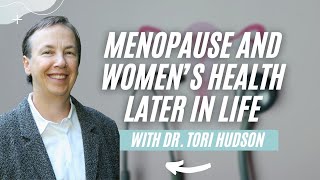
A recorded interview (Aug 24, 2023) in which Dr. Doni Wilson interviews naturopathic physician Dr. Tori Hudson about the evolution of women's health care and individualized naturopathic approaches to perimenopause and menopause. They cover the rise and evidence for nutraceuticals and botanicals, the "ladder of intervention" (individualized stepwise care), common herbal/formula choices and product formulation, practical guidance on menopausal hormone therapy (benefits/risks and timing), the role and dosing of vaginal estrogen for local genitourinary symptoms, telemedicine/licensure constraints, and prevention strategies for osteoporosis, heart disease and dementia.
Questions this video answers
August 24, 2023.
About 39–40 years (practicing in Oregon).
71 years old.
A Woman's Time, a medical clinic in Portland, Oregon.
If started within the first 10 years of the last menstrual period and before about age 60, in women without prior breast cancer, stroke, or clotting disorders.
Chapters
Hi and welcome to how humans heal. I'm Dr. Donni Wilson and today I'm going to introduce you and interview my friend and colleague and mentor, Dr. Tori Hudson. Thank you so much for being here, Tori.
Love to see you and I look forward to it, see what you're up to with these podcasts and such. We've been, we've been, we've known each other for quite a while now, so we go back through different iterations of our career and our evolution and is.
It so fun to get to talk, you know, and connect like this? Dr. Tori Hudson has been in practice as a naturopathic doctor for 39, almost 40 years in Oregon. She's the medical director at A Woman's Time, which is a medical clinic in Portland, Oregon. She also has been a teacher in many different roles at the naturopathic medical schools and including Washington. My teacher when I was at Bastyr University. So I look at you as one of my teachers of, of related to women's health and also worked with you even in your clinic also. And, and in that way, you know, became friends and mentoring me as I started to practice. So thank you again so much. I feel so grateful to you for everything you've taught me. But not only that, I mean, you're, you've been so instrumental with bringing awareness to women's health. I think, like around that time when I was graduating from Bastyr is when you came out with the initial, the first version of the Women's Encyclopedia of Naturopathic Medicine or Natural Medicine. This is one of the versions of that encyclopedia. And just to even think this is one of the first books that was written about natural approaches, diet, herbs and nutrients for women's health. Health. And that's huge. So thank you for that. I really think you started a movement to helping open up this conversation for women's health and how can we help women in ways that women weren't being helped for a long time. And so I want to talk about that, but I also want to talk about your new book, the Menopause Companion Book, which is so important and I, I know so many women are having questions and concerns and confusion of what to do, how to n navigate perimenopause post menopause. And so I want to share about that as well today. So anyway, I hope listeners really understand how amazing it is to have this opportunity to connect with you and the fact that you're still in practice, you're still helping people every day.
I am, I'm 71 years old. And still going strong. Knock on wood. I better knock on wood for that. Yeah, it's, it's. It's a labor of love, as I, as I think it is for you as well.
Yeah, we do share that in common. And I have to tell you, you're, I think, the. The most brilliant product formulator that I know. And this is something for anyone listening to know about Dr. Tori Hudson, is that she really reads the research and she takes a research related to health conditions and natural approaches like nutrients and herbs for ex. And then she takes that information from the research and then puts it into protocols and formulas. And the formulas you've developed are some of my favorites. They're tried and true in my practice that I go to for my patients all the time. And so I want to revisit that as well today. So we've got a lot to talk about.
Okay, we better get to it.
So if you just starting looking back, like, if you were to look back, let's say, 20, 25 years ago and how women's health looked then compared to how it looks now, what do you see that's shifted?
My goodness, I should have gotten your questions ahead of time. What do I. What do I want?
What do I think that's shifted? Well.
There'S been sort of a big shift in menopause management, sort of the rise and fall and rise again of, of menopausal hormone therapy and how. What, how really incredibly safe it is for almost everybody. And, and just all the nuances of the. It's not all good, it's not all bad. And, you know, so that research has just really been.
Teased out and diced and sliced and continues to be.
That's really in the last 25 years for sure. I think, you know, natural medicine, I can't say as I know exactly. I think it kind of started in the late 80s is what I would say, because I graduated in 84. And I remember Michael Murray was very influential in, I think, bringing to light the botanical medicine research out of Europe and other parts of the world that was going on and kind of the. I attribute him to really, the initiation of an awareness of that whole world of botanical medicine research and how it has influenced your practice. My practice, retail settings, all kinds of practitioners, and the development of integrative physicians who now saw, oh, there is this body of research on botanical medicines. There is this now expanded, intense research on nutraceuticals. It wasn't. It's not just Adele Davis and vitamin A and beta carotene. It's not just the Mediterranean diet. And there it's really like vitamin D and green tea and curcumin and black cohosh and.
Zinc. You know, the, how we can use these supplements to both reduce the risk of disease, prevent disease and treat disease. So that whole, the research, the evidence based, as they call it, research and nutraceuticals and botanicals in the last 30, 25, 30 years, I think just, just like that. And, and I think that has fundamentally altered our years in my profession and fundamentally altered the development of the crossover MD you know, the sort of integrative medicine, functional medicine, MD to incorporate high quality evidence of natural medicine into their advice to patients. And even some of these things have crossed over into the very typically kind of straight laced conventional M.D. you know, it's not that uncommon, at least in Portland, Oregon, which granted is one of the coastal places where we see these kinds of things happening. But you know, there is, there's certain, like, like probiotics, fish oils, those are good examples of things that have kind of penetrated the mass market and consumers and most, you know, and practitioners of all kinds.
And I think that's really, I mean, I'm, I mean also in terms of like just thinking of women's health, I mean, I know that that's like really expanded the options because I feel like, so, you know, to me, you know, when I talk to patients, even people from a couple decades ago, it was, they were more like you go to one practitioner and you might get a single suggestion. But now people are able to research these different approaches online and they're able to access different practitioners like you're mentioning in sometimes even, you know, more conventionally trained practitioners who have this knowledge. And so women, I think women are getting also more likely to, to say, hey, I want something different. Are you? Yeah, too where women are like, wait a minute, maybe I don't just want the one suggestion that, you know, that sort of the, the standard. Maybe I want to do something different for my health.
You're right. Yeah, you're, you're right to bring that up. Thank you. Yes. The patients are more informed, have more opportunities to be informed, come more often with their own thoughts and ideas and opinions. And what about this? What about that? And.
Most, most of the time, you know, that's a nice collaborative process.
And occasionally we, you know, it's challenging because you can read this, things in this little box and if, and not being, they're not trained as physicians, so they're not aware of the, all the other boxes and the bigger perspective. So but women, you're right, women have a lot more tools to help themselves. They have a lot more tools to get what they need from their healthcare providers. They have a lot more ability to question.
Do I really need this?
I love it when someone comes in and just asks for a second opinion. I had a woman just, yes, Friday, and she was.
Wanting, just all she wanted for me was a second opinion on did she need this particular surgery for her bladder or not. And I ended up saying, you know, I actually, I think you do. And this is why. And. And herbs and nutrients are not going to restore those ligaments and that frequent urination, spontaneous incontinence is going to just probably get worse with time. And so you and I are trained to recognize the value of conventional medicine and how to incorporate that into a natural naturopathic medicine context and how to blend and sort of recognize that.
Every paradigm has its strengths and every paradigm has its weaknesses. And I think what's unique about the modern naturopathic physician, like you and like myself and many of our colleagues, is that we are really practitioners, like, you know, functioning on this spectrum of, you know, recognizing the, the. We're so broadly educated, and if we have the mindset and the philosophy to include all that, all those options, we can really help patients navigate.
The best opportunities for their, for their healthcare.
And it is tricky sometimes. I mean, especially when it comes to perimenopause postmenopause. And this is also why your new book is going to be such a resource for people. I know you, you have it there. Show. Show us again. So they.
Oh, yeah, okay. Here.
Yeah, this is the menopause companion. Oh, my gosh, I love it. Because women need that, like, talk about navigating the health care system.
Oh, yeah.
When you're, you know, and I, and this is where I love, you know, what, you know, your description of this. But the way I think of it is like, I mean, perimenopause is at least a decade before the period ends. Even so that's a. Already a decade of our lives. And then you have postmenopause, which is everything after that. It's, it's a we, you know, to realize, wow, this is a lot of years of our lives to be navigating these hormone shifts and in potential symptoms and health issues. And women really do need help navigating that, especially because as much as there is, as you mentioned, more research coming out, I think there's not still not enough research. So we're ultimately helping women navigate with as much information as we have. But we always want more information, right? We wish we.
Yeah, absolutely. More, more is more is better. And, and, and, and, and, and it's not always consistent and it can be confusing. And I think an important thing to remember is it's, there's rarely a one size fits all. I, I'm. I could maybe say never, but I won't say never. But there's rarely A1s.
I think the beauty of one of the things that we do in naturopathic medicine is really try to individualize the approach. And there's going to be, if, you know, 10 different women have.
Hot flashes, you know, there's going to be something that's common perhaps to our recommendation, but there's all the nuance of the rest of their health and that, that's sort of a. I think a striking thing about anything related to perimenopausal and menopausal women is it's, it's not only a long part of their life. In fact, for most women who are going to be living till their mid-80s, it's the, the, the most years of their life, actually.
So.
These hot flashes occur in a context of what's there. Do they have arthritis? What's their risk for diabetes? Do they have high blood pressure? What's their risk for Alzheimer's? It's all, it's like, here's the quality of life issues, which are fairly simple to resolve, most of them. And then here's the disease prevention issues and the disease treatment issues. And I think all three of those buckets really need to get addressed.
Yeah. It's always, how do we look at the big picture and then help gather the information to help women make the best decision they can. But it's, it is, you're right. It's like, it's so, it's so individualized. How do you, in the book, how do you handle that? How did you sort of like. Because when. Right when you approach this type of top subject with a book, it's like you have to put it into chapters.
Yeah. Yeah. Well, this, this book is, is less of a, less of a. Take this, don't take that hormone or herb or nutrient. It's not really about that. It's more like giving you the tools to, to know more what's going on, how, what changes are happening, how to ask the right questions of your healthcare provider. What, you know, what to question, what to consider, what maybe is problematic out there in the world of tests and treatments and, and it's so. It's more like giving you know, if you wanted to drive from New York City to Portland, Oregon, it's more like.
Don'T just stop at this restaurant and that restaurant. But here's the map, and here's how to get on the right road, and here's how to read the map, and here's how to make some choices about what you want to do while you're on the. On that. On the trip.
Oh, I love that. Because then you can. It does make it like each of us as an individual, we are honoring that and saying, hey, you know, we're all kind of coming at this with a different. Different car, different set of.
Yes.
Right. We need to, like. But we really are navigate that same pathway.
We really are. Yeah. It really is an individual. And often women say, well, you know, my friend, you know, has hot flashes and took this, so I want to take that. And I go, well, your friend's menopause is not really your menopause, and your mother's menopause is not your menopause. And yes, it's good to talk and share stories and share experiences and. But it's not. That's not the prescription. Their experience is not.
A guide to what's the right prescription for. For you.
Yeah. So it's always like, take that information, and then we have to look at all the different factors. In fact, I mean, maybe we. We take an example case just so people, you know, people get a sense of how. How you help them navigate. I mean, one of the things that I always think of with you, Tori, that I. I use to this day in my practice, really. And I know that some of this is what we learn as naturopathic doctors, which is kind of this ladder of intervention of like, what do you. What do you want to try first? What do you want to try next? And you alluded to this a minute ago, where you're like, hey, we. We might not go straight to a surgery. We might first start with something else. So that's a. We refer to as ladder of intervention in naturopathic medicine. But I think you. You use this ladder event intervention so elegantly in. I think you use it with every patient, every protocol, every. Every formula you work on is like, hey, what's the most minimally evasive, invasive, yet effective thing we might do first? Which might be. Right, like a dietary change or lifestyle change. Yes. If. So, if some. Someone comes in saying, hey, and it might be different, say, someone who is 45 and still menstruating versus someone who's 55 and no longer menstruating but they both have hot flashes and sleep issues or night sweatshirts. And you. Right. You might implement that ladder of intervention differently for each.
Absolutely. Yes, I, I see that you grasp that concept very well. I passed that one, Hannah. And what.
Yeah, I, I think what's the opportunity for that way of thinking is it's not just a hierarchy of. For all circumstances. Like, we don't always just start. At least I don't. I'm not going to always just start with diet and exercise. I mean, yeah, I'm number one. I'd be bored to death as a practitioner if that's where I started. With every person, I have to be. I have to be sustainable. But it's. It's like, what is the hierarchy for this person? You know, and this.
Oh, interesting. You know, individualizing that. Like, where are they? Where maybe they've already been implementing diet and exercise and they're coming saying, I'm still getting night sweats and it didn't work.
Yes.
Now.
Yes. I remember a story long ago. I had a long ago, a woman who had severe osteoporosis. She was quite young, and she wanted natural medicine treatment. And I mean, she was. Yeah, quite young. And so there was a particular concern about her because she's got, you know, 45 more years to go in her life, most likely. And, and she, and I kept. After I got the lay of the land, I kept. I would make my recommendations, and she goes, yeah, but I eat, you know, green leafy vegetables all the time. And, and, And I'm like, well, yeah, but you have osteoporosis. That's not the answer. Yeah, but I eat lots of green leafy vegetables. Yes, but that's great. But you have severe osteoporosis. And, and so we have to do something different. We have something else we have to add to that. Yes, yes, exactly. Yeah, that does come up. You know, that's a bit of a dramatic one. But I can think of others, like, even with hot flashes. Well, I eat soy every day and she's sweating all night long and waking up 12 times a night and, and not even comfortable with people at work because she's sweating. I'm like, well, it's not working, you know, so diet is probably not going to cure your hot flashes at night because you've actually already picked the food that would most likely help you, and it's not. So we got to move up, up the ladder.
And so then we, you know, there's. There's herbs and I know, like in, In Your. In your, you know, in your books and in your work, you know, of course, you're. You're always looking at like, okay, what if someone's having hot flashes and night sets? Which herb are they? Are you most likely to have them try first or combination?
Yeah, well, you know, I look for what I call two furs, three furs and four furs. So what her. In that case, what other problems does she also have that might be helped by the herb that I'm thinking for her herbs? I'm thinking for her hot flash. So I'm looking for, okay, is her. Is. Is she having. Struggling with her mood? So hot flash, is she struggling with her mood? Does she have achy joints? Does she have memory problems? So what, you know, herb or formula would cover the most issues is. Is the thing I look for. Because even though we could say, well, black cohosh by far has more research than any other single herb, that doesn't mean it's going to work for that person number one at all. And it could be that she has one or two or three other issues that, oh, wow, there's. I remember this study on curcumin and hot flashes. And she also has osteoarthritis and she's also got a family history of Alzheimer's. So then I'm. What about curcumin? You know, that's an example of sort of the two for and the three for.
I call it multitasking. It's like, then the herbs can multitask.
Yeah, yeah, the herbs can multitask. That's a good one. And. And people, you know, women, people, anybody. Humans, you know, you have more than one problem at a time. Often, you know, we don't just are. We aren't just. We don't just have this one little thing going on.
Are you ready to discover your unique stress type? We're all affected by stress, but why fight it when you can master it? Take my free online stress type quiz today and conquer your burnout. We'll measure your energy, sleep, mood, focus, and body to determine how your body is built to deal with stress. Then we'll routinely together to take precise action to help you get out of stress mode and become resilient to it. It's time to master your health. Let's go.
I. I love to see younger patients as a relief sometimes. So a little bit of a reprieve because most of them are too young to have too many problems.
One thing.
Yeah, I mean, it's not always the case and some of them can have Unfortunate situations, but often psychological. I'm 25. I have these premenstrual symptoms. I'm like, great, easy. That's easy.
Let's do that. Right? Yeah. And then. So then if they're like, say they're trying. They're either. And. And let's. I want to cover the hormone part, the hormone replacement part, a little bit. Like, say, say a woman's like, well, I'm.
I'm.
I'm hesitant about hormone replacement for one reason or another. You know, again, like you mentioned at the beginning, there's newer research that's helping us as even providers become more comfortable with hormone repl. But some women are like, well, I'm not sure if I want to do that. What else can I try first? And this is where, yeah, maybe we're using these hormones or herbs that can be so helpful. You know, as you mentioned, there's herb herbs, single herbs and herbal formulas, along with other things that can help with some of these perimenopausal symptoms. But at one point or another, sometimes it's like, okay, we've tried the herbs, we've tried these other things. And still, whether it's night sweats or vaginal dryness, for that matter, it's like, these symptoms are not getting better. What can I do? And I think that's a lot of times when I find myself in the conversation with patients about some form of bioidentical hormone replacement therapy. But is that what you would say? Is that how that. Is that. Would you see that as well with your patients?
Well, I'm trying to kind of hone in on the question you might be asked. But so, so there's.
It's important to understand the benefits and the risks of menopausal hormone therapy. It's. If not it. And menopausal hormone therapy and birth control pills, I think, are the two most studied categories of drugs in the history of the world. So we have. We have a lot of research and over decades.
So, you know, it's important for the practitioner to understand intellectually, academically, what are the benefits, One of the risks for all comers. And then our patient is she, you know, age, some of the most important determining factors is how old is she now? When did she become menopausal? Does she have other coexisting health or what other coexisting health problems does she have? And what are her risks for I would call the big three osteoporosis, heart disease and Alzheimer's disease, and that sort of the. And then what of her what, what symptoms is she having that are affecting her quality of life? So I kind of implied earlier sort of three buckets of information. What's, what's the quality of life issues, what diseases is she at increased risk for and what conditions that diseases does she already have? And that informs my decision making on the benefits and the risks of menopausal hormone therapy. And for most, if you're, if you've become, if you're not yet, if you're within the first 10 years of your last menstrual period, you, if you're less than age 60 and you haven't, you don't haven't had breast cancer and you haven't had a stroke or clot or dbt.
Then there's a few others, fatty liver and a few other things that inform the decision. But those things are the fundamental, that covers the most territory. Then, then menopausal hormone therapy is safe for that person. The risks are negligible if you start before age 60, within the first 10 years of menopause. You haven't had the things that I mentioned. You know the risk of breast cancer from going on menopausal hormone therapy if you've taken it for four years or more. Systemic hormones, a patch, a cream, a pill, a sublingual, an injection, if you take that for four years or more, only one more woman out of a thousand women per year would get a breast cancer. I mean it is tiny, tiny and tiny. And if you drink more than two drinks a day of alcohol and you don't exercise very much and you're overweight, that your risk of breast cancer is much higher anyway than the one out of a thousand of hormone therapy. So we should be focus, our focus is wrong. Our focus should be over here in terms of risk of things like breast cancer, including family history, of course. But we can modify women's alcohol and weight and exercise. Hopefully we can help them achieve success in those areas. So there's very few women for whom systemic menopausal hormone therapy is actually contraindicated. There are cautions on delivery methods. If they've had, if they have a gallstone, we shouldn't give oral. If they have fatty liver, we shouldn't get oral. I'm just ticking off a few.
If they have elevated triglycerides, we shouldn't give oral, but we can give transdermal and, but now vaginal estrogen for the purpose of local vulvovaginal problems doesn't increase the risk of anything if it's done properly. Meaning you Know this tiny doses, typically twice a week. I tell women it's like lip balm. You know, it's local. It's not going to, the lip balm isn't going to get to all the rest of your body. And.
And lip balm, if you got dry lips, you want the lip balm. Vaginal estrogen for these local dryness, itching, irritation, painful sexual activity, leaky bladder. It's magic medicine. I would say don't dink around with vitamin E in the vagina or moisturizers or this and that lubricant or anything else you could read about or dream up. Vaginal estrogen is magic medicine.
Just skip there on the ladder, right?
Just, I mean, there, you know, if a breast cancer patient, we have to have a conversation about, about it. And, and we, the standard of care guidelines is to start with a moisturizer if you're a breast cancer patient. But even.
Even, you know, gynecologist societies and menopause societies say you can use these tiny doses safely in a breast cancer patient in. For vaginal symptoms.
Yeah. And I'm finding too that it's. So for women who are experiencing HPV and abnormal Pap, you know, whether it's cin, let's say 1, 2, 3, or vein postmenopausally, a lot of times the vaginal estrogen, let's say estriol at a low dose can be really helpful.
Well, it just, number one, it'll help them feel comfortable in their, if they're having symptoms. But yeah, it, it's like you're improving the vaginal ecology with a little tiny bit of vaginal estrogen. And that's relates to bacterial vaginosis. And we're finding that this ecology thing and the species of Lactobacilla might be relevant in HPV as well. And vaginal estrogen gets you a healthier ecological environment and balance of organisms.
Yeah. And you wouldn't necessarily think that at first. You know, I think a lot of women are, are just dealing with discomfort when, and I love the way you're saying this, just don't dink around, just like get yourself this support. And, and, and it's either available, right. Like you can get pharmaceutical versions of, let's say estradiol or you can get compounded versions of estriol. And, and you know, and it does, it's not even. You have to use daily doses. It's usually.
No, you shouldn't use daily doses. It's, it's more like, it's typically, it's a Loading dose of every day for a couple weeks and then it's typically the maintenance doses tw, these tiny doses. But here I would say, you know, this is not an area where it has to be bioidentical. It doesn't have to be Estriol. It could be Premarin, it could be big pharmaceutical stuff. Although those big pharma medicines like the Estrase estradiol cream or the Premarin cream you do then as a naturopathic physician, we start thinking about, well, what else is in that product?
The other ingredients.
Yeah, the other ingredients. Well, parabens, you know, that's got some potential problems. And so there are other, the inactive ingredients and we haven't even thought about yet. The horses perhaps and Premarin. But.
Yeah, the compounding pharmacy affords you the opportunity to deliver the greener cleaner.
Product as well as customize the dosing and method of delivery as you mentioned. But when push comes to shove, if someone's insurance or.
Economics their personal finances.
I'm like, let's just get you some vaginal estrogen whichever way is the most convenient and the most affordable for you. But yeah, I do my analogy to the greener cleaner estrogen products are like, you know, I prefer to buy, you know, seventh generation toilet paper. You know, I'm not going to buy the scented yada yada with the, let alone, not recycled, let alone some other weird little ingredient in there. And.
Yeah, so it's just a, there's, there's that aspect of what are we doing to our planet and what medicine choices we're picking when we, when we can.
And I love that that you're, you know, really saying, hey, it's, each person needs to be able to choose what's going to work for them in your life, in your circumstances and your finances. But at the same time for women to know, hey, this is something that should really be on your radar and on your to do list in your regular routine, not only for vaginal health, but then, and not, and not even if you're having, not necessarily just for sex, but just for, for comfort and prevention.
Yes, absolutely. Yeah. If someone is, I tell women, okay, you're, you're reporting to me that you're noticing this dryness, this comfort during, because of your sexual activity. And I, and I tell, I tried to tell them because I've seen over the years, if she stops having sex, she stops doing the medicine, you know, And I tell her that, well, number one, you might want to have sex again. So you're keeping this tissue Healthy for the future. But also, if you have dryness and discomfort with sexual activity, it means that you are now going to be at increased risk for vaginitis, urinary tract infections, possibly hpv, bladder leakage, overactive bladder. This problem of dryness is related to that tissue being vulnerable to these other problems. And so, and this is one of those prevention miracles, really, you know, that you can prevent those things from happening most of the time by using this, that little tiny doses of vaginal estrogen. So it's not just for sexual comfort. It's related to bladder health, vaginal health as well.
Yeah, I love that. And that you connected also the research to the biome, you know, like realizing, wow, the, the vaginal biome relies on healthy estrogen levels in the cells. And then that biome is, you know, there's so much more interesting research. We could talk again, do a whole nother conversation just about, you know, we, You. You don't have a lot of time left. Sorry, but I, and thank you so much for, for what you've shared. And I, and again want to mention to anyone who's listening, I'll make sure to put your book in the books in the podcast notes as well as, you know, to note some of your formulas. Like, I mean, again, some of my favorites from you include your black cohosh. I don't know how you manage to, like, find the version of the plants that's most effective. I don't know. I just think of it as your magic, because I've had patients try different kinds of black cohosh or different kinds of chaste tree berry, and they don't get the same benefits from it. And on your company, Vitanica, the formulas you make with Vitanica, I mean, I, I know that that's my gold standard. I know if I'm gonna be like, hey, I want to try black cohosh, we're gonna try the Botanica black cohosh. And if that's not helping, then that.
Says to me, then we can move on.
Yeah, let's move on. Because it's. I know that it's. It has a certain effectiveness. Same with your chaste berry. You know, these are individual formulas, but you also have, for example, you mentioned, mentioned bladder infections. My favorite formula clinically for bladder infections is your cran stat extra formula, let alone your slow flow for heavy menstrual bleeding. I mean, these are formulas I've been working with for more than 23 years in my practice. And. And I just see over and over again, they're helping women. So thank you. From the women.
Sweet.
You've been helping and, and for. Again, like, I think people will hear from this interview how you really think things through, and I think that's why your formulas are so much more effective.
Well, thank you. That's. That's the goal, for sure. And yeah, it's very. Consume confusing for consumers and, and for practitioners that aren't really paying attention to, like, what is like, you can go to the store. They can go to the store. Or let alone even worse online. Oh, black cohosh, one capsule twice a day. And this one is $12, and this one is $24. And. And you're going, well, this one says it's 500 milligrams for $12, and this one says it's 40 milligrams of a standardized extract for $24. This looks like the better deal. It's not the better deal. And who's gonna not? It takes some education to know that.
It really does. I mean, also, your CCDG is a tried and true for HPV cases, and it makes so much sense. It's like, otherwise, we're trying to get the curcumin and the green tea and the coriolis and the dim in separate bottles, and you're like, let's just put it all in one bottle. How about that? I'm like.
Let'S make life a little easier and more easier to navigate. Right. For everybody.
And that's what you do, Tari. I mean, here you are writing books, you're here speaking about it, and I think women who, who are wanting more help, even with navigating hormone replacement, as you said, there's. We can break it down and we can say, hey, for your case, what, what makes sense at this point in time, and, and if, if someone listening is like, okay, maybe I'm, I'm now wanting to try bioidentical hormone replacement or, you know, hormone replacement of some type. Then you, they, you, they know that you're a resource. I think you do also work with patients virtually.
I do. I used to just rely on you on the east coast and me on the west Coast. Right. But yes, I do. But I try to try to. I stick to the letter of the law. And so. Well, it's a couple things you from. For me to see someone virtually, they have to be an Oregon resident or have an Oregon mailing address. Billing. Billing address. You can see how that can be flexible. And, and then for prescribing purposes. Yeah, I can really only write prescriptions, actual medication prescriptions to an Oregon pharmacy. Although some of these mail order compounding pharmacies that have licenses in different states, I can use them so you can live wherever and I can use some of them, have a license in all 50 states. So that's the way to do the hormone thing. But, but, but yeah, there are some things that I think.
Make it much easier. Certainly these days you can, can be a virtual patient. But I would caution your listeners to really, if you're going to go that direction, you know, is, well, is this person licensed in the way that you think they are and you want them to be and are they.
Practicing within the scope of their license? And because you don't want to get in trouble and you don't want your pharmacist to get in trouble and.
Maybe your doctor will get in trouble, but they chose to get in trouble. But, but, but mostly like what is their education, what is their qualification, what is their licensure? That's, that's important because even within our profession there are, there are NDs that did not graduate from an accredited naturopathic medical school and take a state or national licensing exam. And our beloved American association of Naturopathic Physicians is the kind of go to research source for accredited licensed, went to a naturopathic accredited medical school. Those are the naturopathic physicians I think, you know, your listeners want to, want to seek out. So thanks for helping out all those east coast people that write me I have abnormal pap smears or have this and that. Who do you know on the East Coast? I know someone. Here she is.
Yes. Well, and I was trained by you. So you know, you know what, what's in my.
Well, you, you have a, you have a skill, skill set of your own. And I see your book on the back shelf there, which is terrific. Thank you for sending that to me when that came out. So I know you do fabulous work. I think you have another book as well or two. So I know, I know you're a busy woman over there. We're, we're both multitaskers.
Yes. And it's. So that's why it's so fun to get to connect and talk and share with everyone and to just, you know, for people to see this inside. Look at, you know, here's how you know a naturopathic doctor who like you, who has been, you know, not just being a doctor, but being a researcher, being a formulator, being an author, being a professor, you know, here's what is inside of Tori's world.
Because I think then women who are like, we talked about women wanting to gather information for themselves to be able to make decisions. Then you know how to navigate that. Just like you wrote in your new book. You know, here's how you navigate this process of, like, how do you weigh out your different risks and your symptoms and your situation and then find a practitioner who can guide you and help you and, and, and so anyone listening, you know, feel free to reach out to me as well if you have questions or need more help. I'm, I'm, I love to help as well with navigating perimenopause and post menopause and have licenses in a couple different states where I can, you know, potentially help you depending where you're located and, or direct you to someone who has this training that Tori's mentioning that has that training and background and ability to really guide you through this process because.
Right.
Would you say, ultimately, Tori, like, there's so much we can do to prevent things like osteoporosis and heart disease and Alzheimer's and, and help you feel good into later years of your life. That's really the message.
That is the message. That is the possibility. That's the opportunity. And it, and it, and it, it's not just a matter of eating the right food or taking the right pill. It's like, it takes work. Right? It takes, you know, I have to work at it. I'm. You might have to work at it a little less than me, but I have to work at, okay, I got to exercise today. You know, how am I going to do that? When am I going to do that, where am I going to do that? And so it takes attentiveness and intention and occasionally, not occasionally, many, many women, I, you know, they just, you have to react, visit the attentiveness to ourselves and most of my patients, that's a regular conversation. Like, how do we, how do we. How can I help you make change? And it's not just, you don't have to be perfect. You just have to practice and make some, some steps. So I got a. Speaking of patience, I should go see my one o' clock person who's waiting for me. Swell to see you. I hope our paths cross in person again soon.
Very good, I hope. Thank you so much, Tori. Talk to you soon.
Thanks for listening to how humans heal. If you liked this episode, leave a rating and a review and for more resources, visit DrDonnie.
More from Dr.

How to Reverse #Autoimmunity and High-Risk #HPV: Addressing the Root Causes of Both


#Hypothyroidism and Hashimoto's: How to Know if You Have It and What to Do Next






