Overcoming Mental Health Struggles: No More Stigma, No More Silence
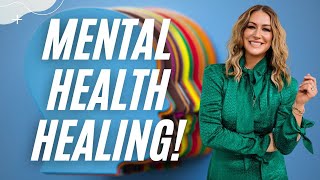
Karina Dawn grew up with a parent with paranoid schizophrenia and founded The Big Silence to fight mental health stigma through youth programs and therapy access. She shares how fitness and community helped her recover, and Dr. Doni Wilson explains her clinical framework for stress recovery using cortisol testing and a quick online quiz.
Chapters
Hi and welcome to how humans heal. I'm Dr. Donnie Wilson and today I have the honor of interviewing Karina Dawn. She is not only the founder of the Big Silence foundation, which is bringing awareness to solutions for mental health issues. She's also the co founder of Tone it Up, meaning she is a fitness expert and has been for many years. She's also a New York Times bestselling author and a dog lover and many other things. Thank you so much for joining me today, Karina.
Thank you for having me. It was a pleasure to have you on my podcast as well. And now to be here sitting on the other side. Thank you.
Yes, it's so it's really fun, right, to get to, for us to get to talk to each other and be like, wow, this is. We have such common passions for helping people. And, and I really would love, you know, because I know you're so vulnerable about sharing your story and what really does bring you to this work, because you, I mean, I really see that it's. All that you've created is out of a passion to help other people so they don't have to go through such struggles. So tell us a little more about your passion and what gets you up every day. Creating more support for people.
Yeah. So I grew up in Indiana in the 90s. You know, I always say no one was talking about mental health and there were no resources out there. And my mother was diagnosed with paranoid schizophrenia and depression when I was like 11 or 12 years old. And I didn't know how to manage that, didn't know how to manage my stress, didn't know how to master my stress at that age and nowhere to go. And so I turned my stress to, in, to.
Terrible habits of drug misuse and suicide attempt at a very young age and probably 10 years of situational depression while my mother was in and out of the house, missing persons in and out of the hospital. And back then I, as a teenager had to go to the library and buy a book or rent a book or whatever about what schizophrenia is. So I had to educate myself on that and then figure out how to work through it. And there was a shame, not only for myself, but then my mother with the stigma. So I really stayed in silence for quite some time. And in my early 20s, I finally just decided, like, this is not what life is about. There's. You're meant to be something greater. There's some. There's a bigger purpose in life than just, you know, throwing it all away. And so I thought about the time I was my happiest, and that was running. And as I ran my first half marathon when I was 12 years old.
And, yeah, literally, exercise saved your life.
Mm. Yeah. And I remembered that moment of crossing the finish line back then, and I was like, okay, that was something that I can achieve. That was something that made me feel worthy, because for so long, I felt like I would never be able to achieve anything. So I went back to that, to fitness, and I signed up for a triathlon, and I did that triathlon. I trained for it. I hated the entire process, but you do it like, you know, it's like change is uncomfortable. And I. I did the race and I crossed that finish line and just tears down my face because I had accomplished something, and I. Something that I. I never thought I could do. And then that's where I shifted to. Okay, let me share this. Let me share how fitness can improve your. Your mental state, your stress, your anxiety, all of that. And just through fitness, it will teach you how to accomplish even more and more. And so then that's how I started working in fitness and wellness and personal training and founding Tone It Up.
Amazing. Amazing. And that. That was your first book, right?
Yes. I have three books to tone it up around fitness and nutrition. And then my last one that, you know about is the Big Silence, which is the memoir that tells the entire story.
Amazing. I mean, because that's the thing is having a parent with a mental health illness is one of those considered those adverse childhood events that research shows can have an impact not only during childhood, but throughout our lives. And so to, you know, for you to really realize, wow. And I think just having that realization in itself is stressful and as you mentioned, like, feeling like, who do you turn to for help? And a lot of times when kids or teens are going through this, they don't know who they can turn to. Sometimes they don't feel like they can turn to even a counselor at school or a family member because they're afraid of, you know, what to say and how. What the response is going to be. And. And so it's a really scary time. And so to be able to then, you know, come out of that and say, hey, I'm breaking this silence. The big silence. Let's break the big silence and just say, hey, you're not the only one who's going through that and having that experience. And how can we help ourselves as humans? Right. Get. Get through that and recover from it.
Yeah. And just opening up that. That stigma around, talking about our mental health and.
To Be able. Yeah, that's why it's the big silence. And I think it's so important even with our youth starting there. So a lot of the stuff through the foundation and what we do with therapy for all program and youth programming, it's really to connect with the youth. And, you know, what I didn't have when I was growing up or you. And, you know, I imagine we grew up around the same era where no one was, like, talking about it. So here we are just talking about it with no shame and, you know, helping.
That's amazing. So, like, if. If someone, like, for youth, they could find you through the Internet, is that how most of them find you?
Yeah. Bigsilence.com also right now we have partnered with Jewel, singer, songwriter, with her program Inspiring Children. And they do a lot of work with youth as well.
Oh, that's beautiful. Because, I mean, I know, like, yeah, the more that, like user on social media, on YouTube, on, you know, so they're gonna. If they can then come across, like. And then through all your efforts, being able to break the silence, just putting it out there and saying, hey, this is a thing. And to me, one of the biggest messages is that it's possible to recover. Because as much as we know that those adverse events and experiences and trauma can have a negative effect on our health throughout our lifetime, we also know there's so much we can do to prevent that and recover from it. I mean, is that. Tell me more about your thoughts on that and what you notice.
Yeah, for myself, I.
Through that, I would say, decade of darkness, I thought I would end up like my mother who was diagnosed with a mental illness, and then my grandfather as well, and probably generations before. And when I realized that this illness was not going to take me the way that it did with my mother and that I was mentally. Well, I think that's the biggest thing is you get stuck in that victimhood. And I realized, okay, so it's not going to affect me and my brain. And then it goes into, okay, so I had this trauma growing up. How can I take this trauma and make it into some sort of lesson and then be able to share it? And I think that's the biggest thing for me. And, you know, with the youth and growing up with parents who, you know, are, you know, may have a mental illness or something, I think it's important to let them know that you're not alone and it's okay.
Yeah, that alone is a lot. Right. And you just feel like you're not. That takes away the Isolation immediately. And. And then to know that we're all just human anyway. And. And we're gonna. You know, we go through these experiences, but then we can come together as humans and support each other through it. And that's a beautiful thing. I mean, even along the lines of substance use and abuse. Because so often when. When as humans, we're under stress or have trauma or maybe unprocessed emotions of any form or in toxic relationships, as you and I talked about in our other interview, you know, it's. It. Sometimes the only thing we know is to do is reaching for substances that maybe can help us numb the experience, at least temporarily. And I. And we know how the rates of substance abuse and substance addiction, as well as suicide, because you mentioned suicide before, too. Those. The rates are going up. So it's, you know, it's a huge issue. How do you know. And to help people to know that there's other solutions.
Yeah. I think that other solutions is a good thing to point out for myself. A lot of therapy. Therapy is something also that has to break that stigma. Right. We're. And, you know, back then, it was like, oh, you're going to therapy. You're crazy. No, right.
You. You're right. We didn't used to even want to tell anybody about that. Yeah.
I think it's really important. And to this day, therapy is just more of a casual conversation, like, oh, I have to go to my therapist. It's like going to the doctor for a checkup. So therapy is wonderful.
Aside from that, meditation has been really big for me.
And exercise again. I go back to exercise all the time. I'm out here in Palm Springs and just, like, going for a hike and being in nature and all these natural ways that you can just really connect with yourself and just reaching out to someone and, you know, saying, hey, today I don't really feel great. You know, maybe like, you know, just connecting. And I was on my podcast, I was having a discussion with a doctor and talking about loneliness being just. And I might quote myself wrong. Or him. But how the pandemic of loneliness has been worse than smoking, like, 15 cigarettes a day.
Yes.
I've seen that research, too. It's. Right. So it's like, you realize, like.
And we can.
We. It just. We. We just have to get past that.
Yeah.
Place where we're feeling more isolated and be able to reach out to others.
Yeah, I know. I mean, even in your work with stress. I'm so interested because I. I took this from your book, the stress tests, the five different things. And I thought it was a stress magnet. And then I was like, oh, blah. I was like, equal with everything.
Yeah.
So you're like, what do I do with that?
I was like, I gotta call Dr. Donnie. Because I'm like, no, no, I have everything.
You know, when I see that, that's when I'm like, okay, let's check your cortisol levels. Because sometimes there's actually combination types of the stress type. So sometimes some people may have high cortisol at certain times of day and low cortisol at other times a day. And so the only way we'll really know is when we actually measure your levels. So then that's what I'm thinking. We better do your cortisol panel and measure your. Have you ever done that before where we check your cortisol at like, four different times a day?
No. Not like how you were taught. You talk about multiple times a day. No.
Yeah, because then. Then you and I will. Then we'll really know your stress time because we'll see what is that cortisol up to? What's that adrenaline up to? And not only that, but with that panel, we also check the neurotransmitter levels. And this is a thing is a lot of times with, you know, with mental illness where. Or let's say depression, you know, for a long time, the thinking was, oh, all depression is low serotonin. But actually, from the research, I mean, some people with low mood have low serotonin, but that's nowhere near 100% of the underlying issue with depression. It can also be there's too high or too low cortisol. And none of the medications, you know, oftentimes for depression are for an ssri, right, to prevent the breakdown of serotonin. But lo and behold, a person might have too high or too low cortisol. And so this is where that test can really, I think, break the silence in another way by instead of just assuming, you know, instead of assuming, oh, I must have sort of like this broken set of neurotransmitters. What we can do is we can actually see what the cortisol neurotransmitters are up to. And then there they can all be influenced by not only diet and meditation, which you mentioned, but also nutrients and herbs. So once I know what the imbalances are, then I can say, oh, my gosh, this gives us such power. And that's how I look at it, is all of this just gives us power to help ourselves better.
Right?
Then we go, oh, My stress type is such that let's say a person has high cortisol, now they know, oh, I can use these herbs or these lifestyle changes to bring the cortisol back to optimal, back down to optimal, or someone has low cortisol, we can help bring their cortisol back up to optimal. But that's huge because cortisol has such influence in our bodies. And if it's too high or too low at different times of day, we're not going to feel good.
We're all exposed to stress. Women, men and children are experiencing alarming rates of stress and burnout. It's not something that we can completely avoid or escape. But what we don't hear about is how to recover from all this stress that we're exposed to. This is what inspires, inspired my research and clinical work over the past two decades where I've been looking to answer that question. What can help us as humans to recover from stress? And through that research and work, what I discovered is that we're not all affected by stress the same way. While we might assume that we all have high stress hormones of cortisol on adrenaline, it's simply not the case. When it comes down to it. And I measure the levels, what I found is that there are five stress types. This is how as humans, we are most likely to be affected by stress in terms of how that stress disrupts our stress hormones, cortisol and adrenaline. So this is what led me to.
Develop this stress type hormone quiz.
And I made this quiz available online so you can do it right here on my website@drdani.com and in less than two minutes you can know your stress time, which is how stress is affecting your body and your stress hormones at this point in your life. This is key information to now be able to recover from stress and reverse the effects the of stress.
Because to the degree that our cortisol.
And adrenaline is either too high or too low, we are constantly being affected.
By stress that happened in the past.
Once we can re optimize our cortisol and adrenaline, we have eliminated the effects of stress and we can now go into the future with a clean slate, with optimal hormone levels and our body functioning as if the stress never happened. So I would love for each and every one of you to know your stress type so then I can teach you the diet and lifestyle changes you can make, as well as the nutrients and herbs that are specific to your stress type, so that you can effectively reverse the effects of stress, recover from stress, and prevent future stress from negatively affecting your health. I can't wait for you to do.
This quiz, find out your stress type.
And go on this journey with me to mastering your stress and resetting your health. I'll see you there.
You know, it's so interesting when you speak about depression and everything. So within my community at Tone it Up and the big Silence, I get a lot of messages of.
I think I'm depressed.
And I don't want to talk about it. What do I, what do I do?
So I have at the big silence. We obviously have a ton of resources for that and we have, you know, the therapy for all program. We pay for therapy. But what would I'm like interviewing you during your.
I love it.
No, I'm just interested for what to say to one someone like that first step for me it would be reach out to a resource. But again, there's that stigma and you know, someone doesn't deserve to be depressed.
Yeah. And, and I'm glad we're yeah. Especially touching on depression because it, especially depression is where we, you know, there's even more that feeling of isolation and, and, and feeling like things should be different than they are and really questioning of oneself. And I think that.
Definitely from. For me, this kind of a test that I'm talking about can be so wonderful because you don't even necessarily have to say that, you know, say I feel depressed. You could just say, hey, I want to know my cortisol neurotransmitter levels. You know, and so even if you're not quite ready to reveal your whole internal experience, you could just say, hey, this is a test that research over and over shows that those types of imbalances are going to affect our mood. So let's find out what the imbalances are. And not only that, but I love a kind of test that we can do something about. There's so many tests out there, you know, like so many people are getting blood work, but the blood works like everything's normal. And you're like, yeah, but I don't feel good. And it's not going to show in the blood work. A lot of times, unless there's anemia or low thyroid, which we might see in blood work. But say there's no anemia or low thyroid and they're still low mood or low energy or low motivation or however it's kind of showing up for a person. I'd be like, we need to know what's happening with your adrenal glands. And the adrenal glands is where the cortisol and adrenaline is happening. And the fact that we can even measure the neurotransmitters, because we can measure neurotransmitters in urine. I believe that this testing, the cortisol, adrenaline and neurotransmitter testing should be accessible in every mental health clinic everywhere in the world. It's existed for decades, it's been well researched and well established as helpful and the treatment is using non addictive substances like nutrients and herbs. It's like, well, why isn't this part of our standard mental health assessment? And I really believe it should be right now. It's an out of pocket expense for people. But the thing is, when you're going through that experience in your life, a few hundred dollars test is so worth the investment because then you actually have information. So we can then actually give the right nutrients and right support to get these levels back on track again. Neurotransmitters are all made from nutrients. So if we know what's low, we can give the right nutrients to get it back to optimal and other pieces. Which is I think also very interesting is to look in genetics because people are hearing more about this too. We know and we kind of have a sense that to some degree mental health issue has some genetic component, but it's not 100% like in your experience. It's not, if you have a parent with a mental health issue, it's not 100% that you're going to have a health issue. There's some percentage, probably even less than 20%, maybe 10% that has a genetic influence. But ultimately what turns on our genetic susceptibility is our stress exposure. So if we do stress recovery, we're already turning off our genetic susceptibilities. I really find that this kind of testing can make such a huge difference because now it's not just symptoms in our head, so to speak, it's actually out in front of us. And we can get this objective information to help us understand our bodies, whether it's understanding our genetic influences that we can then do something about, or understanding our neurotransmitter levels that we can then optimize. So it's now we can automatically go into a proactive mode to help address any of those symptoms, whether it's depression, anxiety or to me, any mental health diagnosis we can address in this way. And I absolutely encourage my patients and I myself love to use other tools as well, like biofeedback and meditation. And you mentioned therapy. There's so many different forms of therapy. Maybe if you don't mind sharing a little bit more. I know you do so much with meditation and, and helping people with meditation. Tell us more about how you use that and what you, what kind of difference you see for people.
Yeah, I would say I tend to be like in the mornings, I tend to kind of have anxiety, which I feel like it's just like you wake up and it's like the day and you. I always have to just take a few breaths and be like, oh, it's the day, it's another day alive. And in that positive self talk, that gratitude. And it's really important for me to get grounded and do a meditation every morning. And this can be, a lot of times people are like, I, this is too much. I don't get it. I keep thinking, my thoughts keep going during meditation, but it's completely normal. And I think it's really important to not overthink what meditation is. So it literally could be two minutes grounding. We have a lot of meditations in the Tone it up app.
And it can just be grounding yourself. Body scan, inhaling, exhaling, working with your breath. And this is something that helps anyone who perhaps is under a stressful situation or having anxiety to just breathe and bring awareness to your body and becoming present. It really can be very simple. I mean, I've gone so far as like a four hour meditation before in silence, which I love. It's crazy. I, I will go if you have the time. Not everyone has the time. I was at a retreat in Monterey, California and this is part of it. And I literally was blown away on how I showed up at this meditation retreat at a stress level 10 and left with a zero. And so really it is very important. I would definitely put recommend. The number one tool to manage your stress is meditation and movement. Get out there, move your body.
It's so true. And, and there's so much research on both of those meditation and movement and, and you know, and it's true sometimes people are afraid of meditation because, you know, sometimes we do have these racing thoughts and, and, and to know, okay, that's not that you're doing it wrong. It's just sometimes it takes starting in shorter quantities to practice. Right. It's a, to some degree it's rewiring and relearning patterns in our, in our brain waves, in our brain and our thinking. You know, being able to retrain our nervous system. Hey, instead of going down the same path of thinking that I've been down a million times, I'm going to Teach my brain this other pathway and it, it takes a little bit to remind yourself how to get over there, right?
Yeah, it's just like a muscle if you're working out and you build that muscle so in your brain when you learn how to meditate, it becomes easier and easier. You become stronger and stronger. And yeah, it literally is life changing. And I, you know, I brought it into turn it up probably like four or five years ago because meditation, even for myself to talk about it openly was very woo boo and you know, but now it is becoming so mainstream, which is amazing. And it can lower your, your blood pressure and just boost your mood and it's, it's such a simple free tool.
It's amazing, right? We have it right at our fingertips all the time and we just have to know how to learn how to use it. And we're not taught these things from a young age, which is why it's so beautiful of the work you're doing to help young people to learn these tools to learn, hey, you can turn to this. And it's available on your app for that matter too. You don't, you can just open the app and you've got all of this support right there. So it's such a beautiful thing. I mean, thank you again so much for joining me. And I know you're, you're also recording the Big Silence book.
Yes, I am. My memoir, which is already released in hardcover, but I am doing the audiobook right now. It took me a little bit of time since it is a memoir, to be able to relive it and. But I'm actually having a lot of fun with it. I've just had a lot of people ask for the audiobook. So it is coming out in May 2024.
Awesome. Oh my gosh. Well, I can't wait to share about that because again, you're not only are you such a resource of support for people, but you're just a reservoir of, of relatability for people to say, hey, you know, hey, you've been through this and this has helped you. So anyone listening who might be struggling, you know, to just know that Karina's here, I mean, I'm here on your side too. We're here to. Right, we're here to help people, people to navigate and not have to be stuck in these, these patterns of feeling awful.
Yes. And yeah, just here to, you know, we all are what we say, all together here, walking home. And you are not alone. And yeah, we have all the tools, we have the support and you Know, just making that choice. I would say that, like, choice to cross that finish line and know that you can do anything. I think that was my biggest lesson in shifting in my life was doing that race, crossing that finish line, making that, that choice to do something that I was afraid of.
And yeah, yeah, that gives me goosebumps, really. To hear the way you tell that story is like. And I think people probably can relate to that in their lives, too. Of something you, you did that you thought, how am I ever going to do this? But you, you just decided, I'm going to try. I'm going to get up each day and work on it and cross that finish line in whatever form that was. You know, I think that that can really be. Give such meaning to our lives. I know for myself, lately, it's ballroom dancing. And I, People will say, how do you, you know, why is that even something you want to spend, spend your time doing? And it's like, I know that if I, I, I signed up for a competition, so it, like, gets me to, you know, it gets you engaged in, Right. In the process of, like, okay, what do I need to do to accomplish this? How do I. I'm going to make space in my schedule. I think a lot of times it's hard for us to put ourselves into our schedule, right? But if we have something we're aiming for, like, I'm aiming to accomplish this, then each day you're like, hey, this is a priority for me. I'm gonna make sure it's in my schedule. And it almost becomes then outside of ourselves, but it, and ultimately it's really for ourselves.
I love that you're ballroom dancing because this dance is another thing I would put in your mental health toolbox. And I just did this. I was just at a retreat with my friends in Maine and we, I said, I'm gonna dance more. And they're like, what, you don't dance? I'm the most uncoordinated person ever. But I came back. I was with my friend from la, came out to Palm Springs. We went to a Dominican dance party. I learned how to dance there. And then I had eight girlfriends over and had a salsa dancer to my house. And I'm learning how to salsa dance now. Yay. My husband's like, what are you doing? I'm like, this is fantastic. It's moving your body. You have to be so aware of, like, what you're doing and be very present with dancing. And you're. Yeah. I say more. More dancing. That's right.
I, I I, I know it's putting it all together. I think of dance as a meditation, actually. I find because you, you can't think about anything else. You, you have to be thinking, what is the next step I'm taking? What is the neck? What is the music? What is that? You know, what is my partner doing if you're dancing with someone? And so to me, it's a moving meditation. It's combining both things that you, you love into one. And, and again, it's. To me, it's an essential. I've been dancing most of my life, but I, I had several years where I wasn't dancing when my daughter was young, and that's right when I was the most burned out and migraines and all the feeling awfulness that I went through. And I, when I finally was like, I'm getting myself to a dance class. It's. It's like that lifeline of like, okay. Because also you have community in dance. You're with usually dancing with at least your dance instructor, let alone the whole other people in the dance studio. So it's. You get the community going as well. And it. No wonder there's so much research on the healing power of dance.
Right? Yeah.
Be a new dance resurgence.
My salsa dance teacher is going to be on my podcast too, and then we're gonna do a video of teaching how to, like, how to dance.
So I love it. Okay, well, everyone definitely make sure to follow the big Silence podcast as well to make sure you don't miss out on that. I love it. And I hope I get to dance with you sometime soon as well.
Absolutely.
And is there any last suggestions or tips you wanted to share? Karina, while we're, while we're here together.
Just head over to thebigsons.com for all your resources you want to work out. Maybe get some dance in our app at Tone it up.
That's it.
Awesome. Well, it's such a joy to get to connect with you and to. I just really want to acknowledge and honor all the beauty in you and that you're sharing in the world and how many people I know you're helping. I just want to express my gratitude to you. So thank you.
Thank you and always nice to connect with. Yep.
All right, talk to you soon.
Thanks for listening to how humans heal. If you liked this episode, leave a rating and a review. And for more resources, visit drdani.
Com.
More from Dr.


#Hypothyroidism and Hashimoto's: How to Know if You Have It and What to Do Next






