Post-traumatic Growth – What We Can Learn From Cancer and Cancer Patients
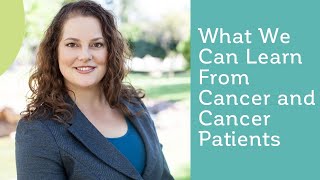
Dr. Heather Paulson explains how cancer patients move from post-traumatic stress to growth after treatment ends. Her naturopathic oncology approach combines conventional care with lifestyle changes and supplements, treating the whole person. She shares how to support someone in recovery and why processing emotions now prevents long-term damage.
Questions this video answers
May 13, 2020
"Anywhere between 1 in 3 to 1 in 2 Americans" (as stated in the interview)
"Eating 40 grams of fiber" (as stated in the interview)
"12% chance of working" (as stated in the interview)
doctorheatherpaulsen.com (DrHeatherPaulsen)
Chapters
The information provided in this podcast is educational and not intended to diagnose or treat medical conditions.
Dr. Donnie Wilson struggled for decades to solve her numerous health issues and heal her body. But with focused determination, she healed herself. And in doing so, she discovered the Dr. Donnie stress recovery Protocol. On this show, you're going to hear from doctors, nutritionists, and Experts along with Dr. Donnie, who will give practical advice and wisdom to help heal your body. This is how humans heal.
I'm very excited to introduce my friend and colleague, Dr. Heather Paulson to talk with me today. Talk with us today about her specialty and approach. She is a naturopathic oncologist, which means that she's a naturopathic doctor who specializes in helping people with cancer and after cancer. And so Heather and I have known each other for quite a long time, so we know that we love talking and we share so many common beliefs and values. And so I'm really looking forward to being able to share that with all of you today and for you to learn about what's possible in terms of support during cancer and also what we can learn from that experience that you can apply whether you have cancer or not. So tell us a little bit. Heather, thank you so much for being here. Tell us a little bit more about what you do and what inspired you to do this.
Yeah. Hi, Donni. Thanks for having me. I am excited to talk with you. Too many of you guys might not know how much Donni and I laugh together. And we have known each other for a really long time. And even through thick and thin and very serious situations, we are able to find the human. And I think that's one of the things that's really important as people overcome stress and post traumatic stress and shift from post traumatic stress to post traumatic growth. So as an astropathic oncologist, as somebody who works closely with people who are identified in research studies as having post traumatic stress just from hearing the words, you have cancer, their post traumatic stress indicators go off the charts, and same with their caregivers. So it's not even just the people with cancer, it's the people who love them, too, that also have a post traumatic stress response. We can learn a lot from how to navigate that kind of trauma and that kind of level of stress and pivot it into growth. I think we're all going through stress in different moments of our lives. You might have stress from a loved one passing or a relationship changing or being asked to stay at home because there's a virus circulating. There's so many things that put Us in the pressure cooker of life. And.
There'S ways that we can learn how to pivot that stressful situation into an opportunity for growth. It might not feel like it in the moment. Right. Like, when you're in the pressure cooker, it can feel like a lot. You might not see that you could actually pivot your way to growth, but there are some strategies, and I'm looking forward to sharing that with you all.
Wow. And that's. I mean, I think that's just eye opening already. Just the idea that there could be a pivot for some of these stressful life situations. And of course, I'm thinking that probably most everyone knows someone who has had cancer or maybe currently has cancer, or maybe themselves has dealt with cancer. I mean, what do you find? Is that. Is it. It's that common, right? I mean.
Oh, absolutely. I mean, they're estimating anywhere between 1 in 3 to 1 in 2Americans are going to experience cancer in their lifetime. So if every other person is experiencing cancer, I mean, if you look to the left to you on the right of you, chances are that one of you, even if one in three experience cancer, one of you is going to experience cancer in your lifetime. So, yeah, it's hard to not be touched by cancer in some way or another, whether that's you personally or having a close friend that's been diagnosed with cancer, or a family member or your child's school teacher. You know, there's just so many ways that it shows up in our lives.
Well, and it really just shows us that it's more the norm than not the norm. So in some ways, just reframing and realizing to some degree this is part of life cancer. And I find sometimes when we just sort of look at it that way, as much as we would rather it not be part of life, it is part of life in some way. And so how can we support ourselves through that? How can we get through it in a more supportive way? Because it's like a lot of times with other stresses, we can't. We can try to avoid and prevent cancer, but. But eventually it's going to show up somewhere and how can we support ourselves? And I think that's one thing that's very unique about what you do, because there are also a lot of this specialty of naturopathic oncology. There are a lot of other naturopathic oncologists that work in that area. But one thing that I find is different about you, which I want to have you share a little bit more about, is just how to look at it as an opportunity to support the person going through cancer treatment, even if that, no matter what that treatment is, maybe share about what brought you to learn that, about helping with cancer?
Absolutely. So being statistically probable that we're going to contact cancer in my lifetime, actually having a loved one diagnosed with cancer is why I studied naturopathic oncology. When I was around 18, 19 years old, my dad was diagnosed with stage four colorectal cancer. And he and I were best friends. I mean, I can get choked up right now thinking about it, because that's how close we were. Even at college, I called him every day and we talked, and he was always my biggest supporter and cheerleader in my life. And.
When he was diagnosed with stage four colon cancer, first of all, we didn't know he had stage four cancer. All the doctor said is that he had a really big mass. He had a really big tumor about the size of a football. They said, knowing what I know now, a size of a football tumor that was obstructing the colon, making it hard. He was vomiting because nothing could pass.
That's very advanced stage disease. But they never told us that. And they started him on chemotherapy and did surgery. And I noticed this thing happening where his cancer would go away, and they would say, oh, yay, it's gone. You're in remission. And one time, I think our family thought he was cured, like the first time it went away. But then every nine months to a year, his tumors would come back, and then he'd have to do another round, and then we'd have a little reprieve, and then he'd have to do another round of chemo and then another little reprieve. At the time, I was studying marine biology, and I was wondering. I was wondering, you know, in ecological systems, if something keeps coming back, we look at the cause of why that thing's coming back. So if you keep getting weeds and you're spraying weed killer, why are the weeds coming back? And that is how I started looking at cancer care. My dad was always asking his oncologist, is there something else I could be doing? Is there something more I could be doing? This is a cancer of my colon. Do you think I should change my diet or something? His oncologist would say, no, eat whatever you want. Do whatever you want. It's surprising to me that there's clear data at this point. There wasn't then, but now, almost 20 years later, there's very clear data that eating 40 grams of fiber really reduces your risk of Colon cancer recurrence.
That'S not a big shift. You don't even have to change the types of foods that you're eating. Just focusing a little bit more on fiber. And I was just surprised at that time that his oncologists were like, that doesn't matter. And I'm surprised now that oncologists still sometimes say that. And what I was also surprised by was that there wasn't a lot of transparency about what stage he was in and what his probability of survival was. And so that's something that I really take seriously with my patients, is we call it in medicine, we call it informed consent. Here are the risks of this treatment, here are the benefits of the treatment, and here's what happens if you choose to not move forward with this treatment. I was the first one to tell him that he had stage four cancer. I was researching his cancer in the library, in the biology library, because as a marine biologist, we take the same pre med classes as all the pre med students. Except in my second two years, I got to focus on animal communication, how dolphin sonar works, like physics, really nerdy stuff about underwater communication and identifying fish and reef systems, river systems, things like that. But we.
Learned the same kind of statistics and anatomy, physiology as the pre med students. And I was researching his cancer type in the library and pulled up a research study about the chemo that his oncologist was recommending to him. And as a 20 year old, called my dad and told him, hey, dad, did you know that this treatment only has a 12% chance of working? And I knew that he got so sick from chemo. And I know that you guys listening have watched friends or family members go through chemo and get really sick. And I was like, for 12%, you know, like, wouldn't you rather be able to walk on the beach and enjoy your life and have more time with us than, you know, being sick and having low blood count so that you can't go to the beach and stuff. And in my family, one of my other family members said to him, well, don't stop fighting though. But if like 12% is 12%, like, why would you stop fighting? And that's when.
That'S when he had his very last chemo treatment ever and was referred to hospice and was given his first consultation with a nutritionist was when he was on hospice care because he was in a place where he was getting tpn, which means food through an IV bag into the arm because he couldn't eat anymore. And in that moment, while I was Home and sitting with him in being present in his dying process and looking at the TPN bag, the bag of food that was going through his veins, I was like, there's got to be another way. This cannot be the way that we treat cancer. This can't be the only thing I knew it was too late for my dad to shift where he was at. And I was conscious enough to know that he was dying. And at 21 years old, as I was by his side the whole time.
But I still went back to my aunt's house and looked up some last minute like, well, if I had to give advice to somebody else, what would I do? And that was the first time. It was three days before he died. It was the first time I heard the words naturopathic doctor.
Wow.
That's how I found out about naturopathic medicine. Decided I was within that day. I decided I was going to go to naturopathic medical school.
And this is 20 years later now.
This is. I mean, so this is. It's 20 years later that I am here practicing. Have been practicing naturopathic oncology for 13, almost 14 years now. And seeing the difference that supplements and diet changes and.
All of the things we do as nature paths, herbs, stress management, sleeping, Some of it sounds super simple sometimes. This is why I'm kind of laughing. It's like, it's so simple. But it makes such a huge impact on the kind of side effects people have from treatment. My patients have good energy during their chemotherapy. They don't tend to get neuropathy. They don't tend to have a lot of fatigue. They're able to maintain their normal work schedules or hanging out with their grandkids. It's really amazing to see the difference of integrating.
Naturopathic medicine into cancer care and what an impact it makes on people not only in that acute phase, but also for risk of recurrence. Because that was the thing that I saw with my dad. It just like, it kept coming back and it kept coming back. And so there's also things that I do with patients that helps reduce that keep coming back phase or lengthen the space of time. Like, I feel like if I were to work with my dad today, if he were my patient, we would have.
We'd have many more years between when he stopped chemo and when it came back, we'd have instead of nine months or a year, we have three years, four years in between. Wow.
And it's, I think, really one of the.
Main points you're making is that people don't have to necessarily choose between naturopathic and sort of conventional chemotherapy. It's about how you can do both. Like how actual these naturopathic approaches can help the chemo work better, can work alongside the chemo. But it makes a difference to have someone like you who knows all the research, who has all the experience, because I know there's people who like patients I'll see too, who have. What we do is you and I work together with the patient so that they can get your expertise versus, say, someone starts to get interested in what they can do to help, like you did you start searching online, what can I do to help my loved one while they're in cancer treatment? Or what can I do for myself while I'm in cancer treatment and they start searching on the Internet. There's so much information is overwhelming. I'm sure you hear that from people all the time.
Absolutely. I mean, that is one of my most important roles, I think, in working with people is helping sift through all of that information. And one of the things that really resonated with me when I came across the principles of naturopathic medicine three days before my dad died. There were two things that stuck out to me that I felt was missing in oncology. One was treat the whole person, and the other part was doctor as teacher. And when you treat the whole person and you don't get caught up on simply identifying the tumor by itself and focusing on the tumor, you're looking at how is that tumor interacting with the rest of the body? How is the body responding to it? Is there inflammation, blood sugar, dysmanagement? Is there something else going on in the body that's contributing to tumor growth? But also, how are you doing physically, how are you doing emotionally? How are you doing spiritually? These are not questions that tend to come up in oncology care. And it's a huge piece of the experience. And it's critical to ask these questions when we're trying to go from post traumatic stress to post traumatic growth. And the other thing is, doctor is teacher. And so I love it when patients come to me and they're like, I've read this book, this book, this book. I watched this docu series. I researched this, and then I can say, okay, cool, this part applies to you. This part over here. This part, it doesn't apply to you because that's good for this cancer type, this cancer type, and this cancer type, or that's good for this symptom, this symptom, and this symptom. But that's not you. So let's take all of this information that's available and really customize it to what's going on with you, what your lab markers and your body is saying to us, what your energetics say to us from a Chinese medicine perspective and ayurvedic perspective and how you're doing spiritually. So these are the things that really create a comprehensive naturopathic oncology plan.
Wow. And a lot of this I. I think you can do even without seeing a person in person, like by video or phone, right?
Absolutely. Yeah. I support people, actually, all over the world, so we work out time zones and chat via video. And so far, my furthest away patient, I think, was in Dubai or client, I should say. But we've worked with people all over the world and all over the United States.
And then, you know, where you are in Phoenix, you. You can do even treatments in person, whether that's IV therapies and so on. When would a person choose maybe to do that?
It depends on what's going on with their cancer. And I get that question a lot. That's a really great question, Donni. And a lot of times, if you're on chemotherapy or if you're recovering from chemo or radiation or surgery. Surgery, it's pretty easy to support you through that from a distance. You know, you have your local care team, and I'm consulting and providing some advice that you can take back to your local care team. Where I find a lot of gaps is in survivorship. So once treatment's done, one of the things. So another piece of this puzzle is that when I was in my first year of medical school, my partner was diagnosed with lymphoma. We were 25 years old. And what I remember about when he was done with chemo was they were like, okay, bye.
We'll see you in six months. And I'm like, wait, what? What do you mean you'll see us in six months? Like, he's been coming in once every three weeks. We've had a home health nurse come in every week. And now we're just like, you'll see us in six months. I'm terrified. So there's a huge gap between stopping treatment and then just waiting for the next shoe to drop and wait for cancer to show up again. Basically, I have to say that almost 15 years later, he's still cancer free and doing great, having great health. So that's another piece where people sometimes come out to see me when they're in that survivorship phase, because we can run some Labs and we can do some monitoring. That's not necessarily just waiting for tumors to come back. It's about optimizing how your body is functioning.
I love that because to think of it as what was the environment that the cancer came from to begin with, if we really want to be preventing it from coming back, we need to shift this internal environment. And so you can help people with that too. Just thinking through. And of course, it's unique to each person. So it's like really getting to get to know that person in their unique stresses and maybe toxic exposures and genetics and, you know, get to help them solve that so that they can really create a different outcome for their body.
Yeah, I think that's a huge benefit of the background of being a marine biologist and coming from an ecology background, Because I used to do habitat restoration for the national park service. If you've ever stood in the redwood forest, that is just such an amazing space on the planet. And that's where I used to work.
Yeah. So when we were doing habitat restoration, which means taking out non native plants that were not native to the redwood forest and planting plants that were native to the redwood forest, we had to shift so many different things. We had to change the soil ph because the non native plants that were thriving actually changed the soil acidity and alkalinity to make it so that other plants couldn't survive, the natural plants couldn't survive. So we had to change that phone. We had to look around and say, okay, what else is improving the survivability of this non native plant? And sometimes it was that they could overgrow certain plants, but not other plants. So then we had to replant with the right plants that could out compete them from coming back. And then we had to, you know, apply hay and help the soil, not just ph wise, but nutrient wise for the right kind of plants to survive there. And that's what I did leading up to going to naturopathic medical school. And that's how I look at cancer is it's this weed that we're trying to pull out. And surgery and chemotherapy and radiation are very good at yanking that weed, or weed killing, if you will. But if we don't change the soil of the body, if we don't change the environment, then we haven't shifted the likelihood of that weed regrowing. So that is the beauty of naturopathic medicine.
I don't know about you, but I love a good protein shake. The problem was I had a hard time finding one that fit my dietary Restrictions, had the right nutrients and was able to support my weight loss. But after years of researching, Dr. Adani has developed a protein shake that includes the protein and nutrients found to be the most effective for me, who wanted to optimize my weight, metabolism and digestive health. And now we have Dr. Donnie's pea protein Nutritional Shake. The best part is it comes in two flavors, chocolate and vanilla. It's vegan, gluten free, non gmo, and not to mention delicious. It mixes easily in liquid and it's formulated for optimal intake of protein, vitamins, minerals and fiber. And I love that. 20% of the proceeds contribute to cat rescue and care. Do you want to try it before you buy it? Get a free sample now@drdonnystore.com.
Wow.
And that's, that's a beauty of what, what you offer people. I'm so. It gives me goosebumps to think about. I'm sure the people you work with tell you that all the time, how they've probably kind of known that they needed that kind of a guide, a healing guide or support system, and they were probably searching for that when they found you. I also am interested. I want to talk more about what you've mentioned in terms of thinking of cancer as like a stress or as a trauma. Like just, you know, the treatment of cancer as a stressful process. And honoring that, and honoring that, there's going to be recovery from the treatment process.
And again, how well we can learn from that because like you said, a lot of times people feel like they're counting down these chemo treatments, they're counting down the radiation treatments, and they get to the end and you think that you'd be jumping for joy and celebrating, which of course you're glad it's done. But I've seen this for patients too, where they get to the end of it and then.
They'Re unexpectedly met with this sort of depression or post traumatic processing that happens. So talk us through that a little bit more. What is that about and.
How can we help people and learn from that experience?
Yeah, I call this cancer whiplash. Because what I felt going through this process with my partner when he was done with his cancer treatments was like, we were on this crazy roller coaster ride. It had ups and downs and twists and turns. And when it stopped and they were like, we'll see you in six months. I felt like if you've ever ridden on a roller coaster and you pull the car back into the station where you load and unload and then they hit those brakes and you're like, clunk, clunk, and your head goes forward and back. That's what I felt like the cancer ride was for us. And when we had that cancer whiplash of, like, someone suddenly slammed on the brakes at this finish line where supposedly cancer was done, this is when a lot of emotions came up and a lot of things when you're in survival mode, you're just putting one foot in front of the other and surviving. The beautiful thing about survival mode is that you're super present, and you're super in the present moment. And I was really having a challenging time moving from being so present day to day, hour to hour, to reemerging back into air, quote, normal life, and being like, but nothing is normal about life right now. We just went through this huge process. We had a huge amount of social isolation because of his white blood cell counts being low and not being able to hang out with our friends, not being able to go to the movies, not being able to go to Costco because there's too many people there. So we had this huge amount of social isolation, but this huge moment of being super present and together in a way that wasn't part of normal life. And so when you go back into normal life and you're not feeling normal and you went through a process that created a new normal for you, it can be really challenging. And then a lot of emotions that you were not even intentionally suppressing, I don't think that you think, oh, I feel that emotion now. I'm gonna smoosh it down. Some people do that, but it's just because you're in survival mode. The brain is like, yeah, we are not gonna bring that to the prefrontal cortex right now. There's just other things going on. We're gonna go ahead and put that back wherever it belongs, and we'll get to that later. And it's a protective survival mechanism. So that is part of what I don't feel like anybody talked to me about as a caregiver, and we weren't guided through some of that during the cancer process. And it's something that I bring up, like, before you even start chemo. I'm like, okay, now do you have someone to help you emotionally? Because even though you feel like you're doing good, like, you still might want to talk to somebody. And even though things might be going this way, they might be fine during treatment. So just make sure you have something lined up once treatment ends, because I know of this kind of cancer whiplash phenomenon. And one thing that I wish is that we were able to process it more in the moment than having to spend so many years afterwards going to retreats and counseling. Not that any of that's bad. I mean, I think we probably would have still taken advantage of those opportunities if they were presented still. But.
I recognize that it's important to process emotions in the moment, process the experience in the moment, whatever that means for you. Talking with a girlfriend or a close friend, talking to a pastor, writing in your journal, just taking a moment to contemplate what all of this means, how things are shifting for you. And I think that's where you and I started connecting about this recently, Donni, because we were talking about being isolated through coronavirus.
It's so interesting that it's. When you said this, and just as I'm listening to you, I'm sure people are also going, oh, my gosh, I feel that now being isolated from this pandemic. And tell me more, what can we learn from that? Like you said, just like someone in cancer treatment, we've been isolated and, you know, for this, you know, for this medical purpose. But. And we. It became kind of a normal, but it doesn't feel quite normal. And now what, we're supposed to just start shifting that to some other normal again?
Right. And this is where we say it's never going to be normal again. Right. And how do we want to define normal? I mean, I keep talking to people, even friends, not even just patients, and I'm like, listen, the workforce is never going to be the same again. Like, elementary school is never going to be the same again. These things that we think that have been a particular way for 50 plus years, chances are they're going to try to go back to whatever normal was prior to isolation, prior to working from home, prior to homeschooling with the teacher via video chatting. You know, they're gonna go, they're gonna try to go back, but there's gonna be resistance to it going back to that old way of being. And you have to just be okay with that. I mean, that sounds so much easier than it is. That is so much. That's like such an easier statement than a practice. But this is what I've learned from my own cancer experiences and working with people with cancer is that as things bubble up and you're just like.
All right, well, that doesn't feel good. Or that reminds me of this stressor or I actually really enjoyed this part of the experience of being in isolation or being.
Distant from my workplace or I didn't like this part of being distant from my workplace or being isolated from my friends. It's important for going from post traumatic stress to post traumatic growth to have some sense of control of your next step. And even though none of us are in control, you're not in control of your cancer coming back or not. As much as you might change your diet or you might have all of the right habits and things, you can reduce the probability that cancer is going to come back, but you're never 100% guaranteed that cancer is never going to come back. And I think that's where we're at with coronavirus too is we're doing things to reduce the probability of this being a problem. But as we go back out into the world, there's going to be some setbacks, there's going to be some set some steps forward and it's going to be a process. We're not going to just jump right back into normal life.
Well, a lot of what I hear you saying is that it's about having an awareness. Like just. It's amazing how much just having the information and knowing that it's a common experience and that it's, you know, I like what you just said. It's normal to. Maybe there's things about have being isolated at home that you figured out that you actually like that you never would have dreamed you like, you know, and maybe you go, well, maybe I want to keep some of that in my life, you know, so for those learning opportunities, but also being aware that there may be some as you, as things shift and open back up again, hopefully soon, that there may be times where your mind almost catches you like that little bit of whiplash and goes, well, wait a minute, can I do this When I couldn't before, but now I can. And you almost have to talk yourself through it and be like, yes, I can go to the store now because of this, this, this. So you might have to kind of walk yourself through it. And just having that awareness can make a big difference versus sometimes we'll catch ourselves. I know in I do this for myself, I'll be in the moment so much with something that it catches me off guard that I'm irritable or tired or, you know, something that's our body telling us, oh, wait a minute. Here's a stress that hasn't been noticed yet. And so that can also be a chance to just go, wait a minute. Maybe I need a little alone time and just process this or journal or to call a friend like you said, to just be Able to talk it out and process it through and go, okay, why am I having these thoughts or feelings? And what can I do to support myself through it?
Yeah. And I mean, that's one of the things I really appreciate about your friendship, Donna. You're a great friend to be a sounding board like that. But if you don't have friends that can support you. So, like with cancer, with the cancer experience, a lot of your friends or family members might not fully understand what that new normal is like for you. And I'm going to assume that we are all going to react to going back to normal different.
And so some of your friends and family might not be in the same page as you. You might be more optimistic than them and not want to be brought down by their negativity, or they might be more positive than you or whatever the dynamic is. You might. You're going to have a different experience. And it's also a great time to work with people that are used to being there to help people process their experience. That can be a support group. That can be a women's group, a women's circle. It can be a counselor, it can be a coach. You know, it can be a doctor. There's so many people that are trained and passionate about being that sounding board, too, because sometimes I get from my patients that. But their friends and family don't really understand them. Absolutely. Let's connect you with somebody that gets it.
I know you're working on creating more resources for people who are going through cancer treatment or after cancer treatment. Tell us more about what you're creating, because I think it's along these lines of offering support when you need it.
I think one of the things that we've come away from this collective experience of isolation is that connection is so important. Like, we cannot. Human beings cannot be disconnected from other human beings. And we can for a certain number of days or weeks. But that's what makes the survival. You watch those survival reality shows ever, like, Naked and Afraid and stuff, where people. What do they break down on first? Like, this is what I've observed first. They break down because the ones that don't create an alternative shoe have a lot of issues. Like, you got to protect the bottoms of your feet. And the second thing that they break down on is the isolation.
And so it's really challenging to be isolated, especially when you're going through a specific health challenge or health experience. So that's why I am creating a group program, a community, a hub where people can connect with other people going through Similar experiences. And not just similar experiences, because a lot of my patients give me feedback like, oh, I don't want to go to a cancer support group. Like, I can't listen to. I don't want to sit around and hear other people who are, like, struggling and, like, eating a lot of bad food. And, you know, I just don't resonate with my local cancer support group. Absolutely. So this is a group of people going through their cancer experience who want to have growth, who want to have post traumatic growth. And look at this experience from a realistic perspective of like, yeah, some days this really sucks. You know, sometimes this is really bad. But other days I have gratitude and these are the things I'm grateful for. And also people who are doing diet changes or already lived a healthy lifestyle prior to their cancer diagnosis, people who are feeling good during treatment and aren't sick, people who are exercising. These are things that are not part of a typical cancer support group, not part of a typical cancer community. I wanted to draw everybody together who's having this collective experience of, oh, my gosh, you can be healthy with cancer. You can get healthier than you ever been, even though you have cancer right now or you were diagnosed with cancer six months ago, a year ago. And that's the kind of group we're forming over in my community. So it's really an exciting time to come together. And more and more people are like, oh, yeah, we can connect over video, we can connect over long distance. Where before this level of isolation with coronavirus, people had a lot of resistance to connecting virtually. And we've broken through some of those barriers through this particular time. So that's been really exciting too, is seeing that we can actually still, heart to heart, connect with each other, whether we're listening to our voices or looking at each other via video.
I love it. And how can they find, you know, where can they go to find you or find out more about what you're offering?
Yeah, so the best place to find me is at my website, DrHeatherPulsen. That's D R. Heather Paulson. P A U, L, S O N. Because there's a lot of ways to spell Paulson. Doctorheatherpulsen.com I also go under the handle Dr. Heather Paulson. Dr. Heather Paulson on Instagram and Facebook, Pinterest, YouTube. So wherever you like to hang out, you know, wherever you like to learn, I try to put things that you can learn from up there. And it's not just about cancer. We do a lot of conversation around the Spirit and soul side of healing. That applies to everybody. But you tend to get really shook to the core and ask big life questions like, what's the meaning of my life? What happens if I die? How do I want to process death and dying? These are things that naturally come up for people when they hear the word cancer. And so it really feeds my cancer community. But it applies to all of us. We are all asking ourselves these big questions every day, particularly when going to the grocery store might somehow create a domino effect where somebody ends up on a respirator. So we are all in this moment where we get to ask ourselves these big questions. And these big questions, and taking time to contemplate them is part of many transitioning from post traumatic stress to post traumatic growth. So I encourage you to take the time, in whatever kind of minutes you can steal away and think about that, or have a zoom room chat with your friends and talk about it and ask them, what are you feeling about this or this or this? What are you feeling about after this? What is the meaning of your life now that so much of your meaning has been diminished by the changes in our lifestyle? What's your current meaning of your life? And what currently brings you joy? And what currently defines who you are?
Oh, my gosh, those are. That is such an amazing point that you're making. And I think that.
A lot of times, people, we're so busy just getting through the day, you know, getting through what we have to do for work, and then getting food to the family, and then trying to clean and then trying to get some sleep. We. A lot of times we don't have the time or space to think about, let alone talk with others. And it can feel awkward at first, you know, like, who's gonna be the first person to be like, how are you feeling about the meaning of your life today? You know, like.
But I think your point that this. What we're all going through right now is like, what people who have cancer go through and what we can learn from is to have that opportunity to think about that. What is my purpose? What is it that brings me meaning? What is it that, you know, like, it almost gives us this opportunity to look back at what we value most, which actually turns out to be how we make our decisions. You and I learned about that passion test, right? Like, how you make a decision today about what you're gonna do. Are you going to the grocery store? Are you gonna go buy plants to plant in the garden? How are you gonna spend your day? Or are you gonna be you know, watching tv. But that choice might be about what you want, what meaning you want in your life, and what's the biggest priority for you. And, of course, there's no judgment. It's all unconditional, just awareness for each of us. Having different values and different priorities and just finally having a chance to actually stand back and look at that and choose consciously. Right. It's like more like giving sort of a chance to have a conscious choice of, you know, do I want to go to the beach today? If so, what do I need to put in place in order for that to happen? If that's my priority. I know I'm interested in your. Your input in that.
Yeah, I mean, I think that is totally true. And sometimes this makes me like the hit of a dinner party. And sometimes this makes me like a really awkward dinner party guest. Right. Because I'm not the person who tends to ask you, what do you do? You know, I. And if I do, it's because I'm probably gonna follow up with, like, oh, you know, what kind of meaning does that bring for you? Or how does that fulfill your life? Because.
We crave connection on a deep level. Right. And we often have conversation at a very surface level. I remember watching Governor Cuomo talking about the conversation he had with his daughter in a way that he would have never given her the time to have that deep of a conversation. But he actually sat with her for two hours to hear all of the things that are going on in her brain and all of the emotional things she's trying to figure out as a young adult and how in prior to coronavirus, he would have been like, okay, I got, like, 20 minutes. Go what's going on? You know, and just, like, get the highlight update of what's going on with. With his loved ones. And he said, I will never go back to that. That's one of the things I've learned from this. I will never go back to that. And I was really struck by, you know, plus or minus his politics. I was really struck by that aha. Moment that he had. And I think that a lot of us are having, and we're not used to having these deep conversations. We're used to being like, how's it going? How's your day? Okay, I got, you know, I can listen to you for five minutes, and I gotta jump back in my car and do this next thing, or I gotta take so and so to a soccer practice, or I got all these other balls that I'm juggling. And so here are some Prompts you can use if you're not used to having these kinds of conversations. You can ask, what is something that excites you right now? What is something that is fun right now? What is something that you've done recently that challenged you? What is something that you're really struggling with? And is there anything I can do to support you? So it doesn't all have to be just the positive side of things. You can say, is there something you're struggling with? What's been the hardest part of Corona for you? What's been the hardest part of isolation? What's been the hardest part of cancer? You know, what's been the biggest blessing? What's been the best part of this? And we can open. People will open up to you pretty easily as long as you show that you're interested and that you have the time to listen to their answer, and you really make the time to listen to their answer. And it's not to fix anything. It's just to hear who that person is. And sometimes if you have feedback or you've. Oh, I've struggled with that, too. This is how I got over that. Or. Oh, that's interesting. I've never personally thought about that. Thought around isolation. Wow. I can't believe that's the way it's impacting you. So we're not trying to fix it. We're just hearing people out. And I think that's all we want right now, is to just someone to connect with that's hearing us out. And if they have advice, great. If there's no advice, great. You know, so that is what I would encourage you all to do.
Well, and you're reminding me that a lot of times people have said to me that maybe they don't know what to say to someone who has cancer or similarly, someone who just had a experience of death, maybe a loved one who died. It's kind of like we have feelings, but we so much don't want to hurt the other person's feelings that we don't know what to say. And sometimes we then say nothing. And I love your. It sounds like these may be things where you could then reach out to someone who's going through cancer treatment or recently dealt with a cancer death and be able to be present in that conversation.
Tell us more if there's something different that. What. What is it that would help bridge and help to connect with someone who's going through cancer?
Yeah. One of the things that I spent a lot of time doing, knowing that I was going into cancer Care, as my area of expertise was, I spent a lot of time reading books on death and dying. And I think that contemplating death and dying is one of the most powerful gifts any of us can give ourselves because it makes other challenging situations so much less challenging. If you know.
How to deal with one of the scariest things that most of us never contemplate. What does my life mean? If I were to leave right now, what was the impact I made? What kind of, you know, it's like those. What's that? Dinners with Maury or something. The five regrets that most dying people have is that they focus too much on work and not enough on the things that created meaning in their lives. They neglected their relationships and took them for advantage and thought other things were more important. Like those are in research studies, the common regrets of people who are dying. And when you know that and you're not near dying, it really shifts your entire life. And when you've asked those kind of questions of yourself, then you can be present for someone who just experienced death in a family, you can be present with somebody who's really sick, even if they're going to get over that illness and they're going to be really healthy. A lot of people are awkward in that time of intense illness because it brings up our own fears of what if I got this sick? What would happen in my life? You know? So the number one thing you can do is be reflective in your own life and then it'll give you a better way to interact with people who are going through a challenging time. But there's also prompts. So let's say you don't have like a three day retreat to contemplate these things. And you're like, how in the world am I gonna like all of a sudden be in a space of resolving my fears of death when my friend and whoever just died two days ago. One of the things I learned in Death and Dying class is that one of the great questions you can ask somebody after somebody has died is, what was your relationship like with this person? What was your relationship like with. Insert name. Because that gives you information about how to respond, you know, So I told you guys, my dad was my best friend. I lost my best friend. And if you were to respond in kind of a flippant way when I lost one of the people that I was closest to, that wouldn't be an appropriate response. But somebody else who lost their dad, for me to respond as if their dad was their best friend without knowing their dad could have been a real jerk. They could have had a real tumultuous relationship. They could have really fought to the bitter end, you know, or they might have had to distance themselves from their family because of certain family dynamics. So it's really helpful to say, what was your relationship like with that person? And then you'll get feedback about, oh, wow, how are you dealing with, you know, what do you think you're going to do with that past trauma? Or how are you feeling about that past trauma or bad relationship now that they're gone? Are you feeling resolved, conflicted, or how are you feeling now that your best friend is gone? You know, so it helps frame the conversation. But that's the same for illness too. So when someone's diagnosed with cancer, the thing that they give me feedback about when talking about their friends and family or they're very well meaning friends and family is platitudes like, oh, well, you're gonna get through this, everything's gonna be okay. You're strong, you know, you're gonna be fine. Like, don't make people skip through their emotions. That never feels good. That doesn't feel good to any of us. If you went through a bad breakup and everyone's like, oh, that's okay, there's plenty of fish in the sea, you'll be fine, blah, blah, blah, and like, minimize your breakup. Like, imagine you were a 16 year old going through your first breakup ever and somebody said that to you. You'd be really having a challenge with that. Right? So try not to platitude or skip over negative emotions and just ask, just ask, how, how are you doing? You know, this is how I phrase it to my patients. How are you doing? You know, some people have a lot of stress around this, some people don't, like, give me some feedback, how are you going through this process?
And I tell them, I don't want to make any assumptions about how this is impacting you. So I want to know directly from you how this is impacting you. So you might not use those exact words, but just letting the person know that you don't have any expectations about what words come next out of their mouth when you ask them. And then the same thing of applying, having time to listen to how they're doing. And if you're going to ask a question, just make sure you have time to hear out the answer.
Wow, it's such valuable information. I'm so glad we got to talk and to cover all of this. Thank you so much. Is there anything else you want to share before we wrap up?
No, I just wanted to share, just to be gentle with yourself. I think, Dr. Adani, you're really good at reminding us of steps to take for self care. And it is going to be really important. No matter what is bringing up a stop pause in your life, whether that's an illness or a change in relationship or a virus that's creating stay at home and quarantine orders, whatever is pausing your life in the moment, be really gentle with yourself, with how you move through that and how you emerge on the other side.
That's one that's such beautiful advice and suggestion. Thank you. And again, thank you so much for joining us. I look forward to talking to you again more soon.
Yeah, thanks for having me. And I look forward to connecting with everyone who's listening. And I also am just again, so grateful for your friendship. You're an amazing doctor and everyone is so lucky to be learning from you.
Oh, thank you. Thank you so much for saying that. I mean, I feel like it's, you know, it's just being able to do this together, to be walking parallel in life, you know, serving people as naturopathic doctors together, it's. It's really a blessing for me. So, so thank you, Heather. And I see your book there in the background, Cancer Proof. So I know that that's another thing that if someone's really wanting to understand more about what you suggest and what they can do, where can they find cancer proof?
Cancer Proof is available on Amazon and there's a whole chapter on post traumatic growth and steps to take to get to post traumatic growth. And I think it applies with cancer without cancer, cancer prevention. It applies to all of us, but it's focused on people going through the cancer journey.
I really love that we've been able to, by understanding what someone with cancer goes through, we've been able to really learn things that all of us can apply in our lives, starting right away. So thank you so much for that gift that you're sharing from your experience and from your patients. So. So thank you.
You're welcome.
All right, talk to you soon.
Bye.
Thanks for listening to how humans heal.
If you liked this episode, leave a.
Rating and a review. And for more resources, visit drdani dot.
More from Dr.


#Hypothyroidism and Hashimoto's: How to Know if You Have It and What to Do Next






