Reversing Breast Implant Illness with Sarah Phillipe | How Humans Heal Podcast
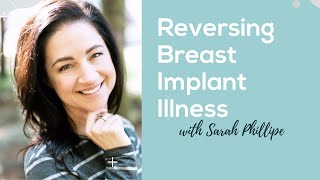
Sarah Phillippe had breast implants placed in 2011 and developed vague symptoms within months, spending five years before deciding to explant. After removal and surgery for stage-4 endometriosis, she recovered over roughly a year. She describes brain fog, fatigue, hair loss, and chemical sensitivities as common breast implant illness symptoms, and outlines a functional-medicine approach to recovery involving gut healing, liver support, and addressing underlying infections.
Questions this video answers
Around 2011.
About six to nine months after implantation.
About five years from symptom onset to decision to explant.
She had stage‑4 endometriosis with organ involvement and underwent a very extensive excision surgery described as eight hours long.
Roughly one year total until she started feeling quite good again.
Chapters
The information provided in this podcast is educational and not intended to diagnose or treat medical conditions. Dr. Donni Wilson struggled for decades to solve her numerous health issues and heal her body. But with focused determination, she healed herself. And in doing so, she discovered the Dr. Donnie stress recovery Protocol. On this show, you're going to hear from doctors, nutritionists, and Experts along with Dr. Donnie, who will give practical advice and wisdom to help heal your body. This is how humans heal.
Hi, and welcome. I'm very excited to introduce you to Sarah Phillippe. Today. She is an expert in breastplant illness syndrome and how to reverse the symptoms associated with breast implants. And so thank you and welcome, Sarah, for being here with me today. Of course.
Thank you so much for having me, Donnie. It's a pleasure to be here sharing all this information with your audience.
Oh, my gosh. I mean, please start by telling us, how did you get to here? How did you discover even that breastplant illness was a thing and it was something you experienced, right?
Yeah, yeah. So, you know, my story, I feel like, is one of pain to purpose, really. I mean, how I got into this field really is a result of what I've been through personally in my life. And I think that's the case for a lot of, you know, functional medicine or holistic health practitioners. But for me, you know, I.
Decided to get my breast implants placed. I believe it was 2011, and at the time, I had been working night shift as a nurse for about five years. Four or five years. I had a terrible diet. Not a great lifestyle, of course, because my sleep schedule is opposite of what it's supposed to be.
And five years is a long time on the night shift, and that's a tough one.
Yeah, very stressful in the body. And so when I had made that decision to get my breast implants, I was already kind of set up for the fall because of my diet and lifestyle and my sleep schedule and, you know, just really, really stressing my body at the gym as well and pushing my body to the limit and cyclical dieting and all of. So I had my breast implants placed, and I would say it was about within six to nine months or so. I started developing vague symptoms, you know, that kind of made me think I might have hypothyroid and potentially even Hashimoto's been experiencing fatigue and hair loss and irritability and some anxiety and just.
Kind of gaining weight a bit more easily and having difficulty getting it off.
So it was like, even though, like you were saying before, Maybe you weren't at the healthiest because of your work and your diet, but once you had the breast implants placed, then it got worse. It sounds like.
Yeah, I think that they were the trigger for me. They may not have been the only, you know, problem in my life, but they were definitely the trigger that triggered a lot of symptoms to develop. And so, you know, I experienced a lot of cognitive dysfunction, so brain fog, difficulty concentrating, word retrieval, memory loss. I had really struggled with just reading something, and I had to read it, like, 10 times because I couldn't tell you what I just read, you know, that's really pretty significant. Yeah, it's hard when you're in the medical field. You know, you have to be pretty sharp. I had. What else? Muscle. I would say kind of muscle wasting. If I wasn't, like, really on top of lifting weights. Temperature intolerance. So I didn't tolerate cold very well. I had low libido. I had heart palpitations, shortness of breath, night sweats, insomnia.
So, like, head to toe, basically. I mean, it sounds like just every possible symptom. You're. You. Have you. So you started, I guess, to be like, what is going on with my body?
Yeah. Yeah. And the worst for me was actually menstrual issues and sibo, because SIBO is. I mean, if you have it, if you've ever had it, you know, it's.
I have had it, and it is. It's like I often say, but if the digestion gets involved, that's the thing that finally pushes us over the edge. And it's like, I can't do this anymore. You know, like, when you have the bloating and the pain and the pressure and the burping, and you're just like, this has got to end.
It's all things we take for granted. Right. Until we lose it.
But, yeah. And then I just really couldn't handle light sounds, chemical smells, any of that. It was just. Everything was just on overdrive. And I was so, so sensitive.
So I went to lots of different doctors, could never really find an answer. So that ended up leading me down the more functional medicine, holistic health path and doing functional lab work and discovering all these different things that were going on in my body. And at the time, I kind of had that intuition, that instinct that maybe my breast implants were a part of this picture. But there was really no information out there at the time. There was no evidence that this could be a possible factor.
Well, I think that's an important point because probably A lot of people can relate to those symptoms, you know, of fatigue and the digestive issues and everything you just mentioned. And I think it's important, like what you said is that you can go to all different practitioners and specialists and do the standard tests and the blood work, and it might all be kind of, quote, normal. And you're like, but I don't feel normal. Obviously, there's something going on. And because breastplant illness is such a new discovery, you know, that we kind of realized that this was even a possibility. Probably most practitioners weren't even thinking that.
No, they weren't. And I actually, you know, the naturopathic doctor that I was working with earlier on in my journey, she knew I had breast implants and that she never really asked about it or said anything about it. And then I worked with another doctor down the road who, you know, specializes in Lyme. And so I was working with him to treat chronic Lyme. And I even asked him point blank, do you think my breast implants could be a part of this problem and making it difficult for me to heal? And he said, oh, no, we'll just, you know, get your. Get the Lyme under control. And then I think the breast implants won't be a problem.
I see, I see. So it's like a chicken and the egg, you know, And I think practitioners. I can relate to that as a practitioner. Sometimes you're like, you know, trying to figure out, am I at this end and by solving this end, it's going to fix everything else, or am I at this end? And we. Oh, you know, like they were saying to you, they figured that maybe addressing the infection or addressing underlying hormone imbalances might solve it, but when it. Tell us more, what ended up. I'm assuming that what ended up happening is that they figured out, no, it was the breastplants that was causing everything to go out of balance.
Yeah. You know, I don't think it was anyone who pointed me in that direction. I think I eventually just started listening to my intuition about it. I did everything right. I did all of the things I was supposed to do. My dietary changes, lifestyle changes, meditation, yoga. Like, everything I was doing was the right approach, but I was only getting so much better. And I did get a little bit better, but I still struggled with a lot. And it was really when I started trying to have a baby and get pregnant. And I struggled for years, trying and trying and trying. And then, you know, I just. One day I just felt like, you know, I was literally on my knees just why, why, why, why? Crying out like, what is going on here? I just need an answer, you know, and it really just kind of came to me that, you know, I had been. I had been suspicious about the breast implants, but it kind of all came to a head at that point, and it really was no longer about me. I kept thinking in my mind, you know, okay, if breast implants are my root cause or at least a big one, and I do get pregnant and they've made me this sick, what are they going to do to a growing baby inside of me? You know? So it came full circle, and it started to become about, you know, the future health of my future children.
And, you know, and sometimes that's the thing that motivates us, right? You start to be like, wait a minute, I need to be healthy in order to get pregnant in the first place, let alone have a healthy baby. Yeah.
Yeah. And so then at that point, it was really an easy decision. Once I kind of came to that conclusion, I was. I had my implants out, and about two months later.
Wow.
It took me like five years to get to that point of thinking, you know, I wonder if this. Could this be to finally making that decision.
And I'm so interested now to hear what happened after you had the explant. Like, did you. What was that sequence where, like, you. Did you then feel like you had confirmation as your body started feeling better or.
You know, I had done so much work, and I had, you know, made a lot of changes in my life before that. So I think that really helped, you know, improve a lot of things before I ever even got them out. But it wasn't a miracle getting them removed. It was a very slow healing process, and I didn't really notice a huge shift. I actually feel like I felt quite a bit worse for a while.
And then about six months later, I needed a second surgery. So it wasn't the end of the road for me. I had discovered before I got my breast implants out that I had developed stage four endometriosis, which means that I had organ involvement. So, you know, I had. It was grown into my bowel. It was grown into my vaginal wall. It was invaded. It had invaded my left fallopian tube and ovary. So I had to go in for a very, very extensive excision surgery that was eight hours long. And surgeon said it was the worst he'd ever seen.
That's a long eight hours at a. In a laparoscopy, huh? Yeah, yeah.
And so that recovery, I think, was actually Far worse. And it took about six months for there, so probably about a year total.
Until I started feeling quite good again. And it was really, I attribute it to obviously removing a sword, one of the sources that was creating chronic illness and chronic inflammation in my body, but also, you know, all the work that I had done prior and then after as well to really work on healing my body.
And how long has it been since then?
You know, in October this year, it'll be three years.
Okay. Okay.
Wow.
So do you, I mean, would you say you feel like you have your body back in a way?
Absolutely. Absolutely.
It was the decision, I think that I made initially because of a huge lack of self esteem and self worth. And it's been such an incredible, you know, growth experience and journey back to self love and back to discovering who I really am outside of my physical appearance. So there was a lot, I think, of healing that needed to happen because of the root cause of why I got them to begin with.
Wow, that's powerful because for women who are listening, who maybe have breast implants and maybe are not feeling well.
Somewhere in that blur of trying to figure out why they don't feel well and kind of having an aha moment, hey, maybe it has to do with the breast implants and realizing like what you're describing, that it can be a journey, but not only a journey of recovering from the implants themselves, but really gives you that opportunity to look at yourself and reflect on, you know, what is it that even had we choose implants to begin with and the healing that comes there in terms of how that. So it's like it becomes such an interconnected process. Right. There's so many different levels, levels and layers to it. But, you know, it sounds like it takes some discipline and some real focus on yourself. Like, really, what would you say was the thing that kept driving you forward? I mean, I heard you say it was for, you know, aiming for this healthy baby, but is that. Would you say that's it? That's what really, each day you'd say, I just really want to figure out how to improve my health for my, you know, for my future pregnancies and babies. And that's what did it? Because I think that, you know, for a lot of women, it probably feels overwhelming.
Absolutely. I think for me, yeah, my why? And I always think it's important to have to think about and reflect on, like, what is your reason that you want to get your health back? You know, there's gotta be a bigger reason than just, I want to feel Good. And for me, it was the driving force was really wanting to start a family and having not been successful with that so far and then worry about what this could do for a growing baby. So that was kind of the thing that kept me going and helped me make that decision and has kept me pursuing the best health that I can be in.
My little kitty is visiting us here.
Well, I mean, I haven't gotten to review very much of the research related to breastplant illness. If there is even any wondering if, you know, what you found in terms of research now that's, you know, sort of validating your experience and what you've seen that really stands out that can help, you know, other people to really, you know, have that eye opening moment of wow, this could be a real important cause of illness.
Yeah, you know, you're right. There really isn't a lot of research out there. There are some research researchers who have done a lot of their own observational studies and really kind of dissecting, you know, how breast implants affect the body. And so there's a couple of schools of thought out there that first of all, one is with regards to Asia, which is autoimmune.
Adjuvant induced autoimmune syndrome. So that means that we would think about silicone as an adjuvant in the development or the onset of autoimmunity. And a lot of women are diagnosed or maybe even misdiagnosed with different autoimmune conditions that sometimes actually resolve on their own after a period of time of removing the breast implants. Sometimes not really depends on the person. But so there's that thought process that the silicone which is very neurotoxic and it's very pervasive in the environment, in our personal care products and our home cleaning products, it's everywhere utensils that we use for cooking and all of that. So it's not just the silicone in the implants. We're exposed to it on a daily basis even without the implants. And even the saline breast implants have a silicone shell. So regardless of what type of implant there is placed, you're always going to be exposed to some level of silicone.
And then the other is really just the silicone itself is very, you know, the fact that it's neurotoxic and very pervasive in the environment. Adding that layer that's inside the body and exposed on a daily basis, you just can't escape it. And it's constantly bleeding into the body, into the lymphatic tissue at body temperature and traveling throughout the body that. That is leading to a neural neurotoxic level of silicone causes so much dysfunction and dysregulation in. Within the cells themselves. So it's, you know, one. One thought is. Is autoimmunity, one thought is toxicity. And I think they both are very relevant.
And are there any tests that you find, like, help a person to get any kind of confirmation?
You know, I think that's the hardest thing about it is that there is really no test out there. There's. There's no test for.
Specifically related to breast implants or breast implant illness because the symptoms are so.
Vague. You know, they can be. They can cross so many different lines of different types of diagnoses, which is why there's so many misdiagnoses is because no one really knows what's wrong with you, you know?
Yeah, you could have. You could have a diagnosis of autoimmunity and hypothyroidism and endometriosis like you. Or PMS and IBS and sibo. You can have all of these diagnoses, but it's not really identifying this as an underlying issue. Wow.
Right, Right. But what I do often see is on functional lab work, there's a lot of dysfunction. You know, there's really low immunity, and even, like, your gut immunity, that's your first line of defense. So I really commonly will see low secretary IgA.
Lots of autoimmune markers, lots of inflammatory markers.
I use a neurotoxic questionnaire just to assess people's symptoms. And people are always really surprised at how many symptoms they're dealing with on a daily basis that they just don't think about until they're asked about them, you know, and so women will have, you know, on a scale of 0 to, you know, 250, maybe even 300, they'll have upwards of 100 symptoms dealing with on a regular basis. So.
And we just kind of disregard them as kind of like, oh, maybe I'm just being forgetful or I'm a little tired or, yeah, my heart races sometimes, and we just kind of blow it off, right?
Yeah, yeah, it's really easy to blow it off because so many symptoms are so common these days, even though they're not normal. I think that's a big distinguishing factor that our bodies were designed to function optimally, not with, you know, symptoms every day, on a day, you know, on a regular basis.
Yeah, that's. That's. That's really something. And I think it becomes so much of the norm that we, people start to forget that it's even possible to feel good. And it, and sometimes it, you lose hope, you know, you lose hope that something could change. But here you are, you know, as an inspiration, saying no change is possible. It takes, it takes time, it takes discipline. But the thing is that since you figured this out for yourself, you're creating ways to help people get through it more efficiently, right?
Yeah. Yeah, absolutely.
Hello, Tell me more, tell us more what you created and how you help people to figure this out and to help solve it.
Yeah, you know, when I was going through it, what I realized is that there's just really no one out there helping women heal after the surgery, after the accident. And this is huge because people, people just don't know what to do. And they, some, some women are really expecting that this is going to be this miracle cure and then they're going to wake up miraculously feeling 10 times better. And while sometimes that may be the case, whether it's short lived or long term solution, I don't know. But for most women, it's not the case. And there's work to be done. And so because I've been through it myself and I understand, you know, what it takes to heal the body and how the body works, this has just become my pain to purpose, you know, my mission to really give women the tools they need to heal themselves. And so, you know, knowing what breast implants do to the body and what other root causes are commonly an issue. So, you know, I don't believe that the breast implants are the only issue that is creating chronic illness in women's bodies today. I think that there are several things, the kind of come together to create this perfect storm situation. And so if we think about it that way, you know, just removing the breast implants is not usually enough. We have to kind of do more digging and figure out what else is going on here. So oftentimes I'll see things like someone's living in a moldy home or working in a moldy home.
So more toxic exposure.
Usually there's some underlying infections going on, whether it be gut infections or systemic infections, maybe reactivated viruses that were once dormant, but the immune system's just not functioning the way it should anymore.
Like Epstein Barr virus and. Okay, yeah, and you mentioned Lyme. You know, I think of a lot of these kind of chronic infections, they, they flare up when we're susceptible. Even HPV virus, you know, it's, it starts showing up when we're vulnerable and as you're describing, it's like it becomes this perfect storm of susceptibilities. So then the viruses just kind of join the party, you know, and sometimes it's tempting to want to just chase down that one path, like, oh, I'm going to go treat Epstein Barr, I'm going to go treat Lyme. But really, it's the whole health of your whole body that's. That needs to be addressed so that you're no longer susceptible.
Yeah, you really have to work on optimizing the internal terrain in the body.
And, you know, other types of infections that people don't normally even consider or even know about are cavitations.
If you have cavitations, which is an infection in the jaw, that can create systemic symptoms as well. And so systemic inflammation that can really be a blocking factor to true lasting healing.
A lot of times the dentist doesn't. Doesn't catch it, or you have to do more extensive imaging to actually find these sort of festering infections from, you know. Yeah, like you said, it gets into the jaw from a tooth, and that's a real stress on the body. We often kind of think, oh, it's just in my mouth or it's just in that tooth, but it's actually kind of spewing out toxins and bacteria all the while. No, it's a really good point to just to, you know, sometimes and you know, you start to realize, you know, sometimes there's a whole list of things like you are so saying amalgam fillings, you know, if there's that metal exposure and it's. Maybe if there was just one thing, it may not add up to an issue, but by the time you have all these factors, then, then it's just dragging you down.
Yeah, it's typically like an onion. You know, we're just peeling back the layers to make sure that we're addressing all forms of stress on the body. And so that's really what, you know, what my work entails is really digging and not leaving any stone unturned so that we can address all the stressors that are affecting function and kind of coach the body back up to normal function and healing. So if we remove enough of those stressors, the body is designed with the. This innate intelligence that will heal itself if it's able to, if it's given what it needs, and if enough of those root cause types of stressors are removed. And the other thing that most people aren't thinking about is mental emotional stressors.
Yeah.
You know, and so mental emotional Detox work or if you have past traumas that are unresolved, that are just kind of like a festering wound, you know, that can keep you in a space state of chronic fight or flight.
You know, something a lot of people don't know is that too much stress can actually create an abundance of health problems like high blood pressure, high blood sugar, anxiety, migraines, insomnia, even fertility issues. This is because high stress puts your adrenal glands on overload. They release cortisol and adrenaline, which controls your digestion, hormones, immune system energy, fat focus and even your emotional response. So how can you beat stress when you don't know where to start? That's why we have a free 7 day stress reset program. It's designed to help support weight loss, digestive healing and hormone balancing. It includes support for integrating self care. Daily tips come to you by email and video. Gluten free dairy free meal plans as well as grocery shopping lists, journal pages and more. This, this free program will help you beat stress and put you on the path to wholeness in your body. Get your plan now for free@drdonnie.com I.
Like how you're using that analogy of like.
Emotional trauma acting like a, some, you know, we're. Because we can't see it. Sometimes we don't put it on the same severity level as like a injury or an infection, but it is, it's. That has that same capability to, you know, kind of create constant inflammation in the body.
Yeah. You know, and we're more than physical beings, we're spiritual beings as well. And that's, you know, that's something we can't, we have to pay attention to. We couldn't ignore if we want really true lasting healing. You know, that's, that was kind of that last thing that I hadn't addressed. And so I know from personal experience just how healing it can be and it can really just open the floodgates of your body just you know, saying okay, you know, like I can finally get past this point and move on to the next layer of healing. And so that is so powerful and it really can make or break somebody's journey.
Wow. And so do people work with you one on one or they work with you in other ways?
Right now? Yes, that's just one on one. You know, I work with women individually. I may have a group program in the future, but for now, yeah, I just work one on one with women.
Yeah. And I would think that, you know, a lot of you, do people reach out to you and just Say, hey, I'm wondering if, you know, have, you know, I heard you, and I'm wondering if this might be the case for me. Is that a common starting place?
Yeah. Yeah, it is. And here's what I'll say about that, too. And this is what I always tell women who ask this question, is that.
If you've been dealing with a lot of symptoms and you have done a lot of things to try to resolve your condition or your symptoms that you're dealing with and you haven't improved and you have implants, then they're the obvious next step. However, I will also say that even if you have. You've been dealing with symptoms since before your implants went in, or if, you know, you had implants for a very long time, you know, decades with no issues, and then maybe a long time down the road, you started developing symptoms. To me, it really doesn't matter what came first, the chicken or the egg situation. It really is about once. Once the body starts breaking down, it's really about removing all forms of stress on the body. And the breast implants are one of those stressors. And so.
I don't ever expect it to be this miracle cure, getting them out, but I think it is an important first step. You know, removing the source or sources, and most people's case it's more than one, is crucial for healing. You really can't heal the body when you have this core, chronic source of stress that's still present. So that's always the first step. It's just like when someone has amalgams and they're neurotoxic from that. You know, you can't detox the body with amalgams in your mouth.
It's so true. Yeah, no, it's in a. And it's. It's like, right away, it just puts it the first thing in line, you know. But also, there's a piece where I find that a lot of times I. Before people can really maybe even dive into that big of a change or that much change, you know, because next will be the sort of detox and recovery process. But sometimes I find they need a bit of, like, preparation first, like get the body ready for this big transition. Do you find that too?
Yeah, if. If there is definitely, you know, a good amount of time before explant is scheduled, I think it's really a great idea to really working. To be really working on opening up the detox pathways.
You.
You know, making sure that your liver and your kidneys and your lymphatic system are well supported and you're having regular bowel movements every day and eating a nice clean, organic, pasture raised kind of diet and getting clean water and working on reducing the stressors and toxins that are coming in from other sources, things like that. That really sets you up for a nicer recovery for sure.
Well, and plus then if say like you're describing, you've made these diet changes and maybe you've made some changes in like where you're shopping for groceries and even personal care products and the toxins we can get exposed to there, then you've kind of got your home, your foundation kind of set so that when you go through a surgery and a recovery, you already have the things to choose from that are gonna be supportive. So I like that idea of like thinking of it as like a preparation for this process so that you've got that foundation already.
If you don't mind, I'd love to talk with you a little more about detoxification because.
It sounds like that's a lot of what you're helping people to really understand is how the body detoxifies and how to be supportive of that process. And I know people hear a lot about detox out there in the world, but, you know, how do you think about it? How do you. I mean, you were just saying like, you know, the different pathways that our body detoxifies, like through stool and urine and sweating, but, you know, talk us through a little bit more in terms of like how you explain detoxification to a client.
Yeah, absolutely. So this is, I think, a really important part of healing. I think most women are aware of that because it's talked about a lot in the breast implant illness world and on different features groups, social media, everyone's talking about detox. I do think it's just one of the steps that really needs to be focused on, but it is an important one.
So for me, you know, I think of it in a couple of different stages. So you really have to really open those downstream pathways first. Because if you try to detox the body before your pathways are, you know, well nourished, well functioning, open processing toxins, then you're going to end up bottle. It's just going to bottleneck. Nothing can actually get out.
And then you're going to feel worse.
And then you're going to feel so much worse. Yeah, and so it's more like straight sweeping things around rather than actually getting them out.
Oh, that's such a good point. I mean, it's. Sometimes we can even overlook constipation and it's like, no. Before you can really be detoxifying, we have to keep. Get the bowels moving regularly or we're just getting nowhere.
Yeah, yeah. If you're not pooping, you're not detoxing. Detoxing.
So that's really important. I like to see women pooping three times a day, two to three times a day for proper elimination. And, you know, of all the toxins we're going to be working on pulling out. So, like I said, liver, kidneys, lymphatic system, those are all really important to support. So I use nutraceuticals. But I also think that it can be great to do things like castor oil packs and coffee enemas and dry brushing and rebounding and lymphatic massage, whatever you can do to encourage those pathways to work. Well, sweating is great if you've explanted already with an infrared sauna, things like that. You don't want to do that before your implants come out because heating them even hotter than body temperature generally results in releasing more toxins.
Wow, that's really important one for women to know, right. And to be like, okay, wait till after the explants are out and then you can do a whole sauna protocol.
Yeah, absolutely. So, and then, you know, I always like to start binding things in the gut, you know, right away, because as your detox pathways start to open with the support that you're doing, you're going to naturally start to dump some toxins. And we want to bind those up to get them out in the stool. And your body is really, really small. So what happens when you're dumping toxins is everything is not everything, but a lot of things are processed through the liver and dumped into the gut via the bile. And the body wants to conserve energy. And bile is very energy, expensive to produce. So it will reabsorb the bile back into circulation, and along with that comes the toxins that were bound to it.
Why would you think the toxins are on the way out? They're getting right back in again.
Yeah. So we want to sequester that bile or bind it up so that that it is eliminated through the stool. And we're forcing your body to produce fresh, new bile. And so and the other part of this is really re establishing methylation. A lot of women who have breast implant illness are poor methylators. You know, they have different gene mutations of some of their detox genes, and it doesn't necessarily impact their ability to effectively do detox work. It's Just that we need to of course, remove the sources and then reduce what's coming in from the outside environment into the body and then work on re establishing their methylation pathways. So that's really important. Supporting energy production, so supporting the mitochondria and ATP production, which is energy, and then giving your body the necessary building blocks for building healthy cells. So you need the right types of fatty acids that aren't oxidized to create healthy cells. So we can reduce cellular inflammation. When you can consume a lot of fried foods or processed foods or just foods that have even fats that have even smoked in the pan reach their smoking point, those, those fats are now oxidized and add to the level of oxidative stress and inflammation on the cell, on the cell membrane. So those are all things that we think about when we're thinking about detox pathways because that we're detoxing the cell. Right. So toxins have to be able to get out of the cells and they can't do that very well when the cells are inflamed.
Oh, I love that you're bringing it to the cellular level, you know, because I think that also can sometimes be hard to really kind of imagine. We don't look at our bodies and see all our cells, but really we're made up of all these little cells with little mitochondria inside. Like you mentioned the mitochondria. I think of like the little engines that turn our nutrients from our food into energy. And when those cells get bogged down by toxins and oxidative stress, they can't make energy for us. So no wonder we feel tired, no wonder our muscles are struggling.
And I love this point you're making where to say that the walls of the cells are made up of fats. So the fats we consume determine the fats that are at the cell wall making healthy cells. So if we're choosing what are your favorite fats by the way, people to eat.
I like.
So I always encourage people to eat a lot of, you know, fats like.
Ghee or grass fed butter, if you can tolerate that. Avocados, avocado oil, raw nuts and seeds. Because again, when you roast them, you kind of oxidize those fatty acids.
So you want them raw before not cooked, basically. So the faster in a healthy form.
Yeah. Eggs, if you pasteur raised eggs, if you tolerate the eggs, that's a really great source of, of choline.
Let's see here. I'm trying to think, what else do.
I normally say for my fish Yeah, I was thinking, like, official maybe, if, especially if the person's not having very much like wild salmon, then they could get the Omega 3s from a good quality fish oil. But just to be realized that, because I think sometimes we're taking in these fats and we hear how important fats are, but we forget that it's because they actually make up our cell wall. And having a healthy cell wall is so important for cellular function and cellular detoxification. So that's wonderful. I love to get to emphasize that as a piece of detoxification, because I think sometimes people think of just like. And while it can be important, right, to sort of remove our exposure to toxins, you know, choose organic foods and stay away from, say, alcohol or substances that might be more taxing to our liver, we can also take things like milk thistle and other nutrients like the B vitamins, the methylated B vitamins for liver function. But at this. So we can do all that focusing on the liver. But you're making such a good point that that's not the only place that detoxification happens and that we want to help out the liver, but we got to help out all the cells in the body to function, too.
Yeah, yeah, Very, very much so. And you know, the mitochondria are, yes, they're most commonly referred to as the powerhouse of the cell, right. Because they make all the energy. But they're also can be referred to as a canary in a coal mine because they are so sensitive to changes within the cell and especially toxins. So when. When they're affected by toxins that can actually completely shut down their ATP or energy production that is supposed to be produced to fuel your cells and their functions that they perform.
And you can effectively get stuck in what's called the cell danger response, because when you're exposed to a high amount of toxicity or different infections or things like that, your body actually goes into cell danger response, which, you know, that ATP actually, your membranes become leaky and it leaks out of the cell and into the bloodstream, which is usually not where ATP is found. And that goes to fueling that inflammatory sense, cell danger response, rather than fueling your cells. And so it can really take this.
Damaging pathway of leading to a lot of chronic illness because of that. Because your mitochondria talk to your DNA as well, and they, you know, will tell your DNA to turn on or off genes. And so you're. You end up with. Because of this, you end up with the. The illness of your genetic weakness, basically. So if you have certain gene mutations and your mitochondria are like, hey, we're dealing with this threat over here. We need you to shut off. You know, and it's the MTHFR gene mutation or it's cuft gene mutation or whatever it may be, then that's going to impact function in your body. And so it may be different for each person, but it's going to impact you. And so, you know, that's why it's so important to work on the cell membranes, but also, you know, removing those stressors that are keeping you in that. In that state of that cell danger response and then working on shutting that off too, because the more you get stuck in it, the harder it is to get out of, you know, and the more poorly your body is going to start functioning because of that. So there's so many layers to just, you know, the basic foundation of normal function.
No, it's such a good point. And I think, you know, it's to realize that all of this is possible. You know, like, we can think about how stress and toxins negatively affect these, you know, our cells and our systems in our body, but to also know that it's possible to safely and effectively detoxify and reverse this cell danger response and get your cells working again. And it helps to work with a practitioner who has this training and can help guide you, because it's a lot to do on your own. It can be, first of all, you don't feel good. So trying to do it on your own and learn all of this on your own, and it can be overwhelming. But also I find that there's phases you want to go through, and if you. And if, you know, like we talked about, if the bowels are not moving, we have to start there. And so just knowing all of those places where, you know, you want to, like, start here first and then learn what your body needs next and move on to the next phase. And really, because it is so individualized. Right. Like, it. I mean, I find that, like, one protocol, what might work for one person could be very different for another person, including when you are at this point of stress and toxicity that you become so sensitive sometimes to even things that are healthy for you. So you're reacting to sometimes herbs or nutrients, and it can make you feel more like you're stuck. But actually, there's so many ways we can help you get unstuck. Right, Sarah? I mean, is that what you find too, is working with a person, you can help them solve the. Solve it all along the way?
Yeah. Everyone is so unique and with their bio individuality and what, what things they've been exposed to even and how their body is functioning currently and what deficiencies they might have and things like that. So you know, there's no one size fits all approach. There's no plan that I could give every single person that would work the same way for every single person. You know, it has to be really individualized to that person and where they're at and what their needs are. And you know, once you start getting those foundational things going and working well, then you can start moving into more deeper detoxification work and addressing, you know, pathogens and things like that. So you know, there is a point where we can start to chelate, you know, heavy metals and toxins with oral chelators. You know, we don't want to use things that are weak binders because it's going to be the same street sweeping situation and we want to make sure we're using binders within their half life as well. Because once those binders stop working in the body, if you don't have more coming in, it's just going to drive those, it's going to let go and those toxins will be driven deeper into the tissues. So it's very complicated when you, you get into really, truly detoxing the body at the cellular level. And you know, I always encourage people, even if it's not with me, work with someone who really understands this and can help you through it. That's, it's really, really important so that you don't get into a situation where you're worse.
Yeah, yeah, no, I think it's, I think that's a really important point. And like you're mentioning, especially with something like chelation of metals, you know, it's, there's really well researched ways for that to be effective. But you want to work with a practitioner who understands it so that you are sure. I mean basically my rule is always if, if ever you feel worse, it means we need to step back and figure out what's, what needs to be adjusted for your protocol. Because I think sometimes people assume that because they feel so terrible that they're supposed to push through feeling worse. And I want to just warn people, no, if anything, at any point in any kind of detoxification program or even addressing under over imbalanced gut bacteria, if you feel worse, it means we need to, there's things we can do to help with that. We may need to change doses or products or help one of your detoxification Pathways so that things are moving through and out and you shouldn't have to worse.
Yeah, yeah, that's a good point. You know, it can be done gently enough for your body to be able to tolerate and. And process so that you don't have a lot of symptoms and you're not feeling worse. You know, it can be a bit of a smoother process than a lot of people experience. I see a lot of people talking about, oh, you know, I'm having all these horrible symptoms. It must be another detox wave, you know, and it's not really normal to have all of the symptoms, especially if you're not even provoking anything to come out. You know, it's. It's a sign that your body can't actually release any of those things.
Yeah. And we can. You know, sometimes we have to dig into the biochemistry. It sounds like you like to look at biochemistry like me, you know, look into the biochemistry and the genetics and say, why is it for this person? You know, is it because of a gene mutation that's expressing that needs to be addressed with a certain nutrient, or is it because of, you know, like, let's figure out the biochemistry of it, because then we can use nutrients and herbs and other natural approaches to navigate the body. And we don't. It doesn't have to be such a mystery. We can actually, you know, use what information we have to solve these things. And in most cases.
Yeah, absolutely. I think there's always an answer. And if I don't have the answer, I always find someone who does.
That's why it's so helpful to have such a great network of practitioners that you can call upon like you and I have.
Yes. And I think. And to be able to just connect like this, too. So thank you so much for sharing and for being here today. If people want to find out more about you and speak with you, how can they reach you? What's the best way to find you?
You can find me on Instagram and Facebook. My handle is Reversing breast implant Illness. And I have a private Facebook group that is also called Reversing Breast Implant Illness. And then my website is the same. Reversingbreastimplantlness.com so any of those places are easy to reach out to me.
That's great. That's a great way to remember it, you know, and I love that you're putting out there that it's possible to reverse reverse breast implant illness. I mean, first of all, even just defining and raising awareness that it's a thing you know, and I think it's like most things in medicine, it takes a long time for it to become integrated in the standard medical model. And this is a really recent realization that it's. That it. So thank you for raising awareness and talking about it and helping to women that this is possibly affecting your health. Even if you've had implants for decades, it might still be influencing your health. And like you said, it might not be the only thing, but it just could be adding to all the other stress factors in your life. And if we can. If it's a stress factor that we can eliminate, because there's so many stresses we can't eliminate. Right. There's just stress that's going to be part of life. So. So there's stress that we have no control, we can't eliminate. But if you can eliminate the stress coming from a breast implant and it could benefit your health and you can reverse, like you're saying, you can reverse the illness associated with the implants that gives people hope that they can. That it's worthwhile to put themselves in their schedule and take the steps necessary to make that change possible in their lives. So thank you. I think it's so awesome what you're doing.
You know, that's really my hope, is that my story gives other women hope. And also that, you know, in sharing what I've been through, that. That if you're thinking that it might be part of your issue and part of your picture and you're, you know, sometimes that you're dealing with that you don't wait, that you just listen to your gut instinct, listen to your intuition, because it's usually right. And for me, you know, I waited long enough to get to the point where I had to have body parts removed, you know, and that's never desirable outcome. But, you know, I am. I am really grateful for what I've been through, for my experience, because of the fact that it really taught me how to live, how I should be living. And who knows where I would be now if it weren't for that experience, if it weren't for that lesson in life. And, you know, I may end up. I may have been down a different path of leading to chronic illness, you know, with my diet and lifestyle choices. So this has really given me a lot of tools to restore my health and keep it for life.
Wow, that's so awesome. Well, thank you so much, Sarah, for being here today and for this conversation and for. And again, just sharing your stories to help inspire others.
Absolutely. Thank you for having me.
Thanks for listening to how humans heal. If you liked this episode, leave a rating and a review. And for more resources, visit drdani.com.
More from Dr.


#Hypothyroidism and Hashimoto's: How to Know if You Have It and What to Do Next






