Start Healing in Childhood with Dr. Madiha Saeed
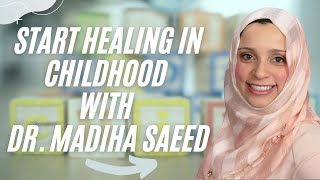
Dr. Madiha Saeed discusses holistic parenting and functional medicine for children, drawing from her own autoimmune illness recovery. She explains how to lower inflammation, build emotional intelligence, and teach discipline as a teaching tool rather than punishment. Her approach combines mind, body, and soul to address the root causes of behavioral and mental health issues.
Chapters
Hey, everyone, it's Dr. Donny and I am really happy to introduce you to Dr. Medea today. She is a medical doctor who specializes in helping children and families with their health from a functional medicine perspective. Thank you so much for joining me today.
Thank you so much for having me. I am incredibly honored. This is going to be so much fun. Yay.
As you reminded me, we have known each other for a number of years, and so it is fun to just be able to reconnect and see what you have been up to. I know you have these new books right behind you that you've been busy writing and creating. So I definitely want to make sure and tell everybody about that today. But also maybe just start by telling us, like, what inspired you to do what you do? Why is it that you're so passionate about helping families?
You know what? I think as most of us, it starts with our own journeys, right?
Yes.
And I was born and raised in Naperville, Illinois. I lived the same kind of bad habits that have led most of adults and children down the road to chronic health conditions.
But I thought that it was just my new normal. I continued on that hamster wheel, specifically all throughout residency, even where my husband and I were both interning as family physicians at the same hospital, working 80 hour work weeks. So I was a new mom, a new wife, a new resident, all at the same time. And what was crazy was I developed multiple autoimmune conditions like Hashimoto's and lupus digest, severe digestive issues where I was literally just to go to the bathroom, I was taking steroid suppositories. And it was miserable, miserable, shutting down. Like I'm telling you, my body was shutting down to the point where acne, eczema, so work, dermatitis, fatigue, joint pain.
And then, you know, it just felt like it was one symptom after another and another. And I even got shingles in residency. And so here you're in your 20s, where you're like your late 20s and you've got shingles. And I'm like, what? This is ridiculous. This is. I'm supposed to be in my late 20s and here I'm having a body that's of an older individual. So it was. But I continued on that hamster wheel because. Right. That's what you do just to try to keep your head above water. Until one day, my husband. We're supposed to do.
We're like, oh, we're supposed to get a career, get married, do the things.
Yeah. And then just, you know, putting especially Us as moms, I think sometimes we're like, oh, we're going to put everybody else before us. And then I was just trying to keep my marriage together and then trying to feed everybody and then this newborn baby and then just with this new residency. So I was just already overwhelmed and. But the hamster wheel didn't stop for me until one day my husband actually had a gut inclination and he said, can you go please check up on our 10 month old child that's in daycare? It was associated with the hospital, so that was awesome. I just walked on over there and that's when I walked into every mother's worst nightmare.
The lights were dim, the daycare provider was rocking back and forth, back and forth in her chair. And then the eerie silence was actually broken by my child's in the back. And when I ran back there.
My little 10 month old blessing from the universe, God, his eyes were bloodshot, his face was swollen, his pacifier was in his mouth, his arms and legs were tied down in a receiving blanket in a bouncer seat. His pacifier was in his mouth, his Winnie the Pooh blanket was wrapped so tightly around his head that he just couldn't breathe. And I immediately picked him up and ran out. And that day I made a solemn promise to God, the universe that you saved my child this day. I promise I'm going to take care of this child the best that I know how.
Right?
Because this is like, I swear I will take care of this child the best that I know how. But then I had to take a step back. Me, as a family physician, I was completely falling apart. So how am I supposed to take care of this child the best that I know how if I, as a family physician don't even know how to take care of myself?
You're like, yeah, I have to take care of you in order to take care of the baby.
Yeah, absolutely. Well, on top of that, if I couldn't even, I didn't even know what I could do to help stay healthy. Even though us as family physicians, we're supposed to be taught like prevention, which is really just early detection, but really there's, we don't get taught much nutrition, very little stress management. And so I went to doctor to doctor because I knew some of these conditions could take my life one day. And I did. And I didn't want to live in this life, stuck by my conditions. And I went to doctor to doctor despite being a physician and despite having doctors in my own family. They were basically like, sorry, you're Just gonna have to sit back and let this disease take its course. And I'm like, are you freaking kidding me? I'm not gonna let this disease take its course.
That's not the answer. Or they're like, oh, there's these medications. And you would read the side effects of the medication it says may cause death. And I'm like, that's what I'm trying to avoid.
This doesn't make any sense whatsoever. Wow. Yes.
And I just, you were like, this is not the path I want to go down.
No, this isn't. I don't want more side effects and, you know, drug interactions. And stuck with all these medications because I was on PPIs already and so many other medications. And so right after residency, I joined this medical practice where under one roof there was me, an OB gyn, an internist and exercise physiologist, nutritious counseling, chiropractor, massage therapy, all brought together for the complete healing of the whole person.
Sounds good.
Yes. And that is when it continued to blow my mind because I was already studying parenting, right. Because now I have a three year old, I was studying, you know, my psychologist had given me a book called the Science of Parenting. And I was like, oh my God, there's actually a science to parenting. And then when you combine it with integrative holistic functional medicine, it just blew my mind. And so that's when, over the last now 13 years, my oldest is 14. And the last 13 years, this is what I've been educating myself on. Practicing integrative holistic functional medicine alongside the parenting world. And then that's why this book came to fruition. The Holistic Rx for Kids Parenting Healthy Brains and Bodies in a Changing World. The first book that I wrote was called the Holistic your Guide to Healing Chronic Inflammation and Disease. And that's when I. That was my experience. I went out how I was able to heal myself. That's the best of functional integrative holistic medicine. All under one route in one book covering over 80 conditions with supplements, homeopathics, acupressure points and aromatherapy. So I'm all about trying to make resources easy for whoever, you know, needs to hear this information.
Because you as a physician had to work.
That is why. Absolutely. Ritolian sync. Absolutely. And that's where I promised myself first I would just go part time in the practice as I was having baby after baby after baby. I have four and so my youngest is six. So not really, you know, really diving full fledged into the practice, but really diving into the research and then implementation in the practice was really where I, you know, started to write books. And I find that was easy to do at home. And plus, I can. These are things that I myself write if I had a problem finding this information as a family physician. And where somebody with multiple chronic health conditions affecting multiple systems of the body, where can they start? And that's very similar now with the holistic Rx for kids. Because our children today are very difficult to parent. There are a lot of different than they were when we were growing up. Because just look at the chronic disease in children that's on a rise. Just look at, you know, how this is. Last year and a half, during this pandemic, there's been a 20% increase in suicide and 40% increase in behavioral issues. So these kids are difficult, more and more difficult to parent. And this is just in the last year and a half what's going to happen. And as we go, continue to go down the line. That's why I'm like, you know what? I've been sort of experimenting on my own children. Right. Like my little lab rats, my beautiful children.
And.
And is. And I just. Using my own.
Right, Absolutely. So that's why this book is really a combination of the research and then with the personal experience that really brings it to light, you know?
Well, I want to, like, I'm so intrigued by it and I'm so excited that, you know, that you, like, I love that you just brought your inquisitive mind into your life and even your children's life to say, hey, what's possible here? Because I think a lot of times people don't know there's any kind of books to help with parenting. And we go a lot of times based on what our parents did.
Absolutely.
And I too remember thinking, hey, there's gotta be some other ways to parent. My daughter is now, she's just turning 19, I can't believe.
Oh, wow, awesome.
I guess five years older than your oldest. And so, you know, I too know what you mean coming through, having a child and coming through with this awareness that I'd like to do it differently. I'd like to be able to be an aware parent who's present and offering my daughter maybe different possibilities. Plus, as you're insinuating, children are different. They're showing up different, they have different needs for parents than potentially children did in different generations. And so, I mean, just if you could define a little bit for listeners, like, what does this mean, like holistic parenting or whatever you would call it. What is it? What does that really mean? And how does it look different than what people might be used to for parenting?
You know, and you're absolutely right. The way that you and I grew up, I mean, we didn't have our cell phones, we didn't have all these electronics. We didn't have the news that was constantly going, you know, right now, currently our children are living in a world where the mindfulness aspect is really not present. They're just, you know, really not thinking for themselves. They're just playing on the whim. But then this is where parenting using holistic parenting is different is because we got to bring that child back to their mind, body and soul. And because we are mind, body and soul, our children are mind, body, soul. And so the holistic parenting really helps to nurture a child's mind, body, soul from the inside out. The skills they need for emotional intelligence, enduring deep friendships and making correct decisions, managing their emotions, being able to be resilient all throughout life, no matter what life decides to throw at them. So it's all about raising mindful children. And these, this mindfulness allows us to see our internal and external worlds clearly and shows us how best to respond by being fully aware at multiple different levels of perception all at once. Holistic parenting can help educate and empower children to be mindful of their bodies, their emotions, their social lives, their environment, learning how to keep it all in balance. And when it does start to sway, they're able to recognize it because they know what.
How they feel in their body on a regular basis. So then they're able to then have some, you know, understanding of what ha. What feels like to when your body does start to sway, and then figuring out what they can do to help fix it before it even becomes a problem, and thereby increasing resilience in any situation environment. So it really does, you know, incorporating skills, mind, body, souls that you can teach to your children and incorporate into their everyday routines that will help to influence your child's immune system, DNA function, cells, mitochondria, microbiome, their immune system, all of that because, and most importantly, helping your child make those rational prefrontal cortex driven decisions and not irrational limbic system driven decisions. Because right now studies have shown that our children are living imbalanced lives, right? They're living lives despite warnings of unhealthy diet, eating more junk food than ever before, with limited diet variety, lack of sleep, lack of nature, lack of exercise and play, negative social environment, increased exposure to toxins inside and outside the home, all contributing to an imbalanced child, inflammation that actually then is the driver. Because what happens is that all of these imbalances can actually lead to inflammation. And now we know science has proven that chronic inflammation is hijacking our children's brains and bodies because there's two main pieces of decision making, our prefrontal cortex and our amygdala. So this is an entire world called neuroeconomics. So it's an interdisciplinary field that really helps to see, seek to explain human decision making and the ability to process multiple alternatives and then follow a course of action that's the prefrontal cortex and the amygdala. Holistic parenting really uses science along with your child's lifestyle, tips that you can do to help and optimize your child's brain and body. We can lower inflammation, optimize DNA and mitochondrial function. And when you start to do that, these connections in the brain solidify and your child is able to make a rational decision.
It's so. Thank you so much for sharing that. It's so exciting to me. And I think the way I might sort of paraphrase what you're saying is that because I think of it in terms of stress, like these are various stresses that of course, as humans we're exposed to, but in, in this current time, you're identifying this particular unique stresses that not only us as adults, but also children are exposed to. From technology and stimulation to different expectations. These stresses, we know stresses can affect our genetic expression. If someone has a tendency toward a certain health issue, the stresses, if we don't counterbalance them, can turn on this genetic expression and cause health issues to develop at younger ages. And I agree with you. That's I think, why I too see so much more anxiety, autoimmunity, digestive issues.
At younger ages. And to realize that because I don't think, even though the research is there, it's not common knowledge that anxiety and depression are really inflammation in the nervous system.
Absolutely. Absolutely. And specifically when it comes to kids, they may not have just anxiety or depression just yet, just behavioral problems. Let's just start with the basics. When researchers actually, researchers at Harvard and Columbia actually looked at a group of 4,000 children, and researchers actually determined that those children with behavioral issues at the age of eight, they checked their blood at the age of 10, and those children actually had higher levels of two proteins called CRP, C reactive protein and interleukin 6, which is a pro inflammatory cytokine that's really produced in response to infections and tissue injury. And so guess what? That wasn't associated with inflammation in adulthood, showing a potential childhood origin of adult inflammatory risk. And so studies have shown over and over that these depressed children and teenagers have actually increased risk of suffering from premature death and all of these other wide range of illnesses later in life even. It's so powerful that, yes, you are absolutely right, that this depression and anxiety.
You can even start from very, very, when they're even younger, when their bodies are imbalanced. If we continue on that hamster wheel, these children that aren't given, if they continue their imbalanced lives and they may start with just maybe behavioral issues, then maybe that'll go to anxiety, depression, adhd, and then they're on out, then it can actually lead to even more serious complications inside of problems. It's really important to get that because right now this inflammation is actually disconnecting our children's prefrontal cortex and amygdalas. And this inflammation is leading to our children unable to use their full brain to make a logical decision. Therefore, it's us versus you mentality, more anger, poor relationships, decreased empathy. So it's really, really sad. And we really need to, as us as parents, recognize this today, to recognize that we got to lower this inflammation so we can help prevent all these other chronic health conditions.
So I want to talk more about some things. People can know how to lower inflammation, But I also just want to mention that you can start any point in time, right?
Absolutely, absolutely. Because it's all about educating and empowering your child to be more mindful. And that can start newborns all the way up to adult children, even us, right? And it's very similar because it's very similar to what we're doing already. So why can't we teach this to our children? I mean, the way that we live our lives is we try. We, you know, every. We wake up mindfully, right? We are. The food that we put in our mouths is mindful. We are understanding what's going on, our mind, body, soul. And then we know when our bodies are starting to go off balance. And then we have to. We look back into our lifestyles and figure out what was off. Did I eat too much this day? Maybe too many? Maybe. Was it increased stress? Did I not get enough sleep? And so just like what we do on our regular everyday basis, right? Because life is on like it's a big roller coaster. So things come and things go. And so to really increase that resilience, to help educate and empower your kids to do the same. And it's really awesome and powerful that once you give your children those tools that they need and help to educate and empower them, they're able to then use those skills that you've taught them to put their bodies back into balance before it really becomes a problem. Let me just give you an example because it's so much fun when you walk into your 10 year old and he's meditating on his own. Why? Because mama, I want to put my nervous system back into balance. I was feeling a little irritated.
Like stressed, so I decided I need to take care of myself and help to decrease that. And I was meditating so. Or my 7 year old. I literally walked downstairs and he's having a bowl of sauerkraut for breakfast. And I was like, why are you having sauerkraut for breakfast? And he's like, oh mama, I woke up a little agitated this morning and I think it was maybe because the organic sugar that I had at Nana's house yesterday when she gave us those that, you know, the chicken yesterday. And so I woke up a little agitated so I wanted to come downstairs to help my gut my bugs and my belly mama. So therefore if my bugs in my belly are happy with the sauerkraut, then I'll feel better. I'm like, are you kidding me? So therefore they're able to do what adults are doing to recognize themselves of what's going, starting to get off balance and how they are now in charge of your health. Because I think we are living in a paradigm where just like I felt like your health is in your control to a certain point, the rest of it, it's in the control of the pharmaceutical company, the doctors, the surgical procedure, whatever that is. So this really gives that control back to your child. So it's so much fun.
Something a lot of people don't know is that too much stress can actually create an abundance of health problems like high blood pressure, high blood sugar, anxiety, migraines, insomnia, even fertility issues. This is because high stress puts your adrenal glands on overload. They release cortisol and adrenaline which controls your digestion, hormones, immune system, energy focus and even your emotional response. So how can you beat stress when you don't know where to start? That's why we have a free 7 day stress reset program. It's designed to help support weight loss, digestive healing and hormone balancing. It includes support for integrating self care daily tips come to you by email and video. Gluten free dairy free meal plans as well as grocery shopping lists, journal pages and more. This free program will help you beat stress and put you on the path to wholeness in your body. Get your plan now for free@drdonni.com amazing.
And because I think sometimes people might wonder, like, can a child really learn these concepts? You know, like. Because I think in. In the way we were, you know, raised. I know how I was raised. A lot of times people think that a child, like, you know, it's almost like they're not going to understand or they're, you know, why explain it or. And I know from. From my experience with my daughter, like, I found that the more I explained to her, the better there's. Now there's things I wish I had said to her.
Absolutely, absolutely.
But it's, you know, they can'.
They can. They can. Oh, my gosh, yes. Because I don't think we give kids enough credit. They can learn math and science and all these really complicated problems and even know what's going on with their cell phones and, you know, playing video games. And, I mean, they're. They're doing really complex things. And so what we're trying to do is really just instill life skills, right? And then to teach the kids that, you know.
There'S these two different types of foods. Let's look at the ingredients of these foods. Let's look at the ingredients of these foods. What's in these and what's in this? They look very similar, but which one do you think is better? Until when my kids used to read the labels when they first initially just started to read, like, even in first grade, they would read the labels themselves. They're like, oh, mama, everybody in school eats this. Can we. I'm like, why don't we read it? Let's see what we're putting in our bodies. And they would read it. They're like, mama, that has red number 40 in it. I'm like, what does that mean? They're like, we don't know. So then we came home and we researched it, just made it themselves.
And that.
That stuck right when they read it and they say, no, we don't want that in our body. And then next time it was another ingredient, we would start. We would start to research, and slowly but surely, you know, we were able to compile one milestone on top of another. Just really telling the kids that these are the things that happen when you deal with this. My kids know what happens when they're stressed. They know what happens when the food enters their body. That affects the microbiome and the insulin levels. They know that Sleep is important for them. They're able to recognize the cues of when they need to maybe get to sleep a little earlier, or making sure that they prioritize that. Then this is really powerful, is that we can give the kids the autonomy in the world, but if they're not unable to make the right decisions, then they're going to keep on making wrong decisions. It's really important to help give your child that environment and role model it yourself. That's really big. If you're never going to exercise, the kids are never going to do it either. Or if you're never going to be worried about what you're putting in your body, the kids are not going to do that either. To start modeling this and then provide that environment for them, no matter what age they're at, to help you, to help them really make those better decisions and choices in today's age. I feel like it was a little bit more difficult when we were growing up, but now your kids want nacho chips.
Okay?
There's a healthier version out there that's even more delicious. So I think now it's a little bit easier because those alternatives are available, that your children can make healthier decisions at any age and still not even lose that taste that a lot of teenagers worry about. So it's really easy to start at any age. It's all about education and. And empowering our children with that knowledge.
I like how you're emphasizing about. It's an opportunity for, as an adult, to also get empowered around these decisions, but also be accountable of yourself. It's like, okay, this is something that almost you're doing as a family.
Maybe shifting your priorities, your focus. Or sometimes some parents might find that they've been doing this on their own, but they haven't been kind of integrating it into their family or with their children. And so just starting, right. I would think you could just start little by little.
Start absolutely. Just little by little. What? You know, starting off with, you know, one of the most powerful pieces, right, to really solidify the connection between the prefrontal cortex and the amygdala is because we all know that we're supposed to be doing healthy eating. We all know we should be exercising. We all know we need to go to get a bed. But it's because our brains have been hijacked by our imbalanced lives that we're just not making the correct decision. So one of the most powerful pieces to start is by gratitude.
By being grateful. This is somewhere I have started with every one of My families and parents and patients and even my own children. Because gratitude and living a life of optimism, studies have shown that can actually solidify the connection between the prefrontal cortex and the amygdala. And that's probably the simplest thing that you can do today to help change those brain networks to. Instead of thinking more negative all the time, just thinking positive. Because what happens is that you're like, screw the. Forget this. You're eating all this diet, and then something bad happens. You'll immediately start putting junk in your food. Or you're like, forget this, it might be tomorrow. Or your kids will do the same thing. Because we are bombarded on a daily basis with these stressors, right? Negativity, the fear, especially when this last year and a half, that is a lot more than ever before, but that is really having negative consequences on our children, our immune system, on our hormone balance, on our mitochondrial balance. So if we can really try to immediately, when you wake up in the morning, say 10 things that you are thankful for every day, that's a great place to start. You can start it with your kids, the youngest newborns, even all the way to adult children, have them immediately say 10 things that they're thankful for. Because when we can change our subconscious from instead of thinking negative all the time to thinking positive, we can really even change epigenetics and improves our heart rate variability. And then it really heals. And then, therefore, we're really able to make better decisions as the day goes on. Because now we're so thankful, right. That we don't want to destroy this body for its blessings. And so we're then. And also we'll be able to make better decisions. So gratitude is really a great place to start. Anybody can start that today.
Yeah, I love that. I love it. And to just make it kind of a fun activity with your children, too.
Yes, yes. And so in my house, right? My. Since the very beginning, since I've been doing this over the last 14, 15 years with my kids and even before I had kids, right. Was we would sing a thankful song, right? And so thank you for my eyes, thank you for my ears, thank you for another beautiful day to change the world. Or. And each child would actually come up with something that they're thankful for. And, you know, I have boys, so it can get really grotesque, right? So they'd be like, oh, thank you for my, you know, belly button. Thank you for my poop. And I can get really. But yeah, we're thankful for all those things.
And to make it fun and then if they're not doing and just, you know, Obviously now my 14 year old doesn't sing the song with it with me anymore. So obviously the youngers do, right? And they, we've, we've had this one that they created together. We've created together and but the older, now that he knows that this is a priority, he does it before he even wakes up. Right. Because it's become something that as soon as you wake up, oh, thank you God. You know, and he says it, says a prayer and says the things that he's thankful for and then he continues his day. And then the same thing as they, as they're going to bed and then even throughout the day, I'm instilling all these pieces of gratitude, you know, I'm so thankful for this. Oh my gosh, look at what you did. You're such a big boy. That's awesome. You know, things like that. To really focus on all the things these children are doing right, not what they're doing wrong because we're humans, we're all going to be doing something wrong, but to really highlight the positive and all the blessings that we have in our lives.
I wonder, I'm curious, like, if something comes up like in the day, something happens that you know, you know, say it's, it would be considered a wrong choice or you know, something challenging or difficult. How do you recommend parents navigate that?
So like for example, if there was like lying or cheating or you know, things like that, you know, it's all about, you know, disciplining your child. Right. And discipline, remember, means to, to, to teach.
So it's not, we're not talking about, you know, like, right. But it comes from a Latin word meaning to teach. And so discipline is the range of ways a parent can interact and teach their child so they can understand what is unexpected of them so the child will make like a good thought out decision.
Right.
So discipline is like a set of these tools and guidelines that helps us set up a child to allow them to use their prefrontal cortex and really take charge over their amygdalas by explaining to the child what you expect for them and why you expect that out of them and then the outcomes and the real life consequences that would be if they didn't. So discipline is actually a thought out plan that is not intended to hurt a child or shape a child's future, but actually it's meant to really shape this child's future. And it really, the real discipline focuses not on the child but on the actual misbehavior and then really offering real life consequences. So because now my kids are now coming of their own, right? They have their own little brains. They're teenagers now. I got one that's almost 11, 14 year old. So we actually.
Come up with these rules together, right? And we treat them like adults and then we need to give them enough credit and we set these rules and we have these real life expectations and if they don't, they need to suffer those real life expectations. So for example.
If they're, let's say they're sleeping really late. Let's just make an easy example. They're sleeping really late. They don't wake up in the morning early enough for school. They're not doing that on their own. They're unable to get any other chores on their homework. I'm like, okay, you got to live with that consequence. They'll do it once or twice. They'll feel like, oh my God, this really sucks. And they're able to then take prioritize themselves and then I'll guide them, I'll say, hey, how could we fix this situation? What can we do to rectify this? Did you like the way that you were rushing to school every morning, unable to, did you like the fact that you were groggy and unable to, you know, because you chose to stay up till like 12 in the morning and then you didn't get up until like really late and you missed your bus? How, how did that make you feel? Right? And then giving them and sort of guiding them along to hey, so how about we try this? What are your thoughts and how are we going to fix that situation? What are your thoughts on how we can rectify this? And if that's really how you feel, so really role modeling these behaviors is super important. So that connection and empathy are really key to getting good behavior that you're actually looking for. And if there is a misbehavior, it's important to find out one why the child was out of balance too. Like let's say if they're lying or they're cheating or they're doing something that to really, when a child gets like empathy or comfort from a trusted adult, they're able to self calm and self regulate their brains and behaviors. But that relationship is critical and then to understanding to figure out so why did you do that? What was going on? And to recognize a child like that behavior is just the tip of the iceberg. There's so much more going on underneath that we need to figure out and help your child Just like you would go to your doctor and they would help you figure out what's going on. Help your child look at their reflect on their own lives and see what they like about it, what they don't like about it, and then help them come up with those.
With like, you know, common denominator on how we can improve the situation or not. So one, role modeling behavior. Treat them like adults with these real life consequences, sitting down and really creating these family rules. Right. And then again, maybe appreciating some of this good behavior, as in like, oh, I really appreciated when you did this, that you were such a big boy. That's awesome. Right? And then again, when there is a problem, look for where your child could be out of balance. Because a child that is difficult to train or teach, sometimes loneliness could be an issue. Attention issues. How's their nutrition? How's their sleep? How is their gratitude? Are they feeling isolated? Do they need more attention?
Do you need to spend more time together? You know, so there's so many things.
There's a reason, right?
There's a reason. Absolutely. So, you know, so I started with like just something basic that, you know, any, anybody can get into with more problematic problems. So either way, your child is able to then reflect, educate, and then you can help them try to figure out why they could be out of balance.
Well, and what it, what I hear too, as you're describing it is already they're going to feel less alone because they have this compassionate adult there absolutely listening and unconditionally accepting them, but also helping them to make you realize, hey, why is it that I was feeling that way or making that choice and to really connect to that. It's, you know, that it can be related to like when I am reflecting on, when I see patients and children and they're saying, hey, what can we do? I'm really been excited to see that I'm hearing from more parents when their children are feeling anxious or having nightmares or.
Noticing different health issues, maybe skin rashes or digestive issues. I'm hearing from them and the parent and the child are saying, hey, I really want to understand what's going on in my body and what I can do differently. Which, you know, which is, I think it's, I'm like, yay. I'm so glad you guys are asking, let's think it through. And like you're saying we can think through, like is there a certain, you know, maybe their eating pattern is disrupting their blood sugar levels or maybe they're eating certain foods that are inflammatory for their bodies or, you know, we can think through, like, how do we are. There's nutrients that are deficient. Like these are things we can actually find out they're probably not going to get from their pediatrician's office. The standard doctor's office though, right?
No, they're not. And unfortunately, as family physicians specifically, we were taught really no parenting class. I mean, when we went to did well child checks, right, we would give out this form and that has like, okay, yeah. Which is really important pieces of parenting is, you know, how to keep your kids safe, make sure they're buckled into the seat belt, make sure you cut their grapes for them, making sure that you're not giving them nuts or honey at a certain age, whatever that is. So those are really important.
But it wasn't the milestones. But.
We were never really taught how to address the psychological, physical, mental, emotional, like all of that, like the holistic part of the child and how we can really optimize their brain and body development at every stage.
People need to understand. Don't expect that from your.
Yeah, no. And so really that's why I had to write this book, to really sometimes even address some of those things that we don't know. Actually, the last part of this book dives into what you can do at each stage, from even newborns all the way to three years old, the stage of, well, child tech, and even provides like, these are the things that you can help to optimize your brain and body function. But yes, but we need what you were saying about the empathy. Empathy is going to be super important because we know just when you just start to empathize with your children, you know, and empathy, you know, is the ability to feel and understand the emotions of others. And cognitive empathy really involves the understanding of another person's emotions at an intellectual level and really taking into consideration someone's situation, how they would react.
And again, this empathy is so super important because if you just really connect and empathize with your child, that then releases, I mean. Oh, oxytocin, right.
Love that.
Oxytocin, yes. Building this loving parenting can actually build connections, release oxytocin, decrease the stress response systems. And so developing these love and respect and honor that comes from empathy can really help to release these natural opioids, help your child feel better, and even help the brain develop. So no matter where your child is starting off with like the gratitude and the love to release some of these love hormones can actually decrease stress hormones, and your able child is less than in A in a limbic system driven decision, like fight or flight, like what, what are you guys going to come up to me next? Or whatever that is and really start to make prefrontal cortex driven decisions.
Amazing how that is, right? Like some of these simple things that feel good for us as a parent, like parenting can actually feel good in that situation where we get to feel the oxytocin and they get to feel the oxytocin is actually beneficial to their brain and their nervous system. And this neuroplasticity concept really that you're talking about, that our neural pathways can shift and change and grow. They're not stuck.
Absolutely, they're not stuck. And you can continue as your child grows, you can continue to build this brain and body to serve them and not serve and not go against them again. I think it's all coming back to just treating them like real human beings.
Sometimes we think that they're just children. I mean, we're stuck on our devices all day long. We're not giving them the attention that they need. Really like the eye to eye communication at any age, showing them these love can write, can really develop these brain connections.
And that leads me to thinking about the actual children's book that you've written and more to come, I think.
Yeah. So I have. This is actually the second one.
Okay.
Yes. The first one is actually called Adam's Healing Adventure, the Power the From Sickness to Health. And that is like an overview of the functional medicine model that we use to really empower our children. And here the next one is about Adam's healing Adventure, the Power rainbow foods where just like what we were discussing. Right. So Adam here wasn't feeling so great. He was actually eating a little bit more sugar than he should have. But then he was irritated and agitated his friends, he was like getting really frustrated, right. Not really liking those emotions. And then his friends are like, oh, were you eating too much sugar? And he's like, yeah, I was too much sugar going into like instead of sugar you can eat, you know, follow the holistic prescription. And then, you know, because rainbow foods can do all of these amazing things. And then we go through all the different red foods and the orange foods and the yellow food, you know, the green foods and the purple and the brown and the white. And really then empowering your child to make that healthy plate on their own and to recognize now they'll feel actually a lot better.
And so this, these books are meant to not just be a one and done, but then slowly, you know, because they are A little bit. They have information in them. So to start reading this with your child maybe at 6 and then continuing until even 10. I found that if you can empower kids from that age group with every time you read it, you're learning a little bit more information, a little bit more information, then they're able to reflect back on it. So this is really a series and the next one actually I'm writing right now, just sign the contract is the power of gratitude, the attitude of gratitude. So, so this is the first one and then I have that one coming up. So I'm hoping to create this entire functional medicine and series to really empower our children from the inside out to be more mindful.
Oh, I love it. That's just beautiful. It's. You're so, you're so creative and I love that you just like, you just go for it and you're teaching. Just by doing that, you're teaching children too to just like be yourself, you know, identify your, you know, what you feel passionate about and creative about and just make it happen. You know, we can make it happen.
And that's why we gotta give, then incorporate. No matter what our dreams and expectations are, to really get, involve our children and our families. Have these conversations.
For me, we have conversations about global warming and climate change. We have conversations about what's going on in the body. We have conversations about what's going on. So just things that involve them. Because every conversation you have with your child, every hug, everything that you do, the food that you put in their bodies to their stressors or sleep, their social, their spiritual health, has the power to mold our children's and our teens brains and bodies for the better. So again, start at any time and to recognize that this connection and positive mindset and just empowering your children with that love and connection, educating and empowering your child, guiding them along the way, giving them again that positive mindset and the life skills that they need to navigate our rapidly changing, changing world. So I dove into all of that and how I make it, you know, practically as, you know, as a mom who really feeds eight people on a regular basis, as my in laws live with me and my. And on the weekends we're in a traditional Pakistani household where everybody shows up at my house for the weekends and I can feed anywhere from you know, eight people every day to even 20 on the weekends. And obviously parties are a different story, but twenties on a regular basis. So if I can do it in my crazy household, you guys can easily do it. And there is so Much that we can do. And it is so powerful when your child is in the driver's seat of their own health.
I love that. Thank you so much for sharing all of this with us today. How can people find, I mean, they can look for your books for sure. At the places normally you find books.
Absolutely.
How can they be in touch with you and find out more?
Yeah. Holistic mom md. I have an Instagram, a Facebook, and I mean, I actually started a holistic Urdu, Maryland channel with my mother in law. I know, I told you. I have three generations in this household educating people about health and wellness. I'm really passionate about it. And so lots of different resources for all different types of audiences.
And then your kids have a podcast too?
Yes. So the kids, because of this last year I was like, okay, what am I going to do with them? And they've been making like videos with me. We were having conversations and since they were like really young, right. Actually four years old, four or three years old, we were having this conversation. Good food. Good food and chemicals is basically not even bad food. It's just chemicals. And so we've been having these conversations since, you know, they started eating. And so when this pandemic hit, I was like, what am I going to do to keep you guys to continue to build these skills of leadership? Because I want, you know, to help empower you guys so then you can empower others. And that's when we started our podcast, the Holistic Kids show podcast, where they take full charge of the interviews.
And it's been like over. So they started, you know, at the age of six. It's been like a year and a half. So six, nine and you know, like 12 is where they started. And now they're 14 and eight. So it's just so much fun to.
Yes.
To really like it. You know, on top of that, you're the, you're not the only one telling them that these things are good or bad. You're here. They're hearing enough from all these other experts. But like, you know, you have New York Times bestsellers that they're interviewing. Even Dr. Terry Walls was so cute. I love her. She was like, oh, I would love to be on your kids podcast. And this is when it first started, like, and I was like, seriously, you want to talk to kids? She goes, yeah, that would be fun. And I was like, okay. They were going off about all the fun stuff that they were learning. And.
And I love that because other kids can listen into kids doing a podcast. It's so, it's so awesome.
Yeah, absolutely. Just you know what, somebody needed to start it. So I was like let's get this movement going and I'm hoping we can empower other kids to take on the reins also.
Oh, I love it. Well, thank you again so much, Medea for joining me today and for sharing all of your your wisdom in your heart and and I look forward to being in touch some more.
Gosh. And I can't wait to support all your amazing work that you're doing. Thank you again for being such a healer in this world today. So incredibly thankful for your work.
Ah, thank you. Thank you. Oh my gosh. Likewise. All right, well, I'm grateful and I look forward to talking with you again soon.
Yay. Thank you everybody.
Thanks for listening to how humans heal.
If you liked this episode, leave a.
Rating and a review. And for more resources visit drdani.com.
More from Dr.


#Hypothyroidism and Hashimoto's: How to Know if You Have It and What to Do Next






