What Are the Best Supplements to Take for HPV?
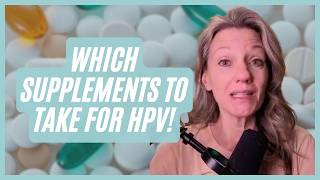
Dr. Doni Wilson outlines how to use supplements to clear HPV and prevent cervical abnormalities. Start with a high-quality multivitamin containing vitamin A, C, folate, selenium, zinc, and vitamin D in active forms, paired with sleep, stress management, and exercise. Layer in additional targeted nutrients based on individual testing and needs.
Chapters
Hi and welcome to How Humans Heal. I'm Dr. Doni Wilson, and in this video I'm going to be answering the question that so many of you ask me, which is, Dr. Doni, which supplements should I take to help my body to clear high-risk HPV virus and to prevent cancer or abnormal cells associated with high-risk HPV virus? So I'm so glad you asked that question, and I'm so glad you're here to listen to this video. I want to review you some of the research behind nutrients in particular that have been shown to be protective against high-risk HPV and even been shown to help reverse abnormal cells caused by HPV virus. And this way you can get the information you need to start thinking about which supplements to be taking. And also, I invite you to grab whatever supplements you currently have on your counter or in your cabinet so that you can look at the ingredients with me and we can figure out if the supplements you're taking are high quality, first of all, but also if they're, if they actually contain effective nutrients at effective doses for you to be able to expect a result by taking them, right? If you're going to buy a supplement and swallow it every day, I want to make sure that you're getting, you're swallowing a supplement that has a high likelihood of benefiting your health and not just wasting your time. Because unfortunately, when women contact me from around the world to help them with a protocol to clear high-risk HPV virus, and I sit down with them one-on-one as a patient or in a program, and I look at the supplements that they're currently taking, time after time after time, what I see is that the supplements they're taking are not high quality, they don't have the right nutrients in active forms, and they're not at effective doses. And I also see this when I'm looking online at whatever supplements are being marketed out there to benefit with high-risk HPV virus, and I often see that those supplements, they might— some of them have good ingredients, but oftentimes it's not in adequate quantities or doses to be effective, and it's not part of a comprehensive plan. So let's talk more about that today. How about that? How do you figure out which supplements to start with and How do you make it in as part of a comprehensive plan? And I really want to emphasize that because what I've seen with 26 years of helping thousands of women and men who are dealing with both high-risk and low-risk HPV virus is that, first of all, that it's possible to clear it and get it to go to negative, but also that it's not just about taking a magic pill. There's not a quick fix. There's not a single supplement that's going to clear HPV. We need to be looking at this as a comprehensive protocol, which means we're going to be using nutrients in your diet, right? We want to help you get as many nutrients as possible from your food, and then we use a supplement to supplement on top of a healthy diet, and then we're going to use nutrients as well as herbs, as well as other natural products including homeopathy, peptides, and other possible supplements as well. And we're going to use oral supplements as well as being able to use nutrients and herbs and probiotics vaginally. And even then, we get even more comprehensive by looking at your body as a whole and saying, Okay, it's not just about going— getting adequate nutrients and using herbs that are antiviral, but it's also about helping to restore your body's innate capacity to protect you from HPV. And that requires that we look at your body as a whole integrated systems. We need to look at gut health, micro— gut microbiome as well as vaginal microbiome. We need to look at your hormone levels, your cortisol levels and neurotransmitter levels, your stress response. All of this is important to helping your body protect you from HPV. So it's not just about what can you do in the vagina. It's not just what you can do to boost your immune system. It's about what can you do for your whole body to increase your protective capacity against high-risk HPV as well as other infections. And I would argue that it's not just about working on the physical body level, but it also means we need to help you heal on a mental, emotional level as well as a spiritual level. And this is what I see in the thousands of cases that I work with for over 26 years— women from around the world of all different ages and all different scenarios. This, what I'm going to be sharing today, is true for women who are from aged in their 20s to their 70s, all different age groups. And women who've been dealing with various types of high-risk HPV could be 16, 18, 45. There's actually at least 14 high-risk types. So I help women with all different high-risk types of HPV, and I also work with women who've had HPV for all different lengths of time, whether that's you first were diagnosed, or maybe you've been dealing with HPV for 5 years, 10 years, 15 years or more. And what I want to encourage you to know is that no matter your age, no matter how long you've been dealing with this, no matter how many other procedures you've had, even if you've had cancer caused by HPV before, there are still things we can do to help rebuild your capacity to protect yourself from HPV. And so in this video, I want to start by going into the nutrients, some of the key nutrients that there's actually research showing that they can can help prevent abnormal cells and cancer, and they can help reverse abnormal cells. So that— I want you to know that this is just part of a whole comprehensive protocol that we call the Dr. Doni's HPV Protocol, and I want you to be able to at least get started. Now, I have other videos about diet, like foods to avoid and foods to choose. One thing that I wanna share is that in the research related to nutrients, it definitely shows that when you eat eating a diet high in fruits and vegetables, and we know that fruits and vegetables contain a lot of nutrients, right? Fruits and vegetables contain vitamin C, beta-carotene, other antioxidants. So eating a diet high in fruits and vegetables has been shown to be protective against high-risk HPV. So that's a really important place to start, is to just look at your diet and see where can you reduce the sugar like sugar from white sugar, cane sugar, which is only suppressing your immune system, and increase your dietary intake of fruits and vegetables. That could be berries. I prefer frozen berries, but it could be fresh berries, and it could also be vegetables like broccoli and arugula or other leafy greens, as well as a variety of colorful vegetables, meaning you have different vegetables every day or every week, and you rotate through them so that you're getting a variety of nutrients from your vegetables. And there's research all the way back to 1990 showing that that kind of a diet was protective against cervical cancer, and that's just one type of HPV-related cancer, right? So please start by getting your nutrients from your food and work on eliminating foods that are not nutrient-dense and increasing foods that are nutrient-dense. And definitely go watch some of in other videos about dietary choices. And once you've really started, this is the thing, you've got to— it's little by little. It's not about perfection in one day. It's about how do you, little by little, each time you go to the grocery store, you choose different foods and you experiment with different recipes and you find different ways to integrate them into your routine. The same thing with supplements, right? We're going to start little by little. I never encourage anyone to start on like 10 new supplements all at once. Literally, when we look at the research, if you looked at all the research on all the nutrients and herbs that have been studied to help protect you from HPV, you would have a list of at least 50 supplements, and that's not gonna be possible, and it's not even gonna be effective. So I don't encourage you to do that either. Sometimes women come to see me with 10 different bottles of 10 different nutrients in all various doses, and it's not gonna be effective. I can tell you because they've been taking that already for a long period of time and the virus hasn't gone away. And that's when they decide to contact me and they're like, Dr. Doni, what do I do with this? Do I keep taking these supplements or what? And so I go through and help them to clean up their supplements and get them into a fully aligned protocol. And the first thing on that list is going to be a multivitamin. And I'm going to explain to you why that is. So back in 2000, even starting in the 1990s, but definitely there was a study in 2010 from the Integrative Journal of Gynecological Cancer. And this was a study about a multivitamin, literally taking a multivitamin. And they showed that women who took a multivitamin, including what you might expect to be in a multivitamin, right? Vitamin— the antioxidants like vitamin A, C, E, selenium, as well as B vitamins and minerals. And it showed that the women who took that multivitamin had a lower risk of dysplasia, which is abnormal cells caused by HPV. So they had a lower risk of CIN1, CIN2, and CIN3 simply by taking a multivitamin. So instead of like going out and buying 10 different bottles of different nutrients, I'm going to encourage you to just start with a really high-quality multivitamin. Plus, if you have one bottle and you're going to at least take one pill, that's going to get you the most benefit That to me is like your most— the smartest way to go, right? Instead of trying to spread it out over 10 pills that's not at the right dose and not at the right quality, better to get one bottle that is at the right dose and the right quality. Now, here's the thing is most people, when I look at their multivitamin, it's not high quality. I mean, I would say if you're getting your multi like the cheapest multi you can get at Target or, or Costco or, or even online, if it's a lower cost that means that they're putting lower quality nutrients in there. And so I wouldn't go for the lowest cost multivitamin. I would want to choose the best quality multivitamin. And another thing that you may not realize is that when it comes to supplement companies, and there's thousands of supplement companies out there, the supplement companies that are the most careful, they go, they have strict standards, and I've seen I've toured these high-quality supplement companies and see the extent that they go through to make sure that they get the highest quality ingredients, and they go through all the steps to get it into a capsule and into a bottle to bring it to you in the highest quality form. And they've studied, is there— is what the ingredients they say is in there, is it actually in there? And is there anything in there that's not supposed to be in there, right? These supplement companies need to be analyzing these ingredients before they put it in the capsule for you. They need to look and make sure it doesn't have excipients or toxins or metals in there. And so you want to make sure that you're getting these supplements from a high-quality company that's going through that process. And there's something called GMP certification, which is a good manufacturing product process. And so it should say that on the label. If you get supplement and/or on their website, it needs to say GMP certified. Not only that, but I also look for companies that also say on the label that they've tested for toxin and metals, that their product is gluten-free, dairy-free, and then you're gonna even— I go to the next level and I look on the back label and I look for not only what ingredients are in there, and I'm going to talk you through how to look at what's the active nutrients, but I look at the other ingredients, right? You have to look and the other ingredients. And if there's a big long list of other ingredients that includes things like colors and preservatives and, and wax and just stuff that is unnecessary for you to swallow, then that to me is not a high-quality supplement, right? There's no reason to be swallowing extra colors. What's the color for? You know, you're— it's going— you're going to be swallowing it. You don't need any color or, or preservatives or flavors or anything like that, right? So be sure you're looking at the other ingredients, and if it has a big long list, then it's not what you want. And another thing is to know that the supplement companies that have the best process of production and making sure that it doesn't include what you don't want, those companies also usually have a professional product line, meaning they have created a set of products that they only sell to practitioners, licensed practitioners, and they don't sell them on, let's say, Amazon or the internet. And so the only way that you could get access would be through a provider. And the reason they do that is because they want to make sure that you're working with an expert who can help you to take the right dose and take them for the right reason in the right length of time. And so when you, when you get to work with a practitioner like me— with, I'm a naturopathic doctor, certified professional midwife, and clinical nutritionist— then I'm able to access these higher quality supplements than what you can get in other locations. And then I'm able to make them available through my website. So my online store will, at drzoni.com, I encourage you to go look because there you're going to be able to find supplements that are at that higher level of production than what you're just going to get on a regular shelf. And that way you know that they're— that I've approved them, I've reviewed them, I've now gone to the companies that have the highest quality professional-grade products and then make it possible for you to access them. And some products even do require that you're under my care a patient or in one of my programs in order to access them. So if you are looking for a certain product and you don't see it available on my website, it may be that it requires that you are a patient to get access. So I want you to know that, that, that the world of supplements is, is a whole spectrum, right, from very low quality to very high quality. And to me, it's much more effective to get the high-quality supplements because that's where I see patients actually getting improvement instead of just taking a supplement and getting nowhere. So if you've been taking supplements and the HPV is not going away, it could have to do with the quality of supplements and it could have to do with the dose, including for your multivitamin. If you've recently received an abnormal Pap smear result or told that you test positive for high-risk HPV virus, I'm here to empower you. Your body is powerful. Powerful, and it's designed to heal even from HPV. I'm Dr. Doni Wilson Wilson, and I've spent years helping women to tap into their natural healing potential. The Say Goodbye to HPV program provides you with a personalized, natural approach to support your immune system and clear HPV. This is about giving your body the boost it needs to what it's made to do. Join the thousands of women who've taken this journey with me and start your own path to healing. So with the multivitamin, we're— I'm looking for several things, including some specific nutrients. And I'm going to share here at the end my favorite multivitamin, by the way. So we're going to get to that, but I want to first share with you some of the research on which ingredients in the multi. So there's also research on vitamin A as well as beta-carotene when it comes to HPV and protection from HPV. And so beta-carotene, what the research— and this is over several research studies, even review studies— what they're indicating is that beta-carotene, which is a precursor nutrient, right, beta-carotene turns into vitamin A. And so beta-carotene we can get from those colorful fruits and vegetables. And the research indicates that that's the best way to get beta-carotene is from your food colorful fruits and vegetables, whereas vitamin A is harder to get from our diet. And so, and the research indicates that vitamin A in a supplement form is more protective for abnormal cells from HPV. So in 1995, there was a study that showed that women who have CIN3, which is cervical dysplasia, severe form, they had a lower level of vitamin A in their tissue. And so this started to open the idea of using vitamin A— well, first of all, identifying when women have a deficiency of vitamin A, but also using vitamin A both orally and vaginally. So, uh, that's another concept. But first of all, even in a multivitamin, we should be looking for some amount of vitamin A. Now, So when you look on a vitamin multivitamin label, it might say beta-carotene, and some multis only have beta-carotene. But I encourage you to look for a multivitamin that also has, in particular, actual vitamin A. Now, if you might be pregnant or trying to get pregnant or breastfeeding, then, you know, we definitely want to keep your vitamin A dose under 10,000 IU. And in a multivitamin, that will be the case. A multivitamin will allow you to keep your vitamin A get vitamin A but not more than 10,000 IU so that it would still be safe in case of pregnancy or breastfeeding. So, um, and vitamin A can be used vaginally. That's a whole other topic. I definitely guide women who are under my care to use vitamin A vaginally because when you use vitamin A vaginally, then you can increase vitamin A locally at the cervix and the vagina. In a multivitamin, I also encourage you to look for one that contains vitamin C, some vitamin C because there's at least 3 studies back to 1989 to 1991 that showed that when women take vitamin C, they have a decreased risk of cervical cancer caused by HPV. So you want to be getting at least some vitamin C. If you get like 500 milligrams in a multivitamin, that's a start, right? Then you might add more, but at least you're getting some vitamin C, and you can get it in a multivitamin. Study, a study from 2012 showed that there's a higher risk of CIN2/3, which is again severe dysplasia, when women have lower folate and B12 levels. And so there again, where can we— the easiest, simplest way to start getting more folate and B12 is in a high-quality multivitamin where you can get the right form of folate and the right form of B12. Now the right form is gonna say methyl methylfolate, so M-E-T-H-Y-L. That's a key phrase, methyl before the word folate, or methylcobalamin. Cobalamin means B12. There's sometimes other terminology that's used, like 5-MTHF or methyltetrahydrofolate, but you're gonna be looking for the term methylfolate in instead of folic acid because folic acid is the inactive form that your body then has to convert to methylfolate. So instead of depending on your body to make that conversion, you might as well just take methylfolate. And this is especially true for any of you who already know that you have the gene variation called MTHFR. MTHFR gene variations already make more difficult for your body to convert folic acid into folate. And there are studies that show that women who have an MTHFR gene variation are at increased risk of abnormal cells from HPV. In fact, if you have one of the MTHFR677 variations, you're twice the risk of dysplasia or abnormal cells. And if you have If you have— that should be if you have one variation, you have twice the risk. And if you have two variations of MTHFR, you have three times the risk of abnormal cells and cervical cancer. So getting the right methylfolate is gonna help, and starting with a multivitamin, because at least in a multivitamin you can get usually 800 micrograms of folate. And you— we oftentimes clinically, I will guide women to even take a higher amount of folate, but I really I really would want to be working with you one-on-one or in my group to help guide you on how to go higher on any of these doses. But with a multi, at least you can get started, and then if you want more information, you can reach out to my office. We can work one-on-one or in one of my group programs so I can guide you how to— what would be appropriate if you wanted to go higher on, potentially higher on these doses, including methylfolate. Which tests— there are certain tests we need to do to identify that. There's symptoms we need to be understanding in your body in order to know what's the right, and it depends on your diagnosis. Then we can determine what amount of folate and B12, let alone any of these other nutrients that I've mentioned. A lot goes into determining the best best dose, the clinical effective dose for you. So what I'm saying is start with a multivitamin because then you at least get a start on methylfolate and methyl B12, and you're not, you're likely not to be deficient. And then from there, if you'd like more help or you are finding that the HPV is still not going away while taking a multi, then contact my office so I can guide you how to get even the— a better dose for you that's going to be safe and effective. And it's not going to be a dose we use forever. It's going to be a dose we use to help your body heal and clear HPV, and then we go to a maintenance dose. What's your maintenance dose for going forward in your life? Okay, so the other nutrients in the multivitamin that I find are really important based on the research— one is selenium. Right? So in a multi, you're likely to see other— well, you— I hope you see other antioxidants. They should be in there. So other antioxidants include selenium and vitamin E. And so this is another reason why I like to use— and zinc, by the way. In a, in a good quality multi, you should also be getting selenium, zinc, and vitamin E because they also have research, including— there's a study from 2012 on vitamin E and selenium lowering risk of abnormal cells and cervical cancer. There's a study from 2015 specifically about 200 micrograms of selenium daily reducing risk of cervical dysplasia. And there are also studies of zinc, um, usually 15 milligrams per day to help prevent cervical dysplasia. So please look at your multi and make sure, does it have those in there at good doses? And if you are not yet taking a multivitamin, then I welcome you to check check out the All-in-One Multi that's at— it's under the brand Nature Empowered Nutritionals. I'll put a link down below so you can find it. The thing about this particular multivitamin that I love— there's several things, actually. One, it's from a super high-quality, professional-grade company, and so this means that you can count on them making sure that it doesn't include what you don't want what you don't want, and it does include what you do want. And so you want to be choosing a really high-quality multi from a good company. Also, it contains the active nutrients. So it contains the active forms of methylfolate, methyl B12, as well as high-quality forms of all these other nutrients I've mentioned, including vitamin A, vitamin C, selenium, zinc, and vitamin E. And you only have to take 2 per day. Many multivitamins I see out there, sometimes the recommended dose is 6 per day, and it's like, oh my gosh, that would be really hard for me to take 6 multivitamins per day. So 2 per day is much easier to do, and I like that because my preferred dosing is to take one in the morning and one in the evening. This way you covering yourself, see Nutrients are often used, you know, as soon as you swallow them. So it's gonna be— if you swallow it in the morning, it's gonna get used during the day. You swallow it in the evening, it's gonna be used overnight. So you're covering yourself 24/7 by taking one in the morning, one in the evening. Also, what I found with so many women, hundreds and hundreds of women taking this particular multivitamin, is that women do really well with it. I don't know if some of you have found when you take a multi that you get an upset stomach or somehow you don't feel good. Believe me, I used to be like that. I used to not be able to take a multi without feeling worse, and this particular multi, women report time and time again that they don't feel worse when they take it. They actually feel better. Now, please don't be surprised when you take a really high-quality multivitamin, likely your urine is gonna be more yellow because when you swallow healthy B vitamins and they get absorbed into your bloodstream and they go through your kidneys, they're gonna— it's gonna make your urine look yellow. That's not a problem, that's not a bad thing, that actually is a good thing. It means you absorbed the B vitamins, it means your body metabolized them, and it means that your urine is now healthy color. Urine is supposed to be yellow. So we're so used to our urine being clear that we think that's normal, but actually that's not not healthy. We want to have light yellow colored urine. And so taking a multi with high quality nutrients, likely you're going to see that your urine is yellow, and then you can be thinking, okay, great, it got absorbed, I got the right nutrients, and my body's using them. And oftentimes women start to report back to me that their skin is better, their hair is better, their energy is better. They start to feel better because these nutrients— of course, if you're swallowing them— they're circulating around your whole body, and you're gonna see improvements everywhere. And if you're feeling better in other areas of your body, very likely your body's also gonna be healing your vagina, your cervix, and fending off HPV. So there you have it. There's a start to understanding how to use vitamins and supplements related to HPV. Again, it's not just about trying to find a singular pill that with one ingredient, it's likely not going to be enough. And I keep looking at this and trying to figure out how to streamline it, because again, there's so many— so much research on so many nutrients and herbs that if we tried to cram it all into one product, it wouldn't fit. We'd have to take so many different pills of even of that same product. So So that's why I believe the best way to begin is with a really high-quality multivitamin that covers the basics of a foundational nutrient blend that's going to give you the antioxidants, the B vitamins, the minerals that often are deficient. One that I didn't mention yet is vitamin D. Oftentimes we're deficient in vitamin D, and I encourage you to be— get a blood test for this to see what is your vitamin D level. And make sure your multi has some vitamin D. In the multivitamin that I recommend, it has 1,000 IU of vitamin D, so it gives you a start on a daily dose of vitamin D, which is also very protective against HPV and supportive of your immune system. So these are many reasons why I recommend to start with a high-quality multivitamin to help improve your protection from HPV and help to reverse abnormal cells and prevent cervical cancer, as well as other HPV-related cancers, and then build on that, right? Make sure you're following what I call your self-care. CARE stands for C for clean eating, A for adequate sleep, R for recovery activities, and E for exercise. So follow your self-care, work on improving your diet and getting healthy nutrients from your diet, and then add a multivitamin. You could use the All-in-One Multi that I recommend, one twice per day, and then you start to go, okay, now what do you want to build from there? And that's when we can get, get started going into even more details of understanding why your body is susceptible to HPV, including looking at different tests that help us identify root causes for you, and then looking at other herbs, mushrooms, nutrients, probiotics that we can use to help your body heal. So I cover all of that in my How to Get Rid of HPV free online workshop, and I'll put a link down below so you can sign up for the workshop and learn more with me there and really get a comprehensive plan going so that you're greatest, highest likely to go, when you go back for your nested exam in 3 to 6 or 12 months,— we want to make sure you've been doing something to help prevent it from progressing and even get to achieve negative HPV, negative abnormal cells. That's the goal. And so it's a process, right? We go step by step, and it's important to go in a sequence because when I guide women in this sequence, starting with the self-care, starting with the diet changes, starting with the multivitamin, then we can build on that that, that's the best sequence to get the best results and the greatest likelihood of reversing HPV and abnormal cells as soon as possible. So I hope this gives you some clarity and some next steps, and I encourage you to subscribe if you haven't already subscribed so that you get my next video and join me here at How Humans Heal as well as in my newsletter each week, and then I can help guide you from there, including if you feel like you would like more help, you can join me in the 3-month-long Say Goodbye to HPV online group program, or if needed, if you need more one-on-one support, you can reach out to my office and we can see if it's a good fit to work with me one-on-one from wherever you are in the world. We don't have to be limited by location. There's ways for me to get you the information you need from wherever you are. Okay, so thanks so much for joining me here, and I look forward to connecting with you soon. Thanks for listening to How Humans Heal. If you liked this episode, leave a rating and a review, and for more resources, visit drdoni.com.
More from Dr.


#Hypothyroidism and Hashimoto's: How to Know if You Have It and What to Do Next






