What Is Naturopathic Medicine?
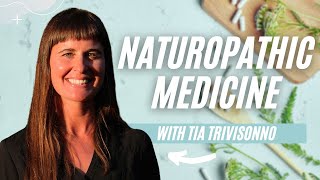
Dr. Doni Wilson and Dr. Tia Trivisano explain how naturopathic doctors treat mental health by finding root causes in the gut, hormones, and nutrient deficiencies, then work with psychiatrists to reduce medication. They share patient stories of recovery and emphasize treating the whole person, not just symptoms.
Chapters
Hi, and welcome to how humans heal. I'm Dr. Donny Wilson, and today I'm excited to introduce you to my friend and colleague, Dr. Tia Trivisano. And she is a naturopathic doctor as well as an acupuncturist. She, like me, lives and practices in New York for many years. She's been in practice for over 12 years, and so I'm really excited. She and I have known each other because we both, we live nearby each other and we've worked together with the New York association of Naturopathic Physicians. I kind of, in some ways, gave her the baton of running the New York Association. I ran the association for over 10 years, and there was a couple presidents in between. And now Tia is the president of the New York Association. So thank you so much for doing that. Tia, hello, Donnie here today.
Thank you so much for having me. And thank you so much for all the beautiful work you did do to create that organization. It is alive and well. We are so grateful and carrying the baton. And actually, Dr. Kirsten Carl is our president elect, so she'll be coming up soon. And I'm just eager to continue my work with advocating for naturopathic medicine in the state of New York.
It's huge. I know, believe me, when I first moved to New York in 2001, and mind you, it was right after 9, 11, and at the same time, I came from a state, Washington state, where naturopathic doctors not only were. And you came from Oregon, Right, Right. We were trained in states where naturopathic doctors are licensed as primary care practitioners. And we both came to New York where naturopathic medicine is not. We're not licensed as primary care providers. And so we really function, I think of it as we function as consultants and speaking specialists and experts in the area of naturopathic medicine. But unfortunately, New Yorkers can't access us as primary care providers, even though we are trained and did board exams and have licenses in other states to do that, including Connecticut, which is the closest nearby state that offers that. So, you know, for all these years, we've been educating in New York, raising awareness, including in the Capitol, and have had active legislation in the Indian New York legend New York legislature for way back, since I was working on it, and I think that was back starting in 2002, we introduced legislation. So hopefully at some point, New York finally passes that legislation. But in the meantime, it's really. I know for myself, it is. It became such a passion project of wanting to raise awareness for this other way of looking at our health and looking at the way we support others through their health issues. And so I'm so glad to get to share your perspective on that today. Tell us first, like, what initially sort of inspired you to become an naturopathic doctor?
It is my favorite question, and I love hearing these stories from every single one of our colleagues because it's unique and usually transformative and empowering. And like you said, when talking about how naturopathic doctors think, it's a little bit different, perhaps. And it's because we have gone through something that inspires us to transform how we look at health. So in my case, I actually, when I was in undergrad, I did go to school in upstate New York. So even though I'm not a native New Yorker, I went to Hobart and William Smith colleges. I was studying environmental studies and music and kind of pursuing other interests, social sciences, and then went off into the Peace Corps in South America and Paraguay. Prior to going there, my father was dealing with a lot of health issues, which we started to learn about when I was in high school. He had some trouble with his heart and also his kidneys. And so we were going back and forth to different specialists and having some trouble with the medications, with changing up the diet all the time. And it kind of seemed like we would do one thing that would support his heart, but then that thing that supported his heart would unfortunately negatively affect the kidneys. And we were often going back and forth to different specialists. And I'll just never forget forget the moment when we were in the hospital setting. My mom kind of turned to me and she said, you know, I wish there was someone that would treat the whole person. And right in that moment, it kind of just hit my heart and a light bulb went off. And, you know, unfortunately for us, you know, my father at that point was too ill to kind of work with the naturopathic doctor, and he passed my third year in college in undergrad. But it sparked something in me that said there is absolutely someone that treats the whole person, and I just have to figure out who and what that is, and I am going to pursue it. So initially, I just started reading everything I could find about botanical medicine, herbs, about nutrition, and just as a hobby, because I was kind of finishing up school at that time. Then in the Peace Corps, I'm spending time in rural Paraguay and, you know, drinking mate and what they call Tedded A, which is the iced version of this herbal beverage that has so many health benefits. And the homestay family I was kind of associated with in the area would come over and he would take me through the garden and we'd be talking about all the different herbs. And this one is supportive to your digestion. This is good for your kidneys, this is good for your heart, this is good for your nervous system. And it just seemed like the more I learned, the more I wanted to learn. And I got very inspired to keep pursuing it. And then I thought, well, how do I actually not just learn about sort of the lay medicinal aspect of what we have in the garden and in nutrition with our food and how to care for ourselves on our own, but combine that with the science and the clinical information and really the medical language that we are raised with so that I can actually use all of that to talk with patients in a way that it benefits their whole health. So that they could be working with a cardiologist, let's say, or an endocrinologist. And I can speak that language. But I also know what is good to treat the whole person and use all these natural remedies that we have right in our yard and in our kitchen cabinet.
Amazing. And so that's what led you to nature public medical school.
That's what led me. I was do as I was studying and picking up all these books, actually a friend of my parents handed me a book on pursuing your career. And I literally opened it up to the page that said the National College of Naturopathic Medicine, Natural Medicine at the time in Portland, Oregon. And that's. I started looking into it and there rest is history. Here I am. Awesome.
And then you trained as an acupuncturist.
Yes. So in. In the school in Oregon now, National University of Natural Medicine, they do have a program to do both. You can do the dual degree program in classical Chinese medicine as well as naturopathic medicine. And I did get my license in acupuncture as well.
Amazing. And then you came back to practice in New York. I think in a. You're still in the practice where like I like I know that you and I both have such an interest in I. The way I say it is how stress affects us as humans, especially mental health. So anxiety and depression. Tell us more about that. How did you get inspired to really help in that area of mental health?
Yeah, it's again, wonderful question and I feel it's such a beautiful fit for naturopathic medicine and on some level represents an underserved community because you can go to many different specialists and you could be, let's say, working with a psychiatrist. But if the root cause is Your gut health or something to do with your adrenals or thyroid, the endocrine system, some other underlying infection, then you may be placed on a medication and you could still be suffering from a lot of symptoms. And we never get to the root cause. So again, through sort of a twist of fate and an interesting unfolding of the process moving forward. As I was leaving Oregon, a colleague of ours who is now back in Oregon, who's a naturopathic doctor, her father was looking to work side by side with a naturopathic doctor in his psychiatric practice. So when I moved to New YORK Back in 2011, I began working side by side with Dr. Michael Gurevich. The clinic is called Transformational Healing Solutions. And we started working side by side to sort of see where does the psychiatry piece fit and then where does the naturopathic piece fit. And we noticed that of course, course teaming up and working together, the patients are able to get better faster. And we find that there is in many cases it's very challenging for conventional medicine to get to the root cause of what is going on in mental health. So I've become incredibly passionate about that and thinking about the mind body connection, what it really means, how do we really support it and making sure that again, I think of that with my initial spark from how do we treat the whole person? Right. We can't treat the body without supporting the mind and the autonomic nervous system. And in some cases we're not going to support these mental emotional symptoms if we're not looking at the physical aspect of things. So it's a really beautiful way to treat the whole person.
And when you and I learned in Nature Bathing medical school about mental health issues, we, we, you know, just like anyone else learning about mental health issues, it's a standard practice to consider what's going on in the body, like you mentioned.
Absolutely.
Is there a nutrient deficiency, anemia, low thy thyroid function, adrenal function? So that's a standard practice. And yet I think a lot of people who go to into standard mental health, or you know, psychologists, psychiatrists, that's not necessarily addressed. People end up kind of being led to believe that it's all in their head, so to speak.
And oftentimes as we see in this, you know, modern world that we're living in more complex, more chronic, more inflammatory diseases, that there are so many mental health symptoms associated with that and they're not may not be looking at something that is a chronic underlying infection that's causing anxiety, causing depression, causing obsessive compulsive disorder, any. Any one of these things. And so. And sometimes a very physical issue, even something as straightforward as a food intolerance. And a person could be placed on a psychiatric medication because of the anxiety or whatever neuropsychiatric symptoms are occurring because of that. And then often, unfortunately, we see the trend too, is start with one medication. If that medication's not working, raise the dose. If that's not enough, add a second and in some cases a third. And I would say it's quite complicated to support the patient to figure out how to safely reduce these medications if they're not the right fit. So that's something I've become very passionate about since I've been learning from Dr. Gurvich. That's one of his specialties, is really how to approach the medication reduction in a safe and effective way for patients. Patients. So simultaneously, what is the root cause? What are the things we need to heal and address within their physiology and their biochemistry and of course, emotional traumas that need to be worked through and then simultaneously figure out how to reduce these toxic side effects, stabilize, and in some cases, help a patient with the medication?
You're making a great point that I also see in practice, which is, yeah, one, the. A lot of practitioners will put a patient on a medication for anxiety, depression, or other mental health challenge. And then. And then the, the strategy is only about how do we add more or switch it out for a different one. It. They. There's not a lot of support for how do you decrease or come off of these. And too often I see patient, you know, the doctor might just say, oh, just reduce by half.
Right.
And then of course, the person has a lot of stuff, withdrawal symptoms and side effects. And then they're likely they have to go back on because they're not. It's very difficult there to. To you, right? You and I would Never drop by 50%.
No, it's very difficult. Yes.
Or just out of nowhere without addressing the root cause. Let's, let's go into that a little bit more, like, to be more specific, let's say. Because what would you say are the most common situations you see? Anxiety, depression, or what are the most common conditions?
You know, absolutely, anxiety and depression. You know, certainly every day we have treated people with bipolar disorder, which now, of course, in the new diagnostic criteria, there's a few versions of that. We do see a lot of obsessive compulsive disorder and certainly have worked with patients who are going into psychosis and have paranoia. And so working with these things yes, really. Understanding essentially why a person is diagnosed with something in the beginning, I think is incredibly key because we really have to examine. All right, well, does this person, is this person really fitting all this criteria? What was going on? You mentioned coming after 9, 11, for example, that I have seen patients where they're placed on a medication for an acute grief as an antidepressant and then never taken off or so what is the underlying trauma, the event? And is that, for example, does that qualify as a diagnosis? Or are we looking at someone who's dealing with a grieving process? So that's another interesting thing for us to think about in terms of people coming in and they have received a diagnosis and now they're carrying this with them. And over time, you know, you may not have been able to speak with someone who's going to dig a little bit more deeply into the layers of what was really going on. And can these things in fact heal and be reversed? And can this depression and anxiety go away? Can even some of these diagnostic labels go away? And I can say that we do see that, of course, we see people who are dealing with severe depression, also with anxiety, obsessive thoughts, and they heal and they get well and they live happier lives as a result. So adopting that model and thinking about it, you know, that things are reversible, preventable, but also once you get to the deeper root causes, we can look at the symptoms and of course it's important to understand what they are. But looking at the underlying etiology, we can really, really help to reduce those symptoms and, and balance that mental, mind, body connection.
I love this and I, I love writing about this in my books and talking about it too, because it's, it really is a different way of thinking about, you know, like, so often, I think, like you're saying, people often are kind of led to believe that once you have a diagnosis of anxiety, that that's your diagnosis forever or depression. And now sometimes it may have times in your life where it's flares up or is aggravated and then. But when we, as you're describing, when we can go through looking at the root causes, looking at, is it, you know, are there stresses that we. Or traumas we can help you process through? Are there imbalances, nutrient imbalances or hormone imbalances or gut health. Right. And gut bacteria? There's so much research there. And I could go into.
There's.
There's so much we can do that we now know, of course, is completely interconnected with what we're experiencing in our mood as we address these root causes, then the, the anxiety symptoms can go away. So it's essentially that the anxiety is reversible. You don't have to live your life like it's not. Because right. There's these classic terminology of, you know, someone, there's something broken or there's something.
Right, right.
There's some chemical missing and it's this, it's really that. No, there's an imbalance that's getting missed. And when we can address that imbalance, we can fix the whole situation.
And you know, I always love to think about pull in the naturopathic principle. So of course treat, treat the whole person. But doctor, as teacher through education and empowerment, you mentioned something very important because I think another place we're sort of under the influence of a current paradigm that, you know, is that this idea that we either have something or we don't have. Right. So we think about something like anxiety and it's either permanent or we're never feeling anxious. And one of the things I often say when I'm working with patients is the emotions are like weather patterns. You know, they are, we, they're meant to be with us and they do change. So you brought up that important point of a flare up. You know, feeling better and living a healthy, well balanced life does not mean there will never be a time that you experience anxiety or that you feel sad over a loss, which it could be a deep grief which then and ends up as a small period of depression. But that if we really work with all these different factors and we support you and we sort of promote emotional awareness and how do we observe the shifts in how we feel even throughout the course of a single day, let alone months and years, then we're not trying to kind of say that there's something wrong if we're feeling a certain way.
And I love that. And it reminds me that I know one of your favorite things to do when you're not seeing patients is surfing. And I can see, I love using waves. Of course, as naturopathic doctors, we like to use analogies from nature anyway. But ocean waves are such a perfect analogy to what you're saying.
Do you find that when you're surfing you're like, no, it all makes sense, you know, Absolutely.
I am the first one to admit surfing completely changed my life. And I started it in my basically early 30s, so I didn't learn how to do it as a young child. And there's so many different things about it that is a beautiful metaphor for healing and Connecting with nature and even just how our bodies, how humans do heal, right? So we think about the waves, we think about the tide moving in and out. We think about how one day I look out and the water is flat and the surfers are sad because there are no waves. And then the next day it's bigger than you can imagine and you shouldn't even paddle. So it really teaches you a lot about surrender, about patience, about literally, of course, going with the flow, being in the moment, persevering through different challenges, because there's no, you know, you go to learn one sport, let's say, where the terrain is always the same. It's very different than having to work with all these different weather conditions, the temperature, the direction of the wind, how the water is moving. So there's nothing I've experienced to date that is as much I feel in the flow with nature as that is. So I'm super passionate about it. And absolutely, it has taught me a lot about healing, very much on a mental, emotional level, because it's a very good place to just get out there. And then you're exactly focused on what you're doing and you are surrendering, surrendering to a changing environment. So really, there's no time to kind of argue with it. I often say, you know, you argue with the changing tide, it's not going to work out.
Well, you already know that, so you're like, okay, how do I. What do I do instead? How do I support myself through it? Which is how, right? Like, how do we. Instead of, like, thinking that stress is not going to happen, or expecting, I'm never going to feel anxious because these are impossible things, right? About. We learn how to support ourselves through it instead.
Exactly. And so it's. It's the same thing. It's like you get sort of tossed underwater. The best thing to do is relax. And, you know, you. You have to let go of that impulse to kind of fight it, to not want it. You know, whether we're thinking it's anx, if we're thinking about joint, you know, physical pain, how do we teach ourselves that sort of relaxing into things and seeing if it moves and changes and shifts, rather than greeting it with more angst or stress or tension, is a lifestyle shift that I think naturopathic medicine does a great job of teaching folks, and certainly some of these hobbies and adventures that we can have out in nature, definitely a good, good practice for that.
Well, and also, like, you know, teaching you. It's also your stress recovery, like, you know, as Practitioners, Right. Like, we need to also be implementing. And I love that you're like, here's how I'm implementing my stress recovery. I'm sure you know that you can at any age go learn a new activity. I mean, I've loved that too in my life. To be like, okay, what am I going to do? That's going to be a challenge. I'm going to have to, you know, it takes me away from some of my usual activities and thought processes. But then we can learn so much from it while we're recovering from stress.
Definitely. And I love thinking about those other examples. In nature, like diamonds are produced under pressure, right? So it's not like stress in and of itself is bad. It's this idea that if we have a lot of, you know, a challenging environment, a pressure filled moment, what do we do with it and how do we sort of shift our relationship to this external environment to think about, do I grow from this challenge and do I keep going forward or is it something that's kind of knocking me over? And one of the keys, I think, to feeling better as you go. You mentioned kind of taking things on at any age is that you keep doing it, you know, you keep inviting a new stimulus to grow and change. And we know our bodies are producing new healthy cells every day and every night. So the more we kind of learn to adapt and pivot to the external world in that good way, you know, we keep grow, growing and producing more beautiful things.
I love that. Thank you for that. And, and when you, when you work with your patients, you know, is it, I just want to have listeners get a sense of it, like say they, and this is what I mean, this is also what I likely see with mine too. But I want to just get your sense of like. So they come in maybe with, with current diagnosis or an aggravation of symptoms. And you assess, okay, here's what are the root causes? Let's start addressing them. And then as, right as the, as the waves calm, right. As things stabilize, that's when we can think about, okay, now maybe, and this is to be clear, if someone's thinking of coming off of a medication, they would work with the psychiatrist who prescribed it. So then we as naturopathic doctors are saying, hey, we're going to help you learn how to. Instead of the boat. A lot of times I use the boat analogy too. If the boat is really rocking, that's not the time to take away something that's stable, realizing, wait till we got the boat, like nice and stable, then we can very slowly, with the support of the doctor, they prescribe the medication, gradually see how if you can come off of some of those medications and then as a person goes into more of a maintenance mode, then they know what to do. Now they've learned the tools. But what does that look like in your practice? Do you find that then patients work with you on a main maintenance type?
Yeah, absolutely. And that's very important, what you mentioned, and that is what we see and what we do here is certainly someone comes in and they either have a diagnosis or they've gone around to many people and they've never received a diagnosis, and they say everything looks good, there's nothing wrong, but they still don't feel well. But absolutely, when a patient comes in to work with us here, number one, when I take a new patient, we make sure that we understand what we're working with and that a person is feeling better and has some notable improvement, feels more stable. Before we were to move any kind of medication. And they are absolutely working with the psychiatrist who manages that piece. So like you mentioned, with the waves coming, the boat rocking, if someone is feeling highly unstable, what we start with is looking for those underlying additional causes and working on gut health, working on elimination and supporting all the organs of detoxification and any underlying nutrient deficiencies, these kinds of things. And to. Until you see that person report that they're feeling better, and then once things are in a good, healthy, stable place, that's when you would begin that process of working with the specialist to reduce medications. And absolutely after that, when people are feeling well, better, we do work on a maintenance kind of more prevention and just tuning up. I have yet to see, though I hope this is the future of naturopathic medicine, that the patient comes in and says, I feel absolutely great and I just want to stay that way on the first visit. I think that's more rare for a new patient appointment. But if, you know, as naturopathic medicine starts to be more widely practiced, I hope that that's a model that we can get to.
I do too. And I love how you mentioned some of the, you know, what we think of as the principles of naturopathic medicine. And I think maybe let's touch on that a little bit more because people might be. Because sometimes people are in the sense of like, oh, I have have to choose either conventional medicine or naturopathic medicine. And your clinic is a perfect example of where it's been able to be combined even into one clinic. But a lot of patients might also have A psychiatrist and say naturopathic doctor, how do you describe the difference for people and how to navigate this, if this is new for them? How to navigate introducing naturopathic root cause care into their health plan?
Sure. It's a great question. And absolutely many patients come in working with one specialist, primary care, or in some cases, multiple specialists. And I would say that the majority still are looking for that piece of how to treat the whole person or are just looking for support with a certain symptom. I do work a lot with. We talked about the microbiome, gut health, because that's just an area where there's so much unfolding in naturopathic medicine. Absolutely shines. So usually how I would navigate that is to talk a little bit about these principles, that the role of the naturopathic doctor is to look for the root cause of any kind of symptomatology. And in some cases that may be multifactorial, which might be why a person has been suffering so much and not finding so many answers. Because it's not just the gut health. It could also be connected to trauma and some other symptom, endocrine system. Right. So the naturopathic doctor is going to work as really a coach, a mentor, a guide to teach on some level. I mean, the thing I am the most passionate about is teaching these basic treatment guidelines that we have. You know, things that you can do at home, whether it's hydrotherapy, castor oil packs, you know, simple things to care for yourself that will support your overall general health and then reduce symptoms and make the need for some of these more invasive interventions less likely. So the role is to follow these principles. So treat the root cause, treat the whole person. Doctors, teachers, where we really get into this idea of how to educate everyone. I look at health from. It should be absolutely about empowerment. We know a lot about the different specialties because we went through this rigorous program and we went through all these board exams and we studied all the same classes and did our clinical rotation. So we can understand a lot about cardiology, dermatology, gastroenterology. So how do we put the pieces together for the patient? So, for example, if they come in with a diagnosis, but their only option is medication and they don't want to pursue that, or they come in with laboratory work, and there's not that much, but there could be some things that are actually showing signs of an issue down the line that the naturopathic doctor is going to come in and also follow this other principle of prevention, which is, how do we look at your blueprint, where you are now, how you feel now, what your labs look like and not just look at it as sick care, disease care under this model of, you know, just maintaining where you are, but optimizing your health and wellness down the line by looking for patterns that could emerge.
Oh my gosh. Thank you so much for explaining that. And I, and it reminds me that I think sometimes people are now also hearing from people online and social media, some with varying levels of training. And I'm. And again, it's. I'm so glad for the information to be getting out there, but also helping people to differentiate. Okay. Who. Who has the training to help them and to what degree. And so what you're describing is, has been, you know, along the lines of, you know, our training with our doctorate degrees and continuing education. And, and it is the licensing for naturopathic medicine is state by state, which is why we were mentioning about how we're working so hard to hopefully have New York state license the profession so that we can even offer more of what we're trying to provide. And depending on the. I think telemedicine has also offered more ability for people to access naturopathic doctors, not in terms of primary care, but just even our expertise through video and online. And at the same time, yeah, people I think might be, they might be coming across like say health coaches who have. Which can be a really helpful resource source in this, like you're saying, taking from this sick model to a wellness model of healthcare. Because health coaches can help people implement the dietary changes and the stress recovery activities. And because it sometimes can be overwhelming when you first start down this path. And so that's how I see it is like a health coach can help with implementing. And yet it's important to know that a health coach is a different level of training than what we do. But tell us a little bit about how you see that.
I think so. And it's almost like I've started to think about it. Like I read this book a while ago about the insurance model and very interesting pointing out just different perspectives about medicine and how we don't sort of view it as a commodity, which on some level, if we start thinking about how do we work to show people how to become an educated consumer of medicine. I really feel like, because this gets to your exact point, is that there is is a totally beneficial time and place for a health coach. There's also a place for a specialist, you know, a certain type of specialist within the conventional medical model. There's also a Naturopathic doctor. There's also an osteopathic doctor, there's chiropractors, and then you have social media and a whole bunch of people talking about all kinds of different ideas and recipes and things. You should do that for this and that. And as you're saying, it's a wonderful thing that the information is out there. And I, we have a really big role to play in educating people who are out there who are looking for just more support in general, how to navigate the system, how to support themselves with their own health education and empowerment to learn a little bit about what these differences are. Because you walk into any other arena where you're going to make an investment in your life and you're going to want to work with an expert that helps you navigate what is this versus this. It can be so overwhelming. Terminology is confusing. I find that a lot of patients that come in don't know the difference, of course. And so I look at education as an ongoing process, but really I feel like that's a great place for us is to. Because we do know how to speak the language that connects all these different people within this integrative or I like to say cooperative, hopefully model of medicine.
Oh, I like that word, cooperative medicine. And sometimes people will hear the word functional medicine, which was brought in a number of years ago, and that sometimes practitioners who have original, more conventional training, who then have learned some naturopathic type approaches and then they, they become sometimes certified in what's called functional medicine. But it's a, that's, that's where that terminology comes from. But cooperative. It is a nice way to say that how do we work together with these different, different areas of specialty, but that there's such a thing as actually helping patients succeed by working together.
Versus, like, why would practitioners be competitive with each other? We're all here to help.
Right? Right. And I feel like the number one reason very often is there's, there's that resistance and fear associated with the thing you don't know much about or the thing you don't understand. Right. And we look at it like we understand, especially state by state, whatever our scope of practice is. And training as naturopathic doctors is more eclectic. So yes, we're pulling from a lot of different areas and we have a lot of a very wide and pretty robust education and training as whole person healthcare. I also think that just because another specialist doesn't exactly understand what that means does not mean there should be any competition or resistance that, you know, it never hurts to learn a New language. It never hurts to learn more about what these specialties are so that we are and truly work as a team in for the best for the patient. That's who we are here for, is for the patient.
Absolutely. And sometimes I know it's tricky for patients because there's also, as you mentioned before, insurance. So a lot of times insurance is really the way I've now come to think of it as it's covering, like a conventional approach and procedures or surgeries. It has certain aspects of care that is covered by insurance. But a lot of what we're referring to is more in a wellness model of care that isn't yet under most insurances.
Right. Yeah.
So it's like start. Sometimes it's about starting to think about your health care budget in a different way. Right. Like, I think for many people, their healthcare budget was like, oh, I paid for my insurance. That's supposed to be all my health healthcare. But when, if you start to go, oh, wait a minute, I want to be able to address my whole self. I want to be able to get to the root cause. Okay, that means we need to shift your budget to allow you to be able to access that type of care.
Yeah, absolutely. Absolutely. And think about all the ways that as you invest in healthful choices, you're saving down the line. You know, but there's so many paradigm shifts that we have to make because we. We're trained to think a way. Like you just mentioned that model, you know, I paid for it already. So therefore, I need to do what's within that. And there's nothing, of course, you know, you want to do what's within something that you've already paid for, but also, if it's not meeting your needs, this is. Yes. Where we have to kind of consider all these different things. We can bring in and shift the budget a little bit to support that.
And at some point in the future, hopefully, that the insurance and medical system shifts to match that. I do think exactly. I mean, I've definitely seen, over the 22 years that I've been in practice, I've seen more awareness for these ways of thinking about how we help humans with their health and, you know, starting to see shifts that way. But it's still, you know, I think still it. There's a. Yeah, there's a lot of awareness building to happen, which is why I'm so glad to have you here on how humans heal today. So to talk about this and to hope, I'm thinking we answered a lot of questions, but anyone listening if you have more questions for Tia or I, please don't hesitate to reach out. Write into us. We're here to help you think through and talk through and understand what's possible for you. Because sometimes when you first hear that something else is possible, you go, wait a minute, did they just say that? And it takes a minute for our, right, our mind. Mind and our nervous system. Because our nervous system gets so used to the way things are and we're basically saying, hey, you know what, maybe it doesn't have to be like that. And it's nothing. It's not that anything we're not saying, we promise something's going to change overnight. That wouldn't be true either. It's about this just starting to take the steps forward in the process to learn and to integrate new information in a way where potentially you can create change. But how, how huge that can be, right, I'm sure. Please tell us about. In the patients that you've seen in the past 12 years, I'm sure you've seen some amazing transformations with absolutely unbelievable.
Life'S transformations, you know, and such beautifully powerful stories that, you know, still kind of gives me chills to even think about. Because you're talking about some people who really, you know, of the things I do address here often is I'm the last stop practitioner. You probably also have this Donnie, where they've tried literally everything. They've been to every single specialist. And I've seen some people with incredibly chronic severe symptoms, not able to leave the house, not able to walk. And then years later they're medication free and they're traveling all around and teaching and living an incredible life. These are the kinds of things that can and do happen. And many cases I've heard so many times, you know, they've been to specialists who basically told them there was nothing, there's nothing that can be done. There's, there's, it's all in your head, which you mentioned before, that one comes up a lot. You know, you just need to do XYZ or take this, take that, and it's a very short visit. And, and they're really left in some pretty, sometimes dark spaces over all of that. And when you see not only someone going from the, that place of this is the most horrible I've ever felt in my life. And, and there's really no hope to not just surviving and getting through that, but ultimately thriving. I mean, this is what I do think naturopathic medicine can do and does do. And it's, it's unbelievable. Because it just provides so much hope. And then moving forward, those folks end up teaching and sharing through their experience, transforming, you know, suffering into something powerful and beautiful. So then they become on the front lines of providing more information in terms of how folks that can heal, that have never heard about any of this before.
Beautiful and amazing. I know. It's. It's what gets me up every day to do what I do. And I'm sure for you too, right?
Yeah. Yeah.
It's so rewarding to see when. When.
So reward. Rewarding. Mm.
That is like. Okay, well, we'll keep going. We'll keep sharing this message. And I love you and I both. Often we get to see each other when we're speaking at conferences because I want listeners to know, like, what we're talking about here. Now, Tia and I go to naturopathic conferences where naturopathic doctors are getting their continuing education credit and we're teaching them how we're doing this successfully in our practices so that those naturopathic doctors can do the same in their practices. So you can. I'll make sure to share links so you can find a naturopathic doctor potentially in your area or learn more about naturopathic medicine. And to know that this is information that we, you know, we, we're like researchers and clinicians. We do the work, we do the research, we find what's working and then we share it to the public and to our profession and other professionals so that, so that others can benefit from it in the long run.
Yeah, absolutely. And the education piece, I mean, I, I so much thinking more and more and more about how right now, in this, in this exact moment, in this day and age, we really need to embrace deeper levels of self care. And there's just so many ways to help people do that. And shifting into a space of greater self care and prioritizing health and wellness in a new way. I mean, if each of was able to do that, we would have a much happier, healthier and peaceful society and probably a healthier environment too. So it's wonderful that folks are out there teaching on the front lines and sharing all this information and with podcasts and to larger audiences so that people know how to find guidance locally.
Thank you so much for joining us today, tia. And thanks, Dr. Tia Trevizano. Thank you again. I'll put your contact information so they can reach out to you and learn more about your clinic.
And your work. So thanks again. Oh my gosh, I can't wait to get to see you soon. Hopefully.
Me too.
Thanks everyone. For listening. Please subscribe and follow and sign up so that you're going to hear again when I have another next episode of How Humans Heal.
Yes. Thank you so much.
Thanks for listening to How Human Humans Heal. If you liked this episode, leave a rating and a review and for more resources, visit drdani.com.
More from Dr.


#Hypothyroidism and Hashimoto's: How to Know if You Have It and What to Do Next






