Why I’m Obsessed With Stress - with Dr. Doni! | How Humans Heal Podcast
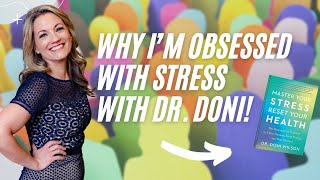
Dr. Doni Wilson, a naturopathic doctor, explains how chronic stress hormones like cortisol and adrenaline damage fertility, digestion, mood, and immunity in women. She identifies individual stress patterns through testing and treats them in phases: first calm the nervous system, then restore neurotransmitters, then build lasting resilience.
Chapters
Hi, I'm Donnielle Wilson. Most people know me as Dr. Donni. I am a naturopathic doctor and also certified professional midwife and certified nutrition specialist. I graduated from Bastyr University in the Seattle area in the year 2000. I've been practicing as a naturopathic doctor ever since. I live in the Tri State area on Long Island. But really I help people from around the world as a consultant specializing in stress and understanding how stress affects us as humans. Specifically how stress affects women who are struggling with fertility and recurrent abnormal pap smears and hpv. But I also love to help anyone who's struggling with symptoms that are related to stress, which actually when it comes down to it, more than 90% of our symptoms are, are caused by our stress exposure, our day to day stress exposure, as well as our past stress exposure. And most of us, in order to deal with this stress, we tend to push it under the rug or just try to power through. And actually when we're doing that, it's working against us because stress is gonna affect us as humans. And to the extent that we dismiss that or ignore that, we're actually leaving ourselves at a disadvantage for health issues to develop at some point in time in our lives. Either health issues related to our immune system, our digestion, our hormones, our nervous system, or all of the above. And this just happens to be what I had an interest in from a pretty young age. In fact, a lot of times people ask me, donnie, how did you even get interested in naturopathic medicine? And it's actually kind of not what you would expect because I grew up in a house with a father who's a pharmacist. My father is still a pharmacist, and he ran a chain of over 1200 pharmacies on the west coast throughout my childhood. And my mother is a teacher. So what you might not expect from someone who grew up in a pharmacy and surrounded by pharmaceuticals is the lessons I learned from childhood was how to avoid the need for medications, how to eat healthy, how to, to take nutrients, how to spend time outdoors and exercising in order to prevent health issues. That's what my parents taught me. So actually, I'm not sure why we all were so surprised. When I became interested in nutrition and naturopathic medicine, I was actually getting my. I got my pre med degree at Oregon State University and I started deciding, let me take a class in nutrition because I was interested in nutrition from a young age. And lo and behold, when I took a nutrition class, I decided, let me just get A bachelor's degree in nutrition. Also, it's my personality. When I get interested in something, I just decide to make it happen. So I got two degrees in four years. And then I found myself asking the question, I wonder if there's a medical school that includes food as medicine as part of the training. And my friend said to me, well, there's nature public medical school. And yes, there was a nature public medical school right near where I was in Portland. But my friend didn't mention that one to me. She mentioned Bastyr University in Seattle. This is before Google. So I had to get in my car and drive to Seattle. And I walked into Bastyr and I said, I'm looking for a medical school that teaches food as medicine. And I'm sure they were like, oh my gosh, where did she come from? Because that's exactly what they do at naturopathic medical school. And so I immediately knew I was in the right place and was excited to begin. But I actually took a year off before I started at best year. And during that time, because I was actually also saying no to pharmacy school, my parents had me set, and of course my dad was on the board of the pharmacy school. So I was set to go to pharmacy school. And I said to my parents, you know what? I don't want to go to pharmacy school. Luckily, at a young age, I had connected with my intuition and knew enough about myself to know that I was not going to be happy in that career path. And so I took the time to do other things I enjoyed. I was also have a background in dance, so I was teaching dance and gymnastics. I also was working as a nutritionist and as a barista. And I learned during that year, this is really what I want to do. And so I did go on to Vassar University and trained there as a naturopathic doctor and a midwife. As part of my midwifery training, I started researching how stress affects women in labor. So this was really. Already I knew I was interested in women's health, and already I knew I was interested in how stress affects us. What I learned from women in labor has completely influenced my research and work related to stress for the rest of my career. Because what I learned from those women in labor, and I was researching women who had a history of abuse and then went on to have a pregnancy. And what I found is that these women needed to have an adequate amount, an optimal amount, I should say, of cortisol and adrenaline, which are our stress hormones. They needed the optimal amount of cortisol and adrenaline in order for labor to progress effectively smoothly with the fewest interventions and complications. If women have too much cortisol or too much adrenaline, which means a stress response during labor, it actually causes labor to decrease and more complications and interventions are needed. But the same is true if there's not enough cortisol and adrenaline. If we don't have enough cortisol and adrenaline, it also affects the progression of labor. So I thought to myself.
Is this going to be true for people who are not in labor? In fact, when I finished my residency at Bastard University and my internship with Dr. Tori Hudson, I ended up moving to New York City. And it was November 2001, right after 9 11, one of the most stressful times in the history of Manhattan and let alone the world. And so I was able to say, let me help my patients. Not just my patients who are pregnant and in labor, but all of my patients who are under stress. Is it true that they also need optimal cortisol and adrenaline levels? And I started measuring their levels. I started measuring cortisol levels in my patients. From morning, midday, evening and bedtime. I measured adrenaline levels. And this testing had just become available. It was brand new. Now. It had been in the research for decades before, but specialty labs just made it possible to measure adrenaline, norepinephrine, epinephrine, dopamine, as well as neurotransmitters like serotonin and gaba. So I was all over it. I'm like, I'm going to measure these, I'm going to measure cortisol. And that's the time that I first measured my cortisol and adrenaline levels. And what I saw was that I was completely bottomed out on cortisol and adrenaline. I don't know how I was functioning now. At that time. I had finished a decade of nature public medical school and residency. I had just moved across the. I had a daughter and I started my practice and I was exhausted. I was also running a non profit organization and legislative effort in New York state because I was aiming to get recognition for the naturopathic profession in New York State. And of course, as you're starting to learn about my personality, I tend to take on everything I can and feel passionate about everything that I do. So I was becoming burned out, what we would call burned out, where my cortisol and adrenaline were flatlined essentially. And it was a real wake up call for me. I was like, what the heck, I have to figure this out. Because I was also experiencing severe migraines. I was having Migraines that I didn't tell anybody about because I thought as a naturopathic doctor with all this training, I shouldn't be having migraines, I should be able to fix this. And so I didn't tell anyone I was secretly having these severe, severe, debilitating migraines that would take me out for days at a time. I would have to cancel all my patients and I would have to get help with my daughter. I don't even know how I was doing it. And this was going on for years. And so I was all the while trying to solve my migraines while also researching stress and helping my patients. And I started writing about stress at that time. I also started lecturing about stress at professional conferences around the country. And so what I found in one of the first papers I published was about anxiety and depression and how it relates to stress as an underlying cause. And that article really inspired me to write more. That's what led me to write my first book called the Stress Remedy. And the subsequent books, for example, there's the Stress Warrior and the Natural Insomnia Solution and the most recent books called the Master your Stress Reset yout Health. And it's all about my clinical experience and research because I actually did research, retroactive research in my practice of 127adults and their cortisol levels and their adrenaline levels to identify the patterns. Because here's the thing that I found so curious and to me so transformative in terms of my health and my patients health, is that it's different than what I learned in naturopathic medical school. I did learn about adrenal glands which make cortisol and adrenaline. In naturopathic medical school I learned that they were important. But it wasn't until I was in my first year of practice and practicing with one of my colleagues that I really understood that a lot of the health issues that I was helping people with, from Lyme disease to allergies and autoimmunity and digestive issues and Epstein Barr virus, really when it came to it, if I was truly looking for underlying causes, which is what I was driven to do, I was very driven to solve my patients health issues and solve my migraines. And I had to keep looking for what was really going to solve this. I had to dig deeper. And when I dug deeper, it kept landing me right back at the adrenal glands and cortisol and adrenaline levels. And so I kept measuring these levels. And what I saw is that we don't all have the same response to Stress. Now in the literature, Dr. Hans Selye, for example, wrote about adrenal maladaptive syndrome. And this is from I think maybe more than 60 years ago. He's a physiologist, so he was writing about how humans are affected by stress from a physiological perspective over time. And he saw that truly we are affected by stress now. We have our natural, normal, healthy stress response which we wouldn't want to go without. We need to as humans respond to stress to protect ourselves from stress. We have our built in amygdala response, our sympathetic and parasympathetic nervous system, the vagus nerve. We have the HPA axis where our brain is telling our adrenal glands to make cortisol and adrenaline. And all of that fires off to help protect us when something, when we're in danger. But at the same time that system should also have a shut off so that we can go back to our rest and digest and repair mechanism in our body. But when we're under constant stress and we are never get, our body's never getting the signal to have anti stress, what happens is we go into these maladaptive patterns. And yes, looking at Hans Selye's model is helpful because we can see that cortisol can go too high, cortisol can go too, too low. And same with adrenaline, it can go too high or too low. But here's the key. When I was implementing this clinically with myself and with my patients, I found I needed a different model in order to be effective with my care. I needed to be able to address my patient here and now. Where are they in this moment in time and what can I do to help this patient recover from stress and in their life at this moment, in this situation. And so what I needed to know is I needed to know what is this person's cortisol and adrenaline levels now? And so by measuring their cortisol, not just one time a day, not just with a blood test in the morning, but we need to measure it in the morning when they wake up in the middle of the day, like before lunch, before dinner and before bedtime. We can measure this with saliva, so by spitting in a tube at home or in urine, which you can also collect at home. And there's labs that will process this. Now I went through a process of testing out all the different labs, so many different thousands of samples. And I found here's the lab that gives me the most consistent, predictable, accurate results for cortisone levels. And depending on whether a person is taking or exposed to cortisone, maybe as a hydrocortisone or steroid treatment. Then we need to measure it in the urine versus saliva.
Something a lot of people don't know is that too much stress can actually create an abundance of health problems like high blood pressure, high blood sugar, anxiety, migraines, insomnia, even fertility issues. This is because high stress puts your adrenal glands on overload. They release cortisol and adrenaline, which controls your digestion, hormones, immune system, energy focus and even your emotional response. So how can you beat stress when you don't know where to start? That's why we have a free seven day stress reset program. It's designed to help support weight loss, digestive healing and hormone balancing. It includes support for integrating self care. Daily tips come to you by email and video. Gluten free dairy free meal plans as well as grocery shopping lists, journal pages and more. This free program will help you beat stress and put you on the path to wholeness in your body. Get your plan now for free@drdonnie.com.
And I was able to find the lab that most predictably could give me information about a person's norepinephrine, epinephrine levels and how they were metabolizing their catecholamines. So this is huge. And I'm saying to myself, why isn't this part of standard care? But it's not. Even though it's in the research, even though they use these tests to develop medications, this is not used in standard care. In fact, it's not even approved in New York state. So that's why I have maintained practices and licenses in other states so that I can access this testing and make it accessible for my patients. So what I do is I look at the biochemistry and again, because I have my training in science from my bachelor's degree, my training in biochemistry from naturopathic medicine, my training in nutrition, I'm able to understand the biochemistry of nutrients and the biochemistry of catecholamines and to understand that if a person has certain imbalances in their levels, I know which nutrients are needed in order to get everything back to optimal. Again. Because of my training in herbal medicine, I know which herbs are going to help and I can read research studies. In fact, in my books you'll see hundreds of references of research studies. Luckily that they're researching herbs and nutrients for exactly this. For how do we optimize cortisol and adrenaline and not just herbs and nutrients. There's hundreds of research articles on what I call Stress recovery activities, everything from meditation, mindfulness, journaling, yoga, dancing, singing, journaling, gardening, you name it. There's research on all these activities that humans can choose to expose ourselves to that can help us recover from stress. Now, where the perspective that I'm coming from is, I'm now begging researchers and investors to please make it more accessible to measure cortisol and adrenaline levels and to please fund studies to help us understand more about what we can do to optimize cortisol and adrenaline, whether those levels are too high to bring them back down to optimal or too low and bring them to optimal. Because here's the thing. To me, and based on all of my work, this is so key to our longevity to prevention of chronic illness, to.
Reversing chronic conditions that people have been struggling with, including depression, anxiety, autoimmunity, pain. We actually can shift. And I know this because I see it with my patients and I see it with myself. I no longer get migraines. My patients all the time are seeing a reversal of health issues that their practitioners told them could never be reversed. And this tells me that this theory that I've had for all of these years is actually true. That when we achieve optimal cortisol levels and optimal adrenaline levels, we essentially reset the effect of stress on our system. We can actually reset it. And most people are walking around day in and day out thinking that they just have to somehow survive with this current situation of imbalance caused by stress. And I'm saying, no, you don't have to just survive with a current situation of imbalance caused by stress. We can actually rebalance things. Now, I know this is not what you're going to hear in conventional medical office. I know this is not even what you're going to hear from my colleagues in functional medicine. Because this is my work, this is my research. This is what I've figured out to be true. And so that's why I'm so passionate about sharing it with all of you. I believe that as many of us, first of all, should have access to knowing our cortisol adrenaline levels and knowing how to get them back to optimal. And this is what I refer to in the Master your Stress Reset yout Health Book as your stress type. To me, the stress type is your pattern of stress maladaptation, or what I refer to as adrenal distress. When our adrenals are under stress and they maladapt, it's called distress. And what's happening is the cortisol tends to either stay too high or certain times of day or all day. Or cortisol can go too low at certain times of day, or could be a combination of the two and the same for adrenaline. It can go too high at certain times a day or too low at certain times of day. And whatever your pattern is, 10 at this moment in time is important because it determines your effective treatment. Not everybody needs the same treatment. The treatment for high cortisol is completely different than the treatment for low cortisol. Not only that, but what I found is that there's an important sequence to follow when helping your adrenal glands to recover from stress. It's very tempting. I see it every day, colleagues and practitioners alike. Even if, luckily, they're measuring the cortisol levels. Hopefully they're also measuring adrenaline levels. But what's very tempting, I get it, as a practitioner, I did it too, to begin with, is you jump in and put the cart before the horse, so to speak, and try to address ahead of what's really going to be most effective. What I found is we have to step back and we have to start with what I call phase one, which is to calm out of stress mode. We have to. If there's high cortisol, adrenaline, we need to use whatever we can use, nutrients, herbs, to bring that cortisol back to optimal. We're not trying to get cortisol to zero. We just wanted to bring it back to optimal. And this is actually by resetting the HPA axis. It's not just a fake thing. It's not just a band aid, it's not just a crutch. It's actually bringing cortisol production down to optimal. It's actually retraining your communication in your body, in your nervous system, in your adrenal glands. We're retraining the system to make an optimal amount of cortisol and at the right time of day. So we need to know, is your cortisol high in the morning? That's when we're going to dose the herbs and nutrients to bring your cortisol to optimal. If your adrenaline is too high, we need to help with that metabolism. We need to use nutrients such as magnesium that help the COMT enzyme metabolize norepinephrine correctly. If that's. If there's another problem, if you're deficient in iron, if you have a toxicity of mold, we need to address those things so that we can get this metabolism working again. I also have studied all of the genetics and epigenetics and functional genetics of the last decade. I myself have MTHFR gene variations. I studied with Ben lynch, and I have my own protocol for addressing genetic variations. And would you know that when I'm addressing epigenetics and genetic variations, it comes down to addressing stresses? Yes, it helps to know your genetic variations. However, the main thing that affects our genetic expression and our genetic and our influence of how our genes affect our daily functioning in biochemistry is our stress exposure. Emotional stress, toxins as a stress, toxins from our gut, bacteria, toxins from environment.
And even nutrient deficiencies, I would consider a stress. These stresses affect our biochemistry, and these stresses affect our genetic expression. So even when we look at genetics, it comes back to addressing our stress. And so we can help the body to metabolize adrenaline. We can get that adrenaline back to optimal. That's so important for phase one. But also what's important for phase one that most people miss, most practitioners miss, is if a person has low serotonin and GABA levels, which most of us do, because serotonin and GABA are depleted by stress, they are calming neurotransmitters. If we have depleted serotonin and gaba, we're not going to be able to recover from stress. We have to first support our serotonin and gaba. Now, serotonin and GABA are made in our bodies from nutrients, so we can effectively give the right nutrients to support serotonin and gaba. Also help your body make more itself, because those are neurotransmitters that we make in our bodies from nutrients and from our digestive tract. So we need to heal our digestion, make our make more neurotransmitters, address the elevated cortisol and adrenaline, and that's phase one. Now we can actually get to phase two, which is where everybody tries to jump to. But if you try to jump into phase two of stress recovery, likely you're going to feel worse. That's what happened to me. I jumped, right? I said, oh, this is what I was learning in school. Let me take these herbs to support my cortisol. And lo and behold, I'm feeling worse. I'm getting heart palpitations. I'm anxious. I'm like, I can't take adrenal support. What is wrong? Well, I needed to go back and do phase one at first, and then I could do phase two. In my case, I tend toward low cortisol and low adrenaline. I don't need to do the treatment for high cortisol, high adrenaline. I needed to get to the point where I can help my adrenals make More cortisol and adrenaline again. And most practitioners will just jump to providing a replacement of cortisol, either glandular or pharmaceutical prescription cortisol, hydrocortisone as a replacement. In some cases that's necessary, severe cases, but most of us don't need that. Most of us, our adrenal glands can make more cortisol and adrenaline if we're just given the right nutrients and support to do so. Then a key piece, other key piece of this protocol is phase three, which is where we're maintaining over time. What's the point of just correcting the imbalances and then stopping everything and going back to the way things were before? What's the point of that once you feel good? This is what my patients say to me. Once they feel good, they don't want to go back. They're like, doctor, doctor, please tell me what do I have to do to maintain this over time? And that's phase three, where we become resilient to stress because we know what to do on a day to day basis to maintain healthy cortisol and adrenaline levels over time. And part of what that involves is actually something I teach way back from the very beginning of this protocol, which is what I refer to as care or self care. C for clean eating, A for adequate sleep, R for recovery activities, and E for exercise. But we need to be implementing care based on our stress type, based on our stress response. And so this is what I write about in the Mastery of Stress book and this is what I beg researchers to teach us more about. How do we know how to implement care based on our stress type. That to me is going to be even more transformative to our health going forward in the future. But what I the message I want to give here is just how important it is to pay attention to your cortisol and adrenaline levels. I think it should be part of everyone's annual exam at the very least. And if you don't, you don't have a practitioner who's offering this test. Definitely find one. This is why I offer programs and one on one appointments with patients. And I help people from around the world to be able to understand what their cortisol levels mean, what their neurotransmitter levels mean, how to use amino acid therapy to rebalance your neurotransmitter levels, how to rebalance your gut biome, how to rebalance your hormones, how to rebalance your immune system, turn off autoimmunity and allergies. I used to have severe allergies. My family has autoimmunity, both my parents. It's in my genesis. I do not have autoimmunity and I do not have allergies and I do not have migraines anymore. And it's because I implement everything that I research and everything that I learn. And this is what I teach my patients. I teach them that they can become resilient to stress by understanding how stress affected them to begin with and then giving their bodies the support it needs, the care and the right herbs and nutrients to optimize cortisol and adrenaline so that they can actually be resilient to stress going forward. And this is how I help women to fend off hpv, for example, and get HPV to negative and Pap smears resolved. How to get rheumatoid arthritis and other forms of autoimmunity to go to negative without medications. How we can reverse other health issues that patients have been dealing with that they've been told and seen many practitioners and never had good results. And so this is what I'm passionate about doing. This is what I love to talk about. I'm so glad to get to share it with all of you. Thank you for your attention and I would love to hear from you if you would like to hear more about this and how this could be helpful for you. Thank you so much. I look forward to hearing from you.
Thanks for listening to How Humans Heal. If you liked this episode, leave a rating and a review and for more resources, visit drdani.com.
More from Dr.


#Hypothyroidism and Hashimoto's: How to Know if You Have It and What to Do Next






