Why Should You Trust Naturopathic Medicine?
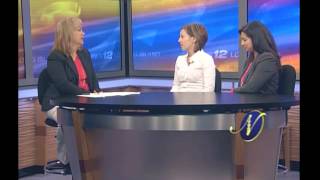
Dr. Doni Wilson and Dr. Pina Logiudice push for naturopath licensing in New York, pointing to Connecticut's licensed model. They say it would let naturopaths order labs and bill insurance, cutting costs for chronic disease. The Medical Society of New York argues their training is less rigorous than MDs.
Chapters
Coming up, should naturopaths be licensed to practice medicine in New York? And what's in it for you as a health consumer? That's up next on Long Island Naturally.
Hi, welcome to Long Island Naturally. I'm Mary Muse. Right now, there are only about a dozen naturopaths working on Long Island. That's probably because they're not licensed to practice medicine here. After spending four years in a postgraduate medical school, naturopaths are forced to limit the scope of their practice to being health consultants. But there is hope that can soon change. The public's interest in natural medicine continues to grow with the help of programs like the Dr. Oz Show. I recently profiled a naturopath from Huntington who's become a regular guest on Oz's nationally syndicated show. On a recent Dr. Oz show, the expert guest was introduced as a doctor of naturopathic medicine.
Joining me is superfoods expert and a.
Doctor of naturopathic medicine, Peter Ladudice.
I think was a wonderful boost for our profession.
Dr. Oz's support could help naturopaths gain the recognition they need to be licensed in the state of New York. Currently, 16 states license naturopaths as primary care physicians. That allows them to order blood tests and prescribe natural remedies, all while being covered by insurance.
What we do is how do we help heal the body using supportive measures rather than suppressive drugs.
The New York state legislature is considering a bill to allow naturopaths to be licensed, but opponents have been vocal. One critic, the Medical Society of the State of New York, declined our request for an on camera interview, but told me naturopaths should not be allowed to call themselves doctors because they're not trained as rigorously as conventional doctors. Here there are signs some naturopaths have grown frustrated with how long this licensing battle has dragged on. Well, just across the border in Connecticut, fully licensed naturopaths have been working side by side with medical doctors for years.
The states that do recognize naturopathic medicine, their health care costs are lower. Vanessa, your blood pressure is perfect.
Nice and low.
You can go to a doctor and get a second opinion. Why not get a second opinion to do something naturally? If we all lived up in Connecticut, you could see me as your primary care physician. But unfortunately here in New York, I'm not allowed to do any of that. It's really more of a health consultant.
We need to take a break, but stay tuned. Up next, you'll meet the Long island naturopath who earned the title doctor from one of the nation's most respected physicians.
SA.
It.
Do you know what a naturopathic doctor is? No, not familiar with it. Okay. Most people aren't. They're looking to be licensed in the state of New York. Uh huh. They're primary care physicians that use natural remedies to help people overcome their problems. What do you think of that? What's the track record.
Really? Without knowing the track record, I couldn't respond to that. If they don't have a medical degree from an accredited college, I couldn't take their medicine if they gave it to me. Seems like a good thing. I mean, as I said, too many people are taking too many medications.
Welcome back to Long Island. Naturally, my guests are Dr. Pinole Laguta Che, a naturopathic doctor, a licensed acupuncturist and frequent guest on the doctor I showed. Also joining is Dr. Donni Wilson. She's a naturopathic doctor, a certified professional midwife, and the president of the New York State association of Naturopathic Physicians. Thank you so much for coming. Thanks for having us. As you can see from the mos, the people on the street, a lot of people really don't know exactly what you guys do. So why don't you tell me what's the difference between the education you get and that of a medical doctor?
Okay. Naturopathic doctors do receive a doctorate degree in naturopathic medicine and, and from accredited universities and then we also do national board exams. The difference in the training really has to do with our specialty. We specialize in natural therapies. So our training is in the use of natural therapies versus being trained in general surgery. So that's one of the biggest distinctions is medical doctors are trained in general surgery and specialize in, in that way we are trained in natural therapies, but the basics of the medical training is very similar.
Okay, so in other words you study anatomy and physiology and biochemistry and all that sort of thing?
Yes.
Okay. But when we talk about natural remedies, what kinds of natural remedies are we talking about? Pina.
Yeah. What we use primarily is that we'll do a very extensive patient health history intake and really get to know the person and what's going on with their body. And then what we do is that we'll look at dietary recommendations, their lifestyle, the stress of their life, if they're exercising, how they're sleeping. And then what we will recommend is some lifestyle modifications or botanical medicines, nutrient therapies, or anything along those lines that would be really effective to optimize their.
Health okay, do naturopaths ever prescribe drugs? Do you study pharmacology?
We do study pharmacology. That's a key part of our training. We study pharmacology for over a year and then we study the interaction between medications and natural therapy. So we become experts in not only how to prescribe, but how to safely prescribe while also using herbs and nutrients.
Okay. Now, I was once told that naturopaths are like primary care physicians by a naturopath in Connecticut. If that's the case, perhaps, I wonder if doctors think, what's the point? Why do we need you guys? After all, there are primary care physicians, aren't there?
It's true. One of the reasons is there's actually a shortage of primary care practitioners in New York. And so to be able to bring another profession that has that training would be very helpful to health care in New York state.
Okay, what could you do for your patients, Pina, as a licensed physician that you're unable to do now?
Well, the primary thing is to diagnose and treat a condition. So right now we don't have that ability. So most patients, when they come in to see us, they're pre diagnosed by their medical doctor or other type of physician, and then they come into us looking for other solutions regarding their health and how to optimize it rather than using prescriptive drugs. So if we did have a license, we would have the ability to diagnose and treat someone, have them come in to see us run the appropriate lab work if necessary, or other imaging, and then again, start with the treatment protocols as we deem appropriate, whether starting with the natural therapeutics, and again, knowing really the line of, okay, when is this person really needing the conventional medication so really supporting their body in that way.
I imagine that one of the issues is that you would licensing might mean you'd be covered by insurance, is that right?
It does. In New York State, it's two separate laws. So once they pass the licensure, then we would be able to be added to the insurance law.
Okay. And of course, insurance coverage would mean more people would have access, is that right, to naturopathic physicians?
Absolutely. And that's our goal from the New York association of Naturopathic Physicians is that our goal is to make licensure possible to increase access to naturopathic care. It has been shown that naturopathic care can decrease the number of chronic conditions and save money for the state.
How would it save money for the.
State though, because of decreasing health care expenditures on chronic health Care conditions like diabetes, asthma, which are the places where such high numbers are being expended currently.
Okay, so why then would the medical society of the state of New York be lobbying to prevent your licensure? I mean, do you have any idea what their objections are?
Well, we believe that they are. They're not quite understanding the extent of our training, which, as we were talking about, a lot of people are not aware of the extent of our training. We do complete over 1200 hours of clinical training, in addition to 4100 hours in total of didactic training. So I think it's not well known how much training we actually complete.
I wanted to tell you that I went to Connecticut two years ago and visited the naturopathic medical school there and followed a student who went to a hospital to do rounds with medical interns. So clearly the attitude there is very different.
Yeah, it's amazing. So close by in Connecticut, as well as Vermont, New Hampshire, Maine, all licensed naturopathic doctors.
Absolutely.
Yeah.
Connecticut has been licensed for naturopathic medicine since, I think, 1922. So for a long time, they've been implementing natural medicines in their healthcare system.
Wow. And the chief of staff there told me that in Connecticut, they're very interested in learning about natural remedies, particularly herbs, because they say a lot of their patients are using them. And the doctors are concerned about the fact that they're unfamiliar with these herbs and the patients are using them. And of course, they may be interacting with their drugs, and that seems to be. It could be a problem, I imagine.
Absolutely. And the research shows that approximately 40% of people are using some form of natural therapy, and most of the time not. Not telling their health care practitioner and not knowing that experts like Dr. Laguna Chai and I exist to help them.
Right. Okay, we need to take a break, but when we come back, will licensing naturopaths lower the cost of health care and give you a natural alternative to suppressive drugs? We'll talk more about that when Long Island Naturally returns.
I think that naturopaths should be licensed. I think insurance plans should really start to understand and appreciate what they bring to the table and overall, start turning our health care program from a defensive to an offensive. You know, preventative care should be the first and foremost, and I think New.
York State is unfortunately far behind many states, and I think that they got to catch up the same way. It took a while for chiropractors to be eligible for insurance if they insured. That's fine. I mean, there shouldn't be no problem. With that. But I don't know. What kind of a doctor is it? Welcome back to Long Island Naturally. We're back with two naturopathic doctors, Pinole Judice and Donnie Wilson, talking about how licensed naturopathic doctors can impact you as a health consumer. You know, some of the people I spoke with on the street were obviously very skeptical. One asked, what kind of track record do naturopathic doctors have?
Well, one of the great things about naturopathic doctors is that if you actually look at our liability and malpractice, it's one of the lowest out of all practitioners. So it's really quite amazing in terms of what we do is so safe. And then in terms of effectiveness, again, we've been able to treat many people with great success, you know, for preventing disease or if someone is acutely ill. So I think that. I think we've done a remarkable job.
I think one of the things that is not. People are not conscious of in our culture is that we really just respond when we're ill. No one ever thinks of. Is that right? Isn't that part of the problem?
Yeah, I'm sorry. No, I definitely think so. Because I think, you know, when most people, you know, from very little, we're trained that if you're sick, you take this. And what we're trained to do is to empower our patients and really educate them to understand that, you know what, there are things that you can do at home. There are wonderful natural remedies that you can take to really support the body, whether if it's a common cold or a sprain. There are so many wonderful other modalities that are out there that can support the body rather than shutting off mechanisms using medications.
And unfortunately, in the national health care plan, there's absolutely no place there at this point in time for preventative care, really.
And hopefully we're working toward that. We're working to have preventive care more included, because even some insurance companies are starting to see that if they include preventive medicine in their programs, that they're actually going to save health care costs and help people to not be in situations where they need so many invasive procedures and prescriptions.
Right. One of the people that spoke before the man on the street was actually Dr. Karen Barbosa, who's a breast surgeon, and she told me that you are her primary care physician.
Dr. Barbosa is a remarkable, amazing breast surgeon, an amazing human being. And, you know, what she does is that she really sees the value of incorporating integrative care as her health care system. As a physician herself a surgeon, she really sees the benefit for herself and her patients. Patients about really how you could truly optimize someone's health using both medicines together. And I know for Donnie and I, that's really our ultimate goal because it's not that there's one medicine better than another. It's really about the two medicines coming together so that patients have the best of all worlds.
Yeah. I was thinking, I'm sure there are other physicians out there who feel as she does, who want to have that exchange and support. Because everyone sees is so specialized in medicine today, it's impossible to be a generalist. And that's what you guys would provide, right?
Yeah, we would be the experts in natural therapies and. Absolutely. The goal being to. From whether it's a medical doctor, a naturopathic doctor, or any healthcare practitioner, the goal is better health for the patient.
Right.
I'm sorry. Because one of our main things is that I think a lot of patients right now are. Are feeling the dilemma that they don't know which way to go. And the worst place for a patient to be is to be stuck in the middle. And so I think the more educated they are about how to integrate both, I think it would be the best outcome.
Okay. Well, in my mind, one would always start with the natural remedies first and only go beyond that if they're not helping.
An important part of licensure, though, is that the legislators as well as the current medical community understand that we have the training to know when a patient needs additional care. And so that's part of the work that we're doing with the New York association and public awareness is to really help people understand that we have that training. And that while yes, we're really our specialty is helping people with the beginning steps, it's also to help people to know when they need to seek other care and how to use both together. Say a person has diabetes or asthma, and really it's at a severity where they need to be on medications and, well, there are some nutrients and herbs they can use at the same time. And instead of going to search on the Internet, which most people do is go search and try to figure it out for themselves, they could come to one of us. We already have all of that information, and we work on it every day for the past decade that we've both been in practice. And we can really help a person to create a strategic plan that integrates both their medications that they're already taking, as well as natural therapies. That can help them to improve their health, not just expect a downward process.
Right. And I understand from.
Dr. Zamparone, who's a professor at that college in Connecticut, that that's exactly what happens in Connecticut, that he refers to medical doctors and they refer to him, and it's a very easy exchange.
Yeah. I practice in Port Jefferson on Long island, as well as in Stamford, Connecticut. So currently, because there's not a license in New York, I travel to Connecticut, where I can do a physical exam and order lab work and provide a diagnosis for patients, Whereas in Manhattan, where I also see patients, and on Long Island, I'm not able to do that. So it's quite an arbitrary switch at this point when we cross state lines, that the change in what we can offer is quite dramatic.
So you're telling me your patients go to Connecticut to meet with you so that they could get the kind of medical care they want?
They do.
Wow. Oh, my goodness. So tell me, where do things stand with the licensure?
The licensure process, which has been a long one and which is common in New York state for licensing a profession, is looking very positive at this point. Senator Laval, our senator from Long island, is extremely supportive and really wants to see licensure for naturopathic doctors happen.
Okay, just tell me, Pino, why did you choose to move here knowing that he would not be fully licensed here?
Well, I just feel that there's. You know, I'm a New Yorker. I grew up on Long island, and my family's here, and I wanted to come home. I wanted to be close to them. And knowing that naturopathic medicine was not licensed, you know, I knew. You know, the funny thing is, when I first got back to New York, I first got recruited to the New York Naturopathic association to help support the process, which I was glad and more than delighted to join. But I also knew that there was so much inherent within natural medicine that I could do, despite the law, to help people. And so I decided that I had good faith that at some point the license would change. And I felt that New Yorkers needed this type of medicine. And I was happy to come out here and be like Donny, bit of a pioneer to get it moving.
You are a pioneer. Let's put up that graph so we can show the name of your website. People want to go there and support you guys in the licensing process. Thank you both so much for coming in. I hope people learned something today about how important this is. I'm sorry, we're out of time. Thank you. So much for watching. Tune in each Wednesday for my weekly reports on natural alternatives and healthy lifestyle choices. For Long Island Naturally, I'm Mary Muse. Enjoy the rest of your weekend.
Sam.
More from Dr.


#Hypothyroidism and Hashimoto's: How to Know if You Have It and What to Do Next






