Why You Feel Exhausted Every Holiday Season (And How to Fix It)
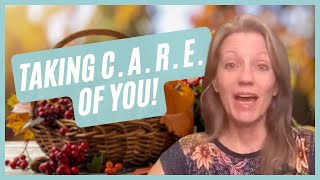
Dr. Doni Wilson explains why holidays trigger fatigue, sleep problems, and infections, then walks through the CARE framework: clean eating, adequate sleep, recovery activities, and exercise. She offers a stress type quiz and recipe guide to customize the approach for your body.
Chapters
Hi, and welcome to how humans heal. I'm Dr. Donny Wilson, and in this video and this episode, I'm going to be talking about how to actually take care of ourselves and our health during the holidays. Very often, what I hear from people, and specifically from patients, is it's almost like we hit a certain point in the year, and then when the holidays start happening, no matter which country you live in and no matter which holidays you. You observe, the holidays can really throw off your healthcare routine. And next thing you know, weeks or even months go by and you'll find yourself coming out of it going, what just happened to me? And you have to start all over again. And so I want to share some tips with you so that hopefully I can help you to actually improve your health, even during the holidays. And these same tips would help you if you're under stress of any type. A lot of times, if you're going through a point in your life where there's a lot of activity, extra things going on, extra demands emotionally, physically, on yourself, that's actually where we tend to take care of ourselves less, when we should be taking care of ourselves more. And so I encourage you to focus on. First of all, it just takes awareness. It takes a willingness to observe ourselves and willingness to, instead of judging yourself, instead of being critical or hard on yourself, to be gentle and loving with yourself and say, actually, one of the most gentle, loving things I can do for myself is to take care of myself during the holidays or when I'm going through stress so that I can get through this time period and be at least as healthy or healthier on the other side. And this is something that I've learned the hard way. Definitely I've been through times in my life where there's been stress and there's been more than I can even imagine being able to do in a single day and barely getting any sleep and never knowing when it was going to end. And it was in those time periods that I saw my health deteriorate and I myself feel worse and worse and worse. So I want to share some of the symptoms and health issues that. That I found for myself and I see in patients that you might see for yourself. Oh, that's how you know when your body's trying to tell you that you're falling behind on taking good care of yourself. So this could be things like simply feeling tired all the time. So feeling like you're tired during the day, you need a nap, you wish you could go back to bed, and maybe you're having Trouble sleeping, not falling asleep or waking up early. And so it ends up, you're burning the candle at both ends, right? You're like, not getting enough sleep and you're feeling tired all the time. And then we become more and more reliant on stimulants like caffeine and sugar to get us through the day. And we might even become more dependent on things to sedate us or relax us in the evening that may actually be working against us. We might be thinking, oh, I'm going to drink a glass of wine to relax, when actually it could be working against you and disrupting your sleep more, right? So it's like the things we gravitate to to help us through the stressful time or the holidays ends up working against us. And so the other things you might notice may be more often headaches, more frequent infections like sinus infections, bladder infections, or other kinds of vaginal infections, for that matter, or intestinal infections. This is when people may be more likely to develop diverticulitis, for example, or other kinds of inflammatory conditions in your body, like gastritis or GERD and reflux heartburn starts happening, or other kinds of digestive issues, constipation, diarrhea, whatever it is for your body, your version of irritable bowel syndrome or inflammatory bowels starts to happen. We also might start to notice different rashes on your skin, or either weight gain or weight loss. You might notice brain fog or irritability and anxiety, depression. All of these things can start to show up when we're under a lot of stress and even during the holidays. Here you are wanting to enjoy yourself during the holidays, and yet the holidays can be a more stressful time for us. And if we're not keeping up with taking care of ourselves, we start to not feel good during the holidays. We start to gain weight, we start to feel irritable. We're not even enjoying the holidays because we don't feel good. And then we're wondering, oh, my gosh, now I just have to get through a couple more weeks before I can actually start taking care of myself again. And so I want to encourage you to start to try to get ahead of it. As soon as you realize it, you can start making changes. You don't have to wait in order to change the way that you're taking care of yourself. And especially during the holidays, and especially when you're under a lot of stress. So what are some ways to get started? Because I know it's. It can feel overwhelming. You're like, how Am I going to start when I got so many other things on my to do list? Believe me, I've been there too. And I had to just figure out how to outsmart it. And one of the best ways to get ahead of it is to make it really simple. And that's why I love the acronym CARE as in self care. C in CARE is for clean eating. So we're going to try each day a little bit more toward eating clean. And I'm going to come back to what I mean by that and give you some ideas. The A in CARE stands for adequate sleep. So how do we prioritize our sleep and take steps to make sure we're getting good sleep every night or as many nights as possible? R is for recovery activities, activities that we can do even for short periods of time each day and each week to help us consistently be recovering from stress so that we can stay ahead of it instead of having the waves come crashing down over us. And the E in CARE stands for exercise, which means movement at your activity level and movement that you enjoy and that feels good to your body. Okay, so that's the beginning of it is think of it in terms of how are you taking care of yourself every day? Because when it comes to it, down to it, the more we take care of ourselves and each and every day, that's going to add up. Even if it's in small increments, it adds up to significant difference in your health. Now again, this matters no matter what health issue you may be dealing with. You might be following me because you have high risk HPV virus and an abnormal Pap smear. This is absolutely what I recommend for helping you to continue protecting yourself from HPV during the holidays or during a stressful time. This is also what I recommend if you're dealing with maybe perimenopausal symptoms, because we know perimenopausal symptoms are absolutely going to be worse and aggravated and more severe when you're under stress without enough recovery from stress. It's also true if you're working on fertility and wanting to get pregnant, you're wanting your ovaries to be ovulating optimally and producing healthy hormone levels. Well, to do that, we need to be taking good care of you every step of the way so that your ovaries are getting the best signals. The ovaries need to have calm signals in order to get the best ovulation to happen in the greatest likelihood of catching a pregnancy and maintaining a pregnancy. We also want to be following these tips Whether you're wanting to address an acute condition like maybe an autoimmune, even an autoimmune condition or joint pain or surgery recovery or, or even if you're wanting to prevent a more long term condition like heart disease, diabetes, dementia, bone loss, this is going to help all of those things at once. This is why to me this is such a great catch all, all in one thing you can do that's going to help in so many ways because you do simply taking better care of you and there's this beautiful ripple effect where it ends up helping in so many ways throughout your body, including then you're going to be able to maintain, right? You achieve that healthy weight, you get that normal Pap smear, you get that negative autoimmunity, you get your cholesterol levels down and your blood sugar levels optimized and your cortisol optimized. And then now this new way of taking care of you is your new normal. And you're going to be able to maintain that over time, which is a way better strategy than the, than the sprint and the, then you fall behind, right? The sprint is like I'm going to go on an extreme diet, lose weight and then for the next six months gain it all back again and then we go on a big sprint and lose weight and then gain it all back again, right? It's like a, we're kind of like on the wagon, off the wagon, this kind of analogy. And so that is a strategy that a lot of times humans we find ourselves in is the hurry up and then, then everything falls behind again and then we hurry up and then we fall behind again, right? And that strategy, it just isn't the best strategy for long term health. Because the best strategy for long term health is something that you're going to do on a regular basis so that your body can benefit from it each and every day over time. And that's where we're going. We want to be able to create habits, routines, I call it your self care routine that you can follow day in, day out. There's going to be some days where it's a little bit off track, right? There's going to be some days where maybe you're traveling or something happens or you miss a little bit, but you're going to know I'm going to come back to my self care routine because that's what's going to help you maintain over time no matter what comes at you. You know what your self care routine is that works best for your body and you Also then be able to notice if something goes off track and, and be able to self correct more quickly than if things are so chaotic. It's hard to know. There's too many variables. So a lot of times when patients come to see me at first, that's where they're starting from. They have a lot of different symptoms and a lot of different variables and they're like, I don't know what's causing what. And so I become the detective who comes in and says, okay, we can figure this out, we can figure out what is causing what, which foods are causing which symptoms and which issues need to be addressed, which hormones are out of balance, which nutrients are out of balance and we start addressing them and we start taking off, taking the things off the list and you start feeling better. And then little by little we go, oh my gosh, now all the labs are coming back to normal and you're feeling good. By the time you go through that process now you're like, oh, this feels good. I want to stay here, I want to keep feeling good. And by that point now you've got a new beautiful self care routine in place that you can continue to optimize moving forward and you don't have to fall back to this old chaotic place of feeling out of control of your health and feeling like the symptoms keep adding onto the list. Okay, so I want to go in some specific tips for you, to give you some ideas. And these are not one size fits all. I really encourage you to know yourself, your body and to use these tips to help you as a bounce off place and jump off and go, oh, okay, here's an idea and let me see what else I might think of that would work in my life or for myself. Right, so let's start with clean eating. So c for clean eating. What I mean by clean eating is eating foods that are going to be first of all healthy for your body with nutrients that your body needs and wants and not the things you don't want. Like try to avoid pesticides, so choose organic foods. You can avoid what your body doesn't need and choose what your body does need. We can also make sure to choose foods that are non inflammatory. If we're eating foods that are inflammatory, now we're just adding inflammation to our body and that's working against us. So the most common inflammatory foods are gluten, dairy and sugar. So as best as you can avoid gluten, dairy and sugar, the more you're going to drop your inflammation levels and the more you're going to increase your immune system function. Not only your immune system function, but you're also going to improve your digestion, which means you're going to improve your absorption of your nutrients. And it means you're going to overall benefit your whole health. I find that these inflammatory foods, gluten, dairy and sugar, are very highly associated with abnormal Pap smears in women of all ages. They're also associated with bone loss in postmenopausal women especially. But anyone can experience bone loss from exposure to gluten, dairy, sugar. We also, those, those foods are also associated with weight gain.
And skin rashes, autoimmunity, thyroid issues, heart disease, diabetes, and dementia. So you know what? Like here again, let's pick the solution that solves the most problems at once, right? Let's, instead of picking having to do a lot of things, we can say, hey, let me just do this, let me just clean up my diet and I'm going to solve a lot of issues. Then we can see what's left. So, yes, I do recommend doing a food sensitivity panel, if you haven't already, because then we can find out exactly which foods are inflammatory for your body. And if you're not yet ready to do a food sensitivity panel, then I would start with gluten, dairy, and, and sugar, because those are the most common inflammatory foods in humans, most all humans. So that's a good bet that that's a good place to start. And I so often hear people who say, okay, I'm just going to finally avoid gluten, dairy and sugar and then they finally start feeling better. And yes, it's possible to, to avoid gluten, dairy and egg, or in eggs, excuse me, gluten, dairy and sugar during the holidays. So, for example, Thanksgiving in the United States, you could have turkey, turkey doesn't have gluten or dairy. And you can then have potatoes, sweet potatoes, vegetables, all of these things are going to be already gluten free, dairy free, and no sugar that has to be added. And so you can have beautiful, delicious, healthy foods during the holidays without having to have gluten. Or if you want to have, let's say bread or something made from bread, you can get a gluten free version. And butter, I find, is usually fine for most everyone. So even though butter is really from a cow milk source, I find that butter is okay. Or you can use a different oil or fat like avocado oil or ghee, which is a clarified butter. So there's other options for butter as well, but I usually find butter is okay. In small quantities, having optimal cortisol and adrenaline levels is essential for health and longevity. And yet the stress in the present and in the past can affect our cortisol and adrenaline levels, causing them to be too high or too low. This is thing is that we're not all affected by stress in the same way. So over the past two decades, I've been researching and discovering how to help my patients recover from stress. And I've identified the five stress types which are the five common patterns of disruption in cortisol and adrenaline levels. The reason why this is so important is because the treatment is different when cortisol is too high. We use different herbs, nutrients and other modalities to bring levels back to optimal than if the levels are too low. So that's why I through research developed the stress type quiz which allows you in under two minutes to discover what likely your cortisol and adrenaline levels are. So then you can make decisions about which herbs, nutrients and other healing activities to choose to help optimize your cortisol and adrenaline again and improve your health now and into the future. Just go to stresstypequiz.com where you can take the quiz and take it from there. So that's an example of how you can choose to eat gluten free dairy free during the holidays. And I will put down below a link to my Gluten Free Dairy Free holiday recipe guide which is free for all of you. So if you're wondering how you're going to eat clean for the holidays, then I recommend you download the Gluten Free dairy free Holiday guide from me. And then you're going to have all the recipes, my favorite recipes that we use in my family every year because this is how we eat at my house. So that's a start. And the other thing that I would do in terms of clean eating really would be also clean drinking, which means having filtered water. And it means avoiding or definitely decreasing your alcohol intake. Because alcohol, while a little bit is okay, it doesn't take much to go over too much. And we know from research that when we have too much alcohol on a daily or weekly basis, it increases the risk of all different health issues, including cancer, including risk with high risk HPV virus, and including everything from heart disease to diabetes and dementia. So why drink something that's going to increase your health risk? You can have a little bit, but again, monitor and make sure you're like thinking, okay, maybe you have one alcoholic drink once a week or twice a week. And to me, even then that can Be too much, especially if you're trying to get HPV to negative. I would just commit to saying, hey, you know what? This is going to be a holiday, a dry holiday time. Instead of dry January, let's have a dry holiday. Just go ahead and say, I'm going to choose something other than alcohol, which is what I do. I'm right now drinking green tea, which I often do at holiday events. I'll go for let me get the filtered water, Let me get the. Even if it's sparkling water, or you can get a flavored sparkling water if you want to make it a little fancy. And you could even put it in a fancy cup to make you feel fancy while you're drinking it. There's also other now beverages and mocktails that can be very tasty and delicious and don't have to include alcohol or sugar. So I encourage you to look them up and experiment and try out and find your favorite drink other than alcohol during the holidays and any time of year, especially if you're wanting to improve your health and be healthy and get a negative pap smear. Okay, so those are some ideas for clean eating. Now for adequate sleep, what I recommend is that you start paying attention to how many hours of sleep you're getting right now. Every day I pay attention to what time did I go to sleep, at what time did I wake up. And this way you can quickly calculate how many hours of sleep did you get. And if you're not getting, I would say, at least seven hours on a regular basis, then we need to start taking action. We need, and this is, I mean, like seven hours straight through, not being woken up five times in the middle. So if you're not getting seven and a half to eight hours of sleep, then we need to be thinking, okay, is it a quick fix? Like, is there just. We need to communicate with other people in your home about when you need to be sleeping so they don't wake you up accidentally, including your pets. Do we need to be making sure your bedroom is dark? No lights waking you up, no sounds waking you up? Maybe we need to do some cleanup and decluttering so that your bedroom feels nice and a perfect place to sleep so it's your nervous system is not being overstimulated in that bedroom. As a. We need to take these kind of steps. If it's maybe perimenopause disrupting your sleep, we can address that as something I help patients with all the time. Perimenopause is very common to disrupt sleep, whether that's from causing night sweats or simply just by causing you to wake up too early, whether you have a night sweat or not. So these are things that can be addressed by addressing your hormones. So we can look at is your progesterone too low? Do we need to start supporting your progesterone levels? There's very safe and effective bioidentical and natural progesterone in creams, in oral forms that we can use. Because the progesterone, not only does it help regulate your menstrual cycle if you still have a menstrual cycle, but it also helps calm your nervous system and help you stay asleep. So and even postmenopausally we can use both estrogen and progesterone to help us sleep. And there's also many other herbs we can use to help with sleep. And one of my favorites is to look at your cortisol and neurotransmitter levels. Because if you have high cortisol at night, that sleep, or if your cortisol is going up too high in the morning, that's going to wake you up early, or if your serotonin is low or your adrenaline is high, they can disrupt your sleep. So what I always recommend that my patients do is you can start by doing the stress type quiz on my website and that will give you a sense of your stress type. That's a free online quiz and that'll give you a sense if likely your cortisol or adrenaline need attention. And then what I recommend doing to get very specific about your case is to do a urine saliva test where we can measure in the urine we can measure serotonin, dopamine, adrenaline, gaba. So we can measure your neurotransmitters so I can guide you to get them back to optimal. And in the saliva we can measure your cortisol level so we know how's your cortisol in the morning versus the midday versus the evening versus the bedtime. And once I have that level of detail, I can help you solve it. That's exactly what I've developed in my stress recovery protocol over the past 25 years. So you can find it in the master chest. Reset your health book. And if you'd like help, I'm happy to guide you as a one on one patient or in the stress warrior program so we can help you get back to sleep again. And it's not just about sometimes we solve the cortisol, we solve the neurotransmitters and we solve your hormones like estrogen and Progesterone, and you might still be having trouble with sleep, then we need to look deeper. We need to be thinking, is there something other nutrient deficiency, gut health issue, something else going on, even a mold toxicity? And so what I recommend, if that's the case, if you're really struggling with sleep and we're not solving it quite yet, I wrote a book about this called the Natural Insomnia Solution. And I recommend you read it and then come talk to me and say, okay, I read the Natural Insomnia Solution. Here's what I think is going on and what I need help with so we can guide you to get better sleep. Sleep is huge. Sleep is when our body does so much repair. Our brain integrates our day and our memories, and our body does all kinds of healing and our immune system protects us from infection. So, so important to be getting enough sleep. A lot of times, even just getting better sleep, people will find that they're losing extra weight and they're lo their infection rate goes down and they get that normal pap smear just by getting better sleep. It's amazing. So that's why it's part of care, right, is to get that good sleep. Okay, so let's move on to R for recovery activities. Recovery activities to me is everything from just some nice solitude or quiet time for yourself to deep breaths. Even if it's 10 deep breaths when you're in a stressful moment to calm music. I always encourage you to have a playlist on your phone, on your device, that you can put on when you're doing the dishes, when you're driving, when you're going about other activities. So you have this calming music communicating with your nervous system that things are safe and it can go into a calm state. Also could be playing music. If you're a musician, you can do play your instrument. Playing an instrument is shown to help us reduce stress, whether that's a piano or a drum or whatever it might be. And then also it includes things like meditation, mindfulness as well as yoga. And yoga crosses over into exercise as well, because yoga is both a stress recovery activity and an exercise way to practice balance, movement, flexibility. So yoga can work in both categories. Also, there's so many more stress recovery activities that I can think of. Everything from spending time in nature, spending time with pets, spending time with loved ones, calling a friend, journaling, so many more. So there's an endless list of possible things you could choose as recovery activities. And they don't have to take you all day. It could literally be something that takes you five minutes in the morning and five minutes at night. What I like to do, as soon as I wake up, I put on a meditation, I do some journaling. And this is a practice that I learned from Ann Runkle, which is when you wake up in the morning, write down with a piece on a pen and paper. Write down any fears or resentments that are on your mind, because when you write them down, and then you can shred it or throw it away. Release these fears and resentments so that you can focus on your real priorities for the day with clarity and purpose. So that's a quick idea you can do in the morning. Just write it down. And even do some journaling, whatever's coming up for you so you can let it go, get a clear list and move forward. You can also use the morning for movement or spending, getting outside in nature. And.
So there's so many different ways you can introduce recovery activities, even in small increments of time, even for 10 minutes, even the middle of the day or 10 minutes at the end of the day. And these are things you can even do with your children, with your loved ones, and be able to benefit from the recovery. These recovery activities all have been shown in research to help us to recalibrate our cortisol, our nervous system, so that we're not in such dysregulation in our nervous system. We're actually telling our nervous system, hey, there's time where we can relax, recover, and de stress so that we can reset all of our hormones and our immune system and heal right, Instead of being in a constant state of stress that's perpetuating the messages of stress throughout your system. The E in care stands for exercise. And again, I encourage you to start where you're starting from. No judgment, no expectation. It doesn't require perfection. Simply could be five minutes of stretching. It could be starting. What I like to do is pull up a YouTube video or an exercise app and do a five or ten minute workout. It could be doing ab strengthening or core strengthening. It could be a little bit of, could be some squats or some bicep curls, or it could be just taking a walk with your dog, but you start with something. Start with some movement. And also one of my favorites is dancing. So I love going. You could go to a dance class, but you could also just put on music you enjoy and just move in your own kitchen like nobody's watching, right? Dancing like no one's watching. It's a beautiful way to shake out the stress and move your body and it counts as movement and exercise. So these are some ideas for you to just go with it. And because I think sometimes we feel like it's such a big demand and we make a big mountain out of it. Oh my gosh, I don't know where to begin and I've been up and doing this and we're hard on myselves and then we can't even get started. So I encourage you to just let that all go, shake it off, be like, okay, it doesn't require perfection. It just means that I'm going to take better care of me. More than anything it's about you getting to prioritize you and that means that you're increasing your self love, your self respect and, and you're in more alignment with yourself and your body by choosing into these behaviors. And so again, be gentle with yourself doesn't require perfection. And definitely it's not a place to be conditional or judgmental or critical of yourself. It's just a chance to say, hey, I'm going to do what I can and I'm going to have learning, learning opportunities along the way. Learning in terms of eating, learning in terms of recovery activities, learning from others. What are they doing that works for them? What are they enjoying? And this gives you something to talk about when you communicate with other humans, whether at a holiday party or anything else that you're up to, what are they doing that works for them? And so you're in a state of curiosity and learning which is a beautiful place to get to connect with other humans and connect with yourself at the same time. So there you have it. Those are my tips, Dr. Donnie's holiday tips and tips to continue implementing your self care even when you're under stress, whether that's the stress of the holidays or any stress that might be popping up in your life. Just know that the priority is taking care of you. And when you're taking better care of you, then everything else goes more smoothly, right? That becomes your center, that becomes your, your point of reference and that's the goal because that's where you're going to see the most shift and most change in your well being and your life and your health. So I'm glad to get to connect with you and share that information with you and I look forward to your comments down below. I'd love to hear what was helpful, what worked for you, what your questions are, and I would love for you to join me again for another episode of How Humans Heal. So just subscribe and or join me on my newsletter list so you can receive a email each week when the news, when the podcast comes out. And if you would like my help, please don't hesitate to reach out to my office so we can understand what your needs are and talk about where we can go from there. I help people from around the world because this is something we're all dealing with, no matter where in the world. And these are things I can teach you and help you with from most all places in the world. So I look forward to connecting with you and I wish you happy holidays, whichever holidays you're observing and wherever you are. I'm happy for you to connect with me here and I look forward to connecting with you again very soon. Take care everyone.
Thanks for listening to How Humans Heal. If you liked this episode, leave a rating and a review. And for more resources, visit drdani.com.
More from Dr.


#Hypothyroidism and Hashimoto's: How to Know if You Have It and What to Do Next






