7 Principles of Authentic Success: Joshua Lee's Journey from Digital Guru to Human Connector
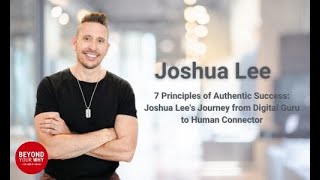
This content was created by Dr. Gary Sanchez. This content was uploaded by Dr. Gary Sanchez. This is a YouTube video titled "7 Principles of Authentic Success: Joshua Lee's Journey from Digital Guru to Human Connector" created on March 12, 2024. It features a conversation between Dr. Gary Sanchez and Joshua Lee, discussing Joshua's journey from a successful digital marketer to a proponent of authentic human connections. They explore themes of personal fulfillment, the importance of understanding one's 'why', and the transition from focusing on monetary success to meaningful impact. The discussion also touches on Joshua's personal life, including his career shifts, family, and the development of his current business philosophy centered around human-to-human (H2H) connections.
Chapters
Welcome to beyond you'd why Podcast, where we go beyond just talking about your why and actually help you discover and then live your why. You see, we believe that knowing your why, that driving force behind every decision you make and every action you take, is the essential first step to really knowing yourself. It allows you to move forward faster and have a bigger impact. If you're already a fan of the show, then you know that every week we talk about one of the nine whys and then we introduce you to somebody with that why so you can see how their why has played out in their life. This show will be more powerful for you if you've already discovered your why. If you still need to do that, head over to whyinstitute.com and discover your why today. It'll only take you about five minutes. Now let's meet today's guest.
This week we're going to be talking.
About the why of Contribute to Contribute to a greater cause, add value, have an impact in the lives of others. So if this is your why, then you want to be part of a greater cause, something that is bigger than yourself. You don't necessarily have to be the face of the cause, but you want to contribute to it in a meaningful way. You love to support others and you relish success that contribute to the greater good of the team. And you see group victories as personal victories. You are often behind the scenes looking for ways to make the world better. You make a reliable and committed teammate and you often act as the glue that holds everyone else together. You use your time, money, energy, resources and connections to add value to other people and organizations. So today I have a fascinating guest for you. His name is Joshua Lee, also known as the dopamine dealer of LinkedIn. He is a seasoned entrepreneur, author and crusader for authentic human connections in the digital arena. With 16 lucrative businesses and the book Balance is under his belt, Joshua's journey is shared with his blended family, including his wife, Rachel, and their cherished children, Jaden, Skylar and Ava. In the early 2000s, Joshua propelled clients like MySpace, Yahoo, and Google to stellar heights, managing nearly a billion dollars in ad spend to achieve 35 trillion online impressions. Yet as the digital space grew more automated, the essence of human touch dwindled. Seeking authenticity, Joshua founded standout authority in 2014, aiming to humanize personal brands. Through it, he aids high powered entrepreneurs and professionals in crafting remarkable content and seizing massive opportunities. On LinkedIn, the professional realm's epitome standout authority's mission transcends business metrics, aspiring to help individuals Stand out, inspire hearts, and evoke positive global change, all while preserving the soul's essence. Joshua's efforts have led to collaborations with luminaries like Joe Polish, Dan Sullivan, John Maxwell, and enterprises like Oracle, Gartner and adt. Joshua remains a digital realm beacon showcasing the blend of business success with genuine human connection. Joshua, welcome to the podcast here. I appreciate it.
And I can't believe you read the whole thing. Again, it's. I appreciate you, but again, I was like, I was like, man, it's. He's going through the whole thing. Let's do it.
You know, I read it and earlier and I was going to shorten it and then I thought, you know, I don't think it would do it justice. You've done some amazing things. You've got a great story. You've had incredible successes and incredible. Not successes that. We can talk about that.
Yeah, all of us talk about the nuts. Exactly. Like you mentioned, why I wrote the whole book. I mean, again, it was all about, you know, here's the things that I was too scared to be able to share because this is the things that were taught growing up. Don't share these things that are quote, unquote negative because it's that they define you. But the problem is they will define you in the right way if you share them. Allow others to get to know you.
And we'll get into that. Joshua, let's do this.
Where.
Where do you live currently? Let everybody know where you live currently.
I'm here in Austin, Texas, man. I mean, it's a beautiful sunny day out. So excited to be able to share.
Which I'm a little ticked off about because I came back from Austin this morning and I was there all weekend running in the, you know, the 5k part of the Austin Marathon. And it was freezing cold, 30 degrees.
Yes.
So, yeah. All right, now let's go back.
66 degrees out now. So, you know, it's a little bit.
Thanks for showing me that. Yes, I'm pretty happy about that. So let's go back in your life and where were you born? What were you like growing up? What were you like in high school?
And I love this. I mean, you know, Gary, this is. These are the types of questions we ask our clients too, when we ask, you know, tell me about yourself. They don't start far enough back, you know, so I was born in Texas in a little town, Beaumont, Texas, actually.
South of Houston, growing up. I mean, my family is from a little town called Nederland, Texas. So, you know, this is way back When I doubt they even had a stoplight, you know, but my. My dad moved around a bit, so I ended up really. Most of my education and things like that through high school was actually in Houston, so still Texas boy, born and raised, but grew up in Houston. You know, growing up, it was interesting. I was an only child, so I didn't have that built in brother and sister. Right. So I was. I was spoiled at times and lonely at times as well, too. Right. And I think people don't always take that in. They go, oh, only child. You got everything. Yeah, but I didn't. You don't have those built in, like. Like brothers and sisters that so many other people take for granted for so long. So, you know, that was interesting for me because for me, being able to get to get to know everyone else, that was really key for me. Right. Really getting to know who I was talking to, what their why was, and then all sometimes mimicking that. Right. To be able to go. To grow that friendship. So that was me growing up. It was. I played football, basketball, you know, did the typical stuff there. If you ask my mom, she'd tell you I was an entrepreneur at a very young age. You know, I was that kid that was selling candy out of his locker, you know, because I saw a need, you know, going through back then. Let me tell you, the margins were amazing. Mom and dad paid for the candy and kept all the profit.
I love that. Yeah.
High school, you were probably a popular kid. So for those of you that can't see Joshua, he's very fit and he's. His hair stands straight up. About how many inches is that?
Depending on how long. When's the last time I got a haircut? Right now I probably need one. So I'd say we're at least. At least two and a half. Almost three inches.
Yeah, straight up like Mohawk. Straight up, two and a half inches. There we go. We got a side picture there. No loss of hair, but just straight up and shaved on the side. So, yeah, Joshua's why, like we talked about, is to contribute to the greater, greater cause.
Right.
Add value to other people. But how he does that is by challenging the status quo and thinking differently. And then ultimately, what he brings is a trusting relationship where people can count on him. So that explains the hair to the rest of us, but. Okay, so you graduate from high school. Football, basketballs, athletics. Where do you go from there?
You know, that's an interesting. You know, because I know you said I must have been popular. Yes, I had a lot of friends, but at the same time, Gary, I'm gonna tell you, I felt outside looking in always, right? I was always part of the groups, but I never felt like I fit in, right? And that was always one of my struggles, being able to go through it was friends with everyone and friends with no one at the same time. And so it was always an interesting. I don't think I truly understood friendship until I met other entrepreneurs, right, that really understood that kind of thinking outside of the box kind of aspect. So, you know, and I mean, like, it's. I say typical, but I mean, you know, I. I was athletic at a young. At a young age. So, you know, really kind of going through. You know, I played varsity football and basketball, chose football. I mean, look, if you go back in and watch movies like RC Blues about Texas football, let me tell you, it's. They're not joking. I mean, I remember I can show you now my knee because I used to be able to get a shot of cortisone every other game they give me to make sure I could play. And now if anyone knows about cortisone, it actually deteriorates cartilage. So, like, my left knee is pretty shot these days, in my 40s, but, you know, I had the opportunity. I was that kid, too, that was very athletic playing. But on the inside, it took me a long time to realize this. I took in a lot of information. You know, school was going for me. I could sleep through class, but I could read a book and remember everything and take the test and an ace it. So growing up, I mean, right before I graduated, I could have graduated two years early because of my SAT score, my SAT score. I was 30 points shy of a perfect SAT score, which was pretty phenomenal. Being able to go in thinking of, oh, it's Josh the jock going through. But I had that other aspect of me. I remember going to visit the campus of University of North Texas on a quick start program that would take my next four years and put them into two. So I would come out instead of a senior in high school, I would come out a junior or starting my junior year in college. But I remember they go, it's one of those things, you're like, hey, you know, how do you feel when people call you dork or nerd or make fun of you for being someone like, I don't know, I play football, right? Like, I didn't have those because I was able to be able to kind of manipulate how my Persona, how I was perceived by the different audiences. So we didn't have that issue. And they told me I couldn't drive for the first two years. I was like, dude, I'm turning 16. Are you kidding me? So I was out. I ended up going in and following my girlfriend at the time that we were picked to get married first out of the gate to college and playing football for about a year, and then realizing that, man, this was in Nacogdoches at Stephen F. Austin University. And I realized too, that football, there's nothing out there. It was called knack of nowhere for a reason, right? Because again, there was nothing out there other football and, you know, and just hanging out. And I was like, I gotta get out of here. Because I had the opportunity to go to any college I wanted to prior to that. And so I left. I went to University of Texas, and that's where I found Austin. Really enjoyed being in Austin, but again, still that same issue with college. So with me, while I was going to college, I worked for. Before I left, I worked for a company that most people probably forgot about, GTE Wireless, that became Singular Wireless, that I think eventually became AT&T Wireless. But I was one of the youngest corporate account executives they had had in their history being working at that company. And so before I graduate, before I was getting close to graduating, I was already making six figures. And I realized I was like, wow, what am I doing? Right? Like, there's opportunity for me to make more money in the business side of what I'm doing comparably to getting the degree that I was following that I would take me a lot longer to get there. And so that's kind of where I started and left and actually got into the real estate business. So that's kind of where my journey, the entrepreneurial ship, started in the, like, 2001, 2002.
So you started at GTE and then left? Well, how long were you at GTECH?
Oh, I was right at senior high school all the way through until I got to University of Texas in Austin.
So I'd say about two and a half, three years.
Two and a half, three years. Graduated from college. You didn't graduate College?
I left 10 hours early. I just couldn't finish it. It was something that I was. I. I couldn't push myself. It was one of those pieces that. And this is. This is the funny thing, Gary. I had friends of mine that wrote their. Their thesis in college on me because I was the one that helped them. Almost had a perfect SAT score, and I still left college early because I just didn't see the value in It, I mean, to be 100% honest. Like, look, give me a book, give me a test, but I don't need you to read that book and then tell me how, how your perception of the knowledge in that book is, you know, read. So that's kind of where I lost that interest and saw bigger opportunities. Being able to create financial freedom for myself. Sell.
Okay, so you leave gte, you leave college and you get into real estate.
I did. I went and got my broker's license. Okay, broker's license. Because that's where it was like everyone was doing, you know, the real estate side, you know, being, you know, being able to do loans. And I was like, man, well, I don't want to be the person doing the loans. I want to be the person they're going to, to get the loans. Right. I want to be able to be that, be that one up. Where's the opportunity? So I got my broker's license in Texas, Florida and California.
And then got in, got into the loan side of it or the house side of it.
The loan to loan side. Yeah, I was on the loan side. So I was doing the brokerage of the loan. So.
Ah, so mortgage loans.
Yep, that's where I was at, mortgage loans being able to go through. And I started up a office here in Austin. I was here for a very short time. My lender asked me to move to California. And, and it's interesting too, the girlfriend that I was dating at this time, when we got together, she was like, oh, we can't stay together long. I'm going to move to California. You'll never leave Texas. Lo and behold, the opportunity arose and I said, oh no, that's just. Don't worry about that, we'll figure that out. I said, you're right, I'll never leave Texas. And then of course I found myself in Long Beach, California in 2002.
Was that when was the big.
Mortgage bust with New Century?
I think that was 07, right before 08 happened. So I mean it was pretty farther on 06.07 around there. Yeah.
Okay.
Yeah, okay. It was right before.
Okay, so you got out, went out to Long Beach. Houses are going crazy there. High priced homes and in the mortgage business, great space to be in. My, my roommate from dental school dropped out of dental school and went into mortgage banking. Did way better than I did.
Yeah.
And so you did that.
I mean, let me, let me. I had the whole p. I thought it was amazing. Right. Again, we were following the money and this is a, this is a, this is A problem that I found myself and a pattern that I found myself in because it's what we were. I was taught as a kid, right, follow the money. And you know, for me, once I got to California, I realized, wow, people would, I used to say this, I was, I say people would run over their own grandmother to close a loan. They would put people in bad situations. This is, I saw 2008 coming, before 2008 even was even close to it because they put you in reverse mortgages, negams, all these other things. And people were, especially in California buying their homes for 2 to 300,000 now that owed close to a million dollars on it because they were making more money on their refinance every year and then comparably to their jobs. Wow, that was crazy. And so, you know, I was really only in California for about a year before I was like, I can't do this anymore ethically. I didn't feel alignment in it and the people that were there. And so I had jumped out and I had a buddy of mine that brought me into a little arena called digital marketing.
And did you stay out in Long beach during that time?
I did, yeah. I stayed out in Long beach probably for another, another year.
Let me tell you, it was, it was a hard time too when I was making that transition. I remember because I had a roommate, roommate came out there with me. And then we also had my girlfriend at the time too, who later became my wife, my first wife. And you know, it's. I remember trying to be able to make it in between that transition and I mean, for about six months, I mean, we lived at the Dollar Store, right? That's, we, I was going to the Dollar Store to be able to buy a lot of the food, to be. Make sure I could afford the, the expensive apartment. So I didn't ruin the credit, you know, and be able to go through that we had in downtown Long Beach. And I mean it was, it was crazy. It was something that I learned from my father because again, when I was 15, I had grown up in an upper middle class family and you know, my father lost his job right before I turned 16. And instead of being like everyone else going, oh well, I'll find a new one, I'll just sit back and wait. He was like, no, he worked at Circuit City, he worked at Sears selling siding, he sold 18 wheelers till he found his national opportunity which allowed him to be able to grow with the net company to be the EVP and retire before he was 60. But I mean like these are something that was instilled in me. So it was like, okay, how do we continue to make this work? So instead of just, you know, folding in or letting things go, I was like, okay, well, we're gonna make it work. Dollar store. We're gonna. Let me tell you that that food's not as. It's not great, but it's. It doesn't make. It'll help you survive.
Okay, so when you say you got into left mortgage banking, got into digital marketing, what do you mean by digital marketing? Like, what were you doing? How did they talk you into that big of a change?
It was a buddy of mine. I was in there, he said, look, this is a new opportunity. It's. It's really starting out, and I think you should check it out. I mean, I was a guy that taught me, look, I went through, see what's in my room or not. But if I say the word Alexa, you know, sometimes we'll have. All of a sudden they have the machine start speaking up. But I'm like, okay, I don't have one in my office here. But I used to go through this Alexa list, and it was how sites were ranked online. And I would go through and we would. We were here to be able to monetize traffic, help people put ads on their sites. And so I would go through about a thousand sites a day. And I mean, I'll tell you, even back then, I mean, like, most of the sites online that are ranked highly are not regular sites. They're adult sites. So, you know, you do really kind of go through a lot of just. Even my mom, I remember, she's like my friend, I was talking to her son and he said that you're looking at adult sites all the time, all day. And I'm like, hold on, mom, calm down. I'm not. You know, it's. Someone took things out of. Out of context being able to go through. But I mean, I was going through Gary to reach out and say, hey, hey, Gary, I see you run the site y.com, right? Like, if I can make you a dollar more now than you're making, either I'm going to make you more money or I'm going to prove to you that you're making the most money you can on your website, monetizing your traffic, right? Easy sell, right? Like, look, it's a win, win. Either I'm going to show you that you convince you you're making as much money as you can, or we're going to show you we can make you more Right. That's it. And I would go through there. And I mean, it was crazy to be able to work for that and be able to go through that whole aspect. But I built a lot of different relationships with a lot of different people. But I was only there for about six months because the owner at the time of the business decided to change from being a business owner to a business operator. And a lot of people don't know the difference. There's some people that work on the business and some people that work in the business. He was someone that actually had everything running well, and then he decided to be able to take things back into his own hands. And not every entrepreneur is meant to be able to run a business. And the problem is, most entrepreneurs don't figure out this until it's too late. The right ones actually go from entrepreneur to business owner with an entrepreneur mindset. Right. That's what we're. That's what you should strive to be, not an entrepreneur your entire life. And when he did that, he shifted. And basically, I remember the call going, hey, from is this isn't. You know, so and so wants to be able to get on a phone call with you tomorrow. Do you have time? He's never had his assistant call me, like, okay. And then I got the call. Hey, we're shutting down.
Wow.
It was like, okay, what am I going to do next? My next chapter was, and I had these relationships. Why don't I use them? Why don't I could, you know, find the people that are doing the advertiser ads when I find the people that traffic and pair them together. So my first true company in that space was born called Leads and Feeds. And it was really being. I was the middleman between traffic and advertising, being able to take my percent on the traffic. We were doing arbitrage, buying low, selling high. And very quickly, based on my relationship, scary. One of my first big clients that really shaped who I am and where I am today came into play. It was a website that most people forgot about these days called MySpace.
Wow. And what was that like getting a call from MySpace?
I had some relationships in there, and they're like, josh, you know, we know you've been kind of in this space for a while, you know, really being. And it's before everyone really knew who they were, what was going on, they were just getting kicked up. This is like late 2003, 2004. And I said, you know, hey, we. We need to figure out how to monetize this thing. And they didn't have Any ads. So, you know, in essence, I helped them come in and create one of the first social media ads that most social media ads are based off of today to be able to monetize their traffic. And that was leveraging again, another relationship that I have with a company called Overture, which became Yahoo, I think Yahoo's Verizon, now owned by them. But, you know, they. They've kind of moved. But we would take and be able to, you know, purchase their traffic from pennies on the dollar, you know, and we're buying clicks basically, right, for tenth of a penny and then turn around and we'd have keywords like mesothelioma back then, that would pay anywhere from 500 to $800 a click. And so, like I'm paying a tenth of a penny to make 500 to 800. We were literally printing money. You were doing anywhere from on a. I hate to say it, on a bad month, 2 to 3 million a month to a good month, all the way to 5 million a month.
It was crazy at a very young age.
And so that's where my traffic career started. And we were. We would go through and. And from there it was, how do we actually shift? How do I shift and change? What's the leverage ability of this? And as I controlled that I had so much traffic, I was able to build out the relationships, create more opportunities, and I started having people come to me. How do you do this? I want to be able to do this in a different arena. And so I realized really quickly that I had built an infrastructure in my company. Sales team, IT.
Finance, all those other aspects, and I could actually leverage that. It wasn't just about the traffic. And so I started actually taking 51% ownership of these other companies that were experts in their field. I would be the back end. And I started really monetizing almost every acronym you could imagine, from cp, CPC to cpa, cpl, and like, I could go on to the ways to monetize. And I was the guy that you would go to to be able to monetize online if you were looking whatever arena it was. And everything was about the money, right? How do we actually make more money? But I was. I was lost behind that Persona, Gary. And I mean, that's kind of where, you know, things started shifting in my life.
So you were printing Money, working with MySpace, working with Google, working with all these other big companies, bringing in tons of money. And at that time in your life, you were married?
I had gotten married in between them, yeah. So shortly after I Started my company, things like that. And I started doing well again. Good Southern boy. I was, I was raised that you don't ask your wife to marry you. Don't ask the woman that you, you love to marry you until you can support her if you needed to, 100%, you know. And I finally felt that, that security. And so that's where. And I'll be honest, I think it did a little bit too. Cause I was an entrepreneur. I'm always trying to fix things, you know, that aren't working. My relationship wasn't working at that time, but I was going to fix it. I was going to get married. That was going to make things better. Yeah. I also tried to fix a different times with my two, my two children because again, I want a kid, she didn't. And so I tried to fix it two other times before I realized it wasn't the way to fix things. And if this, this was something I couldn't fix.
So biggest lesson you learned because I know you talk about it a lot during the. Making lots of money, but not being, not feeling like you're really connecting or not feeling the same way inside, just not feeling fulfilled. Is that what you would say? How would you describe it?
There wasn't fulfillment. There wasn't any. I felt lonely at times. Again, you know, I told you, I felt lonely in the beginning in my, in my career because there was perception of me and who I was and I mean, like when around my friends, because I hired a lot of my friends to be able to work for me when I was building that business. And they were comfortable working for me. Right. Not pushing me. And you know, and, and it was all about, you know, money I could spend. I mean, I got to a point, Gary, I mean, where I was 40 pounds overweight, never been overweight in my life. My relationships have become monetary and I had no vision about where I was going. I just knew where I was at. It was this whole work life balance. Right. I worked as hard, I played as hard as I worked and that was, that was everything. And that really didn't shift until I started having kids. And I, and kids. I wanted to do better, I wanted to be better. And also made me feel hollow that I wasn't. This wasn't something I was excited to tell everyone about. And if I told anyone what I was doing, honestly, most people go, oh, you're just bragging. I had family members that were like, you don't want to hear about your company. Like, great, you're making a whole bunch of money. Right. Like, don't talk about it. And that sucks. You can't have people that you can celebrate your successes with. I didn't have that in their life. And so, you know, there was a point, Gary, where I left California, I moved back to Texas, and when I had my kids and my son Jaden, who's 14 now, my daughter Skyler, who's 11. And I always had my door open because I wanted to be able to make sure that in my home office, because if I couldn't say what I said in front of my kids, I didn't want to say it at all. Something I really wanted because I wanted to be a very present father. And I still remember the day when my office door shut and I would sit in my office eight hours of time staring at the wall. And I mean, my office not only became a sanctuary, but a coffin that I would contemplate if the money I would leave for my family would be more important than.
And that was a rough time.
And outside looking in, perception wise, social media wise, I was successful, AKA I had monetary value.
But that's how society looks at it. But I didn't feel successful. And it was, it was a rough point in my life.
How long ago was this?
9, 10? I'd say that's about 10 years ago. 10 years ago I was working 5.
You're 35. 35, on top of the world, had all the stuff you wanted. Kids, wife, living, ran themselves too.
I didn't. I mean, I had people. I had so many people working for me that I didn't need to be part in the business. Right. So even most of it didn't think I worked that much. And I was running 10 companies at the time that were ranging anywhere from seven, eight and nine figures.
Wow. And what finally was the turning point.
For me, it was going on a trip. A friend introduced me to a good guy by the name of Yannick Silver. He runs a group called Maverick 1000. It was in the early days and they invited me for their first trip to be able to meet them to a little island called Necker island to meet an amazing entrepreneur, Richard Branson. And all of a sudden I saw people that were actually wanting to do good on this world, to actually celebrate their successes with others and still make money at the same time. And I knew there had to be a better way. That was, that was, that was the turning point, right? And I remember coming home and I remember to talk to my wife, going through things, and she goes, why do you want to help people? Right? Why don't you? Why don't you do what you do best? Make money. And that, Gary, I think that's when I finally realized that the gap between us had grown too large. And I was really blessed, too, because a good friend of mine by the name of Jesse Elder gave me permission at that point in time to be able to take not only my life back, but give my former hers. And so that's when my divorce started. And, you know, most men don't start divorces. It's usually on the other side of the thing. And I remember my lawyers going, josh, this is going to take up three years, right? She thinks you've hidden money everywhere. I had really good tax attorneys that, you know, helped me in the tax side of things, and I said, no, we can always make more money. We can't make more time. And basically, I closed. Closed everything down, sold it, whatever it is, and I gave everything to my former. And at 36, I moved back with my parents with a little bit under a thousand dollars to my name to be able to restart, to be able to save, to do the maximum, which is six months in Texas, to be able to go get divorced and to be able to move to the other side of it and not take my kids through that pain and suffering that a lot of kids go through these days.
Wow.
That was the restart of. That's what I thought was the restart.
Of the new Josh Joshua 2.0, but it was maybe only 1.5.
Yeah, it was. It was.
Gary. I mean, like, I was free, right? But I was, like, going out with my friends, trying to forget. But when I was home, I was even being a good father where I was, I was. I was not paying.
I was.
I was depressed. I didn't realize I was in a mini depression, right. Because I walked away from that. I was free. I'm released. I've walked away. I've started over. I've let go of all the. The businesses that didn't make me happy, more like they just made me money. And that's the big thing. Oh, money makes it. No, it doesn't. Right. Money should be a byproduct of what, what makes you happy, Right. Not the forefront of what it makes you. What makes you fulfilled and happy and feel success. And so, you know, I went through that for a little bit. I mean, and that's kind of. I remember to reach out to my friends one day and I said. And actually said it to them, and they go, yeah, we know. We've been waiting for you, brother. And next Day next day when I finally released my perception of everyone else's perception of me because I perceived everyone still saw me as the guy I was. So is hiding in this container. And I think this is what drives most people in this world crazy, right? Our perception of someone else's perception. We have no clue what their perception is until they tell us. But it keeps cage until I finally released it and allowed to be able to hear other people. What's going on? Not did my life turn around and I found the new opportunities.
So 36, starting over, living with your parents, thousand dollars to your name. What'd you do?
Well, of course I became a life coach.
I love it being a life coach.
Wrote my book Balance is how to successfully integrate work and life. I had my man bun, so a little bit different hair, my mala beads. I mean my pendulum had swung. I was like, I'm going to show the world how to live. That I was too scared to be able to do. But you know the problem with that was one, I realized it wasn't a life coach. Two, which again, there's so many people in there like, oh, I'm gonna teach the world. Two, I was forgetting my, my past to forge a new future.
And not until after going through that for a while and honestly meeting my wife now.
And her.
I had to take a second to be able to say this. I had never had anyone. I did a long distance relationship with her at first and we were just like, look, let's just be 100 ourselves and either we love each other, we hate each other, right? One of the two. That was freeing to be 100% you, 100% of the time with someone that you really wanted to spend your life with. We've done that today till today, right? And we continue to be able to do that. And I remember one time she was like, I'm going to leave. She was working at Microsoft. She goes, I'm going to leave Microsoft and move back to Austin for you. And she was turning down. She, she had just gotten the role from, to be executive counsel one of the EVPs at Microsoft. I mean like that's the, the corporate ladder fast track. And she turned it down for me. And then I told her now I don't want you to move to Austin and shoot. I couldn't tell her why. Couldn't tell her why. Because I couldn't pay my rent. And I was scared as a man. I couldn't, couldn't do my side. Those are the things I was told not, you know, and you know what she said to me, Gary, she goes.
If the situation was reversed, you'd have me, right? You'd be. Take care of me. So of course, I mean, that's what men do. Well, then why can't I say that to you? I got you. I had never had anyone in my life tell me that except for my parents.
It was amazing to be able to hear that from someone else. And the pressure, the weight of the world off my shoulders for a second. I mean, I'm sorry, I'm getting slightly emotional right now. I was thinking about it because it was, it was so touching. It was such a free moment. And that allowed me to be able to kind of shift a lot of what I was doing and re. And take, give, take the time to be able to see where I was moving forward. Forward.
Wow. And so she moved back to Austin. You guys moved, you know, in together or what?
What, what?
And then started a new biz, new career path.
She was still working for Microsoft. This was before COVID So she was kind of working remote. They were testing it out to see if they would allow it or not.
They're like, we don't do remote. You know, before all that other stuff. But. And she was actually working and listened to me a little some of the stuff I was saying. And it finally dawned on me that I was again forgetting my past to forge a future. And so when I finally realized there's an opportunity to be able to go in, especially on a platform like LinkedIn, because she was working at Microsoft when they purchased LinkedIn and I heard a lot about this. And she goes, you know, and she's like, you should check it out. And then when I realized I looked at the platform, I said, wow. I spent hope all my career monetizing the web. What if I shifted? And I took what I'm doing as a life coach, but put it on the impaired it with what I was doing before and actually humanized the way we are online.
And it was, it was like magic. I mean like I went in, I started doing myself, I reached out to people I cared about. I treated other people like human beings online. And all of a sudden I start, I started getting opportunities with like men and women. I used to read their own books on how to be able to start my own company 20 years ago. Now I'm helping them educate, inspire and draw people in, not sell them. Creating advocates first line byproduct become clients, right? And really making that the focal of what was going on on a platform that was all about spamming and about B2B. When, in essence, there is no B2B or B2C. Right? Business to business or business to consumer. It's all hh, human to human. Every company is run by another human being. And.
When I talk about it, when I do it, when I get to be able to share it, I smile about what I do these days. Right? And I mean, that was the start of what got me here today. Of course, you know, later on, about two and a half years ago from today, my wife left corporate, came in the business with me. Now everyone's like, oh, we see the magic behind Josh. I'm like, yeah, she is amazing. But together we're able to bring. I know everyone listening can't see the picture behind me, but even behind me, you'll see this is something I had done after an ayahuasca journey. This is the male ethos and the female ethos of what I believe and perceived in art form. And I try to sit between the two because I believe both sides of the coin are needed to be able to create true value in this world. And so, you know, that's kind of how we found ourselves today. Now, I know I skipped a little bit and I'll stop because I've been talking for a while.
No, that's the whole point. You're supposed to be doing the talking.
But.
But let's talk about the. I remember seeing you speak at Traffic and Conversion a few months ago, and I loved when you said human to human connection. Not B2B, but H to H. Yeah, can. Let's dive into that a little bit. Like, give an example. What do you mean by H to H versus B2B?
Well, I mean, again, when you think about it, Gary, I mean, everyone goes, well, what are you doing right now online? Is it B2B or B2C? Business to business to business, consumer. You're a business selling to another business, or you have business selling to the consumer. Like, you know, like, I'm either selling to you, I'm trying to sell this Mentos and sell you gum to a person, or am I actually trying to sell it to Walmart? Right, so they can then sell it to you. Right? That's business business or business consumer. But the problem is, again, everyone I'm talking to, I'm not talking to an organization. I'm not talking to a. A company doesn't have an ethos. It doesn't have a. A soul. I'm talking to the people that are behind it. And that's what I finally realized. Right? Like, we're sitting in this world always chasing an algorithm, and it's like, oh, well, here's the next hack, here's the next trick to beat the algorithm. And those algorithms are constantly changing. And when I finally realized that if you just treat people, it's not nothing different than what our mothers taught us, or a lot of our mothers taught us growing up is how to treat other human beings, we just start doing that online. It's not chasing, we're not trying to chase what's changing. We're just evolving with it. And it's a slow evolution. And it was amazing when you just reach out and understand that as human beings, that's who we need to be able to talk to, and that's who we are always talking to. B2B and B2C, they're just ways to diversify ad spend like guys like you and me 20, 30 years ago, right? That's. They're just looking to be able to monetize more. Right? And so I think this is where, you know, finally hit home, that people want to connect with other people. They want to understand their why. I want to be able to go in if I was going to work with you, Gary, I mean, the same thing, right? Like, I could be part of the WHY Institute or again, wow, I really align and connect with Gary. You know, I bet if I have alignment with him, commonality, I understand that's what humans look for. We look for commonality. And we also make decisions based on some degree of love or hate. We do not make decisions being indifferent to something brands can't love or hate. Right? They're indifferent based off of the people that run them. So we have to be able to understand that once we understand that, you can really actually build conversation because conversations create relationships. Relationships open up opportunities. Most people, when you're looking at B2B or B2C, it's connect, pitch, connect, pitch. And what they're doing is hoping to be able to pitch a thousand people, hoping to close the one person, when in essence, all they're doing is pissing off and spamming 999 people. If you treat everyone like a human being, you still might still get that one opportunity, that one sale, that one partnership. But because you treated like human beings, you created 999 advocates. I'm going to tell you right now, an advocate is so much more powerful than one client, because an advocate can bring someone a thousand clients. Because my. My name out of someone else's mouth rather than my own name is more powerful. And that's what people have to understand.
So how if I'm listening to this and saying, Yeah, I use LinkedIn, I spend time on LinkedIn.
How would, what, what does it look like to.
Use the H2H thinking yeah, let's do it man.
And you know, this is the whole thing, people go LinkedIn, it's new. Like no, it's been around for 20 years. Just turn to 21 this year, right? Like so it's been around for a long time. And I mean where it's going, it's, it's a powerful platform when used the right way because you can be a light in a very dark tunnel as well as people go, I just get spammed all the time, right? And so like for us, I, I look for trigger points. I hate cold calling and I hate cold email, right? There's rarely a person that when you, you, they get a phone call, they answer it, they unknown number and they don't hear a hello on the other side within the first second that they sit around going well let me just hold on and wait for the automated person to jump on it. This doesn't happen, right? And so I look for trigger points on LinkedIn. When we talk about the human algorithm, it's like comment, share post, like comment, share post. I mean that is the human condition online. We've been conditioned over the last 20 years be caught in this pattern like comment, share post, like comment, share post. That's what these social media platforms want. So how do we actually create a stopgap in someone's pattern? Well, it's easier than you might think, right? For us those trigger points, did someone look at my profile? Did someone engage in my content or did my ideal audience like Dr. Gary Sanchez, did he post something amazing online that's amazing what you have to do to be able get someone's attention. I could say, oh Dr. Gary man, I saw you looked at my profile. I just want to reach out and say thank you man. Too often don't appreciate that. I'd love to be able to connect with you and find out what pushed you. Look me up Gary saw you like my recent post, man, I just want to reach out and say thank you or Gary man, that post on the Y Institute, I'm really understanding someone's why really resonate with me. Thank you. Thank you is a powerful stop gap in someone's pattern. When you appreciate someone or something they take for granted on a daily basis, it makes them pause, it makes them stop in their tracks and wow, I don't care who you are where you've been. Appreciate someone for something they take for granted. It's amazing way to be able to build that connection, to be able to start that opportunity rather than, hey, Dr. Gary, have you thought about using LinkedIn to get leads? I mean, two different scenarios. And as I said, man, it's the things I do on LinkedIn. I think they do online. LinkedIn's the vehicle. Let's just put it that way. Like, I can do this across any platform. People are listening, can do it. It's just the things my mother taught me, how to treat humans. So first and foremost, thank you. Right? Appreciate things that you don't take, that you take for granted, that others take for granted, right? They connect well. Again, we're always looking for trigger points, actions they've taken, they've connected. What do I do now? I pitch now. That's what everyone else does. They pitch as soon as you connect. My mom always taught me when I meet someone new, give them a compliment, right? Like, oh, cool dog. Love your hat, you know, oh, man, I love that car that you're driving, right? Like this. Nice little compliments that kind of go in a compliment on LinkedIn. I see it as an endorsement on their profile, right? For marketing, whatever it might be. People go, how can you endorse someone that you don't know? First rule of my house, with my kids, it's nice to be nice, right? It's just the rule going through it. I wish more people in this world would actually see that, right? It's nice to be nice as a first rule, rather than going, how could I tear this person down to build myself up? That's how most people look in this world, right? So it's nice for us. We give them. We give them an endorsement. It's the late thing goes, hey, Dr. Gary, Josh endorsed you for marketing. You want to say thank you. A little button. I get a message now it's you starting the conversation. Says, hey, Josh, thank you so much for endorsing Warning. Really appreciate it. Now I can go back in, ask another question about you, man. Gary, happy to do it. By the way, I'd love to know you're thinking on this, right? Asking someone's mindset. And then it's as easy as providing value. No matter if they give you the answer that you're not looking for, you still provide value. Most people, when they give you an answer after you ask a question, you're like, oh, not my customer. They get dead silence and never hear from you again. Everyone almost lead with Value. I push everyone here listening to leave with value. How do you leave a conversation with value, that it resonates with someone so they continue to think about you, that you didn't ask for anything, but you. You added value without needing anything in return. That's what creates advocates in this world. And so those are the things that we go through to be able to actually do that human condition online. And it's amazing how these relationships, these conversations, these opportunities are created day in and day out. And look, my clients that I work with, again, some of the 1% people in the world, right, that are truly adding value, names that I could mention on here that everyone would know, and what they're doing is they're creating advocates first. It's not just about that. Because again, what you kind of see within this, what you see within people, Gary, is, is this like, I'll give her example, someone that we, you and I both know, Dan Sullivan, strategic coach. Dan's been around for a long time. I had the opportunity to be able to work with him and you know, one day and we forget that these people we hold with high regard sometimes. We forget that the people that made us and put us where we are, yes, we put in a lot of work, but also we have a lot of advocates underneath us that have been there, cheering us, liking our post, commenting, sharing, being able to go through, buying your courses. So we go in. I remember Dan just reached out to someone and said, dang, hey, just want to reach out and say thank you, man, for. For liking my recent post. Really meant a lot. The response from this, the gentleman is something I'll never forget and this is my why of why I do clients. His response was, Dan, you'll. You'll never know what this means to me. Today I plan on it being my last. So by you showing me to appreciate the things I took for granted in life gave me new hope. Thank you. I will continue on.
That's why I do what I do.
Who would have thought a mere thank you for someone liking a post could change the trajectory of another human being's life?
Well, that's byproduct. The byproduct of what we do is clients, opportunity, all other stuff. But that's what we have to be able to think about. These are little ripples because I try to change this world on my own. I damn near killed myself doing it. The only way that I can truly change this world, not only for my kids, for future generations, is work with other amazing humans like yourself and the other people listening Right now, too, because that's the only way we can change this world is together. And so that's where I know that that's, that's. That's the human that I look at every single day.
I love that. It's funny because it's like take going full circle, right? From human connections. We used to have to. Not human connections and automated and AI and auto responders and auto emails and auto everything to. Now nobody wants any of that auto stuff. We'll even listen to it or even pay any attention to it. So now we have to go back to where we started, which was human connection.
You know, Gary, I think this is the whole thing, man. I think we have a better time to shine now more than ever. When we go, oh, well, we live in a world of AI. It's. It's a digital revolution. No, it's a human revolution more now than ever, right? Because again, now is the time to be able to shine as a human being. AI is going to be here. It's going to be around for the people that use AI as a tool, not a replacement will be able to shine because the tool in the right hands, like a paintbrush in an, like in an amazing painter's hands, right, it can create a masterpiece, right? Or it can create destruction. Right. In the wrong hands. And so that's what we have to really understand. That content's not king anymore. There's going to be so much content, so many experts because of the AI revolution that's coming in right now. That content's just noise. It's quality is queen, right? The quality content that's taken that human element, be able to put in there, that's connecting, is going to stand out more than ever. I think that's what we have to be able to pay attention to. Like, you said, like, yes, we went through that now after Covid, the people with that human connection, I'm like, we're talking about tnc. There was someone that was. There was like, oh, yeah, I don't have to show up for podcasts anymore, right? Like, I can just have AI. They'll do my entire podcast. We'll have a video of me. You'll never even know the difference. I'm like, seems like more noise. Like, why? Like, I can create content faster than ever. Do I need to. Like, I post. And for our clients, we don't post more than three times a week. We get more visibility than we ever need. I don't need to post three times an hour. This is more noise.
Yeah, I like what you said content is noise and quality is king. It's almost like quality is noise and connection is king.
Even more so. Right. Relationships. How do we actually go through to be able to do these things? It's the quality of the connection. Right. How do you actually do that? How are you building? If you're starting off with the wrong foot, why should you expect. Like, again, people go, oh, wow, I never get caught. Why are you using these same spammy techniques to be able to draw in your own audience if you never fall for it? Right. Like, you and I see these things all the time. We've been around for long enough. We know when it's. It's just an automated email, when it's automation, when it's going through that are trying to look for lead. Why do we think that our audience won't either? And if they do, do we really want them as a client? I want to educate it. I want an inspired audience. I want someone that chooses to work with me because they're so educated. They understand what we're doing. They see the value. Not that I'm having to sell them every single month. It's time for the rebill. That's exhausting, not only for us, but for them.
For those of you that are listening, I. It's in. I've got pages and pages of notes, Joshua, right now. And I know I missed some things. You keep throwing these little gems out there that I, you know, I got to go back and re. Listen to this.
Yeah.
Because as I write them down, you know, just a little what you just said right there, it's obvious, but not obvious about the educated client. Right. There's such a difference between a client and an educated client in their excitement to work with you versus skepticism and who the heck are you?
Done.
Right? We've all been there. We're sitting there. Every call we're having to prove. And we get on that call and we get that pit in our stomach, right? And we're like, man, okay, I gotta talk to Gary again. I gotta reconvince him while he's still working with me. Like, I'm like, just like, I got on this call. I'm like, yeah, man, Gary and I get to connect again today, man, That's. I'm excited. I can't wait for this. That's what I want every single call, and that's what I choose with every single one we work with right now, it's like, I get that pit in the stomach or I tell our clients, you get the pitner Somebody, like, tell me, like, I don't want that. We've already. We've past something that we shouldn't have passed, and we've already extended past what we should be working with anymore, because go out there again. Same thing with me, right? When I went through my life, you know, reset. Right. I was. Sometimes people just need permission to be able to move forward. And we need, as entrepreneurs, as business owners, sometimes we need to give the permission to our clients that it's okay. And guess what? When you do that, more amazing opportunity will come to you tenfold. Yeah.
Last question for you, Joshua. What's. What's the best piece of advice you've ever been given or the best piece of advice you've ever given?
For me, I think it stands true today as it was when I. When I. It kind of hit me. I'm not sure if this was given to me. It was downloaded into me, whatever it was, but. And it might have been for my wife, too, because when we started that relationship, I talked about being 100% right. Right. And for anyone listening, need to be 100% you, 100% of the time, on and offline. I promise you. It's so much easier being able to be yourself all the time, right. Than trying to remember who you were pretending to be the day before. And this is what we live in this world right now. This is what affects our children. This is what affects everything that we go on, this perception of what's going on. If we just allow everyone to be able to see us for everything that we are, the beauty that's in. And the wrinkles in our face and, you know, and the. And the cracks in our business, our mistakes that we've made, right. That actually are brilliant ways of learning. And we share that. Maybe we'll actually. I mean, Dr. Gary, this is. This is why I wrote the book, right? I didn't write for anyone other than myself. This book right here truly just shares all the things that I was told I shouldn't share. And it was freeing for me to be able to share with the world and hope that one other person in this world would read it and not feel alone, as alone as I was at that point in time that made me contemplate if I should be on this planet or not. If I hadn't tried to hide those things, if I'd just been 100% me, maybe it could affect people more on a greater scale. And so that's it, man. 100% you, 100% of the time, on and offline. I'm talking about not just in business, in your relationships. I live that one life with my wife. Right now. There is not a work life and a personal life. That's like having two different personalities. Anyone? Two different personalities. Either you're taking lots of medication or sometimes you're seeking a lot of help, Right? We have one life, and we have to live it that way. I guarantee you it's freeing for everyone. You actually start doing that.
I love it. Joshua, if there's people that are listening, that want to connect with you, want to work with you, want to follow you, want to learn more from you, what's the best way for them to get in touch with you?
You know, I. I love this question. And, you know, usually all our marketing friends, like, hey, let me give you a download so you can. I can capture your email and be able to go through. You know, for me, LinkedIn, of course, is my power platform. I love that. But I don't want someone just to send me a blank connection request. What I would love so I can get to know them. And honestly, Gary, so I get to know you better, reach out to me on LinkedIn and tell me why you love Dr. Gary Sanchez. What inspired you to be able to follow the why, right, to be able to listen to his podcast? Because now I'll get to know you and I'll get to know Gary as well, and I'll be able to share those stories with him. So that's. That's it. That's what I love, man. It's starting a conversation.
I love it. That is awesome. Joshua, thank you so much for taking the time to be here, and I know you and I will be in touch with each other throughout the years, for sure. We're so. Thanks again for being here.
Thank you, my friend. Thank you so much.
I really hope you enjoyed today's episode and that through today's guest, you heard how important it is to know your why and how impactful it can be in your life and the lives of those around you. Be sure to head over to why institute.com and discover your why today. Remember, the more you know about yourself, the more you'll know about others. I'm Dr. Gary Sanchez, and I'll see you on the next episode.
More from Dr.




Women In Leadership: A Need For A Greater Systemic Change With Belinda Clemmensen






