A Lifetime of Growth
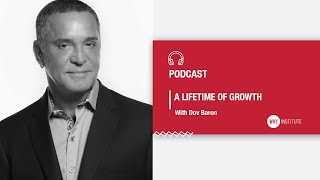
Dov Barron talks about identifying your "primary drivers," the deep pain-driven motives beneath your stated purpose. He works one-on-one with clients on year-long contracts, using empathy to surface what actually moves them, and wrote Fiercely Loyal on why people stay at companies.
Questions this video answers
December 5, 2019.
Fiercely Loyal.
One year (clients commonly continue beyond the initial year).
fullmontyleadership.com.
Leadership and Loyalty podcast; Pursuing Deep Greatness (Roku TV).
Chapters
This episode of beyond you'd why is brought to you by our why App. Head over to yinstitute.com to take the why app so you can discover your why today. Knowing your why is the essential first step in having the clarity to move forward faster and have a bigger impact.
Welcome to beyond you'd why Podcast, where we go beyond just talking about your why and actually helping you discover and then live your why. Now, if you haven't yet discovered your why, then go to www.whyinstitute.com, discover your why and then come back because the podcast will have much more meaning for you when you know your why. And so if you're a regular listener, you know that every week we talk about a particular why, one of the nine whys, and then I bring on somebody that has that why. Today we're going to be talking about the why of make sense to make sense out of things, especially if complex or complicated. Now these are people that are driven to solve problems and resolve challenging or complex situations. They have the uncanny ability to take in lots of data and information and observe situations and circumstances and sort through them to create order. They consider factors, problems and concepts and organize them into solutions that are sensible, easy to implement. It's not so much that they enjoy problem solving necessarily, it's that they simply can't help themselves. It's the lens with which they view the world. Now today we've got a really great guest for you today. I like to just read you his bio. His name is Dov Barron. He is a best selling author of several books, his most recent being Fiercely How High Performing Companies Develop and Retain Top Talent and the host of the national TV show pursuing deep greatness with Dove Baron on Roku TV and the host of the number one podcast for Fortune 500 listeners, Dov Barron's leadership and loyalty show on itunes and is carried on FM and AM radio stations across the US with almost 1 million streams per month. He also writes for and has been featured in many industry magazines including being featured on cnn, cbs, Small Business, Pulse, shrm, Yahoo Finance, Boston Globe Business in Vancouver, USA Today, CEO, Entrepreneur and many more. So Dov, welcome to the show.
Thank you Gary. It's a pleasure and honor to be here. I appreciate being invited and I delighted at the opportunity to serve.
So Dov, I just read your short bio and I've read your long bio before and it's almost two pages so there is.
Sorry about that.
A lot to talk about and I had your assistant shorten that for me so we could have some things to talk about but give us a little of your background. How did you get into coaching? How did you get into writing books? Tell us a little bit about you.
The short Reader's Digest version is that I was a weird, wacky and very unusual child. Freaked my mother out and she thought I was might be possessed. So she shipped me off to the rabbis. And I began my studies when I was about seven or eight years old. It started there. By the time I was 11 I taught myself Prana Yoga and then carried on studying metaphysical studies. And then at 21 began to travel the world to study with different spiritual masters. So I studied Vedanta, which is Hindu philosophy, Buddhism, the Dao, Gnostic Christianity, Coptic Christianity and Kabbalah. And so I studied all those. It was very interesting to me. While I was studying those, I was also running businesses in the uk. I ran businesses on three continents in the uk, in Canada and in Australia. And then from that I started going on from the metaphysical studies. I started studying psychology because I found there was a lot of spiritual people who could tell me what way my chakra was spinning but they couldn't hold down a job.
So I started studying psychology, became a counselor and a therapist. Family counselor. Family therapist. That got on my nerves because I didn't like people whining. So I started studying this, what was then called back in the 80s, the early 80s, the psychology of excellence, which today is called leadership. I studied that and got really into the depth of what that was, which was excellence of psychology and then found out that there was a lot of people who had a lot of excellence who were missing something. They found that something was missing and they same spiritually dehydrated, we'll use that term. Then in 84 I stumbled into quantum physics and started studying that and eventually wrote a thesis on the intersection of quantum physics, metaphysics and psychology called personal emotional resonance fields. And in 84, the same year I got invited to speak for a national menswear company of all things. That was the beginning of my speaking career. And I've been working with high level individuals who are CEOs, athletes, entertainers, high level entrepreneurs, etc. Since then speaking around the world on stages around the world and started writing after some major events in my own life in the early 90s. And I think I'm on my 13th or 14th book, I'm not sure which.
Is the reader's digest version. Sounds a bit over the top really. I always a bit kind of like oh I don't know, how can we shorten this.
So let's go back when you were very young and you said you started looking into the metaphysical world. Why did you start on that path? What got you going in that direction?
As I said, my mom originally thought I was possessed because I. The reason was, it was because I was an artist as a child. And my mom's favorite entertainment for her friends was to say, sit down and let Dove draw you. And I would draw them, and I would take a long time to do that. And I'd be about halfway through, and they'd always want to have a look, and they'd look and they go, oh, my God, that's so great. And I'd say, well, it's not done. And they go, it looks done. Sit down. And I'd finish. They always liked the halfway version. Because in my mind, this is not saying the truth, but in my mind, I was first. The first half I was drawing them, and the second half I was drawing, quote, unquote, what I saw as their soul. And so invariably growing up in a ghetto environment, which is where I grew up, in abject poverty, surrounded by crime and violence and addiction. Needless to say, when I draw, draw the soulful side of people, that wasn't quite as pleasant. And my mum thought I was drawing demons, and that's why she shipped me off to the rock.
So that was the beginning of the metaphysical journey.
What did the metaphysical journey represent to you? Why would you pick that path? I mean, what did it mean to you that you were. What were you looking for? Were you trying to figure out life? What were you doing at that age?
Oh, it was very simple. Even from a young age, I was very clear, this isn't it. This, as it appears, is not it. Even when I got to being probably 10 or 11 years old, I remember clearly being in the living room while a conversation was going on between my aunt, my uncle and my mother. And looking at these people who I considered to be very smart, particularly my uncle, who was very intelligent and thinking, why do smart people do such dumb shit? I just was fascinated by it because I, as a kid, could work out what they were doing. I could see that they were repeating a pattern. And so for me, there was this understanding of. There is something beyond the veil of what we call reality. And I don't know what it is, but I have got to figure it out. And then beyond the intelligence of a person who was very capable of working out very complex things, like my uncle, who would repeat doing stupid things at a personal level. So it was this always wanting to know below the surface. And that's why, like I said, it took me into three realms. It took me into the metaphysical, it took me into the psychological and took me into the quantum physical. Because I wanted to get below the surface. And out of that was this desire. And it's always been there for me to then share that with others. Like, here's what I found. Take a look at it and see if you can see the same, and then see if you can reflect it on yourself. And invariably, people could see the same, but they could not usually reflect it on themselves until years later. And I perfected the work that I was doing.
It's interesting, you know, as I hear you speaking, you're the perfect example of the why of makes sense. I mean, you spent your life trying to make sense out of this thing called life and what's beyond it or what's deeper in it. And you started at an amazingly young age. I mean, most people don't a have the ability or the cognitive ability at that age to even think that way, but somehow you did, and you credit that to your parents. How were you able to do that at such a young age?
It was an inherent deep desire, number one. Number two, it was without doubt growing up in an environment that was absolutely the polarity of that, where I was supposed to get a job with a pension and shut up, get married and do what everybody else did. And. And there was nothing about that that was inherently true for me. And I just knew that. I always knew that with every fiber of my being that I was born in the wrong place. And that doesn't mean I was born in the wrong place. Literally. It just felt like I was not going to buy into the package that I was being sold. It just didn't appeal to me. It didn't make sense to me. There was no part of it that I wanted to have anything to do with.
So if you were to go back even farther, was there a time in your life, even before that, where you were forced to make decisions quickly, where maybe something wasn't stable, maybe one of your parents wasn't stable, or the situation wasn't stable, where you didn't know what was coming and you had to be on your game, ready to make a decision, ready to move fast at a moment's notice?
That was what you just described, my life. Yeah, that was exactly how I operated. So when I was seven years old, I came down the stairs into a long hallway that led out to the street. And the door was open. It was Summertime, and a large figure was blocking the light. I knew that was my father. And he was about. He was walking out towards the door, and I just intuitively knew something was wrong. And I shouted, dad. Dad. And he turned around, came back down the hallway to me, crouched down, and to get as close to eye height as he could, eye to eye. And he touched me on one shoulder and then on the other, as if to knight me, ruffled my hair and said, I'm going now, son. You're the man of the house. Take care of your mom and your siblings. And in that moment, stole my childhood and put me in a position where I felt responsible for everybody and everything. Responsible for my siblings, of course, but I also became responsible for the emotional care of my mother, who, of course, was falling apart. I became her entertainer, I became her counselor, I became her confidant, and I became the caregiver of my siblings. So that was pretty much how my childhood really sort of kicked off. So I was always faced with things that were bigger than me, and my life has been about that. It's been about stepping into things that are far bigger than I can cognitively cope with. Where I've written a lot about and done many videos on imposter syndrome and how I lived my life from a place of feeling like an imposter. But it's actually. It's a horrible curse and very painful to live with. But at the same time, it was also the fuel, because if I'm an imposter, I have to find a way to get better at. I have to find a way to learn and learn fast, and that's what I had to do as a kid, and that's what I continued to do.
Yeah, you were forced to be the one people went to when they had issues, problems. You were the guy at a very young age.
Well, you know, it's fascinating because I had this conversation with somebody a few years back, and they were saying, you know, what was it like at school for you? And I said, you know, I was a pretty lonely kid most of my life because I was a weirdo. I did not think the way other kids thought. But it was fascinating that even the kids that I didn't get along with or I didn't have a relationship with would always seek me out for counsel. I was this counselor from being a small child, and I can remember being 12 years old at the first year of high school, and I went to a different school than I'd gone to before, and this was the first time I'd not gone to a secular school. I'd gone to a school that was in my own faith. And all the kids around me were wealthy. There was only four of us in the school who were poor. Four kids. And we were the four kids that hung out together. And the wealthy kids wanted nothing to do with us except when some form of shit was going down. And these kids would seek me out and would always ask me for counsel. I can clearly remember saying to my mom, why do they come to me? I didn't understand, why do they come to me? But inherently, they knew that I would give them some perspective or insight, so it was always there.
So for those of you that are listening to the podcast that have the why of makes sense. I'm sure that Dove is speaking your language because that's exactly what you do as well. And it's fascinating. Dove, for the rest of us that don't have your why, how fast. I'm sure you were able to solve problems for people. They could come and just really dump all their stuff on you. And this has been your whole life. I'm sure they can just dump everything on you and you can sit and listen and say, okay, I got it. I know what's going on. Let me help you understand it so that you can move through it or around us so you can move forward. So you help people move forward by helping them solve their problems. Typically, very fast.
Yeah, very fast indeed. And that's what I do, like I said, with high level individuals, but I also do it with companies and organizations in how to define their leadership and their culture in ways that cut through. You know, I've often been described as somebody with a laser beam. I just cut right through. And I also don't sugarcoat it. So, like, here's what is clear to me. You can listen to me or not. That's totally your choice. But here you ask me for what I see. This is what I see. Here's why. And my ability to connect things that they've never seen the connection to is what really makes people go, oh, my God, I never would have thought that that was driving this.
So let's go into that. Tell us how your brain works for solving a problem.
Good luck.
Yeah, good luck. Right. Because it's fascinating that you're able to. So I have my own version of what I think happens in your brain, but I would love to see if you have some insight into this as well. When you're tasked with helping someone solve a problem, very complex, very complicated, what happens to you? How do you solve that problem so fast, how are you able to move through it so much quicker than I can?
Well, I don't know that that's true because I don't know how you do it. But for me, what I know is that I understand something that most people do not understand, and that's called primary drivers. Primary drivers are not a part of traditional psychology at all. So primary drivers are connected to quantum fields and they interact with that quantum field again. Now we're back to the intersection of quantum physics, metaphysics and psychology. So if you know the primary driver of an individual, which is what is it that's at the deepest possible level of this person that has them pursuing or driving towards something, even if it doesn't make sense. And if it doesn't make sense to me as the outsider, I will look at it and see two plus two equals a giraffe, or two plus two equals anger instead of four. And my ability is to find out what that giraffe is, to find out what that 22 or anger or whatever it is that they have as their equation. So I'm always looking for what is that primary driver. I'll give you an example, just so you understand, because as you know, my work is what we talk about in our work is your why beyond your why. So we're not talking about the why in the way that most people think about it at all. We're talking about a level of primary driver. And that's what my latest book that's coming out is on. It's called One Red Thread. So I'll give you an example of it. A good friend of mine, a very high powered individual in the world of branding, he and I were having a conversation and we were talking about these primary drivers. And he's like, I just don't understand that. And I was like, okay, I get it. I understand that. I said, here's what I want you to understand. Your purpose, not your why, but your purpose which is below your why. Your purpose is run by your primary drivers. He goes, okay, but I still don't get it. And I said, well, your purpose doesn't come from your passion. It doesn't even come from your abilities. You may have developed abilities out of it, you may even be passionate about it, but it's not driven by that. And he goes, then what's it driven by? It's driven by your pain. Your purpose is always driven by your pain. He goes, okay, well I just. And he said to me, he's a very bright. He goes, I got to tell you I'm really resistant to that. And I go, okay, that's fine. You don't have to believe me. I'm not attached to it. But I'm just. That's what I see. And he goes, so can you show me that in me? And I said, absolutely. What do you do for a living? He goes, I mean, branding. I go, no, no, you know, that's what you do. But what do you actually do? And he goes, well, I show people how to really stand out. And I said, absolutely, you do. That's your number one thing, right? And he goes, yep, I can make anybody stand out above the noise of the crowd. I go, that's fantastic. Tell me, what was the number one pain you felt as a child? And he started to cry and he said, I was an invisible brown kid. I go, exactly. Your primary driver is to be seen. And when you step into your purpose, you solve that for others. You heal others by healing yourself. You heal yourself and you learn how to heal others. So as a result, now you're being seen. You've always been in the background doing this for everybody else. I mean, he's worked with people like, who are insanely famous, but nobody knows his name and didn't until recently. Now he's finally stepping into the healing of his own wound. And as he steps into that, he starts to fulfill his purpose, his deep psychological purpose, which is the why of his why. Stepping into his primary driver.
I love that. That is very powerful and I want to think about that. Now I'm going to have to listen back to what you just said and think even deeper about all this stuff because that's really powerful. Like, even when we look at your life, when we think about you back to your. When you were a very young boy and had to take over, and the pain that you experienced in becoming the man at age 7 or whatever that was. And now you're doing that for everybody else.
Exactly. It's always the driver.
Yeah. And I don't want to lose this thought that we were talking about before, because I really am curious about how your, how the make sense brain works, because what you told me was accurate. But you also had that ability when you were seven years old and nine years old, when you had no idea what primary drivers were. And so how did your brain work? It's the same brain. It's been working, doing the same thing all these years, just with different terminology and different depth of knowledge. But even when you were very young, you were, you were the problem solver. Like you Said you were the guy that these rich kids came to to help them solve their problems. How did you do it at that stage and at the stage you do now, what happens in your. What are you seeing as people are telling you their problems?
Oh, okay. So this is a very easy answer, but I'm going to explain it in a simple metaphor. I think you know, Gary, that a few years back I spoke at the UN and the State Department about the far right radicalism, the radical neo Nazis and such. And I was invited to speak there with another guy by the name of Tony Mac. And the reason I was invited to speak with Tony is because I de radicalized Tony. I'm the one he credits with having de radicalized him because he was the head of war White Aryan race in Canada. I didn't know his background, but he came and took one of my two day trainings with her and again, still didn't know any of that background. And then a friend of his bought him an hour with me and we sat down for the first 15 minutes and I said, okay, we've shot the shit here. Let's get to why you're really here. Because my time's not cheap. You don't want to waste this time. And he looked at the carpet as if he was going to find the answer in the weaves of the rug. And I said, tony. And he looked up at me and swallowed a couple of golf balls. And then he began to tell me about being a neo Nazi, the levels of shame he felt for it because he knew that it always pushed people away, understandably. And I got a big grin on my face. And he looked up and saw this and got mad. I said, what the f are you laughing at? And I said, you do know I was born Jewish, right?
And he started to laugh and he said, oh shit, the irony. And I said, absolutely, absolutely. And so I'm telling this story on stage at the UN and the lady who was running the panel said, how could you, a Jew, serve and help somebody who'd been a neo Nazi, somebody who would have willingly supported the annihilation of everybody like you? And I said, that's easy. And she said, what? I said, because nobody ever sits in front of me who's not me. And she goes, what do you mean? I said, that's what I've always had the ability to do. I've always thought if I'm look, this is the mirror. I don't live in the world, I live in the mirror. Everything is reflecting back some part of me. And she said, well, are you telling me you were a neo Nazi? I said, absolutely not. She goes, then I don't understand. What I saw in him was a highly intelligent, highly articulate, highly creative, wounded little boy who needed significance. I've been that boy. I knew what it was like to be that man. And from that place, that level of rapport and compassion, I could have empathy for him, not for his behavior, because I understood that his behavior was not who he was. And that is the way I've always thought. This is me in front of me, and my job is to find out how they are me, because that's how I can actually help.
So the little boys that came to you at age 10, you put yourself in their place always.
I would always go, how are you like me? And it was interesting because everybody who showed up appeared to be very different. As I said, I was one of four poor kids in an entire high school. But I would look for how you like me.
And that was always what I was looking for, was that position of rapport that would always give me a level of understanding of that person that I couldn't get cognitively, that I couldn't get through an intellectual or an intellectualized process. But I could always get it through an emotionally intelligent level of consciousness that would allow me to drop into understanding them at a deeper level.
Wow. So first step is understanding. How would you. If you were talking about steps to solving the issue or the problem, what are your 1, 2, 3 steps? Or how do you. What's the process, you know, verbally that you use?
For me, it's very simple. What is the problem that you see that you cognitively are aware of? So how long have you had that problem? And if you're smart enough to know that's the problem and you know that you've had it for a while, why haven't you done anything about it? You want to start there? Why haven't you done anything about it? And the person will go, well, I have. I did this and did this. Okay, so why didn't you do something else? Well, I did. I've tried everything. Well, clearly you haven't tried everything because you still got it, right? Yes. Okay, cool. So now if you're a smart person, which in front of me, I don't work with people who are not smart. Why are you? What's going on? Or maybe I'm just thick. No, you're not thick. That's not it. What is it? And we begin to peel back the layers. And the answer is very simple. Is that there's something you're getting out of it that you want. And they go, you're telling me that I'm in this relationship, that I'm in this business with this business partner, doing this, dealing with these people in my team who are sabotaging whatever is. Because I'm getting someone. Yes, that's a hard pill to swallow, I understand. But there's something you're getting. Well, what could I possibly be getting? I don't know. Let's find out. And then we begin looking at that. And sometimes, and I'll just tell you, part of the clue is sometimes all we're getting out of it is validation of a shitty belief, validation of some awful message we were given. So for me, I walked around for the first 26 years of my life believing I was ugly and stupid.
Why? Because I was looking for evidence. Here's psychologically what you need to understand as you listen to this. The mind is always looking for evidence of that which it believes to be true, even if what it believes is completely false. That's why I'm working with the people who are already top. They are people like Gary, our host here. There are people who are CEOs and C suite leaders and entrepreneurs and athletes and entertainers who are at the top of their game, that other people look at them and go, I want to be you when I grow up. They're going, there's something else, and I want to tap into it. How do I get there? That's the work that I do. That's the work that I deliciously do love doing.
Helping them make sense out of what's keeping them stuck.
Helping them make sense of not only what's keeping them stuck, but helping them make sense of why they're doing stuff that they intuitively know.
Isn'T getting them to where they want to go. So they keep running on a hamster wheel that doesn't work. So there's something missing. And they know that. But part of the, you know, we all have an ego. If you're born, you get an ego. And so part of the problem is that in order to go to where I want to go, I will have to give up something. And the ego doesn't want to give up anything. But, you know, everybody I work with invariably will say, that's the big fear. If I do this, I might lose that. Yeah, you might. And you might also get someone a hell of a lot better.
So where people will fall off is they'll just go, I just can't better lose this. Well, you're actually not losing anything. You're about to gain something. But I can't make anybody go there.
What is your perspective on failure? Meaning? My brother and I were talking about this the other day, and it was when you don't have a lot of failure, it almost seems like a downside to having failure where you have to change course. You know, when you're not. When you have a little bit of pain, you can deal with it. When you have a lot of pain, you got to change something. Does that make sense?
Of course it makes sense. One of the primary motivators of human beings is pain. Nobody wants to admit that everybody thinks that what they're actually doing is chasing love and chasing joy and chasing happiness. No, you're not. So the thing about it is, at a psychological level, it's not my opinion. This is psychology. Human beings are motivated by two primary forces, pleasure and pain. So the pursuit of pleasure and the avoidance of pain and pain is the number one motivator, not pleasure. We think it's pleasure. It's not. It's pain. We want to get away from pain. So what that means is the ego mind makes up that this, whatever this is, could be more painful. This change could be more painful. So we. We run language patterns, like, better the devil. You know, That's a terrible language pattern. That's absolute nonsense. Well, you may be living with the devil. Well, what if you're living with the angels afterwards? You know? Oh, well. But it could be worse. Yeah, well, my friend is, you know, they're in there. So what. What does that got to do with anything? You have to step into being courageous. And this is what it is. You see, one of the things we're lacking is courage. And here's, you know, bringing it back to what you're saying about failure. You know, everybody's talking about fail forward, and failure is good. No, it's not. It sucks. Failure sucks. I know I've failed a lot. It sucks. And it doesn't suck once. It sucks every time. But it builds resilience. See, the failure is not what kills you. It's staying down. That's what kills you. You're going to get knocked down. Life is going to beat you to the canvas over and over and over again. And if you don't have a damn good reason to get up, then you'll stay down. And until you find your purpose, until you find your primary drivers, then, yeah, when you get knocked down, it's going to be a long time for you to get up and Maybe somebody will help you and maybe you won't get up and maybe you will. I don't know. But what I do know is that when you're tapped into your purpose, why you are actually here on the planet, when you get it into that, it's like, okay, I need to find a new route. That sucked. I am in pain. I want to quit. Every fiber of my being wants to quit, but I'm not going to, believe me. I know I fell 120ft off a mountain and got smashed to pieces and died five times in the process. I know what it's like to come to the end and want to give up. I was in a very dark and suicidal depression, so I felt understand it.
How did you change that? How did you pick yourself up from.
Wanting to be suicidal? Yeah, very simple. Exactly what I just said. I dug in to find my purpose. That was what I had to do. It was the only option. I had to dig in and find my purpose. So what people don't realize is that before I fell, I was very successful. I'd already been speaking for six years. I was already traveling the world. I was already in newspapers, magazines. I had all kinds of great success. I had a big American car, which was the personification of success to a poor kid from the uk. So I'd made it. But it was something I was missing, and I was an adrenaline junkie. So when I got smashed up, people would say to me, how you doing? I'd say, I'm great. I'm coming back. And by the way, that was saying that with my jaw wired closed. But the truth of the matter is, in life, there is no back. There is only forward. That was a big fat lie, and it was coming out of my ego of wanting to stay the same. And I would go out with my friends while I was in my recovery, and they would be laughing and joking, and I couldn't laugh and joke. And I'd feel like, oh, my God, you know, I'm never going to be okay. I'm never going to find a way back. But I just got to keep trying. And I'd be struggling and struggling and struggling with it. And then I went out for a night out with my mates, and I had a great night. And I actually left. And I thought, oh, my God, I can make it back okay, I can make it back. And I got home that night, and as I swung open the door into the kitchen, I noticed from the light coming from the outside that there was garbage festooned across the floor. There was Kitty litter. There was empty cans, meat wrappers, coffee grinds. It was a mess and it smelled horrible. And I knew exactly who the culprit was. And I marched into the living room. I'd gone from pure joy and feeling like I could have come back to pure rage. And I marched in the living room to find the culprit. I lifted my hand to just crush the culprit as it was curled up comfy on the couch. And something in me, halfway through, stopped myself because I'm not a violent person. And instead of hitting the cat, I put my hands underneath the cat and scooped it up. And the cat was cold in my arms. And I held the cat close to me and realized it was dead. And I fell to my knees and I began to sob. And it was only a few minutes in that I realized I'm not crying for the cat. I'm crying for the life that is dead.
And it was in that moment that I knew I had all the success. I had all the intellectual abilities, all the articulations of all those things. I had great understanding, I was smart, and I had worked out all kinds of great processes for myself and others. But the truth was that I had not found my purpose. And I should tell you that if somebody arrest me five minutes before I fell off that mountain, I Have you found your why? My answer would have been yes, but I hadn't because I hadn't looked at that deeper level. And by the way, the day I fell, I'd already been about 13 years into my process, so it wasn't like I was an idiot and didn't know.
I love what you said there earlier when you said, it's not necessarily about coming back. It's about moving forward.
You have to look back to move forward. This is what's really important for everybody to understand. You have to look back to move forward. And if you don't look back, you are destined to do as I talked about with the relatives I had. You are destined to repeat, just destined to repeat the pattern. But in order to. Once you do that, it's not about getting back to your success. It's about moving forward into something that is more important than success. Let me ask you, as you listen to this right now, let me ask you, what is for you. What is. Write it down. What is success? Beyond success? Because everybody, every coach in the world will ask you, please define success so we can help you get to your outcome. Great, so you do that. So what? So now you go make a million bucks. You make 5 million bucks, you make 25 million bucks, you make a billion dollars. I know these are my. Sometimes my clients, and they go, yeah, something's missing. What is success beyond success for you? If you don't know that you've not found your primary drivers, you've not found your purpose yet. Not bad, you know, live your rest of your life out the way you are, it's fine. I am not here to judge you. You must do what you feel is good for you. But if that's what's missing for you, that's what I help people with.
So I'm listening to this now. I have success in today's world, let's say. But I don't have success beyond success. How do you help somebody get to success beyond success?
Through that process I just described earlier. Okay, that person works with me privately, and we do amazing work. And you should know that most of the people who come to work with me have done a good deal of work. So it's not unusual for my clients to say, well, you know, I went to Fiji and Tony Robbins program, and, you know, and they go through this list, this plethora of things that they've done. And it's wonderful. It really is. I mean, it's really wonderful. And I say, it's a great place. It's wonderful. And if you want to keep going with it, it's okay. That's not what I do. This is beyond that. And invariably, those people will say to me, oh, my God, I never even thought of this, never even considered it. One of my clients who flew in, my clients coming from around the world, One of my clients who flew in in January had just flown back from Fiji. He'd just been with Tony Robbins at Date with Destiny, you know, And I have nothing bad to say about Tony. I've met him several times. He's a great guy. I like him a lot. So it's not anything negative at all. And he sat there, and within two hours, he went, why have I never seen this before? Because nothing is aimed this way. Nobody goes to where I go to, and it's taking this extremely complex and making it so simple for that individual. And invariably, my clients are always saying the same thing. I want to recommend you to my friends, but I don't know how, because.
I can't give them the formula. And I go, no, you can't, because it's bespoke. It's designed specifically for each individual that I work with. And that's why I only work with a handful of clients a year. I Can't work with more than that because they're in a contract with me for one year. We're going to work together tight for.
A year, which is how I got to you. Well, you were recommended by one of the previous guests on the show.
Oh, is that right? Okay. Yes.
Yeah, one of your clients is.
There you go.
Remember, she connected us and she.
Oh, yes, of course. Ann, right?
Yes, Ann. She said, oh, you gotta meet Dov. And I said, okay, I'd love to meet Dov.
Ann has been a client of mine for the last six years. So everybody who comes on to work with me works with me for a year. Initially, we start with a one year contract, but it's very rare that a client will drop off. And that's part of the reason I can't take on too many plants at a year, because they all want to stay.
Well, that's how she feels. I know that for sure.
Let's change directions a little bit. Tell us about Fiercely Loyal.
Well, the book Fiercely Loyal came out of the work that I do with CEOs and with companies around purpose. And one of the things that I found was, was there's an epidemic problem. Many of these great companies, I mean, really great companies, cannot keep good people. And they were like, why can we not keep good people? This is crazy. You know, they were buying the cappuccino machines, they were buying the bean bags. They were doing all the things they were supposed to be doing that Google told them to do because it was working in them and it wasn't working, and they didn't know why. And what became really clear was that the clients I was working with privately, who were taking what it is that I do into their companies and asking me to come in, they were able to keep their top talent for a long time. And they were like, okay, what is going on here? So that's how that book became about is like, I need to help these organizations keep their top talent. Because one of at the top of the list, millennial workers, by the way, millennials are coming on 40. So we think of millennials as being kids. They're not. They're now at their eldest, coming on 40 years old. And right at the top of their list. So many of them are in leadership positions. Right at the top of their list is that they want to do meaningful work. Well, what is meaningful work? It's working in an environment that is purpose focused. Mm.
Wow. You know, you think of millennials do get a lot of flack for being all kinds of different things, right? Lazy, entitled and whatnot. But definitely working at a place with purpose is something that you hear about them as well.
Yeah, but, you know, even those things like that, that's absolute bullshit. It's just not true. And I'll give you an example. So, you know, we think of millennials as entitled. The reason we think about them that way is because we're looking them through our lenses or the lenses of our generation. Those are the wrong lenses to look at them through. You can't look at green grass through red lenses. It doesn't work. You don't see the grass. You see a distortion. And so we're looking at these people, these millennials, through our lenses of our generation. They're the wrong lenses. Number one. They don't have the same value system. People say, oh, they're lazy living in mom's basement. Yeah, they are. Because they don't care about buying property the way that previous generations did. They don't care about having a 10,000 square foot home and showing it off. They actually like minimalist. They don't care about owning a Mercedes or a Jaguar or a Ferrari. Why? Because they understand it's a waste of money and it's a waste of the environment. They understand that a car will sit 90% of its time. And that's not a Millennial's car. It's any of our cars, at least. Like, the average car spends more than 90% of its time in the garage. It's not doing anything. You're paying insurance. It's wearing out. It's devaluing. It's a stupid thing. They want to work in we share spaces. They want to work in wework spaces because they like a culture. They're not looking for work life balance because they understand it's nonsense. It's failed miserably. It's bullshit. It doesn't work. There is no such thing as work life balance. But there is such a thing as work life blend. What they understand is that I want to work with my friends. I want to work with people I'm around. And the whole idea of entitlement is absolute nonsense. And here's why. Millennials. Millennials volunteer more of their time than any previous generation has. They volunteer. They work on projects with other people without any pay. We don't do that. Well, hold on a second. What about the entitlement? Clearly doesn't work. Hmm.
I love that. I recently listened to a speaker here that has a company called Millennial Labs, and he talks about. Well, he puts this one slide up that shows all the things that are being said about millennials today, you know, they're lazy, they're entitled, all those different things. And then he slides away from it when that statement was actually said, you know, so they're entitled. That was set in, you know, 1924 by the parents of kids of that day. And they, you know, all the things that are being said about Millennials or what was said about us by the people before us, our parents.
Absolutely, Absolutely. And actually, that. That quote goes back to the time of Socrates.
So this is not new.
No.
You know, the older generation always frowning on the newer generation. Right. And the newer generation always looking back on the older generation saying, you guys screwed it up. What we need to do is honor and respect that everybody is where they are and that this is one of the great things about the change in business today, is mentorship is not from the top down. Smart leaders, and again, I talk about this a lot in fiercely loyal smart leaders, understand that mentorship goes up, down, down, up, side to side. I want to be mentored by those who I have authority over, those who I'm leading, because there are things that they will know much better than me. There are things I can help them with. There are things they can help me with. We're all equals in that, what we have as a specialty. But our specialties may be more valuable in a particular context, but that doesn't change the fact that this is just. I can learn from you. That simple.
Well, Dov, I know we're kind of over our time here, but I really have enjoyed speaking with you. I got to have you on. I know we could go on and on and on for hours, and it would be fascinating, and you would help us make sense of so many different things that you do for your clients, that you do when you speak, that you do in your books. And I really appreciate you taking the time to be here. If people would like to get a hold of you, they'd like to connect with you to see if you could come speak at their events, or they'd like to work with you as their coach if you have space for them. How should people get a hold of you?
Thank you, Gary. I appreciate you mentioning that. The simplest, I mean, really. D O V B a R o N. You can find me if you Google that, you know, you will find hundreds upon hundreds of pages. Because I have a big presence on social media. You can certainly find me at my main website, which is fullmontyleadership.com fullmonteeleadership.com There you can find out about the programs that we offer, the books that I offer, the online programs. You can find out about my podcast, the leadership and Loyalty podcast. You can find out about my YouTube channel, which has over 700 videos on it. You can find the icons which are all the articles. And again, there's around 6 or 700 of those in there. All the different ways to connect with us again, YouTube, LinkedIn. Please reach out to me through LinkedIn, Twitter, Facebook, etc. I'm all over those places. And by the way, I'm going to say one other thing to you, and that's this. As you're listening to this, Gary puts together this program for you, brings you wonderful guests so that you can learn. And guess what the problem with a podcast is? It's kind of one way. We don't know if you get anything out of it. If you don't tell us. So what I want you to do is I want you to go rate, review and subscribe to Gary's show, to this podcast. I want you to do that. But I also want you to write to Gary and write to me. You can CC me. My private email is dovdovarn.com, dovbaron.com write to us both. Tell us what you got out of this and more importantly, what are you going to do with it? That's what matters. Information is worth the hole in the donut. Transformation is the application of what it is you learn. Write to us both. Tell us what you're going to do with this, how you've learned from it, and if I can personally help you now, you have my private email. I'm here on the planet to serve. If there's something I can do, then reach out to me.
That's awesome, Dov. Thanks again. I really appreciate it. And you have a great rest of your day there.
Thank you.
More from Dr.




Women In Leadership: A Need For A Greater Systemic Change With Belinda Clemmensen






