AutomationWorx: Jamie McKean’s Secret to Simplified Business
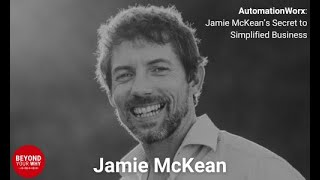
Podcast episode (host: Dr. Gary Sanchez) interviewing Jamie McKean about his personal why ("contribute to a greater cause"), career journey from the UK to New Zealand, and shift from corporate IT/project roles into coaching and consulting after reading The E-Myth and completing an MBA. Over ~15 years Jamie has worked with coaches and consultants (claims he has worked one-on-one with 600+ people) and built Automation Works, an all-in-one marketing/sales automation platform for coaches/consultants that consolidates CRM, funnels, calendar booking, membership sites, social planning, SMS/two-way messaging, reputation management and AI booking bots, and offers migration/onboarding support.
Chapters
Welcome to beyond you'd why podcast, where we go beyond just talking about your why and actually help you discover and then live your why. You see, we believe that knowing your why, that driving force behind every decision you make and every action you take, is the essential first step to really knowing yourself. It allows you to move forward faster and have a bigger impact. If you're already a fan of the show, then you know that every week we talk about one of the nine whys, and then we introduce you to somebody with that why so you can see how their why has played out in their life. This show will be more powerful for you if you've already discovered your why. If you still need to do that, head over to whyinstitute.com and discover your why today. It'll only take you about five minutes. Now, let's meet today's guest.
This week we're going to be talking about the why of contribute to contribute to a greater cause, add value, have an impact in the lives of others. So if this is your why, then you want to be part of a greater cause, something that's bigger than yourself. You don't necessarily have to be the face of the cause, but you want to contribute in a meaningful way. If you love to support others and you relish successes that contribute to the greater good of the team, you see group victories as personal victories. You're often behind the scenes looking for ways to make the world better. You make a reliable and committed teammate and you often act as the glue that holds everyone else together. You use your time, money, energy, resources and connections to add value to other people. So today I have a great guest for you. His name is Jamie McKeon. He is a servant leader and has been helping coaches and consultants for the past 15 years with their online marketing, helping some of the biggest names in the coaching industry like, like Tony Robbins and many more. Today, Jamie's focuses on helping as many coaches as he can through his platform automation works, which is a systems approach to marketing and sales to make people's lives easier through authentic communication. Jamie, welcome to the podcast.
Gary, look, thank you for having me here and I love the intro in terms of the contributor because I was sitting there going, you've just described me. Let's have a chat about that then. That's amazing. O.
Exactly. Well, I'm sure everybody has already now noticed you have an accent. So tell everybody where are you right now?
So my name is Jamie. Hi. I'm an Englishman from the accent though, in the middle of New Zealand. So Englishman in New Zealand, northwest England, near Liverpool, if. If you know the area. And so the accent is a little bit northwest Ish. But being in New Zealand for just over 20 years, I haven't lost the accent. Some people say to me, you sound a little bit Kiwi. So I'll phone back to England and 10 seconds later it's gone. But do have two passports. A few more, I'll be like Jason Bourne. But for now, yeah, here in the middle of New Zealand, just around the corner from Middle Earth. For those who like the movies. Pretty cool spot. And so many people have said to me, oh, it's on my bucket list. It's on my wish list. Well, come and do it. Reach out. I've got a list of all the different places you could visit. So happy to be a bit of a tour guide as well. I love that.
Well, Jamie, take us back. Let's let our audience get to know you. You were born, obviously you set in England. What were you like growing up?
Are you asking me, though, my parents that, oh, this is a podcast or a therapy session. Amazing. I guess from a. From a. Talking about the contributor and talking about. As we reflect back on our lives and what shaped us. I have flashbacks of as a teenager being there listening to and helping friends and almost being an ear from a friend. So the, I guess the emotional intelligence part of it, you learn very early on, which led me down many different paths.
So. Yeah. And also traveled a little at an early age. My parents, I was lucky enough that my parents took us to Australia from the uk. My uncle and auntie and cousin live over there. So that gave me a little bit of a.
What's the right word? Like just a penchant for travel. That. And also I worked from as soon as I could probably work the age of 12 or 13. I always had job. Had two jobs through.
Well, a job through high school and then went into university and actually had two jobs through university to be able to pay my way. So I've always, from a very early age, always worked. And I guess that also if you translate that to today, the work, the empathy, the trying to look after people and, and travel says me now in New Zealand and 57 countries so far, still trying to travel and explore more places.
So, yeah, that's. That was.
High school.
If we, if we were, if we saw you, you hear, there's Jamie, he's 16, 17, 18 years old. Areas walking by us, what would we have seen?
Interesting, because I largely kept to myself, so you might have seen me walking by myself at A very small but very.
Deep connection with a very small number of people. And some of those still are there today. I love having those friendships that have lasted 30 plus years and that I can go back to England and just fall back into those friendships. And they're very, very special to me. You wouldn't have seen someone flamboyant, says me, who now can MC events with 2000 people in front of me. You probably wouldn't have seen that then.
But all those types of things develop with age and experience and practice. So you would have seen probably someone who you thought was an introvert, keeping to themselves and just head down and pushing forward, I guess.
And what kinds of things, if you can recall back to them, like, what kind of things were going through your head at that time? Were you more about just staying to yourself and getting your own things done? Were you more about seeing who you, you know, how you could help other people? Were you part of the school system? Like, were you.
What kind.
Were you into sports? Like, what was your thing?
Yeah, great question. I had a few different things, but I wasn't like the. The captain on the tattoo was a captain of the chess club. It was very much. And I played some random different things, like badminton and a few other, like hockey and a few other different things.
People say, you're northwest England. You should be doing rugby or football, soccer, football. And I came over to New Zealand. I've played more football in New Zealand than I ever did in England. We don't want to digress down that path. But just with that close group of friends, I was always there as a listener. I was always there to support them and look out for them and cherish that group of friends. So actually, most of my memories.
And I guess things that for me happened outside of school. So it was with those friendships. It was with the things. One of my close friends became a travel buddy, and we went to Australia together, We went to India together, we went to America and Mexico together. All things we did. And that was in our sort of late teens, very early 20s, when we were exploring. And he had. He had a very similar. His name's Rob. He had a very similar.
Outlook on the world in terms of the world's really small. Let's go travel, let's go explore. So I really enjoyed that part. And being able to do it with someone was pretty cool, apart from we walked over from San Diego over to Tijuana, and then everything changed into Spanish, and we hadn't planned for that. I said, oh, crap. And the next two weeks I'm reading a Spanish guidebook, I'm ordering taxis and hotels and by the end of the two weeks all he could say was grassy ass and ola. And it sounded like that. And there's me trying to learn the phrase book. So that I guess that also encapsulates. I'm always trying to learn stuff, always trying to learn from myself, but also in that example in Mexico, trying to speak and trying to honor and respect the locals. Yeah, that's always been there from an early age. So.
So those of you that are listening, Jamie's why like we talked about, is to contribute to a greater cause. But how he does that is by making sense out of the complex and challenging, figuring things out. And ultimately what he brings is a simple solution. So he simplifies things, makes them easier to do and we'll see how this all plays out as we go along. And so okay, you, you finish high school off to your. Did you go to school after that?
Went to the high school, took me through to I think it was 18 and then went into university from there. Okay.
Was actually offered a few different jobs along the way and it was, I had a, almost a calling to be a teacher but then I looked at the wages for teachers and the wages for business and chose business. It's funny now if I look back through my career, I spent most of it teaching people things so I haven't lost that. I just haven't got the teacher wage. I've got a very, I've got a soft spot for teachers. My partner's a teacher. Full circle.
Also I, I love design and art and things like that and was offered a graphic design job at the point where I was making a decision about the degree and chose not to do the graphic design and went forward with the degree. The degree was business and computers which fit me because I had a self taught computer stream of passion from about the age of 12 or 13. Got given a computer for Christmas one year and didn't leave it side for a long time. Back in the day where you'd put a cassette in or a floppy disk if you remember those days, Spectrum ZX and those types of things that were what I self taught myself on.
So yeah, business and computers in university and then from there it was a four year degree and the third, it's called a sandwich degree and the third year you went into business and did a job and so I actually traveled and went south about three hours south in the UK to a place called Slough. People know it, they'll Be like, oh, were you safe? No, not really. But there was a lot of industry there and worked in a technology company there. And so that was my university. And I say to people, I learned in university how to play pool and how to drink, and they were the key things I got from it. I think I did. I got a degree, I got quite a high mark in the degree.
And then managed to get myself a graduate role after that in quite a blue chip business in the uk. So that was the university. Yeah.
So, okay, so now you're going into business and you said, great job right out of school and what were you doing? What kinds of things were you involved with?
Yeah, so I got the graduate role was with one of the big banks in the UK and they said for every 300 people who applied to get in the job, only one person gets the job. And I, being the comedian I was, I put my hand up in the room and said, I think I'm in the wrong room, sorry. And went on to work in that bank for about 18 months. But because I always learn and I'm always wanting to get ahead, I hit a plateau pretty quickly and then found another opportunity in another bank. I was a systems analyst. That's what I was hired for. But then I found a project junior project manager role in another bank. I was like, well, that sounds interesting. And I think my whole journey from early days through to now is just keep exploring. If something looks really interesting, it's like, oh, cool, let's explore that path. And literally it's taken to me all the way through to this chat now and all the things, all the decisions I make in my life.
And that role was a bank, another investment bank in London. And I was given a project probably within about 12 months to migrate three different banks together because that bank had purchased two of the banks. And so I had to. My role was to migrate 3,000 desktops together, 3,000 desktop machines, all the servers. And that was my role. And I think at the time I was maybe 22 or 23, had a team of 30 or 40 people working for me to run that program of work. So that was.
Quite a big endeavor, quite a big challenge at that age. Remember one point I'd go to the gym quite, quite often after work. And then I came back into work and we had three teams working around the clock, 24, seven doing these work. And I stood behind one of the people who were coding and they turned around and they said to their, the guy who's their boss is this joker behind me. And he goes, well, he's your boss's boss's boss. He's like, what? Because I was just there. I finished in the gym. So I was quite. But just checking that everything was okay. And for a very long time, I was usually the youngest person in the room.
It was quite interesting when that changed. I'm not the youngest in the room anymore.
Of course. It's always going to change at certain points. But that was journey through. And then that big program of work finished. There's a whole lot of things almost happened at once that finished. I met a Kiwi girl, New Zealander who was in London.
And at the same time, just afterwards, my grandma passed away, who's one of the closest people to me. And it was almost like the. The perfect storm of things. And I just said, life's too short. Why don't we go traveling? Why don't we go to New Zealand? And we did. And so that moved from London into the New Zealand piece of the journey at that time. And when was that? About 24 at this point the way.
Okay, at 24 you moved to New Zealand. No job. But, but, but a. But a girl. So at least you had that going for you. And then what was your first job over in New Zealand?
So we left the UK and actually we did a bit of traveling for six weeks. Went through South America, so explored a bit and a little bit of Europe. So tick the number of countries up on the list. Then came to New Zealand. I just walked into a contract job. I say I walked in, I applied for jobs, and because of the experience I had, I got a contract role pretty quickly in terms of project management.
And then again, the same came in, did the best job I could. And then other opportunities popped up that looked interesting. Cool, let's go check that one out. And did that for a number of years.
Through to. Hold on now I need to do some maths. Hold on. How old am I now? Probably very early 30s.
Was doing that. And then just thinking about the age of my children as well. I might need some fingers. You might need to put your fingers up and I'll do some counting. But they.
I read there was a certain point, it was about 18 years ago. So it's part of this journey. I was doing this work and something just didn't feel right. And I kept saying to people every six months I was having like a midlife career crisis every six months. Didn't know what it was because I have the.
Sort of mindset of always looking to better myself and always looking to Progress. It's really hard to do that in a, in a business, in a career, depending on the organization you work for. And so I was quite often unsettled. Also don't like politics and I was working in some pretty high levels, some organizations, and I just have zero tolerance of politics and don't want to spend my brain on it because to me, it doesn't help you progress unless you want to be a politician and you want to play those games. That's different. That's not me.
But I read the book the E Myth, Michael Gerber, and I remember where I was. It was one of those big light bulb moments. And I just said, I finished the book and I was in Auckland. I was in our home in Auckland, upstairs in the bedroom, on the bed, reading the book. And I just had. It wasn't just a light bulb. It was like a strip of lights in a Runway. They all, everything just lit up and went, I want to help these people. I want to really. Everything I want to do wants to help these people. And so I made that decision from that point forward, what do I need to do to be able to help people.
Those who are portrayed in the E Myth, to help them be successful? If you're watching this and you don't know the E Myth, Michael Gerber, the E is entrepreneur. So the entrepreneurial myth, and he talks about three different types of people, the entrepreneur, the manager, and the technician. And most people are technicians and they love what they do and then they try and start their own business. But then you need to learn manager and entrepreneur bits, which are all skills by themselves. That's why many businesses fail because they want to grow a business, but they actually just don't know how. So I suddenly had this passion of, okay, I really want to help the people who want to better themselves, better their lives and help other people, but they don't have the skills. And so very quickly, I say very quickly now, but maybe weeks or a small number of months, I enrolled in an MBA. So I did a remote MBA from the UK. I was like, which is the top five MBAs in Europe? That's also distance learning. And it was Henley Management College at the time. So I signed up for that and paid for that myself to learn more about business as quickly as I could.
Was doing that as well as the day jobs. And.
Then the role I was in was quite a busy role. I was running professional services for an IBM premier partner in Auckland. And I did a restructure with them and they said, your role is actually three Roles, Jamie, which one do you want? I said, I don't, I don't want any of them. So I signed my redundancy the day before I went on paternity leave for my first child.
So. So already I. I left countries and went somewhere without a job. Now I'm leaving a job and about to have first child, so don't have job. Right. But it's reasonable. I had the self belief in myself that I'd figure it out.
And so just pushed forward, did a couple of contract roles, but then had a friend off the MBA say to me, I need help with png. I said, which company is that? He said, it's a country. Okay. Next thing, I find myself in Papua New Guinea. And look, I got really excited. I was like, wow, I've been offered an opportunity in Papua New Guinea. This is amazing. And I was all excited after the cafe and I came back home going, this is exciting. Started googling it and it started saying cannibalism and.
Rape and pillage. And I'm like, oh, Jesus, what have I just agreed to here? And I was like, okay. And my wife, I think she's my wife by this point. Yeah, she's my wife. My wife. And we have.
The daughter is now born. My first child is born. So it's a daughter. And so wife and daughter. I'm like, okay, I will go over by myself, check how it looks, and then if it's okay, you can join me.
Over a go for three months, live over there for three months, and then they come and join me. Okay. So then I'm in Papua New guinea helping a technology company that had four different divisions. And I was there as a consultant to start with. And then they offered me this expatriate setup, a really good deal, and I signed the contract. Literally the day after they signed the contract, they said, we need you to be our services manager, please.
So literally a day later, I'm now managing 100 staff. Okay, I'll run the services arm of this business. And I did that for nine or ten months.
And then baby number two was due and we had the choice of, do we stay in Papua New guinea, third world country, for the health service, or would you go back to New Zealand? We chose the latter. Went back to New Zealand and that's when I then started my own business in terms of how can I help people, all these different things I've done now, finished the mba.
The dissertation I wrote was on emotional intelligence going full circle back to teenager. Published article off that published book. So technically My published author off the book that was created off the back of that. You won't find it anywhere. I think the only three people who bought it was my mum and two other people.
But hey, marketing, published author.
And then.
Hold on a second, hold on, let me ask you a question.
Go for it.
And if I. What was it that made you say, I want to help these people.
And why? You know, you read the book, I get it, exciting. But why did that. What struck a chord with you that said I've got to go help these people?
That's a great question. I think there wasn't a specific sentence in there that sort of smacked me in the face. It was more that these people had a passion and they wanted to take that thing that they're very good at and they want to go and make some type of positive impact with other people's lives.
And over time I've figured out that what I can do, and you mentioned it before in terms of I can help take a whole lot of complex situations or scenarios and simplify for people.
But I knew my skill was taking all of those different parts and helping people along the journey. And because I've been again going back to teenage, just helping people and being there for them and supporting them, it just felt like the right thing to do.
Yes, I'm a logical person and very ones and zeros and I think possibly partly on the spectrum, but I had a very strong feeling. This is feeling basis spectrum to feelings on the spectrum.
But it was more along the lines of.
Being able to empower other people. And. And you mentioned at the start servant leader, that when I first heard that term, I was like, that's me to be able to be behind the scenes, to help drive people to be more successful. And that's how my business has evolved over the years, to be able to.
Have those types of impacts. And I know we're at that space, but later on when I set goals and say I want to help 100,000 people and then it gives someone one idea and then that's just gone and helped 100,000 people, I'm like, crap, I need to get better at my goals.
So.
Yeah, there wasn't one sentence, but it was just more the desire inside to go, I can do that. And that's going to have a really big impact in the world if I do that. It's a bit like that story of so many people have quoted it. I think it was Zig Ziglar ahead saying when he's walking along the beach and he picks up one thing and throws it back in the water. And someone goes, there's millions of them on the beach. Yeah, but it's important to that one. Yeah, right.
I've only heard that a number of years ago, so it wasn't there when I read this book. But that's what it feels like. It's the more individuals I can help go impact other people. It's that snowball effect or ripple effect, whatever you want to call it.
Yeah. You're able to help them by. Because you've already figured out, you know, you can take the challenge they're facing, which is figuring out business, you can simplify it so that they can have an even bigger impact.
That's my aim. And look, I'm not going to say I get it right for everyone, but I've worked with more than 600 people one on one now, and you see patterns. And I was with a client last week and they, they got some advice off someone else saying, you should do this thing. And I said, but hold on. And that's the problem. Today so many people are so willing to give advice.
But give advice without truly understanding the person to know what they need and what's going to be right for them, and only spend the time to try and truly understand the person to say, yes, there are literally a thousand frameworks out there of what you could do, but what's going to be the best one or the possible best. Right. One for you?
Yeah.
So, okay, now you've got a business. You've started. What was that? Like you said, you've got a new second child. No business. You launch your business and, you know, take us through the early parts of your.
Was it easy for you to get clients? Was this like a struggle? Was this like. What was that like for you?
Sure. And this is, this is. This is great therapy, by the way. Can I get a recording of this? I'll listen to it before I fall asleep. But you've just. You just. In this story, we say, okay, so, yeah, I left one country and walked into a new one without a job. I left a role on my first child, and I left a role for my second child. This is like a pattern. Okay. And when I started my business, what I did is I went and I bought one of those business in a box. I invested in one of these. You go and get training for a week to learn this thing and go and be able to put it in place. And the very first step of that process was make a list of 100 people that you know that you could then talk to and use your existing network.
It's got a special name, they've got different names. Anyway, I remember again vividly sitting on a bed, got a pattern here. Sitting on a bed in Papua New guinea. This time though, in my hotel room and I was writing my list of a hundred and this was my.
Stepping stone to the next part of my life. And I got to 33 and run out of names. I said at the start, I have a very small number of people. I don't have hundreds or thousands of people who I know really well. I wrote 33 and they're like, crap, I can't even get to 100.
And the whole approach was you approach those top people and say, I'm going to go to this thing for a week. I'd like to take your business with me as a case study and I'll come back and give you a report with a view that they say, that's great. And then when you come back and you do it and they go, cool, I'll pay you to implement that stuff. Right. I did that process. One of the people on my list was my next door neighbor. I sort of, I knew him a little bit and he had a business. I'll put his name.
Another one on my list was my accountant.
By the sixth person on my list.
I had, and I'd got the neighbor as a case study and. But within the first week of me coming back from that course, I had two people pay me $5,000 a month.
Within the first six days. And apparently I was the top performing in the global network of the consulting thing.
I was like, okay, this is doing okay. And my aim then was to work with those and then grow and get the next ones. But what happened is when and what you do for the 5,000 each, you worked half time. So 50% each with a client for the first three months and then it dropped down to 10%. So the aim is you could keep adding people as you went. So about the two month mark, I was like, okay, I need to start looking for some clients now. And I started just looking for clients.
Trying online marketing, try just experimenting. I'd never done it before, but I was like, okay, I need to do this to put money on the table to pay for food. And within about two weeks of me starting, I had too many clients.
And then suddenly I couldn't deliver the same model I was used to. So I had to change it a bit and adapt it to say, instead of being a consultant and being inside the business and I Need to do some coaching. So I need to step back a bit with all these clients.
And so I was just pushing and driving to probably more specifically answer your question. When I jumped in. I've always gone into something and said, I don't have a plan B.
I almost burned my bridges. Well, they. Was it Greek mythology where they burned the boats? I know there was found to be. Not true. Possibly. But it was like, this is the. I'm committed to this, this is what I want. All my energy was moving this thing forward. And so very quickly I was building up numbers of clients and this is within a small number of months of starting my business.
And then I had other coaches reach out to me and say, how come you've got so many clients? We can't get clients. How are you getting clients? And for me, I was just doing the work. And so then very. And this was this, we're talking now, 15 years ago, um, this is when I started saying, oh, okay, so this is normal. Okay, let me try and help you and let me try and help you. And then just people kept coming and asking me. And then people started introducing me to other people. And then my network started growing. The next thing, I'm helping a friend in Australia, a friend, Takima, who.
Was privileged to help him in the early stages of his business grow his business. And I was the behind the scenes guy, Photogen. And then over time we started doing things together, then got introduced to the Tony Robbins companies and helped one of their businesses and so many other people who are very well known in the coaching space. I've probably helped them. I've probably had a session with them.
Of brainstorming and. Or running some marketing campaign or something like that over the years.
And it's just. Yeah, it's just evolved over time. And then the same adage of just always being open to opportunities of what may come, might that have slowed me down. Maybe I didn't pick one thing and just scale the one thing, which is what I can help teach people today. But people would always try and I'd pay money for mentors over and over again and they would say, just pick one thing. It doesn't feel right, though. There's something not right about picking one thing. I'd be bored. No, I need to do something else. So I could never, ever settle on one thing. Whereas other people go, yeah, I'm just gonna do this one thing and I'm happy. That was never me.
Until recently. I've now found something that is technically one thing, but it's Got a lot of variety in it, so I'm happy.
But that was the journey of just being open to how to help people, not being too fixed in my own way. And also that's allowed me to keep learning new things, but always with the underlying premise of said it before this. There's literally a thousand different things out there. Most of them are based on probably only 50 concepts, just different labels. But it's actually what do you need right now and what's right for you? Because everyone's, we all know everyone's unique, not so much, but we are technically unique. But what is right for you? And yeah, so you sounds like you.
Were coaching or consulting businesses then coaching businesses. And that turned into coaching coaches.
Got it. And so what it was that, what do you see was your secret to.
Having too many clients?
Because if they couldn't find clients and you had too many, what were you doing differently than what they did? What are you, what were you coaching them on?
Well, I guess it's a two part question and I would never say I've got a secret. The only thing of a secret for me is where, where did I put that remote? And I don't even know myself. But the it, if I look back, it was just more. I just tried lots of things and I tried lots of things to see what did and didn't work. And though what I see quite a lot of with all these gurus online who call themselves gurus, they've tried one thing that worked and then they spend the next six months or six years telling everyone that's the single thing that they should do.
And then the people will buy it because they go, oh, you must know what you're talking about and I'll buy your thing. And it might work for 10% of the people who buy it, right? But I tried lots and lots of different things. And in the early stages, I would say to people, yeah, this thing worked for me, you try it. But relatively quickly I realized just because it worked for me doesn't mean it's going to work for them. So I was always just trying new things and I failed in a lot more than I've succeeded in. But also if something I've tried might not have worked for me, it still doesn't mean it won't work for someone else.
And so then I say, hey, this is how you do this. It should work because these are the component parts of why it should work. So why don't you try that? And I say to every client I work with, I say, I Don't know everything. And I'm not always right. I like making a $5 bet with my clients. Bet you five bucks that'll work. I think I've only ever lost one bet so far. But the thing I do know is that the data will tell us if it works or not. Let's try it and be ready to fail. If it doesn't work, great. What's. What's option two? But don't let that failure define you and just keep moving forward.
So it's funny, I was just listening to this book on my drive. I was just driving back from Arizona here, and I was listening to Atomic Habits. And in there he was talking about.
They did the study where they had took a photography class in college. They took half of the class on one side and said, okay, you all are going to be focused on volume. So if you can do a hundred photos by the end of this semester, you'll get an A. 90 is a B, 80 is a C. And the other half was all on quality. And they had. They only had to turn in one photo.
Yep.
And the people that did the best work actually came from the ones that did volume.
Yep.
Because they just, like you said, they tried a lot of things and they know what didn't work and they knew what did work where the ones who didn't have any reps in and just tried one thing didn't have the best results.
Yep.
And so you sound like the volume guy that just said, let me go try this. Fail.
I fail.
If I, if I don't, I don't and I'll know.
And great book and the BJ Fogg piece as well.
Tiny Habits is the, I think, the underlying piece of the atomic habits 1. So both good things, good resources.
I want to add a caveat to that. I'm. I don't want to say close to 50, because then I feel age. I'm 47, so close to 40, with Swedish rounding that's been drinking. But.
In my earlier years, I had a lot more energy. And when you've got, if you're younger and you've got more energy, you can try a lot more, you can push a lot harder. And this is me talking completely for myself, by myself. Right. Because today I have three daughters, almost three of them are all teenagers. That takes up a whole lot of their energy. Right.
So we have different things we have to deal with. And so today in my own, in my day right now, I do try different things, but I'm a lot smarter with how I try them. Whereas in the past, absolutely. That volume, I was able to push and push and push and push with no regard or with less regard. But as we get a little bit older or more, we're more cognizant of resources being money or energy.
We want to try and figure out what can work best for us. But as long as we keep going right, you might not be able to do as many things as you could have done a number of years ago, but still, the momentum of getting things done is really, really important.
So how do you do that? I'm listening now. I said, okay, well, when Jamie was young, he tried anything, and now he's smarter than that, and he's figured out how to narrow it down. What do you mean I narrow it down? I focus on my resources. Take us through what you do now that's different than what you used to do.
I'm very deliberate with the time I spend, and I've got a very specific focus. And my focus.
Right now is my platform. Automation works. And the beauty about my platform is that I'm able to leverage, and it's one of my favorite words in the world, leverage. Um, if someone's. If we've helped someone build a.
A funnel, a. A marketing book funnel, it's usually a specific blueprint that people follow. But the beauty of it now in the platform is we can literally clone it from one account to another and say, you're done. And so the speed we can help people with is pretty cool. So that is me working smarter. And. And the beauty for our clients is that they don't have to spend 5 or 10,000 for these things to be done, because it's literally a click of a button and we charge by the hour. So people are like, you're doing yourself out of money, Jamie. Well, no, I'm not, because my whole focus now is to really look after our customers, our clients.
And find more clients. That's the single focus. And the best way that I want to do that is through building relationships with people. Okay, so all things like your online marketing, your social media and all those things are great for certain people. And for me, if I was doing it, it'd be, yeah, it would be a nice to have. But my sole focus now is meeting the right people and spending time with people and getting to know people and really having a deeper relationship with people, which allows me to better serve people and therefore my focus instead of having 24 different campaigns going on, which, by the way, I could easily have doing going.
But the effort it would expend and the resources it would expend versus the.
Methodical build of clients on our platform, which is achieving all of my goals that I need. I actually said this this morning to one of my daughters. My sole focus in my life is to look after my three daughters.
My partner knows that's my first focus. She's my number two, or number four if you have a joint first with three of them.
Business for me is a vehicle to be able to help people and the resources allow me to live the life I want to live. Right. I'm in the middle of New Zealand, I'm not. I don't need a beach house right now and all these things I don't need. What I want to do is just look after people one at a time, methodically build my platform, which we're doing with the team, with my team. So because I've got that very single focus, it means I can choose exactly how I grow that, which therefore means my energy and resources are spent so laser focused on the path I want to follow, which is the relationship building which I am following. And to do that, I've joined a couple of masterminds and then I get to know the people in the masterminds.
And be in service to those people in that audience. It's really interesting. I joined two masterminds literally within a week of each other and one of them has paid itself back in both relationships and monetary value probably 20 or 30 times more than the other one.
So even just joining a mastermind doesn't mean it's going to solve a problem. It's still the quality goes back to the thread of the quality of people and the quality of relationships, which has been a thread from. Thank you for bringing it up. My childhood on the journey. So feel like I'm going for a minute.
Let's talk for a minute about Automation Works. So what is that? So coaches are listening, business owners are listening, entrepreneurs are listening. What is Automation Works?
Automation Works is an all in one platform designed for primarily coaches, consultants, services, businesses who.
Know they need to look after.
Their clients and look after their sales and their marketing.
But they want to do it in the most cost and time and energy effective way possible.
Because I've done this for literally 15 years, helping people design their different setups. I would used to have to draw a box. My whiteboard's just over here, but I'd used to have to draw on the whiteboard probably nine different platforms, nine different technology solutions to help someone have all the things they need in a business.
And I Now have a platform that has all of them in one place. So, number one, it costs less than these nine. Number two, you have one login, so it's easier to use than the nine. Number three, they all. It all combines, so it all talks together. You don't have to worry about the connections not working. Number four, if you're trying to teach your team how to use it, it's a lot easier. So upskilling your team to come up to speed is a lot, lot quicker. And the number five, which I mentioned before, is we always have an onboarding session with our clients, which is there's no charge to that. We say, what your projects are you working on, what do you need help with? And then we're able to bring resources from other accounts to speed up their learning, to speed up their implementation, to allow them to get their results a lot quicker. And we have the same approach for every client, so we don't do it unethically. Someone's paid over here for something and then we give it to someone else. It's all done for the greater good in terms of working with us is aimed at helping you work smarter. And.
Thank you for inviting me here. And I've got my own podcast as well. And when I run my podcast process again, it's all automated. So we have our CRM and we have people who've expressed an interest. And then after I've spoken to them, I drag the box to another column and then they get an automated email. My team get automated emails, my team get automated tasks. Everything happens, and all I've had to do is drag a box.
So it's those types of things that anything that's been repeatable in my life. This again goes back. I have a flashback of probably a moment when I was about 15 and I cut the corner of a road. A friend said to me, why are you doing that? I said, I'm always looking for a shortest path to things.
I said that when I was about 15, and here I am 47, and all I've done for this many years is always looking for the shortest path of how can I make life easier for me? Which is then translated into how can I make life easier for other people?
Which goes back to contribute, make sense, simplify.
Right.
How can I have a bigger impact by solving problems and simplifying it down to where it's easy for them to do.
Yep, exactly right.
That's perfect. Jamie, if. Let me see if I can sum up what I think I heard about automation works for. For our audience. It sounds like Automation Works is a platform that pulls everything together for them if you're a coach, even entrepreneurs. Right? But it puts it all in one place.
Like.
Like what would it be the combination of like of other platforms that we're used to hearing the name of. Like, is this a HubSpot plus a.
Plus a plus a plus.
Like what are, what is, what all does it combine?
Yeah, great question and great example of HubSpot. Fun fact. I was the first HubSpot partner in New Zealand about eight or nine years ago, so.
So HubSpot, Infusionsoft, Confusionsoft, now called Keep Ontraport, ActiveCampaign. All of those pieces are replaced with Automation Works Calendly Acuity. That's inside of Automation Works.
Membership platforms, list them Kajabi. All the other different ones is inside Automation Works.
What else? Things like hootsuite, like social planning and things like that is inside of Automation Works. We also have reputation management. So especially for those people who are looking after a local market and you need to get your Google rankings up and listings, which is super important nowadays, that's in there as well. I'm trying to think off the top of my head, what else is there? Two way sms. So if you want to have conversations with people and you want to reach out connection into things like Facebook, Instagram, etc. So if people message you from there, it all comes into one place. So you don't have to log in, you don't have to have 20 different windows open to keep conversations open. It all goes into one place and there's an app on your phone so you can do most of this from your phone. Also.
The development is pretty cool and I want to use the word aggressive in terms of the new features that have been rolled out. So we've got an AI bot in there. So AI booking bot. So someone could reach out to you via website. Next thing they'll have a full conversation, they'll be booked in your calendar and you didn't do any of it. It was the AI platform that did it. I love that. There's some of my favorite calendar entries. I'm like, where did they come from? And then I go and look at the chat and the bot had a full chat with them and booked them in. Do you want to have a. Do you want to find a time with Jamie? Yes, please. Is Thursday or Friday better? Friday, two or four o'? Clock? Four. Great. Book you in. Here's the link. That's the bot. I'm like, that's amazing. I'VE got an assistant who does that for me. She's probably looking at it go, that's just taking me off my job. It's fine. I give her more work to do. They're just a few examples and there's many more as well of for the platform that we can in essence replace Wistia Vimeo, where I replace the video hosting is all in there. So very quickly. And we're just onboarding a client now who's paying a couple of thousand dollars a month to I think active campaign and we're moving them in. Before that we migrated a client off Keep in and they've been with Keep for I think they said 11 or 12 years.
And they're saving money out the gate. So.
So somebody's listening and they already have HubSpot or they already have one of those. You can migrate it in pretty easily.
It depends on what needs but simple answer is yes, we can help do migration. We have a very small cost to do that because our aim is that you're going to love the platform and be around for a very long time with us. So it's more about trying to look after you. And some people, quite a lot of people who are on a platform have been on the platform for a number of years are like it feels in the too hard basket. Yes, I want to move but I feel like I'm trapped. I don't know how to do it. And we help make that how easier because likely you might have set up 100 different campaigns and 10,000 different tags. But how many are actually actively using? Probably a very small percentage. It's the 80, 20. Well, let's just move the ones you need and then you can actually. It's almost like.
What'S that lady who does the tidying up in the houses? Marie Kondo. It's like a Marie Kondo for your online market. You can just freshen up and just keep what you need and then say goodbye with love and then you can't move forward.
Yeah, well Jamie, if there's people listening that want to connect with you, want to find out more about you, want to work with you, what's the best way for them to get in touch with you?
The simplest thing for, for one link would be go to Jamie McKean dot com. You can find me there. You can contact me there directly. If you want to learn more about the platform, you can go to AutomationWorks co. So automation works with an X on the end.
I assume we can put the links below the podcast. So there'll be links below that you can click on, but feel free to reach out. We'll probably have the links below of things like Facebook and other platforms. Instagram. You can go say hi there. Just do me a favor. Tell me that you came from the podcast because I get so many people going. Can I be your friend? I want to pitch you something. No thank you. I do love building deep relationships with people, so I would love you to connect. Please say hi and say Gary sent you and I'd love to have a chat with you.
I love it. Jamie, thanks for being here today. Thanks for taking the time. I know you got a lot going on, but I really appreciate you spending the time with us and enjoyed hearing your story and it. It just makes so much sense now why you're doing what you're doing. So thanks for being here today.
I've thoroughly enjoyed it. Thank you for having me, Gary.
I really hope you enjoyed today's episode and that through today's guest, you heard how important it is to know your why and how impactful it can be in your life and the lives of those around you. Be sure to head over to whyinstitute.com and discover your why today. Remember, the more you know about yourself, the more you'll know about others. I'm Dr. Gary Sanchez and I'll see you on the next episode.
More from Dr.




Women In Leadership: A Need For A Greater Systemic Change With Belinda Clemmensen






