Becoming The Solution
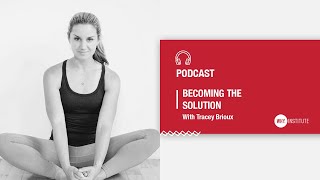
Traci Guerin Brio founded Reset Breathe Fitness after losing a friend to illness, building an online wellness community with live classes: HIIT on Monday, Wednesday, Friday and Pilates Tuesday, Thursday at 5:30am. She emphasizes daily movement for mental and physical health alongside yoga, nutrition, and cooking resources.
Questions this video answers
Live classes at 5:30am (her time): Monday, Wednesday, Friday = HIIT; Tuesday, Thursday = Pilates.
30 minutes (described as ~2% of your day).
Reset Breathe Fit (resetbreathefit).
Yes — a one-week free trial is offered.
Four children: Cole (9), Evie (7), Stella (5), Luke (2).
Chapters
This episode of beyond you'd why is brought to you by our why App. Head over to yinstitute.com to take our free why app and discover your why today.
Welcome to beyond you'd why podcast, where we go from just talking about your why to to actually helping you discover and then live your why. And so you know that each week we talk about a different why, and then I bring on a guest who has that why, and we can see how that why has played out in their life. And this week, we're going to be talking about the why of contribute. Now, if you remember this why, these are people that want to help. They don't have to be the thing, they don't have to be the focus, but they want to be part of what we're trying to accomplish. They're great team players. They're people that would always ask the question, how can I help? What do you need me to do? How can we have a bigger impact? Let's do this together, right? I want to be part of the team. They're people that are pleasant and friendly and always positive and uplifting because they want to use their time, their money, their energy, their connections to help other people do better. And so today I've got a great guest for us. Her name is Traci Guerin Brio, and I hope I said that right. She's going to let me know, I'm sure, in a minute, but. Tracy's passion for physical activity started at a really young age when she used to watch her parents running in local races and thought it was the coolest thing ever. When she got to college, she played varsity field hockey for five years while she earned her business degree and and captained the team for four of those seasons. Now. Tracy then began coaching in her late 20s and took on the role of head varsity coach for the university. She went on to coach the team to three undefeated seasons for the first time ever in the university's history. She won three straight university championships. One of Tracy's athletic highlights was completing the Lake Placid Ironman Triathlon when she was 24 years old, which she says was one of the most incredible experiences of her life. Tracy's passions for wellness has been steady throughout her entire life, but seeing too many people close to her battle illness and then losing a dear friend to cancer several years ago intensified that passion tenfold. Traci has taught hundreds of classes over the past decade in fitness and is inspired daily by watching others take time for themselves to be healthier. She believes so strongly that Daily movement is an essential part of living and feeling our best, and her mission is to guide and cheer others to that quest. That is what led her to start her own business, Reset Breathe Fitness. It's an online wellness community where she teaches live fitness classes from her home. Now Tracy and her husband John, have four children who keep their lives full and wild every single day. She's got Cole, that's nine, Evie, that's seven, Stella, that's five. And a baby of the family, Luke, two. So, Tracy, welcome to the podcast. That was a mouthful.
It was. You know, I'm, like, sitting here and half feeling emotional. Thank you for that. That was really nice. And it feels, you know, I feel very honored to be in the contribute category of your. Why? That kind of made me emotional. Just listening to you explain it important so well.
Tell us what about that made you feel emotional?
I think because I strive so much to live that way, and so to actually be put into that category, I felt like, was a real honor. I actually was talking to someone earlier today, and we were talking about how people define success. And, you know, so much of the time it's on that, like, material achievement and, you know, and in that, a lot of the time, people do tend to lose their why, I think. And so for me, you know, so much about what I do every day is, you know, helping people on that, like, path to feeling their best and, you know, to be able to just sit back and kind of reflect on that and know that whatever, you know, whatever the material gains are that you're getting back, if you get to actually do that every day, then I think you're kind of there. And that's just an awesome feeling, I think.
Yeah. Well, tell everybody about what you're doing now.
Okay. So I have a community, as you mentioned, I operated through a private group on Facebook. I had taught fitness classes for over 12 years. And then after my fourth child was born, I knew that I would have to change the way that I did it because, you know, generally people like to take fitness classes in the morning or at lunch or in the evening. And now that we had four kids and, you know, two of them were in school, I just knew that I couldn't kind of keep up that schedule anymore. And so I wanted to figure out a way to still do it, but work from home. And I also knew that there was a need for it to be simpler for people because I had so many people that were kind of at the same stage of life as me, and fitting time in for themselves was just Hard because, you know, they're taking their kids to a sports practice or, you know, if they were working all day, they didn't want to get home and leave their kids again and go take that time for themselves. So I knew there was a need for it because I also saw when they started to kind of put themselves aside, I could see, you know, you could see it in their face almost. You can see the struggle of, like, them starting to lose themselves. And, you know, I always get so much out of someone coming to my class and then at the end saying, like, that felt so good. I so needed that. I feel so much better. For me, that's what it's all about, is just like, how you feel afterwards. And then I would see them not come back, and it was because they would, you know, again, a lot of the time it would be guilt. A lot of the time it would be that they just didn't feel like they could prioritize themselves ahead of someone else, or they felt like they needed to prioritize people ahead of them. And so it was just so they would let it slide. And, you know, it's so easy to say, I'll get back to this someday, or I'll, you know, I'm gonna do it again. It's just too busy right now. And then time just goes by. And so I knew there was a need for it to just be easier for people. So that's kind of why I started the community. So I. Every morning at 5:30am my time here in Canada, I do a live fitness class. Monday, Wednesday, Friday, I do kind of a HIIT class. And Tuesday, Thursday, I do a Pilates class. The people in my community can do it with me live, or they can come back later and kind of do it whenever it suits their schedule. So if it's on their lunch break or in the middle of the afternoon, I know sometimes people split it up and do like half in the morning, maybe finish half in the afternoon when their kids are napping. So then they can kind of do it whenever it suits. So that way they can kind of tailor it to make it work. And it just makes it a little bit simpler. So all the classes are just 30 minutes. So it's 2% of your day. So I kind of try to share that message, like, we deserve to take 2% of our day for us. So that's a little bit about it. And then I also have a. We've kind of grown now. So I have a yoga instructor who teaches yoga live, usually once or twice a week. And I have a nutritionist that comes on and does a talk. And then I have a girl who does a couple cooking classes. She's really funny and awesome, and it's all, like, super high vibe positive people that are just, you know, all kind of on the same mission of just really being passionate about people taking time for themselves and just being healthier.
So essentially, you took the concept of having to go to the gym to take a class, or go to a cooking class or go to a Pilates class or a yoga class, and you've allowed people to do it right from their screen in their house so they don't have to have the guilt of leaving their children or leaving their house or their. Their spouse. They can do it right there and watch you live.
Yes, exactly. And so depending on the time zones, like, people, you know, some people, like, are not into early morning classes, and that's totally fine. Or for some it might be the middle of the night. But I do generally have a good group that joins me live in the morning, which also kind of fuels me, too, because when I'm teaching the class, I totally feel like I totally pretend I can see them. And so I talk to them as if I can. Makes it more engaging for me, too, than kind of just standing there and, you know, just talking to a screen. So, yeah, so they can do it whenever. I know a lot of people that are traveling with work, sometimes they'll say, like, they just do it in their hotel room whenever it suits. But, yeah, it's just simplified. And I don't, for the most part, none of the classes require any equipment. So you can literally just kind of drop wherever you have space and do the class.
That's great. One of the things I didn't talk about in your introduction is that you've been teaching these for Pilates and fitness classes for many years, for 10 years. And you've got lots of different certifications in different types of fitness activities, right?
Yes. Yeah. I started getting certified shortly after university because I had so many years of playing sports. And then I started coaching. And when that was kind of behind me, I knew that it was still something I wanted to be involved in. And, you know, you kind of want to have your thing still. And because I was so passionate about it, I just started getting certified. I mean, I did my business degree, but then I just started taking a lot of different certifications, and then I started teaching. So kind of right around the same time as, I guess I was finishing my coaching career. And then have I had about 12 years of teaching in person classes and doing personal training before I started the business. So I've definitely seen a lot of different, like, body types and a lot of different, you know, learned a lot about what modifications people need to do. And so I try to incorporate that as much as I can into the classes to make it for all levels, because that's important. And I think there's a bit of a misconception too, that people think like, if I'm not super fit or if I haven't been exercising, I can't go to a class because I'm not in good enough shape. But literally, I mean, you can stand on the spot and march for 30 minutes and that counts. And I think too much of the time it's so black and white with people. It's like, if you can't go all in, then there's no point. And I think that message really needs to change with fitness because literally it's just about showing up for yourself and teaching yourself that it's, you know, you are valued enough or you value yourself enough to take that time to spend on you and to make yourself a little bit healthier and to feel better. And that has such a ripple effect on the rest of our lives and it has such a ripple effect on the people in our lives. So I think we're so much better able to care for the people around us when we first kind of look after ourselves. And we need to be more accepting that it doesn't have to look exactly a certain way. You know, we just have to tailor it to make it work for ourselves.
What brought you to realize that? Because you've done sports and activities at a very high level. I mean, not many people complete an ironman. Not many people start on their, you know, field hockey team for as long as you did. Not many people have done the coached to the level that you have. And then at some point you realize maybe it's not all about reaching the pinnacle. Maybe it's just about movement. What changed for you?
That's a good question. I think there's a few things and I think part of it is after kind of my competitive sports career was done myself, I knew I've always been into running and enjoyed running. And it's not like I shouldn't say I enjoy it. I don't always enjoy it. I think sometimes when you look at people that are active, you think, oh, they must love that. And there's a lot of days where I really don't want to go for a run or get up in the morning and exercise. But for me it's so much about your mental well being and how I feel after. And I think so many, I think there's so many people that are struggling with their mental health. And for me, I know that if I go a few days without exercise, I can feel the tension and I can feel the anxiety in my body and then I feel afterwards what a release I get from it. And so I feel super passionate about sharing that message because I think for so long and even for myself it was about like the physical gains and you know, even like the rewards or the awards that you would get like from being a part of a sport. But it was after kind of my competitive sports career was over that I started to realize that it's so beyond that and it's. There's too many people that give up on it because, you know, they kind of let themselves down on the physical side or they feel like if they're not like, you know, all the messaging is about how you look and achieving like this like perfect body or this perfect physical image that we give up, then our mental health is really what suffers almost as much or more than our physical health. So for me that's a huge part. And so I really feel that I've seen so many people give up on that and then their mental health suffers. And so I think that's a huge part of it is that I really want to share that message that just like daily movement is really important for us to function at our highest level and to feel our best. And it's not about necessarily all of those things. I don't know if it was any like one event. I mean, I did as you did share. I've had like some people super close to me that have gone through illnesses and I did lose a friend a few years ago and that really, really shifted a lot for me as well when I watched someone that like so desperately just wanted to be well that I'm like, there's so much more to life than, you know, like achieving that like, perfect body or that like, you know, what you kind of picture as success. There's so much more to life when like our health is just really the greatest gift that we can have. And so that again, I guess kind of pushed me even further to sharing that message that like, we just really need to work hard to be healthy. Like, that's a really big gift.
So what part of your competitive career was physical and what part of it was mental?
You know, I want to say like almost in my in my youth, like, you're a little more immature in like what you're striving for. So for me then it was like growing up, it was. It was like very much the physical, like wanting to sort of like be the best or like, get to the like, the highest level that I could.
Well, that's what I mean right there. So getting to that level, completing an Ironman, how much of completing an Ironman is physical and how much of that is mental?
Oh, yeah. So that was a really great learning experience for me too. That was major mental. I mean, you definitely have to put the physical training in. But when I went to that, I had never done a triathlon before, which is kind of crazy. I guess now that I look back, I was a little immature in that. But I was just like freshly out of university and I had no money and there was no triathlons in the area that I lived in, so I had to travel for them. So I didn't have any money. I was saving all my money to go to this Ironman. So I literally had never done a triathlon before. And, you know, I put the time in, I put the effort in. I had watched a friend do one the year before. But when I got there, it just kept saying to myself, I put so much into this and I need to really take in every part of this day. It took me like 13 hours and 45 minutes and I was like, I'm going to enjoy every second of this. Put so much time into this. And I had like all these family members that came to watch and they drove like 10 hours to where the race was. And it was funny because I never really went into it thinking I wasn't gonna finish. I didn't really know whether or not if I was, but I never really, like, entertained the thought that I wouldn't get to the end. And I think now as, like almost as I've gotten older, I realize how easy it is to put limitations on yourself with your mind. I feel like that kind of comes as you get older. And when I did that Ironman, I feel like in a way I was still partially a child and I hadn't really put into place those, like, mental limitations of, like, this is a big deal. Like, you have all these people that drove this far to come watch you do this race. And it's pretty major for. Never done a triathlon. Like, I actually never even thought about the fact I might not finish where I feel like if I would have done that almost a few years later, I might have realized you know, as you get older and you have more challenges, you definitely put more kind of filters on yourself mentally because you're surrounded by failure more. And so you just set yourself up for it a little bit more sometimes, I think. And so, you know, now I'm kind of on the other end of it and I realized how easy it is to put those limitations on yourself. Back then I was kind of too young to really even do it. But I feel like in those years in between, there's lots of times where I put like limitations on myself. You know, even starting my own business, like starting this business, I realized how much of. How much of it is mental. It's like 95%. And I feel like even with that IRONMAN, it was 95% and just the rest of it was the training. But again, I look at that as almost like an immature undertaking. But then I realize it's almost like a child. Like children don't have those limitations on themselves and that's why they achieve so much in such a short span of time when they're young, because they don't really realize how big of a step it is for them. You know, how even learning to walk, that's pretty major. But like they don't realize that it's something. It's something that is big. So they don't put those limitations on themselves. Where I think as we get older, we start to do that. Yeah.
So when you think about what you've done, you've competed at the highest level, which is part physical, but mostly mental. You've coached at the highest level, which is all mental, started businesses, you've finished an Ironman, you've learned that the mental aspect of all of this is more than the physical aspect. But if you don't have the physical aspect, if you don't have the health, then it takes its toll on your mental part.
Absolutely.
So it doesn't mean that you have to finish an Ironman to say that you're healthy, right?
Absolutely.
No, just movement.
Just movement. I think it just, you know, I kind of been paying more attention to what we tell our subconscious. And I realize it's so easy to say, you know, that if you're not again, doing it the way that your friend's doing it. And there's so, especially with social media today, it's just so easy to compare. And I see so many people struggling because they're comparing other people are doing, but everybody's story is different. And everybody, you know, everybody has their things that seem a little bit more effortless and so we can't, you know, for some people, getting up and exercising every day is. Appears effortless. And for some people, you know, it's, it's really a big deal for them to train themselves to get into that routine. But then those same people might have, you know, they have their, their things that are easy. But we so get caught up in that, like, comparison game of, you know, not if we don't feel like we're as fit as the person next to us or, you know, like anything to do with physical activity. I feel like it's so much. We compare way too much. And at the end of the day, it's really about just moving so that you feel better. Like, no one. I've never ever in all of my years, like, I've literally taught thousands of classes. I have never had someone come up to me after class and say, I wish I didn't do that, or I don't feel better. And I think to me, like, to me, that is like the greatest achievement and everybody should be celebrating. I think everyone really needs to celebrate every time they exercise because so many people skip it and so many people don't and so many people don't want to. So the fact that you actually showed up and did that for yourself, you know, those are the things that we need to celebrate. And we often, we often don't. You know, we often leave and just say, oh, I wish I was more fit. Or I wish, like, you know, that I hadn't taken a break, rather than like, I showed up today and I didn't want to. Like, that is. That's awesome. And those are the things that we need to give ourselves credit for.
So if you were to summarize it and say, what is the purpose of exercise in your mind, what would you say is the purpose of exercise? Because it's interesting. As I'm listening to you, and I'm sure as our listeners are listening to you, it's pretty obvious how you feel about exercise now and how you view it even in the way that you teach it to the people that come to your classes. Because you don't see exercise as a way to have a perfect body. You don't see exercise as something to compete at the highest level. I mean, yes, you have to exercise to get there. But I think what I'm hearing is a different perspective on exercise. And I'd be curious to hear what you feel is the purpose of exercise.
I really feel. And again, because of, I guess, what I've witnessed in the last few years, I feel that our health is our greatest asset. And I heard a quote, and it was, when we have our health, we have a thousand dreams, and when we don't, we have one. And I kind of live by that. I feel like we all have a responsibility to look after our health and be an advocate for our health. And just showing up and moving your body is just so important. And I think that not only does it make us live better because it makes us feel better, but I think that we kind of owe it to ourselves and the people around us to look after ourselves. I mean, we only have one body and we have one opportunity, you know, to make our life as best as we can. And exercise, to me, should be about that, not about looking a certain way. I think it should be about kind of almost like a responsibility to look after, like, the vessel that you've been given.
That's awesome. Say that quote again, because that was really, really hit me. I really liked that.
Yeah, I love it. It's. When you have your health, you have a thousand dreams, and when you don't, you have one. Wow, that's good. It hits me every time I say it because it's so true.
And I hope you're using that on your website, and I hope you're using that on your. Every time you speak, because that's really, really powerful. Because without movement, right. Then your mind isn't there, and all you can focus on is, how do I get healthy or how do I get my health. But if you have. So it sounds like the purpose of exercise is to. Well, you use it to clear your mind, right?
Absolutely. I mean, you know, I have, like, people like, how do you have exercise when you have four kids? I'm like, how do I not? Because I'm very good mom. Whenever I don't take that time for me, and like, it's. It just like it has to happen. And I get so impatient, and I can just feel like if I miss. Even on the weekends, because I don't teach classes on the weekends. And in the wintertime, it's so cold here. And I, you know, my motivation is not as high. So sometimes on the weekends, I don't really do much. And like, by Sunday night, I am, like, not a nice person. I can just, like, feel that tension. And it's because, like, I didn't, you know, take the time for me. And so I feel like whenever I come back from a run, like, I'm a. I'm like a totally different mother. You know, I joke about it, but it's true. At the same time, like, my kids know that I have two personalities. And you know, it's important to me too for them to see that and like, to them to see that at an early age. Like my 2 year old, like, I teach my class at 5:30 and then at 6:00, my husband gets up and he goes and does the class. So he watches it back and does it downstairs. And like my two year old, like, one of like his first like words was like, or sentences. I remember he said like, daddy, do a workout. And I was so cute, but I was like, so proud because he just like thinks that's normal. And to me I'm like, I know I make a ton of mistakes as a mother on a regular basis, but if I can teach that, like taking time for your health is important to my kids, then that's like one thing I don't have to worry about.
So if I'm listening to this podcast right now and I'm, you know, haven't really. I've been focused on my career, I've been focused on my kids. I haven't been focused on myself. I've kind of let myself go. I just don't feel like doing it. Yes, I know I should, but I don't feel like it. What kind of advice do you have for somebody that's at that stage? Because I'm sure you see a lot of that.
I think there's two. I think one thing, there's this like super powerful video on YouTube. It's like a minute long. I try to play it on my Facebook page. It's like, I think it's from the Heart and Stroke foundation or something, but it's basically like, what will your last 10 years look like? And it goes back and forth between this video of like an older gentleman who's like outside walking and like playing, playing with his grandchildren. And then it shows him putting on his tie. And then it goes to another image of him holding his hand up by his throat, but it's adjusting his oxygen tube. And then it shows him having these people help him out of bed and tie his shoes. And it's so powerful because I think so often we get caught up in them. Like, that's years away. And so I don't have to worry about that right now. And so that's kind of like a harsh reality message to those people right now. It's like, we think we can get away with putting off our health right now, but those are the years that you want quality of life that you won't have if you don't look after it right now. And so that's kind of like my harsh reality message that like, sometimes. I know that's a bit. Sometimes we do need harsh messages. But the other thing is, like, on those days where you're just finding it hard to be motivated, I think it's important to surround yourself with people that do inspire you and do motivate you. And so that's why in my community, I always encourage people to comment after they work out. Because sometimes it's those comments like that where you see other people did their workout that will be like, okay, I'm gonna do it too. And then the other part of it is sometimes you have to just get out of your. And like, I know every morning when my alarm goes off at 5, I'm like, oh, my God, I don't want to do this. And like, I have these, like, few minutes where I'm like, super dramatic in my head, like, talking to myself. And then once I get up and get dressed, I'm good to go. And so I always say, like, if I could just like, even avoid those few minutes where I'm like, overthinking things so much and just like, it's almost like, let yourself go through the motions of, like, getting your sneakers on. Sometimes we just overthink. But those are kind of like three ways.
Yeah, that's really good. You know, a couple weeks ago, I had a patient come in that. In my dental practice that I've known since I was. I grew up with his kids, and they lived maybe six houses from us. And he's a doctor here in town, and he used to be overweight until he was probably around 30 or 35. And then he got into running, and he's been running his whole life, and now he's 93 years old. Twice a week he takes the tram, which is this. You know, we have a big tram that goes from. From Albuquerque, the outskirts of Albuquerque, up to the ski area. And so he takes it twice a week to the top of the mountains. And he runs five miles up there. And he's. Yeah, and he's 93. And so I asked him, I said, so how many miles do you think you have on your feet? And he said, you know, I don't know, but I've done a hundred marathons and I've done ten hundred mile races at least. He said that last summer he went back to his 75th high school reunion. And I said, I can't imagine there was a lot of People there. And he said, actually there was. And I said, well, you, you probably were one of the youngest. You had. I think I said, you had to be the youngest 92 year old there. And he said, well, I have a little bit different definition of youth. And I said, what do you mean? And he says, I believe that you're young when you're contributing, when you're giving to society, and I believe that you're old when you're just taking from society. And I thought that's an interesting perspective because he said this last year I wrote three research papers that got published at 93. 3. 3 research papers. It's interesting what can happen to people or what does happen to them when they stay active.
Oh yeah, it's unbelievable. I'm still like stuck on the 75 year high school reunion.
I know.
And he's on his original parts. He still doesn't have a. He's not had any knee replacements or hip replacements or anything. All original parts.
Yeah. I think those stories are so important because we get so caught up. Like to me, I feel like there's so many, so many people get caught up in like that I'm so busy right now and it's almost like a competition sometimes, like, who's the busiest? And like we lose sight of that and we lose sight of like, okay, right now if I'm like looking after myself, like I might be able to do that when I'm 93. Like, I think those should be our goals. Like I want to be able to tie my own shoes and I want to be able to get out of bed by myself if I am lucky enough to be living when I'm 90 years old. And I don't like, we don't think about that. We just think about like, oh, I just got to get like all these things done on my to do list and gotta, you know, get through this crazy schedule and get my kids to all these different things. And so we like lose perspective on like, you need to take care of yourself right now so that you can be able to do those things. Like, those are major. Not about like how I'm gonna look this summer at the beach. It's like about how I want to live the rest of my life or like in 20 years or 30 years from now, whatever it is.
You've made it simple for people, right? You've made it easy, you've made it a no brainer. I mean, it's 30 minutes. You know, how many TV shows do we watch that are more than 30 minutes?
Yeah. You know, like, there is something mentally so much easier about 30 minutes. I always taught classes that were much longer than that when I taught in person, you know, like 45 minutes to an hour. And there's something about the 30 minutes that like, it does fly by once you get started. It's gone super fast. And again, like, I love that like 2% of your day, it seemed like such a small part. So it's mentally, like, makes it a little bit easier when, you know, it's like literally 2%. Just, I can do that. I deserve that.
So this is how you've been able to multiply your effect in the world as well, isn't it? Because the more people you can help, the more that they're going to go help.
I like to think of it that way. And that makes me feel really good because I do try to, you know, again, exercise is just one piece of the puzzle, right? There's a whole recipe. And like being healthy and living your best and being your best, like eating well and you need to get sleep and red stress and eat good foods and all of that is a big part of it. And so I like to try to. My piece of. Or the contributing part, I guess, is encouraging and guiding people to exercise. But that's why I like to have those other contributors in my group too, that kind of share their specialty. And that exercise is massive in terms of showing up for yourself. But there is so many other factors in being healthy that are important as well. And by that I'm saying that is that I'm not going to. I don't like to have that promise to people, like, do my workouts every day and you're going to be the healthiest you've ever been. Showing up and doing a workout every day is going to make you healthy. But there's other pieces to the puzzle too. But it does make me feel good whenever I hear from people after class and just saying I was having a really crappy day and then I did this class and I feel so much better. That is.
Huge for me and it makes my heart super happy when I get those messages. Or there was a girl yesterday who had shared that a year ago yester she had been like rushed to the hospital because she lost all feeling from her waist down. And she was like a mom of three young children and she had to go to super intensive physiotherapy for months. And she started my workouts five months ago. And she's like, here I am a year later and I'm doing five workouts a week and feeling so strong. Those are the things that light me up so much because I think again, that's the big picture and that's what's really important. And it's important to draw inspiration from those people. We all can get so caught in our stories of like, I'm too busy or life is too rushed right now, I can't do it. And like, we can kind of like let ourselves like get carried away with that and let that last for a long time. But I think those, those little stories too of things like that are like the 93 year old, like that's amazing. Those are the stories that can kind of snap us out of our reality sometimes. And I think it's important to draw inspiration from that when we're in that like story of like, I just don't want to do this. It's like, you know, open up your mind to like some of these other people that are, you know, that are making it work, that probably could easily say, you know, it's not working for me right now. It'd be easy for that 93 year old man to just say, you know, I'm too old for this. But clearly he's not and clearly that's why he's in the shape that he's in. So, you know, those stories are awesome.
Last thing I want to ask you and you know, a lot of people feel like they've got to be perfect, they've got to eat perfect, they've got to do all or you got to be scheduled perfectly, they got to do their exercises perfectly, Everything's got to be perfect or they're not going to get results. How do you feel about that?
I feel like the biggest thing you have to do first is say nobody is ever going to be perfect and no one is perfect. And as soon as you can like let go of that, then you're going to just feel so much happier about all the steps and strides that you are making. Like there's literally nobody that has doing it the way that you feel you should be doing it. We always think there's this like perfect way, but there is no perfect way. The only way I like to use the perfect, the word perfect is if you are completely tailoring something to be perfect for you. There is no like right way to do anything or perfect way to do anything. It just has to work for you. And I think that's the only way that you can make it perfect. But I try to avoid using that term because I think it just sets us up for disappointment. I think it makes us miss so much of our success and we miss so many things that we should be celebrating because our feeling like it's not perfect, even though it's pretty freakin awesome. So I think that, you know, you have to really celebrate every stride forward that you make and you have to also celebrate that sometimes you're gonna get thrown off track, but when you come back after that, you know, it's. I always see people like starting out something and you know, everybody's like gung ho and super motivated and then life happen and you get thrown off track. And that's often what defines the real strength. Because I see there's two things that can happen. You can let itself keep you off track and you give up. And that breaks my heart when that happens or they kind of switch gears, persevere and then they switch things up to make it work for them. People's kids get sick or somebody in your family is going through something and they need more of your time and so maybe you need to switch gears. But when you keep going and realize that that doesn't mean that you're failing because it's not the way that feel like you should be doing it, but you're still working towards that, you know, taking that time for you, however it looks, then that's like when real success happens. And I think those are the things that we super need to celebrate when it's really hard to show up and we do. Anyway, to me that's like what really our goal should be rather than like whatever you feel perfect is because at the end of the day, like really what is perfect and really who is like no one really has that. As much as social media may like maybe make you feel that other people do, I think people are becoming more aware of that. That like, you know, again, it's so much a highlight reel. Everyone has a highlight reel. But just try not to make that kind of be your goal. Make your goal kind of about what's working for you.
Wow, Tracy, I can see why people love going to your classes and spending time with you and listening to you talk because it's. I'm uplifted just listening to you talk. And so if somebody's listening to this and they want to connect with you, they want to know what you're doing, they want to find you, they want to start taking classes with you and being part of your community, what do they need to do?
My website is reset. Breathe FIT R E S E T Breathe B R E A T H E F I T. So Reset, Breathe, Fit. That's where people can register if they want to join our group. Or you can look at my Facebook page as Reset, Breathe Fitness, or on Instagram, it's esetfree. So you can kind of find me all of those spots have, like, the link to our website if you want to join our community. And we do have free trials as well for one week, free trials for anyone that wants to give it a shot.
So, yeah, you are out there making a difference. I'm excited for all the people that are going to continue to join you because you make it simple, you make it easy, you make it fun, you make it make sense. And. And I know that you can at least guarantee one thing if they start working with you, and that is that they are going to feel better.
Oh, thank you. I really, really appreciate that. That makes me feel very good.
Thank you so much for being on the podcast, Traci, and I'm sure we'll have some conversations in the future.
Thank you, Gary. It was an honor to be here.
Take care. Have a great day.
More from Dr.




Women In Leadership: A Need For A Greater Systemic Change With Belinda Clemmensen






