Building Bridges: How Jerome Myers Turned his 'WHY' into a Career of Impact
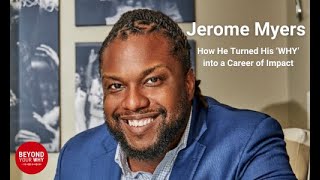
Jerome Myers left corporate consulting in 2016 after building a division from zero to $40 million in two years. He now coaches founders through life after selling their companies using a four-step framework called NXOT, detailed in his book You're Next released in December 2023.
Questions this video answers
March 19, 2024.
2016.
November 2017.
December 2023.
From $0 on January 13 to $20 million by the end of that year, and another $20 million the following year.
Chapters
Welcome to beyond you'd why Podcast, where we go beyond just talking about your why and actually help you discover and then live your why. You see, we believe that knowing your why, that driving force behind every decision you make and every action you take, is the essential first step to really knowing yourself. It allows you to move forward faster and have a bigger impact. If you're already a fan of the show, then you know that every week we talk about one of the nine whys and then we introduce you to somebody with that why so you can see how their why has played out in their life. This show will be more powerful for you if you've already discovered your why. If you still need to do that, head over to whyinstitute.com and discover your why today. It'll only take you about five minutes. Now let's meet today's guest.
This week we're going to be talking about the why of Contribute to Contribute to a greater cause, add value, have an impact in the lives of others. So if this is your why, then you want to be part of a greater cause, something that's bigger than yourself. You don't necessarily need to be the face of the cause, but you want to contribute to it in a meaningful way. You love to support others and you relish successes that contribute to the greater good of the team. You see group victories as personal victories. You are often behind the scenes looking for ways to make the world better. You make a reliable and committed teammate and you often act as the glue that holds everyone else together. You use your time, your money, your energy, resources and connections to add value to other people and organizations. And so today I have a great guest for you. He is an award winning engineer turned business strategist. He uses his rich experience and innate understanding of human emotions to ensure that your journey from the corporate world to entrepreneurship is a fulfilling one. At the helm of a division of a multi billion dollar Fortune 550 company, Jerome created a thriving two twenty million dollar operation with 175 dedicated team members. Now he employs that expertise to advise leaders across diverse industries from real estate to health care, guiding them to double their revenue, harmony in their work life integration and ramp up their charitable contributions. His multifaceted experience also extends into the realm of real estate and academia. Jerome wears the hat of a general partner in a multifamily real estate portfolio that lends its strategic acumen to the North Carolina Agriculture and Tech Technical State University Entrepreneurship Advisory Board Driving Entrepreneurial progress. Jerome Myers welcome to the podcast.
Dr. Gary Sanchez thanks for having Me, brother, how cool is your nine wise? And the ability to get that figured out in like eight minutes, man, I did it standing up in a hallway and it's spot on. At least I think it's spot on.
So you and I met at a. We were both speaking at a conference called the Elite Wealth Advisor Symposium in Fort Lauderdale. And you're like the first person I met when I walked in, Remember, you were setting up and you had a, you had a booth with your book, which we'll talk about, and you're like, well, what is this why thing? And gave it to you, and right there on the spot, you took it. And then we've had a great, some great conversations ever since.
Yeah, man, it's phenomenal. You were just, you, you dug in, you started asking me questions about what I was doing, how I was doing it, the messaging behind it, and digging into how and the how that goes on top of the why. And I was just like, man, you're just such a genuine, generous person. And so I'm just grateful to have had the opportunity to hang out with you in person and I learn more about your system because it truly is something that's eye opening for anybody out there who's questioning what they're here for or why they're here and how they can actually use that to make a difference in the world.
So your, for those of you that are listening, Jerome's why, as we talked about, is contribute to a greater cause.
Right.
Add value, have an impact in the others. How he does that is by making sense of the complex and challenging, solving problems which you're going to hear about in a minute he's really good at. Ultimately, though, what he brings is a trusting relationship where others can count on him. So when he talks about things, he's lived it, he knows it. He's not going to tell you anything that's not true and that's not going to work. Does that feel right?
It feels very right. And when I read it for the first, I was like, man, they, they get me. And I've been racking my brain trying to figure out how so few questions can actually get to this place where you can actually describe a person and what makes them tick or how, what makes them work. And like I said, a relatively short time.
So let's go, let's let our audience get to know you. Where are you right now? Where do you live now? And then take us into kind of where were you born and what were you like growing up?
Yeah, so I live in Greensboro North Carolina. I grew up in Fayetteville, North Carolina, the son of a soldier and a stay at home mom. We played a lot. My dad would work at the Carolina half day, so he'd be gone before 6am and come back after 6pm most days. And I'll never forget hanging out with my mom on a Thursday morning in the front yard and hearing the trash truck on the main street. We were in the cul de sac, third house on the right, and I knew the truck was coming because I could hear it. And when it turned on my street, I would get even more excited as he went to each house that got before us. And I'll never forget Lonnie just hopping off the truck, flipping the top off the trash can lid, it spinning around like a top and then falling flat. Him doing a little pirouette and dumping the trash in the back of the trash truck. And then he did what I always want somebody to do when they've got a big machine that makes a lot of noise and it's stinky at times. He pulled the lever and I just went crazy, man. And then he spent the trash can back to the corner. And no matter how many times I watched him do it, it never tipped over. It always just sat on the corner as it was supposed to. Lonnie was making art. And so I looked at my mom on this particular day. I said, mommy, I want to be a trash man when I grow up. And it's funny, because we were celebrating her birthday over the weekend and that story came back up. But anyway, I told her, I want to be a trash man. And she said, do you like your Jordache jeans and your guest T shirt and your Nikes? I said, yes, I do. And she said, well, you know, you should pick a career that's going to allow you to live the lifestyle that you want to live. And part of that is the income that you make or the ways that you make for what you do. So being a trash man isn't going to probably pay for the lifestyle that you want, not only for yourself, but the family you may have one day. And so for me, it was like an exorcism. She was taking all the innocence out of my body. You can't just do what you love. You just can't do the things that you think are cool and make money from those. You actually have to consider how you get compensated for them. And that story is relevant because I didn't really think about it much until I got to the senior year of high school and I was talking to my physics teacher, Mr. Ayers. I said, hey, Mr. Ayers, should I solve problems with people or solve problems with math and science? And he said, well, Jerome, I think you could be successful at both. But, well, one's going to pay better than the other. I said, so I should solve problems with people? He's like, no, that's not the one that's going to pay better. Math is science. You could probably go be an engineer, and that will put you at probably double the salary that somebody who solves people with problems with people would get as a starting salary after completing a four year degree. And so I studied engineering in college and played football for four years and I got that engineering degree and then went off and did the corporate thing. And there were a lot of twists and turns on the journey, but, you know, that's how I got into Trajectory. And people may be asking, well, how does an engineer become a business strategist? What I realized through sophomore year in college was I didn't actually want to be an engineer. I wanted to grow businesses and I wanted to deal with the people issues in businesses. And even when I went back and checked starting salaries, people with a business management degree didn't make what engineers made starting. But I did see a path that I could jump from engineering into technical leadership or executive leadership at some point. And so that was the path that I set out on.
So let's go back a little bit. When you were in high school, now let's go back there. What kinds of stuff were you into? You were into sports, obviously. What were you like as a high school kid? What would your friends say about you?
Yeah, the superlative I got was most involved. And so I was a DARE role model. I was always picked for stuff. I was junior class, homecoming, whatever that thing is. Played football and baseball.
Didn't get involved in student government. I didn't like the student government stuff. But if there was a club outside of that, I was probably in it. I was in the, what do you call that, the junior achievement stuff, the Beta Club, you name it. And then we had an academy at the school. And I think that's probably pretty commonplace now, but back when I was in school, it was like the very beginning of the specialty centers. And so we had a technology specialty center. And the funny thing about this story is I didn't even know what an engineer was until we had a, like go to work with engineer day. As a function of me being in that academy. I always thought the engineer was the person in the front of a train. And that was the only one that I had any access to or idea of. And so it was hang out with the athletes after school, hang out with the smart kids during school, all the AP classes. I think I graduated 26th in my class of like 400. And just look for ways to add value and help encourage, mentor, that kind of thing. Yeah.
And then off to college. Where'd you go to college?
North Carolina Agricultural Technical State University.
Oh yeah, that's right. And then. And you played football there?
I did, yeah. That was pretty interesting. It was four years of a job that I didn't realize was going to be a job when I got started, it was, it was a lot between the Travel and the 4am workouts and then the 4pm workouts and staying up till midnight to do homework and then do it all over again. It taught me mental toughness and how important resilience was because I think I watched a lot of people play for a year, maybe two, and then they were done. And I was on an academic scholarship, so I didn't really have a whole lot of incentive to keep playing. But I. I started and so I finished.
So what was it that told you, hey, I think I want to grow businesses instead of being an engineer. I want to deal with people instead of being an engineer. What, what was the moment that you.
Knew that there was a step in between? And so there was this concept of decoupling time for money, which happened the summer in between my freshman and my sophomore year. And so I had a job working as assistant at a fitness center on campus. And I'll never forget it being like 4:45 on a Sunday. We closed at 5 and I closed at 4:50 because I didn't think anybody would come in and try to get a workout between 4:50 and 5:00 clock on a Sunday. And the guy that I reported it to came and found me in my room and said, what are you doing? And I said, well, I don't think anybody can get a workout in an amount of time, time that's left for it to be open. And he said, well, I don't pay you to think. I pay you for your time. And it was in that moment I said, well, I don't want a job where I have to be at a specific place at a specific time in order to earn money. And so when I moved off campus, I didn't actually know anybody that didn't have to go to a job. But when I moved off campus, the person that owned our complex, he was making about $700,000 a year. And we never saw him or talked to him. And the way that we arrived at that number was I was paying 395. I had two roommates doing the same thing. The guy downstairs that I talked to pretty regularly who was another engineering student, he had the same thing happening. And we counted up the number of apartments that were doing that in that complex. Like, we just want to make $70,000 a year, this guy's making 700,000. But we did. I didn't have a path. I didn't know anybody had a multi million dollar real estate portfolio. And like I said, my dad was a soldier. So those folks weren't coming over to hang out at the cookout. So it was like, well, I guess I need to go down the traditional path. So that iteration of wanting to be able to separate time for money was the first step to knowing. Because I don't know any engineer that doesn't sell their time. It just doesn't exist. And so then it was like, okay, people who are running businesses are leveraging other people's time. And so they may have a role, but people who are truly business owners don't actually have a seat on the org chart. And so people who don't have a seat on the org chart and concept have decoupled their time for money. So the goal was to figure out how to do that. And I had some pretty cool mentors when I started in corporate and I started to see how they were leveraging other people's time even though they still had a job. But I was seeing a bunch of small business owners coming in and servicing the big company that the Fortune 500 company I was working for. I was like, oh, so those folks are actually business owners. All these folks are just high paid jobs, but these folks are business owners because they've got people doing the work and they're figuring out the contract and then they're getting out the way. So I was like, man, how can I do that? And so that was a kind of progression from, I know I want to decouple my time for money, but how do I do it? And eventually we got back to real estate.
But yeah, so yeah, you then went. You did graduate with an engineering degree, right?
I did.
And then you started out as an engineer.
I did.
And how long were you an engineer?
I think I was technically an engineer. It's interesting because I didn't get my PE until maybe 7 years in.
Actually functioning as a true engineer. It was probably three, three years, maybe Four. And then I got into leadership. And so with my leadership titles, I continue to review engineering work, but I wasn't the one necessarily doing the engineering. So when I left the engineering or the power company and moved into consulting, the professional engineering license became important. And so we sat and got that and got some other credentials to make us as a consultant more credible. But, you know, I would say that it was probably three or four years of peer engineering, and then engineering leadership after that.
Okay, and so then you started engineering, leadership and consulting. So. And then how long did you do that?
So I did that until my last year was 2016. So I guess in total, the stint was like 12 years.
12 years of consulting and leadership. And learned a lot during that time. Right. How to work with people, how to help people maximize themselves, their time. What was that experience like for you?
Yeah, if we talk about the last role, where I went from $0 on January 13 to $20 million by the end of the year.
That was just a rocket ship. We were working on a project that never been done before. We were taking overhead power lines and putting them underground. I was the second person hired into the division at P and L responsibilities and all of the safety responsibility for the organization. And I was the face of. For the client or to the client, which was the company that I used to work for. And so.
Very quickly we had to figure out who our new leaders were going to be, because we went from zero projects to a hundred projects, and eventually we had 400 projects at one point. And there was just no way that one person or one group of people could manage that. And so the organization, like, we figured out how to do the process, fired ourselves from it, taught other people how to do it over and over and over again. And you just saw the organization grow and grow, and then it was almost like feeding a snake, because the client would give us a project, we'd go out, get the real estate rights, then we engineer it based on the real estate rights that we got, and then we feed it to the construction team so that they could actually build what we engineer. And just going through this continuous process of we got to get these easements, we got to do these designs, we got to get this stuff installed over and over and over again. And all of the nuances with the client that was paying the bill, the people's yards that we were going in to actually do, the physical installation, the standards that we had to adhere to related to the engineering, and then just the negotiation, because we weren't paying the people for the Right to cross their property. We were selling them on this concept that they could have more reliable electricity during a storm. And so it was just fascinating to see how many people came in, how many people left. And then I'll never forget getting a phone call on December 24th at 4:55 and a person that I talked to every other week and saw once a quarter saying, hey Jerome, we're only half the sea moon. Like what? We're going to need them next year. What do you mean? He's like, yeah, you and I have been talking about this for a little bit, but I've made a decision. I was like, yeah, that's not the right decision. He's like, yeah, it's not a negotiation. I'm going to tell you what we're going to do. And I'm hard headed. So Gary, I didn't go with it. I kept talking, eventually hung up on me and told me to talk to me in the new year. But that was tough because I felt like. I remember one lady, they were, her husband was in the military and he was moving to a new duty station and she told him she wasn't going with them. She wanted to stay with us and continue to work on the project. So it's just this iteration of seeing people fully engaged and be connected to work that they're doing and given their life meaning and then being able to have impact. And that for me was intoxicating. I was gladly getting up at 4 o' clock to get in my truck and drive an hour or two depending on where I needed to be in the territory for the day and then get back and pick up the kids from daycare and get ready to do it all over again the next day. It was a wild ride with a whole lot of human problem solving. The technical stuff was kind of easy compared to some of the stuff we had to figure out with people though.
So the company, they finally got rid of that division after you'd taken it from 0 to 20 million in one year. They said we're done.
No. So that was only half. And so we ran again. We did another $20 million the next year and this year, the Tuesday before Thanksgiving, I was standing in front of the group and I said, hey guys.
Don'T spend all of your money on Black Friday. I don't know what's going to happen between now and the end of the year. We know what happened the year before.
And I just felt all my leadership credibility ooze out on the floor. Didn't feel good. And I was like this isn't worth it.
And I realized that I had agency the first go around.
I said it was their fault, they made me do it right? I gave the agency away. It wasn't me. I would never do that. They're making me do this. But I had a choice and I chose to participate. And it's something, I don't know that it haunts me to this day, but it's something that I never forget. We have a choice. No matter what the situation, you always have a choice to do what you believe is right. And I don't think that I did what was right. And now there was one guy who worked with us who was let go in that first year. And it might sound a little dramatic, but, you know, he lost his vehicle and then he lost whatever job he had for that vehicle that was paying for that vehicle. Then he lost his family, they moved out. And then he lost the house and then he took his life. And you know, for me, while I didn't pull the trigger, I pushed the domino in the chain of events that happen. And that in and of itself is something that I sit with on a daily basis because I know that our decisions put things in motion. I know that our decision not to speak up or not to fix something is.
It matters. I think a lot of us can kind of shrug our shoulders and say, oh yeah, it's not that big of a deal or it's not my fault. But the reality is we're put on this planet to make a difference and we have the opportunity to make big impact when we want. So yeah, man, they, no, they didn't. But I decided that I was going to leave corporate America when I had to tell people that I didn't know it was going to happen for them in between Thanksgiving and Christmas. And I look around every year and it's the same story every year. People are getting laid off in order. And now mind you, like I wasn't running a low margin business. We had $6 million in profit both years, right? So we're running 30% margins. Payroll was a pretty small number, but yet we needed to lay folks off. I just, I couldn't make sense of it. And yeah, maybe it's just me being a naive bleeding heart kid, but it didn't make sense to me at all. And I wanted the buck to stop with me.
So you leave on to your next thing. What was next for you?
My next was thinking I was going to buy an apartment building, going to 10 different banks, them all telling me no the first one basically asked me, what experience do you have? And I said, well, I got an mba. I've got a professional engineering license. I just ran a $20 million P&L. And they're like, yeah, none of that matters. Like, what experience do you have? And it's like, have you ever done a project of this size or this scope? And kind of pulled out my pockets because. Pulled out a piece of lint because I had none of that. Right.
It was not what I'd done. And I found out pretty quickly that banks don't invest in your dreams or your hopes. They invest in proven business plans with experienced business people, and they are looking to make sure that they don't have any risk that they can avoid in putting their capital on the street. So I, at first person, I thought, oh, you're crazy. You just don't know what you're talking about. Of course, you want to lend me a million dollars to buy this apartment so that I can renovate it and fix all the things and make everything right here.
But nine other people agree with them. And so I had to pivot, started doing fixing and flip houses because I'd been lending some money to people who were doing it while I was in corporate. And I realized, like, man, these. I don't think they're that much smarter than me. I don't know why I wouldn't be able to do this. And that kept me in the real estate community long enough to find some partners to do that first deal with. And I was fortunate enough to be in the seat of an asset manager for that first deal, which got me in the paper, which then had the same people who wouldn't lend to me a year prior, asking if they could refinance the deal that we were working on or if I had other deals in my pipeline, even though I didn't even know what a pipeline was at that point. And so that was the first. Next. And I realized one morning, driving into one of my flip houses, that I was working harder and not actually making any income because when you do those projects, all money goes out before money comes in.
Than I was when I had a job. And I was like, what am I doing? What am I doing?
And so how did. So that takes us up to today, right?
Because you.
How long ago was that?
That first deal was done in 2017, November of 2017. We closed on the first deal. I left corporate in 2016 and the 2016.
And so are you currently in real estate as well right now?
Yeah, we still have a portfolio that we operate. So we bought most of our deals pre Covid and we operated them through Covid and we've had some exits on some of the deals that we had and most of them we've been able to double the value over the five years or so that we own the properties, which ended up being really cool from a multiple standpoint because people were able to three and four extra money.
So let's talk about your book now. You what's the title of your book and tell the audience about your book.
Yeah, you're next. The guy for Finding fulfillment after your Exit is a book that we released in December of 2023 with the goal of helping founders who have the big exit is exit 6 in our model, the one where you get the financial world for some people call it a pot of gold at the end of the rainbow. Other people look at it as a lottery. The way we think about it is you sell your business for seven, eight or nine figures and you get to a place where you're probably work optional and you don't know what you're going to do next. This book is specifically written for people who have been working on an enterprise for 15 to 45 years. And you wrapped up a lot of your identity in the business because you spent so much time cultivating and building it. Our goal is to eradicate the pain and the suffering that many people feel or experience on the backside of an exit. When you go through the decoupling process of taking something that's been so integral to your life because it's where you spent a lot of time, spent even more time thinking and earned a good bit of income, to take that away is something similar to a car accident for a lot of people, because the day that they sign, unless they have some type of obligatory, obligatory period on the backside, they go from waking up at 5 o' clock in the morning, working out, going into the office, staying in the office until the Carolina half day is over, then going home, maybe doing something with family, and then getting back on after they do something with family before they go to bed to wake up and do it all over again, to having no structure, having 60% or more of the people that they talk to on a daily basis vanish. And this whole concept of what do I do with all this time that I have, because now I don't have a rigorous schedule.
It can be an echo chamber that is deafening.
So why did you write that book?
I went through it. So when I left corporate, it was the first experience with it and there were some Smaller ones along the way. But going building an enterprise that big and those folks being as close to family as they can get because of the amount of time that you spend with them, and being able to call them whenever, knowing that they'll pick up, and knowing that they solve problems for you without you ever having to deal with them, it was like, man. And I was only there in that role for two years. So the loss of identity that I felt on the backside of that, because in concept, even though I still have a license, I was no longer engineer. Right. And that was a part of a relatively long career. I had all of the fillings of business ownership, even though I didn't have to take the pay cut initially because I was on salary to do the role that I was doing. But we had $0 in revenue when I showed up. So to spend that up and get all the billing and all that stuff taken care of, it felt like as close as you could get to entrepreneurship without actually, you know, severing where you're going to get that paycheck every other week or once a month, whatever that is.
And then just seeing all the people vanish, the people who I talk to daily, multiple times a day, they weren't interested in my call when I didn't sit in the chair anymore and. Or if I couldn't award the contract or whatever, however you want to define that. And so for me, it was a big struggle. And here I am trying to figure out how to do this other thing because I didn't really exit with a plan on what was next. I thought I might be able to buy an apartment building, but I wasn't. And so the stuff didn't work. And so there's all of these fears, and we call it the founders exit paradox. There's all of these fears and this discomfort that you experience on the way to finding your next. And I didn't have a guide. I didn't have anybody to tell me, you better have this other thing figured out. And so I went cold and I burnt the ships, which is probably a recipe for disaster. But I watched so many people who are exiting think that that's the way that they're going to figure out what's next. And so there was my experience, and I ended up being, you know, patient zero. And then it was watching other people go through this and watching them struggle and watching some of them fall in a hole that they couldn't climb out of, and then see the collateral damage that happens as a result of them being in that space not knowing what to do and not knowing who to talk to. So when you get isolated, you do some really scary things. Sometimes in addition to that, you can ruin what you spent 20, 30, 40 years building from a legacy standpoint in a matter of minutes. And so my goal was to help people, or it became. And it's more than a goal, it's actually a mission now, because I see this going for the next 20 or 30 years, seeing. Helping people maintain, one, the legacy that they've crafted, two, helping them find the courage that they need to explore this stuff. Because once you get good at something, a lot of times you become a slave to the thing that you're good at. Because the humbleness that it takes to go down and start over and be a newbie for some people, especially when you're older, is crippling, because you don't want people to think less of you. You don't want people to think that you aren't good when all of your credibility comes from your having all the answers. And so I went through it then. And then each time we've sold apartment building.
I've experienced it. Each time we've changed our coaching model, I've experienced. And so the combination of the stuff that I've struggled with, along with watching and helping other people navigate this, it just further.
Compels me to take action against this. Because when I look around, there aren't any people solving this problem in the way that we are.
You're talking about stuff that a lot of people don't want to talk about.
Right.
They don't want to think about. I experienced it myself when I sold my dental practice. Right. I was a dentist for 32 years, and I did have something else to go into, and that's why I left it. But I still experienced, you know, every day I saw 50 friends right there in my office. They came to see me. And whether they hated coming to the dentist or not, I considered him a friend. And I'd known them forever. I knew everything about them and their kids and seen them grow up and seen their kids grow up. So it was a. Every day was a great day. Two.
Sitting in an office where I saw hardly anybody.
Yeah.
And nobody was around to go to lunch or to, you know, just exactly what you were talking about. So got to experience that. You know, I still felt it, but I can only imagine what I would have felt had I not had something else to do.
Yeah. And so it's like a car wreck. Right? It's. It's literally going from 60 to 0. If you don't have the next thing and there's no.
Well, the difference between with the having the next is you break, right? You're slowing down, you're transitioning, or you're not having a direct hit because you, you can see something else there. When the people go to zero with no break because they have nothing else, it's violent, is visceral. And in that experience, I think a lot of people.
You hear people talking about folks dying a couple of weeks or months after they retire, it's because they didn't have their necks, right? And so the next word is an acronym for our four step process, which is nourish, evaluate, explore, and then transcend. And so the whole goal here is one, to have people take a pause and understand all the things that they've done and then decouple those accomplishments from the problems of the past that they've solved and know that those skills, resources, assets are transferable to be used against other problems. And then the, the evaluate is, well, what, what am I best set up for? You know, I talked to one guy, he's like, yeah, Jerome, we've done, I don't know, 80 exits and however many billions of dollars in those exits, I was like, that's cool. And so what happens after your people exit? It's like, I don't, it's not part of what I do. I just, I don't know. He's like, but I do allow some of them to come in and be coaches. Well, everybody's not going to be a coach. Most people don't enjoy listening to other people that much. So that's not the answer for folks. But what we want people to do is evaluate. What can you take all of these wonderful skill sets and the fabulous network you have in order to kind of work on and solve a problem or eradicate a problem is the way I like to describe it. And then explore. And you want to kind of step out there and try to understand how that problem can be solved and what methods have been tried already and really begin to understand if this is something that you want to take on. And then once you figure that part out, then it's transcendence. It's actually going out and acting and deploying resources against it, meaningful resources against it, so that you can help make that dent. You know, I think about Bill and Melinda Gates and some of the stuff that they do in their foundation is just like, you know, an example that I think is probably household and common, but I think there's so many other people out there and so many other problems out there that if we are at the place where we're work optional, right? So we have time, freedom, and we have financial means that will allow us to make a big impact, that we go off and do that. And I just watch so many people continue to do things because it makes them money, but they know for a fact that that's not what they're here for. And at some point, I think they have to jump off and actually do the thing that they replace here. Because we all have a mission.
Would it be valuable.
For people that are getting ready to exit, getting ready for what's next, to know their yos a hundred percent?
Because that's part of the nourish phase. And it's actually how we're probably going to. We're going to use it, right? We have a interview process that is two hours on the front end, and it really helps us dig into the anchors and a bunch of other things that kind of set them up for, here's what your base is, and then here's how we think we can transfer that into some potential other things that you might be interested in based on the interview that we did. The other piece of this is, though, an understanding of why they are the way they are. And so to have that in three sentences, having the why, how, and the what is going to allow them to, in a concise way, explain who they are, how they do what they do, and.
What it is that they do in a way that I don't think most people have language for. In fact, you'll hear a lot of people say, oh, yeah, that's just the way I am. But this gives it a whole lot more eloquence, and it allows other people to not have to dig through and find the stuff. You can just present that these are the way things are. And then as long as you demonstrate that behavior on the backside, I think it makes it really easy for people to begin to trust you. Because from my perspective, the biggest hurdle for folks is when you've had this identity for a long time, when you're moving over to a new thing, people want to put you back in the box that you've always been in. And so what's cool about yos is it's completely removed from a specific industry. And this is you as a person. And I think that's probably the biggest thing that most people miss. You are not your business. You have an identity that is totally independent of that. And the moment that you figure that out, you figure out what that is, and you have the words to articulate what that is. It makes it so much easier for you to then go out into the space and then reference the experience that you have doing the other things to explain how and why you're qualified to do whatever you're doing in the next phase of whatever your experience is.
Yeah. So if you're able to help them choose what's next based on their yos, you can be very sure that they're going to love what they do.
Right.
And when you're. When it comes time for net what's next, you might as well pick something you love since you're already. What did you call it? Work optional.
Yeah. You're work optional. Yeah, I like that term better than retirement. Right. So a lot of people get queasy when you say retirement. So I say work optional. Here's the thing, right. It. Once you have enough money, because a lot of people think retirement's an age once you have enough money where you don't have to go trade your time for money, you solve the money problem. Your work optional. So why not allocate your most valuable resource, which is your time, against something that you really feel like is going to make a difference in the world? Because making more money, and you know, I've spent time with center millionaires and billionaires, making more money isn't going to make a difference in the grand scheme of things for them. And for some of us, we might say $50,000 is a lot of money or a hundred thousand dollars is a lot of money, or $500,000 is a lot of money. It might be. But if you've ever read somebody's eulogy, it doesn't talk about how much money they have. And you know, do the kids really appreciate it or the nieces or nephews or whoever you write in the will? Maybe. But I don't know if that matters as much as your ability to go out and make a tremendous impact on the world and contribute in a way that you could only contribute because of the experiences and trainings that you had and lessons that you learned building this massive enterprise that gave you the opportunity to have the liquidity event which would then allow you to have that time, freedom.
My wife and I were having this conversation this last weekend, actually. We were in Austin and we were walking down by the water there and. And I said, you know, I was thinking about this the other day, let's say just out of the blue, we sell the y Institute for 100 million.
How will that change our Life. What, what will be different than what we're currently doing? And it was like not much, not much different. More money is not going to make a bit that big of a. Yeah, we maybe we did a few more nicer restaurants, stayed a few more nicer places, but I still want to do the same things. I want to do what I'm already doing. So is that the goal? Is the goal to get an extra X amount so that I can stay at a couple of nicer places?
I don't think so.
It's not. I mean, that's not what we're here for. The money is a indicator of very little. Right. It's how much impact or how much investment can you make without having to enlisted other people. And it's kind of the beginning and the end of it. Now what you do with your time and how you spend the time I think is the bigger impact. And our ability to be great resource allocators is something that most people don't really experience until the backside of exit six. But look, man, once you hit a certain level, and I think they updated the number from like 70,000 or $75,000 a year back in like 2000 where making more money didn't make a difference, I think it's been moved to like $500,000 a year where you can basically do whatever you want and it not make a difference in your lifestyle.
It all sounds great to be a billionaire or since a millionaire or even worth being a decimillionaire, but at the end of the day, you're probably not going to change your house if you do. Okay, great. You might buy a car if you're a car guy. There's but so many watches you can buy if you're a watch guy. For the women, they might buy some shoes or some bags. But at the end of the day, the majority of the people who get the most from their wealth are the ones that invested in things that help other people. Like they solve a real problem. They get to enjoy it. One of the guys that was there at the conference that we met at, he talked about dying from a heart attack at 36, then resuscitating him, and then him and his wife coming up with this foundation that pays the expenses for children, parents to travel with them. If they have to go to a specialist related to some type of cardiac issue and their ability to make sure that those people are together at such a traumatic and stressful time, the people who he does that for will never forget them along with the kid. Right. And so Those types of issues, that was a problem that wasn't being solved. I'm sure he was made aware of it when he was in recovery from his incident. Fortunate for him, he was financially.
Fit enough where he could, he could handle the challenges of that blow. But there's a whole lot of other people who aren't and won't ever be. But he can help them one family at a time. And I'm sure once he sells this firm, he'll be able to do it at a much larger scale if that's what he wants to do. And I think that's what it is about the. At the end of the day, Gary, I think we've all been placed on this planet to be able to make the lives of other people better because they encountered us. And you know, my why is contribute. And so of course I would think that. But when I look around at the people who have the most fulfillment, it's never because they got another car. It's never because they flew private. It's never because they own an island. It's only because of the impact that they've been able to make as a result of those things. They've been able to create experiences for other people or they've been able to give money away. And I can't remember exactly who I talked to, but there was a parent whose child gave them a book on like Die with Zero. I think that's the name of it. But basically it's just. It was you, right? I was like, that was not what I expected. And so I don't know if you've already told the listeners that story, but I think it is a phenomenal story because I think it just kind of puts the period or the exclamation point on what we're discussing here today.
Yeah, my daughter got, for Christmas this year, she bought me the book Die with Zero, which you wouldn't think a child would buy a parent, right. Die with Zero money. So where. What does that mean for the child?
Right.
That they. They're getting nothing. But that wasn't the point of it. And I. And she said that her small group that she's part of, they're all reading that book. And I thought, why would a bunch of young, you know, 20 and 30 year olds be reading a book called Die with Zero? And then once I read the book, it was very much what you're talking about, Jerome, which is figure out how much money you need to figure out how long you're probably going to live. And then figure out, because he Had a formula for that. And then figure out how much money you actually need, you know, and as you get older, your needs for money actually go down because you don't have the energy to go travel around the world. So figure out what you really need to die with. Zero. Make that the goal. Instead of die with millions of dollars in your account, but use that money for the experiences you can have.
Right.
Whether that's helping other people, whether that's taking trips with your family, your kids. And so it's a great.
Way to think about money in that it's not to be hoarded up so that you can give it to somebody else when you die. And who knows what the heck they're going to do with it. You determine what you're going to do with it. And if earmark the amount that you want for your kids and then give it to them when you're alive so you get to enjoy it with them. Yeah, I think it's right in your philosophy.
Yeah. I just think it's a phenomenal way to approach it because the intentionality that it requires. Yeah. To. To allocate the resources to the right buckets to get the return on the investment that you would like to give. I. It's unfortunate, but one of the guys that works out at the gym that we work at and is actually a coach, he passed away. He didn't have any life insurance. And it's like you can pass on debt, right. The final funeral expenses to your family, or you can do the fundraiser in order to get people to not have debt that have been left behind. You can leave behind money. But the one thing that I don't think ever goes away is the memories. And so I don't think anybody on the deathbed is asking for more money ever. I think they want one more experience with the person. I think they want one more time to go do that favorite thing or maybe they want to taste their favorite dish or maybe they want to hug somebody again. I've talked to a lot of guys who have lost their partners over the years and it's always interesting to see them tear up and talk about, well, if they could have just have one more trip or one more date or. And it, it sounds kind of, I don't know, woo woo or squishy. And a lot of people don't actually want to go to that place. But if you think about that, then you're probably thinking about what's most important for you. If you got it one more shot, if you got one more choice, you're you're probably picking what's most important for you. And so in that, why not live that way? And I just think that book just puts it in such a way that it makes it clear for us. Right. Sort of like yos. It makes it clear for us what we're doing, why we're doing it, how we're doing.
Last question for you, Jerome. What's the best piece of advice you've ever been given or the best piece of advice you've ever given?
So I. I don't know if it's advice, but it is a statement, and it's your dream should be real. I've just watched so many people put themselves in a box and struggle with this idea of being able to dream again. You know, a lot of us turn our dreamer off when we're 12 or 13. The first time somebody tells us, be practical, be reasonable, go get a job that makes sense. Or you can't do that because you're going to be risking the stability of your family. Or insert whatever word you want to insert to let people know that you can't do something because of some other responsibility that you have. And I will tell you that the dream is only placed on your heart because it is supposed to be brought here. And so it's up to you to conquer the dream killers. It's up to you to really lean in and follow your intuition and get to the place that you're supposed to be. Because you have to become somebody different in order to deliver that dream into the world. And I just watched so many people let those dreams die on the vine. And what they don't realize is they're being selfish when they do that, because there's somebody who's counting on them that they probably haven't even met, don't even know their name, to do the thing that they've been placed here to do. They don't do it because they let somebody else and what they think think that person might say about them control their actions. And I just dare them to be courageous because I know what a difference they can make once they lock in and step into purpose and live on purpose.
Yeah, Jerome, if there are people that are listening that want to work with you, maybe have you come speak at their event, they want to follow you, buy your book, what's the best way for them to get in touch with you?
Yeah, man. ExitToExcellence.com you can find out all the cool stuff we have going on, and you will be able to pick up on the 8Xs of a Founder. Find out more about the Exit Paradox and a bunch of other free resources, including get access to our podcast.
Awesome. Jerome, thanks so much for being here today. A great conversation. I was looking forward to this, so thanks for spending the time with us today.
It was an honor. Thank you for having me.
I really hope you enjoyed today's episode and that through today's guest, you heard how important it is to know your why and how impactful it can be in your life and the lives of those around you. Be sure to head over to why institute.com and discover your why to today. Remember, the more you know about yourself, the more you'll know about others. I'm Dr. Gary Sanchez and I'll see you on the next episode.
More from Dr.




Women In Leadership: A Need For A Greater Systemic Change With Belinda Clemmensen






