Coach Elevation and The WHY of Better Way With Mitch Russo
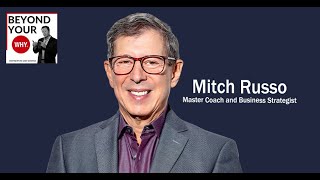
Mitch Russo built Clientfolio, a $29.97/month coaching software with unlimited clients, to give coaches numeric accountability and goal tracking. His method starts with a why discovery to align clients' true purpose with their mission, then accelerates progress from there.
Chapters
Welcome to beyond you'd why Podcast, where we go beyond just talking about your why and actually help you discover and then live your why. You see, we believe that knowing your why, that driving force behind every decision you make and every action you take, is the essential first step to really knowing yourself. It allows you to move forward faster and have a bigger impact. If you're already a fan of the show, then you know that every week we talk about one of the nine whys and then we introduce you to somebody with that why so you can see how their why has played out in their life. This show will be more powerful for you if you've already discovered your why. If you still need to do that, head over to whyinstitute.com and discover your why today. It'll only take you about five minutes. Now let's meet today's guest.
And so this week we're going to be talking about the why of better Way to Find a Better way in Sheridan. So if this is your why, then you are the ultimate innovator and you are constantly seeking better ways to do everything. You find yourself wanting to improve virtually anything by finding a way to make it better. You also desire to share your improvement with the world.
You.
You constantly ask yourself questions like, what if we tried this differently? What if we did this another way? How can we make this better? You contribute to the world with better processes and systems while operating under the motto I'm often pleased but never satisfied. You are excellent at associating, which means that you are adept at taking ideas or systems from one industry or discipline and applying them to another, always with the ultimate goal of improving something. And so today I've got a great guest for you. I've had Mitch on before and the last time we talked he was in the process of making some really cool software and writing a book. And so I thought it would be perfect for our audience. But let me read you Mitch's bio. Mitch Russo started a software company in his garage, sold it for eight figures, and then went on to build a company to over 25 million. With Tony Robbins and Chet Holmes nominated twice for Inc. Magazine Entrepreneur of the Year, Mitch's book Power How Certification Can Explode youe Business helps readers create new business divisions using high performance certification programs. His software for coaches clientfolio IO, fills a void in the coaching software marketplace by helping coaches make their clients more productive with goal tracking and accountability. Mitch's newest book, Coach Elevation blueprints his success, his process for helping clients find their true purpose and connect that to their true mission, which accelerates progress in both business and life. Mitch, welcome back to the podcast.
Thank you, Gary. It's great to be back and love our continued conversations. Yes.
So last time we left off, you'd.
Already done a whole heck of a.
Lot of stuff, and. And we could go on and on about your bio, which we did last time. But since then, you've now launched a software program. You've written another book. Dive in. Tell us a little bit about this. Which one would you like to talk about first?
Well, I'll talk about the origin, why I decided to create this software product. So what was happening is after my Power Tribes book came out in 2018, my life got very busy. I started building a lot of certification programs. People read the book, they got excited about building their own, and I started creating more and more programs for people, which is always fun to do. But what started to also happen is that my coaching business really started to grow. And what I found is that, you know, it was time for me to put my big boy pants on and buy some software that manages a coaching business. So I basically went around and I did surveys to see what products were out there, and I tried five different products, each with big promises, and I found them to be woefully inadequate for my needs. I'm sure they're good products in every other way but for my needs, which was basically easy to learn, easy to use, low cost, but still very, very powerful around goal setting and accountability tracking. A lot of my success with my clients comes from holding them accountable. And instead of just saying, oh, so, you know, accountability could be easy, let's just ask them how they're doing today. That's not accountability. We get very granular. In fact, we set numeric goals with every client, usually up to six, and we track those goals, sometimes every day, and we put them into a dashboard, and then we create grabs and charts to show people exactly the kind of progress they're making. In fact, this became so popular that we actually extended the software and created a portal for our clients to log in, enter their own data, and see their own graphics and charts so they could see what's going on all at once. So this started for me. I started this project in 2019. It came to life, putting his very first version in 2021. And since then, it's had two major revisions. And then in the last revision, what I started to realize is that I was using a process almost unconsciously. I've been using the same process for the last five or six years. And I've refined it since I discovered the why discovery. The why discovery, for me was sort of like the missing component to make this whole thing work. And so started to become such a big part of what I did with the client that I decided to explain everything in a book. And so I wrote a new book. It's called Coach Elevation. And the book itself is a blueprint about how to successfully run a coaching session with the purpose of discovering a client's true purpose, connecting that through their why discovery to their true mission. Now, what does this do? What this does is it changes the nature of the engagement. Number one, it emotionally opens a person very, very quickly. I did our first session yesterday with a new certification client, and, I mean, she broke into tears 25, 30 minutes into the session because she had, for the first time, really felt what her true mission was. And then later, as we took this a little bit further and as she. She told me what her why was, because I had her take the discovery before. Now all of a sudden, it was very clear what her entire business was, was dedicated to doing. Before that, it was just an enterprise. Now it is a life mission. And now it changes everything. She'll move faster, she'll work harder, she'll be more successful, and she'll be more motivated to finally get that done. So that's what I've been up to, Gary. Wow. Wow.
Okay, so let's. Let's go back for a minute. When you say your coaching business took off, right. Who do you like?
Who's.
Who do you coach? Who's your ideal coaching client? What kind of clients are you talking about?
Sure. So I would. With certification, I coach SaaS, companies, I coach training companies, other coaching companies as well. And the whole idea is they have intellectual property that they are able to create a transformation in others with. The thing is, is that if you could show someone else how to create that same transformation, then in effect, what you're doing is you're creating a scalable license model that will allow somebody to take this information, teach it to others, and then help them get clients and share in the upside or the revenue that comes from those clients, and we certify them in that process. So what that means is that when I. When I work with a certification client, what I'm doing is I'm starting by doing a full. Well, I start with the process I described earlier, which. Which makes everything go much easier. And then at that point, we're building a business plan around the idea that we're going to have a certified coach or certified consultant network. And then from there we build out the marketing system for that, then the sales system for that. And then we start to create the infrastructure on how we bring through students, if you will, into the system, into the pilot. We call it a pilot, the very first one. And we train them up and we get them to be successful. We work with them one on one. We even engage with them while they're working with clients to make sure that that first batch of of graduates has business success and rapidly. And the reason we do that is because what we want to do is we want to take those testimonials and we want to bring the next group through. And that's sort of how we do it. So it's the early adopter rule, you know, the tip of the triangle, tip of the pyramid. The early adapters, they go first and then once they get results and those results can be shown to others. Now everybody wants to do it. And that's really the theory behind the way we do this.
So your ideal client, be a coach or coach organization that has a process that they want to help other coaches use to better serve their clients.
Right. But there's a wrinkle here. And the wrinkle is, is that what we want to do is we want to create a recurring revenue model on several levels. So before you could buy coach certification from one of many very smart famous coaches, and you'll pay anywhere from 5 to $18,000 for that certification. And what you generally get is a beautiful 8 by 10 certificate that's suitable for framing right behind you on your zoom window, but generates no money. I mean, and here's what we know about coaches. We know coaches love to coach. They're smart people, they're empathetic people, but they're lousy salespeople and they're sometimes not very good at marketing themselves. They may be good at helping others market, but they're not very good at marketing themselves. So we take over. When I say we, I mean my company, the company that I'm consulting with, we build a marketing and selling system for the people that they certify. Now what does that do? Number one, it puts enough revenue in their pocket so that we're usually delivering between a 6 and 12x ROI on what they paid for certification year after year. And that's just one stream of recurring revenue.
So how do you build a marketing and selling system? What does that look like? Give us an example of something of what that would be like.
Sure. Well, let's take the average company and we'll use your company, for example. So let's say that you have a database of email addresses and names. And let's say a percentage of those people are actual customers who paid you money. I'm going to guess it's somewhere hovering between 5 and 8% of your database has paid you money, which means somewhere between 95 and 92% of those folks have not paid you money. But nonetheless, they seem to be resistive to all your charms and all your wonderful emails and all your videos. So what do we have? We have people who know you, who probably like you and even trust you, but they still haven't made a decision to work with you. So now what we do is we train people to do what you do to duplicate your transformation. The ability that you have to transform, to transform another human being, or particularly a corporation in this case. And once we teach them how to do that, we then build a business model that says we're going to share our prospects with you. We're going to put that inside of a CRM system and we're going to give you access to that CRM system. In fact, we're even going to create all the emails for you. All you got to do is sit down every morning and, and basically run the system with the new leads that you received today. If you do this, then the system will start to make offers to the prospects, but a better offer than before. So here's what the better offer looks like. So, Bob, you probably remember when Gary offered you the why Discovery and you loved it and you thought it was great, but for some reason you didn't pull the trigger. Well, I am a why Discovery coach and my job is to make sure that when you take your why Discovery that I work with you one on one for free to see and make sure that you implement this into your life and get everything that we intended when we created this amazing tool. So if you like, we can offer you a short, a small discount or we could just set you up with a free call after you take the discovery and we could explore how this can benefit you and build your business and grow your, your relationships in ways you never thought possible. Now that's better than the offer you made over the past several years. Why? Because a live coach is willing to do this for free. Now why would the coach be willing to do that for free? I think it's an obvious answer. They're looking to build relationships. They want to start working with people they haven't worked with before so that they can help them in their lives. And therefore, and our statistics show that about 25% of the people who get a free or a few free coaching sessions will then go on to buy coaching because they found it to be so valuable that they don't want to give up their coach. And if that coach has any form of a personality at all and has a lot more to offer than what was offered for free, there's a good chance that business relationship can go on for many years. And it can involve the base company too, meaning they can involve your, the Y Institute. And why? Because there's so many other things Y Institute offers and that coach can have those as part of what they offer as well. So they can get a commission. That's another recurring revenue stream on whatever they sell their coaching client. They can earn money on the coaching itself and they can even share that money with the company because the company gets to set this up. And the third thing, of course, is that next year we bring them into a big room called the symposium and we do a three day rah rah event and we reveal some new tools and get them all excited. And then when they go out for the next 90 days, you're going to see a huge bump in revenue just coming from new sales and they pay for that as well. So all of these recurring revenue streams start to stack up and by the end of the third year, you're typically dealing with several million dollars of profits just from a certification program. If it's done right and if it's done with the proper scale. That is what my book is about, that is what I consult on. And that is why I needed software to help me make sure that when somebody engages with me, I mean, it's not, I'll be honest, Gary, it's not cheap. When someone engages with me, I have to make sure that they get the ROI on what they paid me. And the only way I can really do that is if I hold them accountable. And I don't mean just casual accountability. I mean, as I said earlier, I want numeric accountability. I want to know how many prospects came in this week. I want to know what they did specifically to cause that. And can we duplicate that next week? That's what my goal is. That's the software I could not find. That's why I had to build it.
So you went out, tried out five or so different other software, looking for what you needed to be able to get that accountability didn't exist. Said I'm going to make my own, something that I would do as, as I've done myself. It's a better way thing.
Right.
And then so for those people that are listening, that were. Are trying to do something similar, how the heck did you go do it yourself? What was that like for you?
Well, I mean, it's. For me, it's. It's something I always do. I mean, Gary, you're the same way. I mean, look, I start things all the time, and I get excited about things. My challenge sometimes is staying focused long enough to see it through to fruition. When I started this project, it was back in 2019, and I had a serviceable beta about a year later. And at that point, I showed it to some people. I gave away a few seats for them to try, and the enthusiasm was so dramatic that I absolutely was motivated to keep going and going and going. Now, I had started by building a great team. That was step one for me. I needed a great team in order to create the product. And I already knew the right people, and I was able to put this team together, and I put them together. I put this team together for the long haul. This wasn't like a contract job you pick up on guru.com or something. This was a real team that I knew I would be able to stay with. They would be able to stay with me over the long run and really bring this product to fruition. And so far, we're our third year together, we're doing great. The team is incredibly brilliant. And of course they get things. They get. Part of what I offer, I mean, is I want them to participate, so I build participation in for them as well. And. And what that does is it energizes them to want to do better and better. So my job at this point is I use my. My network organically to market the product first while I'm improving it. And again, it took 18 months to get it to the point where it is today. And as it improves, as it gets better and better, I use my organic network to do that. We're just about to launch a fairly sizable paid ad program because we now have. I think we have traction at this point, and I think now it's time to start taking advantage of that. You don't want to let that slip away when you hit that inflection point.
So what is the. Okay, tell everybody again the name of the software and then what it does differently than everybody else.
Sure. The name of the product is called clientfolio, and the IO is the extension. So it's Client F O L I O. And I was trying to be cool like the cool kids, you know. So that's why I picked the IO extension. But you could also go to get clientfolio.com if you forget the IO thing. So there's two URLs. Either one works, takes you to the same place. So when I looked at all the other products, what I discovered is I started by watching hours and hours of training videos. And I don't really think of myself as having a super long attention span doing things I don't like. I have a good attention span doing things I love, but when it comes to things I don't like, not so much. And I was sitting there trying to slug it through these videos and I just, I can't handle it. I mean, I hated it. And here I am trying to figure this out. So I finally power up the software after studying videos for two or three days and I load my client list and the first thing it does, which was super embarrassing and difficult for me, was it started sending emails to my clients without me authorizing that. And immediately I completely shut the thing down. I said this, gotta go, I can't deal with this. And I tried another one. The other one I tried was what I would call a kitchen sink product. It had every possible imaginable component that someday you ever might want. And it was like $395 a month to use, which I thought was outrageous, even though I could afford it. That's not the problem. But I also now realize that I'm going to have to learn all of this stuff that I probably won't need or want. So I put that one aside. Then I tried one of these other very low cost ones that were, I think they were even cheaper than what we were offering our product for. We only sell it for 29, 29.97 per month. And I saw, I found products that were cheaper than that. And when I powered them up and started to use them, what I noticed is that they were, they were what I would call lead magnets. So you, you would, you would start using it. And as soon as you got the three clients, it would want to hit you up with another 30 or $40 a month. When you got the seven clients, it wanted another 20 or $30 a month. So I realized from the beginning that we needed to create, create a model that was unlimited clients. So anybody who signs up for 29.97amonth, if they're a coach, they get unlimited clients. We don't, we don't really work along those lines. Now. We do have optional added functionality that does cost extra if you need it. If you don't need it, you don't pay for it. But the bottom line is that you don't need it. If you're a coach, if you're coaching clients one on one coach, then everything you need is right there. And what we believe is the distinctive and discerning factor is the fact that it's easy to use. It takes about 20 to 30 minutes to learn the system, number one. Number two, once you start using.
Contains everything. So all of your homework information is in there. All your notes, all of your zoom links are there. All of your Q and A with clients is there. The client portal, which is an extension of the software, allows your clients to log in and get their own homework, answer their own accountability questions, fill in their goals and stats, and even ask their coach questions, which I found to be powerful. Why? Because otherwise it would go through email. And if I go away for the weekend, I'm coming home to three or four hundred emails and I might lose an important question from a client. I don't want that to happen. So we built an internal communication system right into the software that has worked really, really well for my clients.
So the ultimate goal here is to just have an amazing client interaction and experience accountability, keep it all in one place so that you as the coach. Because there's a lot of coaches that listen to this podcast so that the coach can perform at the highest level.
Yes, we're elevating the session. We're taking what used to be sometimes a relatively scrappy session, even though the coach might be amazing. You know, they have a notepad open here, they have a spreadsheet open there. If they use spreadsheets, they have another browser open for something else. Or maybe they're trying to figure out how to get their next appointment on another browser window or another. Who knows? Another pop up of sorts. So what we tried to do is we tried to put everything into one browser window so that the coach can focus only on their client during their session and take casual notes while they're talking. And at the same time, as soon as the session is over, they get to touch up those notes, maybe make them more attractive with underlines and numbering and bullet points, whatever they want. And then when they're done, they click send homework now, save session, and they're done until the next week or the next time they meet with that client.
Sounds like a better way.
You know, I think you're right.
Yeah. So if you're listening and you know that Mitch's why is to find a better way, then, you know, what he's come up with has to be better. I mean, you can't if something's not better. Mitch, can you talk about it?
Yeah, I sure can.
If someone wants you to sell a product for them and it's not better than what's already there, are you able to talk about it? I mean, do you want to sell something like that?
I actually don't. It doesn't interest me at all. I mean, and that's part of what I went through when I was doing my own exploration into trying to find a coaching tool for my own business. I couldn't stand using inferior products, no matter how much they cost. And even if it was free, I still couldn't. I couldn't deal with it because I knew it was not good enough. And as you said in the intro, I needed at least good enough and I wanted better.
It's not that you set out to say, oh, I've got to make some software. I've got to go spend the next three years figuring out how to do this. That's probably was not high on your list. But when you can't find it and you know you can make it better, then it's almost like you're compelled to do that, right?
Yes. Now, this might be a form of mental illness, Gary. I admit to that. But yet here I am. And, you know, I get obsessed with stuff once I realize I'm on the right path and I. And I see it working. You know, that's, that's what I saw with this very, very early framework of a first edition. I saw it working. I immediately noticed I was saving about 16 minutes per session, and I'm doing two or three sessions per day, four days a week, and I'm doing admin during what I would call my peak cognitive period of the day. So if I'm sitting there doing $10 an hour work during thousand dollars an hour time, then I know right away I'm getting an roi. Even if no one else ever wanted to use my product, I know I was getting an roi. Yep.
So then what was the motivation to write the book?
That's a great question. So what started to happen about. About 10 years, 12 years ago? I think I stumbled across this process that I just in the middle of one session in particular, I started asking a series of questions that appeared to change the person's viewpoint very quickly, appeared to get them past the casual nonsense and go right to the heart of the matter that we were trying to figure out or Discuss and I, I made note of those questions. And then this next session I had, I, I said, what the heck, I might pull those questions out and try it again. And then I did. And what I noticed is that I had more or less the same result. What I noticed is that was a huge improvement in the ability to cut through the wasted time and non essential information and get right to the heart of the matter. And this started to happen more and more and more until I started to refine the process over time. Then about, I think it was about five or six years ago when we worked together and you uncovered my why for me.
In a van on the way to a hotel room or to somebody's house.
And that was like such, it was sort of like a mule kick in the head for me. It really was such a major shift in the way I now saw things. I started to use the process even before you had your why discovery itself. I started to use the process to help people identify where they were in terms of their why. And now what I was able to do is once I understood or at least sort of zeroed in, maybe if it wasn't exact, I could figure out a little bit better who they really are given their why. I was then able to couple that with their, with their true purpose discovery process that I had built. Now at this point, we were then going to look at the business completely differently. So instead of this business being a way to make money, we now saw the business as a way to fulfill a lifelong true purpose and mission. This changes everything. And sometimes on, on either end of the stick, sometimes, Gary, we actually throw the business away and start over. Other times we go into the business that is not ideal and we change the attitudes around what we're doing and maybe some of the functional activities of what we're doing. And that aligns it with our true purpose. And once you do this, it just makes everything smoother, faster and more, I would say, more profitable. Everything works better once people are aligned. And now if you start like when I worked with one organization, I did this with the CEO and he said, well, okay, you got to do this now with my team. So everybody we got, we got them to do each of, we did each one of them separately. They all did the Y discovery, they all got their results. And then when we aligned the group, my goodness, it was hard to believe the results would happen. Once you get the group aligned, it took a couple of weeks to get everything done. Once the group was aligned, there was, there was harmony. There were no more fights. There was no more disagreements. Everybody realized exactly what the goals were and the true purpose was of the, of the entire company. Now, as you and I have talked about before, a company needs a code of ethics. It needs a culture. And in order to create that culture, we must basically know the why and the how of the CEO. We need to know the CEO, because the CEO started the company. Let's call that person the founder. And if we know what the mission and values, goals and why of the CEO are, that's when we can align the team to that. Once that alignment is done, now everything works like a well oiled machine and allows us to get a lot more done.
How do you contrast why versus purpose?
Okay, I'm going to tell you the secret. That is not a secret at all. It's right in the book.
Everybody's true purpose is basically the same. The true purpose of most individuals is to help others. Now there are may, there may be people who say, well, that's not my purpose. Actually if we did the discovery process, you'd find that it is. And the reason I say that is because it's the way we're built. It's the human structure. The way the human mind is created is that it generates the highest level of serotonin from helping other people. When we help others, the greatest high you could ever achieve comes from that feeling. And the, at the, at the highest levels of helping others, there is no better feeling. Money cannot buy a better feeling than that. So if we know that in advance, what good is it? It's no good at all. You know why? Because we didn't emotionally connect with it. So the goal of the book and the goal of the process is to connect you to the, this true purpose, which is to help others. Now I don't tell people in advance when I start working with them. Oh, by the way, before we get started, let me just tell you your true purpose. It's more important that they go through this process of finding it in, in themselves. Once they find it in themselves. And they go, yeah, I mean, like I said yesterday, this woman just broke down in tears. She's a lifelong entrepreneur, she's had four businesses. But the reason that she, that she became so emotional was because this is the first time. And she says, you know what, I've done this for 4,000 people, I've never done it on myself and, and, or something like it. She had a different process. But the whole point was that, you know, now that she finally gets this, it truly connected who she was as having a True purpose to her mission, which in her case was to help others through her, I would call her mechanism. Everybody has a mechanism for how they do this. We may have the same true purpose, but we don't have the same mechanism. You do it your way, I do it my way, but the goal is the same.
So again, when you were to compare why versus purpose, how do you see them as being different?
Well, why. Why is the component of how you get the realization of your true purpose. Whereas your true purpose is something that you must emotionally connect to first. Feel that it is real and as real to you, as real as anything else. And then we use the why discovery to uncover the most powerful mechanism and process that you could have to find the true mission of yourself or your company.
I love it. And so in your book, then, you outline the process for helping coaches become more successful. It's more about coaches hosting or hand or working with clients. Is that more what it's about?
It is, yeah. The book is written for coaches to work with their clients. And no matter what type of clients they have, whether they're meditation clients, business clients, it doesn't matter. Because if you go through the process in the book and you align your client first before you start using your mechanism with them to get them to. To have the. The realization or transformation that you want them to have, they will get there faster, it will be more powerful, and they will be more successful because they're aligned, but they can't get there, truthfully. And this was the missing piece. Like I said, the missing piece was the. Was the why discovery. Once I got the why discovery and I embedded that into this, into this process. Now, finding a. The personal mechanism, every person is really what their why is. Right? I mean, that's what. That's what my mechanism is to find a better way. I mean, I. It's language a little differently, but it's. Without it, I can't get to their true mission effectively.
Yeah.
Yeah.
It really shortcuts everything, doesn't it?
It does, it does. If you know.
Well, well, well, what it comes down to is this. When you have an emotional experience and you connect it to something that you care deeply about, then that is something you never forget. Like the woman that I worked with yesterday and all the people I've done this with over the years, they will never forget the moment when they uncovered what their true purpose really was to them and. And to who they were.
And that's the part that makes all the difference in the world. Like I said, I could tell you. Yeah. Your true purpose is. Yeah, you like to help people. That's your true purpose. Doesn't do anything. Got to discover it.
So is there true purpose.
Different than purpose? Here's the reason I'm asking you. Because on the podcast I've had some guests that are their lifelong study is purpose. They have companies like Purpose Point and different organizations like that. When I ask them the same question I just asked you, it's interesting the answer that they give, which is similar but different. And maybe it is the same, I'm not quite sure. But what they'll say is that your purpose is where you live, your why, how you choose the action that you choose to use your why.
To deliver.
Right. No, they're right. Except the difference is, is that your action changes my. Under that definition, my purpose can change every few years. My purpose is to build a software company and sell it for $10 million. My purpose is to build a company with Tony Robbins and sell it for $25 million. In other words, I can have purposes all throughout my life, but the underlying true purpose of is the same from the beginning of time to the end.
Perfect. So that's what the distinction I wanted to make, because that's what they would say as well, which is you have multiple purposes. You could have multiple. You have a purpose as a parent, purpose as a business owner. There's more than one purpose. But then you're talking about your true purpose, which is kind of like the overarching. Everything falls under this.
Exactly. And as I said, not to repeat myself over and over again, but just knowing someone telling you, well, everybody's true purpose is the same. It's to help others means nothing. Yeah, it doesn't help at all. It has absolutely no meaning to most people. Because most people will say, well, that's not my true purpose. I know that. But if I took them through this process, which only takes 20 to 30 minutes to do, and they, they actually connect with. Changes everything. Yeah.
It's a self discovery. Say, you know what? That is it.
That's right. Right.
So, and I don't.
If there's. Go ahead, I just say, and I don't, you know, I don't lead them to it. I mean, it's very. Sometimes, you know, I'm sitting there like, you're so close. If I give you two words, you'll get there. I, I never lead them to it because that would be stealing from them. The power of the process. I love that.
So, Mitch, if there's people that are listening right now and they want to Learn more about what you're doing. They want to follow what you're doing, they want to connect with you. What's the best way for them to do that?
Well, to connect with me directly, they can go to mitchrusso360.com and all of my properties, if you will, are on that particular page. If they'd like the book, Gary, is it okay if I give your audience the book for free?
Yes.
Okay. They can go to coachelevation.com and get a free copy of this book and they could download a PDF of the book or they can go on Amazon and they could get it on their Kindle, or if they want a hard copy like I have, they can buy it on Amazon as well.
And that book is specifically for coaches that are looking for a process to help move their clients forward faster, right?
Absolutely. They use this process and it will help transform their entire business. Well, here's why, and this is what I teach in my program. Once you help somebody at a higher level, then what's going to happen is your results will improve. And if your results improve, you're going to get better, stronger, more emotional testimonials. And if you're getting better, stronger emotional testimonials like you've never had before, you're going to raise your prices. And once you raise your prices, you're going to start attracting a higher level client who's going to pay you more, pay you what you're worth for the work that you're really doing. That's what the book is about. It's that entire sequence of processes that get someone to that point.
I love it. I love it. So, Mitch, what's next for you? Building the software company? Is that the biggest thing on the horizon for you right now?
Well, by popular request, I've started a coaching cohort to take people through the process and help elevate them. So my coaching cohort is starting up next month and it's relatively low cost. It's really designed, It's a short program, it's an eight week program. And I'm going to take coaches and I'm going to elevate them and, and I'm going to basically get them to the point where they can duplicate what I do all throughout my process. Now, what I described today is the first hour, half hour or so of my process. And honestly, it's fantastic. But there's so much more. And so what I teach in this cohort is I take them through the entire process, which you've seen some of with the mind mapping and with the structuring of, of the entire sequence of what happens after an engagement starts. That's where I think the power of organization is. And that's what I teach.
It's funny. I'll end it with this. I ran into somebody who knows Mitch, a mutual friend. And the way that they described you was. Just cracked me up, which was? Yeah, you know, Mitch and I had dinner one evening about something and we talked about something, this project that we wanted to create. And that night, Mitch stayed up all night and designed it and built it and had it ready the next day. He said, if Mitch says he's going to do something, he's going to do something. And so that is who you will get if you guys end up working with Mitch in some capacity. So, Mitch, thank you so much for being here. Great to catch up again. I am going to follow what you are doing. I am excited for what you have got in the horizon.
Thank you, Gary. It was a pleasure. And as always, you know, you and I have a long Runway ahead of us as well with so many great things that we can both do together.
Yep. Thanks, Mitch.
You got it. Thank you, Gary.
I really hope you enjoyed today's episode and that through today's guest, you heard how important it is to know your why and how impactful it can be in your your life and the lives.
Of those around you.
Be sure to head over to yinstitute.com and discover your why today. Remember, the more you know about yourself, the more you'll know about others. I'm Dr. Gary Sanchez and I'll see you on the next episode.
More from Dr.




Women In Leadership: A Need For A Greater Systemic Change With Belinda Clemmensen






