Contributing To The World With The Leaders Of Tomorrow With Glen Campbell
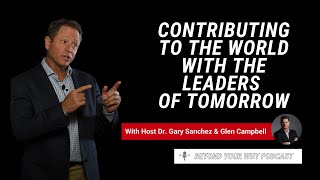
Glen Campbell left 27 years in brand strategy to start Brandheart, a method for helping leaders find their why. He walks through how aligning your conscious and subconscious minds to your purpose restores relationships and health, and shares a case study of an ex-CFO who landed a CEO role after discovering hers.
Chapters
Welcome to beyond you'd why Podcast, where we go beyond just talking about your why and actually help you discover and then live your why. You see, we believe that knowing your why, that driving force behind every decision you make and every action you take, is the essential first step to really knowing yourself. It allows you to move forward faster and have a bigger impact. If you're already a fan of the show, then you know that every week we talk about one of the nine whys, and then we introduce you to somebody with that why so you can see how their why has played out in their life. This show will be more powerful for you if you've already discovered your why. If you still need to do that, head over to whyinstitute.com and discover your why today. It'll only take you about five minutes. Now let's meet today's guest. Welcome to beyond you'd why Podcast, where we go beyond just talking about your why and actually helping you discover and then live your why. So if you're a regular listener, you know that every week we talk about one of the nine whys, and then we bring on somebody with that why so you can see how their why has played out in their life. And so this week we are going to be talking about the why of contribute to contribute to a greater cause, add value, or have an impact in the lives of others. So if this is your why, then you want to be part of a greater cause, something that is bigger than yourself. You don't necessarily want to be the face of the cause, but you want to contribute to it in a meaningful way. You love to support others and you relish the success that you contribute to the greater good of the team. You see group victories as personal victories. You are often behind the scenes looking for ways to make the world better. You make a reliable and committed teammate and you often act as the glue that holds everyone else together. You use your time, money, energy, resources and connections to add value to other people and organizations. So today I have got a great guest for you. His name is Glenn Campbell. And so Glenn started his career with degrees in commerce and psychology. He also has a master's in NLP and hypnotherapy. Over a period of 27 years, Glenn has been a director and and chief executive of some of the world's best and brightest brand strategy and communication companies like Cleminger, BBDO Saatchi and Saatchi Leo Burnett. Across four continents 12 years ago, he created Brand Heart and developed unrivaled methods for leaders best self Identity and organizational brand identity. In this time, he has worked with over 500 business leaders and entrepreneurs from around the world in developing their personal and organizational brands. And the results have been nothing less than transformational. Glenn's unique and proven method is paradisciplinary in nature. It's a harmonious fusion of his 30 years of extensive experience, the latest in leadership research, a unique brand identity model, neuroscience, quantum physics, Eastern and western philosophy, and spirituality. Glenn is considered a world leading authority in empowering people to profound higher self realization in business and in life. Glenn, welcome to the podcast.
Well, I'm delighted to be here, Gary. Hey, I really love that description of contribution. Can you introduce me to all those people, please? That'd be great.
For sure. Well, let's start here, Glenn, take us back in your life. Let's go back to even when you were in, you know, in your teens and what were you like there? How did your take us through your journey on how you got to where you are right now, the teens?
You know, I went to a private boys boarding school, military school. I'm sure a lot of people can identify with that. And you know, very disciplined, you know, very exacting in everything we did. You know, we played a lot of rugby, rugby union, that is, that was my sport. This was in Brisbane, Queensland, Australia. And so, yeah, played a little bit, you know, very much a sporting school, very big emphasis on sport and academia of course, and the military and discipline and all that sort of stuff. And so from a very early age, I guess you could say that, you know, achievement was very important to us. Discipline was very important to us. You know, being scholarly, you know, seeking answers was very important to us. And that was kind of part of the culture of the school. And of course I was a part of that. And so that kind of starts to forge the way you go through life, doesn't it?
Yeah, yeah. So then from high school you went off to get your degrees. Now where did you go for that?
Well, I stayed in Brisbane and I went to a university called the Queensland University of Technology and did a commerce degree with a major in marketing. And then because I was playing rugby at a representative level, I graduated to playing for my state, Queensland, which in those days was pretty, you know, as an amateur sport in those days. But it was pretty cool because we were probably one of the top five provincial rugby sides in the world. And so, you know, we played, you know, Queensland would play against Scotland and we'd beat them. So it was pretty impressive side I was a part of. And then because I was playing rugby at that level. I decided not to go into the workforce. I decided to do another degree and that was psychology degree. And I did that at University of Queensland.
So why did you pick a psychology degree?
Because after I'd finished my commerce degree, I'd done a number of psychology electives and for some reason or other I just did particularly well in those subjects and I really liked it. And I remember the head of the faculty at the time said to me, you know, if you're thinking about doing further study, you really should do psychology because you're pretty good at it. You know, you're pretty, you're a bit of a natural at this stuff, you know, and, and so I just naturally went to the other university which was, you know, not far away, but had a specialty in psychology. And so I went, I went there had no problem getting in because. And also the other thing was at that university I got a number of. Because I'd done so many subjects, I got a number of exemptions. And so instead of doing a three year degree, I ended up doing a two year degree. So that was good.
Okay, so now you've got your commerce degree and you got your psychology degree and Glenn's off to do what now?
I went straight into, you know, I got a job straight away in brand strategy and communications in the best agency in Brisbane at the time. It was called Clementer. It was a part of the Clementine BBDO Group. The BBDO Group is in America, their head office is in New York. And so I ended up getting a job there straight away, straight into the business of brand strategy and communication development and execution.
And so then how long did you do that?
I worked there for five years. It was a very small agency, only about 35 people, but a kind of strategic and creative boutique. You know, really amazing work considering, you know, it was a small agency in a, you know, Brisbane, Australia. But then I got, after five years there, I got headhunted. You know how these things happen. And I was asked to work for an agency called Saatchi and Saatchi in Sydney, which at the time, you know, Sydney is the biggest city in Australia and the biggest population density. And this agency, Saatchi and Saatchi was one of the leading, if not the leading agency in Australia at the time and certainly one of the bright lights of the Saatchi and saatchi network, a $6 billion network at the time, global network.
Wow, okay. And you were there for how long?
I was there for five years there as well. And my role There was to look after the Toyota motor vehicle business in Australia. And so that included their Hino trucks, the Lexus brand, which is the prestige brand, and all the Toyota vehicles. So it was a very big account for us at the time. You know, in Australia they were spending I think about 75 million on advertising and brand strategy. And so it was a big step up for me from Brisbane to work on such a major piece of business. And I certainly learned a lot. They weren't, they weren't easy guys to work with, you know, the motor vehicle game. And so they want results, you know, they want to see results. And you know, interestingly enough, in that time, you know, we were. I wouldn't say we did it all, I wouldn't say that. But we contributed a great deal to getting that brand from number three to number one in the Australian marketplace.
Great, okay, so you were there five years and keep us going.
Then.
What happened to you next?
Well, then I got recruited again, headhunted again to go and work for Leo Burnett, which I'm sure Americans, if they knew anything about brand strategy and communication companies. Burnett is a Chicago based company and is another kind of global powerhouse, about a seven or eight billion dollars company. And I got headhunted to work with those guys and I spent quite a lot of time there. I ended up going straight into the board of directors, the national board of directors. I was their national business development director. And I worked on a number of pieces of business that I led in terms of the strategy and the development of all their marketing and communications work. So I worked on brands like Woolworths, supermarkets, which in Australia is a 700 store supermarket brand. I worked on Subaru, I worked on a number of alcohol brands. I worked on all sorts of stuff. Gatorade, we introduced the Gatorade product into Australia, which I really love working on. That business was a lot of fun. So big brands like that, so. And I worked on our military over here. I worked on the army, the air force and the navy, you know, with their recruitment. So lots of really interesting stuff. A lot of fun.
Okay, so how long were you there? And then on to the next thing.
Nine years there. And then I went into my first chief executive role. So I was the chief executive of a small agency, was only turning over about 30, 30, 40. And that was a creative boutique, you know, creative powerhouse in Australia at the time. And it was a dream job for me. I was the chief executive of that company and I ended up taking that company. I think when I started with them, they were doing about 18 million. I got them up to about 42 million in the two years I was there. Then after that, another chief executive role in another agency called IdeaWorks. And that was a part of the WP Global Group, publicly listed company. And that company, I think, was turning over about 400 million. And I had about 120 people in my team working with me. And I did a couple of years there, very successful couple of years there. Then I left. I left the industry and started my own business, Brandheart, 12 years ago.
Okay, so take us into that moment when you knew you needed to leave the industry and start your own. What happened?
This is a great question. It was seriously, Gary, this was the turning point, the epiphany. This is where I really started to think about this whole idea of why. And so, you know, it really is a great question. And I remember it as like it was yesterday. There was two things that happened in the wic. One, I was pitching a banking business, a major. It was kind of a second tier bank, but it was still pretty big, a big piece of business. And inside the context of that pitch, there was a lot of things going on which I didn't like morally, ethically, professionally. And so that really bothered me a lot. And then in the same week, I was pitching a burgers, coke and fries business. And I thought to myself, is this what it's come to? Burgers, coke and fries? Glenn, really, you know, that's not you. That's not your thing, you know, And I remember coming home to my wife and saying, you know, I'm just not happy. I'm just not happy. I just. I feel like I'm working, you know, I'm working 60 hours a week on average. I feel like a hamster on a treadmill. It's Groundhog Day, you know, it's like all I'm doing is it's all about money and this can't be it for me. I mean, it's just got to be more to it than that. How did I get to this point? You know, it's like I've blinked and 25 years has passed of 60 hour weeks. And I'm sitting there going, what am I doing? And I asked myself those two primordial questions, Gary, that plague humanity we know for time immemorial. Who am I and why am I here? And it really bothered me a lot, you know, and then the epiphany was this. I thought, hold on a minute. You know, all I do for a living and all I've done For the last 25 years is help big organizations develop their why and who. I mean, that's all I've done for a living. You know, I go in there and develop their strategic positioning, we would call it, right? Or, you know, their brand identity. You know, we call it that as well. Those terms were interchangeable. And it's like, how are we going to position ourselves in the market? And then we do all this work around the personification of the brand. You know, what's the personality of the brand? How do they look? How if they're, if this brand was a person, what would they look like? What would they be like? You know, what kind of friends would they have? Where would they live? You know, all that kind of stuff, right? And, and I thought, hold on a minute, I've been doing this, I'm really good at this stuff. Why don't I just do it for myself? And that's what started that journey of kind of self reflection, contemplation. I took the strategic tools that I'd learned from some of the best and brightest brand strategy companies on the planet and I changed them, modified them, and then I took myself through my own exercise, which is not easy to do, you know, I mean, when you got to do that yourself, it's actually very difficult because you're kind of second guessing everything anyway. I kind of did that for a period of about three months where I got to the point and I went, this is Glenn's brand. This is my brand. And I, when I looked at it, I had this massive sense of relief. It's like, man, I know who I am, and this is not it. What I'm doing is definitely not it. That's not me. That's not. That's not my passion. That's not what's going to make me happy. And so, you know, I came home after doing all that work. I came home and sat down with my wife, Victoria, and said, I'm leaving. And she said, what are you going to do? And I said, I don't know. But it's not that, because that's not what makes me happy. And she said, you have no idea what you're going to do. And I said, no. And I said, but I'm going to leave because this is definitely not it for me. You know, it's not my why. And that's why I was talking. This is not my why. And so I can't do that anymore. I've got to be true to myself, my true higher self and my true higher why, my higher purpose, right? And So I ended up leaving. And then of course, what I did was I continued to develop that model and then I started to attract, you know, work with business leaders and help them do the same thing.
So what was it about what you were doing that you didn't like or didn't feel like you.
I was lacking meaning?
I just felt like, this is meaningless to me now. I mean, I don't feel, you know, I'll tell you what the thing was, I wasn't getting up in the morning and feeling enthusiastic about going to work. You know, I did, I did a good job because I was the chief executive, right? And there's a lot of people look at you and take cues from you. And I did a good job of, you know, kind of masking that and not allowing people to see that. I thought I did a pretty good job, but it was bothering me. And, you know, one of the other things that contributed to this was when I went into this chief executive role, they would have quarterly meetings where I'd go upstairs, you know, because the group CEO and the group CFO are upstairs. And we'd have these quarterly meetings and we'd sit down and look at the numbers. And I noticed they never talked to me about the people. They never talked to me about any of the other kind of KPIs. They only ever sat down and said, just let's go through the numbers. And it was like, hold on a minute, you know, aren't you interested in the health and well being of my people? Aren't you going to talk to me about my culture? Aren't you going to talk to me about, you know, how I'm improving productivity and, you know, blah, blah, blah, all those other things. But they didn't want to know about it. They just said, we're just interested in, you know, what your EBITDA is, you know, earnings before income tax and depreciation allowance is what we call it. And it's like, it's just, you don't. You're just interested in my profit contribution, that's all. And all the discussions were around that. And the other thing that happened was we went from quarterly meetings to monthly meetings. And then, because there was a lot of pressure on the network, it was all about contribution to the network. The monthly meetings, went from weekly meetings. And I'd go up there and sit there and say, what do you think has happened since last week? I mean, what, I've got to cut the biscuit budget or something? I mean, how do you think I'm going to. There's only two things here, right? There's revenue. You know, the two biggest costs I've got is people and rent and all the rest of it. It's kind of inconsequential, really. They're just line items and they're not really very big. And so I could go through all that stuff all day and cut them to you by 10% and cut, you know, be the head of the razor gang and cut this stuff and cut, cut, cut, cut, cut. And everybody will know, you know, and that has massive confidence, you know, affects the confidence of people in a confidence business, right? I mean, creativity is a high confidence business. And when people are seeing little things change all the time, it's like, oh, what's going on here? What are we. What, what are we doing? You know, what's happening in our company? Why is Glenn doing this? You know, and. And so I, I kind of used to have these discussions and say, I'm just not going to do that, you know, week by week. And why are we meeting week by week when the story is never any different? And it's just this constant pressure coming from the top down to achieve, you know, things that I weren't passionate about. And, you know, I got into that industry because I was really passionate about doing amazing creativity that impacts people in positive ways, you know, that can enhance their life. And it wasn't happening. You know, I just felt I was selling, you know, I was kind of stuck, you know, ahead of the gang of people who was selling more consumables to people that they didn't really need or want, you know, and so. And so I thought, this is not good for me. It's not good for anybody. So I don't want to do this anymore. And, you know, and that, you know, there was a number of things. It's really interesting the way this happens because it was kind of like a seismic event, right, where all of these things happened at once, all in a really short time frame. And I remember talking to Victoria about it, saying, it's fascinating the way this is happening. I mean, I can see it. I can see, you know, that that's happened and that's happened and that's happened. And it's like I'm getting a message from the universe here to do something, you know, to change something, and I need to listen. And so, you know, I can't. And the message from the universe, from my perspective, was manifesting itself through my intuition. It's like my intuition is telling me it's, this is wrong. And I'VE got to change. I've got to do something. And so I've got to trust that. And I did. You know, I was very connected. I'm very connected to my intuitive powers, and I trust my intuition. I thought, you got to listen to this because it's too overwhelming. There's too many signs. There's signs everywhere. And so I've got to listen to this. And so I listened and I changed. And, you know, I resigned. And they said, oh, what are you going to. And I said, you know, what other job are you going to in the industry? I said, I'm not. I'm leaving the industry. I was shocked. And I went and, you know, they were shocked. How could you be doing this, Glenn? This is you. And I said, actually, it's not me. And, you know, I've discovered that. And so, you know, that was what I call the epiphany, that turning point that you were talking about, Gary.
So when you sat down and asked yourself those two questions, who am I and why am I here? How did you go about figuring out that answer? And what was the answer?
Yeah, well, my first answers were the stock standard answers, right? Who am I? I'm the chief executive of Idea Works. And so I immediately went to my title and I thought, is my title really my identity? Well, it's not. And then I started looking, then I kind of went, well, it must be my cv, my experience, that must be my identity. Well, it's not. And, you know, the more I went through this, the more I thought, well, my experience in my CV is not my identity. My title's not my identity. Where I live is not my identity. The car I drive is not my identity. The brands I buy, that's not my identity. It's not who I am, and that's not, certainly not why I'm here. I mean, the big why question, I mean, that can't be why I'm here, to accumulate more stuff, right? In fact, I'd feel a whole lot better if I got rid of most of it, you know, and so I defaulted, like I think most people do, who don't really get into this level of introspection and, you know, this journey that they default to, you know, what people have told them or what the industry has told them, or what we've been programmed to believe or, you know, all those other kind of classic borrowed identities that don't mean anything to us and aren't real anyway. And don't, you know, as you started this whole thing, don't contribute really to Anything in a meaningful way. And so to me it was like, well, none of that is meaningful. None of that makes me. Makes my heart beat stronger. You know, I don't feel passionate about it. And so that was what started the journey and then where I came out. I'm at my best when I'm helping other people to realize who they are as well. And I just found, you know, in my, in my work life, whenever I sat down and did, you know, you know, you forced as a leader to do these quarterly reviews, you know, human, you know, HR would say, you've got to do, you know, quarterly reviews or biannual reviews or whatever. And I always would find myself in those meetings, putting the checklist aside and just saying, how you going? I mean, why do you get out of bed every morning? What keeps you awake at night? You know, what really bothers you? You know, what answers to basic questions can't you answer? And I would have these kind of searching discussions. I never tell anybody anything. I would just ask these questions. And the questions I was asking was prompting them to think about it. And I would obviously leave the meetings and say, go away and have a think about that and think about why you're doing this job, why you love it, what it means to you, and have a think about that and come back to me and talk to me. And I was getting into these amazing conversations with people where they said, glenn, I've really thought about when we last talked. And this is where I'm coming out on this stuff. And I found that we were going on this journey of self discovery, right? And, and which is what I did for myself. This kind of. Now we're going into this discovery. And I had many people sitting in front of me going, I'm doing this, you know, introspection work. And I'm not liking it, Glenn. I mean, I'm revealing things that I don't like to see. And it's like, it's okay, you know, we've all. And I've studied with psychology, I've studied Freud and Young and all these guys, and Young used to call it the shadow personality. You know, I'm saying, oh, you, you're identifying your shadow here, you know, and you know what the shadow is, and it' a part of you, it's okay. You just got to know who it is. And, and then you've got to kind of work to minimize that. Go back to the light side of who you are and what's the light look like? How would you describe the light, you know, and we'd have those discussions, those kind of young in discussions, you know. And of course, I was doing that with myself as well. It's like I'm aware of my dark side and I'm aware of my light side. And I've got to continue to steer myself to that light side and work on that and build that and define that. And so to me, it was about, you know, what does my higher self look like and my higher purpose, my higher self, what I, what I call my source self look like, which is really the why, Gary. You know, you call it the why, I call it the why too. It's the same thing. And what's that person here to do, really? I mean, everybody's here to do something, you know, that contributes to the planet. Human beings are basically good people and they all want to do something that's good and contribute to people. I mean, that's what we're here for, and that's when we're at our best, right? And so how do I be my best self? And. And it's through contribution, which I love. Why? Why? I loved where you started. And through contribution to serving others and how can I help others to find their why, to get, you know, a stronger understanding of who they are and why they' and then to have the courage to pursue it?
I love that. And there's a basketball coach here in the US called John Calipari, and he says it.
He has your same why. And he says, I want to be the pebble that causes the ripple effect in the lives of those around me. That goes on and on. And so it just keeps multiplying. Your ability to contribute to the world by the people that you help have a bigger impact.
It is so good. I love the way you've said that. You know what he calls it? The ripple effect. I call it the butterfly effect. I borrowed that from a movie. And it's this, this butterfly effect where the vibrational energy of you is going to affect the vibrational energy of somebody else, which is going to affect the vibrational energy of somebody else. And obviously you want that vibrational energy to be high vibrational energy. Like, you know, love and, and, you know.
Wisdom, insight, acceptance, you know, joy, bliss, peace. You know, they're, you know, they're the high vibrational energies that you want to have the effect on other people. And, you know, we. This is the quantum physics side of it. When you talked about that at the front, where I do quantum physics, it's really just knowing and understanding energy and how you can energetically impact somebody in a way that's really positive. And you know, Daniel Goleman does this work. If you read any of Daniel Goldman stuff, you know, emotional intelligence and amazing best selling books like this, he's one of the US is kind of profound psychologists in leadership and in eq, understanding the role of eq, what he calls emotional intelligence. Well, emotions are just energy, Gary. They're just. Emotions are energy. I mean the quantum physicists and the neuroscientists have proven this. And so what kind of energetic or emotional level are you vibrating at? What energetic level are you vibrating at and how does that impact others? Well, you know, we know from quantum physics that like attracts and impacts like, you know, if I'm operating at a very high emotional level, you know, that those levels I was talking about of love and bliss and joy and harmony, you know, then that's going to affect other people as well infect in many ways because they start to feel it too, you know, I mean, you know, Gary, have you ever walked into a room and felt the vibe of a room and God, what the vibe of this room, man. You know, it's the energy of the room and of the people in the room. And so creating a vibe, you know, through your own energy is very important. But you got to know what that is and that you know, your energy and so to your work. I love your work work by the way. I love what you do through, you know, you wrap your energy around your why because your why is high vibrational energy, right? I mean you can't, you can't have a why that is around death and destruction. And you know, I want to go out and hurt people. That's no why. And that's not a why. So it's kind of the antithesis of what a why is. Right? And so a why is about something that is positive and something that's powerful and profound, that enhances life, enhances the planet that we live on. And so therefore you wrap this high vibrational energy around it and it becomes a massively contagious. And that's what creates the ripple effect. And the ripple effect is another way of talking about quantum energy anyway, because the energy, the ripple is the energy that impacts everybody else or the butterfly effect is the energy that can impact one, two, five, you know, five minute.
Oh, love it.
You don't know.
So tell us about how that led those conversations then led to brandheart. And what is brandheart?
So brandheart is really all about working with leaders. I mean, all I've done from the Beginning of brandheart is really work with leaders. And mostly, I would say mostly it's C suite leaders. You know, chief executives, chief financial officers, chief technical officers, chief marketing officers. And you know, my rationale was always influence the influencers. And so if you can positively influence an influencer, then that influencer is going to have the butterfly effect to a lot of people. Right. So if you can get to one that's an influencer, you'll get to many. And that was my rationale. And so I want to work with the leaders of businesses that impacts their clients, it impacts their team, their culture that has this kind of profoundly positive impact on their business. And of course, coming from a brand strategy background, I knew how to do that from a positioning point of view. But what I did was escalate that up and say, well, before I do any work on the organization, I want to work on the leaders first and get them to know and understand this, you know, what their role is as a leader. And you know, unfortunately, Gary, the vast majority of leaders on this planet have been organically programmed to be command and control leaders. They command and control. And of course that's very low vibrational energy. That's motivation through fear and motivation through coercion and negative persuasion. That doesn't work. That creates really destructive, disharmonious cultures. And that's one of the reasons why three out of five businesses fail within the first two years. Well, they go broke because it's a leadership problem. You know, it's not so much that they've got a bad product or whatever they're doing. You know, it's a it all the buck always stops with the leader. And you know, when we're talking about leaders, we could talk about leaders of businesses or leaders of basketball teams, of leaders of families, leaders of anything. You know, if you're, if you're a leader of being a leader of your own life, you know, just leading your own life in a way that's positive. And so it doesn't really matter. I think everybody has the opportunity to be leader and should be a leader. And so, you know, so at the end of the day, I kind of went, well, it's not just leaders. It's kind of everybody. And so I want to help everybody do this work where. Just like you do, right? I mean, you know, we're in the same game in many respects. That's why we talk. That's why, that's why we, you know, in our first discussion we got on so well. It's like, oh man, a kindred spirit here. This guy's great, you know, love his work and I'm not competitive like that. I kind of look at you and I just hope you'll be immensely positive and, and really influence a lot of people to do this work. It's so fundamental, essential in fact, Gary. And I'm kind of doing the same thing in my small way, and it really is the same thing. So when you ask me a question about Glenn, what are you doing? It's like, well, pretty much the same as you, Gary.
I want to help people to find their why and I want to help people to really know and understand that deeply, right into their DNA and thus the neuroscience and the quantum physics. So I go very deep into the journey of saying look and, you know, understand how this affects your neural pathways, how you can create new neural pathways, how you can create new belief systems that are held basically in your subconscious mind, how you can get this, you know, conscious and subconscious mind coherence, you know, where you've got this whole, what I call single mindedness or whole mindedness, where, you know, it's like every part of my, you know, conscious, non conscious minds, every part of my body, my cells, you know, are in harmony around my why. Right? I mean, I'm in harmony. And so I am a walking, talking, you know, the epitome of my why in action every minute of every day. Right. And so, and so I try to take people really deeply on that journey and so that it doesn't become something that it's conscious, it becomes, it becomes unconscious competence. It's like I just do this naturally. It's me now, it's who I am. And so what happens in that process? Well, it's the same process, similar process to what, you know, people go through when they get programmed to be somebody who they're not, you know, which most people are. We mostly, we're brought up to be programmed to be something that we're not. And so, you know, it's reprogramming into who you are. Really? Yeah.
Well, give us an example of, take us through somebody going through this process. What would they like to begin with? What would they like afterwards? What was the impact in their life? Give us an example of how this works.
Oh, okay, I'll give you a very recent example. And so I worked with a guy who was a Group CFO of a big supermarket chain in this country. After 17 years, he was sacked unceremoniously. He was referred to me by somebody I know who knew him very well. And when he came to Me, he was a basket case. I mean, he was a mess because he had attributed his identity to his title and his job. And what happens when you take the title away and the job away, identity gone. And so, you know, what happens is a lot of people go into. When this happens in their life, through their work, and they've attributed their identity to that. They feel this sense of helplessness and hopelessness, and they go into, well, I don't even know who I am anymore because it's been taken away from me. And so I don't know what to do. And, you know, this guy was. He'd have put on a lot of weight. He was doing a lot of comfort eating. He was lying around the house. So his relationship with his wife and family was being badly affected. He stopped doing anything because he didn't know what to do. And so it's like he'd lost all sense of purpose and he'd lost all sense of meaning, and his life didn't stand for anything anymore. Now, this is a guy who's, you know, got a couple of university degrees. He's, you know, he's an accomplished leader in his field, worked with a very big company, but they took that away from him. And so when they took that away, it was like he had nothing left to deal with, right? He had nothing left to hold on to and take him forward. And so when he came to me, we went through my methodology, I saw him straight away. I mean, he was literally a blubbering mess. I mean, you know, a guy with his credentials was. Couldn't really articulate what he was feeling, what he was doing. He was having all sorts of problems, and he had no idea what he wanted to go to either. In fact, you know, when I said, what do you want to do? He said, I need to get another job as a CFO of a supermarket chain. And I said, oh, you want to go back to doing exactly what you did before? And he said, yeah, yeah, that's all I know. I don't know anything else. You know, I'm really good at that. And I said, all right, well, let's just put that aside and let's just talk. You know, let's just let me take you through my methodology and we'll go on this journey. And we did that. You know, fast forward to about two months later. We've got. We've found his why. We've found his. We've discovered his why and who. We've been going about the reprogramming work to get that from the Conscious to develop new neural pathways to get that from the conscious mind into the subconscious mind. And so we'd be doing that programming. Been working really hard at it, I must say. He jumped in. He just said, all right, I'm going to give this everything I've got. He jumped in. He did the work. Then everything changed. Everything changed really quickly. Relationship with his wife. So much better. For the first time in several years, he was going out and having lunch with his daughter. It's like he's. He really had no relationship with his daughter. He never had time. He was. He was spending time with his daughter. His daughter was saying, dad, what's going on with you? You know, where's your magic dust? I want some of that magic dust. It's really good. He's so much nicer now. We can sit down and talk, you know, it's lovely. He was having that relation, those relationships as well. He'd stopped talking about his previous employer. He wasn't talking about that anymore. He kind of looked at it and said, I've got that in perspective. That was experience. You know, it was a good thing, actually. And, you know, he saw the positive in it, and so he started being very positive. He was back at the gym. He'd lost a lot of weight. He was eating really well. His skin was glowing. He was glowing. He was smiling. I hadn't seen him smile through my whole process, you know, and he was smiling and laughing and joking again. And then, you know, we'd finished our work, and he rang me one day, and he said, hey, Glenn, look, I just want to talk to you. I'm going for this dream job, you know. He said, you know, remember you told me I shouldn't be a CFO anymore? I should be a CEO. I should really be running the company. He said, well, I've been going for CEO roles. And I went, oh, Willie, I didn't know, you know, And. And he said, yeah, yeah, I'm going for CEO roles. And I just wanted to sit down and talk to you about this role and, you know, what it's all about. And I'm just kind of. My dream job, you know, it's in an industry that's very different to supermarkets, and it's in a. In an industry that's very socially focused and very positive, you know, really good for people. And so he's kind of landed there, of course. And I said, oh, that's okay. Let's do a role play. You know, I'll interview you the way they would interview you. And then I'M going to listen carefully to the way you talk about yourself and if it's not, you know, around your why and who you really are, you know, I'm going to be pulling you up on that because if you default to your CV all the time, like everybody does, you don't want to play that game, you know, talking about cv, that's not who you are, you know. And he went, yeah, yeah, no, no. Anyway, we did a couple of role play sessions and we did a kind of bit of corrective work and where he's defaulting back a bit. And then, you know, about a week later he rang me and he said, I need to talk to you, it's really important. And I said, what's happened? And he said, I'm standing outside the building, I've just finished the interview. And I said, how to go? And he said, there was a panel of five people, they kept talking about my CV and I kept elevating the discussion up to what they're actually really buying and that's me and they're buying my why and they're buying who I really am. They're not, you know, my, my cv. I just kept saying, look, you can read about that and I'm happy to talk about specific things, but that's not who I am. I am so much more than that. That's history. And I'm better than my history, a whole lot better. And he was talking about that and he kept going back to his why. Let me just explain to you why I'm here and who I am and what I've got to offer here. And the discussion was so unique to this panel. They said they'd never heard anybody talk like that before in that way, with such confidence and conviction and understanding of self, such self awareness that he, he finished the interview, he walked out to the elevator, one of the guys came out from the panel and said, look, you know, we've talked about it, we want to offer you the job now. And, and he just went, oh really? And they said, no, no, we don't even need to think about it anymore. You are a standout candidate. We couldn't believe the kind of conversation we, it was just extraordinary because everybody was so focused on wanting to tell us, you know, about their experience and you didn't do that at all. I mean, we were just stunned, you know. Anyway, he said, glenn, I got the job and this is my dream job. And this was like, you know, a half a million dollar a year salary. Gary.
Wow.
It's extraordinary, you know, one interview. And all he did was just said, I just naturally, I just talked about myself and who I am and what I've got to contribute, my passions. You know, when I talked about being, you know, sacked from that job, I talked about it openly and honest, honestly, and how the experience has just made me a better person and why I've gone through this journey and blah, blah, blah. And they just went, you're in, man. We want you. You're the guy, you know, who's going to develop this business and this culture in a way that kind of reflects you. And that's what we want. And so that's a. That's, you know, that was just recent.
Yeah. So he talked about, instead of just what he's done, he talked about why he does it and who he is versus what he's done.
Right. He hardly talked about the what and the how at all. Yes, he talked about the why and the who, Gary, and mostly about the why. And, you know, he. He got his narrative going around that, and so he changed the narrative of the discussion where they just sort of said, well, tell us more about this. You know, tell us more about this. We want to know more. And he was very clear on it. I had massive clarity and focus around, you know, his why and his who. And he kept saying, whenever they deferred back to the what and the how, he kept saying, well, you can read my CV for that, but, you know, if there's specific things you want to talk about, I'm happy to talk about it. But quite frankly, that was who I was then. Now I would probably do that a bit differently. And so my answer would be different, because I am different. You know, I've grown a lot since then. And they couldn't believe how open and vulnerable he was as well, and how passionate he was, you know, and compassionate. They couldn't believe it.
What would a statement, if you will, or a sentence or an introduction sound like? If the. If he had started with his why and his whole, what would that sound like? I don't know. If you could give us that example or maybe your own why and who so that the listeners can understand what that would sound like versus just, hey, I'm a coach, or, hey, I'm a. I help you with your brand strategies, what would it sound like from the perspective of this is why I do what I do and this is who I am. How do you do that?
Well, you know, you said for me to give you an example of mine. I'm happy to do that. And, you know, this is through my own process and my own method. I always start with the two words I am. The power of those words are, you know, profound. And so to me, my vision statement, which is my why, my personal why is I am the light that awakens people to higher self realization.
I am the light. Right, so what's light? Light is love. What's light? Very high vibrational energy. I am the light that awakens. And it's not telling people, it's not, you know, persuading people or influencing people, just helping them to wake up to who they really are. And the waking up is to their higher self realization. And realization is, I'm not thinking it, I'm doing it. It's happening all around me. So realization is, you know, the impact I'm having on people, the influence I'm having on people. The butterfly effect, the results I'm getting in my personal life, in my relationships, you know, in my, through my reputation, through my revenue. And it always comes back to revenue because I find leaders who do this always make more money. They just always do. It's, it's kind of, it's, it shouldn't even be a focus. It's just a natural outcome. They always make more money, you know, way more because they attract people who want to be a part of that. They attract the best employees who want to do the best work. And they attract the customers because the customers go, there's something about this company I really like. And so therefore I'm not going to ask them for a discount, I'm not going to question them because this is the way they work. Right? And so leaders like that have a tendency to develop really powerful leading brands, just make a whole lot more money. And you know, if, even if you take that side away from it, it's just that these people are a whole lot better in their relationships. They're better in their family life, they're better with their friends, you know, they're better with their associates and you know, or strategic alliance partners or whoever. They just have better relationships. And that doesn't mean they're passive or they're a walkover. No, no, it just means they have better relationships. They know how to handle that stuff in a way that's quite positive. As opposed to now, now this is not working for me. I'm going to throw a tantrum or I'm going to go into commander control or I'm going to get aggressive. No, no, it doesn't work that way. People don't do that once they kind of get that. And so My why statement is I am the light that awakens people to higher self realization. It's my why statement. And I have a purpose statement that sits underneath that as well. I mean, my has the vision, the North Star, and then it has. Well, my purpose statement is, why am I getting out of bed every morning? To get me on the fastest possible track to that North Star. So what's my purpose? And my purpose is I am empowering people to be in heart led conscious Flow. Success. Flow.
Heart.
Say that again. I am empowering people to be in heart Led heart, led conscious. Flow. Success. Flow.
Heart, led conscious. Flow.
Okay, Flow. Yeah, flow. And so what's flow? It's effortless. Yeah, I don't have to work at it. It's not a struggle. There's no frustration, you know, there's no none of that stuff. There's none of those low vibrational energies. I am in flow, right? And so a lot of people call, you know, I know Americans call it in the zone, right? And so I'm in the zone. I mean flow. And so, you know, I'm in this state of effortless flow. And I talk a lot to the people I work with about, you know, the effortless flow of productivity. You know, don't be busy, be productive. And how do you be productive? You be in the state of flow. Because when you're in flow, that's when your creativity and imagination is working at its best, right? That's when you're problem solver, you know, you're getting solutions that come to you and you do, and you do your best work, right? When your creativity and imagination is released. But, you know, what happens with most leaders is they're suffering stress, anxiety and depression. They're in fear. And what happens when you're in fear? Well, you go into your reptilian brain, you know, that primordial brain. And what's the primordial brain? Fight, freeze or flight. And so what happens when all the blood flows from your prefrontal cortex, your, you know, executive function, to your primordial brain, your reptilian brain, all the creativity and imagination shuts down. It literally shuts down. And you go into fear, you go into protection. That's why you see a lot of people, you know, in this pandemic in fear doing crazy things. Really intelligent people doing crazy things, because they're in fight, freeze or flight. And so. And they're not thinking. They can't think. They can't, you know, solve problems with their creative and imaginative mind. It's actually shut down and so it's not working. And so how do you, how do you make sure that you're a great leader? And you, you have great people working for you. You are powered. You empower them to their higher why and their higher why. It's not a state of fear. There's no fear. Love it at all.
So, last question I got for you. What's the best piece of advice you've ever been given or you've ever given?
Okay, Gary, you're going to love this, I know you will. And the best piece of advice would be this. Stop doing, Stop spending money on personal development. Don't go get another degree. Don't do further training and coaching. Find your why first. It is essential, it is fundamental. There is nothing more important, because everything else comes from that. And so once you find your why, Gary, the business you're in, by the way, mate, once you find your why, what happens is you then understand what further development work you need to do to take you on the direction of your why. So then you can say, this is the training, further training I need to do. This is a further education I need to do. This is the coach I need to do or the person I need to work with that's going to help me most to go on that journey in that direction towards my why, to, you know, my North Star, right? My true north. And so. And so it's not until you do that, I mean, I would say this, you know, I mean, I know that in the United States, you know, where I've worked, I've worked in Chicago for 12 months. I worked in New York for 12 months and two separate occasions. So I do know and understand, you know, in some respects, the American culture and the American psyche in American business, because I've worked with a lot of leaders there. But to me, it's like, save that money. Don't spend any more money at all on that and get to your why first. And once you get to that why, what happens is clarity and focus and meaning. Meaning. And then what happens is this journey of fulfillment and joy because you're doing what you really love, which is right for you, which is around your why. And so that's the best piece of advice I would give you for you, Gary, which I already know. You've done all this work, and for anybody that is listening to you or wants to work with you, it's crucial, mate. It just doesn't get any more important. And if we had a planet, this is my final statement. If we had a planet that knew their why, we had it, we would have a planet in absolute, productive, joyful harmony.
Love it. Love it. So. So, Glenn, if there's somebody listening that would love to connect with you, wants to work with you, wants to hire you, any of those things, what's the best way for them to get in touch with you?
Well, I could give them my email, but it might kind of flood my email. But they could find out more about me at my website. My website is simply brandheartmethod.com so B R A N D H E A R T Gary Method M E T H O D dot com. You could go there and you can find how you can contact me and you can find out more about the work that I'm doing, which. Which by the way, is very simpatico with your work, Gary, which I love. That's why, you know, I wanted to talk to you today because I just thought, I'm gonna have a chat with Gary today. It's gonna be great. I can't wait. Because he's a kindred spirit and I love kindred spirits, you know, who are out there trying to help the world in a way that's really profoundly positive. And by the way, I should say this to anybody that's listening, you told me about your journey, which I absolutely loved. You know, your journey from being a dentist right to where you are now, which is an extraordinary shift.
And so, you know, I want to say I love your work, Gary, and you're a treasure, mate, to the planet. Keep going.
I appreciate that, Glenn. Thank you so much. And thank you for getting up so early to be here.
It was only 7am for me. I am up at 5:30 every morning.
Oh, okay. Well, in that case it is when.
I do my best thinking.
Well, thank you for doing your best thinking with us. And I look forward to staying in touch as we go on our journey because I know you take a lot of what we do and you go even deeper and you really help people manifest that and bring it to their world and see it in the right light. So thank you for being that light that awakens the soul of the people around you. So I appreciate it and we'll stay in touch as we go on our journeys.
Yeah, thank you, Gary. I appreciate the time. Thank you. Great conversation.
I really hope you enjoyed today's episode and that through today's guest, you heard how important it is to know your why and how impactful it can be to in your life and the lives of those around you. Be sure to head over to why institute.com and discover your why today. Remember, the more you know about yourself, the more you'll know about others. I'm Dr. Gary Sanchez, and I'll see you on the next episode.
More from Dr.




Women In Leadership: A Need For A Greater Systemic Change With Belinda Clemmensen






