Discover How To Live Your WHY With Miracle On The Hudson Survivor, Dave Sanderson
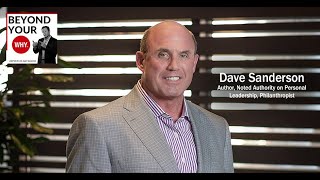
Dave Sanderson survived US Airways Flight 1549's crash landing in the Hudson River on January 15, 2009. He spent seven minutes in 36-degree water before rescue, an experience that shaped his mission around anticipation, resourcefulness, and servant leadership. He credits mentors like Tony Robbins and a benefactor named Bill with preparing him to act decisively in crisis.
Chapters
Welcome to beyond you'd why Podcast, where we go beyond just talking about your why and actually help you discover and then live your why. You see, we believe that knowing your why, that driving force behind every decision you make and every action you take, is the essential first step to really knowing yourself. It allows you to move forward faster and have a bigger impact. If you're already a fan of the show, then you know that every week we talk about one of the nine whys, and then we introduce you to somebody with that why, so you can see how their why has played out in their life. This show will be more powerful for you if you've already discovered your why. If you still need to do that, head over to whyinstitute.com and discover your why today. It'll only take you about five minutes. Now, let's meet today's guest. Wow. In today's episode, you're going to meet Dave Sanderson. Dave was on US Airways Flight 1549, the one that's called the Miracle on the Hudson. He was the last person to get off the plane, and his story is fascinating on how the water came in and what he did to just jump over the seats to get to the back to help everybody else out, and how he had to survive and save himself at the end when there was no more room for him on the plane or in the little boats. So it's a great story of how he helped others and how he finally had to help himself. So I think you're going to find it fascinating. I can't wait to share it with you. Welcome to beyond you'd why podcast, where we go beyond just talking about your why and and actually helping you discover and then live your why. So if you're a regular listener, you know that every week we talk about one of the nine whys, and then we bring on somebody with that why so you can see how their why has played out in their life. And so this week, we're going to be talking about the why of contribute to contribute to a greater cause, add value, have an impact in the lives of others. So if this is your why, then you want to be part of a greater cause, something that is bigger than yourself. You don't necessarily want to want to be the face of the cause, but you want to contribute to it in a meaningful way. You love to support others, and you relish successes that continue to the greater good of the team. You see group victories as personal victories. You are often behind the scenes looking for ways to make the world better. You Make a reliable and committed teammate and you often act as the glue that holds everyone else together. You use your time, money, energy, resources and connections to add value to other people and organizations. And so today I have a fascinating guest for you. When US Airways Flight 1549 or the Miracle on Hudson ditched into the Hudson river on January 15, 2009, Dave Sanderson knew he was exactly where he was supposed to be. As the last passenger off the plane on that fateful day, he was able to use the skills and resources he learned throughout his life to not only survive, but but help others. He emerged from the wreckage that day with a new mission to encourage, encourage others to do the right thing when faced with a life changing decision. This profound experience changed his life. Today he travels the globe sharing his inspirational and motivational leadership message to help people make a difference in how they do business and live their lives. Named one of Inc.com's top 100 leadership speakers, Dave travels the world to share his inspirational leadership lessons, raising over 14.8 million for the American Red Cross. Dave, welcome to the podcast.
Gary. Thank you for having me today. I'm honored to be with you today.
This is going to be interesting, I'm sure, and you know, your intro told a lot about your story and I really want to dive into that. But before we do that, Dave, can we go back a little bit in your life and let's learn a little bit more about you before that day.
Sure, sure. I'd love to share a little bit more about how I got to that point because it's, I think all these moments in your life matter and they all make up for that one defining moment. So let's talk about it.
So let's go back. Where, where did you grow up and what were you like in high school?
In high school, I grew up in a place called Winchester. Virginia? Yeah, Winchester's at the point, northernmost point of the South. And you know, I was there and I play, I was, I was an athlete. I played all sports. I, I was one of those athletes, Gary, that was good at everything but not great at pretty much anything. So I, I could, I could compete, but I wasn't standing out. But you know that between that and I was also the first president of our Key Club. And only reason I bring that up is that I have something very significant happened during that time that set me on this pathway of where I'm at today.
So tell us what happened at the Key Club.
So, yeah, I was, I was asked to be the president of the Key Club and The only reason I was really asked initially, because I tore my knee ligaments up. And the third football game of the year, I was pretty much out the rest of the year. So I, the gentleman who was starting up came to me because he needed a leader and asked me if I'd do it. And so I did it. We started with nothing. But one of the things that he did for me is he introduced me to people around the city of significance. And one of those people happened to be our U.S. senator who was, who was out of Winchester. His name was Harry Burr Jr. And I got the opportunity to meet a senator when I was in high school, a junior in high school, which was very significant because, you know, I got to see what leadership was like at that level. But what that opened up for me, Gary, is a couple different things. Number one, since I was president of the Key Club and I got that opportunity, Senator Burr was holding a fundraiser in Northern Virginia. And one of the people he invited was one of my heroes was Senator John Glenn, the first astronaut to orbit the Earth. And that was like nirvana for me. That was like the icing on the cake. I got to meet not only a senator, but somebody who, who was very, not only historic, but since something nobody had ever done before, which really gave me an eye opening experience to, you know, anything's possible. Anything is possible because he, as you know, his story started NASA when NASA was starting nothing, with nothing. Right. He was the third, he was the third one up. And so I was that, that gave me the perspective of, you know, you're, you're always, at least you can touch people, you can get hold of people if you do the right thing and work and work with people to do that. And so I, I've never been afraid to talk to people. And I've had opportunities to meet all these great people because I, I opened my eyes and was never afraid to approach people. Wow.
And so, okay, so you graduate from high school and then what happens to you? Where'd you, where'd you end up?
I went to college at James Madison University and I wanted to play football, but the second practice in, I was a walk on, so I was pretty much nobody. I. I hurt my knee again. And my dad had that, what I call a come to Jesus talk with me and say, hey, you're not going to play football. You're not going to be a pro like you dreamt. You better get an education. So I was in actually the first international business major class at Madison Offer. So as a freshman, we started our. They Started the international business discipline. And I was one. I was one of the first people to graduate out of that at James Madison.
Awesome. Okay, so you graduate with international business and what do you go into?
Well, that's exciting because my goal is to get an international business. And this was during the recession in the early 80s, and there's no, there's no jobs in that area. So I went home and my dad gave me 30 days to get a job and be out of the house. And one of the things I tell people, one thing that great things I learned from my dad is he was a man of his word. You know, he, he, when he said something, his promise meant something. In 30 days, Gary, I didn't have a job. So what he did is he helped me get my first job. And that was being a second assistant restaurant manager. A place called Howard Johnson. I knew nothing about hotel restaurants, but I was out of the house and he lived up and I lived up to that commitment.
Wow. So what was it like being a second assistant at a Johnson's?
Well, you know, all of a sudden you come out of college, you're feeling pretty good about life, right? You got this great education, and now you're working second and third shift, you know, learning skills that you never want to even think about learning. But that turned out the third stop is where I ended up, here in Charlotte, North Carolina. That's how I got here. And that's. If I didn't have that opportunity, if my dad didn't make me do that, my whole destiny would have been changed. Because what happened for me is I was here and I was working second, third shift, right? I was low man on the totem pole. I was, you know, we didn't lock up as you know, remember Howard Johnson was a 24 hour gig, right? So I was, I was there pretty much into the middle of the night. But there was a gentleman, a lady would come in every night. Gary. His name was Bill, her name was Bonnie. And they would come in, he drove a pickup truck and he always wore a flannel shirt. But what I found out about Bill is after we, we come and talk, he come in and have his coffee and you know, we have his ice cream and we talk. He actually owned over 80 movie theaters and restaurants to north of South Carolina. He was a multimillionaire back in the early 80s. And his nickname around Charlotte was the Sam Walton of Charlotte. He was one of those guys, as you never know. But he, he took me under his wing. And it happened to be on December 24, 1984, is when everything changed. And what happened was, as he came to the restaurant early that day, he said, I want to show you what I got my wife for Christmas. It was a brand new blue Corvette. Now, I never seen a Corvette, could spell Corvette, never smelled a Corvette, but it was cool. And he threw me the key, said, hey, let's take a ride. I'm like, what? What? So let's take a ride up and down Woodlawn Road. So we got in the car and we went up and back. I said, bill, Bonnie's going to dig this, man. She's going to love it. He goes, you need one of these? I said, bill, I'm making $13,000 a year. I work a second shift, right? He goes, that's your problem. It's your mindset. He said, you mind if I coach you on how to have a mindset of success? And I had nothing to lose. But the next 13 years, Gary, he took me under his wing. It was teaching me the mindset of success, how he became what he became. He was taking me to places. I was meeting the CEO of Bank of America, which then was in CMB bank and First Union, and all the people he was running with. I was on the. On the edge of this, watching this, on how he did it. So fast forward to May of 1997. He called me to his office. He said, I want to share a couple things with. He said, number one, I've got lung cancer. Now, Bill smoked a couple packs of unfiltered chemicals a day. All right, this started back in the 20s, so, you know, wasn't shocking, but it was like, you know, okay. But then he walked over to his desk, he pulled out some papers. He sat down next to me, put them on my lap. I'm like, what's going on? He goes, this is. This is what I wrote down in 1920. These are the lessons. This is what I wrote when I got these lessons back in the 20s. In fact, 1929. I even said, I want to give this to you, but you got to promise me something. So what? He goes, do not let it die with you. And Bill passed away in September of 1997. But he gave me these notes that he wrote in 1929. So the mindset of what you have to have, what he learned, you know, during the roaring twenties. And so that. That my dad hadn't lived that promise, I never would have got to that opportunity. And now I made a promise.
Wow.
And I had to fulfill that promise.
So what were in those notes? Give us an, some insight into what was written there.
Yeah, he had, he wrote all these lessons down and he's like, one of the lessons I always remember is like, you know, I have an alternative vision for the future. And what does that mean? And what he, what he shared with me about that, what he wrote in his notes is he took notes when he met Franklin Roosevelt in 1938. He idolized Roosevelt because he's. One of the things he told me and he wrote down is Roosevelt was always positive. He always had a vision for a bigger, united, bigger America, how America should be right. And that's why leaders come at the right time in confident countries. He wrote about time. He met Ronald Reagan in the early 80s. He had the same situation with Reagan. Reagan was always talking about that shining city on the hill. He always had, he was always positive. So one of the things he taught me and one of the lessons was you got to have an alternative vision. You got to look at bigger picture of how your life could be, what you could do with your life instead of going down a pathway that other people want you to take. One of the great lessons, I mean, it was a tremendous lesson, tremendous lesson about faith because, you know, one of the things that he shared with me and this is, I mean, because I lost, we lost a child, 7 month old back in 1990. And I was sort of messed up a little bit. I wasn't producing as much as I probably could have. And he shared what happened to him is he had a son back in the 30s that, you know, he had. And he got, got drafted to go to Korea. And he could have, he said, I could have stopped it. I had the money to do it, but everybody's got to do their duty. Everybody's got their responsibility. And his son died in the army in Korea. He said he felt guilt for a long time, but then he realized that, and this is a lesson, I think, of going from the spiritual side. He said the same God that started the world with the same God with my son, the same God with your son, it is a reason behind it. And that helped me a lot, sort of get my mind around, you know, things about faith. And if you have faith, there's reasons behind it. You don't know why, but you just gotta have faith. That's going to work out. So these are the kinds of lessons that he was teaching me all these years. And that's why I wrote my book From Turmoil to Triumph. These were the lessons that I got to implement that day on the Hudson river that came Right. From faith to looking at being able to do the mission and looking at how to really have even more responsive. Responsiveness, Right. How. So that's a long winded answer, but that's. It was an amazing time. And now it's my. My commitment to be able to share what he shared with me to the next generation.
How. How did Bill learn all of that?
He had a mentor. He had a mentor, and his mentor came to him in 1917. And he told me, Bill. Bill lived around here in Charlotte. Charlotte area. His dad was a farmer. As my. As the story goes, as you share with me, they come in to sell their crops because Charlotte was the hub, right? They come and sell their crops. And this guy would come in, he said he's always in a suit, and he would come in and he'd talk, right. And Bill was anxious. Bill. Bill loved movies. In the early 20s, he will love movies, but he didn't have any money. So the guy showed him how to get a few pennies together and get his first movie, his first movie house. And all of a sudden he was learning, he says, from this very successful businessman. So it just got passed down from somebody in the 1910s to Bill and then Bill, I think, Bill, I think, ultimately was looking for somebody to pass it on to. Wow. And you have somebody, right? And I just happened to be the guy there that, that he. He got. And I agreed. And you know what? My. When my mom. I told my mom and dad, they were like, who is this guy? Right? And I share with him what happened. And they're like, if he can offer you just one bit of advice, take it, take it on, right? Just take it on. But he taught me much more than that.
Did you ever ask Bill why he picked you?
I never really asked him why, but I think told me a story around, around why. And this came down when he was opening up his first movie theater in South Carolina, and this is in the 1930s. And the story said, he never told me directly, but I sort of hint got sort of, sort of hinted at why. He said that, you know, he was going down. He had. It was a long drive to South Carolina. It wasn't interstate highways, and he needed somebody. He needed to hire a manager, somebody to manage that. And he said one of the ones of bits of advice he got when he. He was starting his own business was is go on your instincts. He said you could do. He told me, he said you could do all the analysis you want, but if you go on your instincts more often or not, it's going to play out. And that gentleman stayed with him through the entire 1960s. He's with him the whole time, 1960. So I think if I look back when he said that, told that story, really told me that he had something instinctively connected. And I don't know why, but I say, you know, I don't question why, you know, but I just happen to be there at the right time. And I was a recipient of a gift, and that gifts can be passed on. Wow.
Okay, so he passes away in 1997, and then did you take over the, the. What happened to the. The movie theaters?
Yeah, well, he. He was already semi retired at that point, so he already passed the movie theaters on. So he was. He was pretty much retired. He, you know, all the reason I found out the backstory I really found I was at movie theaters is when I started dating my future wife. I had no money, right? I had no money, right? And he gave me a couple of movie passes to go to take my girl out to the movies. Be a hotshot, right? So I went out and it was the Queens Park. It's no longer there, but it's down. It was about two miles from the restaurant. Took her there, right? And when I got there, we got in there to check in. The guy says, Tell Mr. Bill, hey. I'm like, what? Okay? And I went back and he said, he said, how's your experience? So it's great. I mean, the guy took care of us. He goes, well, that's one of my theaters. And that's when I found out, right? He. He was. He sent me to check in on, you know, really doing what he wants to do. But he, he had passed those on, you know, I guess a few several years before, during that time. But he, he was semi retired at that point. He was, you know, coming Howard Johnson every night to have coffee and ice cream.
Wow. Okay. So he passes away past, gives you his lessons, and then what did you do with that point? Did you. What were you.
What.
Tell us, take us on your kind of career path.
Yeah, so I was in sales at that point. I was pretty successful. I was always doing pretty well. In 1987, after this happened, what did I do with them? I put them in a journal and I didn't look at them. But what happened five months later, four or five months later, is when I was asked by a gentleman named Tony Robbins to be his assistant head of security. I was on a security team, and so I was. Had proximity to another master, right? But I was assistant, which meant I basically Managed the floor while other people managed other things. But about two years later, in 2000 or so, he asked me, the head of security. So now I'm traveling with Tony and I'll be supporting Tony directly and the team. So I was having these conversations with Tony, getting distinctions on these things that I learned and getting new distinctions from Tony on some of these things. So for about 13, 14 years, I was, I was around Tony then the head of security. So I had the opportunity to be around Masters. And what's one of the things he taught me and I learned from Bill, but Tony taught me is proximity is power. If you're around people who have influence and know things, that's power, you know, and my dad told me that years ago in a different way, said you don't have to know everything, but you have to know somebody who does know everything.
He told me that when I was in high school and you know, when I was a kid. And it turned out to be true. So Tony, for the next 13 or so years, Tony. Tony sort of gave me the opportunity to have a doctoral lesson in how to manage your mind. And especially that played out on January 15, 2009, greatly.
Wow. So, okay, you. Were you working with Tony at the time that you were on that plane?
I was, I was that and working for another company at the same time. So yeah, I was, I was working, working hard on both things. So yes, I was with Tony. And Tony was the only person who called me that night after the plane crash. He, I tell people he, one thing about Tony, he's got resources and if he wants to find somebody, he will find somebody. Right. And so he, he's the only one that found me sitting in a hospital recovering. And if he actually did a YouTube on that conversation, you go out to YouTube and see it and told a little bit about our conversation. And it was, it was very, it was, it was very emotional for me because he, he remember I just wasn't one of his people. I was like his guy. Right. And that meant a lot to me. Meant a lot to me.
So take us into that flight now that just into Flight 1549. And where was it going and where did you get on?
Got on in LaGuardia, end of a three day business trip, got done early, changed the flight. I was on first class seat at 5 o' clock flight, changed it to flight 1549 at 2:40, got seat 15A. So 15A. 1549, January 15th. A lot of 15s going in there. And I've got numerologists telling Me what that means. And that's a. That's a whole nother discussion. But yeah. And just nothing unusual, right? The plane was delayed. If you've been out LaGuardia and it was 11 degrees and it was snowing, so no big deal, right? That's not a big deal. Happens all the time. Nothing unusual about the takeoff, you know, and if you've ever taken off out of LaGuardia, for folks who haven't, the runways are jut out into the bay, and then the normal flight pattern is they turn north and they start making their turns. Nothing unusual until about 60 seconds after. And then when you hear a big explosion. And that's what got my attention, because I wasn't paying attention. I was reading the magazine because I know everything. Yeah, I'm Mr. Flyer, right? I know everything. And all of a sudden you see fire coming out from the left wing, like, okay, but the planes have multiple engines, right? So, all right, we'll go back, get on the plane. I'm not going to get home early tonight. But no one knew at that moment, including the crew, at that exact second it would happen on the left side of the plane, where I was at, also up on the right side of the plane. Simultaneously, it knocked both engines out. The birds knocked them out simultaneously. The geese did. So now you have no. No power.
What did that feel like when you had no power? I mean, it was like.
It was just like you were gliding or he's like. You hear. And that's what. That's what was startling at first. You hear nothing. It's so quiet. I tell people, you can tell. I said, talk to any passenger. They'll tell you the same thing. It was so quiet. You hear a pin drop.
Because looking at each other, people were.
Sort of looking, but no one was freaking out. I tell people, that's one of the great things. So that's where God's grace entered, because no one freaked out. No one was looking around. No one was going, you know, going crazy. I think everybody's looking around like, what's going on? Right? What's. What's going on? And then they start banking. I'm like, okay, we're going back to the airport, right? No big deal. But then as he banked, I looked out the window and the skyline of Manhattan was like, right there. I mean, it was right there, and we were actually at a little lower than the highest buildings.
Wow.
Okay. Then I look out a little further. You see this bridge coming up, which turned into be the George Washington Bridge. It's like I've never seen that bridge before in my life. And it's like, okay, something's going on, right? So I was like, every second things are going on until he says his famous words. This is your captain. Brace for impact. And then, you know, at that point, it's serious. Something's going down. And it doesn't look good at this point because now you're clearing the George Washington by roughly 400ft. The bridge is 600ft up. The plane was a thousand feet at that point in descending. So he clears about 400ft, and the only thing you see is water. It's like. And I've never seen a successful plane land in the water. They're always toppling. So that's the moment that. Do you have to get your. I tell people, you gotta get your ducks in a row pretty quick now. You gotta get things lined up in every which way pretty quick. And get your game plan together. Because if you do survive, what are you going to do now? So that's what. That's pretty much what happened. I got, after I said my last prayers, got my head down. Gary. I said, okay, my. I mean, I play sports, right? Like I mentioned, I played sports. We always had a game plan. And in business, I always had a game plan. And my game plan was, I.
Kept saying in my head, I love out, I love out. I love out.
I love.
I survived. I at least had. I had to have a game plan.
What do you mean? I up, out.
I was at C15A. Get to the aisle, go up, go up the. Exit the middle row and get out. Ah. That was my game plan. Aisle, up, out. Because I wasn't on the wing. I was four rows behind the wing. So I had to go up to get out. One way or another. I had to go up, aisle up, out. That was my game plan.
Wow. So the first time he came on the intercom was to just tell you, was to tell you to brace. Didn't tell you what was going on, what's happening, nothing.
The only time he came on. That's it. That's it. He was very succinct in his communication, which I think was one of the great attributes that happened that day. He, not only he, but the crew was very succinct. You know, they kept saying, brace, brace, brace. Right. So. Because they knew that was coming up.
So what was it like when you hit the water?
Extremely hard hit. He estimates he hit between 100, 120 miles an hour. And if you see the head and I've got. When I show when I do my talk and I show a little video of it. The backside hits first and 15 A's towards the back. So the back hit first, which meant to the brunt of the head. And so. And then it came down. And then certain rights are skidding to slow down. So it was a very, very, very hard hit. And water started coming in immediately because the back of the plane got torn off on the hit. Water starts coming in. So water immediately, Gary was where I was. It was about ankle to knee deep. Immediately. Immediately it was 36 degree water. Immediately back of the plane, it was more like chest level, deep water.
So the people in the back of the plane were seat belted in to chat and the water was chest high. When you right off the bat, right, how long did it take to go from the hit to where you were stopped?
It took approximately 20 to 30 seconds from hit down, sliding to totally stop. But 20 to 30 seconds, that's it.
And I wonder how he knew not to. Well, why do other planes topple and.
Yours didn't he hit it perfectly. Because if you look at it, and I've heard other pilots say the same thing, one degree, just one low degree, either way, you're either toppling into New York City or toppling into Newark. And that's a bigger disaster than what happened. Or 1 degree nose down, you're going straight to the bottom of the Hudson. Or one degree back, you fought, you're going backwards. You had to hit it perfectly.
Wow. Wonder how the heck he knew to do that.
He had all he had all those years of his moments, right? Of practice and preparation.
Wow. Okay, so you hit. You. Did you hear the back of the plane rip off?
No, no, no, no, no, no. When we hit, I looked up, I looked out the window, I saw light, but I didn't hear any. I mean, it was such a hard hit. I went forward, back forward. It was that hard of a hit. It was like a very jarring hit.
And then the back of the plane is gone.
And not the total back, just the engine in the back.
Oh, the engine in the back. Okay, okay. But then water starts pouring in right away. 20 seconds later, you're stopped. Okay, now you're stopped. What's it like inside the plane? What's going on?
The word, the term I use that night with Katie Couric on CBS was control. Chaos. It wasn't. People were now their heads. Right. No one was pushing each other and get out of the way. But it was moving quickly. People had to move because water now Like I said, it's about anywhere from waist to chest level, deep in the back, about knee level. Deeper where you at. You gotta go. You gotta start moving. There's no time to wait, right? You can't mess around. Think. Let me get my stuff. Right? You gotta go.
Wow. And then. So you did go. You got up, got out. Were you. You did not get out. You were in seat a.
You said 15a on the left side. Correct.
So you were at a window.
No. Four rows behind the left wing. I was at a window four rows. Four rows by the left wing.
So was there somebody next to you?
Yep. The plane. Plane was full. Correct.
Oh, gosh. So you had to wait for them to get out.
Yep.
For you to then go out. So take us through it. The plane comes to a standstill, and is it hard to move? Thinking, or is it.
No, it didn't go. It started going down about 24 minutes is when it was like this. All right, so it was about 24 minutes from going from relatively flat, the back side in and up. So what happened to me is when things were moving, right, it was my time to go. When I got to the aisle, I'm like, I'll up, out. But then something happened. It changed everything. I heard. I started hearing my mom start talking in my head very quickly. And there's something my mom would tell me, Gary, when I was a child, all of a sudden I heard. And my mom passed away in 1997. But what it was is, if you do the right thing, God will take care of you. And I heard that, and I had to make a decision. And the decision I made was I climbed over the seats to go towards the back and see if anybody needed help, because I was fine. I know anybody in the back was fine, but I was fine. So instead of going out, I climbed over the seats to get behind it. And things were moving pretty well. That's people moving. There's nobody standing still. But I got behind the last person. I started making my way out then. And at that point, you're about, like I said, about chest level, deep water. The back hit first, so the bins have broken open and all the luggage is floating around, Right? And it's dark. Because you got to remember, this is late afternoon winter New York, right? So it's late, so it's a little sore. Dark. And the first light that I saw was on the right side of 10F. I'm like, I'm out of here. But then I got to the door, I started looking out, and there was no room on the wing for me and no room on the boat for me. But that's why it was amazing that people are being rescued. That's why I was inside the plane, waist deep in 36 degree water about 7 minutes holding on to that lifeboat because the lifeboat was floating out into the river and they were yelling me to hold on so they could have access to the wing to get out on to get out. So that's why I was in the plane for about 7 minutes away. Steep in 36 degree water.
When you think about going into a cold plunge, they're about that. And sitting in there for a minute is excruciating. Much less seven minutes. How long can you survive in 36 degree water?
The EMTs told me I shouldn't be around. Usually is no more than 90 seconds. But you know, I think what I've heard from other people, I, is that you get that adrenaline right, you got the adrenaline going and that speeds your metabolism up, which I think is exactly what happened to me. I was like, all right, let's go. I go into, I'm going to that athletic mode right now. It's time to. We're going to play mode. I think that's what happened because about seven minutes later is when I felt the plane shift. And I found out later is one of the tugboats as a part of the rescue, as he backed out, he hit the front of the plane. When he hit the front of the plane, he shook the plane. Shook the plane. I felt water go up my back. I'm like, I gotta get out of here. It's going down. And that's why I jumped in to start swimming to the closest boat that I could find. It's into the wing. And now it's the longest 15 yard swim of my life because not only was I fully clothed, I've already been in the water for 36 minutes or 36 degree water for seven minutes and there's jet fuel in the water. So we were talking about your eye situation. Yeah, that's what happened. That's why I wear glasses. Because I, I found out when I got back I had jet fuel in my eyes. Got stuck in my eyes. And that's why I got, I had a little hazy perspective that night. But that I got there, I got there. I think my mom and dad said they had gimme swimming lessons in the Red Cross when I was a young kid. I mean, everybody get out of that plane to swim. I had to swim for my life.
And then they just pulled you into one of the boats.
You would think that, but no. I got there and they started yelling at me to climb, climb, climb. Because the ferries are about 10 to 12ft up and then a ladder there. And I yelled up, can't, can't, can't. And then I heard my mom talk to me. Because the word my mom hated most of life, Gary, was word can't. If you grew up in my house, he said, I can't to my mom. She would say, if you can't do it, you're going to do it. And what I realized after she passed away, that was what I realized. Her worldview. I talk about worldview a lot. People's perspective of what's going on. The worldview. Her worldview is, if you can't, you must. She wouldn't accept it. So I got one arm up, other arm up, and two men, to this day, I don't know who they are, grabbed me and pulled me on one of the ferries, and that's how I got out.
Unbelievable. So you were in the water for how long? Seven and a half minutes.
Eight minutes, at least. Somewhere in that, that range? Yeah. Wow.
Okay. So they pull you up into the boat, and then what happens?
Well, you think everything's cool, right? I made it. But that's not what happened, because now that's the moment. And we talked. I talked about a moment ago about adrenaline, right? And you can you just go, go, go. But when you think you've made it, you said, let it all go out. I. I equated to. And you live out west. And I saw this last year when I spoke in Oregon, these wildfires, right? You see these wildfires. And then I was watching while I was out in Oregon, these wildfires, I see these firefighters that are going in, right? And they come out, they're sitting on the curb, and they got nothing left, right? That's what happened to me. And I was so cold, Gary. I mean, I've been in the water now for extended amount of time, and the air temperature is 11 degrees, and I could. I could barely. I could barely breathe. I. I was. I. That's the moment I thought, I'm going. I'm not going to make it. I'm not going to make it. But fortunately, someone was there with a phone. Please let me get my message out, let somebody know that I was, you know, I said, this is your father. I've been in a plane crash. That's all I could get out. At least I got the message out that I was alive. And that's how my family Found out that I survived.
Gosh. Did it. How many people. Did everybody survive or did some not survive?
It's the only one in aviation history that everybody survived. 100%.
Oh, my gosh. So now you're sitting on the boat. Froze, you know, freezing in 11 degree temperature. Did they put you in blankets? Do they put you in hot water? Like what happened to you?
Well, that would have been great if all that would have happened. None of that happened because they didn't have any blankets on the boats because the boats were deployed immediately when. After the plane crashed into the water. The CEO author themes Arthur Imperator of the New York Waterways to set the boats out. Go. They weren't supplied with all that. So no, I got. I got to. I went to the New Jersey side because I went out to right side of the plane. And those. Those boats, those. Those ferries were going to New Jersey. Left side went to New York City. And so I got there, they put me down the floor in this Triad center, Gary. And stripped all my clothes off. I'm sitting there in my underwear. I didn't know what's going on. Right. Just sitting in my underwear. And my EMT tells you, I'll be right back. So now I'm on the floor pretty much naked. Then a guy walks up to me with a card to say. It says, I need your name and date of birth. And I give it to him and he puts it puts that card around my right ankle and he walked away. And I don't know when you grew up. I know who the listeners grew up. I grew up in the 70s and there was a show called MASH. When they tagged your toe, you didn't make it. That's exactly what I thought. I'm like, I'm dead. I'm like, I said this. The movie Ghost is true. Right. I'm just watching this whole thing play out. And fortunately the EMC came through my blood pressure and it was totally out of control. And that's when things start happening for me.
They didn't give you blankets? They didn't give anything to keep you warm? Nothing.
Nope. They didn't have anything.
Oh, my gosh. That doesn't sound like a heck of a lot of fun.
It's, you know, it's definitely one of those days that you were challenged at every point. Yeah. You know. Yeah. And that's why I tell people things I learned from Bill Tony. And being around these people is. It's all about your mindset.
If you can't control your mind when all stuff's hidden around you, you're not gonna have a chance. And that's why I try to teach these younger people, right, These, these young kids who are smart as a whip, but they're having problems now controlling their mindset with all the COVID and all that other stuff that's going on, right. They, they don't have the wisdom yet to know that, you know, if you have that positive mental attitude and have that mindset, you can survive, right? You can survive and get another shot to play. But that's what has happened a lot to these kids. Now, I've talked to a lot of these kids and they're scared because they never had to face adversity. And that's one of the things my parents at least made me do when I was young, face adversity. They made me have consequences for my decisions, which I think I'm a failure at that with my kids because I want my kids to make sure they had a good opportunity. But one of the things I would do over if I had this whole thing to do over is I'll put them in situations where they had to make a decision and they had a consequence so they can know how to make a decision. Because everybody's going to have that life defining moment. Everybody is.
Wow. Okay, so then they ended up getting you to the hospital. You have hypothermia and all the rest.
Yep.
So how long were you in the hospital?
I was only in the hospital overnight because I want to go home. Yeah. And I should have gone home, but I, yeah, I. I was very fortunate that the circumstances played out where I could get home. And, and when I got home, right. I had made, I made some promises, I go to the doctor and all this, and I finally did that. But yeah, my. If I look back on this, if you talk to my friends at Palisades Hackensack Medical center, as I said, we should have released him. I was in no condition to, you know, do anything at that point, but I tried to be, man, I tried to man up and just do it, and I did.
So what are the lessons that you learned from that experience that you now teach about? And because I know you speak all over the world, what are some of the things that you talk about?
Well, a couple of things I talk about. I'll tell you what I learned. First, the big, the big one, the big learnings from that day and really came from that situation. But probably a couple of weeks after is when it comes to clicked in my head. And what happened, Gary, was, you know, I Was in doing a lot of media with all the crew and a lot of the passengers. And I was on Good Morning America with other passengers and the crew. And we got done, and we were sitting in the green room, you know, just talking and stuff. But one of the passengers just started getting very emotional. Say it that way. Getting emotional. And it was emotional outburst. Say it that way. And I'm sitting there thinking, what's wrong with this guy? We survived the plane crash, we're on national tv, but how bad can it get? And all of a sudden, I really found out later that he was going through a divorce and he just lost his job. And what he. What he. What he. His meaning of the plane crash was devastation. And I started thinking, how many times in my life have I judged somebody so quickly before I understood their backstory, but understand a little bit about them? What does that cost me financially, emotionally, relationship wise? I mean, how many times have we judged somebody quickly? We don't even want to talk to them. That's what's going on in this country right now. We're judging people immediately. We can't even have a conversation without getting in an argument. So I said, if I could change that one thing, be less judgmental, how would that. How. How could that help me? So I started doing that. And that's opened up everything in my life, where I'm at right now. Just, you know, I said, I believe what Martin Luther King said. Judge people by the content of their character, right? So that's the best, the big. The biggest lesson out of this. But some of the things that played out that day is definitely around. I talk about, you know, awareness. You got to be aware. You gotta. You understand what's going on around you, right? And you can't just let somebody else direct you all the time in your life. You gotta stay aware. And that one of the key skills that day that played out for me, and I actually wrote about it this week in my blog about the skill. And this is the key skill set everybody needs right now. Whether you're going to look for a new job or looking to be an entrepreneur or whatever you're doing, is the skill set of anticipation, the ability to anticipate what's going on next, see the bigger picture. I talk about the alternative vision for the future. Like Bill taught me, you have to anticipate. And I really realize that there's two skill sets I coach people on now that if you want something, you better be able to anticipate, because if you can help somebody anticipate their next move and help them your asset. And second, which played out exactly during the plane crash is resourcefulness. Because you don't have a lot of resources when you're a plane crash. But if you can use the resources that you do have, then become resourceful. People are looking for people who are resourceful because there's not a lot of empty, a lot of money going around and resources are available all over the place. You got to be able to use your skill sets in a way to be an asset to somebody else. So anticipation and resourcefulness.
Wow. Yeah. Gosh. So now that once, once all of this was over, you were on the TV programs, you didn't go back to work with Tony or did you?
I did for a couple of years. In fact. In fact, next month, late, late in February, which is about a month and a half after this all happened, in late February, he had an event in, in Secaucus, N.J. and his assistant called me, Gary. He said, you gonna be there? Because, you know, I mean, I'm going through all this stuff, right? I said, I'll be there, I'll be there.
Right?
So I show up. Kaylee, I wasn't much used to him, right, that weekend, but we were, we were doing our pre events get together, right? And I said, I said, tony, I said, I'm gonna give you a heads up on something. I'm probably gonna have more media here than you will. And he starts laughing, right? Because what I knew what was happening is CBS and everybody else was showing up outside, you know, because I was there. So I was pretty useless to him, that event. But at least I could. I was there for him and he saw me show up, right? And I wanted to show up for him because he showed up for me that night, you know.
Yeah.
And that's about. I talk about loyalty, right? You know, I'm big on loyalty. You know, you gotta have, you gotta have your team's backs. You have to, or you're never going to have any trust whatsoever with him.
So I'm surprised Tony didn't have you come speak.
I, I've had a couple of things. He's been very. He's been very kind with me. He's been very kind with me. But you got to manage. Those are Tony's events. Yeah, those are Tony's events. He pays a lot of money to have those events.
Yeah. So now.
Now you're from there, you went on to start speaking, start having holding events, start teaching. What was that like for you?
Well, initially I was just doing churches and Local events, because candidly, I didn't know what. I didn't know what I was doing, Gary. I was being asked every 15 minutes to be, you know, do something right. And I was trying to work, and I was trying to serve Tony, and I was not serving my family, which was something I looked back on. Probably I would have changed, but, you know, I. I took the zig Ziglar approach. I said, you know, for the first 50, 75 things I'm gonna do, I'm just gonna do it. So what Tony told me was this. Speak from your heart. Don't ever take notes. Speak from the heart. So I. I really focused on that. But what opened up everything for me. Well, there's a couple things that open up, but the one thing that really opened it up was when I was invited to speak at a fundraiser for the American Red Cross in Charlotte, and they asked me if I would speak. It was a Red Cross month in March, a couple months later, and of course I was going to do it. They were there for me three times that day. Of course I'm going to do anything I can. And I came, and all of a sudden, they raised over a hundred thousand dollars at that event, which got my name out, right? And I was asked to speak to one of their. Their major events up at. In Washington, D.C. which happened to be Supreme Court. And so I had the opportunity, and they raised $6 million that night. I didn't. All I did was speak. I didn't. But when it happened that night for me is, I don't know if you've ever been to the Supreme Court, but you have to have a justice sponsor you, all right? You can't just walk in and say, I want to do an event, right? And the. The justice who was sponsoring that now is Justice Anthony Kennedy. And when I got there, I got introduced to him, and he said, give me three minutes. Come to my course. Give me three minutes. What happened that day? He took me to his quarters, about two or three minutes. I share with him a little bit of what I share with you. And then he came. Came back out, and I got my picture taken. I'm like, whoa, I'm with a Supreme Court Justice. And it's not because I'm so great. It's because I think that I gave it up. Gave up being judgmental. I said, you know what? I'm here to serve. I'm here to serve. It's not about me. And that, I think, is what opened up everything for me that gave me a strong reference for if you just come from a servant, leadership, heart.
Things will open up for you in your life.
Well, Dave, if.
So, what's next for you? What's on your plan to. What's your plan for what's coming up?
Well, thank you. So we'll go back to Bill's notes because back in 2016 when I was writing my book Moments Matter, I found the notes in this credenza. If you see my, my credential right behind me, they were in this credenza. So I made a commitment back then and it was one of my major mission is to teach what he taught me to a million people in 10 years. So this is my mission. And Tony always taught me, he said make the big a goal, right? Make the big goal and you'll figure out how to do it. You don't have to figure out how to do it right now. So it's taken me a few years to figure out how we're going to do it. So, you know, I got my new book out. I'm running another book for the 15th anniversary next year. Right. I've got my magazine, see my magazine down here called Moments Matter, the magazine. I'm sharing information with other people in my magazine. I've got a course out teaching certain lessons of this in the course and of course I look forward to see. I love to speak because that opens up the opportunity to talk to people one on one and orange group sessions. So that's how we're doing it. And it all became all because I found them and I made this big goal and all of a sudden I'm starting to figure it out.
Wow. So last question for you. What's the best piece of advice you've ever given or the best piece of advice you've ever gotten?
Yeah. I think that one of the best pieces of advice that I learned, but not in this terminology I'm rephrasing it is faith removes hesitation. What does that mean? And what is faith? Give thanks. You have some bigger belief system that's things happen for a reason and a purpose. And if you have faith, it removes any hesitation on taking action. It's those people who don't have faith, they get stalled, get stifled and so they don't make progress. So I always start out and I start out and one of the things, one of the last thing I talk about when you hear me speak, Gary is talk about gratitude. It all starts with gratitude. And grace is fueled by gratitude. My thought process is the more gratitude, gratitude you give, the more grace you get, the more grace you Give. The more faith you have. The more faith you have, the more action you're going to take to improve somebody else's life. So I taught, I talk about this at the end of my talk because I want people to understand. You can't have fear with gratitude. You can't. If you have gratitude, you're giving thanks. Something bigger. That faith is going to come inside you, and you will have the determination and persistence of perseverance to be able to push through when those times get tough. And what happened to me on January 15th is basically a reference for that. Wow.
So now you're, you're about helping other people, about unleashing other people.
It's all about becoming a servant leader and giving, helping other people first. Right. And don't expect anything I tell my kids. My kids are, you know, millennials and gen zers and sometimes they expect things first. In fact, I had somebody last week come to me, and all he wanted, all he did is once. He didn't offer anything.
Yeah.
And I, I said if I ever speak to him, the piece of advice is give first. Give something of value to somebody first instead of asking. And that's what Bill did for me. Right. He gave to me. I mean, he didn't have to give me those tickets. He didn't have to do all this. Right. And it taught me a great lesson, is if I just give first. Right. It comes back tenfold, and it does in life. I love that.
And so if people want to follow you, learn from you, hire you, have you come speak, what's the best way for them to get in touch with you?
Well, thank you so much. The easiest way is go to my website, davesandersonspeaks.com you can see all my material. You can get in touch with me. But if you want to see my new content, which I'm coming out with new content, I'm committed over the next 52 weeks to come out with new content every week. And I post that on LinkedIn. And I just mentioned this week's lessons around anticipation and why it matters. So, yeah, go to LinkedIn if you get some, hopefully some good content, some new information for me. And then if you want to check in, go to davesandersonspeaks.com and I'd be honored to connect with you.
That's great, Dave. Thank you so much for taking the time to be here today. I really enjoyed hearing your story. Obviously excited that you survived that crazy day, but it's great to see that you're giving back so much and making an impact in other people's lives. So thank you so much for being here, Gary.
Thank you for having me. I hope you have a blessed day.
So it's time for our new segment, which is Guess Their why. And I'm going to pick for this episode, Amelia Earhart. And I'm picking her because she and I both spoke at an event a couple weeks ago, and so I got to hear her story, and she's not related to the original Amelia Earhart. And it's a fascinating story on how that came about, but that doesn't take away from what she completed and what she did on her own. And so as a college student, she learned to fly a plane and then took on the task of flying around the globe, and she did it. So I'm going to say that Amelia Earhart's you ought to see her story. I mean, you ought to hear her speak sometime because it was really, really well done. Great lessons. And I believe that her why is actually to find a better way and share it. She was always looking for better ways when got stuck or something got blocked or something wasn't going to turn out like she thought it would. She would work and work and find another way. She would find a better way. And everything kept getting better and better. So I believe that Amelia Earhart's why is to find a better way and share it. So thank you so much for listening. If you've not yet discovered your why, you can do so@why institute.com with the code PODCAST50. If you love the beyond your why podcast, please don't forget to subscribe and leave us a review and rating on whatever platform you're listening to so that we can bring the why to 1 billion people in the next 15 years. Thank you so much for listening, and I'll see you next week.
I really hope you enjoyed today's episode and that through today's guest, you heard how important it is to know your why and how impactful it can be in your life and the lives of those around you. Be sure to head over to why institute.com and discover your why today. Remember, the more you know about yourself, the more you'll know about others. I'm Dr. Gary Sanchez, and I'll see you on the next episode.
More from Dr.




Women In Leadership: A Need For A Greater Systemic Change With Belinda Clemmensen






