Discover the Key to Captivating Your Audience: Secrets to Effective Speaking Revealed w/ Joel Weldon
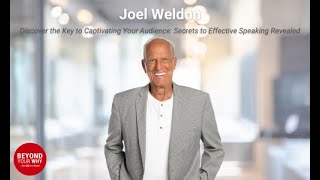
Joel Weldon went from shy kid in Far Rockaway, Queens to Hall of Fame speaker by joining Toastmasters in 1969 and winning speech contests. He gave 274 presentations in 1974 and earned his first $25 speaking fee. His core advice: prepare thoroughly, open with the audience's needs, not your credentials, and build referral systems to grow.
Questions this video answers
About 81½ ("I'm going to be 82 in October, so 81 and a half").
September 4, 1969 (joined Toastmasters a week after being told to attend).
Placed in the top three in the world in 1974 (World Championship of Public Speaking).
Over 3,000 paid talks and has personally coached/critiqued over 10,000 speakers.
First paid speech: $25; gave 274 presentations in 1974.
Chapters
Welcome to beyond you'd why podcast, where we go beyond just talking about your why and actually help you discover and then live your why. You see, we believe that knowing your why, that driving force behind every decision you make and every action you take, is the essential first step to really knowing yourself. It allows you to move forward faster and have a bigger impact. If you're already a fan of the show, then you know that every week we talk about one of the nine whys, and then we introduce you to somebody with that why so you can see how their why has played out in their life. This show will be more powerful for you if you've already discovered your why. If you still need to do that, head over to whyinstitute.com and discover your why today. It'll only take you about five minutes. Now, let's meet today's guest.
Today I've got a special guest for you. His name is Joel Weldon. Now, Joel is my speaker coach, and so I wrote up a special introduction for him that's different than what you typically hear. Often you'll hear more of a bio, but listen to this introduction and see if you can hear how different this is. All right, here we go. Imagine you get a phone call today requesting you to speak at an event in just three days to an audience of 45 of your ideal clients and customers. What would you say? Hopefully, you would say yes.
But would you be prepared, confident of.
Your results, joyful of this wonderful opportunity? Hopefully again, you would say yes to all of those so you could grow your business. Using speaking to grow your business is a wonderful skill to possess and to keep improving. Warren Buffett, Buffett, the great investor and a very wise entrepreneur, said, you can increase your value by 50% just by learning communication skills and public speaking. That's why I hired Joel Weldon as my personal speaking skills coach. Joel is a Hall of Fame professional speaker with over 3,000 paid talks and has personally coached and critiqued well over 10,000 speakers. Joel is also the creator of the Ultimate Speaking System, an online speaking skill system with one. With one on one coaching. So when I heard all of those accomplishments, I asked, Joel, with all that you've done as a professional speaker and speaking skills coach, how old are you? And so Joel smiled and said, let's put it this way, my Social Security number is five.
Yes, Joel has been around a long time, but he's built his career in speaking skills coaching on timeless truths that don't change even as the world around us is changing. He's got more energy than people half his age and has adapted so well to the virtual world we now live in. I'm going to ask him some. I'm going to ask him the kind of questions you would ask if you were here. Plus, I've asked Joel to share specific ideas and have a conversation with you today to help you take your speaking skills to an even higher level. Joel's tagline is Speaking Made Simple. How to be an Even Better Speaker. Today's podcast is titled Using Speaking to Grow youw Business. So let's welcome Joel Weldon.
Well, thank you, Gary. That was a wonderful introduction. You're a fast learner.
Well, that is so different, Joel, than what I often get from guests. And what I've off what I used to do myself. You know, I used to send more of a bio, and that's what I'm used to reading. And then working with you has just transformed everything that I do. And first of all, thank you for that. But second, it's so much more powerful.
Well, as you're listening on this podcast, think about when you're introduced to somebody, if, if they set you up the right way. The goal is that your audience, those listening to you, are already moving in your direction before you even say hello. As opposed to what ordinary speakers have to do is they have to grab the audience and get them into the message. So what Gary created there really set up the idea. Like he said, if you were invited to speak, how would you feel? And how important it is to become an even better communicator, to grow your business, whatever your business is or whatever your why is, even though this is doing it the right way, and in my experience, that's the right way to introduce a speaker, not a bio, because a bio is all about the speaker. This message is all about you. It's not about me, and it's not about Gary. And you're going to see that in this discussion. So what's the first thing we're going to talk about, Gary?
Joel, I want to. I want the audience to get to know you, and I think it's critical for them to understand where you came from. Because, yes, you are a professional speaker and yes, you have done thousands of speech speeches. However, there was a time when you weren't comfortable in front of an audience and there was a time when you weren't the kind of speaker that you are now. So let's start there. Where were you born? Well, first, first of all, how old are you? So that everybody knows.
Well, I told you my Social Security number. Is five. No. Well, I'm. I'm going to be 82 in October, so. 81 and a half.
81 and a half. Okay, so take us back in your life. Where were you born? What were you like growing up? What were you like in high school?
All right, now you just heard the question. Let me give you the answer as you're listening to this podcast. You don't care. You really don't. You don't care anything about me. The only thing you should care about if you're on this podcast is, does this guy know something that can help me be an even better communicator and speaker? That's all you. You don't really care where I'm from. You don't care what I was like in high school. Unless. And that's a powerful word for you to think of. Unless what you're going to hear can be of benefit to you. So here's a tool that you can use when you are asked to relate a story. Always open with the point of the story. So now, to answer Gary's question, he said, where were you born, and what were you like going to high school? The point of my answer for you as you listen is, it doesn't matter where you start. It's where you can go. So based on that point, I didn't start off in a great place. Born and raised in New York in a place called Far Rockaway, Queens. Raised by a single mom. We were poor as an only child, and she worked all the time in high school. Never gave an oral report, had no confidence. Do you remember what you were like in high school? Were you valedictorian of your high school class, most likely to succeed? Probably not. Very few people are. But remember, it doesn't matter where you start. It's where you end up. So after four years of high school, never stood up in front of the class and gave an oral report. Was terrified of standing up in front of a group. First, because I had no confidence. Second, I didn't think I had anything to say, and I'd rather take a failing grade than do something that was so difficult. So can you imagine? Just imagine that was you. And then somebody at your high school graduation in the bottom quarter of my high school class comes up to you and says, I'm a psychic. And young man, I see in your future, you're going to become a professional hall of fame speaker, speaking around the world to millions of people. Right. I couldn't even lead my silent. I couldn't lead my Sunday school class in Silent prayer. I mean, that's bad. Yeah. And that's where it began. But speaking effectively, wherever you are on that journey of communication, speaking effectively is a learned skill.
So why night high school started.
Yeah. And that, why I think that's important is because so many of us are either there now or were there where speaking is terrifying. Leading a meeting of your peers is terrifying, much less getting up in front of, you know, 100 people or a thousand people. And you were there. So you've experienced that you, you didn't come out of the womb a great speaker, is that right?
Absolutely not. No. Never having done it. Matter of fact, I was 28 years old before I ever stood up in front of a group and said anything. So there was no, no background in that area. And so it doesn't matter where you are now, you can improve. Just like in sports. If you've never played golf before, you're probably not a very good golfer. But if you were really committed to it and you practiced and got a coach and did certain things and read books and watch videos, you would certainly get better. Doesn't mean that you'd be on the PGA Tour, but you could get better. And the same thing about speaking, it's a learned skill, nothing to do with where you are now.
So you graduate from high school. What happens to you after high school?
Well, what about your confidence? Second story. Here's the point. How important self confidence is and what is it like when you don't have confidence? And that's where I was. So because we were poor, I started caddying at a country club when I was 14. And all through school I caddied. And when I graduated high school, Pepe, the caddy master at the Inwood Country Club on Long Island, New York, call me in the caddyshack. And he said, joel, we got great news. Every year the members contribute to a caddy fund so they can pay for a college education for a caddy. And this year, 1959, you were picked as the caddy of the year and you get a four year college scholarship. Any school you can get into, we're going to pay room, book, tuition, everything until you graduate. What do you think of this great opportunity? What would you have said, Gary, if that was you?
Hooray, I'm in. Let's go.
Well, you wanted to be a dentist and go to dental school. Well, I turned it down because I didn't think I was smart enough to go to college. I didn't think I could do anything except work with my hands and as a result, I passed up that scholarship, took a building construction course, and became a carpenter working in the construction industry on an hourly pay. And at age 25, I was making 6,250 a week, banging nails, digging ditches, working hard. Where did you start? You probably didn't start off where you are today, but the question is, how confident were you? Did you gain confidence along the way or were you born with it? Well, I don't think you're born with it. I think you earn it. But because I'd never done anything, I hadn't spoken, I didn't have a lot of friends. I was shy, self conscious, uncomfortable with people. Only good was working with my hands. What if that was you? And then somebody told you you turn into a professional speaker and speaking skills coaches. It's crazy, it's impossible. No confidence, no achievement.
But how do you get confidence? You get confidence by doing something often enough that you start to feel you can do it, rather than thinking of, I can't start thinking of what I can do. So that's where I was at age 25, going nowhere fast. I was married, I was about to have a child, but not much else was going along. But 62.50 a week wasn't very much money.
And so what got you into okay from, from there? How did you get into? What was your next step?
Well, think about your life as you watching and listening to this podcast. Every part of your life, something happened and it was a good thing or bad thing. But if you would look back on your life right now and you could identify every major event in your life, I bet you could figure out that almost all of them turned out to be a blessing. Something good for you, even the bad things.
So there I was, doing nothing really, except working as a carpenter. And the point of this third story is how one idea can change your life forever. How one sentence could change your life forever. And that's what happened next. Because a fellow from our church came up to me one Sunday. He said, joel, why don't you come and work for me? I know you're working in construction, but why don't you come and work for me? Now, I didn't know what he did, Gary, but I knew he had a station wagon filled with junk. So I thought he was a salesman and he always had the gift of gab. And then he told me he sold World Book encyclopedias and they were looking for people to work door to door on a commission. Now, can you imagine if you're shy and self confident and self conscious, you have no confidence and you can't talk to people. That you're going to become a door to door salesman in New York with New Yorkers as your prospect. And yet Gary, he made it sound so good. He, he, he made it sound so wonderful because he said, you get a commission. I didn't know what that meant. So I asked him, I said, what does that mean? He said, we pay you what you're worth. Well, right away I didn't like that because I didn't think it was worth anything. But he got me to quit my job and I set a company record. In the first four months, I made 1200 sales calls and one sale. So just imagine that you knocking on door. And would you like to know my approach? I can still remember it, Gary, years later.
Here's what doesn't work.
You don't want to buy any books, do you? Okay, thank you. And I go to the next step because they told me the law of averages works. Now if you listening to this, if you've ever been in sales, they tell you that the law of averages works. It does. Well, I kept knocking on doors and then remember the point of the story is how one idea could change your life. So I knocked on Mrs. Irene Dunn's door in Bayshore, Long Island. I can still picture her. This was 1967. And I made my standard approach. You don't want to buy any books, do you? She said, young man, we love books. And she was a big Irish woman. She said, I've got six kids, they love to read. What books are you selling? I said, well, it's the World Book Encyclopedia. She said, world book. I've wanted to buy that for years. I didn't know where to get it. Come in, come in. Me give you a check.
So she comes back. Do you remember when people paid with checkbooks instead of checks? And so she comes with a checkbook and a pen. She says, how much do I make the check for?
I said, I, I. Can I use your phone? Nobody ever asked me that question. I didn't even know what the book. So I had to call the office to get the price to have Mrs. Dunn write the check. And then I turned it in. Now imagine if that was you. Four months, 1200 calls, and now you make your first sale. And my manager was Vernon Cavill. And I went into his office and I told the secretary, I have my first daughter. She clapped and she gave me a big hug. She said, Let me tell Mr. Cavill, your ears are going to be so excited. And Mr. Cavill comes out and says, joel, you did it. You did it. This is the beginning. Tell me the story how you made the sale. So I told him just what I told you. And he looked at me, said, you didn't sell anything. You didn't create any need. You didn't make a presentation. You didn't open the demo book. You just took the money. I could have sent a dog out with an autopad on his tail, and he could have come back with that sale. You know, I've been doing this 22 years, Joel. You are the worst salesman I have ever met in my entire life. You have the worst attitude of anybody I've ever met. And you're never, ever gonna make it dealing with people. And then he used that word, unless. And then he said, unless.
You change the way you think about yourself.
And I said, Mr. Cavill, how do I do that? He said, I don't know, but maybe this record was. Will help you. And then, Gary, he reached into his desk drawer and pulled out a copy of the Strangest Secret by Earl Nightingale. And I know you're familiar with that name and in cases you're listening to that you've never heard of Earl Nightingale as a stranger's secret. It's the largest selling spoken word message in history, recorded in 1955, put on a record, became the first spoken word record to sell a million copies. And the Strangest Secret was one sentence. And that was the sentence that changed my life forever. And the sentence is this, that you become what you think about most of the time.
So think about what are you thinking about right now? Are you thinking about how you could be an even better speaker? Are you thinking about growing your business? Are you thinking about how do you use your why, your how and your what to get more people that you can deal with on a better basis? What is going through your thinking right now? So he told me to take this record home and listen to it, and I did. I told him first. I said, I don't dance. He said, no, no, it's not a music record. It's a talking record.
And if you haven't heard the Strangest Secret, you can find it on get the Strangest Secret. It's so powerful even today. I never heard anything like that. But I told you the result, what I heard was life changing. So for a week, my wife and I listened to that. We talked about the ideas, we evaluated, what I'd been thinking about. And then we both agreed that if my mother had ever seen those books, this wonderful World Book Encyclopedia. As poor as she was, she would have figured out a way to get it from me. And maybe if somebody had sold it to her, I would have done better in school. I might have been interested in learning, which I wasn't, but I never had a tool like that. So that's what I filled my thinking with. What if I could go out and help some other kid do better in school? So with that change of attitude and the change of thinking, same product, same price, same territory, I went out and I knocked on four doors. I made two sales, legitimate sales, and I doubled four months of effort in four hours.
And Gary had an old beat up Volkswagen with a crack in the rear view mirror. And remember looking in the mirror and I said, I did it, I did it. And then what did I do? Same product, same territory, same price, different thinking. So as you hear that story, what if you change your thinking about what you're doing now? If you want to build your confidence, think about what you can do, not what you can't do. So with that change in thinking, I was on fire. By the end of that first year, the next eight months, I became the number one salesperson out of 1100 that worked for Mr. Cavill. I was unstoppable. I didn't know anything about selling. I just knew about how I could convey the wonderful joy that these books could bring for the kids in that family. And people picked up on that. And this is what led to becoming a speaker. Because then I began became a manager and I was making more money than I ever dreamed possible. And it was helping so many people get great books. And I was hiring and training people and then I had to run a meeting. By that time I had moved to Arizona because I was afraid I was going too fast in New York and thought maybe we ought to start all over again. So we moved to Phoenix, Arizona in 1969, and they made me a manager in Arizona. And they said, we have 17 people that are school teachers that sell World Book. You should talk to them. They're going to be on your team. So just imagine now, you've never spoken in front of a group. You've learned how to talk one on one, but not in front of a group. And you're going to run this meeting. 1969, Tempe, Arizona, right near Arizona State University. 17 people show up. You talk for an hour and the meeting's over. Everybody leaves and you're packing up. And one of the attendees happened to be a school principal, comes back in and he says to you, Would you like feedback on the meat? What would you say when somebody gives you, Would you like feedback on what you just did? What do you know, Gary is going to happen? Yeah.
It's either going to be, that's probably not going to be good. If they, if they offering it, it's probably not going to be good.
That's right.
So I said, yeah. He said, well, first of all, this was the worst meeting I've ever attended in my whole life. And I've been an educator for 40 years and I go a lot. This is the worst I've ever been. And you're the worst speaker I've ever heard in my whole life. Now I'm 28 years old, I start to cry. And he was a bigger guy than me, put his arm, I said, stop crying. You're not a baby, you're a grown man. I'm gonna fix you.
So I'm wiping my eyes. It's. What do you mean you're gonna fix? I'm gonna teach you how to speak. Speaking is a learned skill. You just don't have the skill. So show up Tuesday morning, next Tuesday, 6:30, Brad's Coffee Shop, right across from Arizona State University at a Toastmasters meeting.
So I go and I didn't know anything about Toastmasters, maybe you've never even heard of it, but there are clubs, I think in 170 countries, thousands of clubs. We have 200 in Arizona alone in a small state. So they're everywhere. And it's a self help group to learn how to speak. And I joined that day and that started the progress. So now let's think about your story. What could you hear that can have such an impact on your life that you become what you think about? And that's what happened. That week of listening is Judy and I, my wife talked about what I have been thinking about, all the things I couldn't do. That's all I thought about, what I couldn't do. What if I thought about what I could do? What difference would that make? What difference would that make for you if you focused on what you could do? There's certain things that you can't do, but what can you do?
And that was the switch that was flipped and it stayed flipped all of these years.
Sometimes the power of one idea, maybe that's finding your why, which is what happened to Gary. That switch was flipped that day when you and Simon Sinek came to the agreement that he didn't know how, you were going to figure out a way, you were going to find a Better way to have people discover why, why they do what they do, how do they go about doing it, and what's the result when it happens.
So with my why being the right way, I guess I always had that because I love systems. And that's what I learned in selling, that there was a way to do it, there was a way to approach the door. And my how was make sense. It had to be clear and simple. And the end result was trust. Why was I successful as a salesperson? Because these mothers trusted me when I said I would come back when the books would arrive and show you children how to use them. And Gary, that was my secret selling technique, that I would go back to every home that bought the books, sit down on the floor with the kids and get them so excited about the books. And then I would go to a referral presentation and say to mom, you know, it's a shame that so many moms will never see these books. Who do you know that would benefit from finding out about World Book? Oh, you got to see my system and write down the name. And virtually everybody that gave me a name would buy. And as you know, referrals are the easiest people to do business with. Are you building your business now with referrals? Gary hired me because he was referred through our Group Genius Network and saw how this could help him. What about you? Are you using that power of doing a great job and then having people steer you in the right direction?
Man? Yeah.
So you. So, Todd, joining Toastmasters was the next step.
And then. So what happened to you? Tell us about your first Toastmaster speech.
Well, it really wasn't very good because, well, that. That was September 4, 1969, when I was told I was the worst speaker. And it was. It was a Tuesday. So a week later, I joined Toastmasters. And I'll tell you about the second speech, because the first speech.
Tell about yourself. The second speech is a speech about trying to get over nervousness, and you can talk about anything you want. And if you're not in Toastmasters, you should be. I'm still an active member of toastmasters after 50 years. My daughter is a member of our club. Every Monday at noon, we're at Chats Toastmasters in Scottsdale, Arizona. It's a great organization where you can practice things. But the second speech, I gave my speech. And in Toastmasters, Gary, since you haven't been an active Toastmaster, they have an evaluator who then, after the speaker gives a speech, critiques it in front of the whole membership of what you did well, and what you could do even better. And this was a professor at Arizona State University. And you could picture a typical stereotypical professor, everything by the book and very. And his name was Dick Bitsworth, and he looked like he had a little bow tie. And he was a short man, but a wonderful speaker. And he stood up in front of the group and said.
Joel, I'm not going to evaluate you. You don't deserve it. You gave a red light speech. Do you know what a red light speech is? He's yelling at me. I said, no. He said, at every red light from Scottsdale to Tempe, you started to write some notes down to figure out what you're going to talk about today. You never prepared this speech. You didn't practice the speech. You didn't care about us. And because you don't care about us, because you weren't prepared, you're not going to get a word of feedback from me except this. Don't ever do that again. And he sat down. How would you feel if somebody did that in front of 20 of your friends at that point? If you were to check my website, it says, america's most prepared speaker.
That other sentence drove home the point. How disrespectful it is if you're not prepared for your audience. If I came into this podcast for you unprepared, that would be disrespecting you, and I wouldn't deserve anything. So make sure you prepare when you're going to say something.
So just imagine there's this guy, 28 years old, joins a Toastmasters club. Five years later, there's a speech contest, and they put out a flyer, and my wife, sword, she said, oh, you can enter the contest. I said, no, I. I'm not that good. Wait a minute. You've gotten really good. You could. You could compete in the contest. So I entered a speech contest, and I won. In the Tempe Toastmasters Club, best speaker out of 22 members.
A few months later, I'm at the World's Finals at the Disneyland Hotel in front of 2,000 people at the World Championship. Out of 60,000 members, I placed in the top three three in the world in 1974. So that was in five years. I went from being able to even say my name in front of a group to being one of the top three in the world. And that's what launched my speaking career. Wow.
Do you remember what you talked about in that top three speech?
Oh, yes. Man Under Construction. That was the title.
Wow.
And I probably would have won. Because in those days, you had to give a different speech at every level. So there was a contest in your club, then the area. Then if you won the area, you had to write a different speech to go to the division. If you went to the division and you won there, then you went to the regionals. If you won in the regionals, you had to write a different speech if you want. In the regionals, you went to the international and had to write a different speech. But had I given the last speech before the final international, it would have been unbeatable.
And that talk briefly was this.
They just introduce you by name and title. So they said, Joel Weldon, speaker number three, whatever it was. And I went up with a napkin.
Covering my mouth, wiping it off, no eye contact to the audience. And I leaned over the microphone. There might be 300 people in this room in Kansas City, Missouri is where this was. And I didn't look at anybody. And I said, I'm sorry, Mr. Toastmaster, but I don't think I can give my speech. I don't think I'm good enough after hearing the first two speakers, and I'm sorry. And then I walked and sat down in my seat. And.
Before. It never happened before. And he comes up, he said, well, I guess the show must go on. And as he starts to introduce the next speaker, I leap up out of my chair, I run up, and he was like 6, 5, big red headed guy. And I shoved him out of the way and I said, sit down.
Imagine how the fear of failure can prevent every one of you from doing what you're really capable of. Just like that last speaker who stood here and didn't think he could do it. So I went into a talk on over.
In a presentation like that. So your.
Your mic just went out.
It's coming and going.
Oh, gosh.
Let me just see if this.
Oh, gosh.
What about now? That's good.
I just tapped the table.
What do you want me to do? Over. Do. Maybe.
When you said, well, you leaped back up.
Let me just get rid of.
Who's that?
So we'll have to edit this.
Gee, that's crazy about the microphone.
Yeah, I went out once before, right when you.
Oh, after you.
You said you went and sat back down.
Okay, so. So. So I start with, I sat back down.
You could start with the mic, the napkin over your face if you want.
Oh, all right.
So the toastmaster just introduces the speaker by name, our third speaker, Joel Welt. And I walk up in front of a couple of hundred people With a head table where the speakers were all positioned. With a napkin covering my face, no eye contact for the audience, shoulders down, walking slowly, leaned over the microphone and said, I'm sorry, Mr. Toastmaster, but I. I don't think I can give my talk. I don't think I'm good enough to compete in a contest like this, especially after hearing those two previous speakers. And I'm sorry, I won't be able to give my talk. And then I walked and sat down. Imagine you were in the audience. This has never happened at a Toastmaster. These are the finalists in the Kansas city of maybe 12 states that represented that. That different group. And the Toastmaster, being good on his feet, said, okay, well, I guess the show must go on. We'll go to speaker number four. And just as he said that, I leaped up out of my chair in front of them on the stage, and I put. He was like six four, redheaded guy, big shoulders. I pushed him out of the way. I said, sit down. And I looked at the crowd with a big smile on my face, and I said, imagine how the fear of failure can prevent every one of us from doing what we know we can really do. Just like that last speaker that was ready to quit quit before he even started his talk. And then I went in a talk on overcoming the fear of failure, and I won hands down. I mean, they told me the voting wasn't even close. And I think there were seven speakers at that event because it was such a different approach to it. And it taught me how important it is to get your audience's attention in the beginning. And then that was the result that got me to the finalist. And placing in the top three was written in the Arizona Republic. And then the phone rings, Gary, just like it rings for you when somebody has taken this test, this assessment of yours, and. And seen their YOs, their operating system, and shares it with others. And because the sharing was done by the Arizona Republic, on the front page says, local ToastMaster places top three in the world out of 60,000 speakers. And the guy calls me, and he said, I just read the paper. We need a speaker at a meeting. Would you come and speak to the Phoenix Independent Garage Owners? Now, this was back in 1974, when all garages had mechanics in them and people that would clean your window and check your oil. We don't have that anymore. And I said, sure. His name was Paul Cronin. Can still remember him. So he tells me the date and everything, and.
Talk money.
Your microphone went out again.
What could this be?
I didn't touch a training.
Oh.
Maybe it's just a connection.
Well, there's nothing moving in here.
Oh, Gary.
Let me check one.
Seems like it might be something with your foot or your leg.
Just because there's nothing under there that's empty.
Now.
It's when you kind of lean forward, and for whatever reason, then all of a sudden it goes out, and then it comes back in real loud.
Well, then maybe I shouldn't lean in. Just stay like that. Is that better?
That's good.
All right. Where do you want me to start?
His name was Jim Cronin.
Okay. Yeah, okay. His name was Paul Cronin. And he said, I read about you in the paper. We need a speaker at the Phoenix Independent Garage Owners Association. And he told me the date and place. He said, would you come? I said, sure, I'd be happy to. He said, well, we got to talk money. I said, what do you mean? He said, how does $25 sound? I said, well, I guess that's okay. Where do I send the check? And he said, no, no, no, no. We give you $25. I said, I get $25? He said, yeah, and you get a chicken dinner. Well, I didn't know anybody got paid to speak. Just in Toastmasters Selling World Book. And he said, sure. He said, we're going to pay $25. And that was my first paid speech. And from that one speech, I ended up giving 274 presentations in 1974. $25. And then went to $50 the next year, and then it went to $25,000. Wow. All on the power of one idea that we become what we think about.
That's amazing. And on that journey to speaking, to getting there, I can imagine there's a lot of lessons that you learned along the way. And I know that's what's in your speaking system now. You systematized it, right?
Yes. Well, without knowing my why at that point, I could see that when I first went to this postmaster's group, which my first experience about how do you talk in front of a group? I kept looking for what you just said, looking for the right way to do something, which taught me, you better be prepared. Yeah. That was the first lesson I learned and never forgot it, and then kept looking at things that could make a difference, coming up with that opening that was so dramatically different. Quitting before starting and being different, which was one of the things Earl Nightingale taught me. Don't compete. Create. Find out what everybody else is doing and don't do it. Everybody's willing to give their talk. I opened by saying I'm not giving my talk, and it grabbed their attention. What if you did that? What if you differentiated yourself as you're listening to this podcast? How do you stand apart? Don't compete. Create. And, Gary, that's what you've done with this. I've taken all of these assessments, you know, from Colby and disc and all of these, and, you know, there's some parts of good. Yours is so dead on. And the day that you gave me that result, it blew me away and immediately gave it to my daughters. They said, dad, that is you.
And because the right way is my why. That's what I've done with speaking by watching every speaker, looking what could be? What are the common things? What works for an opening? What works for an ending? What about a call to an action? How do you tell something to engage the audience? How do you use humor? And developing all of that into a system so that anybody could use it and keep it simple? Because my. How is the.
Make sense? Yeah, it's got to make sense. It's got to be something you can do. In fact, I did. It doesn't mean anything because, remember, in the opening, I said, you don't care about me. You can't. Does this guy know something and help me be an even better speaker.
You have the perfect yos. So Joel has been talking about his yos, which is his why is to do things the right way. How he does that is by making sense out of the complex and challenging. And ultimately, what he brings is a trusting relationship where you can count on him. So what he tells you, you're going to be able to trust, because he's already figured it out. And I have proof of that, because. Okay, so for those of you that do some speaking, and for those of you that do a lot of speaking, there's a difference between speaking and knowing how to speak. Maybe you can address that a little bit, Joel, because like I said, I. I had done plenty of speaking already, but when you and I started to work together, you've taught me so many little things that I just didn't know I didn't even know existed or that I should be doing. But since I've incorporated those, has made a tremendous difference that never would have known about.
Unless you and I had started to work together. So maybe you can address that. You know, the difference between what you see in people that speak and people that are professional speakers?
Well, I think the. The term professional speaker is a little misleading. Yeah, we think of professional speakers, like a Tony Robbins, you know, somebody like that, or we think of a celebrity person, like a sports star that's no longer playing, goes on the speaking circuit and does things like that. That does not really mean that they're a professional, meaning great in what they do. But. But just think of the difference of what you said happened to you. Let's just say as you're watching and listening to this podcast, you're a pretty good golfer. You have natural coordination. You, you're in good shape, and you hit a pretty good golf ball, but you've never had a lesson. And maybe you hit a good shot on the third hole, and then you have a similar shot on the fifth hole, but it doesn't go like it did on the third hole. But you don't know why. You. You thought you did the same thing, but obviously based on the result, you didn't do the same thing. What a golf coach would do is help you identify what you do. That works, because if you don't know what you do it, it's going to be very difficult to do it again. And if he says to, you know, the difference on that third hole versus the fifth hole was that gripping hand. You were a little lower on the shaft. You want to keep your hand over here, they give you some kind of a tip. That's all I've done with Gary is Gary had so many good things he was doing. In many cases, he didn't know he was doing it, they were working, but because he didn't know exactly why it was working, it's difficult to do it again. And that's where that why comes in is the right way. That makes sense. Create a system. So that's what Gary and I have done. And that you can do is if you can identify what works and why, you can repeat it. And then you do the same thing on the other side. What is not getting you the result? Is there a way to improve that? So you stop doing what's not working and start doing what is working. So can I give them an example of one of the things that we talked about? Yep. And it has to do with how the ordinary speaker speaks. And you can tell from their first statement, if you think back when you've been at a meeting and you have a speaker step on stage, whatever the event is, it doesn't matter because the ordinary speakers all start pretty much the same way. Well, I'm just so honored to be here. Or I. I'm just looking forward so much to being here today. I'm just so excited to share these ideas.
What if the opening was completely different?
And if you use and I don't know if you can see this, Gary, it's a little sign here. If I put it the right way, if you read that, I don't know, does that show up? Yes.
It's not a lot of sign.
So if you're listening and not watching, I just held the word you up. So the suggestion is, whenever you begin a message, use the word you. And this is the one thing that can make a difference. That has made a difference, Gary. And not plural. So as this podcast is on, if you go back and listen from the beginning, I talked about you as you're listening as, as, as a viewer, as a podcast follower, not all of you, not many of you, no plurals. So that's tip number one. Talk to the audience as if it's only one person and their name is you. You're here because you're a member of XYZ organization.
That forces you. If you start with you here because you begin with a you. And one of the things you expect to get out of these meetings is ideas that you can apply immediately. All use but the ordinary speaker. I'm so excited to be here and I've been thinking about what I'm going to share with you and all the things that have helped me over the years. And I just want to give you everything I've got because it's really going to be so helpful. Now, that's a good statement.
But it gets the focus on the speaker. You want to get this focus on your audience. So that was one thing that Gary learned. Avoid saying you guys, all of you, many of you, and go to you and. And it's not an easy habit to break because that's how everybody talks. So as you're on this podcast, here's your assignment. Look at an email that you wrote today.
To a client or a customer of yours, and just look at the first two paragraphs, print it out and circle the pronouns eyes and use. I can be I, me, or mine, or you could be you, your or your.
I is the most used word in the English language. The chances are you're going to have more eyes than use. What if you made a decision right now to see if you can eliminate the eyes and add more use.
I'm writing you this email because I wanted to tell you something I'm so excited about. I've just released my new book and I wanted you to know about it. I mean, haven't you gotten Emails like that. Y. What if it was the other way? When you read a good book, are you excited? Well, there's a new book that just come out that you might find extremely helpful. If you're the kind of person that wants to look for new ideas and even better ways of doing something, this book could be for you. All right, well, I just made that up, but I know the system is. Make it about them. If you will just do that, you will feel such a greater connection. Even if it's a printed email, if it's on a phone call.
If the opening of your phone call was about them. How do you open with the word you?
Your letter, Gary, was terrific.
Couldn't wait to tell you how good it was and how clear it was. Matter of fact, got me to call you.
That's a you statement. So get in the habit of doing that. And that's one thing Gary is excelled at. And then what happens? And I know you can verify this, you can feel the connection to an audience at an entirely different level when the audience feels you're talking to them, not to all of you. Now, some of you out there now, you might say, well, well, how can you do that? If you have a big group, how do you talk to one person? Well, listen to this. There's what, 8 billion people on the planet? You might be a man or you might be a woman. That just included everybody. You might be new to your business, or maybe you have lots of years of experience. Grace, you might have read the book xyz, or maybe you never read xyz, but you'll find in this book, so you can include everybody in the singular use of the word you.
You might already be a great speaker or you're wanting to become one.
Go, Gary. It's your podcast.
So helpful. No, that I was going to add to that because you made me aware of it. And every time that myself or my team writes an email, now we all are aware of it. So I printed out that part of your. The book, of your manual where you talk about I, I, I, I, I versus you, you, you, you, you. And I had them all read it, and they now are very aware of it. Every email that I write.
I make.
Sure that I get rid of the eyes. And now I'm. I'm even uncomfortable saying I, just like I'm doing right now. I can hear myself.
There's nothing wrong with saying I. Gary had to say that I'm now using the idea. He can't say you're now using the idea, but the Point is, at the worst case, it should be a ping pong game. And if you played ping pong, the ball goes over the net, then it comes back and it goes over the net and comes back. One side I, one side you, I, you, I, you. But the ordinary speaker, it's 90% I. I want to share this next idea with you.
Here's an idea that you're going to really find helpful. No I there. I love this next example. You're going to love this next example. I'm really so excited about this idea. You're going to be really excited about this next idea.
Do you become. I find myself almost becoming an I Nazi or something, you know, where I'm like, I. I want to stop everybody from saying I, but it's so helpful. It just changes the entire meaning and the connection and the engagement with the audience. When you use you versus I, like you always talk about they don't care about you. So what? Right. They don't care about you. They want to care about themselves.
Well, if you, you know, think about the whole beginning of this conversation. Yeah. For your members is you asked me about a personal story. It's. You have to answer about yourself, but notice how many times I put you in there.
Yes.
No. What would you have done? Here's the point of the story for you. You don't care about Joel Weldon's childhood. Why Joel Weldon became a speaker, how he became a speaker. Unless the point is a benefit to you. So you can use I, me and mine, but you want to make sure you're doing it for their benefit, not for yours. And that's what happened. You know, I just love this example.
Well, then go in the closet and tell it to yourself because I don't care.
But this idea is going to be so helpful for you.
The Joel. I want to dive into the so much of what you teach and I listen to you all the time now. So I. There's a Joel has a, a big manual, but he also has lots of videos, lots of recordings, lots of other expert speak speakers that you've interviewed. But a lot of lessons along the way that just stick in my head. Well, mainly because I'm listening to them all the time. One of the ones that you.
Shared with me, the first one that you shared with me that is so obvious now, and I use this all the time when I talk to people about the power of, you know, learning how to speak better and present better, is you said quotes have to be two slides. That was the first thing I think you said to me, when it came to looking at my presentation, because one of. Right up front, I have a quote. And you said to me, quotes have to be two slides. And I remember thinking, I don't know what you're talking about. Quotes have to be two slides. And then you said it again. Quotes. When you use a quote, it has to be two separate.
That is at least. At least. Have to be at least two slides.
At least two slides.
I have one quote. That's seven slots, and it's one cent.
So why don't you dive into that? Yeah, dive into that.
What do you want me to do? Because you know now. Why. Well, I'll give you an.
I'll give you the example in. In one of the quotes that I use is from Mark Twain, and he says, the two most important days in your life are the day you were born and the day you find out why. Right? So Joel looks at that and he says, well, that has to be two slides. And again, I still didn't know what you were talking about. And I. And I'm guessing the listeners probably don't know what the heck we're talking about either. But then you did it for me, and you said, okay, let me show you what I mean. And you took the first slide and you said, the two most important days in your life are the day you were born and the day. Dot, dot, dot. And then the next slide had just on it. You find out why.
So that as you're speaking, it has so much more impact. It, like, engages them, it makes them think, it creates.
Interest, and then you reveal it.
And that one other thing, too, is when you put that one quote up there with the whole sentence, they can read faster than anyone could talk. And they see what we call the punchline. It's like a joke. A great quote usually ends with the impact statement at the end. Like, this is a great quote for what Gary is doing. The two most important days of your life are the day you were born and the day you find why. Find out why. Oh, okay. There's no impact in that because. Because they already saw it before Gary can deliver it. So you force them to not get ahead of you. And even if they're ahead on the first part, the impact of that statement by Mark Twain are those last few words. And when Gary put it on two slides is the day you were born. And. And just as he says, you find out why. They see it. He said it. Bam. There's impact. And it's such a simple little tool that you can Use. So my quote about Walt Disney is seven slides long because there's so many punch lines in the middle of that quote that it would be so diminished by the time it got to there. Yeah, okay, I read that.
So that would be perceptive for you to pick up on that so quickly. Well, because he's looking for a better way.
I know. If I find a better way, I gotta take it.
Yes.
So what do you know off the top of your head? Do you have the Walt Disney quote?
Oh, yeah, sure. Yes. Well, 1955, Walt Disney, they'd gone bankrupt a number of times, but they finally got Disneyland finished in Anaheim, California. They had a big team meeting, and they were going to open the park. And then somebody said, so, so how are we going to sell this place? Are we going to get all the people to go on these rides and come into the plant, you know, into the facility here? And Walt said, we're going to do just one thing. And he gave this statement, which is the reason that Disney has become so successful now. So if that was 55. 45. So that was 78 years ago. And here's what Walt said to the team that day. And then I'll break it up for you just in pausing, but just picture. These are all separate slides. So it had a picture of Walt Disney and his name. And he said, do what you do so well.
That when other people see what it is you do.
They want to see you do it again. So that was three separate slides.
And they will want to see you do it again and will bring others with them to show them what it is you do.
Do what you do so well. And when other people see what it is you do, they want to see you do it again. And will bring others with them to show them what it is you do. And, Gary, that's what you've done. Do what you do so well with that YOS operating system, that when somebody takes that, like I did, they want everybody else to take it, which I did, and I was telling everybody about it so I could show them what it is you do. Now, as you're listening on this podcast, what do you do? How well are you doing?
So that when people see what it is you do, they want to see you do it again. And they will bring others to show them what it is you do. Think of the power of that statement, Gary. But if you add it all on one slide. Okay, yeah, pretty good. There's no impact.
Your words are power. Now, since we're going to split this up into two discussions, Let me leave you with this thought for the end of session number one on the power of words. So if I said to you I can help you earn more money, does that sound pretty good? Or if I said to you I can help you get in better shape, that sound pretty good? Or listen carefully to those words. Was I really saying, I can help you earn more money because you're probably not doing very well financially, or I can help you get in better shape because you're probably not really in great shape now, but if you were to add one four letter word every time you wrote in an email.
Or spoken these words more or better, every time you use the word more or better, you insert the word even.
I can help you earn even more money. I can help you get in even better shape. What does that do to change that? Hey, you're already successful financially, you're doing great. You're already in good shape. But there's another level. I can help you get to that next level. So I could say to you.
I can help you be a better speaker. I can help you be an even better speaker. And Gary is a priming. See, he was so good to start with. Now he's dangerously good.
I love it.
There's something else you did.
Before you told us the Disney quote that I want to dive into in the next episode because that's another tip that you gave me that I use. It's funny, I find myself talking, teaching your stuff to other people. But you, you just did it again right before you did, you did the Walt Disney quote. And we're going to dive into that in the next episode so that we can get into more tips and more tricks and more things that you've. More things that work that you more right ways that you shared with me so far that I want to share with our audience. So we'll do that in the next episode.
I really hope you enjoyed today's episode and that through today's guest, you heard how important it is to know your why and how important impactful it can be in your life and the lives of those around you. Be sure to head over to whyinstitute.com and discover your why today. Remember, the more you know about yourself, the more you'll know about others. I'm Dr. Gary Sanchez and I'll see you on the next episode.
More from Dr.




Women In Leadership: A Need For A Greater Systemic Change With Belinda Clemmensen






