Finding Better Ways Of Thinking, Doing And Understanding With Lisa Schermerhorn
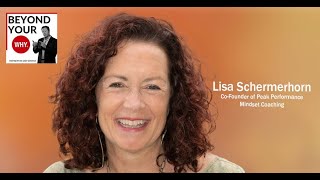
Dr. Gary Sanchez talks with Lisa Schermerhorn about finding your 'why' and using challenge as a tool for growth. She explains how understanding the reason behind your struggles helps you break through limiting beliefs and live more authentically.
Chapters
Welcome to beyond you'd why Podcast, where we go beyond just talking about your why and actually help you discover and then live your why. You see, we believe that knowing your why, that driving force behind every decision you make and every action you take, is the essential first step to really knowing yourself. It allows you to move forward faster and have a bigger impact. If you're already a fan of the show, then you know that every week we talk about one of the nine whys, and then we introduce you to somebody with that why so you can see how their why has played out in their life. This show will be more powerful for you if you've already discovered your why. If you still need to do that, head over to whyinstitute.com and discover your why today. It'll only take you about five minutes. Now let's meet today's guest.
Welcome to beyond you'd why podcast. We go beyond just talking about your why and actually helping you discover and then live your why. So if you're a regular listener, you know that every week we talk about one of the nine whys, and then we bring on somebody with that why so you can see how their why has played out in their life. And this week we're going to be talking about the why of challenge. To challenge the status quo and think differently. So if this is your why, then you don't believe in following the rules or drawing inside the lines. You want things to be fun and exciting and different. You rebel against the classic way of doing things. You typically have eccentric friends and eclectic tastes because after all, why would you want to be normal? You love to be different, think different and you aren't afraid to challenge virtually anyone or anything that is too conventional or typical for your tastes. Pushing the envelope comes naturally to you. And so today I've got a great guest for you. Her name is Lisa Schermerhorn and she is a transformational leader, award winning speaker and expert in the fields of human behavior, leadership and personal development. She also trained in the Winner's Mindset with Bob Reese, the former head trainer for the New York jets and and helped a professional golfer win Golfer of the Year. Lisa was a VP of Business Development for an innovative startup company using virtual reality to help clients with pain reduction, memory loss and stress reduction. As a certified Hypnotherapist and master practitioner of Neuro Linguistic Programming, nlp, she helps entrepreneurs and high performers get from where they are to where they want to be much faster than conventional coaches. Lisa is also a YOS certified Coach helping people Discover their why and apply it to their life, both personally and professionally. Lisa recently launched her new book titled and Every Belief is a Lie. Lisa, welcome to the podcast.
Thank you so much. And every time you read the definition of challenge, I get chilled.
It's pretty fitting, huh?
It's so fitting. It's so fitting. And I tell people how much finding that out changed me because with you're a challenge, you're an outlier, you're different. And as a child, I learned differently. I was very creative. I didn't fit in very well. I struggled a lot. And I always thought that I was broken and something was wrong with me. And there was a belief that I held on to, even though as an adult I realized that I, you know, that I could function and that I was smart, but there was always this little part of me that just thought I was different and broken. And when I got the challenge, why, I was like, of course. And it really helped me own who I am. I mean, I don't know if people will be able to see this, but I live in a log cabin on the side of a mountain in the middle of Vermont and I used to live in New York City, so go figure.
Where did you grow up? Take us back to where you grew up. What was your childhood like? What was school like for you? What was it like to be challenged and not knowing what it was through elementary school, middle school, high school, college, what was that like?
Let's see. I grew up in New Jersey on the Jersey Shore, but I don't have the accent.
Upper middle class family.
But I went to kindergarten.
Before the cutoff, so I was one of the youngest in my class. And everyone could read. Everyone knew their letters, their numbers, and I couldn't. And I struggled. And, and it every year, I was always behind and I found that every summer I was going to summer school and my self esteem plummeted. I just thought that I was stupid. I didn't think that I was ever going to amount to anything, but I was always very creative and artistic. I ended up going to a summer program at Rhode Island School Design, and I was actually accepted there. But my parents were so afraid that I'd be a poor starving artist that they were not about to have me go to art school.
So I went on to Simmons College in Boston, where I got my bachelor's degree in marketing and management. I then went on to the Garment center where I went to work in the fashion industry, where I found out how abusive it was. I worked for one company and my boss Would walk around. We were not allowed to take lunch breaks. We had to stay in our office and we had to be at work at seven in the morning and we couldn't leave till seven at night. This was in the 80s and I was young and I was impressionable and I thought, oh, this is the fashion industry, so, so it should be cool. He would come around and eat our lunches. He would come around and take a bite of our sandwiches. Stick his hands in your fries. I won an award for worst boss.
Magazine. I submitted that. But no, he was horrible. And I was lost. I had no sense of self. I had no sense of who I was and what I wanted in my life. And I ended up leaving and I, I got very depressed and I was so depressed at one point that I was going to therapist two to three times a week and no one was able to help me. And finally someone had suggested a hypnotist and I was like, don't they make you quack like a duck?
Who would go to a hypnotist? But I was desperate and I tried it and I couldn't believe how quickly that they got to the root cause of my issue and helped me release the information that I was holding onto. And I decided from there that I wanted to be able to do that for other people. So the woman who I went to, I asked her, please tell me all the names of the people that you've trained with. And I went on to train and because of my belief that I wasn't smart, if you saw the list of certifications.
If I stacked them all. But it was a way for me to go outside the box and be different and help people who were different. But I didn't realize that that's what I was doing. I was so desperate to heal myself that I went on and realized that I had these abilities to help others. So I went on to study neuro linguistic programming. Tony Robbins is really well known for it and it's considered the study of excellence. What they do is they study the people who are top of the field. And how do these people think differently than the rest of us?
It's mastery around excellence. But I've gone around and studied a number of different things. Energy, medicine, how our energy system works. Studied with different master teachers all over the world.
I, I just, I ended up in a 29 year marriage.
We had gone in different directions and I was terrified to be on my own. I did. My kids were in college getting ready to graduate and someone had suggested a firewalk facilitation program where you train for a week on how to do fire firewalks for other people. And two things that I was afraid of, being alone and walking on fire. So I chose walking on fire first. And the week entailed breaking arrows from your net, your throat, bending a ten foot piece of rebar from my throat, walking four feet of broken glass. And every night we walked seven to ten feet of red hot coals. And to graduate we had to walk 40ft of red hot coals.
And did your feet burn?
No. But I was terrified and I thought they would. And I was convinced I was going to end up in the hospital. And those poor people who were in my class, they survived me all week.
And what was. I'm sorry, go ahead.
I was just going to say, so what was the benefit of that? Because I know there's people listening now that are going to be thinking, I've thought about doing that. I wondered about it. But I wonder, what am I going to get out of that?
What did you get out of learning to do that and accomplishing that goal?
Right. Mind over matter. Because who could ever think that you could bend a 10 foot piece of rebar from your throat?
And there's a whole mindset. For instance, when you're walking on red hot coals, there's something called chi energy. And we all have our own chi energy. Well, the fire has its own energy as well. You have to raise your energy at or above the energy of the fire. If you can do that, you can walk. I would never let someone walk who's depressed or down because that's when people get burned or they're afraid. So when Tony Robbins does his firewalks, he plays loud music, he gets people cheering and do people burn themselves? Yeah, you still can. I was terrified for the 40 foot walk. And someone in my group said to me, you know, because I was having a meltdown. And he said, he asked me, how much fire have you walked this week? And I said, well, we started Sunday night, so probably walked about 50ft already. He said, exactly. You've already walked more than 40ft. This should be a piece of cake. Go. And it was my easiest walk. I remember when I walked across, I felt like I floated and I stopped and my feet were warm. But they refer to them sometimes as little kisses that you get on your feet. But I remember just having a pair of flip flops on and my feet were warm, but I was not burned at all.
That's amazing. It's amazing that the body can do that and that you did it, you know, you somebody who had the stuff going on that you were dealing with and you were able to do it. And so once you were done, you finished this week. Long journey. How were you different at the end.
Of that week, I sat with my fears and I thought to myself, I just faced one of my greatest fears and I survived. And if I've been in this marriage for 29 years and I'm not happy and I'm afraid to be alone, then I need to go towards it and I need to figure it out. And when I got home, I had a conversation with my ex husband about looking at our marriage and it took a couple months and we ended up splitting up probably three months later. And I moved to Vermont on my own. Didn't know a soul, had no family here, didn't know anyone. I just knew that every time I came here I loved it so much and it felt like home. And every time I went to leave, I would cry. So I knew I needed to be here. I didn't know why. And then found a community here and found really sound like I fit in Vermonters that we have a saying keep Vermont weird. And so there's got to be a lot of challenge people here.
I found my people the same about.
Austin and what is it, Portland. So you could go to either any of those three places.
So then after that, so you moved to Vermont, you moved into a log cabin and you continued coaching or when did you start coaching other people?
Well, I've been doing coaching on and off for 20 years, but I really took it to a whole nother level.
The past six years when I moved up here full time. But I was working with people in person because people didn't want to work online. And then Covid happened which catapulted my work around the world. And now I see I have clients in Australia, clients in Africa and France and England and all in Canada and all across the country. And it allowed me to connect and network like I had never done before. And I ended up meeting a woman who did a marketing event and she did my why. Ah.
And.
She introduced me to Dan, who she, they just did. She just did the test. So he ended up doing my whole why. And I, I, I swear to you, it changed my life. And I got my partner Kevin, my business partner Kevin to do it too. And what was interesting is we both have similar whys and you usually don't want to team people up with similar whys, but we're both challenged and we're both better way he has contribute. So I always know that he's got my back and he always takes care of me. And he also knows technology. And so he's got that background where he gets the foundation done and helps make things happen, whereas I'm makes sense where I'm always. I'm like the visionary, and I come up with all of these ideas, and then he helps me implement them. Even though he's contribute, I think he has some simplify in him, too.
So for those of you that are listening, what Lisa is talking about is her why is to challenge the status quo and think differently. And as you can tell, she thinks outside the box. She doesn't follow the rules. She does it her own way, and that's what's made her, her, her. And then how she does that is by finding better ways, which are all the different courses that she's taken, they're all better ways of thinking, better ways of doing, better ways of understanding. And ultimately, what she brings is our solutions that make sense, solutions that are doable, that. That are logical, that are going to work. And so. And then your partner, his why, he has the same why and how that you do challenge and better way, but his what is to contribute to other people, to have a make a difference in their lives. And so you two have been a really good combination, is what you're saying.
Yeah, we really complement each other. And what's interesting with him, the difference between us is he owned his challenge as a kid. He wore it proudly. He talks about some of the outfits that he would wear as a kid. He loved standing out, he loved being different, and he owned it. Whereas I didn't have that confidence. I didn't have that in me. So even though you can have the same why. One of the things that I love being a why coach is when you discover someone's why, it's really. It really helps pinpoint where people's issues could come up and to determine whether or not someone's done their work or not. So it makes my life easier as a coach, so it helps me zero in right away and say, well, these are some issues that you might have based on your why.
And it really helps me get to the root cause of people's issues fast.
What I found fascinating is if I just. So if you're watching that, if you're just listening and not watching and you don't know what Lisa looks like or Kevin, your partner, I would have never picked Kevin to be challenged just looking at him on a screen. So I would have missed. I would have created my own narrative around what I thought I was seeing. And I would have been dead wrong. However, that's who he would have been to me, and I would have treated him that way. But now the that I know his why is challenge. And your why is challenge. That opens up so many different conversations. It opens up my ability to connect and communicate and understand you completely differently. And I'm sure it's that way for you with your clients.
Absolutely. Because here's the other great thing, and it's also at work in business, when you know the why of the other people you're with, you can create better rapport. And rapport is everything, because you create trust. And once you created trust with someone, they'll allow you to really go to places where maybe they wouldn't with anyone else. For instance, I had a client this morning who came to me because she wanted hypnosis. But she said to me, I've tried five times and no one has ever been able to do it. And I was able to establish trust by trying to figure out, because I knew from her language that trust was part of her why. So I had to go bend over backwards to make sure that she could trust me. And once she did, boom, she was under and we did some major work together. It was really powerful. And she was astonished because she said, no one else has ever been able to do this for me. So having these tools are so key in helping you, especially with right way people. When you're a challenged person and you're all over the place, it's like coloring outside the lines. And then you have a right way person who's very structured and very much about things being a certain way. We can scare them.
Because structure is important to them and they need things done a certain way to make them feel safe. And as a challenge person, I need those kind of people to do work that I don't want to do. I can't do that. If I had to sit down and do accounting or do things that are really structured, I would do it. It would take me 10 times longer and it would look like a mess.
Exactly. That's so funny. So let's talk about your book for a minute. So you. It just came out recently. And tell us the title. And tell us about the title.
Sure. I've been trying to write this book for almost 20 years. I sat down to paper, blank pages, and. And nothing would come out. And I started to sit with my belief system. And I thought to myself, I do this for everyone else. I need to do this for me and that belief system that, that I'm not smart was, was like a flashlight, right, Shining right at me. And I made a list of all the things that were holding me back. And you know, who am I to write a book? I was not a great student. What am I going to do with my grammar? I don't, you know, I.
All of these questions that I had in my mind and what's interesting is as I released them, I felt lighter and lighter and lighter. And with that, if you were to imagine like a highway and your destination is at the end of the highway, my highway was filled with boulders. As I moved the boulders, all of the sudden the destination was there. And for those people who understand the law of attraction, whatever you believe, you attract unconsciously. When I believed that I couldn't do it, then I was blocking myself. But the minute I started believing in myself and I knew at an unconscious level that I could do it because I'd released all that, everything started to show up. It was unbelievable. The title In Every Belief is a Lie showed up. And as soon as I had the title, this book poured out of me for five months. I wrote non stop rewrote, edited it, and then I'd go back and read. I'm like, who wrote this? This is actually pretty good.
It literally went right through me. And it was a labor of love. And it included my own personal stories of my own journey of going through my own belief systems and, and how when I allowed myself to let go of these boulders that were holding me back, I refer to them as lies. My whole world changed, everything changed. And it's scary because it's vulnerable. I tell a lot of personal. I have a lot of personal stories in that book and, and you open yourself up to criticism and people saying things. But I felt my make sense is so powerful and it comes through in the book because I love to take very complicated information and break it down so it makes sense. And a friend of mine read it and she said she wanted to do a review. And one of the things she said to me is she's a psychologist and she said, you took all of this information that's so complex that I learned in textbook and really made it simple for everyone to be able to understand. And I was like, oh, there's my make sense. So it was what I brought to the book. So it's simple steps, there's exercises in it. And, and what's interesting is that most people don't know. We're programmed from the time we're Born our brain frequencies. We have five major brain frequencies. We start out with something called delta, which is a big wave. And if you think about what babies have to learn, infants have to learn language and sound and taste and emotions and feelings and colors. It's extraordinary. And how to walk, their motor skills. Then we move into elementary school, and that is another way that's slightly smaller, but it's what kids learn when they're in elementary school, all of those things. So they're absorbing, so they're learning from their teachers, from their parents, their grandparents, their friends, any traumas that happen to them, anything. Their religion. So we don't choose our religion for the most part. We are raised into a family and told this is what our belief is. And so such as culture. And our cultures are very different depending upon where we come from and also our socioeconomic status. So money mindset is a huge thing because when people grow up with scarcity, no matter how much they try, they will often sabotage themselves because they don't believe that people with money are happy. I do a workshop where I show a picture of a mansion, and I ask everyone in the room, who here wants to make a million dollars a year? And everyone raises their hand. And then I ask them to tell me about the people in the mansion. They're like, oh my God, they hate each other. They're getting a divorce. Their kids hate them. They can't afford to heat the house. So many people have misconceptions of money, and to me, it's an exchange of energy. And our media portrays people with a lot of money as evil as well. So we get programmed around these, and then people hold onto these unconsciously, and then they sabotage themselves over and over and over again. Or even people with money never feel like it's enough, and they can run themselves into the ground working hard because they're afraid they're going to lose what they've accumulated.
We also inherit beliefs. There's actually science called epigenetics, where they've done studies one one that they did with mice, where they shocked these mice every time they smelled a certain smell, chemical smell, so they associated the smell with the shock. Their grandpups would run when they smelled the smell without a shock. We have those, we inherit those same things. So if you have a great great grandparent that maybe survived the Great Depression or Holocaust or any kind of trauma, that family trauma gets passed down generation after generation, and it runs us unconsciously. We don't even know that we're doing it, and we don't Even know why we have these fears and phobias and anxieties.
So when you talk about releasing beliefs, what is that? Tell us what?
That.
How do you do that? I got this belief. How do you release it? How do you let it go?
I have several things, and in the book I actually talk about several different techniques. And I'm in the process now because I was so busy getting the book ready. I'm going to have videos available with the QR code, so they'll be able to go in.
To release a belief. We store it in our physical body. If you think about something that's irritating you right now, if something's bothering you, someone didn't do something or said something that hurt you, if you were to close your eyes and you can feel it in your body and you can say that's about a five, then from there I ask you to release it using really simple terms. Should I let it go? Yes. Could I let it go? Yes. When? Now.
When you repeat that, the number will go down until you get to a place of new.
Because when you're neutral, you can make really good decisions. When your decisions are emotionally based, you end up making bad decisions.
The most important thing is, is that the event that may have traumatized you, you can't change what happened, but you can change the way you feel about it.
If someone hurt you as a child, when you go back and look at that you've already said, taken on this belief, and it's deep in your unconscious mind. I can't trust people. And then how many times do you know people who were traumatized as child or abused, and then they end up in bad relationship after bad relationship after bad relationship, because that's what they believe love is, or they believe that they deserve that. When you release that emotion and look at it from a different perspective.
And I also do a lot of forgiveness work. Forgiveness is everything. Because if you hold and people misunderstand what forgiveness is about, because it's not saying what someone did is okay. It's about letting it go and, and knowing that it wasn't about me, it was about the other person. And then when you go to a higher place, you can say that person was doing the best they could with what they had, they didn't know any better. Some people may have a hard time with that, but for me, I know in my life, the more that I was able to forgive, the freer I felt and the more joy I have in my life. And more things came to me because I was free and open.
You Know, it always confuses me a.
Little bit.
When I try to figure out, okay, so if I continue to release beliefs that are not serving me, what's the end game? What am I trying to get to? What is the ideal human or what is the.
Where.
Where are you trying to get somebody to.
When you release a belief that isn't yours, your own beliefs pop up. Okay, so. So I'm trying to think of an example. In golf, if you think about it, what happens when you think about where you don't want the ball to go?
Yeah, it goes there.
It goes there, right? So when you let go and you're blank and you're just neutral and relaxed and having fun, and you're just focusing on what you do want, where does the ball go?
Yeah, where you want it, where you.
Want it to go. So what you want to do is focus on what you want, not what you don't want. And too many of us go are. Are focused on, I don't want to lose money. I don't want my car to break down. I don't, you know, I can't afford this or I can't afford that. Well, that's. That's creating your own, you know, your own prophecy. You. You put yourself in that. And does that mean that I never think negative thoughts? Of course not. I'm a human. You know, I was stressed out of my mind getting my book online, and all these things had to come into play, and I had to go for a long walk. You know, we're all human. But then I go back, and then I. And then I breathe and I focus, I release. And then I become sovereign. I become in alignment with who I am, and then I can relax.
And I know that I'm just doing the best I can with what I have for who I am today. And my best today may not be the same best as tomorrow.
You know, an example is if someone's out drinking and they have a hangover, their best is not on Monday or Sunday the same as it could be on Monday. Everyone does their best.
At the time, and. And it's important to recognize that in other people as well, because we're really quick to judge other people. And, And I always try and go from a place of compassion and see what does this person need? Maybe they're struggling, maybe they need my help.
So coming from a place of judgment and, And. And reframing is also another thing that I find is very powerful. How can I see this from a different perspective? How can I look at this that what's what's the gift from this?
And I often do that when I. When I'm going through a difficult time. I always say there's going to be a gift in this somewhere. I don't know what it is. Figure it out.
To me, the hardest part of all of it is trying to figure out what you want, right? It's easy to figure out what you don't want, right? It's not easy to figure out what you do want. Like what do I want to do with my life? You know, all those kinds of questions. As somebody growing up, it is hard to figure that out. So how do you help people figure out what they want?
What brings you joy.
When you're living your why you're in pure joy, right? So when I'm doing my challenge thing, it brings me joy every single part of my day. From where the way I vacation, the way I buy my car, the clothes I wear, the jewelry I choose, the type of dog I choose, my house, everything. When I'm in my why I'm Jo, I'm in joy. And people misunderstand something that's very powerful. People think that their purpose is their job or their purpose is to make a lot of money. That brings a lot of unhappiness. When you do something that brings you joy and service to others. Like what you do, Gary, is you have given a gift to so many people that is in service to others. And yes, it was your brainchild and you worked really hard and it was important to you, but there was a reason that you got this out and this is changing people's lives. So when you think about what you're doing, does it bring you joy? Does it bring you. It's a better way y. Because you're better way, right?
I couldn't stop it.
Right? You can't stop it. When you are in your purpose, you can't stop it. So the more you eliminate the things that. That are blocking you, the negative beliefs, the more these new opportunities will start showing up. And. And I'm not kidding. I mean, all of a sudden, out of the blue, I was offered a speaking gig in, in Las Vegas. And I spoke in front of, you know, all these people and I thought, oh, and then I got another gig in Miami. I was like, I didn't. I wasn't even asking for this. These are things that landed in my lap. And that's what people. I want them to understand. The more they release their negative belief systems, the more that they release these boulders that are in their way, the more Gifts are going to come to them.
And when you also learn to love yourself. I didn't know what that meant. What is loving yourself? Loving yourself is setting boundaries of taking good care of your physical state, working out, being around people that you love, learning to say no.
That's loving yourself and setting boundaries and doing things that truly. That truly bring you joy and that you love. And I will tell you that my days at work don't feel like work. It's not work. And that's how you know.
That'S awesome. And you're helping people get outside their box, right?
I try. Yeah, I do.
It's the lies.
And every belief is a lie. So it's the beliefs, I guess, that are the negative beliefs that are keeping you in the box.
Right. But here's another thing. When I talk about the programming, does this even make sense? We have. This is not a political statement. I'm just using it as example. You have people watching msnbc, you have people who watch cnn, and you have people watching Fox and whatever other channel. Are they all getting the same information? But everyone who's watching thinks they're getting the truth, Right?
Sure.
So does that make sense? So everyone is getting partial truth and the truth is missing. So you get 60%, 80% of the truth. And we walk around thinking that we know the truth.
Yeah.
And we make decisions and live our life and communicate and all that based on the belief that we're getting the truth when we're not.
We may not. Exactly. And I. I just listened to a Native American elder say, use this story. And it was beautiful. Said, imagine you have a blue jay and a robin, and the blue jay is talking to the robin, saying, oh, your nest is so messy. Your eggs are blue. How come they're blue? How could they be blue? How do you feed your babies that? Those worms. I don't feed my babies that. It's like, how do we judge each other and tell each other that we have to be a certain way when we're all unique? We all have different whys, and everyone is different because of that. And it's important to honor that. Honor that special thing. We don't want to be like everyone else. It would be a really boring world if we were.
Yeah. So I always wonder with people that have the why of challenge.
When you look back at what it was like for you to go through your childhood and young adulthood with the why of challenge.
How could you have. How could you help somebody?
You know that somebody that age with the why of challenge is struggling. They Just always are.
Yes.
How could you help them? What would you say to them? What would you help them understand to make. Make it better for them? Or would you?
You know, there's two sides to that because I always say that people's wounds are their greatest gifts. No one knows that pain like you do. So when you get to the other side of that, then you know it and you have the ability to work it. And you know both sides. Now, if someone had said to me as a child, lisa, there's nothing wrong with you. You're special, you're unique. You think outside the box when you go to. If I went to conventional public school, taking tests and exams was a struggle for me. But if I had gone to a different school, let's say a Waldorf or Montessori or something that allowed me to work at my own pace and think outside the line, I might have flourished. Who knows it? Each child. Like I raised both of my children very differently because I was aware of how hard it was to grow up being different. And so I was keenly aware of what worked well for one child was not going to work for the other. And I was very mindful of that. Whereas, you know, I was not a cookie cutter mom where I was going to say this. And I always pushed my kids outside the box. And my son was not happy with me. But I always tried to find creative ways because he was painfully shy. So I found.
What was a sports broadcasting camp for him so that. Because he loves sports, but he would learn how to do public speaking through sports.
Yeah. So I was always being creative as a parent. And that's the thing with challenge kids is that you really need to.
Allow them to have the space to explore because they're not like everyone else and they can be very depressed. And I don't know if you've done studies on this. I know for me, I had learning disabilities. I'm curious as to how many challenge people think outside the box and don't learn in conventional ways.
Yeah. So one of the things that will talk about when you're out here in Albuquerque is kind of the. The size of the lane that the different Y's need to play in. And your why being challenge is you basically need some guardrails, but they got to be pretty wide. So you get to play in that big guard rail as you're moving forward. Whereas as you mentioned, right way is not even guardrails. It's a line. They just want a straight line. They don't want any of that playing in there.
Right.
And so I don't know how we can. We're actually working with the school system right now.
And looking at these kinds of things. How do we.
Because I had parents that had right way in them. They were very much like this is the way you do things, this is the way you dress. And then I would turn around. I went through a period where I was blonde, brunette, redhead, short, long, long, curly, had a bald spot at one point just by accident. But I was always playing with my hair because it was my way of discovering who I was because it was the only way I could express myself was changing my hair constantly to figure out who I was. That that was my. My little of many rebellions. But it's hard, especially when you mix right weight people. If you are a right way parent and you have a challenge child or even simplify because challenge kids can have chaos in their life.
And simplifying people don't deal with that very well. So I think this is a fantastic idea from a parenting standpoint if you can start to identify the why of your kids. I think that I would have had higher self esteem and maybe felt more stable and maybe have not have gone through the depressions that I did. But at the same time those depressions made me who I am today and helped me go on this journey. Maybe I would have saved my feet a little bit of.
Torture.
You know, there's so much still to be learned about how to utilize the nine why's the best. And you're somebody that's going to see something that I don't see. I just know what I know. But people like yourself that come along are going to see things like I said that I didn't see or notice things that I didn't notice. And you're going to add so much more depth and meaning and to how to utilize the nine whys and the yos better.
Well, one of the things that I think about with challenge and better way people are their visionaries and so you're right in there is that, that we see things that other people don't see. You think about Steve Jobs got fired from his own company.
And then brought back because when someone has an idea and it scares other people or they don't understand what the purpose of it is. So as. As a challenge and I imagine is a better way and I have better way in me. It's a, it's a challenge to wait for people to catch up to what I see. It's not a better that I'm better than I just See things differently and then people will finally. And then my make sense helps me explain it. It's a nice combination for me.
If there's a parent listening to this right now who's thinks they might have a child with the why a better way, I'm sorry of a challenge. What advice would you give to them?
Give them a wide berth. You got to allow them to do some exploring. You need to set boundaries with them. But also if they're in a conventional school and they're not flourishing, they're going to need a different environment. And it's also about having dialogue with them and helping them discover what their feelings are and what they're going through. Because as someone who doesn't quite fit in socially, it's really interesting because now I can go anywhere and I'm an extrovert and I make friends very easily. I didn't have that as a child. I didn't understand why someone would want to hang out with me. I didn't understand what I had to offer. So it's really about helping a challenged child explore what their gifts are. And one of the best things my mother did was get me into art because that was something that I was actually discovered I was good at and it gave me something to look forward to in my days.
From a parent's perspective though, it's scary to think about giving these wide bumpers, if you will, to a 13 year old girl or 15 year old and just say, yeah, why don't you go ahead and play in this big area here where you can see how easily they could get taken in the wrong direction. So that's right.
Well.
It'S boundary, it's boundaries too. But when I mean give them wide boundaries, I mean in the exploration of like art, find something that they are good at, that they excel at and then let them go.
It's not, not a structured. An example of this. My son took an art class in school. He went to conventional public school and he came home with this beautiful lighthouse and I think he was 10 years old. And I was like, wow, I'm going to enter that into local art show that they were doing. And I got there and there were 10 other lighthouses that looked exactly like it because they were teaching kids to, you know, identically, you know, copy what they were learning. Whereas a challenge kid would not have done well in that because I would have made all these different colors and everything. And that's what I mean by the wide berth is the exploration of being able to use other colors to do something that's more, you know, an impressionistic and things like that allow them to explore within their gifts.
Gotcha. So, last question for you, Lisa. What's the best piece of advice you've ever been given or the best piece of advice you've ever given?
I wish I didn't have. I didn't worry as much. I wish that I could, could have trusted my own intuition and trusted that everything was going to be okay. I think the struggle of not trusting who I am when I was younger, not knowing who I was and.
Going outside of myself, I gave my power away a lot. I didn't trust that I had the answers. And so that caused me to worry all the time and wondering what other people thought of me. Once I finally started to really stand in who I am and know who I. Who I am, all the worries seem to go away because everything just starts to show up. So, yeah, less worrying and more joy and fun. Love it.
So, Lisa, if there's people listening that would love to get a hold of you, work with you, find your book, buy your book. How can people get a hold of you?
So my website is peak performance mindset coaching.com and my email is Lisa peak performance mindset coaching.com and you can also. And there's a link Belief is a lie. I think Kevin set it up for me. This is why I love having him as my partner. My contribute that you can access it the book through there or on Amazon. You can go on in every Belief is a Lie and it's available on Kindle. It's only 99 cents right now. And then I have the hardcover as well. And if you like it, please leave a review. It helps me. I'm trying to get to bestseller and you can learn all about the whys. It's in chapter 10.
Lisa, thank you so much for being here today. I love the title of your book, I love what you're writing about and I can't wait to continue our relationship when I see you here in Albuquerque in a few months.
So. Absolutely. I've never been so I'm excited to come to New Mexico. So thank you so much. Yeah.
Make sure you stay a little longer to see all the balloons.
I am. I'm staying through Saturday, so. Perfect.
Perfect.
Yeah.
Well, thanks so much for being here. Appreciate it.
Thank you.
I really hope you enjoyed today's episode and that through today's guest you heard how important it is to know your why and how impactful it can be in your life and the lives of those around you. Be sure to head over to whyinstitute.com and discover your why today. Remember, the more you know about yourself, the more you'll know about others. I'm Dr. Gary Sanchez, and I'll see you on the next episode.
More from Dr.




Women In Leadership: A Need For A Greater Systemic Change With Belinda Clemmensen






