Finding What Drives You: Making Sense Of Your Problems With Dr. Matt Chalmers
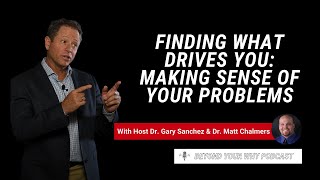
Dr. Matt Chalmers explains how a back injury led him to chiropractic, then to neurology, nutrition, and hormone therapy. His core mission: making sense of complex health problems through systematized, practical solutions like stress management and hyperbaric oxygen.
Chapters
Welcome to beyond you'd why Podcast, where we go beyond just talking about your why and actually help you discover and then live your why. You see, we believe that knowing your why, that driving force behind every decision you make and every action you take, is the essential first step to really knowing yourself. It allows you to move forward faster and have a bigger impact. If you're already a fan of the show, then you know that every week we talk about one of the nine whys, and then we introduce you to somebody with that why so you can see how their why has played out in their life. This show will be more powerful for you if you've already discovered your why. If you still need to do that, head over to whyinstitute.com and discover your why today. It'll only take you about five minutes. Now let's meet today's guest. Welcome to beyond you'd why Podcast, where we go beyond just talking about your why and actually helping you discover and then live your why. So if you're a listener, you know that every week we talk about one of the nine whys, and then we bring on somebody with that why so you can see how their why has played out in their life. And so today we're going to be talking about the why of make sense to make sense of the complex and challenging. So if this is your why, then you are driven to solve problems and resolve challenging or complex situations. You have an uncanny ability to take in lots of data and information. You tend to observe situations and circumstances around you and then sort through them quickly to create solutions that are sensible and easy to implement. Often you are viewed as an expert because of your unique ability to find solutions quickly. You also have a gift for articulating solutions and summarizing them clearly in understandable language. You believe that many people are stuck and that if they could just make sense out of their situation, they could develop simple solutions and move forward. In essence, you help people get unstuck and move forward. And so today I've got a great guest for you. His name is Dr. Matt Chalmers. He received his degree of Doctor of Chiropractic from the Parker College Chiropractic College in Dallas. Shortly after graduation, he started postgraduate work in the field of neurology and is now a certified clinical chiropractic neurologist. Dr. Chalmers also received certification in spinal decompression for the management of disc pain, making him one of only a handful of doctors in the Dallas Metroplex to have such a certification. Dr. Chalmers has been an athlete all his life. And really enjoys working with athletes and their families. Nutrition is a very large part of a healthy lifestyle. And as such, Chalmers Wellness offers a wide range of dietary counseling for weight loss to weight gain. Chalmers Wellness also offers a large variety of nutritional supplements to help improve the overall wellness of the entire family. Dr. Chalmers, welcome to the podcast.
Hey, nice to have you. Nice to be on. It's fun.
So tell us a little bit about how you got into chiropractic in the first place. Give us a little bit of your history. Kind of go back, what were you like in high school, got into college, and then ended up going into chiropractic. How did you pick that?
So my whole family's engineers. And so, you know, the whole, we take data and solve problems, saying, it's just, it's very in my genetics and I didn't want to be an engineer. My whole family's in the oil field business. I kind of saw that and was like, that's not for me. So I was going to be a medical doctor. I wanted to either be like internist or a surgeon or something like that. And then when I was in high school, I played football and I hurt my back and I couldn't walk. And I went and saw orthopedic surgeons, neurosurgeons, pain specialists, radiologists. Man, if you had a license to look at people, I saw you. And at the end of the day, they sent this 155 pound kid who looked like he'd never seen the sun and to tell me that there's nothing wrong with me. I was just making it up because I didn't want to play football anymore. And at the time, I was bench pressing about 400 pounds. I was squatting about 600 pounds. I remember looking at the guy and being like, if I could reach you, I'd break you in half. And he was just astounded that calling me a liar and a fraud would somehow make me a little upset. So I call my football coach and I'm like, hey, man, I can't walk, I can't play ball. And he's like, well, go see our team chiropractor. And because the way fate works, I remember to this day telling him, I need a doctor, not a massage. He was like, well, just go see him. I was like, fine. So my parents literally carried me in. He takes the same X rays the MDS had for an hour or so. Clicks up on the board, goes, oh, it's right there. Put me on my side, adjust me. I got up, hobbled out, went Back to practice three days later. And I was like, okay, maybe there's something else to this whole world than what I thought. And the cool thing was, is about two weeks after that, I asked him a question about the body, and he goes, you know what, man? I don't know the answer to that, but I'll find out. Taking about another 10 days. I go back in, he's like, hey, remember that question you asked me last time? I. I researched it, figured out the answer. Here's your answer. And I was like, you know what? All of those surgeons, all of those medical guys, they couldn't figure a problem out, and so they said it was my fault. These guys didn't know the answer to something. So they went and researched it and looked it up, and I was like, this is the path I want to go down. And so that's why I became a chiropractor. That was my whole deal. Which is funny, because when we got to Chiropractic School, Dr. Stern, he comes up and he was like, who here has family? Who is chiropractors? People raise their hands. He goes, who's here? Has life been radically altered for the better because of chiropractic? We raised our hands, and he was like, if your hand didn't go up, you should drop out now. You're not going to make it. This is too hard. I was about two thirds the people raised their hands, and when we graduated, a whole third of us were gone. So it's one of those things that it is. Chiropractic is kind of a calling. It's not necessarily something you get into for fun, but it's been really, really, really helpful for a lot of the stuff we do. So it's been great.
So do you find people either believe in it or they don't?
You know, it's funny is because we've been working with so many people, and I have so many medical doctors as patients, either from. For the nutrition piece or for the chiropractic piece. I get a lot of people who come in and me, like, they'll just flat tell me, like, look, I don't understand what you do. I don't see why it works. But this person sent me in, or my wife told me I needed to come in, and three or four visits later, they're like, hey, man, I still don't understand how this popping thing works, but I feel a lot better. And so obviously, what you're doing does something. So. Which is hard because even a lot of the standard medical doctors don't have the education in neurology to understand muscle, spindle fiber, Golgi tendon function and how the change in tone happens and the pressure on nerves goes away. And so it's quite involved. But it's one of those things that people are starting to come around just because they've seen the evidence in their friends and in themselves and they're like, I can't tell you how it works, but it does. So I'm going to come do it. So that's been really helpful.
Yeah. You know, I'm a big believer in chiropractic because when, you know, I had years and years of back pain, did kind of a similar path to what you were talking about. I went to every other kind of doctor you could imagine. Nothing worked, but chiropractic did. And that was just a godsend for me. And when I have a problem with my back, that's where I go. Because it's fast too, you know, it's not years of talking about it in X rays and medications and muscle relaxers and all the rest. It's like, okay, let's get it figured out. Like now.
Yeah.
So.
All right. So, like, it's funny because when I, When I did my why with your testing, it was. It was just so, like, this is 100% mate, you know, just from the. When someone comes in, they have an issue. It's. If I do something and it works, that's great, but I have to know why. I have to know, I have to figure out what was it that the real problem was? How do I fix this? Because the thing is that if I understand why, then when somebody else comes, I can be like, I have to. I know what's wrong with you. But I have to attack it from a different angle because that's the way that we solve things. Because if you do something and it works because you don't know how, well, how are you going to replicate that if it doesn't work exactly the same way next time? And so it was really, really funny when I read that from all the nutrition we do for all the physiology work, or even the chiropractic that we do, it was like, okay, this is the first time I've taken any type of test like this and it's nailed down exactly kind of the things that drive me like this. I've never done anything that was even remotely close, but this was a hundred percent on.
Yeah. And the great thing about what you do is it's in line with why you do what you do. Right. You're that person that is great at solving problems, and you love to solve them, the more challenging, the better. Right. And so if what you choose to do with your life is in line with your why, you will have passion for what you do. In fact, that's where passion comes from. You're the perfect example of that.
Well, and that's, you know, we talk about purpose all the time. And people ask me all the time, they go, how do you wake up at 4am every day and research and read for two hours before you go to work? Doesn't that get boring? I'm like, no. Like, I love what I do. Like, there's a lot of times where I'll be reading a research article and be kind of irritated that I have to quit reading it so I can go get ready for work. So. But it's. It's one of those things. You know, I remember the first time I did this. Somebody asked me a question about testosterone and steroids and that type of thing, and I had no idea. This is like the day that I started chiropractic school, so I didn't have any real education. And he remember. I remember to this day, he was like, I thought you were going to be a doctor. You don't know any of this stuff. And I was just like, oh, okay, I can't be that guy. So I went and bought a textbook and, like a medical textbook on it and read it cover to cover just because I had to be able to solve these problems. If someone comes to me with an issue like this, I have to be able to fix it. And so it was very, very telling and very, in my opinion, humorous again, how much this test nailed who I was. Yeah.
And so where I want something that you can think about is that that is why I would choose you.
How many chiropractors are there in your area? Probably plenty, right?
Lots. There's gas stations. There's one on every corner up here.
Yes. So the question for the general public would be, hey, I need a chiropractor. Where should I go? Who should I choose? Right? So the question is, why would I choose Dr. Chalmers? And so from now, knowing your why, when it comes to your message to what you articulate to the public, it's all about making sense of the complex and challenging so that you can help people solve their problem and move forward faster. And you do that now by knowing so much, you. You dive in deep into the different subjects that you are the expert. You know as much, if not more than the medical doctor, probably more because You've had time to actually look into it, and that's why I would choose you.
Well, and that's oftentimes the big thing is because. Because I care. It's why did this thing happen? And that's like when we talk about how gallstones don't really exist. You have to understand what actually happened. Well, it's a liver issue, you know, so you have to do the research. You have to care enough to just always have to know what's the next step. And when you talk about putting, you know, making complex things into integrated plans, like when we look at IBS and celiac and stuff like that, it's like, okay, well, we have to clean the liver first for these reasons, then the kidneys for these reasons. We have to clean the gut and kill the parasites and kill the yeast and bring the probiotics back up and repair the gut lining. And it's just all the stuff in the body, it's. We have to do it in this order for these reasons, in this way. And that's like I said, it was just. That's me. Yeah. Like, I take something very, very complex and I crunch it down into very specific, easy to do steps. And like I said, I've never seen anything that came back and was able to explain how I do things like this.
I love that. So take us back now. Let's go to you. You were in high school, you got injured, couldn't play, went to the chiropractor, got healthy. Did you get to continue to play? Did you play after high school? Or did you just go off more into the. Into the medical realm?
So what ended up happening was I got offers from all over the place to go play, but I knew that I couldn't study the way I needed to play the way I wanted to and, you know, do all the things that is in college life and play football. And so I was like, what are these? He's got to give. And I know I'm not going pro, so I got to let the football thing go because I'm going to be the doctor. I've got to go do that. And so that's what I ended up doing. I just decided to kind of focus down on that. And I kept taking physiology classes. And that was my big thing, because that's how the engine works, it's how the machine works. And so that was obviously why it was. So that appealed to me so much, was because I had to know how the system worked, if I was going to be able to sit down and take it apart and put it back together. And so I took way more physiology classes than I had to, but that was the big piece. And then as we started going through, people started coming up to me, like, hey, I've got fibromyalgia. How do we fix that? I don't know. So I started going to the seminars, I started going to the support groups, figuring out what kind of worked and what didn't work. And so now that's how I figured out how to fix fibromyalgia and chronic fatigue when we went through with the neurology, and I started working with all my athletes. And that's how I figured out how to fix carpal tunnel and plantar fasciitis. And so, you know, there's a lot of these things that if you just sit down and understand how the system works, then ask questions, how did it break? And just break it down into, like, a system. You know, where does this thing go wrong? Why does it go wrong like that? And then you can easily go like, okay, this is the point that broke. Fix that. Everything after it fixes itself. And so that's kind of how everything's gone for us as far as, you know, the direction that we've taken, the practices. You know, you can tell me something. How to do something. Vitamin C does this great. Why? Why does it do that? Like, you should take D3. Okay. Why? Well, you know, 20 seals, where not a lot of people understand that D3 actually works as a hormone, helping absorb nutrients and then directing them where they need to go in the body, which is why if you get sick, you instantly run out of D3. Because your body's saying, absorb all those chloride ions. Bring them up here. We need to make more white blood cells. Well, as soon as you run out of D3, the messenger that's telling the body what to do is gone. And so if you don't keep your D3 up, that's why. And so it's those little things like that that. That's this who I am. That, like you said, that the why, that's what keeps driving this forward of the. Okay, you bring me a new issue. I have to figure out what's wrong. So when we Covid, it was one of those, okay, this is one of the few extra plural problems, which is why venting doesn't do any good. And you have to use hyperbaric. You also see the breakdown of red blood cells. And so the other thing that we have, like that is malaria, which is why quinine actually helps so much so little things like that just kind of, you know, as we go through, we take a problem, we take it apart, where'd the system break? How does this chain work? And how do we build a process to repair it? And so that's kind of how we've done everything.
So it's interesting. So for those of you that are listening and you can't see Dr. Chalmers, he looks like he's a football player still. I mean, he's got, you know, the 28 inch biceps and probably, you know, I don't even know how big of a chest, but he looks like a football player still. And so, but I. But the question that comes to mind for me is you went into chiropractic, and from the outside perspective, chiropractic is all adjusting the spine, crack, pop, get everything lined up, get all the nerves and all that working. So how do you then take that? You're one of the chiropractors. I can tell already that's gone to completely different level than a typical chiropractor. And how do you then why did chiropractic then start to incorporate nutrition and stem cells and all the other things that you guys are doing now from traditional crack and pop?
So the way that worked for me is I've always, as an athlete, I've always been looking at, you know, what supplements are going to improve my functionality. You know, what do I need to eat, what do I need to, you know, how's the biochemistry work? And I'm six or eight hours short of a chemistry degree. So I've had lots and lots of chemistry. And so that's been one of the big pieces of how's this work? But really the other thing is, because I have that entrepreneur style mind, when I see a market niche that's completely open, I have to kind of be like, well, no one's playing here, I gotta go figure this out for nobody else but for me and my family. And so it was, why are we taking the supplements we're taking, what's going on? How do I make my body work better? And you know, anyone in the bodybuilding community, anybody in the athletic community understands how critical diet is. And so it's just one of those, as an athlete, it's just one of those things that you just, you can't not be talking about diet if you're in the healthcare field and you're an athlete, because that's all it is. And a lot of my medical guys, my medical doctor friends of mine, come over and work with me for themselves and they send their patients over to get that piece reset, because if you don't have the chemicals that the body needs to run, it ain't going to run. Right. And so that's a big piece. So that's kind of evolved, at least for me, in the natural space of if I don't feel good or if I want to have great health when I'm 75 or 80, what do I have to do today to make sure that I'm on the right path? And that has a ton to do with nutrition. So that's. That's kind of where this has all come together, is I have this end goal of being really active when I'm 80. How do I get there? And so I had to build a system to get there. And biochemistry was the system that I'm using. And so that's where a lot of that came from.
Yeah, because you said way that way back when you were going to become a doctor, I'm sure at that point you thought medical doctor. Then you were exposed to chiropractic, you went that route. But it seems like you're now going back towards chiropractic and medical, you know, traditional medical doctor, or maybe not traditional, but where you do more than just adjust the spine.
Yeah. And it's funny because my. I, like I said, I have a bunch of eastern medicine, a bunch of Western American guys, and they both make fun of me. They're like, dude, you're the only guy on earth that's going to talk about coffee enemas and injectable medical testosterone in the same visit. I'm like, well, we need them both. You got to clean the liver and your heart, your brain and your bones need to function. So at a certain point, we're all going to have to have at least have this conversation. So, yeah, I'll have that conversation because it's what the body needs. I tell people I'm more of a physiologist than I am anything else. If it helps the body get better, it gets to play. If you come in with a herniated disc, we're going to talk about pain injections. Because those pain injections decrease inflammation, they decrease spasm, allowing me to do the physical work that's required, wired to keep you off the surgeon's table. So again, you integrate these things. You use the greatness of everything that's around you to fix them. We do tons of medical testing. MRIs, calcium CTs, sleep studies, all those things. But at the same time, we're always resting, metabolic rates, we always Go back through after the medical steps and then, okay, what do we need to do to your chemistry to get you where you need to go? Like, how do we make all of these things fit together into a nice little box where everything is set up and ready to go? And so that's really core. The piece is you could make the argument that I'm very mixed because I own a hormone therapy company. So you could easily say that I've incorporated a lot of medicine and I have, but it's whatever works to get us from point A to point B. How do we get to our goal? What's the fastest, easiest way to get to our goal? And then we're going to design a system that takes us from here to there in the cheapest, best, fast, most safest path possible path. And so that's, that's kind of how we set it up. And a lot of times it's, you come in, you got a yeast overgrowth. We can do biocidin and black cumin seed oil and all sorts of things and spend, you know, a couple hundred bucks over the couple months, or you can take Diflucan or nystatin for 10 bucks with insurance and next month we're good to go and we can just repopulate the get with probiotics. So you can use both. It's just what's the best thing for your specific program?
So I'm going to ask you what I think is a tough question.
And that is if you could only pick one thing, one thing that makes the biggest difference in achieving health, being healthy, what would that one thing be? Is nutrition, Is it fitness, Is it blood chemistry, is it supplements? Is it sunlight? Is it sleep? Is it. What is it? What do you think is the one thing that makes the biggest difference in health versus non health?
That's actually pretty easy. It's offsetting or eliminating your stress. So psychological stress changes the body unbelievably. So we have sympathetic and parasympathetic one's fight flight, one's resting, digesting, if you can figure out how to get your stress managed. So your sympathetic nervous system is not always dominant, you or resting parasympathetic is massive, massive, massive benefit. So you see those guys who they smoke and they drink and they eat bad food, but they live to their 90 because they just don't give a damn. They're just like, I'm going to be me, I'm going to live my life. Things are going to happen the way that I'm going to happen, and they're like, how are they so healthy? But this guy exercises and eats right and all these things. Well, he's also stressed out. He's type A. He's freaking out about everything every day, watching every single calorie, doing everything. He's super, super high strung, this guy. Not so much. That's probably the biggest thing. So if you can learn to manage your stress or for like a lot of us who have owned multiple businesses and they get six hours of sleep a night and they're crushing it all day long, how do you offset that? Okay, you go work out in the middle of the day, you meditate. At the end of the day, you set your life up so that you don't wake up to an alarm. You just wake up when you're supposed to. Those type of things. How do you balance that? That's the biggest thing is how do I eliminate the stress damage to the body? Yeah. So we start off with, okay, if you're going to get six hours of sleep, start off by going to bed in time that you can get full six hours before you want to wake up. Like, I get up at 4, so I go to bed around. I'm in bed and asleep by 10. And so I get up at 4 and I used to set an alarm, but now my body's just used to it. So I wake up naturally about 5 minutes, 10 minutes before my alarm goes off. So I'm good. And then I can do that whole thing. So I go, I research, I do everything all day long and then I go to the gym right about 1 o'. Clock. So my stress level comes up and up and up during the day and I go work out and it crashes. Because there's nothing better than kinetic motion to decrease neurologic stress. So now my stress goes way back down. Then I eat, then I go back to work and I work for the rest of the day till about 6, 6:30, then I go home and that's when I do my meditation, that's when I do kind of my, my breathing stuff. And that's where I kind of calm down and do that type of thing for about 20, 30 minutes. And then that crashes my stress again. And then I can deal with, I can play with my kids and do all that type of stuff at the end of the day. So I do that as a, as a daily habit. But then because of the stress that I'm obviously under, coffee enemas are a really big deal because the cleaner you get, your liver and your colon, the cleaner your liver and Your colon can get the rest of your body because all that oxidative stress that you're dealing with is supposed to be pulled out of your body through the blood via the liver. If your liver is congested and it can't pull the blood, it can't pull the waste out. You're sitting in waste all the time. So that gives us cholesterol problems or plaquing problems. That gives us all sorts of oxidative issues, cancer issues, things like that. So cleaning that liver is probably going to be the second best thing. But setting your life up so that you can avoid or balance that stress is going to be the, the number one most important thing. So schedule your day with little breaks in it to de stress yourself.
I work out at 6 in the morning, but I might consider changing that to middle of the day, because it does. You know, when you come back from a workout in the middle of the day, you feel like the day started over way fresher versus going out and having lunch.
Yeah. Well, if you can't, like, obviously getting a workout at 6am is better than no workout at all. But if you can, if you can change it and say, okay, I'm going to do it right before I eat. So here's the cool thing. If you do that right before you eat, you knock out that sympathetic portion. Now you're in parasympathetic, which is resting, digesting. Now that food you just ate has the proper hydrochloric acid to kill all the bugs and viruses, parasites. Now it's got the digestive enzyme from the liver and the pancreas. So you're going to digest and absorb more of the nutrients from that food than you would have beforehand. So that's the other really big piece to crashing your stress, getting it down as low as possible before you eat. So that's the other little piece that's really kind of cool. Plus then you're going to get that little extra window of food nutrition absorption from that workout. So that's the other fun thing.
So what are you seeing in the future? Kind of what have you figured out made sense of that is coming down the pipe? For the rest of us, that's some kind of breakthrough in staying healthy, living longer, living a better life.
Well, so it's actually kind of interesting. The millennials are kind of picking up on this and us older guys kind of have to recognize why they're doing it. So I was talking to a bunch of business owners and they were all irritated because they're like, I keep offering these millennials more money and they just don't want it. I'm like, that's because they care about quality of life more than they care about money. So what I'm starting to see is people starting to kind of wake up and being like, I'm not going to crush myself with stress for 80 hours a week just for money. I want to have a life. I want to live, I want to de stress. And so that's a really good one. I've seen lots of CEOs. I would do a lot of work with corporations specifically for health and wellness. Getting hyperbaric chambers in their office, getting exercise studios in there, getting nutritional stuff in there, making sure that, you know, their HSAs cover supplementation, helping them get the right nutrition in. So a lot of people are starting to recognize that while western medicine is amazing and personally, it saved my life more than twice because of car wrecks. So it is amazing. It has a really specific place. We really need to worry about our daily lives, our daily supplementation, our daily nutrition. So a lot of people are starting to wake up to that idea of what are we doing for wellness, not for medical care. And so that I think we're seeing a lot of. We're seeing a lot more concierge work. When Covid happened, everybody went virtual. My concierge piece of my practice blew up. I mean, it was like we'd go for two or three a month, then it went to like three or four a week. People calling up, being like, I need you to take control of my entire healthcare. This is an issue now. Now I realize how critical and how fragile my health is. You got to help me. And so that's when we started seeing everything. So I think you're going to see a lot more concierge. You see a lot more people who are taking an active role in their health. You're going to see a lot more people who are just deciding they're not going to let the world beat them into a pulp. And so I think we're going to see a lot more healthier people as we go through. I think that we're going to see things are going to get a little bit better. I love that.
So you mentioned something there about a hyperbaric chamber. So for those listening that are not familiar with that, what is it and what is it used for?
So there's a lot of different uses. People think people are most familiar with seeing them around dive shops. So if you get, you know, if you get bent or you get, you know, if you get too Much air bubbles in your. In your blood. You can use hyperbaric to push those back out. But the way we use it for health is when your body is under pressure, usually 1.4 ATA or atmospheric pressures. What ends up happening is that through Boyle's law, you. You can force a gas into a liquid. So what ends up happening is that when you're sitting at room temperature, or, I'm sorry, room pressure, and you're just breathing normal air, that's roughly 28% oxygen at sea level, and you're that. So that's how much oxygen you're getting in. So you breathe either reconstituted oxygen to 95% or pure oxygen at 100%, but under pressure. So now instead of your red blood cells carrying the oxygen, your plasma carries the oxygen as well as. So you can get 1000% more oxygen to the tissues. So we're talking ankles, feet, hands, brain, heart, all those type of things. So when you get that oxygen in, the first thing it does is it eradicates free radicals. So it's one of the more powerful antioxidants. So now the ph changes and it gets more alkaline, so it gets a little bit better. The other thing is that all those little blood vessels that were starved for oxygen now get to breathe on their own. If you have damaged red blood cells due to sickle cell anemia or Covid or anything like that, carbon monoxide poisoning, now all of a sudden, we can get the oxygen where it needs to go. So that's a really, really big piece of what we do. All my pro athletes will come in, and I'll have them go work out real hard one day, jump in the chamber as soon as they get done working out, and then I'll have them come in the next day after they work out. And every single one of them has been like, how do I get one of these in my house? Like, because, like, the last one who did it, he said he's an NFL, big NFL defensive guy. And he comes in, he was like, yesterday, he almost killed me in my workout. Today, I could have kept going to the same workout. He's like, is that because of the chamber? That's 100% because of this. And so he bought one. And he was like. He kept calling me and being like, yo, man, this is the difference in this year. He's like, towards the end of the season, he didn't fall off as much as everybody else did because he was constantly regenerating himself throughout the year. And I probably. Man, I probably got 20 or 30 of those guys chambers, because they would all see him and be like, oh man, what's going on? They'd call him up and you'd have them call me. So it's a really, really big deal as far as when we talk about that, how we're going to be in 30 years. It's one of those things I tell everybody. This is one of those things you should invest in because if you just wake up for an hour, do your emails, read your book, watch a movie, I don't care, whatever, while you're in the chamber for an hour every day, the chances that your oxidative stress is going to become a problem, either plaquing your blood vessels or anything else is going to be really small. You're going to get a lot more benefit out of just doing those emails if you're in that hyperbaric function.
There was a study I heard about hyperbaric chambers that was done in Israel where they increased the length of the telomeres using the hyperbaric chamber 25 years. So what that means long term, I'm not sure. Maybe you have a perspective on that.
So the to make this is kind of a paraphrase of what's going on. But the length of your telomere is basically the length of your life expectancy. So as, as your DNA replicates, the telomeres kind of break off. Kind of like if you tie your shoes for too much and they start to fray at the end. That's kind of the same idea. You got to cut the shoelace or get rid of. But you can't do that with DNA. So by keeping the telomeres healthy, so keeping them oxygenated, keeping them in the right ph balance, keeping the nutrition map to them, they can actually repair a little bit and they can stay longer. So the chances that they can replicate more often is higher. So that goes back to quality of life long term and more or less how long you're going to live. So telomere length is a really big deal. There's tons, there's hundreds of millions of dollars being spent right now trying to figure out supplements, drugs, everything to increase telomere length. And this deal with the oxygen is one of the reasons that people are extending their life by using hyperbaric on a more regular basis.
Would you recommend that everybody have a hyperbaric chamber?
It's one of the few things that you can, across the board, say, obviously there's going to be that weird thing where you got a pressure issue, but across the board, almost Everybody can do this. And so I've never met anybody who shouldn't be doing it. So I would, yes, I would recommend it for everybody now.
So I know you live in right outside of Dallas, so are you insinuating that the Cowboys are going to be really good this year?
You know, the problem I have with my Cowboys is that they can always be really good, but we find a way to not. Like, there's games where we should. We're going to win this by 55 points. And again, the cardiac Cowboys at the end of the game, it's like, we're up. We're up seven points and they've got the ball. And so you've got to stand there and just shake until the game's finally over. So now I'd love to say we're going to do great things, you know, and I like a lot of the guys on the team I met myself, and they're all really good guys, but we're just going to. It's every given Sunday, man, we're just going to figure out where we're at. It's going to be. It's going to be a fun season, but it's. I think we got a good shot, so we'll see where we go.
So now, you also wrote a book, is that right?
I did. It's called the Pillars of Wellness. I don't. I don't sit well. And so during COVID when we kind of had to, we didn't fully shut down in Texas, but we slowed way down. And when we did that, I was like, I gotta do something. And one of my buddies, Ryan Stuman, who does a lot of. He's written a lot of books and he does a lot of motivational stuff, he was like, write a book. And so I was like, all right, that's something to do. And so I did. I put kind of a lot of little things in there that, you know, people don't know. Once you get really deep in physiology about testosterone, about how gallstones don't exist, about like, how to, how to make the body healthier, and one of the big ones was actually finding your purpose and living a purpose driven life. And it's funny because I tell people, they ask me, like, you've been married 12 years, you have a phenomenal relationship. Give us some advice. I'm like, unfortunately, the reason that works so well is because I knew my purpose, I knew my why. So did my wife. And we then figured out that they aligned and. And so we're totally a team. So when I do something to benefit my why, it benefits hers. And so we work together all the time. And that's one of the big, big pieces. So in the book I talk about, it's the biochemical, biomechanical, spiritual and psychological health, like the pillars that hold you together, make you healthy. And those are the big ones. And it's funny, now that I've got a hold of your test, I've been telling everybody, you know, read the five love languages so that you can understand how to deal with your spouse and take this test. Because if you don't know who you are, if you don't know what drives you, you're always going to be miserable. But as soon as you figure out, oh, this is who I am, and you lean into that, that's why I've been doing this 15 years and I'm Mondays, I'm excited for Monday. Like we take four day vacations and I'm always irritated because I'd be away from the office for four days because I don't get to do what I do. I don't get to live my purpose. And so that's the big thing. So, like I'm going to make all of my concierge and I'm going to tell as many of my patients as I can to take this test so they know who they are. So they can figure, they can start pointing themselves in the right direction.
Yeah. And you know how we talk about it? You're speaking my language and we talk about it as being the start here button. Right. When you're trying to figure out who you are. Where am I supposed to start?
Right.
Whatever. Should I take this? This is the first step. Discovering your why is the essential first step in self awareness. And all the rest will make a lot more sense once you know your why. Just like in your case. Right, Your why of making sense of the complex and challenging. That's what everything you take that everywhere you go with you, including in your marriage. And so now the rest, any of the other assessments you take will fit within that why of making sense of the complex and challenging, as will your message for.
Your business. Everything that you do is about making, well, the pillars. Right? What is your book about? It's making sense of health.
And it's funny because when people come in like, well, I want to lose weight, I'm like, well, first of all, we're not going to work on weight, we're going to work on fat. Because I don't want you to gain two pounds of muscle and lose two pounds of fat. You've lost no weight and you're upset, but you've made good strides. And it's like, well, that's easy. We're like, how is it easy? I can do this with anybody. Get your resting metabolic rate, find out your somatotype, put your somatotype, diet macro set into your rmr, check your hormones, and that's it. And it has worked for every single person we've gone through. But again, it's a system. And we're making the complex easy through Systematology, which is 100% what my thing is. I can't wait till my kids get a little older so they can take this test, so I can be like, look, I'm not going to tell you what to do in your life, but I want you to explore these three or four careers before you decide what you're going to be. Because if we can figure out what their why is, I don't care if they're. If they're underwater basket weavers, as long as that's their thing. Like, that's all they talk about. That's all they want to do. They're 100% committed to it. I don't care about how much money they make. I don't care. I just want them to be on fire for what they are and what they do. And this is one of those tests that's going to get them. It'll help weed through all the noise of where they really should be pointing themselves.
Do you feel more successful when you're able to simplify things to the point where other people can do it, or when you're able to create processes that other people can follow?
That's a good question.
This is why I'm asking you this. Just so you know, I haven't shared something with you yet, and that is that there's your why, your how, and your what. And so we already know. Your why is to make sense of the complex and challenging. I'm pretty sure I know what your how is, which I'll tell you in a minute, But I'm a little torn between a couple things for what it is you can. People can count on from you. So can they count on a simple solution that they're able to follow, or can they count on a structured process that they can stick with?
So the reason that it's hard is because I want to make sure that we structure the program, but I also want to make sure that you fully understand where we're at. So I will sit there and like, we're Going to do it this way, and this is why. And people look at me and I'm like, okay, you didn't get that. Let's go back over this in a different way. We'll explain this in a different way. Because it's very important to me that. Because I want you to make your own decisions. I'm not your dictator, I'm your guide. And so I want you to make your own decisions, but I want you to understand each the reason you're making, the choices you're making. Because I can set it out. And if you're like, I don't know why I'm doing this, so I'm just not going to do it, then that I've not helped anybody. But if you can understand it, if I can explain it in a way where you're like, now I understand the importance. Now I understand why I need to do it. That's important. But I also have to make sure that the structure is there so that you go, I did part A, then I do part B, then I do part C so that you get that little fulfillment of, I finished something, and now I can move on to the next piece. So that's a really difficult question. I don't. I don't know which one I put more, probably explaining it to people if I had to, because they can. They can do whatever I tell them as long as they. Yes.
Making it simple. Simplifying it for them, or giving them structure.
Simplifying it. Making it simple, Simplifying it.
Okay, so I'm going to take a stab at what I think, your why, your how, and your what. This would be kind of like your personal message, your personal brand. If you got up to speak to an audience and they introduce, hey, this is Dr. Matt Chalmers. And then if you started your presentation by saying, look, my why is to make sense of the complex and challenging how. I do that is by seeking mastery and understanding, diving in deep, looking for the nuances, looking for all the depth and breadth and detail. But ultimately, what I bring is a simple solution so that you can move forward and you're actually able to do it and use it.
Yes.
That'S 100% what my goal is. 100%. Because it's funny, because I better break this down for lay people. And I've got to break it down a lot of times for my MDs who are like, I thought, this is how the world works now. This is how it is. So you got to make it simple so that people can grasp onto it. So, yes, 100%. That's. That's my goal. That's in my nutshell. But I just nailed it.
I also assume that that is what your practice is all about. And I would assume that's what your marriage is all about. And that's what everything that you do, everywhere you go, is all about. Making sense of it, diving in, getting all the details, seeking mastery of what you're talking about, and then bringing something simple and easy to understand. Just like you did when you talked about your marriage. I'm sure you studied marriage. I'm sure you studied relationships. And you've all probably got 50 books on it.
And you've done the same thing. Your chiropractic.
No, that's exactly right. Like, you know, and that's. That's the other thing is that. And I have to. I have to recognize that there are people who are not like me because I'll go through it and I'm like, how did you guys not come to the same conclusion I did? Like, how did you not. Like, how did you not do this? And it's like, because they're not. They don't think the way you do. They have other gifts and they. So. But yeah, so that's 100% how it all happened is just obtaining mastery and then bringing order to chaos.
So we call that your why operating system. Right? Your why, your how, and your what. And that's the system that drives you. That's how Dr. Chalmers makes decisions. It has to make sense, and it has to have depth and meaning, but it has to be simple. Because if it isn't those three things, how do you feel about it? If it's not those three things, how do you feel about it?
It's not going to work. I mean.
The goal is to get you better. If I explain it to you and you don't get it, you're not going to get any better. If I don't understand the problem, I can't fix it. So I don't understand. That's the thing, I don't understand. Where you like, well, I went and saw this guy, and I went and saw this guy, and I'm like, they don't understand how the body works. I don't understand. Why did you even tell them to do that? You don't know what's going on. So, yes, that's 100% who I am is those things.
So that's where the messaging, the marketing, the branding all come from for your practice. It's all about. So your practice is a reflection of you. So your Practice is all about making sense of the challenges that your clients and customers are facing. Diving in deep so that you know what's going on and then bringing to, bringing it to them in a simple way where they can actually get it done and do something with it. Make sense?
Yes, yes. Yeah, yeah. It's funny because like we're releasing two videos on how to fix carpal tunnel and one how to fix plantar fasciitis at home for like 20 bucks without going to the doctor. And that was the whole thing. So I would show people and they'd be like, this is so simple. How come no one's ever said this? I'm like, I don't know. So I was like, I'll make videos and put it out on the Internet. You just, you guys just make sure everybody sees it. But yeah, it's just, it's all neurology. It's super simple. If you understand neurology, which is, I understand not super simple, but so, but no, that's the thing. I got to explain it in a way that you understand it. I have to take something complex like clinical neurology, functional neurology and explain it in a way that a 10 year old can understand it.
You got it right on. So if there's people that are listening and they love what they hear about you, they're looking for somebody in the Dallas area, probably don't even have to be the Dallas area. But they're looking for somebody that's going to help them make sense of their challenge, know that that person knows their stuff and can bring it to them in a simple way. How should they get a hold of you? What's the best way to get a hold of you?
So the chalmerswellness.com it's pretty good. I've, I've been doing a really good job with messengers and stuff like that. So any of the Dr. Chalmers one on any of the social medias, you get a hold of me that way and then the see well store. So just the letter C W e l l store.com has got a bunch of stuff on it as well. So we're just trying, like I said, we're just trying to get out. If you follow us on the social, we're trying to get out. Like I said, we're going to launch those videos in a couple of weeks. If you, if you're on the socials and you see those videos, share them with all your friends because you know you might not have plantarus fasciitis, you might not have carpal tunnel. But I bet your friends do and I think your friends know somebody that does. So just Dr. Chalmers, one.
Awesome. Well, hey, I appreciate you spending this time with me. It's been fascinating. You're. We're speaking the same language. I love what you're all about. Those are the same things that, that I find a lot of interest in. And so I look forward to staying in touch as we move forward.
Absolutely. Man, that sounds great.
Awesome. So it's time for our new segment, guess the why of somebody Famous. And so this week we are going to pick the famous person. He's a famous golfer, especially if you follow golf. His name is Bryson DeChambeau. Now, if you know anything about Bryson, he is known as the Professor. He is somebody who created his own way to play golf. Completely different than everybody else. He has everybody else. If you're a golfer, you know that each one of your clubs is a different length. So your sandwich is different length than your driver, your nine iron, they're all different length clubs. He decided that it would be right to have every club be the same length and just change the head on him so that every time he could have the same swing and it would be with the same length and give him the best chance of being predictable and consistent.
In his shots so that he could plan what was going to happen better than if the clubs were different lengths. And so I believe that Bryson Dechambeau's why is mastery? Because he is so intricate and meticulous about every aspect of his swing, the course. He has percentages for types of grass, for amounts of. I mean, everything is down to a number. And so it is fascinating to learn about him and see what he has done. And I believe his why is mastery. So thank you so much for listening. If you have not yet discovered your why, you can do so at why institute.com you can use the code podcast50 and get it for half price. If you love the beyond you'd why podcast, please don't forget to subscribe below or leave us a review and rating on whatever platform you are using to listen to our podcast. Have a great week and I will look forward to seeing you next week. Thank you.
I really hope you enjoyed today's episode and that through today's guest, you heard how important it is to know your why and how impactful it can be in your life and the lives of those around you. Be sure to head over to whyinstitute.com and discover your why today. Remember, the more you know about yourself, the more you'll know about others. I'm Dr. Gary Sanchez, and I'll see you on the next episode.
More from Dr.




Women In Leadership: A Need For A Greater Systemic Change With Belinda Clemmensen






