From Near-Death to Full Life: 6 Insights on Turning Crisis and Addiction into Opportunity
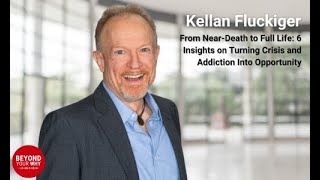
Podcast episode (YouTube) hosted by Dr. Gary Sanchez interviewing Kellan Fluckiger. The episode traces Kellan's life from childhood abuse and decades of self-sabotage and addiction, through a turning-point intervention in 2007, to a near-death/clinical death experience in June 2018 (coma ~17 days) that reframed his mission. He left a corporate career, became a coach, author (19 books), musician, and speaker with a goal to help hundreds of millions discover their potential (stated goal: 250 million). Practical themes: changing limiting beliefs (the 'Book of Context' / BEDEEP acronym), forgiveness, and coaching clients to both believe and take concrete steps (the Results Equation).
Questions this video answers
19
250 million people
Edmonton, Alberta
San Francisco, California
June 2018
Chapters
Welcome to beyond you'd why Podcast, where we go beyond just talking about your why and actually help you discover and then live your why. You see, we believe that knowing your why, that driving force behind every decision you make and every action you take, is the essential first step to really knowing yourself. It allows you to move forward faster and have a bigger impact. If you're already a fan of the show, then you know that every week we talk about one of the nine whys, and then we introduce you to somebody with that why so you can see how their why has played out in their life. This show will be more powerful for you if you've already discovered your why. If you still need to do that, head over to whyinstitute.com and discover your why today. It'll only take you about five minutes. Now let's meet today's guest.
This week we're going to be talking about the why of contribute to contribute to a greater cause, add value, have an impact in the lives of others. So if this is your why, then you want to be part of a greater cause, something that is bigger than yourself. You don't necessarily have to be the face of the cause, but you want to contribute in a meaningful way. You love to support others and you relish successes that contribute to the greater good of the team. You see group victories as personal victories. You are often behind the scenes looking for ways to make the world better. You make a reliable and committed teammate and you often act as the glue that holds everyone else together. You use your time, money, energy and connections to push other people forward. And so today I have a fascinating guest for you. His name is Callan Flutter. And coming through decades of depression, addictions, life threatening illnesses and near death experience, Kellen has become the ultimate catalyst to help motivate people to melt barriers, move mountains and mobilize superpowers to achieve their true desires. As a coach and keynote speaker, Kellen's masterful approach helps people get past old stories, change beliefs and create a life context to reach even goals that seemed impossible. Kellen had a 30 year career in the energy industry. C suite positions in the US and Canada. Since 2007, Kellen has been a coach, author and motivational speaker. With 19 books published. Kellen's goal this year is to help 250 million people discover who they really are and to live and create from that infinite possibility. Kellen, welcome to the podcast.
Thank you. Thank you for having me and I'm grateful to be with you. I'm grateful that you've brought Me to share stories and thoughts with you and your audience.
Well, awesome. Well, let everybody know, where are you currently? Where do you live right now? And yes, let's just start there.
Well, I live in Edmonton, Alberta. And this picture behind me is actually a picture not from the house we're in now, but the one we were before only in about two months in June when it's going to be all pretty and it's just looking down the street from where we looked before. And so it's a beautiful background that I use and it does look like that even up here in the frozen north.
That's awesome. Well, so let's let everybody get to know you a little bit now. Where were you born? What were you like growing up?
So I was born in San Francisco. I was in a two parent family. Middle class. Ish. We never wanted for anything. Certainly had enough of things. My, my. And so that's it. I grew up in the San Francisco Bay area. I was born in San Francisco, California and grew up in a, you know, that kind of middle class neighborhood.
My.
The unusual piece is that my mother got married really young and she was really fanatic about a particular religious and spiritual tradition and activities. And so.
Her version of be a good boy included a lot of physical discipline that today would be felony child abuse. And so I, I got the crap beat out of me a lot. And it left me when I left home at 17 with a permanent conviction that I wasn't good enough and never would be. And that my whole life needed to be spent proving that I was okay. And that led me through decades of depression and struggle and self sabotage and all kinds of stuff for many, many years. Actually several decades until I was 52 when life took an abrupt turn after 35 years of that other mess. So I'll. I'll stop so there'll be a space and then you can tell me where you want to go from there.
If we were to have met you in high school, what would we have seen? What, what were you like?
I was a nerd. I wore black horn rimmed glasses. I, I hid in the library at lunch. And when I finally graduated, not finally, but when I graduated from high school, which was actually a year early, the librarians gave me a present. And the present that they gave me, for those of you that are old enough to remember what this is, was the worn out copy of the Handbook of Chemistry and Physics because they'd gotten a new one. And that's a text, that's a reference book that's about this Thick that had el has all the mathematical, physics and chemical tables in it. And so I got a copy of that, a worn out copy of the handbook in chemistry and physics because they were going to throw it away and they said, oh we know who needs that? And that's what I got from the librarians. And that was me. I was a band nerd. I was social outcast, didn't have any social skills at all. And that's why I hibernated in the library at lunch. So that's who you would have seen in high school.
Okay, and so you graduated 17, got probably with good grades I'm assuming, and then off to college or off to work.
So I went to college for a couple of years. I didn't really know what I was studying. I had a major for part of the time in music and in accounting. I had a mathematics scholarship. I spent two years at college and then I went on a two year mission for the church that I belong to. And that's when, you know, struggles began. The mission was fine, but right after that I didn't go back to school. I decided to get married. And my parents were against all that and it was, you know, my struggle started then I didn't realize how deeply ingrained the idea of self sabotage was. So I started, you know, I got a job and started doing things and then after about three or four years I didn't, I, I stuff that I now know how to language that I didn't know how to language. Then I began to self sabotage and I got myself fired from a very nice career path and ended up also getting divorced. And you know, both of those were, I was the principal cause didn't really know why. And now I know it was self sabotage and depression and the kinds of things that come with unresolved issues. And after that I simply repeated that cycle over and over again. So I created another employment opportunity, another job that went even higher and got married again and you know, started making real money and then started problems with self worth, self sabotage, addictions, depression. You lost that job, you know, did it again and you know, two or three times up and down that roller coaster, each time getting worse until I'd been married and divorced three times and been in and out of rehab a couple times. And some dramatic things happened in 2007 that changed all that. But by then this cycle had been going on for 35 years because I was 52 at that time.
So what do you mean self sabotage? You know, for those, you know, what, what kind of, what, what led you to go down the path of self sabotage.
And.
And what is that?
At the time, I didn't know. Well, self sabotage is that you. You wreck something on purpose, even though you don't realize or think, I'm going to go wreck this today. So, for example.
There'S a book called the Big Leap, written by a guy named Gay Hendricks, who's a professor, was a professor at Stanford. And he posits this idea that we have an upper limit, like a thermostat. And it comes from all of our past experiences. And when things happen or we create something that's above our. What we perceive as our upper limit, like a thermostat, we turn it down. And my vision, version of turning it down was to trash my relationships to do something I knew I shouldn't be doing and get in trouble at work and eventually lose the. Lose the job. And because later in the cycles I had high positions, you really had to screw up. And I did that, including, you know, addictions and all kinds of stuff that were really serious. So self sabotage is the act of intentionally, although not aware, but intentionally doing something that damages your achievements, principally because you believe something's wrong with you and you don't, you shouldn't have, that you don't deserve to be there, I don't belong here kind of feeling. And in that book he posits four reasons. And I don't remember them all. And I'm not saying that book is the holy anything, but it did resonate with me in terms of, you know, I've been doing this to myself over and over and over again, and somehow I don't believe I'm good enough. And I think what the thing was, is I was waiting all my life for my mom, who'd been my principal abuser, to. To put the stamp of approved on my forehead, which I never got, no matter how much money I made, no matter what. Right. I still wasn't, you know, I wasn't enough. And I don't even know what she thought. She. That was a story all in my own head. And we do that over and over. And I had clues that she didn't, that I was right, but I didn't. I never resolved that kind of thing. And so I just lived that hamster wheel of creation and then destruction on purpose only not know, not thinking about. I'm doing this on purpose. Gotcha.
And then what was the moment you realized this was. Has got to stop?
Well, there's a story, and I'll tell you the story. The setup and it is.
It'S, it's a testament, quite frankly, to how far the divine will go to offer us each the opportunity to make something useful and powerful out of ourselves. So this is August of 2007. I'm 52, I'm way at the top of career things again. Making enough money that my three thousand dollar a week cocaine habit didn't matter. And also I was single again for the third time. And I had four of my 10 children living with me. Three were grown up and married and three were, you know, with one of the exes, which is embarrassing to say, but true. And it was a Friday night, I came home from work and I was going to go out and party for the weekend and suddenly I had this urge to turn on the television. Now that doesn't sound like anything, except I'm not a TV watcher. So I picked up the remote and I had bought, you know, cool stuff for the kids and their friends. But I realized I didn't know how to turn it on. So I asked one of my kids and my 16 year old daughter, she punched some buttons and threw it at me and it landed on it. And it was land on a program, I don't know if it's still on anymore, but it's called Intervention. And Intervention is a reality TV show about families who stage interventions for busted loved ones. You know, counselors, priests, whatever. You know, they get people together. Anyway, the protagonist was a high ranking executive with a cocaine problem, right? So I watched my Life for about 10 minutes and I said, yeah, I'm not watching this crap. So I turned it off and did some other stuff. And then I was ready to go out and I just had this irresistible urge to turn the TV back on. Okay, So I did some, I knew how. And that program started over. And no, we didn't have a recorder and no, it wasn't on the schedule and no, it can't do that, but it did that. Holy crap. And so I watched the episode and it went badly. The guy swore he didn't have a problem, yelled at his family and stomped out of the intervention. But it freaked me out. So instead of going out to party, I went to bed. When I went to bed, I went to hell. And what I mean by that is I went somewhere. It felt like I was out of body. I was in a theater watching scenes go on the stage. And the scenes that were on the stage were scenes from my life. And they all were focused on suffering. The suffering that had been inflicted on me as a kid up through the suffering that I had inflicted on everybody else as an addict and a liar, and all the things, you know, all the things that I had been. And it went on for an eternal period of time. And it was terrifyingly painful to watch. Like, I can't describe what it felt like. But anyway, after a long time, I heard a voice. And the voice said, it is enough. I woke up and I was completely disoriented because the sun was shining in the windows and the windows faced west. And I got up and realized it was 5 o' clock Saturday afternoon. So I'd been somewhere for nearly 18 hours. And I got up and realized I. I'd been invited to change. I have no idea what to do. I have no idea where to start. I'd never gotten any help before, but the invitation was pretty clear. So I. I said, all right, I'm done. So I quit cold turkey that day. I threw away a thousand dollars worth of stuff and, you know, quit. But that didn't do anything about how I got there. I mean, that got me sober, but it didn't give me any help about how I got there in the first place. That was part two of the story. So Monday, I went back to work knowing I knew I had to get out of here and change my whole life. But I didn't do that in one day. So I went back to work. And because of the position that I had, I used to get free stuff, free tickets, expensive things, because I made decisions that affected other companies, sometimes to the tune of billions of dollars. And so people were nice to Kellen, right? So I got lots of be nice to Kellen stuff. And one of the things I got was a pair of tickets to see a Yo Yo Ma concert. And if you know classical music, you know who that is. And if you don't, you know, but in classical world, that's like. And they were really expensive, like thousand dollar tickets. I'm like, oh, wow, I'm not going to waste this other ticket. Like, I don't have anybody to take. So I asked in the groups that I managed who likes classical music? And a woman in one of the groups said, well, I do. And I looked at her and I said, have I ever given you anything before? Because I gave away stuff all the time. And she said, no. I said, okay, fine, see you there. So I gave her the ticket. We met at the concert. It was fabulous. And halfway through the show, and you got to remember, I'm now two and a half weeks stone cold sober at this. At this concert, halfway through I had this feeling come over me that I recognized from two weeks before. And this voice said to me, you're going to think I'm insane by the time I'm done with this. But this voice said to me, you need to marry this woman. And I said, you are insane. I said, I've screwed that up three times already. I obviously don't know how to do it. Not happening. Later that night, we were backstage because the reason the tickets were so much, they were backstage passes and tickets to the reception and all that. And the voice came back and said, comma, and you need to tell her tonight. Then I really went crazy. And I thought, look, I don't know her that well. I don't know if she's in a relationship. I don't think she's married, but I don't know if she has a relationship. And besides that, she could, like, have me arrested for harassment or something like. No, but you don't win those arguments. So I did. And it went about like you would have expected. Are you insane? What are you talking about? And she left. And. But over the next two or three weeks, she didn't call the cops, and she didn't have a relationship, and she had her own set of experiences. And about two and a half or three weeks later, after that concert, so about six weeks after, the first thing, she left her position, resigned. I resigned from millions of dollars worth of contracts. I was a contractor, a consultant. And we walked off into the sunset with no idea what we were going to do. But we're going to do this and change ourselves, change me and the world. And the thing that's interesting is she was literally the angel that was sent to help me figure out how to be a person, how to tell the truth, how to have a friend, how to be a friend, how to like anything, how to have a relationship, and all that kind of stuff. And last December, we celebrated our 16th wedding anniversary. So that was the invitation. I still had to do all the work. I had to go get counseling, get help, change who I was and everything else. But that was the invitation. And I'm convinced that it was that loud because I had been ignoring it for my whole life.
Wow.
That is definitely a crazy story. And it's worked out, right? So 16 years. That's. Is that longer than any of the others?
Yes. And here's the fun part. Her name. Her name is Joy, and she is now my business partner. She runs all of our contractors. She's a degreed designer. She's very capable and creative in all kinds of ways that I would never have known. I didn't know anything about any of that. But it was like the thing that was the actual ability, path, possibility for me to go and create what was possible. Like I said, it didn't do anything except open a possibility.
Wow, okay. So you walk out of the building, Joy walks out of the building. We're both free, we're both not working there. What happens?
So what happened is we were trying to figure out what to do. And that was so that the concert was in September, we left in October, we got married in December. And like, literally we didn't even know each other. And I, I said, and I'd been married twice, three times before, and she hadn't been. But she was convinced it was the right thing to do. And she told me later, she said, I just, everybody knew that I had trouble, that I was an addict and all that stuff. They didn't know, but they knew, right? And she said, I just didn't see you that way. I, I knew it was different, and that's why. And she knew to the core of her soul that was right. So what we did is we started saying, okay, what are we going to do? Well, I had wanted to do music, so I reopened the studio and I started working on. She'd been a long time ebay merchant online and her dad was an archaeologist, so she had a lot of artifacts. So we opened a couple of ebay stores and in person, antique stall. And we started doing that in about a year. I started thinking about writing and I started writing books. I wrote books on meditation, which had been something I'd been doing all of my life since I was a kid. I started in martial arts when I was 17. And so we did that. I wrote some books and then I decided I needed to do something and my own growth was happening. I was, you know, recovering and being connected to myself and realizing the gift I'd been given for the opportunity to get sane and get healthy. And then I decided, look, I. I was just convicted. I. I need to do something with this recovery I have made. This incredible or am making didn't happen all at once. This incredible change. And if it's possible for me, and if, you know, if there was a poster child for someone to be left at the bottom of the canyon, you know, I would have been that. And what I know is if, if that, if it's that important to the divine, that even someone in my position, there's an invitation, then that means I don't care where anybody's been. It's it. You can do that. And I just became more and more convinced as the years, months and years went by that I needed to be. I needed to figure out how to be of help. And so I wrote some books on meditation. And then I realized I wanted to write the story of everything that had happened. And so I wrote a book called Tightrope of Depression. My Journey From Darkness, Despair and Death to Light, Love and Life. And then I. I spoke on some stages about it and realized I wanted to help others and realized that, gee, that must be coaching. And so I took some coaching certification classes and just launched a business. And that's been now 10, 11 years. And I have clients all over the world, and we've just built that. And after a while, Joy left the online retail business and jumped in to help me. And now she manages all of our marketing. She now runs a publishing company. I had my first book published by a New York house, but she's done all the rest. And so she also publishes our client books that we help write. And she has a unique distinction. Every client. She has a 100% track record of getting Amazon number one bestsellers for all of them. She's that good. And.
We are perfectly complimentary. And I couldn't.
You know, there's no way you can't like, make this stuff up, right?
Yeah.
So that's, that's what happened. And here we are and the 250 million. Three years ago, I just decided I'm going to help. I some big number. I need to help people realize who they really are. Because it was when I discovered who I really was that all the stories are not true. They're not real. They're stories and we have them and they're true only as long as we believe them. So I picked 10 million and I had no idea how to do it or whatever. And when that year, my year starts October 14th. And the reason it starts October 14th is because that's Joy's birthday. So in October 14th of 21, I said, I, you know, 10 million. And so when it was almost August of 22 for the year end, that I was on a podcast and I started a podcast and I started appearing. I'm on them and doing everything I could to, to reach the goal of getting it, you know, reaching 10 million people. And I was on a guy's show and we were on for about an hour and at the end, he. We said something about the 10 million and he stopped me and he, he was emotional at this point and he said, you need a bigger number. And I said, okay, why? And he said, I've been on with you for an hour and you've changed my life. He said, and I'm going to talk to at least a thousand people this week. You need a bigger number. So that really moved me. And so when October came, I said, okay, 50 million. And I had no flipping idea how we were going to do that. And then we went through that year and this last October 2023, we tallied up the audiences we'd been in front of and the people we'd reached, and it was about 75 million. So we made the goal. And so we said, okay, what's next? 250 million. And I don't have a clue how that's going to happen, but what I can tell you is things happen when you make a choice to add good to the world. When you say, I'm going to do this thing and I'm going to do it out of love and service, then, then the universe listens and stuff happens. I've had introductions. I've had people that are introduced to me that get me in front of another thousand and another ten thousand and another hundred thousand. And so it, it will happen. It will happen. And my. The only thing I do, first breath to last as I work on my 250 million morning tonight. My business plan for coaching is really simple. It's on the wall and it says, I never look for clients. I look for people to love, opportunities to serve, and problems to solve. And so in that process, I've now got 19 books and courses and I'm going next week to Philadelphia to speak. And in September or late end of August, I'm going to Phoenix to speak at the International association of Near Death Studies, which has an annual meeting because I didn't tell you the story, but in 2018, 11 years after that other incident, I died and wrote a couple books about that and had a three conversations with God at the door between life and eternity. And, you know, but the commitment is, I'm like, who you're seeing. This is me. I have. I know that we're all divine. We have capability and we limit ourselves, period. And we can choose to do that. Nobody's going to make us do different. But if you're open to the invitations, there's nothing you can't get done.
Wow.
Well, let's dive into that. So you kind of glossed over real quickly. You almost died or you did die. So tell us about that.
Well, it was June of 2018 and my wife and I went on a cruise. And we'd never been on a cruise before. I don't know why we didn't. At the end of the cruise, I got sick. And it got bad, bad, bad. Sicker and sicker. Got home on Tuesday afternoon. I got sick in Oslo on Monday, Tuesday, Wednesday, Thursday, Friday. And the days matter because I'll tell you why in a minute. But on day five of the illness, it was so bad, I went to one of the walk in clinics here in Canada. They have walk ins. And so I went to the one that was in our neighborhood. They wouldn't let me in. They took one look at me and said, yeah, we can't do anything for you. Go to the ER right now. So Joy took me to the emergency room. It's funny, you know, you go in the ER and they might take, you know, an hour or two or three, depending on how many people. And all the rest of it, in 10 minutes I was in a private room. I didn't even know they had private rooms in the er, Right? And I told them everything that was going on. And they said, they did some tests and X rays and all that stuff. And they said, well, at a minimum, you have pneumonia in both lungs, but we think there's something a lot worse going on. And then they found a room after I'd been there, there four hours, and they said, okay. I came back in. Doctor came back in, said, yeah, we might need to put you in icu. Okay. Then they came back again and said, do we have permission to intubate you and do anything we knew need to do to preserve your life? What?
Okay, Right. And I had sent Joy home earlier in the afternoon because we had dogs and cats and whatever. And so they took. I was still in my room. I don't remember anything else. So sometime right after that, I flatlined. And before that I had. After he asked that question, I'd gone into meditation thinking, holy crap, they're asking me that question. This has got to be serious. So as I went into meditation, I could feel something I'd never felt before. I could feel like a zipper unzipping. I could feel my body and spirit separating. I could feel that. And I thought. So I sent Joy a text. And by then I was trembling so badly I could hardly operate the phone. It was three lines. It said, I see you. And the second line was isolation. Oh, they. I didn't tell you that. They said they were going to put me in biological isolation. Now, if you don't know what that is think of hazmat suits and double door airlocks. Okay, but we're going to put you in isolation. I'm like, okay, this is not good. So anyway, second line was isolation, slash intubation. And the third line was, I may be dying. And she didn't see that because she was asleep. She was going to come back on Saturday morning at 2 in the morning. The nurse called her and said, are you coming? And she said, what? And then she saw my text and they had a conversation. And sometime before that, I had flatlined. And they had some. Either. Either. I don't know if it was after the call or before. Obviously, I wasn't there. But when Joy told me about it later, I wasn't sure of exactly the time.
So they were able to revive me. But what I had, the experience I had while I was dead, was I woke up and I was horizontal. Like, I was on the stretcher. And I sat up and the room had changed from an ICU to a gray. Just sort of a gray. Everything was gray. Very, very soft. Kind of like photocard gray. I couldn't really see how big the room was, and I really couldn't see the ceiling. And then I looked over my left shoulder and there was a doorway over there. And I saw that on the other side of the doorway, it was white. Like, light wasn't streaming through, but it was white on that side and gray on my side. And I don't know why, but I had this feeling, I want to be at the door. So I was suddenly at the door, leaning on the door jamb on my right shoulder. And I looked across and there was someone else on the other side on the white side, leaning on the door jamb on that shoulder, on their right shoulder, like, close enough to touch. And he looked at me and he said, do you want to come home?
And in a millionth of a second, I knew where I was, what was going on with the question man, who I was talking to and everything. Like, you just know stuff, right? And so I'd. Holy crap. And so we talked about it for a while and everything that had happened since 2007, 11 years before, and everything we were trying to do and all the rest. And finally I said, I'm not done. He said, okay. And so that was the end of the first conversation. And I'm quite sure that's when they were able to restart my heart the next day. And I don't know how it was the next day. People ask it all the time, how did you know it was the next day. The answer is, I have no idea. It was the next day, okay, so the next day I'm standing back at the door again, same person, same place. And then the subject of coming home didn't come up. It was done. So that was decided. And it was like, okay, so what are you going to do? So we talked about.
What I'd done, the coaching work and the books I'd written and what I was trying to do and everything else. And then I had an experience that I can't describe very well. I can make an analogy. If you or any of your viewers have seen that old movie made in the 80s called contact that had Jody Foster in it when the aliens, they beamed a thing and they. All right, then she has this experience falling through things. She gates off and has a view of the universe. Okay, it felt about like that. I felt like I was in a protective bubble being fed with a fire hose, and that if I hadn't been in there, I would have been absolutely incinerated. And I saw for. It felt like a really long time, all kinds of stuff, blah, blah, blah. And I would take a long time to describe it, but the, the, the. The. The vastness and the vistas and the. I, you know, we don't have words, right? So I'm back, breathless, standing at the door afterwards, and I knew four things. And the four things I absolutely knew for sure is, number one, every single one of us is an intentional divine creation period. No accidents, nothing on purpose, lovingly, carefully created. Number two, that we were each given gifts and talents. Number three, that we each have mission and purpose that we not only agreed to, but we were stoked about before we came. And number four, that all the help we need is available from both sides of that door. And so I, I said.
Since that's true, why do we settle for crumbs?
And I don't know if in the economy of heaven, brevity is a virtue, but the answer was four words because you don't believe.
And I thought. I didn't. Facebook thought about it. But anyway, so I said, okay, what can I do about that? Oh, glad you asked. So then we talked about beliefs and how to change them and where they come from. And that's what created the companion book called the Book of Context, because the context was the word that defines what I call our context. Straight jacket. Our beliefs, definitions, experiences, expectations, and perceptions. And I use the acronym be deep. That limit what we do. And we live inside this, you know, limitation until we don't. And so that I wrote it as a second one because it would have made the first one too long, but it was really a standalone framework about how to change beliefs. So that's what happened. I was in a coma for 17 days. I lost 35 pounds. I couldn't walk. I had to learn to walk again and everything. I looked like a concentration camp survivor when I came out of the coma. Like I said, 17 days later.
And that's. So that's what happened. And that spawned a couple more books.
Wow.
And so when you said because you don't believe.
Believe what?
Or in your capability, the. Your origin, your divine origin, your capability and your possibility, it wasn't about a particular set of, you know, religious or other things, but you don't believe. Why? Why do we. The question is, why do we settle for crumbs? And the answer was because you don't believe you're capable of more, you're worthy of more. You don't think you can create it. You limit yourself. And it was a general answer, because my question is, why do we as people, why do we settle for crumbs like we do? We live so far below what we could create, what we can be, and it's in fear. Fear of what will fail, fear of what others think, fear of, you know, and we don't believe it's possible. And we allow those things that have happened to us before and what other people have said and the stories and everything else to limit what we try. And, you know, we give up, we quit, we hide in the corner, we do anything except move forward in faith and in possibility and step beyond the light and create.
And so my. My mission already was, but was multiplied by 10 then in terms of commitment. Because can you imagine what it would be like if each person that you just. You personally, Gary, know, loved themselves enough to forgive themselves and forgive everyone around them and simply focus on creating at the very limit of their capability and possibility, just that alone. What would happen.
Yeah.
Wow. So that's now what you've dedicated your life to. Right. Is which is helping people believe.
And understand and actualize, not just believe. I wrote one of the books is called the Results Equation, which is about how to make things happen. So it's not just about saying that message, but it's about what do you need to do to create your goals? What are they? Are they concrete? What, like, what do they look like? What will it look like? What are the steps? And the coaching work is not just to help people believe a thing, but to do the thing, to write the book to create the course to change their lives, to fix their relationship, to make their next or first million to but to do it in a way that they own and they're proud of and maximizes their gifts and talents and the best that they have to offer and instead of just what they can settle for in terms of the crumbs reference. So it's not just the message starts with do you know who you are? Do you actually know who you really are? And now that you do, what are you going to do with that? What is your wildest dream and why? What motivates that? What gives that breath? Because we're built to love and serve each other. That's when we feel the best our bodies, oxytocin and the feel good stuff. It's all about love and service and when we can get out of the stories of, you know, the religion of money and greed and better than and get past that and just get to good. I use the phrase add good to the world. There's nothing we can't fix or solve. We just don't believe we can or we're living behind a story, you know, it's all, look what the world did to me. I'm a victim, you know, all of the related stories that control our lives. So that's what I do know. It's just not about talking, it's about doing and getting stuff done.
So when you say, do you know who you are? When people answer that, what are some of the answers that you get? Like what is, what is who you are? Look like, how is that so message? What is that? Yeah, so.
So I just had a conversation earlier today with a person I'd never met before and who you are, who are you? Real estate agent first, then some other stuff. And then as I asked more questions and this wasn't a coaching call and it wasn't anything, it was a get acquainted call. But for me, I love people and so I just dig in and ask. So it turned out pretty quickly. I found out he'd been diagnosed with cancer at age 29 and he was living with a death sentence all of his life. Gonna die, gonna die, gonna die. He's now 60 and that's 31 years ago. And it's finally about a year ago that he realized, you know, he's probably maybe going to die of natural causes and he can quit living in fear. And he has this yearning because every single person. And I'm getting excited because this is exciting for me. Every person has the feelings inside at one time or Another, that there is more. They were meant for more. They could do something. We have the yearning to add good to the world and to do good stuff. And that's just colloquial for to, to. To matter, to do something that makes a difference. Everybody feels that a little or a lot. And mostly we ignore it. And I did all my life until I was 52 and had the two by fours and the invitation to just walk off the bridge and go see what you can do. And so, okay, I have no idea where this is going, but I'm going. And so this guy, I kept going after, kept going. And by the end of an hour.
By the end of an hour, he was, he was on fire with his own desire to help people who struggled with cancer like he did, the diagnosis of death and their loved ones. And he told me there's 22 million people in North America that have cancer. I didn't know that. He said he figures for every one of those is at least four people that are supporting and part of their thing. At least four people. And that's his own estimate, but who cares? Probably more so that to him makes 100 million people. So he's now, his goal is his real goal, like, like pound the table. To help those hundred million people realize they don't have to live in the sentence of death. Even if they're going to die. Even if they're going to die. It is the manner in which you live for every moment, regardless if you die next week or in 50 years. And he lived under that sense of death for 31 years and finally realized, I am alive and I'm going to die of old age. That's what I do.
And how would he now have answered the question, do you know who you are?
He's a guy on a mission. He's a cancer survivor. And he's a per. He's a. He's a beacon of light. A beacon of light with hope and a path and process to help people who have cancer is his favorite thing, because that was his own experience. But the principle is, regardless of the stumbling block and struggle, he chooses now to be a beacon of light and hope and possibility and how he's going to actualize that. He's going to create. He's going to write a book about his own story and how he felt and what's changed and create, you know, none of it's real yet, but this is in his mind, some kind of support system, courses or programs to offer people an alternative to, to going to just, you know, Living day to day with the sentence of death, hanging another chemo, another this. Oh, I gotta hide who I am. I wonder If I got 15 minutes left. And you know I'm gonna die in five minutes. So I'm gonna live right up until the moment I no longer draw breath and, and be alive and contribute and. And be cheerful like, who cares? I'm gonna die when I'm gonna die. And I can either live until that moment mad, sad, or blaming, or I can live until that moment on fire and adding good to the world just because I said so.
Wow.
So that's who he is right now.
For every. For everybody listening. Kellen's why, like we talked about, is to contribute to a greater cause, add value, help other people. How he does that is by challenging the status quo, thinking differently, pushing them outside their box, getting him to. To do more and see more than they thought they were capable of. And ultimately what he brings are better ways to move forward. And we can see that playing out loud and clear. Right? You want to help them by getting them to think differently about their life, about what they're capable about, of and what they believe. Ultimately, what you do is bring them a better way so that they can be who they were really put here to be. Does that feel right?
And so that's absolute, 100%. That's why I write all the books. Every book I wrote is because I needed it. I wrote a book called Forgiveness, A Journey of Courage to a Place of Freedom and Power because I needed that. I wrote a book about my struggle with depression. I wrote a book about Walking without fear because I needed that. You know, everything I wrote, I wrote from my own experience with blood on the floor. And I wrote it as an opportunity and invitation to others who are struggling with fear, with self doubt, with worthlessness, with whatever stuff has happened to them, whatever's been heaped on them, either accidentally or on purpose. It's. It's an invitation to stop living, defined by those events. And, And. And you're not. Turn the page and, and write a new chapter. Write your own. This is who I say I am. And I'm going to go be that. And I don't know, like, I didn't know what I have to do to go there. I. I don't know what the steps are. I don't know how much broken glass I got to crawl over, but I don't care because I. I'm going there. Why? Because I said so. That's. That's where I'm going.
I love it. Kellen, last question for you. What's the best piece of advice you've ever been given? Or maybe the best piece of advice you've ever given?
Well, I don't know. Best. That's always hard to say. But something that comes to mind often when that question or something like it floats around is this. It doesn't matter where you have been. It doesn't matter what has happened before. It doesn't matter what who did what to you ever anywhere. And it doesn't matter the state that you're in. None of that matters. What matters is what you do now. It is never too late to matter. It is never too late to have an impact with your life experience, with the gifts that you have, with your. With the skills that you've developed. If we get out of our. If we stop making everything about us and we start realizing the possibility that we have to do something greater and contribute to the greater cause. Add good to the world is the phrase I always use, then there's no limit. And so the message is, it's never too late to matter and to have big impact. If you make a choice to find your gifts, to use your life experience to your advantage and go forward and do something with that.
So, Kellen, if there are people listening that want to connect with you, work with you, hire you, have you come speak, what's the best way for them to get in touch with you?
So, because I have a weird name. Kellen Flukeger. You know, if you spell it right, you can find me anywhere. I can't hide. So you can connect with me on social. My website is my name. I only had to pay $2 for it. Nobody wanted Kellenfluker.com, right? So you can Free gifts. K E L L A N F like Frank F L U C K I G E R kellenflukiger.com is my website. You can find me same name on all the socials. I've got a YouTube channel with hundreds of videos. I'm on Spotify. I've got a hundred, nearly 100 songs because I also am a musician and composer and I write songs that tell stories from book. From the books that I've written. And if you want to ask directly about speaking or being a guest on one of my shows, I've got a podcast called your ultimate life with 860something episodes and I have a weekly LA talk radio live show.
Then reach out to the email meetwithkellen gmail.com that goes to the media team if, if it makes sense for you to inquire about one of those things. Meet with kellen gmail.com.
Yeah, I was. That was going to be the last question, but I just thought of one more before.
Before we go, I'm curious how your family has views, sees you now, understands you now, how is the significant changes in your life affected your family.
So that's always a hard thing for. Not always. Sometimes a hard thing. So my brothers and sisters who grew up in the same environment that I did, I'm the second kid, my older sister, she received as much of the abuse as I did. And even though she's a girl, and I remember thinking, I was horrified because she's a girl. I mean, at least I'm a boy in those days. We thought that sort of thing and we don't do that so much anymore. But my. And then there was a third one that was of the older three. The younger three sibs grew up in a different, completely different person. My mother grew up somewhere along the way. So my younger sibs were really angry because I wrote Tightrope and thought I was trying to blame. I didn't blame anybody. It's not an accusatory negative book. It's just a conversation about what I went through. And so that has been difficult because of my years of addiction. I was already off the Christmas card list and, you know, kicked out of polite society. And then I wrote the books and started doing the things that I have. And I don't think my mom has even seen one of the books that I wrote, any of the books that I've written. So, you know, that's. But that's not mine. That stuff used to kill me and my kids. I have 10 kids. Some of them, I don't. They don't talk to me because of the divorces and a bitterness. You know, there's still some estrangement there. And I. I hold nothing I love absolutely open to do anything, but I can't walk their path. And that used to. I used to blame myself for that. So there was a lot of, oh, I did this wrong. Oh, I ruined their life. And they love that. You ruined my life. You and my life. And they like to use that. I used to allow that. And that drove me to distraction and the depression. I mean, it was terrible. The cycle. And what. What the answer is is forgiveness. Forgive them. Forgive me. Because here's why. It's. It's not pretending something didn't happen. Forgiveness is a choice to no longer let the events of the past have power in the present. And as long as you carry around a whole pile of guilt, shame, and everything else after you've done what you can to fix stuff, I'm not pretending you ignore it or a lot of hate and resentment to whoever did whatever they did. All that is is rocks in your backpack. It's a lampshade on your light. It's just a barrier holding you back from being all the light you can be in the world. So the. It's. It's developing, but it doesn't hold one ounce of pain anymore for me because I have and am doing everything that there is to do. And so the only thing I feel now is patience, love, and hope.
Awesome.
Love it.
Well, Kellen, great having you here. I'm so glad we got to meet and I get to hear your story. And thanks for spending the time with us today.
Gary, I want to honor you for the work that you're doing because it's a labor of love to do a podcast. It's a lot of effort, a lot of work, and I want to honor you and just love on you for all the good that you're doing in adding good to the world. So thank you.
More from Dr.




Women In Leadership: A Need For A Greater Systemic Change With Belinda Clemmensen






