From Ophthalmology to the DJ Booth: 10 Takeaways from Dr. MJ
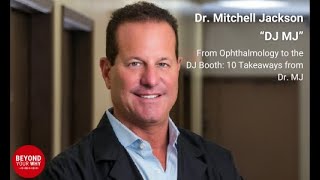
Dr. Mitchell Jackson has performed over 50,000 eye surgeries while building a parallel career as DJ MJ, headlining clubs in Las Vegas and Chicago. He started DJing 16 years ago and now combines performances with charity fundraising for blindness organizations, with plans to release original music.
Questions this video answers
Over 50,000 (LASIK, cataract, refractive procedures)
About 16 years ago (from time of interview)
Undergrad at Pomona College; graduated medical school in 1989; internship ~1990; University of Chicago residency completed ~1993; entered private practice in 1993.
@DJMJSpin (one word, includes 'Spin')
About 11,000 followers (on DJ account)
Chapters
Welcome to beyond you'd why Podcast, where we go beyond just talking about your why and actually help you discover and then live your why. You see, we believe that knowing your why, that driving force behind every decision you make and every action you take, is the essential first step to really knowing yourself. It allows you to move forward faster and have a bigger impact. If you're already a fan of the show, then you know that every week we talk about one of the nine whys and then we introduce you to somebody with that why so you can see how their why has played out in their life. This show will be more powerful for you if you've already discovered your why. If you still need to do that, head over to whyinstitute.com and discover your why today. It'll only take you about five minutes. Now let's meet today's guest.
This week we're going to be talking about the why of better way to find a better way and share it. So if this is your why, then you are the ultimate innovator. You are constantly seeking better ways to do everything. You find yourself wanting to improve virtually anything by finding a way to make it better. You also desire to share your improvements with the world. You constantly ask yourself questions like what if we tried this differently? Or what if we did this another way? How can we make this better? You contribute to the world with better processes and systems while operating under the motto I'm often pleased but never satisfied. You are excellent at associating, which means that you are adept at taking ideas or systems from one industry or discipline and applying them to another, always with the ultimate goal of improving something. And so today I have a fascinating guest for you. An unexpected twist to this story. My guest is Dr. Mitchell Jackson. He is a board certified ophthalmologist and a true pioneer in cataract and refractive surgery. As the founder and Medical Director of Jackson Eye, Dr. Jackson has performed over 50,000 LASIK procedures since its FDA approval, even experiencing LASIK firsthand to offer your unique patient perspective, Dr. Jackson's expertise extend beyond surgery. He's actively involved in numerous FDA clinical trials and has introduced cutting edge treatments like lipiflow for dry eye syndrome. Recognized as a top doctor in Chicago and a keynote speaker at international symposiums, Dr. Jackson's dedication to advancing ophthalmology is unmatched beyond his professional achievements. He is also a DJ known as DJ mj, performing for Live Nation and supporting foundations like the Gary Sisi foundation and Jason Mendez Fight Blindness Foundation. Join us as we dive into Dr. Jackson's incredible journey both in the medical field and behind the turntables. Dr. Jackson, welcome to the podcast.
Hi, Gary. Thanks for having me today.
All right, what do you want me to call. What do you want what. What do you want me to call you, Dr. Jackson? D.J. mJ, what do you want to be called?
Well, actually, almost every CEO, every I company introduced me as DJ MJ on the pod. Pretty funny because that's my brand now, I guess.
Okay, there we go. DJ mj. So you're in Chicago, you're an ophthalmologist, but you go way beyond that. So can we dive into your life? Let's go back. Let's go back to when you were in high school. Where did you grow up? What were you like?
So I grew up in Sherman Oak, San Fernando Valley. I was born, raised in LA, California. The good old days. And 38 years ago, or plus or minus, in 1984, I came to Chicago and did my medical school training at University of Chicago for my eye training and stayed in open practice here. But I went to high school at Harvard. Now it's Harvard Westlake. Did my undergrad at Pomona College, California, and then came out to the Midwest.
So I was an avid outdoors guy, ski patroller, lifeguard, all the California things you do.
Played a clarinet, saxophone, got a little music background back then. When I ended up going to college, I became the music guy for our fraternity. Just happened to be that way using the set tapes back then because we had nothing fancy. And. And then 16 years ago is when I started the DJ thing.
Ah. Ah. So you're. If we had seen you in high school, what would we have seen?
High school was a guy.
That pitched.
And played baseball for the high school team. I was a pitcher. I got scouted by four major league teams. Back in the day. I threw a slider 97 miles an hour.
Wow.
I threw a ball the other day. It was my that I kept joking, my Chicago Cubs are doing okay, but they still need to closer. So I told my sons, maybe I'll come out of retirement and do a third job and throw a ball. My son says, you can't throw jack. I threw the ball. Clocked at 88 miles an hour at age 60.
Wow.
So I'm just saying. So I did. I did baseball and did some music.
And I was more of kind of a nerdy guy. Back in the high school days, when I went to college, I kind of broke out, joined a fraternity and still did the pre med approach. Back then, I could have gone major League baseball. But I decided my dad was blind in one eye, partially sighted, the other eye from optic neuritis from a bacterial meningitis outbreak when he was living in Scotland. And that's what made me become an eye surgeon. I decided that route was the safer route because back when I was scouted for Major League Baseball, there were contracts done were not like they are now. You were getting no money up front unless you made it. I probably would have thrown my arm out in the minors and I don't want to waste all that time. So I decided to go the ira.
And so what was it? How did you enjoy college? Medical school, ophthalmology school.
I kind of did everything in college. I'm the hashtag I did guys. So not knowing that I. I skied for the ski team.
And I played baseball in college a little bit. I kept it minimal because I could have gotten the pros. I just did it for a year, but. And.
Just did the studying because I had to get into med school and do all that stuff. You know, it's a whole different track. It's not an easy track.
No.
And. And then I got into.
Went to medical school in Chicago at the Chicago Medical School. And my dean wrote a great letter to help me get into ophthalmology. And I matched in ophthalmology.
And did my internship 95. Or wait, internship was. Hold on. I graduated. Let's forget all my stuff. Graduated medical school in 85.
No, graduated medical school in 89. Did 90 was my internship and 90. 93 was my university of Chicago residenc. And then right into practice in 93, which puts me going to my starting my 32nd or 33rd year private practice.
Wow. So did you.
Nobody started to make solo back then.
That's what I was just going to ask you. Did you take over practice? Yeah. Or did you start on your own.
From scratch?
What was that like?
Scary. I offer a refractive cataract fellowship now. I've had seven fellows and if they had they only had academic programs, not private practice. If they had a private practice fellowship program back then, I definitely would have done that for years. I would have saved 10 years of learning that curve.
So you just jumped right in?
Jumped right in. Started from scratch, went out to a town called Lake Villa, Illinois. True Midwest rural suburban area and, and 50,000 surgical procedures. Now cataract, Lasik, everything. Wow.
Okay, so you started out in the, in the rural area and then you worked your way back into Chicago. You're in your practice now is in Chicago?
Well, no, I'M still in Lake Villa. I opened a bunch of LASIK centers in the heyday of lasik. I went Schaumburg in Chicago, I went up to Brookfield and I even went to Grand Rapids, Michigan. I was all over the place in the heyday, plus my Lakeville location. Now, you know, I'm getting a little closer to retirement, so I just got to keep it simple. And I'm staying in Lake Villa. I have a surrogate center I go to in Niles and in Oak Creek, Wisconsin, but my main hub is in Lake Villa. Okay, so about an hour north of the city.
Okay, so let's talk about this DJ MJ thing. Because.
You don't typically associate a 60 year old ophthalmologist with being a DJ. So let's, for those people that are listening that are not familiar with what the heck is a dj, what type of DJ are you? Because there's, I'm sure different levels. So yeah, kind of talk a little bit about what kind of a DJ you are.
I'm not a wedding dj. Yeah, there we go. I'm a professional DJ that plays at major clubs. So for example, I, I opened for famous DJs such as Cascade and Zed in Las Vegas at the biggest club. One of them is 5000 person club. I open all the major clubs in Chicago. I've headlined, open, close for a lot of famous people in Chicago. Hopefully we're going to New York soon and back to Vegas this summer.
The way you get famous as a dj, produce your own songs. I have three I'm working on as original productions. I launched three edits this last weekend as the headliner in Chicago. So it's a lot of work. You think ice is a lot of work? It's a lot of work. So the story starts 16 years ago.
I'm foundation room member for Live Nation and Travis Macio was the manager then. And I said, you know, I want to dj. And then right then it was so that place was hopping all the time. I said, I want to DJ here one night. So he goes, come for an interview. So I came for an interview and I told him I've DJ 2 Sweet 16s and I'm an eye surgeon. He goes, are you out of your freaking mind? I said, I'll make a deal. The devil, you give me a shot. I generate more money in one night. This place, I want a one year contract. So to this date, the record still holds. Wow. 10 years later and I had a one year contract and got my base of learning how to DJ in that year. And I almost DJ every weekend at the Foundation Room. And. And then my younger brother passed six years ago. And I'm getting older and where I'm done with DJing, I don't know if I do, you know, I mean, it was fun. We're going to do, I'll do major shows. Like, I'll do big eye industry shows. I'll kind of do a party for everybody. And then my brother said his last words to me. I want you to promise me you'll never say, I wish say I did. And that's what the hashtag I did is. And then he says, make sure you get that Vegas gig one day so when you come to heaven, you can tell me all about the good stories. And I like. And then he passed away. And then I said, seriously, you just leave me like that? Six years later, I put the work in due to my one colleague, Shanar Yunin, who's DJ Rev official. He took me under his wings arms as a great friend and DJ and taught me the ropes to get to the next level. And all the Chicago DJs have supported me. Luckily, they took me in and say, will you inspire us? Because the other guy gives, gives a damn about everything. And you actually show and you put the work in and you've inspired us all to get better. And so.
Now I'm part of that crew. I love them all. They love me and just like I love my industry and they all love me and most of my, like, I'm gonna do a big charity event hopefully later this year at the American Academy of Ophthalmology. I did1in 2019 at the Warfield San Francisco to raise money for the foundation for Fighting Blindness. I'll be doing another one October 19th. The AO is in Chicago in my home base. You can imagine what I'm bringing that night. And that's going to be for try to raise another half a million dollars for a big eye charity foundation is the goal. Wow. So. And then I do, you know, I, I just do my. Do my thing, have fun during life and say hashtag I did.
Okay, those of you that couldn't see.
It.
DJ MJ has a wristband on that says hashtag I did. And so that's what he's talking about. And, and that came from your brother saying that that's awesome.
Yeah. And I always start the big shows. This is for my brother.
Okay. None, not none of us, but 99.999 of us will never experience what you experienced and what you experience every Weekend. So take us through what is it like to be in the club, be the guy that's not yet on the stage, coming on the stage, then hitting the stage and like take us through an evening of being a high level dj.
So it's a lot of prep work. You have to stay current.
A lot of us run off computer serato, which is where I work on everything. But now everything's on sticks, USBs at the big club. So you have to have everything loaded ahead of time. All your folders, all your music planned, you better be ready. It's about a, it depends on average two hour set. So you're gonna probably go through 120 songs or so. So you have to, you better know your music.
And, and most of it I'm a house guy, so I play house music, electronic dance music, you know, some people are hip hop, some are people summer, you know, drum and bass. I'm a mainstream house guy.
And.
That day you have to stay in shape to be a dj. You have no idea. You're not fit. It's hard. So because your mood, you have to be fit. You're up late at night, you know, you just, you got to be fit. So I work out a lot, so I'm prepped for that. And then the day of, I always work out. I carb load early in the day, I take a nap.
And go to dinner, whoever I'm going with that night, and eat light. And then I show up at the club really like 15 to 30 minutes ahead of time. And.
If you're the opener, it's easy as you're just opening, but if you're jumping in the middle or closing, you got your old transition. During that little transition moment, it's a little stressful because when I call Silence of the Lambs, you're never getting invited back.
You gotta transition and keep the mojo going with like anywhere from a thousand to five thousand people in front of you. Wow. So you gotta know your stuff, you're ready to go. But I'm always a little nervous. But I always say it's just like I always told my mentor and you still tell him that I want to be able to dj. I feel like I'm there now, but I wasn't in the beginning. I want to be able to DJ the same way I walk up to the microscope and operate without thinking about a thing. Like I'm today, I want to be at that point. So I'm getting close to that point where I don't think about it anymore. So that's when, you know, you put the time in. It's kind of interesting because at first I always like go worried about what, how, what now it's just kind of natural because you do it enough. But you're always a little. I'm always a little nervous. I guess being nervous is a good thing because that means you care. Yeah, I do. Well. And studies. Yeah.
What's it like to.
You know, the energy. What kind of energy do you get from the audience and the music? Is it more the music? Is it more the audience? Is it the lights? Is it the sound? Is it. What is it? All of it. What's the.
What's all of it? You know.
You'Re opening with four if you're the headliner, if you're the closer, you got to feel the crowd. But if it's going, you'll know if it's going. You can change it up if you have to.
It's the best natural high you'll ever have. You can't be on drugs or drunk or any of that when you dj. I remember one of my first gigs I did in Boston when they owned Higgins Hotel. Brand new hotel. Two things happen. I blew out their new speaker system. So it wasn't a good system. Made a rolling sneakers. Well, there. Forget that. The second thing is I thought, oh, it'll be fun, right? Do a shot, mj. Do a shot. Yeah, it's party, whatever. I barely got through the gig.
There's so much going on. You can. No way can you be doing that stuff. I learned my lesson. Dinner time. One cocktail.
And wow. And then I just kind of sip on a little something through the whole set. Little Red Bull vodka, just a little like a little chewing tobacco type thing. And then, then afterwards, when I'm done by set, I can do what I want. You got to be on it. Yeah.
So when you say it's going.
Describe to us what it's going means to you versus not going.
Well, the vibe of the crowd, if you're holding the crowd. So I remember when I close for Tao, or the biggest nightclub in Chicago, I got invited to close for a great dj, Metro, who's a friend of mine. I remember him telling me, you're the best energy person I've ever met in my entire life. And you changed the dynamic that night. I changed it that night. He says what you did was different. And you started 3am and the same number of people were there at 5:30 in the morning. You held the crowd from 3 to 5:30. Nobody left. We've Never seen that. So that's when you know it's going.
And that was one of my early ones.
So I learned a lot that night. My thing is sometimes you feel it's going like I'm in the zone. Like, you know, eye surgery day. Not just days where everything is perfect, where you don't think about it saying, there's a lot of days where like, I gotta deal with this or that cases are harder. You know, it's like, all right, that was a rough day, but we got through everything. It's the same with dj. When I was just going perfectly dj. If you're in the zone, it's a good thing. That means it's probably in the zone for the crowd. So it's different. Some nights you get a crowd that's just not into it.
It's just no matter what. And sometimes you get the wrong crowd. I remember opening for a hip hop guy one night. I'm not a hip hop guy. So why do they have a house guy opening for hip hop crowd? So it wasn't going because they're there for the hip hop guy and I'm not a hip hop dj. So I make sure when I get signed up, I'm opening for somebody that's similar.
Or closing for somebody similar. So the crowd is the one that likes that type of music. So that's important to kind of recognize too.
So what's the difference between, you know, I've been to plenty of clubs and I've seen plenty of DJs. What's the difference between a good DJ and a great DJ?
Well, the most famous DJs who made all the big money, they've already produced their own music and successful. That's why I'm going to that next level. But I'm the ones who have it.
There are a lot of great DJs in Chicago that I look up to. They spend a lot of time editing and mixing. I don't have as much time as them. I was, I do eye surgery by day, but they're very impressed for what I'm able to do, considering I'm a 60 year old eye surgeon. They're all 25 years old, I'm double their age and I do eye surgery. And they go, you do just as high levels. We do. It's insanity. So that's why they appreciate me. I, I, I don't waste a minute and a day. I mean, I know I speak, I write columns and papers and clinical studies. Then I gotta, like last week I was like up till three in the morning I felt like three, three nights falling asleep on my chair and my computer. I'm working on music. I don't waste a minute of the day, you know, wow. Each time, each job is a full time job. I don't DJ every week and I DJ probably twice a month because it's just a lot of these guys, that's their full time job and they have to do like, you know, six to eight shows a weekend. They'll jump from like two hours and they go to the next club because that's how they make their money. Me, I just can pick one night at one club and I'm done. Know I don't have to do. I've done a couple. When the Academy was in Chicago a couple years ago, I did two sets, two hours each, two different clubs so people could see me more. So I'll probably do that again this year.
What's the difference? Like, like take us through what you mean. They spend the time editing their music because from the outside.
We don't know what the heck you're doing. We don't know what the right songs are. We don't know.
Yeah, let's take your favorite song. So whatever it is, just we don't use radio edit songs like you hear on the radio. We, we take it and people have already done. You can go to certain DJ sites or like 5 or 6 you can subscribe to. We have to be a professional dj. They won't let you in.
And there's a lot of mixes you can choose from where somebody's already done like a mishmash or they, they edit it where they change how the opening is or speed it up or the sound. There's certain software you can do that. It's like learning for, for me it was like learning Japanese. I had to start all over, still learning it. But you can create your own original music from it and then you can get a vocalist. Like one of my songs I'm working on, I already have the lyrics, I already have the title and I have a vocalist now. I have to create the sound of the beat that's gonna make me known. And you know, David Guetta is one of the most famous DJs. He probably has like 100 tracks that are famous, but when they're at that level, it's like me doing eye surgery every day. They're at a whole level where they, they can just produce music. Some songs, some famous songs took three years to produce. Wow. Chainsmokers have a couple big songs. They did one recently. So it Took us three years. So, I mean, it takes time sometimes. Some. You know, John Summit's a Chicago guy, and he has like three or four good songs. He was just working in a CPA firm and now he's made it huge. Just life changed. But I put the time as John, you know, a handful of big, big songs and I'm happy for, you know, that's how. That's all it takes. But you gotta. You gotta. There's software. You go in and you can use vocalists and overlays and you just go in and you can create anything from any. Any beat. You know, every dj. It's so funny. Is any famous dj. When I hear it, I already know that's MK or that's grilling. So that's get a Colin here. They have their certain beat they always like to use and they just adjust it for the next song. So my goal is I got to find the DJ MJ beat that's going to make me known. That's hard. Yeah.
How do you do that?
It's off software. You just gotta think and play with it, figure it out. And then you go to the studio and record it. It's a lot of studio time. You could do you. And tweak it too. Like a lot of us just edit the existing song to give it more of an upbeat or a different change or mix it into a different song. Like, I did an AC DC thunderstruck into a Love Tonight. Xiao Song. I took an older song, rock into a Modern Day and missed it in and it dropped right into it. And the crowd love that one. I mean, there's a lot of things you can do. That's a fun one. I did an old Evanescence song into a modern song, so you can do all types of fun stuff.
So is the goal to create the DJ MJ beat, the DJ MJ sound? Is it the. Is it though? Like, what is it? That is that thing that people are going to connect with.
Yeah. Well, I mean, they know me, but what's going to make me really known?
Yes.
I have my own original sound and song.
Okay.
And I love to launch my first song by the October 19th date, if I could. Six months to do it, it's going to be a miracle. But if I can pull it off and have the vocalist there say it live with me, it'll be so insane because that would be like everything come together in the hashtag I did I. In this event, DJ MJ with his own song, raising money for charity. That would be like the ultimate moment for Me. So that's what I'm working on.
Yeah. So do you. I don't even know if this is a fair question or you even want to answer this question, but do you have more passion now for ophthalmology or for dj?
Well, the challenge is it's more challenging. The DJ is more challenging, obviously, because I got to get to that next level. I've already gone done a lot in three years. I've really come a long way DJing, but I feel like when I produce my own song, that's going to be in my ultimate.
But I still speak for several companies and write a column and do clinical studies and do surgery every week. So my passion, I mean, I prefer the surgery part of eye surgery versus the clinic part.
Gotcha.
The clinic part is like, that's rental. I don't like clinic. I just like, after 38 years is like, all right. Person sees 2020, and they might still be complaining. I'm like, please, you were blind before surgery. You know, I get to be a psychologist every day in the clinic, but I'm an eye surgeon, not a psychologist. Just become good psychologist. But, you know, it's when you work with the public. Yeah. In the DJ booth, I guess it's just me. But he's still working with the public, so you better be make it good or they're all walking out. So.
Yeah.
Well, I felt the same way as a dentist, you know, towards the latter part of that. Yeah, yeah. It was the. The actual work was great. The act, the dealing with all the other stuff was the not so much fun to get to the stuff you really enjoy doing. But then after a while, you've done it so many thousands of times that it's not as challenging as your new challenge.
Right, right.
Which is, hey, I'm not at the top in the. As a dj, I want to get to the top.
Yeah.
And it's interesting you're doing it, though, at age 60. Right, right. Is there anybody else, even in the within 10 years of you?
Benny Bonassi and Cascade. I think you're a little younger than me. You're right around that Cascade from Vegas. He goes, holy shit, you're. The eye surgeon is older than me. What the hell, dude?
You might be the oldest dj, Go. But I'm not famous yet. He goes, something tells me you're going to be one of us soon because you're different. And Zed gave me a big hug when I opened for him in Vegas. He goes, you created mayhem before we came out. It was controlled mayhem. Well, you were the greatest opener this club's ever had. It was fun to follow you that night. He goes this, well, here's your songs. You know, Laid Back Luke is a. A good guy. He actually spoke on my behalf to help me get me that opening in Zed. He vouched for me. I was DJing at liquor box on Halloween night and he said he had to leave early to go fly to Brazil to do a thing. So he goes, mj, do you mind being the headliner tonight on Halloween night? It's a big night, I gotta leave early. So he opened for me. I had to follow Laid Back Luke, who's a famous dj. So I opened with a Thriller remix. And he goes, yeah, you're gonna be just fine. Gave me a hug and took off. And that night was awesome. So I've had some really met a lot of famous DJs. It's been fun.
Best part about being a DJ. Worst part about being a DJ.
Best part of the DJ. It's probably gonna. Well, it's kind of funny. Hopefully it'll keep me alive longer because it gives me my passion to keep doing stuff. But it's. It's a tough life. Yeah. But it makes me want to work out and keep going and use my mind. The worst part of the DJ is I just don't have enough time that I'd like to have.
Because I, I do, you know, I mean, it's like I wish I had all day. Like these guys would be in the studio. I'd make, you know.
But.
At some point, will you.
Oh, yeah, hopefully. I'm hoping in the next. I figure I got about another five plus or minus years and the. I feel like, uh, I'd love to be a director of professional relations or something like that. KOL director. Key opinion director for an eye company. I always joke with me a kol. For a lot of companies. I'd be the perfect guy because you can't con the con man. I know all the tricks. So all the young KOLs can pull stuff on the ultimate KOL. So I'd love to do that for a company and stay in the. I sealed that and still do the music side. Stay connected in the eye field. That would be my ultimate goal. Yeah. So if there's get to the end. I feel like I'm running out of time that everybody hates when I say that, yeah, dude, you're Gonna Live to 100. I go, yeah, but I'm not going to be DJing at age hundred. So I feel like at age 60s. Like, I feel like I got to get my songs made. I like, you know, how much longer can I really, really do this? I mean, most people think I'm in my. I'm 40s, so that's good. I probably have the energy and drive of that, but I really don't. You know, I'm not 25.
No.
And I don't have as much time as these guys. So that's where I feel the downside is I feel like I'm running out of time.
Yeah, I know what you. I know what you mean. But you know, when I saw you in. So for the listeners.
We met at a. An I conference that, that I was speaking at and then we. I saw you again in Mexico at another iconference that you were quite involved with and. Yeah, but wherever you go, you bring excitement, you bring energy. People know you're in the room. You're, you're. That's, you know, that's what you bring. It's. It's interesting because there's no doubt you're in the room when you're in the room.
Thanks.
And, and so that's just a gift that, that you have. And I can't imagine I have never seen you perform yet. So I, I definitely want to do that, but it'll. I can imagine it's the same thing.
This summer.
I will.
My next gig is June 1st, so I get to open for my mentors duo. They're called Do Saints. They have a lot of songs already. They're really awesome. And they chose me to be their opener. That's. It's really cool. That's going to be a fun night. Right? That's going to be my mentor. That's going to be awesome.
That's what I was going to ask you. So now people have been listening and they're saying, hey, I want to follow him. I want to know where DJ MJ is going to be. I want to, you know, what's the best way for people to get in touch with you, follow you, see where you're at.
Everything is on my Instagram @DJMJ. Spin. All one word. DJ MJ. Spin, spin. And yeah, everything's on there. My electronic press kit, videos, my sound, soundcloud, all through the link tree on my Instagram you'll see some videos, everything's there, all my flyers for shows. So that's nice. I got up to about 11, 000 followers now. Kind of growing on the DJ side.
That's great.
And a lot of groupies. Saturday night I got messages the next day, girls wanted to go out with me. I'm like, where'd you guys come from? Oh, my God.
Kind of rock star. Rock star at 60.
My real age.
There we go. There we go. And I know before we came on Today, you were saying this is kind of a really one of your most challenging weeks ever, and this isn't even your normal energy level.
From what I. 10 weeks have been pretty tough on me, I guess. Of the top 10 things in life, I've had five of the hardest things to go through. I've had five in the last of the 10 things in 10 weeks.
Yeah.
Wow. A little mentally wearing, but I still headline Saturday night and.
Did surgery this week, and I'm off tomorrow. Oh, goodness. See? And I need. I need a day off. Oh, my God. Which one? I'll.
So it was DJ MJ Spin.
Yeah.
And so I'm so glad we finally got to talk. Finally got to get you on the podcast, you know, thanks so much for being here. I can't wait to come to Chicago or. Or New York or Vegas where. And. And see you live, because. Yeah, that'd be fun.
You gotta come out. Thanks for having me. This is fun.
Yeah. Thanks for being on. You really enjoyed it.
I really hope you enjoyed today's episode and that through today's guest, you heard how important it is to know your why and how impactful it can be in your life and the lives of those around you. Be sure to head over to whyinstitute.com and discover your why today. Remember, the more you know about yourself, the more you'll know about others. I'm Dr. Gary Sanchez, and I'll see you on the next episode.
More from Dr.




Women In Leadership: A Need For A Greater Systemic Change With Belinda Clemmensen






