From Sinatra to Stallone: Jaki Baskow’s Impact on the Entertainment World & Her Journey to Success
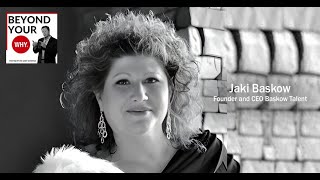
Jaki Baskow worked with Frank Sinatra and Sylvester Stallone as a celebrity broker in Las Vegas, rising from humble beginnings to the top of her field. She discusses her career in entertainment, philanthropy, and the speaking industry.
Chapters
Hey. This week I've got a fascinating guest for you. Her name is Jackie Bascou. She has basco talent in Las Vegas, Nevada. She is known as the Queen of Las Vegas and the top celebrity broker for the last 45 years. She started her business with nothing, $300. Met Frank Sinatra. He took her under his wing and skyrocketed her to the top. We're at her high point. She she was bringing in $20 million a year. I think you're going to find her story fascinating and she's got some great lessons along the way, so hope you enjoy.
Welcome to beyond you'd why podcast, where we go beyond just talking about your why and actually help you discover and then live your why. You see, we believe that knowing your why, that driving force behind every decision you make and every action you take, is the essential first step to really knowing yourself. It allows you to move forward faster and have a bigger impact. If you're already a fan of the show, then you know that every week we talk about one of the nine whys and then we introduce you to somebody with that why so you can see how their why has played out in their life. This show will be more powerful for you if you've already discovered your why. If you still need to do that, head over to why institute.com and discover your why today. It'll only take you about five minutes. Now let's meet today's guest.
And so this week we're going to be talking about the why of contribute to contribute to a greater cause, add value, have an impact in the lives of others. So if this is your why, then you want to be part of a greater cause, something that is bigger than yourself.
You.
You don't necessarily have to be the face of the cause, but you want to contribute to it in a meaningful way. You love to support others and you relish successes that contribute to the greater good of the team. You see group victories as personal victories. You are often behind the scenes looking for ways to make the world better. You make a reliable and committed teammate and you often act as the glue that holds everyone else together. You use your time, money, energy, resources and connections to add value to other people and organizations. And so today I've got a fascinating guest for you. Her name is Jackie Baskow. She moved to Las Vegas, Nevada in 1976 to work at a movie studio under the creator of Batman, Bob Crane. After they lost financing, she was talked into opening her own talent agency. And her new company broke a 25 year long monopoly in the talent game. The first commercial Jackie was in charge of casting made 36,000 in royalties. This caught the eye of Mr. Frank Sinatra. Mr. Sinatra. Mr. Sinatra requested a meeting with Jackie because he was helping Marlene Richie, whom was his opener at the time, acquire an agent. That was the start of her 45 year career working in Las Vegas where she is one of the top and preferred vendors at Caesars and the Wynn. Jackie has since produced TV segments, booked stars to take to Italy for the Telegato and filled seats for the Oscars. For the last 18 years, she has worked with Stallone, Gene Hackman, Tom Selleck, Kevin Costner, Sharon Stone and so many more. Discovery Channel also featured Jackie in a TV segment on Casino Diaries where they named her one of the top celebrity star brokers in the world and named her the Queen of Las Vegas.
Jackson.
Jackie, welcome to the podcast.
Thank you so much. It's a pleasure to finally be here.
I know it's only taken us a year, but we're here now.
I know. So much to share though. A lot to share.
This is exciting. So, okay, you're in Vegas now. Where did you grow up and what were you like in high school?
Horrible. I don't even know how I ended up in business. I grew up in Cherry Hill, New Jersey and when I was 16, my dad owned a bar. He was robbed and killed. So I had a very tragic teenage years. I barely, barely finished high school. My friend Ann's mother actually went in and begged them to graduate me and I ended up. Her dad got me a scholarship for Miami Dade Junior College. I mean, I couldn't type, I couldn't do anything. I was a mess. I just wanted to invite people over and party. So I went to Miami Dade for two years. I was all about the music because we'd sneak on the campuses at University of Miami and they had people like James Taylor and people like that. It was amazing. And I worked like three jobs to keep myself going. And then I eventually came back to New Jersey. I worked with my mom part time and I would take buses to New Jersey, I mean to New York to try to be an actress. And I wasn't a very good actress, but I was a good talker. And.
I was seeing somebody that was cheating on me and we decided to go to the Catskill Mountains and we met Bob Kane and my neighbor and I decided to move out to Las Vegas to work for a movie studio. And when we got here, there was no movie studio. It was an old electric company building. Bob and a man named Russ Gerstein they lost their financing. I had no idea Bob was a creator of Batman. He ended up moving to la. I ended up hiring Peter Goobers, who bought the project 20 years later as a speaker.
We live in a fishbowl. We just keep going around. And I started my company with $300. I took a job with Tele Savalas, and they talked me into opening my talent agency. And somebody gave me an office, a man named Bobby Mars. And I couldn't afford, really, to run my talent agency. So at night, I put glasses on and put my hair in a ponytail and go call bingo. And on the weekend, I worked at Big Ben's car lot.
Oh, my gosh.
When you're passionate and persistent, you have to do what you have to do to get to that next step. And it's my. My beautiful career that I've had here for 45 years this week has enabled me to help others. And that's what life's about. I recently hired Shaquille o' Neal two weeks ago, and he said something that it's not about how successful you are, how much money you make. It's about what you do. You want to be known for kindness and giving back to others. He's very philanthropic, and I was very impressed with him.
Well, let's go back for a minute to high school. And when you said you barely made it through, was it because of grades or because of getting in trouble, or was it just you didn't have any interest in learning the way that they were teaching?
Probably ADD and don't know it. You know, I could not concentrate unless it was something I wanted to concentrate on. And we used to go and dance on a TV show called the Jerry Blavitt Show. We went on that show three to four days a week, and then we'd go to dances every night. So my whole life was going to dances. And that's what I think. It subconsciously kept me, you know, going mentally, you know, with all the tragic that I had. But in school, I never. I never was a serious student. You know, I. I got D's and E's and F's, and it was not good. Not good. But, you know, you have to be focused, you know, and, you know, I have some relatives that went to college, and they weren't focused. If you're not focused, you have to put your mind on things. But I made it through high school.
I went to junior college for a blink of an eye, and I ended up in business. And I have to tell you that I really believe that working when you're young and learning things. Like, my mom was a bookkeeper for a wholesale meat house. And I used to go there, and I used to pick up the phone, you know, do you need meat this week? Do you need that? We sold to all the restaurants in New Jersey, and she was a bookkeeper also. So she was a bookkeeper, and she did their sales. So I learned how to do bookkeeping, and I learned how to sell. And I. I consider myself a great salesperson. You know, you. You have to be able to sell your company and sell yourself and believe in yourself for other people to believe in you. So I don't think. I mean, education is wonderful, and I truly believe in education, but people that can't afford education. And in those days, I couldn't afford education. My mom was working two jobs to support my brother and me. So you learn how to work and learn how to do things. And, you know, I've been a waitress. I've been a cashier. You know, I've been a telephone offer. I think I've been everything. And with that, it's. It's enabled me to be successful in my own business and to look after things in my own company.
Yeah.
And I still love people.
You know, what was it like moving to. What was Vegas like when you moved? Well, what year was that, and what was it like when you moved there?
It was 1976.
Okay.
There were under 200,000 people here.
I think the city was not run by who it's run by now. Yes, but everybody knew your name. I'd pull up to the Desert Inn Hotel, and I knew Gary, the valet guy, and I knew all the valet people at Caesars at that time. And it was more personal to me. It was more personal, and I loved it. People. People knew you when you walked into the hotel. And it's all about relationships. To me, it's still, you know, I'm old school. I'm about relationships and, you know, meeting people face to face and, you know, interacting with people. Because, like, when I have a job, whether it's a little job or a big job, I try to show up and meet my client and thank them for their business, how important they are to me, because not many people do that these days, as you know.
Yeah. So who was your. You opened your talent agency. What was it called?
Basco Agency.
Original, right? Yeah.
Okay.
And who was your first client?
My first client was Suzanne Summers. I did a TV show called Jack and the Princess. I didn't represent her, but it's a Very funny story about the fishbowl. I hired some people to work on that show. And I also worked on a David Brenner commercial where I put a guy named Spider in the commercial. And he touched the Schmidt's beer in the commercial and became interactive with the product. So he made royalties $36,000. And he went home and told his boss and his boss's best friend, Jilly Rizzo happened to discover Marlene Ricky at the Aladdin Hotel. And she was now opening for Frank Sinatra. And she didn't have an agent. So I got a phone call. The old man wants to meet you. And I called my mother and start crying. I said, I don't know who the old man is, but somebody I think is trying to steal my company. I'm coming back to New Jersey. And I ended up going to the lunch, and he was lovely, and I met him and Jilly, and I became friends with them, you know, till the end. And I went to his show every single time he was here. And he was such a legend and icon in the industry.
Yeah, let's dive into that a little bit. What was it like sitting down to have lunch with Frank Sinatra? Where was it? You remember where you had lunch?
Yes. It was a coffee shop at Caesar's Palace. And he walked in with this black NBC peacock jacket. And when he turned around, I didn't know it was him. I didn't know who I was having lunch with. And Jilly came in, you know, he had his glasses and his, you know, little one eye. And he said, hey, kid, I hear you're the new Sue Mengers in town. And I said, Mr. Sinatra, you can have my company. Who's Sue Mengers?
And believe it or not, he followed my career. One time we were doing a commercial over at Bally's, which was the MGM before the fire. And we're in an elevator, and Paul Anka gets in the elevator. And.
Frank is talking to me in the elevator, and he introduces me. And he said, who is she? And he said, she's the next two makers in town. And he goes, paul Anka was like, who was she? Because, you know, you don't get in the elevator with Frank Sinatra. It's usually security guards are in the elevator with Frank Sinatra. So it was very interesting. It was a wonderful time to be in business. I started my business with $300, and I built it to a very big company. I had 24 employees. A couple years ago, we built it to a $20 million company, had some employees that took 15 employees and about 15 million in business. And then you dust yourself off and you build yourself up again. And I became another destination management company again. And then I decided I didn't want my company, but I don't want to jump to that. You can ask me more questions and I'll tell you the climb.
Yeah, that's so Frank. Sounds like he was very helpful in the early stages of your business.
Well, he. I never asked them for anything because I don't like to ask people. I would rather give and. But he walked me into the catering and the office with a man named Jerry Gordon, who was the manager of the hotel at the front desk. And he said, can you use this kid's modeling agency? Use this kids company, see if you can help her. And I'm like, thank you, Mr. Sinatra. You know, like a little girl. And Jerry Gordon and I became friends. And one day he introduced me to. And I started doing parties and events. They said, can you do parties and events? And I'm like, sure. So the first thing I did for them, they asked me if I had a band. And I hired a band called the Imperial Bobby and the Imperials. And they asked me if I could bring somebody into a morning meeting. How would I creatively do something fun to open a morning meeting? So I said, what about Caesar and Cleopatra and one of those leaders with, you know, feeding grapes in the mouth? Well, they didn't tell me who it was. The next thing I know, the next day we're on the front page of the news. It was a man named Jackie Presser, the head of the Teamsters.
Oh my gosh.
And I'm a kid that. I mean, I didn't know. I was so naive when I moved here. I thought, you know, I didn't know anything. You know, I thought a working girl was a girl that went to work for a living, you know. So, you know, that was my first job with them. And then Jerry introduced me to a man named Juliana Fournier, that was a radio host and he was from Italy, and his friend was the Johnny Carson of Italy named Mike Bongiorno. And he came here and they were going to produce 12 TV shows of somebody winning some kind of contest and coming to Vegas and in the desert and showing them at a hotel. So they said, can you produce TV shows? And I said, sure. And I ended up hiring a guy named Don Jacobs, Mr. Camera, who was second unit camera for Entertainment Tonight. And we traveled around and I ended up doing 26 TV shows for them and Engelbert, Linda Carter, and, you know, Frank Sinatra, Jr, Ben Vereen, all these people. And I went in like I was a magazine show and did these interviews and became friends with everybody. And they said, Mr. Berlusconi wants to know if you can bring celebrities to Italy. I said, who's Mr. Berlusconi? And they said, well, he's a man that owns a TV station. They didn't tell me he was the prime minister of the country.
So I started bringing celebrities. The first one I brought was Gary Coleman, and then.
I brought Michael Douglas over, and I brought over Sylvester Stallone, and then we went to Mr. Berlusconi's house for dinner, and he gave Sylvester Stallone a lot of money for his movies. And, oh, my God, I took Kevin Costner and his wife over and ended up helping them with their honeymoon. And Tom Selleck, who was a doll to work with, and, you know, and Andy Garcia. And I ended up doing all these different crazy TV shows. Ms. Italia, the Italian Oscars, the Telegatos. And I just. It was a blessed time for me. I sent Jennifer Lopez over to the San Remo Music Festival, but I ended up not going to that one. But, you know, it's like all of a sudden, you know, you're a kid from New Jersey not knowing anything, sleeping in the same room as your mom because you barely have money to eat, and then all of a sudden, you're living this, like, lavish life. It's been crazy. So I decided to take the lavish life and pay it forward to other people. I've been mentoring kids at the university that want to be in the hospitality and entertainment business. I try to put as many people as I can to work, whether it be a movie, a TV show or an extra. And I tell people it doesn't matter about really being a celebrity. It's what you do. If you do one day of your passion, you've lived your passion in your life. And I've been really blessed.
I brought some celebrities to Boys and Girls Club for the Heisingers in Florida with my friend Cheryl Kagan. And then I got involved with the national center for Missing and Exploited Children. A friend of mine, John Daly, introduced me to John Walsh and to a man named John Arnos. And 12 years later.
Every year when we raise money and do these golf tournaments, in these events, we find missing kids. It's every single year around the time we do the event. It's unbelievable. And I work with Make a Wish. It's funny that this is happening today. A friend of mine just came in from New Hampshire. We are actually purging. We just purged 38 bags that we gave to safeness and. And safe house to people that don't have anything. Because when you think about it, Whether you have $5 or $500,000, we save things. We become pack rats, and we start, you know, like five sets of dishes instead of one set of dishes. And it's so important to start getting rid of that stuff and giving it to people that don't have anything, like the Ukrainian families that just came here. So I'm just realizing, you know, I'm trying to minimalize and give to others because it feels good. Made me feel like I lost weight.
So you've built your company up over the years, and what was it like at its peak? Give us a sense of when you were at the peak of what you were doing, when was that, and what was going on, and what did that feel like?
Well, I'll tell you about the peak, but I have to say that every day I wake up and love doing what I do is my peak. Because I, I, you know what, I love every day, whether I'm doing something little or small. But I would say that my peak, well, when I was bringing all the celebrities to Italy before, COVID was my most fun. You know, you get to go there, you're in a different country. It's wonderful. It's, you know, it's a lot of fun. My peak, I had a girl that was my president of my company that worked for me. We took my company out of nowhere to $20 million company, and I was able to buy some of my employees cars and send them to Europe on vacations and give people deposits for houses that had nothing. And it was like a dream come true. I mean, this stuff doesn't happen in a lifetime. And it was. It was amazing. Unfortunately, she was not amazing. She turned out to be not a good person. But that's the one that left with the 15 employees. But, you know, you learn in life, you learn when you do so many things for people and people don't appreciate it, you learn something. And I learned a lot because everything is a journey. And in my journey, I learned that you can't buy loyalty, you can't buy love, you can't buy loyalty, and you can't buy friendship. It just is.
Wow.
Yeah, it was a pretty big blow.
Yeah. Because it sounds like you were using your success to help others.
And then if I made money, everybody was making money. I, I never, you know, I had great parents. My mother taught me never to be selfish. It's like, it was funny because my mom lived a little studio apartment when she got older and a little assisted living in Cherry Hill, New Jersey. And as I started making a couple bucks, I'd come back from Italy and I'd buy her like a pretty ring and she would turn around and give it to the, to the, the Russian immigrants that lived in her building. I buy her beautiful clothes and she'd give them away. She'd rather have a sweat outfit and go to bingo.
And you know what? I love that about her because she was a good person and things didn't matter. I think all of us get caught up in things and, you know, possessions and, you know, sometimes you look around you or you're friends with people that don't have those possessions and you realize the only possession we have is family, friends, and our health.
Wow. And so when you had the scenario where she. How long ago was that that she took the 15 people and left.
And $15 million in business? Yeah, six and a half years ago.
Six and a half years. So that wasn't very long ago.
No, it was not. But I have an angel over my shoulder. I ended up, I had what was called a destination management company. We did the parties, the events, the entertainment, the speakers, everything. So what happened was I ended up selling my company two years later to a Wall street guy and his name is Steve Black. He helped take LPL Financial public and he owned my company for a couple months and then he went back to work for his ex boss that retired and he paid me for full on my company and gave me my office building back. It's a God story.
Wow.
It's a God story. So I went and my brother went through a divorce and lost everything. So I went and took some of the money and bought him a house in New Jersey. And just, you know, I was so blessed to be able to do this because this stuff just doesn't happen in real life most of the time.
No. So you're at the top. You, when she left, took most and then another guy comes along and pays you off and full when he doesn't even need it or. And then now you're back on top.
And a wonderful man. You know, what happened was when my president, her son, you know, finagled to take my employees and I mean, I was doing at and T's events all over the country, Texas Instruments. I mean, we were big. We were big time. We became a big, big company and a small, you know, a small pot here. So, you know, I, I realized it's funny because I sold my company to Steve Black. And then, like I said, he went back into the financial world, overlooking about 123 companies for his boss and putting teams together. And I'm still in touch with him and his family. They're just. I can't even say enough about him. So about two years later, one night, I was on the Internet and I decided that I did not want this event planning company anymore. I didn't really want to be the boss. Does that sound crazy? I just wanted to. I wanted to service my clients and, you know, and make sure people were taken care of. And, you know, when you're the boss, you're sitting behind your desk, you know, you're trapped, you know, and you're taking care of employees, and it's tough. It's tough. So I ended up selling my company to another destination management company. And.
I'm not going to really talk about them. And I stayed with them for three years as president of business development. And then I decided I kept my speaker's bureau at my talent agency because that's always been my love and my passion and my movies and tv and that's. That's what I'm doing. And it's funny because, you know, you were asking about some of the first people I worked with was Suzanne Summers on Jack and the Princess with her and Bruce Boxleitner. And 25 years later, she's doing a convention for me and I'm doing little doodling, and I came up with the idea for the Suzanne Somers pajama line that's on Home Shopping Network.
Wow.
So, yeah.
Is your favorite thing working with the talent versus doing the destination and doing the events or what? What has been your favorite thing to do over the years?
Entertainment. And the movies and the TV and the talent and the speakers. Because I think with everybody that you hire, especially with my speakers, you get to. You learn something in life. You get a message, you get inspiring, you get motivating. You learn more about life. You know, I have a. A young man named Nick Satimitasso that I. I recently hired. Do you know Nick? He has no arms and no legs, and he lives life bigger than anybody that I know. He opens for Tony Robbins and I used him. And people were like, grabbing onto the wheelchair when they saw him. Like, you changed my life. At the end of his speech, he did this meditation about taking a deep breath in and letting the little child out. That all the things you're harboring, like, I'm mad at my mom and dad, I'm mad at this. I'm mad at that. I'm angry about my ex wife, my ex husband. And he, he was very moving. Very moving. I felt like I can't even believe some of these people that I found. It's like your why? How many people don't know what their why is? Why did I do this? You know, why am I in business? You know, why did I stay in that relationship too long? So many answers and so many questions.
Yeah.
So I love what you're doing.
Well, thank you. And so now it's Basco Talent.
It's Basco Talent and Las Vegas Speakers Bureau. They're two different companies, but under the same banner.
So when you look back, what do you attribute? How did you have such success in that industry? What was the secret to going from, you know, small to 20 million?
Well, first of all, I was scared. I came out here with $300. My roommate moved to LA. She ended up being the assistant to the director, Sidney Pollock. For 30 years I was here by myself. My mother did not have a dime to give me. You know, my mother, you know, I think she had maybe $3,000 to her name in her bank account. And it's like, it's survival, the fittest. You do what you have to do to survive. And that's why I, you know, people are like, you're calling bingo at night. I'm doing whatever I can to pay my rent. And I think that Caesar's palace, becoming their party and event planner and doing their entertainment and things over there. And the day and age when it was just blossoming was a big deal for me. I started, you know, you know, if I made a thousand dollars in a day or whatever, it was lot of money for me in those days. Also.
I think the Italians, I mean, I produced 13 TV shows in a week, and I made 92,000 profit. It's in, it's unheard of. I bought my first house.
I went from an apartment to buying a house. I'm like, oh my God, I'm a homeowner. But, you know, you know, it's exciting. And I think that any job is exciting, whether it's little or big or whatever, if you love doing it, you know. And I think that what helped me be successful is I never stopped. I was, I guess, tenacious. I, I, you know, I'm a networker. I would always, you know, if I would meet you and I'd say, hey, would you like to be in my speakers bureau? You know, and then I would stay in Touch with people. And you know, when I had my destination management company up to a couple of years ago, I couldn't do all that. You know, I couldn't concentrate on that because you know, I, you know, I had to concentrate on, you know, 10 employees. After I lost the, the 24 employees, I had 10 employees left and a lot of them were women. And you know, I'd get these boxes in the mail, they'd be in their office shopping and I'm bringing in the clients and if I didn't bring in the clients, I wasn't paying that $92,000 overhead a month, you know. You know, it's, it's a lot of money to be in business. Yes. Then as you know, covet hit and things change. You know, everything changed in the world after covet. To me I see, you know, I see quality at restaurants have changed. I see people don't want to work. You know, I see people, they don't come up and talk to you and they're not happy. I don't know, it's crazy. I always try to make people feel good. Whether if I see somebody on the street that's you know, you know, homeless or whatever, I try to do something for somebody and you know, change their day.
Conversation and a smile changes your day.
Yeah. And you know, when I first met you, we were introduced by a mutual friend and when I saw your bio and I went to your website and I saw picture and I was expecting, I, I don't want this to come out wrong, but I wasn't expecting somebody as friendly and positive and willing to help as you were.
Because in many situations in your industry you don't seem to find that.
Thank you. And I got a little crazed after I saw you and we still need to do catch up. I had a girl that worked for me, that was my assistant who lost her husband. So I lost my assistant of 10 years. And I'm not really technologically savvy on doing proposals, but you learn very quickly. And then my general manager unfortunately lost her little nine year old daughter recently. So you learn that you have to just do what you have to do. And I have to tell you that this has been a good experience for me because when you start getting a lot of employees and you have people working for you, it's like, get me this, get me that, get me this. And it's like I learned not to get out of my chair. Does that make sense? It's like I expect everybody to bring me everything, not in a pompous way. But just it's like because I'm on the phone all the time and doing my thing. But now it's like I find myself more touching and feeling everything that I really needed to do. I'm opening every file, I'm closing up. I'm more, you know, paying attention more to a lot of things, which is important.
How many people do you have now working for you?
4 part timers.
4 pie time is it for part timers from that? From what you say, 24.
I have, well, I have three out of office remote salespeople and then I have three people that do coordinating. Like if I have a job like two tomorrow night somebody's going to go check in a band for me. Usually I'll show up tomorrow night I can't show up so they're going to show up. And then I have two part timers in the office. I really have more than more than that. So you know the people that come in and out.
But that's a big difference from 24 down to whatever that's six part timers or five part timers.
At my height, I had $172,000 overhead a month. A month.
Painful.
That's enough to put on £50 and age you. Trust me.
How do you determine who you want to work with?
You know, it's so hard because I like everybody, you know, I do, I try to help everybody, you know and sometimes I get overwhelmed and. But I, you know, I have a girl, Kelly that works with me in my talent department. So we know when we're casting a movie or TV show she does a lot of the, you know, the electronic submissions that I don't do and but the speakers and the entertainment I try to interview in person. And now I have a, you know my web guy, Steve, I found him and we built a new website this year. So I'm so glad my old website was dated and I tried now to. I'm marketing now. I have a girl that lives in Israel named Natalie. I forgot about her and what I do is I'll have flyers made and I'm going to talk to you about like you'd make a flyer. What is your why? And you know, you speak about this at the convention. Then I, we just started sending out these flyers to. I have about 120 to 132,000 emails of people that have attended trade shows, trade show companies, meeting planners, event planners, incentive houses. And she'll take because with constant contact you can only send like 400 and some a day. So she'll take that flyer and, like, you'd give me a flyer built in, constant contact, and we send it out, and that's how we let people know about you. Because out of sight, out of mind, you know that. And it's all about volume and letting people know. Because I'm sitting here as one speaker's bureau, one talent agency, and if I don't get those calls, then maybe 10 other speakers bureaus you work with get those phone calls, and somebody's going to call you for a job. But it's been very interesting, and I like it. I have to tell you that I like it. I have an office on Eastern Avenue, small office. And I have an office in my home now. And I spend 90% of my time at home working. It's easy to come down the hall and get on the phone for four hours and then do my stuff here. So. And then I'll go out and I'll meet people.
So contrast for us, big 24 employees to small, what you're doing now, how is that different as far as for your clients? How's that different for your sanity and for the impact that you can make?
I have to say that I love it. I love it. You know, 24 employees. There's a lot of chaos. I had a registration company and a housing company. We booked all the hotel rooms. We were doing all that for Texas Instruments. And then all of a sudden, the technology goes down and, you know, it's the world. The world is crazy. The world is crazy. And I found myself. I was working 20 out of 24 hours a day. I really was. And I. As much as I loved it, and I loved having all the employees and I had. My office building was a house I renovated on Russell Road. I didn't live there, but we had 5,000 square feet of little chandeliers and French doors, and it looked like somebody's house, and everybody had their own little space in there, and I loved it. But I saw the neighborhood changing there. It's on the street of the airport here. And we were burglarized a couple times. And I was in the building one time. Scary. And I just. You know, you say that you wanted to do it, you did it, you've been there and you've done it. And I think that I don't. I like what I'm doing now. I. I don't miss having a lot of employees, and I don't miss having all that stress of the overhead and the payroll and everything. And the people that work for me, they're Lovely. You know, they appreciate it. You know, I pay them well, I take good care of them. We go out, we have fun, we go to shows, we go to dinners, and we get to do things for other people. Like, you know, we love doing make a Wish because Make a wish. We get to see a little child's life changed for a day, you know, and we get to do fun things. So, you know, like, I would tell people, I don't think that bigger is necessarily better. It's always great to grow your company. I won't ever take that away from Enabled me to, you know, buy a house and buy an office building and do things that I always wanted to do. But after that's over, it's like, what, what is it? You want to appreciate your life every day? You want to be able to wake up and do things that you really want to do and take just breathe, you know?
Yeah. That. It, I think, seems like a lot of people go through that. Start small, build this amazing thing, don't really like it, but they're in the middle of the rat race. End up with something smaller and more personable and like that a lot more. So how has that affected the people that you connect with, the people that, I mean. Do you still have as many speakers as you had before?
I do. I have more.
Oh, my gosh. And how are you able to keep up with all that?
You know what, I put them on my, I put them on my speakers bureau. And then as clients come in, if, you know, I never, you know, I'm not in the technology world, even though they're my biggest clients. I, I, I started getting Google AdWords and I had never had them before. And I hired this great company in New Jersey that has been marketing me. So what's happening now? If somebody's looking for, excuse me, a certain speaker or a certain type of entertainment, they're finding me on the Internet. And I'm like, how did you find me? And they're like, Google. And I'm like, oh, my God. I have to ask you what you, what words you were looking for, because I've never in 45 years used Google AdWords, so I can't say enough about them. So it's been interesting, you know, and every, you know, everything is a learning lesson. It's a journey. It's a different. Every day is a different journey. And I, I just love doing it. I love doing it, and I don't care if it's in a big way or smaller way. And, you know, like I said, you Know, last week we had Shaquille o' Neal and Molly Bloom here. You know, this week I had small $2500 speaker. And I love them all because I get to put them all to work. So it doesn't really matter how big it is. It's. You put somebody to work and you were able to maybe change one person's life in that room. Like, you know, when you're speaking, you know, your whole goal is like, if you touch somebody in that room or touched all those people in your room, it's like giving you a million dollars.
Oh, for sure.
So.
So if I'm a speaker listening to this right now, because we have a lot of speakers that listen, what do you see as the key to getting booked?
To getting booked? I think it's all about your subject, your delivery. A lot of people.
Use a moderator because they really are not a keynote speaker, but they can speak, but they don't have a whole platform and their presentation. If somebody was going to do speaking, I would say do something that's going to interest people, attract their attention. You know, people, they want to be engaged right now. And they've seen it all. They really have seen it all. Like, what do you. What is your why is brilliant. In fact, I saw something on TV that said, why did you see that? It was a commercial on tv. I was thinking about you. I'm like, is that his commercial? But. But, you know, it's embracing people here in your heart.
And emotionally. And like, I was talking about Nick Santa Matasso. He's speaking. And I had men that were coming up to us crying, you know, like, oh, my God, I just released. I purged. I did this. He left them with something memorable. And as Maya Angelou said, it's how you leave them feeling. So if you're going to speak, it doesn't matter what you're speaking on, as long as you're speaking from your heart and you know that you can engage and your audience can relate to you. Not everybody's a college graduate. Not everybody. Some of those people are there, and they have a set fee and a set job, and they're barely paying their bills and feeding their family, and they need inspiration. You know, I was one of those people. You know, I, you know, people work for everything that they have.
Yeah.
And. And you can work that hard. And I see people that are very wealthy that have lost it. And I think that it's so important to be a real person. To be a real person. So when I'm hiring a speaker, I want to feel that. I want to feel what they're saying. I, you know, somebody called me recently, speak on happiness, you know, you know what makes you happy. I love that, you know, you go in a room, you know, you're going to see something positive or something educational. And you know, I think every speaker has something to give and it's very important that your delivery and you're, you're touching your audience.
So if I'm a speaker and I want to, and nobody knows me and I'm trying to get booked, how do I go about getting booked? What's the what, what would kind of advice would you give to them?
Well, I would say that you want to go to every speaker's bureau that you can and get on their bureau. You know, I'm not, you know, pompous to say just come with me. Even though I love you, just come with me. Because I only get a certain amount of jobs. But I do say if you're, if you're going to be with me non exclusive then and you really, really want to work on getting a lot of bookings, make a flyer. There's a company out of India, they charge like $100 to make these flyers. I'll have to send you a couple and they're really amazing. And it's a flyer, it's made out of. In constant contact. It would have your face and maybe you have the big why and the question mark or whatever you put on it and whatever message you're trying to get to your audience. And then what I do, I have a girl, that girl Natalie in Israel. She sends it out, she'll start sending it out to. We've sent out to everybody on our list and we'll send out like now and then I'll send out again six months from now. Maybe we'll change it up or we'll send it sometime. We embed a agent friendly. We'll have you do it. Put an agent friendly video in there so people can see you and see how you engage with your audience. Because people really want to see, they want to know that you've spoken somewhere and that it's going to be a success when they, you speak for them.
Yeah. So having a sizzle reel is important.
Sizzle reels, very important, professional high res pictures and you can get them without spending a lot of money. You know, if photographers are charging you thousands of dollars for your pictures, call me, I'll give you names. You don't need to spend that kind of money. Really don't. You know, I want People to spend the least amount of money and make as much as you can.
See, that's why you've been so successful all these years. Because I can tell you that not every bureau thinks ACTS helps like you do. It's a. You know, it's not a. It's not the same for everybody. And I'm sure you probably already know that, right?
I do. Well, there's speakers bureaus, and I will call them, and I'll say, hey, I'm interested in so and so. As usually, some of them are big speakers, and they're like, well, have your client call me. I want to deal with your client direct. And I'm like, well, I'm your client, and you will meet my client after you give me the. Like, how much are they? Are they available? No, I'm not giving you that information. It's very cocky. And I think that it's not a good way to network business because we all should be working together. I look at my. Like, one of my competitors, Jennifer Lear, her and I work together all the time. And, you know, and she used to work for me. And it's like, everybody, every. Each agency has something to offer. Diane Goodman from Who owned Goodman Speakers. Now she's a speakers manager. You know, I actually called her one day, and I said, I don't know how to put this, but I'm in love with your website, and my website sucks. And she said, I'd be glad to give you my web guy. In fact, we just. She just came here and we had lunch. She's a lovely person. And. And now some of her speakers are on my website, and I have her web guide. So, you know, it's so important that we mentor each other in this life. You know, there's a couple girls called me that just opened their little speakers beer, and I'm like, call me. You want to put some of my speakers on your bureau, and we can work together. And, you know, and I will tell you that another important thing is, like, everybody has a set, right? Like, just say your rates, 25 or $35,000. A lot of times people call me and they'll say, you know, we only have $10,000 for a speaker. And I will turn around and call a $20,000 speaker and say, listen, I've had three inquiries this month in Vegas for a $20,000 speaker. Are you. Would you like me to submit you or. No? Not that I ever want to insult anybody, but somebody may not have a job for four months. So if I just made you $30,000 on three jobs. So, you know, I like to think out of the box. You know, I never want to presume anything. I do not take 25 or 30%. I take 20% sometime if the clients don't have the budget, I'll take 10%. You know, to me, it's not always about the money. It's about the relationship.
I love that. What's the difference between a speaker bureau and a speaker manager?
I think the speaker management companies charge you to manage them and to promote them. At least that's what I've heard from some of my speakers. They've said that they pay like thousands of dollars a month to have them submit them and represent them. Speaker's bureau. We should only take commission from you if we get you a job and after you've done the job, we get commissioned.
Okay.
I'm sort of not like a regular speaker's bureau because I've been in the entertainment business for so long. So it's like I need to know where they're staying. Is it a five star hotel? I need them. I need to know they're being picked up at the airport. Is there a coordinator? I need to know they're going to have a sound check. You know, I want to set my speakers and entertainers up for success, not failure. You know, a lot of people just cook it and book it. I'm not a cookbook person, you know? You know, everybody wants to make money. Yes. And be in business, but you have to care. You have to care. And that's why I'm a little bit different. You know, I want to know that you're coming here, I'm taking care of you. I just had Molly Bloom here. We had 70 mile an hour winds. She was like in the air. I was like texting her. I hope you hope you're not upside down. I hope you're okay. She's a person and a trooper. She came in on those wins. But, you know, you want to make sure that people are there and then when you're back, you know, I, I try to show up at these events. I want to see my speakers if it's within my power. If I don't have 10 things going on that day. And when I go there, I want to make sure that, you know, do they have a ride back to their hotel? You know, have they been fed? Is there food in their green room for them? I know it sounds silly. These are little tiny important things that mean a difference.
So I love that. So last question for you. What's the best piece of advice that you've ever been given or the best piece of advice that you've ever given?
A couple. One of my speakers, Dr. Edith Egger, she's a Holocaust survivor, and she told me that we have to always be survivors, not victims. No matter how. How bad things get in life. You're a survivor. Another friend of mine, Dr. Ann Manning, told me that the end is in the beginning. What you see in the beginning is always there in the end. And then there's my mother who always said, be a good person.
Don't base your life on things. Be a good person and give back to others. And that's how I'd live my life. I have a friend of mine, John arnos. He. He's 90 years old. He raises money for the national center for Missing and Exploited Children. And last week he jumped out of an airplane to raise money and he turned 90.
Oh, my gosh. Well, you hang around with some fun people, that's for sure.
We. I'm all about having a good time.
Always have been. Right?
Yep. I am. I'm looking forward to seeing you when you come back to Vegas.
I'm going to be there on Sunday.
You'll call me?
I will call you.
How long are you here for?
I am there until Wednesday.
Okay.
I would love to get together if you're. If you're around, because I'll be there. I'm speaking with Ashley's group and then, then I'll be there for a few more days.
Are you at the M Hotel? Yes, I'm around the corner.
Perfect.
I'll make time. I promise you. You'll call me.
I love it. And if there's people that are listening and want to follow you, learn more about you, see more that's going on in your life, what's the best way for them to connect you?
Probably. Well, my office number is 702-547-5119. And my email is Jackie. And it's spelled a little different. It's J A K I J a k I basco.com and check out our websites, you know, Basco Talent, Las Vegas Speakers Bureau. And we're always looking for new people. And I'm looking for people to mentor. And if somebody isn't a real professional speaker, I will take time and guide them and tell them where they can go to try to look into it. I think it's important to go to NSA and Toastmasters and all those places where you can learn and people give you positive feedback to help you.
Awesome, Jackie. Thank you. So much for taking the time to be here. I'm so glad we finally got to do this.
I look forward to seeing you soon.
I'll talk to you this week. Yes, thank you so much for having me on your show.
It's time for our new segment, guess Their why. And we are going to pick Simon Cowell. And you all know him from American Idol or America's Got Talent. And I've been watching him forever, since I have two daughters and they watched American Idol since they were pretty much born. And so it's been interesting to watch him because he's changed over the years now that he's got a new son. Or I guess he's not new anymore, but his son that's kind of mellowed him out, made him more emotional. He's not so tough and he doesn't, you know, just say what he thinks. But if I had to guess what his why is, I would say that Simon Cowell's why is simplify. To make things simple, direct, to the point. Don't give him the fluff, just tell it like it is. He doesn't beat around the bush. He just says what he's thinking and usually not very long, just hits him with it. So I believe his why is to simplify. So what do you think now? If you have not yet discovered your why, Please go to why Institute and use the code PODCAST50 to discover your why or your yos. And thank you so much for listening. And if you love the beyond your why podcast, please don't forget to subscribe below. Leave us a review and rating on whatever platform you are using to to listen to our podcast and I will see you next week. Have a great week.
I really hope you enjoyed today's episode and that through today's guest, you heard how important it is to know your why and how impactful it can be in your life and the lives of those around you. Be sure to head over to whyinstitute.com and discuss. Discover your why today. Remember, the more you know about yourself, the more you'll know about others. I'm Dr. Gary Sanchez and I'll see you on the next episode.
More from Dr.




Women In Leadership: A Need For A Greater Systemic Change With Belinda Clemmensen






