Going All In
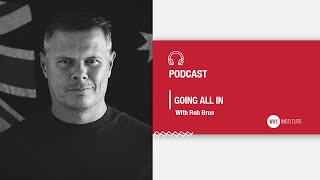
Robert Bruss joined the Australian military at 17, spent a decade in the Navy and Army, then built an electrical contracting business before moving into digital work and launching his podcast Go All In. He talks about trust as the foundation of leadership, what he learned moving from military to civilian life, and how to start and monetize a podcast.
Questions this video answers
Cronulla, southern suburbs of Sydney, Australia.
Age 17.
Royal Australian Navy, then the Australian Army.
About 10 years (he says he was 'nudging up against 10 years').
Around 300 jumps.
Chapters
This episode of beyond you'd why is brought to you by our why App. Head over to yinstitute.com to take the why app so you can discover your why. Today. Knowing your why is the essential first step in having the clarity to move forward faster and have a bigger impact.
Welcome to beyond you'd why Podcast, where we go beyond just talking about your why and actually helping you discover and then live your why. Now, if you haven't discovered your why yet, go to why institute.com, whyinstitute.com Discover your why and then come back and listen to the podcast because it'll have much more meaning to you when you know your why. Now, if you're a regular listener, you know that every week we talk about one of the nine whys. We go into detail of that why, and then I bring on somebody that has that why so we can see how the why has played out in their life. Today we're going to be talking about the why of trust. Now, if you have this why, trust means everything to you. You believe that trust is the driving characteristic behind all that you stand for and will work hard to create it. When the relationship is based upon trust, the sky's the limit. You will go to great lengths to demonstrate that you are trustworthy and and do such things as become an expert in a given field or with respect to a particular subject so that you can demonstrate your expertise and thereby establish that you can be trusted. You will look to do things properly and correctly because that is what a trusted person would do. You want others to know that you can be counted on and will go the extra mile to demonstrate that with your actions, your words and your deeds. Many people with your why actually enjoy numbers, because numbers don't lie. Endeavors such as gardening and sculpting that are predictable. While people with otherwise may get annoyed by the violation of their trust to you, it's like a knife in the gut when somebody breaks your trust. So you build loyal and lasting friendships and relationships with everyone you come in contact with. So today I've got a guest who's all the way across to the other side of the world. His name is Robert Bruss, and I hope I just said that right because I asked him before we started and I think I said it right. Let me tell you a little bit about him. So after 10 years in the Australian Defense Force, in both the Royal Australian Navy and the Australian Army, Rob found his entrepreneurial career off to a racing start. The initial business was an electrical contracting company which as Rob puts it went from zero to hero in just a couple of months. Rob's journey into the digital world started around the same time after not being able to afford a website for the business. So he worked out how to hack one together. That sufficed and over time realized that it was a skill that he could develop. Now, fast forward from 2002 to 2017 and it's been a digital ride and career the whole way. Recently, Rob has set up and founded his own podcast called Go all in or, which is about telling the stories of others and doing whatever it takes to break through and succeed in every aspect of life. Rob will tell you that he absolutely loves what he does because it aligns perfectly with his desire to sit, chat and drink four cups of coffee over a really deep conversation. Rob, welcome to the podcast.
G', day, Gary. Thanks for the invitation to come on and share my why with your audience. I'm really looking forward to this. That's awesome.
Well, let's go back a little bit in your life now. Tell us, did you have to living in Australia? Well, first of all, where are you?
I'm in Sydney, Australia, in the southern suburbs in a place called Cronulla. And I'm about where I'm sitting here. My backside in this chair is about a hundred meters from the water.
Oh, that's awesome. Now, in Australia, do you have to join the military?
I think you have to join the military. If you're a naughty kid and you don't know what to do with your life and your parents will say, you, you gotta go and do that. No, you don't. There's no conscription here. It's all a volunteer service like you guys have there in the States. So it's a very capable force because of that reason, because we all want to be there and choose to be there.
Okay, so you joined at age 17. And then tell us a little bit of what was that like?
It's a funny story. I originally wanted to be in the army. The listeners might have picked up that I was in the navy first. And I went into the recruiting office and said to the guy behind the desk, hey, I want to be in the army. I want to run around with a gun and kick in a door, you know, like on the movies that you see. And he looked at me and shook his head and he goes, no, mate, you don't want to do that. Sit down and watch this video. And he was a navy guy, right? And I watched this video of warships cruising around and firing missiles and shooting guns and boarding parties. And all this sort of stuff. And six weeks later I was in the navy, scratching my head going, what the hell? Where's all the guns? Where's all the army stuff? This is a white uniform, not a green one. That was all a little bit funny. And you know, in hindsight he, I think he pegged me correctly because I didn't, I definitely didn't have the maturity to be in the army as a 17 year old kid. It was a lot, a lot harder. Even when I, after five years in the navy, got out, swapped over to the army. It was difficult then, even after five years of experience in the military. So I'm not sure if I would have cut it straight up in the army. So for all the funny story of the tongue in cheek story there, that guy pegged me correctly. But I loved it. I traveled the world with a pocket full of money. I went everywhere the Australian Navy goes. I was, you know, it's a bit of a rite of passage for a young person to go traveling and I got the government to pay for it and I got paid really well to do it. So I loved every aspect of it. It was a great job.
And so how old were you when you got out and why did you get out?
Well, I left the navy and I asked them if they would do an inner service transfer for me and they were, I think they were all a bit cranky that I was leaving and they said no. And so I actually had parked me in a shore bay somewhere and left me to kind of be for six months. And I kind of did my own thing for six months, which was kind of cool. And I was out and then it took me about six months to get back in. And when I finally got back in, in the day that I was getting signed up the army, these couple of these warrant officers are looking at me saying, what the hell are you doing here, mate? I said, well, they wouldn't do an inner service transfer. And he just signed the paperwork and goes, all right, you'll be in the next intake six weeks later. And. And off I went. So it was about six months between the transition and I enjoyed an amazing career. I was a little bit like, you talk about conscription, it was like being conscripted, actually. I went straight to recruit school, straight to the school of infantry and the day that I was joining my infantry battalion, they were packing their bags to go on the biggest operation the Australian Defence Force had been on since the Vietnam War. And I was like, well damn, that's exactly why I'm here. So that was really cool. And in my first year in the army, I went overseas on operations in East Timor on that very first trip. So that was a very eye opening experience. Nothing like the conflicts in Afghanistan or Iraq these days. Very, very different. At the time the Timorese wanted to, they voted for independence and the Indos didn't like that very much. So they had a bit of a scorched earth policy and they burnt the place down on the way out the door and we went over there to stop that. So it was all very uncool and it was kind of not peacekeeping, it's more peace enforcing. There's some cranky people shooting here and there, but really nothing very much happened. And when we came back from that trip, I felt so lucky. I did everything that people wait 20 years in their career to do and I went and went and did it. And the boss said, boys, there's not much going on for the next couple of years because we spent all of our money and all the exercises have been canceled and everything. So what we suggest you do is to work out how to advance your career. So you can do one of two things. You can either go ahead and do some courses or you could go ahead and get yourself a trade, or if you want to change jobs, you can go and do that. So they were incredibly, incredibly helpful in advancing the career. And I put my hand up to go to the parachute school and I went down there and I got all my free fall qualifications and I got to do all the special forces stuff without having to be in special Forces, which is kind of cool. And skydiving sort of seven or eight times a day for three months at a time across maybe three jump serials a year. And I banked a whole lot of jumps in my logbook. You know, I must have, I stopped counting out around 300, so I was very lucky to do that, you know. And the military has all the, all the best gear, all the best airplanes and parachutes. And when you're at the school, it's just plain fun. And there's only so much of that you can do it kind of, you know, you come to work and say to the boss, what are you doing today? And what are we doing today? And he looks at, he said, what do you think we're doing? We go on parachute, get a parachute, you're more on, go and get your gear, we go skydiving for the day. So that was a pretty cool job. And Afghanistan kicked off shortly after. And one of my mates, his name was Sergeant Andrew Russell, he was tragically killed in an IED blast. He was actually the first Australian soldier killed in the war on terror and he was my parachute instructor, he was my friend and that was really, really close to home. And at the time my wife said to me, well, Rob, you know, you've, you really got to make a choice. You're going to make a choice of these little kids. And my son was like just over a year old and my other son had just been born. You know, you want to go over there and that's going to happen to you. And, you know, I felt like I'd done what I needed to do. I was nudging up against 10 years and all right, it's time to get out and off I go. So, you know, I think in hindsight I got out a little bit too early because I'd turn the TV on and I'd see my mates on TV in Iraq and some of them in Afghanistan and I was just sort of. I felt like I left that behind. So my transition wasn't, wasn't a smooth one. It took me four or five years to transition out of that mentality and that's how I know that I wasn't ready to get out. But you've got to make a choice and those little kids, they're the most important thing. And in hindsight, my ex wife, she was 100% right.
So you get out of the military and it's not as smooth as you envisioned it. And so you've got to get into having a new career. Right, so what did you go into? What happened?
Well, I'll say these days that you've got to find a new mission, that's what you've got to do. And back in my day that none of that sort of stuff existed, we just didn't have what we've got today in terms of communication and more knowledge. You know, it's pretty much in the days before the Internet as we know it today. So it was a bit old school and me and three of my mates, so it was me, Paul and Shane, so three mates that were in the army all decided to get out all at the same time. And we started an electrical contracting company and within must have been within about three months, we had about 20 people working with us. It just went from, as I say, zero to hero really, really quickly. We had no idea what we were doing. We turned over a couple of million dollars and spent a lot and lost a lot. You know, we're flying by the seat of our pants the whole time we were just really good at what we were doing. And it was a time where the New South Wales government here in Australia was waving a big stick at businesses, saying that, you must do this. If you don't do this, we're going to fine you. And we would rock up to these businesses and say to them, hey, did you know that you had to do this? And that's. No, we didn't know that. Well, if you don't do it, you're going to get fined. All right, how much? And it was like shooting fish in a barrel, literally. And we were turning over, so we just didn't have enough staff to keep up with the business. But then I was on the tools on the front end of it as the. I got out of the army and then all of a sudden, here I was as the platoon commander of my own business, in charge of 20 or 30 people and having to run teams of people and coordinate that. And I really had no idea what I was doing. And all I was doing was going from bushfire to bushfire, putting fires out every day. And it was a pretty stressful time. And it was very, very difficult. And the three of us had no idea what we were doing. And I don't think we ever really thought about what success looked like. We love the idea of having our own business and working for ourselves and taking it to the world and owning the world and owning an empire and that. But when we got there, the reality was completely different. We didn't know what we're doing. We had nobody mentoring us. We didn't really read any books. We just kind of made it up as we went. It's kind of funny when you look back at it.
And still did well.
Yeah. And still did well out of it. Absolutely. Yeah. Yeah.
It'll be okay.
Yeah. So what happened to that business?
I left that business. It was just my marriage was on the rocks right then and my missus at the time was kind of like, well, you know, you never hear, what are you talking about? I'm here every day. But I wasn't, you know, I was. In hindsight, I was gone for 16 or 17 hours of a day because we were on sites and a lot of what we had to do was before and after hours. So it was quite difficult. You know, you're gone at 3 o' clock in the morning and you don't come home, like till 11, 12 o' clock at night sometimes. And I would have. I'd have a little snooze during the day to keep myself going and that was all fine, but I just. I wasn't there and so I kind of lost my relationship there. It fell apart. And life just happens. Life got in the way and I decided I didn't want to be there with those guys anymore and try to save my marriage and try and solve that, which ultimately it didn't work. It's just kind of life. That's how life plays out. But yeah, I left that business behind and it's still going today, albeit in a slightly different form. And I'm happy as anything for Paul, who still owns that business and does really well out of it.
So how did it feel to you to be in a business situation where there was no structure?
Chaotic. I came from the most structured environment on the planet, as you could imagine in a military. And anyone that's ever spent any time in the military, or even if you've imagined what the structure in the military is like, you're correct. That's exactly what it's like. There's a structure, there's a boss, there's middle management, there's lower management, and then there's the boys and the girls that go and do the work down at the lower structures. So for me, I could only lean on what I knew and where I came from, which luckily I had some really good mentors in the Army. And I came from the last place that I came from as a training establishment was very organized because they'd bring in 3, 400 baby paratroopers and there was a lot of administration required there. And as a member of staff there, I was required to help with some of the administration, you know, herding the troops around, you know, herding cats and corralling them and delivering instruction and teaching and all that sort of stuff. So that structure kind of lent itself as a good little testing ground, if you like, for what was going to come up. And I can remember distinctly one morning we had to be at this place over at Port Botany, which is the major port here in Sydney. And it was 4 o' clock in the morning. We needed to be there. And I think it was something like 20 people needed to show up. And I was like, there's no way 20 people are going to show up here. I just didn't think the staff were going to rock up at 4 o' clock in the morning. And I got there, I was there at 10 to 4, and I was kind of standing on the parade ground with my arms crossed, freezing cold in the middle of winter. And sure enough, 20 people turned up. And I remember feeling really Proud of myself, thinking, man, I can't believe they all showed up. They did what I told them to do.
But it was pretty chaotic because I lived in that world of, gosh, I hope they turn up, or, God, I hope those boys get to the next job by the time I told them to get there. And, you know, I really didn't know very much about leadership because the rank that I had as a digger, you know, you're not required to really think very much about leadership. And I never progressed through any ranks because I intended to leave anyway, so I never bothered with the courses. So when I got out, that was something. After I left that business, that's kind of when my. It piqued my interest learning about leadership. And these days it's one of my absolute favorite topics because I've run multiple businesses over the years and I've managed to have lots and lots of staff in my companies and I've learned what it means to be a leader. And I think there's a difference between managing staff, you know, managing a team of 20 or 30 people. There's a difference between leading 20 or 30 people. So I've learned to delineate between those two very important things. And there's a very, very, very big distinction between those two things. And I try and study as much of that stuff as I can these days. There's so much leadership training and leadership experts out there, and I really enjoy that aspect.
Yeah, I'm curious, you know, when you look back. So with the why of trust, usually chaos, no, structure doesn't lend itself well for somebody with the why of trust, because nothing you do is consistent and predictable. So you can't really count on anything. It's all. And typically somebody with your why wouldn't survive. Well, there's. It sounds like you did, though, for a little while.
I think you're quite right. That pegged it perfectly, actually. I didn't survive well there. It was always. I was always very anxious about things. And being able to deliver what a customer needs in a business is paramount to the success of your business, because if you're unable to deliver and do what you say you're going to do, you're just not going to be able to go to the next job because the next person is going to find out that you're unable to deliver. So I was very lucky in that we were able to deliver and we always gave ourself enough time to. To get there. But the mechanics of getting there could have been much, much, much, much, much easier. And that's what was giving me the heebie jeebies the whole time. And I always remember it always felt like I could just never get hold of it. I could just never get hold of these people. And that's because I had no leadership training. I had no idea what I was doing, how to corral those people, other than asking them or telling them what to do. But that really wasn't much of a plan. I needed way more coordination. I needed some tools. I needed somebody to help me. And I think that's part of the problem as well, is I just took on too much.
Yeah. And so then you got out and started some other businesses and you had to learn about leadership. So tell us from your perspective, what is leadership?
Leadership's about getting people to buy in and helping people to be a little bit inspired about what it is that they do. Where it really sort of kicked off for me properly in my digital career was around the time this thing that came out was called the iPhone. You might remember that. Remember back in the day, we all had these really cool flip phones, like the Matrix and whatnot. And then this thing, the iPhone, came out, and then there was these things called apps. And I was like, aha, maybe there's a business idea there. And I ended up building a series of apps as well. And where leadership really came to the fray there was. You end up dealing with a bunch of professionals that sit behind a computer all day that you can't scream and shout out. In the electrical contracting business, I could shout at somebody across the other side of the factory and tell them to hurry up or, hey, man, what's the time? You know, because I got a loud army voice and I could shout at people down, and I couldn't do that with these IT people and building things. And what it really needed to do is, you know, people would come to me and say, have an idea to build an app. Okay, what's the idea? And then it forced me to be really structured in discovery and to analyze what they needed to do and to understand whether or not it could be done. And it really forced me to stop and to calm down. And where it really highlight leadership, really come to the fray there, where it highlighted all of my gaps because I was the congruent, really, between the customer and the developers who were typing on the keyboard and clicking on a mouse. And it was my job to disseminate that information to make sure we're not playing Chinese Whispers and we're not delivering something that actually doesn't. It's not what the customer wants. And I became very, very good at that by building relationships. So leadership for me ended up being in the early days about having really good relationships with people. So they're not kind of intimidated by me or scared of me because I'm the boss and I'm acutely aware of that. I can be a little bit scary because I'm loud, maybe a bit blunt, and I'm a little bit bigger than some people as well. Like my physical presence and these guys that work in it, they're smaller, they're quiet, they're a bit more introverted, and I'm the complete opposite personality of them. So I had to really build on relationships with people so they got comfortable with me so I could get them to do what I needed them to do. And that worked when I realized what I was doing and the shortcomings that I had. And I guess it's almost a level of self awareness. You know, if you ask a little kid to play hide and seek with you, ask a three year old to play hide and seek, they'll cover their eyes because they think that no one can see them because you can't, they can't see you. And I think it's not until you become self aware of yourself that you actually find your place in the world. And that's pretty much what happened to me. My self awareness developed. I understood where I was, who I was, and don't stand over people like that. Even though you're just standing there. That's like scary for someone. You know you're much bigger than that person. Maybe dial your voice back a little bit, slow your pacing down a little bit like that and build on. Take these people for lunch, go have cups of coffee with them, get in there. And it was relationships that really helped me to understand the true meaning of leadership.
When they trusted you, they would listen.
To you because I trusted them implicitly. And you know, there's a thing in business called the speed of trust. You would have heard of that before. And you know, you hire a freelancer, you've never met the person before, and then you give them access to your website and tell them to go and do something and they go and do it because you trust them to do it. And you've got to be, you've got, you gotta use the speed of trust to get things done in your business. And yeah, absolutely, you know, I trusted them impeccably, but I realized that I had to build on the relationship in order for them to actually trust me, which was the opposite way that I thought it would be, you know, And a lot of people, I think they feel like if you talk about the military. Oh, you were in the military, that must have been easy there. The boss tells you what to do and you go and do it. You follow orders. Well, yeah, to a point. But the thing is, in the military, they're waving a big stick at you. You're going to be here. If you're not here, this is what's going to happen. There's always a threat behind everything that you do. And if there's not a threat behind what you're doing, there's a really funny enough, a big why. We all understand why we're going there. We all understand what we're doing. But then people are always asking, why the hell are we doing this? What's this all about? And even though you know why, people are still complaining about it. But in the civilian world, it's really no different. People think that there's a big threat and a stick of losing your job or not doing the right thing. And it's all about building a relationship so you've got the trust there between each other to actually make things happen.
You had your own businesses for a little while, and then you got into the digital world. How did you decide? Hey, man, the digital world is for me. That's where I want to spend my time.
Yeah, it's a good question. And it's funny, you know, I was in the gym the other day and I was pumping away, doing some chin ups, and this guy comes over to me and says, hey, man, I see you here all the time. Like, I just want to introduce myself and say hi. I was like, yeah, man, how are you doing? You know, we were just chatting and he goes, out of interest, what do you do for a job? And I said, out of interest, what do you think I do? He goes, oh, you must be a builder or a plumber or something like that. And I said, no, man, I'm a podcaster. He's like, what?
For the people listening, I definitely don't look like somebody that would work in the IT space. It's a little bit left of center like that. And I always find that a little bit funny. I don't know what it is. Maybe I look like a builder or something like that. But these hands, these hands are not made for building. They're made for typing on a keyboard and playing video games. Right? Let me tell you, I'm holding the hands up to the camera. If you're listening and you can't See, back in the day, in the electrical contracting days, we needed a website and I needed. It was just so expensive. Back in the early 2000s, you know, a website will cost you 50, $60,000, and you needed 4 degrees from Australia's best universities to be able to do it. It was just a rare black art. It wasn't a commoditized service like it is today. And back in those days, things like WordPress didn't exist, so you couldn't build things on your own. And just out of sheer requirement, we needed a brochure of our business and we needed to get something there. And I learned how to do that, put that together, got it up there and realized that actually, you know what? Actually not a black art. It's not that hard, actually. Pretty easy to do. And over time, people would say, hey, you reckon you can help me out with that? And I was like, yeah, sure. And I kind of cut my teeth helping people like that. And eventually, you know, after the seventh or eighth time, I can't remember how many, I was like, yeah, I can help you, but it's going to cost you 500 bucks. Yeah, no worries. Oh, really? Yeah, I can help you, but it's going to cost you $2,500. See what happens? Be a bit cheeky. And people were paying. And all of a sudden it started to progress. And I thought if I could work out how to build apps, as that came on, I thought that would be a really great way to make money because it's a giant tidal wave of excitement and people are trying to get onto that tidal wave. So how do you do that? And I really. I had no idea how to develop apps. I had no idea how to code in that language. I didn't know any of that stuff. But what I did know is how to have the conversation about it. And what I did know is I did know how to sell. So the people that could build apps that I know how to sell, I don't know how to have a conversation with a customer because they're too busy typing away on a keyboard with a hoodie on in the middle of the day. And so I kind of brought those two worlds together. And that's where it really took off for me when apps came out and built a dozen apps to begin with. And then it just went from one thing to the next. And I've been lucky enough to be on the journey of this digital world since it really, since its inception. I'm old enough to remember when it didn't exist and saw when AdWords was 20 cents a click and people would spend thousands of dollars on AdWords and get tens of thousand dollars in returns on investment. I remember when social media didn't exist and now social media is so prevalent in modern society and social media advertising didn't exist. And I saw that come. And so there's been many, many waves of development and I've always been on the leading edge of that stuff and been able to capitalize on it and not necessarily typing on a keyboard or clicking a mouse, but certainly being able to read, to watch videos, to understand it and help people to disseminate and navigate that confusing thing that it and digital marketing can be.
So you now transition from that into podcasting. What brought you to podcasting? I'm sure you're having a ball. I'm sure you get to express yourself. I'm sure people get to know you. But how did you get into podcasting?
Almost. Almost correct. The one thing you definitely don't do in digital is express yourself. So you think you would, you think you would, but you're expressing somebody else's creativity. And I don't know if you've ever felt like this yourself, Gary, or the listeners have felt like this. If you've ever had like a burning desire to share a message and to want to do something and to. I don't know what it is. And I sat down and I tried to write a book and I realized that I didn't really want to write a book because that's like sharing an opinion. And. But the opinion that I share was as at a fixed point in time, the moment that I had the opinion and I was, I just felt like a one way thing. And then I realized that, hey, maybe if I had a. This podcasting thing is pretty cool. Maybe if I could go and interview some people and tell their stories and what would I do that about? And then I kind of came up with the idea for Go all in and it just developed and I actually, I feel like I reinvented myself because I fell in love with life again because in entrepreneurial land, it's all about how big can your bank account be, right? And that's the scoreboard. And I'd go from one sale to the next sale to the next sale. And I'm very good at sales and I've always done really well. And my brother and I have the business together and he's exceptionally skillful at developing and delivering and project managing. So all I would really need to do is to go around and drink cups of coffee with people all day and go for lunches and dinners and, you know, that never ever got old. And it definitely still doesn't get old for me. And I just wanted to take that next level and take the leap and to do that as well. And I had to reinvent myself and learn how to do media, learn how to interview people, learn how to communicate my message. And it's really forced me to level up in my life. And it was hell uncomfortable to begin with. That must have taken me 20 episodes to settle in because I'm a bit of a slow learner when it came to this media. And doctoring a conversation and crafting a conversation was like really tricky for me. For some reason. I get really anxious about it. And it took me maybe 40 episodes of appearing on other podcasts to really refine my message because it's a bit left of center. It's not the mainstream entrepreneurial story. But once I've settled into it, I guess I'm 20 episodes in my own show and 40 episodes in communicating my own message. I got the hang of it and all of a sudden I'm off to the races. It took off and it started going really well. And it's a classic example of just keep going, just keep going. Tear the revision mirror off in your car and chuck it in the seat next to you. Don't worry about what happened. Just keep looking forward and keep moving forward like that. And all of a sudden I was in number one spot in iTunes in the business category. And not that that really means anything, but it's a funny little joke. I like to say I'm like a 1990s boy band. I had a. I had a one hit wonder. I was there at the top of the charts a couple of times and now I'm nowhere to be seen. Who am I? I'm on my poster on a wall in some teenage girl's bedroom. No, I'm not on it. I don't know, maybe. I hope so, but unfortunately, no. It's been a huge ride. What a ride. It's been incredible. I get to go on shows like yours, meet incredible people like you, and tell amazing stories as well.
So there's going to be people listening to this podcast that are wanting to start their own podcast. So give them some advice. What was your first day like? What was your first podcast like? What were you thinking as you were getting ready to do that? Because I remember my, my first one was horrendous. Nervous as can be, Couldn't, you know, had no idea what to do at all. And let me hear what yours was like.
I think it was similar. You know, initially. Initially, when you first kick off, you're usually interviewing somebody that you know. So that's a nice way to start. And that person is usually quite forgiving. They give you the latitude that you need to actually do the conversation. And, you know, being a guest on a podcast is a skill as well. Not many people realize that. They think they can just rock up to an interview, not do any preparation, not listen to any episodes of the show that you're going on, and not be able to deliver or articulate a story. And I think the most important thing is that you prepare your guest and build on a little bit of a relationship with your guest, if you can, and that will help set you up for success. And the other thing that I would say is just give yourself a chance. Like, everybody is their own worst critic. And if you make a mistake, own it, baby. Own the mistakes. And be really critical of yourself, because you're going to be critical of yourself anyway. So acknowledge the fact that you're going to go, oh, man, I don't like the way. Way I sound. Or did I really say that? Oh, I don't like the way I look. But then just remember, pull the revision mirror off, chuck it in the seat next year, and don't look behind you. Just keep moving forward in spite of, and just give yourself a bit of time. You'll get there. But it is. People who want to start podcasts usually love podcasts, and they're avid podcast listeners. And believe me, and you could probably echo it, Gary, is that when you have your own show, it is super, super fun, and it is everything you want it to be. And I reckon a whole lot more as well, because it takes your life in directions that you never thought possible. So if you're thinking of doing it, I'd encourage you absolutely to do that. But just give yourself some time.
Yeah, give yourself. How many shows do you think you should decide you're going to do before you decide whether you're going to do it or not?
That's a very, very, very, very important question. And I would add to that by saying, what is it that you can do for 1,000 episodes? Because if you can't think of a thousand episodes of content, your idea for your podcast is incorrect. And I started off as a digital marketer wanting to do something about digital marketing, because that's what I mostly listened to, that's what I mostly knew. And when I really unpicked that and thought about what I could talk about. I would. I wrote down how many episodes I could have, and the reality was I only had about 10 episodes of content in me. That was it. If you sit at a microphone like we are right now and speak into that microphone or read off a teleprompter for an hour, that is so much content. It's a massive amount of content. And there's only so much, you know, as an individual. So if you're going to do something, what you need to do is to work out how to get other people involved in it. So the question is, for yourself is, what can you do for five hundred or a thousand episodes? Well, I definitely can't talk about digital marketing for that many episodes. So if I was going to do something about digital marketing, what I need to do is to get other people on my show and get them to share their expertise. So you've got an interview type show. And a lot of people love true crime. A lot of people love reviewing books, Jocko Willock style, that type of thing. And that is the hardest type of podcasting that you can do because it requires a lot of preparation, a lot of effort on the front end of it to actually deliver a quality product.
So you now help podcasters get on other shows, right? Tell us a little bit about that.
Yeah, absolutely. Just in my journey of trying to refine my message. So my message is go all in and do whatever it takes to succeed. Right? And people hear that and they're kind of like, well, what does that even mean, Rob? You know, like, what are you talking about? Go all in on red or go all in on black? It's a gambling term. What are you talking about? And so it took me a while to refine the message and to be able to articulate what that means and to help people understand and get them to go, yeah, that's true. Yeah. And I don't know, like I said, I was 40 episodes in before I realized I was onto something, and that really connected with people, which is kind of cool. So what I would say is to kick off, you've just got to go on as many shows as you can, and that helps you to refine your message as well as recording your own show. And over time, I must have gone on a couple of hundred shows in the last year, attending shows like this to refine my message, to help my business and my brand. And I must have been on 30 shows, and people were saying, hey, can you do that for me? I was like, do it yourself. No, just Go and ask some podcasters, they'll say yes to you, you've got a good story, do it yourself. But after being asked so many times, I was thinking that, hey, maybe there's something in this and maybe I can help podcasters get paid, because podcasters don't get paid. So I went away and started just using my skill set and building a large network of podcasts. It must be three and a half thousand podcasters in my network now. It's about 40 or 50 of them that join every day as well. It's growing really rapidly, so people are joining the ecosystem. And then I've got a whole lot of guests that want to go on the show. And my whole business is predicated around, hey man, can you just do this for me? Can you fill in their forms and pick the date for me? Would you want me to turn up and do your interview for you as well? Will you sit down like you know what you're talking about?
So there's a lot of people out there that want to control their message and their brand and they're sick of handing over money hand over fist to Facebook and to Google and even if they get a result out of that, they've still got to hand the money back and do it again. And it's just a never ending cycle of handing money to some other third party platform. And what I find is probably 80% of businesses that are out there have a third party managing their advertising campaigns, so they're unable to control their message and their branding, even though they're the ones that stipulate what the message and brand is. And business owners love to come out from behind their brands and communicate their message and to articulate the information about their product, long form content in a long form forum like we're doing here on a podcast. And it's a really, really great way to amplify a message and I help people do that. So it's a hell of a lot of fun. It's just one of those businesses that works really, really incredibly well. And the great thing about it for businesses, it's a discretionary spend in their business. Yeah, that's okay. I'd love to do some podcasts. That's a good idea. So there's never any cranky customers, there's never any stress in the business. And when you get people booked, you can, oh man, I got you booked on the biggest show in the uk. He's million downloads and it's all of this sort of stuff and people get really excited by it. So It's a really great business to be in. It's a lot of fun, and I just really love helping people.
So what's the secret, then, to getting booked on somebody else's show? What have you learned? You just keep trying? Or is there anything in particular that you would recommend for others that are trying to get on somebody else's show?
Yeah, that's an awesome, awesome question and a really important one as well, because there's probably people out there listening to this podcast thinking, I want to do what Rob's doing. I want, how do I get on the show with Gary? How do I do that? And the reality is what you've got to do is you've got to be busy. And, you know, you got to do the Gary Vee. You got to go out there and hustle. You got to work harder than everybody else. And when I first started this, you know, you would send a hundred emails to 100 different podcasters and you would get 10 responses, and eight of them would be no, and two of them will be meh. And maybe one would say yes. So it's all about setting an expectation for yourself that not everybody is going to pick you up. But here's the thing, people get really frustrated because they want to go on a really big podcast that has a giant pre existing audience, but it actually doesn't matter what podcast you go on. So this is the little bit of an insider's tip for you, if you like, from somebody who does this all day, every day with a team of people, is that what matters is not what show you go on, but what you do with the assets and how you use your appearance on that show to position yourself. Because podcasting is all about building authority and communicating your message. And what I like to say to business owners is that just because you go on a podcast, it doesn't mean there's going to be 500 new sales tomorrow. It's not. You could go on Joe Rogan's podcast tomorrow, and sure, you'd have a big influx in your socials, and sure, you might get a little bit of an influx of sales and stuff like that, but next week, Joe Rogan's got a new guest on and those people have forgotten about you and that goes away. So what matters is if you went on Joe's podcast forever or forever, all you'd be able to say, hey, I was on the Joe Rogan podcast. And so you need to slice and dice those assets. You need to create images, you need to get the transcription of that. You need to create audio grants. And you need to put it out there because you've got brand association with probably the world's biggest podcast. Once you get brand association, actually with any brand, it doesn't matter if it's on my little Dinky Dinky podcast. Go all in on Gary's podcast or on somebody else's. Once you've got brand association with something that your customers and your prospects will go, ah, this guy's a dude. He's look at the shows that he's been on. He's been on all of these shows. And that's what I'm saying. It's not going to shoot the lights out for you, but it forms a really important piece of social proof that in a decision making matrix that somebody goes through to find out if they're going to work with you or not.
Yeah. That you are an expert. You truly. Somebody wanted to talk to you.
Yeah, absolutely.
If somebody wants to talk to you, at least you're important enough for that. But I found the same thing, you know, when I started my podcast, you know, beyond you'd. Why? I was very nervous. My first three or four episodes were just me talking in the microphone, you know, giving information. That's really all it was. And then when I started bringing on guests, it became so much more interesting and exciting for me. And then I remember I asked Kara Parish, who does a lot of my the work for me on my podcast, I said, kara, is anyone even listening to this? Am I just doing this? And nobody is even listening? Because you don't really know, right? I mean, I'm the king of that. She goes, you know, you just went over a million listeners. And I was like, what? I was like, I can't believe that I didn't know anyone was even bothering to listen to me. And then, since then it's been funny because now I hear back all the time from people that were guests on the show. And hey, I can't believe how much business I've gotten for being on your show. And it's so much of this and that I had no idea. And it's really been fun to see the kind of ways that you can help people just by having them on your show, just by spending an hour talking to them.
Yeah, absolutely. And see, there it is right there. When you first started, you were like, the way I describe it, I go like this. I'm shouting down an empty hallway, is there anyone there? And like visualize in your mind's eyes, you're listening to the hallway and there's Doors left and right as far as you can see into infinity. And you're shouting down there. And every now and then, someone opens the door and they say, what's that noise? And they shut the door and go back inside, and you keep going, keep shouting down that empty hallway. Then all of a sudden, you know, you ask the question, what would you say to somebody that was thinking about starting a podcast? It takes you on places and on a journey that you never, never expect. And that's the really, really exciting part about it. And that's happened to you, obviously. That's a really cool story.
And you know what, what else I really have enjoyed about having a podcast. And for those of you that are thinking about it, because I get asked it all the time as well. Hey, I'd like to start a podcast. You know, what do you think? How did you do it? All that kind of stuff. And for me, one of the great things about it is you get to have awesome guests like yourself on the podcast. And I get to ask you the questions I want to ask you. I get to learn stuff that you have to answer the question because I just asked it. So if you've got some little secret that I want to know about, I just ask you what the secret is, and then I hear it. And I have learned so much from people just interviewing them. And it's been great to hear their stories because, you know, everybody has a really fascinating story.
I think so. Unbelievably true. And the way I describe that is their byproducts, right? It's a byproduct of a skill set. And one funny byproduct that I realized that's happened to me is every now and then I'll go and meet some clients. And it was earlier in the week, a client of mine, he's. I think he must have booked five or six shows with me already. And he was in Sydney, he was from Brisbane. And I was like, hey, man, let's go and some dinner. And we went down to the. To the Opera Bar and we sitting, drinking a beer by the harbor and having some food and stuff like that. And one of the byproducts of being a podcaster is you end up being a really, really fun animated storyteller because all you do all day is talk to other people and they tell you their stories, and that kind of rubs off on you. And I never realized that I had that part in my personality. I wish I'd discovered that when I was a little bit younger. I wish I'd discovered The fact that I love that kind of bit of a performance, if you like, and I love stand up comedy and I love stories, and I love, you know, working out where the punchlines in things are and making people laugh. And the result of talking to people all day, every day as a podcaster, the byproduct of that is you get really good at telling stories. And you can have incredibly deep conversations with your friends and your family like you'd never had before, because your conversation skills and abilities just develop to a point where that's all you do all day. So you get really, really good at it. One of my favorite byproducts was my listening skills, actually. I was always present with somebody. I always hear what they're talking about. But podcasting is one of those things. My phone is off. Every other thing in my browser is closed down right now. And it's just me and you, Gary. And I don't have to be anywhere else after this. I've given myself enough time, so I get to give 110% of my attention to you. And what I found is when I sit with somebody just in a pub or in a restaurant or just outside of outside of work, that I'm able to do that as well. And my phone is always in my pocket. It's never on the table, it's never on the desk, it's always in my pocket. If I can, I'll put it in my bag and make sure it's not within reach. It's on silent. So when I'm with somebody, I'm completely and totally present with them. And I just found that the depth of my relationships that I have with my friends and family has grown immensely because of that. It's a really interesting byproduct.
Wow, I really like that. Tell us, what are the ways that people are using podcasts to actually make money? Mine is not a way that I don't have advertising and I don't charge anybody or anything like that. But there are ways that people can utilize their podcasts to make money, Is that correct?
Yeah, absolutely. We just said two of them right there. They're the most common ones, actually, is podcasters that have got a bit of momentum behind them like to charge their guests to go on the show. And that's exactly what I was talking about before with brand association. You know, you've got a couple million downloads of your show, you've got a bit of street cred. And what that does is it helps the guest to deliver a bit of street cred for themselves. If they're associated with those types of brands. So other ways to do it is with affiliate deals with your guests as well. So when you bring a guest on, make sure the guest turns up and they've got some sort of offer, some sort of affiliate deal that they can share the revenue with you with. And you don't necessarily disclose that on the podcast. But if I turned up with an offer, for instance, and I was making sales that were attributed to my appearance on your show, then I'd clip you back into that sale. That's the way to do it. But the most important thing that a podcaster can do, and I have this conversation a couple of times a week with various different people in my network, is you need to have an attribution model. You need to understand where your sales are coming from and who they're coming from and why. So that way you can measure it, because what gets measured gets done, and you can actually do something with that information that you get out of it. So for me, it's. I don't have ads on my show either. I don't charge people to come on to my show either, but sometimes I do.
Just depends on who they are. And you'd be surprised what people are willing to pay to come on your show. And you've just got to match that market to the price point is what I've discovered. You know, if you're $1,000 an appearance, you've got to talk to somebody and sell it to somebody that's at about $1,000. You can't talk to somebody that's already got an established brand. They're really big. They've been on dozens of podcasts already. You've got to talk to somebody that is just getting started. They've got some marketing spend, and they want to use podcasting to position themselves as an authority. The way they can do that is to accelerate that process by appearing on a show that's a little bit bigger than most, and that's where you can actually do that. And you'd be surprised how many people will pay for it. It's pretty interesting what happens. So there's advertising, there's affiliate deals, there's charging for people to come on to your show as well. But for the podcaster, the hidden gem for podcasters that they don't realize is you can get paid to interview people. That's the service that I have. I pay podcasters like yourself to interview guests. And the other side of it is helping them help their guests. So somebody uses my service and they appear on your show, Gary, what happens is what I'll give them a dozen assets on the backside of their appearance. So we give them images with that are resized with quotes from the show and the title of the show for Facebook, Instagram, Twitter and LinkedIn. And then they get a series of audiograms as well. And if they want the show transcribed, we show them how to do that just using Rev. It's just a dollar a minute. Pretty easy to do. So what happens is when you go on that podcast, you end up with a whole lot of assets that you can use in your socials. But what we do here at Goal in is we produce the assets, we give them to the guests, we give them to the podcast and we've got them. So three of us have 12 assets each. So that's 36 assets across four networks. So 36 times four that goes out about your appearance on the show. There's a hundred and something posts that go out there about your appearance on one podcast. And that right there is how you amplify your message. And that right there is what you can charge for as well. As a podcaster, most people don't realize that you can do that, but there's so many services out there that you can tap into that can help you do that.
That's awesome. Well, listen, Rob, I appreciate. What time is it there right now?
It is 8:30 in the morning.
8:30 in the morning. So you got up early for this and I appreciate you getting up early and being so bright and ready to talk. So thanks for spending an hour with us and I look forward to us staying in contact as we move along. Tell everybody how can they get a hold of you and if they want to start their podcast, they want to work with you or they want to have help getting on somebody else's show.
Yeah, absolutely. That's really easy. And thank you, Gary, for the invitation and for the opportunity to come on the show and share the story. It's always a lot of fun to do that. If people want to connect with me, you can reach out and just visit goallin.com so that's just goallin.com drop me an email there. Connect with me on the socials, maybe follow us over on YouTube. There's a whole lot of content over there. And make sure you download the podcast on your favorite podcasting app and I'll. I'll see you over there.
Awesome, Rob, you have a great morning there. I appreciate you being on.
Thanks, Gary. Speak to you soon, mate. Bye for now.
Take care.
More from Dr.




Women In Leadership: A Need For A Greater Systemic Change With Belinda Clemmensen






