Herbal Ecstasy: The Search For A Better Way To Party With Shaahin Cheyene
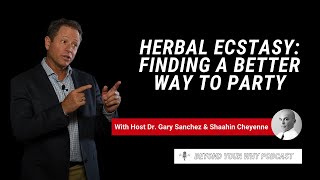
This is a recorded interview (YouTube podcast episode, Oct 13, 2021) of Dr. Gary Sanchez with entrepreneur Shaahin Cheyene. Shaahin recounts fleeing Iran, growing up poor in Los Angeles, leaving home at 15, and inventing the legal product 'Herbal Ecstasy' which he says scaled to over $1 billion in revenue and distribution in 30+ countries and ~30,000 doors. He later patented digital vaporization (an early vape technology), created nootropic products (Accelerol, Focus Plus), and became a major Amazon FBA seller and coach (Amazon Mastery, fbasellercourse.com). The interview covers his founding/scale stories, lessons on finding market distribution first, building diversified foundations (career, real estate, compounded investments, e-commerce), his philosophy of 'burning the ships', and contact/book mentions (book: How I Became King of the Thrill Pill Cult).
Chapters
Welcome to beyond you'd why Podcast, where we go beyond just talking about your why and actually help you discover and then live your why. You see, we believe that knowing your why, that driving force behind every decision you make and every action you take, is the essential first step to really knowing yourself. It allows you to move forward faster and have a bigger impact. If you're already a fan of the show, then you know that every week we talk about one of the nine whys, and then we introduce you to somebody with that why so you can see how their why has played out in their life. This show will be more powerful for you if you've already discovered your why. If you still need to do that, head over to whyinstitute.com and discover your why today. It'll only take you about five minutes. Now let's meet today's guest.
Welcome to beyond you'd why Podcast, where we go beyond just talking about your why and actually helping you discover and then live your why. So if you're a regular listener, you know that every week we talk about one of the nine whys, and then we bring on somebody with that why so we can see how their why has played out in their life. And so this week, we're going to be talking about the why of better way. So if your why is better way, than you are the ultimate innovator. You are constantly seeking better ways to do everything. You find yourself wanting to improve virtually anything by finding a way to make it better. You also desire to share your improvement with the world. You constantly ask yourself questions like, what if we tried this differently? What if we did this another way? How can we make this better? You contribute to the world with better processes and systems while operating under the motto I, I am often pleased but never satisfied. You are excellent at associating, which means that you are adept at taking ideas or systems from one industry or discipline and applying them to another, always with the ultimate goal of improving something. And so today, I have got a great guest for you. His name is Shaheen Shayan. During the Iranian Revolution of 1978, Shaheen's family had to escape to survive and ended up finally migrating to Los Angeles, California. At 15 years old, Shaheen left home with nothing but the clothes on his back and created over a billion dollars in revenue by inventing the legendary smart drug known as herbal Ecstasy. These childhood experiences had a major impact on his perspective of freedom, hard work and entrepreneurship. Later, Shaheen went on to invent digital vaporization, the forerunner to today's vapes and start a number of successful businesses with a couple notable failures. Today. He is the founder and CEO of Accelerate Intelligence Inc. A major Amazon FBA seller with millions in sales. The lead coach at Amazon Mastery, where he teaches the entrepreneurs how to crush it on Amazon platform and an active YouTube creator. Shaheen is considered one of the leading global minds on what's next in e commerce and Amazon and the Internet. He is described as the Willy Wonka of Generation X by the London observer and Newsweek and is one of the most forward thinkers in business. With his Amazon Mastery course, he acutely recognizes trends and patterns early on the Amazon platform to help others understand how these shifts impact markets and consumer behavior. Shaheen welcome to the podcast, Gary.
It's my honor to be on. Thank you for having me.
This is going to be fun. So take us back through your life. That was a lot. That was a big mouthful right there. Let's go back and kind of give us your story, how you got started and how you got to where you are right now. Because it sounds like it was a struggle at the beginning for sure.
Sure. We came to the United States in the late 1970s, early 1980s just as immigrants. We immigrated here through Germany to the United States and we came here in Iran, top of the heap, came here and all of a sudden we learned that we were third class citizens in a country that didn't really appreciate Iranians. During the whole Iran Contra thing. We had Ronald Reagan, trickle down economics, Oliver North, Iran Contra. It was not a friendly environment. And I grew up with a big chip on my shoulder because I was constantly getting my ass handed to me in school. I would go to school, get beat up every day. Now we grew up in a neighborhood that was up and coming, a little enclave of Los Angeles called Pacific Palisades. And in the early 80s it was really much more hippie than it was well to do and gentrified. And my folks managed to get a house there and it was fairly inexpensive. It was a totally beat down house. They bought the house and we started fixing it up. And as we started fixing up this old house, the neighborhood started booming. More and more people started moving to la. Louisiana was in a boom, a building boom and all this wealth started cropping up literally all around us. And we're just like in this old house. My dad worked at a pizza shop and then at a dry cleaners. We were solidly poor and there was all this wealth around us. And I remember actually growing up there and we didn't eat out at restaurants, we didn't Buy new clothes, all that kind of stuff. When I got clothes, me and my brother got clothes. We would wait for somebody to walk into my dad's dry cleaner and pray that that person was cool and that they would not pay their bill so. So we could get the clothes. When they defaulted on their bill or just left the clothes there, we'd always be two or three seasons behind on whatever the fashion was. And I remember a friend of mine whose dad was a wealthy doctor invited me over to eat, and I was like, oh, cool. What's your mom cooking? He's like, oh, no, no, she's not cooking. We're going to a restaurant. I was like, okay. So we went in there, and he gave me a menu, and I just looked at him, and I said, whoa, how the does this work? I can order a pizza and a hamburger, and that man's going to bring it to me, explain to me how this works. Again, this is incredible. And that's how it was. I didn't have any of this wealth, but around me was tons of wealth. And by the time I reached 15, Gary. I remember thinking to myself, man, I want that stuff. I want the Porsche, I want the Ferrari. I want the beautiful blonde sitting in the car next to me, and the big house on the hill, and, you know, all that great stuff, great vacations and all that stuff. So what's the path? So I went and I talked to my parents, and I said, hey, how do I get that? And they. They thought about it, and, you know, as any immigrant family will let you know, the pinnacle of success is becoming a doctor. So my parents told me, you become a doctor, you go to a school. And I was like, all right, great. Sign me up for that. I'll be a doctor. They're like, okay. I'm like, well, how long does that take? Two, three years? Well, no, it takes eight years, 10 years, 12 years. Specialty. 14 years, 15 years. Okay, and then what happens? Well, then you got to get a loan. A loan? Yeah. And then you'll be in debt for another 10 years. You'll be fat and old and bald like the dude next door. And maybe. Maybe by the time you're 50, you'll have a mortgage, a wife, eight kids. You won't have time because you'll be selling your hours. You'll have to wake up at 5am and come back at 8pm but maybe by then you'll have the house and the car, which, by the way, the bank will own. You will not. And very quickly, I discovered, Gary, that that was not going to be a path that worked for me. And very non ceremoniously, I packed up my stuff in a single backpack and I left, left the keys on the counter, didn't come back, burned my ships, decided I was going to go out and find my fame and fortune in the world. As a kid, I was 15, no friends, no money. This was pre Internet, pre all those times.
Let's talk about that for a minute. Take us into that decision. What was going on for you when you decided at 15, I'm going to walk out on my, you know, and do this on my own. What was going on for you?
Yeah. So growing up again in Los Angeles, at school, I never fit in. I never belonged. There was never a group that I belonged. And, you know, as a adolescent, I got involved in multiple criminal activities that adolescents would get involved in. We went to liquor stores and one of we had this little Greek kid. I think you're not allowed to say the word midget, but he was very small. And he would walk into the store, you know, he would fit just right under the sensors, and he'd wear baggy clothes. And we would create some kind of distraction. I don't know, we'd open up a Coke, spill it. Something would happen, and the store owner or manager, whoever's monitoring the store would get busy. He would stuff his pockets with nudie magazines, with those little tiny bottles of liquor, cigarettes, glue, whatever we could get. And he would rush out under the sensors and we would just pay for the Coke or whatever and get out. And then we would sell that stuff in school. And. And then I would get busted. We would always get busted. Gary. We were terrible at crime. There was no reason for. We had no business being in the crime business. And then they would put us in detention. And here we are, these little juvenile criminals in detention. And who's in detention? More juvenile criminals. It was the best business we had ever done, and we would get caught again. They didn't even have a second detention to send us to, so we'd be going back and forth through that. So by the time I was 15, I realized, okay, crime was not good for me. I am not good at crime, failure at crime. So I will not be doing crime. I need to go out there and figure out something to do. My, my, why was. I wanted the wealth, I wanted success, I wanted to climb the ladder. And there was not a path for me to do that. And in those days, so I was going to forge a path, I was going to make a path. I was going to go out there with machetes and cut the entire forest down until there was a path for me. And that's what I did. I started sleeping in abandoned buildings, which was much more glorious than it sounds. And on the beach as well. Sometimes abandoned buildings near the beach because LA was in a building boat. And I quickly learned that if you could watch realtors when they opened up the buildings, there was a code to these boxes where the keys were held to these mega, mega buildings that they were building. And you could put that code in, get the key, sneak in at night, sleep and leave in the morning. By the way, I don't espouse anybody to do this highly illegal, but I would do that. And I would sleep in this like luxurious building. Maybe the plumbing didn't work or the electricity wasn't on, and then wake up in the morning and get out. And eventually I got into the electronic music scene. I learned that I could sleep at clubs behind the speakers, which was another great thing for me. In front of the speakers, very loud, behind the speakers, super quiet. And I started hanging out there thinking, man, you know, I got to learn something about making money. And I had the books. I had the fortitude to read, think and grow. Rich Augmentino, Tony Robbins, Wayne Dyer. I read every self help, personal development, Old timey, New timey, all of those books. So I knew that there was a possibility for me to break the mold, to break out of what one of my mentors called TikTok, to get out of that world and get into a new reality for myself. But I didn't quite know what the path was in those days. And hanging out in the clubs, I realized that there was money being made. So I thought to myself, it's got to be the promoters. I tried throwing a couple parties, I started looking at the promoters. I was like, these guys are broke as everywhere where they're going, they don't have money. They're bailing before the party's over. So they don't have to pay people. They're not driving fancy cars. These are not what wealthy individuals. Then I thought, okay, it's got to be the musicians. It's got to be the musicians. Because musicians make money. Nobody in Those days appreciated DJs, people who played other people's music.
Which led me to how did these things happen week after week, night after night? So I looked around, I was like, it's got to be the property owners. Real estate. Nope, these were all break ins. All these warehouses were borrowed from some big corporation that owned 50 warehouses and whatever. We'd figure out a way to get in. And then some guy would climb the power pole and steal power. Another guy would turn on the water main, and there'd be plumbing. And the party would go on until the morning in these warehouses. So I thought to myself, there's these guys that hang out at the door all the time. They're well dressed, usually have several beautiful women with them. They sometimes have bodyguards. They have nice cars, nice apartments. What are they doing? What do you think they did, Gary?
They were the doorman. They were the gatekeeper.
Close. They were the drug dealers. They were the ones that were dealing the illicit substances and subsidizing the failure of everybody else to keep these parties going. Because it was highly profitable for them. Drugs were a very lucrative business. So I thought to myself, let me do that.
And then I realized I was really bad at crime. I looked back to my adolescence going, dude. Like, my younger self talking to my older self going, dude, you, sir, should not be doing crime. You get caught every time. And then I pictured myself in multiple prisons around the world and thought, yeah, no, I can't do that. And it hit me. What if I could create a legal drug? What if I could create a version of the most popular drug at the time that there was no supply of because they. It had just been made illegal, called ecstasy? So I didn't get the memo that it was impossible. And I went out there and I did it. I managed to get myself a girlfriend. Imagine, no money, nowhere to live. I figured out how to get a girlfriend. I managed to convince her to let me cook up prototypes in her kitchen while her dad was out at work. And I think he was like the principal or the superintendent of some school district or somewhere. And the guy would leave. I would sneak in through the back, through a window or door or something. I'd come in and cooking it up in the kitchen. And finally we got a formula that worked. I didn't have enough money to buy a capsule machine, so me and her would be rolling them up into little balls, and all kinds of people would be coming over. We'd be giving them, hey, try this, try this, try this. And finally we got a formula that worked. I called everybody I knew, and I said, hey, this is amazing. I called authors, writers, uh, all types of people. I just found them in the yellow pages, in the phone books in those days. And I would call people up and ask them for advice, ask them to come try it. And when we had a formula that worked, I knew this was my second Second reason why I was going to be successful, I had to burn my ships again. I did it once when I left home and now I had to find a way to sell the stuff. Distribution. It led me back to the clubs. I was went back to a club. I had a backpack full of these little baggies filled with these little balls that we hand rolled to look like pills. And I had a little insert card in them with a butterfly. In those days, I didn't know what I was going to call it. And I walked up to the biggest drug dealer in the club. Now these days, if you have tattoos on your face, they call you Post Malone and you are a platinum record star. Girls love you. You are harmless. You're probably a TikTok star or YouTube star. You remember Gary in the 80s and 90et. Should you have tattoos in your neck leading to your face? You are most certainly a criminal, a freak or both. Yep.
Straight out of prison.
Straight out of prison. Nobody had tattoos on their faces. Tattoos were not really visible in the 80s, unless you were a sailor or a part of a gang or something. Now this guy had tattoos on his face, on his neck. He had those three little tear things, which I think meant he killed somebody in prison or killed three people or some crazy thing like that. He had the gold teeth, he had the bodyguards, he had the girls around him. He had. It was. It was straight out of the movies. And here I am, this teenage kid with this baggie full of herbal goop walking up to this man who sells real bonafide drugs from a criminal enterprise.
And I walked up to him and he's like, what do you need, kid? I got nothing. We're all out. We've been out for days. And I said, no, no, not a consumer. I want you to sell my stuff. And he said, what's wrong with you? Are you a cop? He's like looking at me. The guards are patting me down looking for a wire. He's like. I said, no, no, definitely not a cop. I'm not a cop, but I want you to sell this stuff. What is it? I'm like, it's just like ecstasy. It's fantastic. But it's legal, it's herbal, it's natural. No one's going to complain. You're not going to go to jail, sir. In that moment, he looked like he was about to kill me. There was no happiness in this man's face, although I don't think I ever saw happiness in his face. It was just a gesture of. And by the way, I write about this in my book, How I became King of the Thrillpill Cult, which was just released. Now, in that moment, I remember thinking to myself, you are not leaving that spot until this man buys whatever it is that you're selling. You are either going to die tonight or. Or you are going to get him to sell what you're selling. You are going to make a sale. I didn't move. I'm sure he said other things to me. I didn't move. And in that moment, two people walked up to him, two partygoers. And I remember them asking him. And there was a negotiation that went on. And he motioned to me. The bodyguards moved aside. And I thought, you know, what's he pointing at? He's pointing at the bag of pills. I handed him the bag of pills. He grabbed the bag. Then he grabbed my backpack, which was filled with pills, and said, come back in two hours. He handed it to them, had an exchange, and he said, and by the way, kid, you better not with me. And don't, don't leave the club. Now I'm having a little bit of a freak out and pretty certain that my young life was going to end there. And then in that club came back a couple hours later.
And I didn't know what to make of it. The bodyguard motioned me to come forward. Girls moved aside. I moved forward. I'm standing there sweating bullets, looking at this guy directly in the eyes. And I can't tell what's going on. But I do notice in the background, people are partying, happy, having a good time. I see the empty baggies everywhere. This guy probably emptied out 30 of them himself, you know. And I'm looking at the guy going, okay. And he looks at me straight in the eyes. Silence for about 30 seconds. And then he says, kid, how soon can you get me more? And all the tension was released in that moment. And that was it. It went from one drug dealer to ten to a thousand to ten thousand. We were all over the world. I had all the buildings in Venice Beach. We were renting them all. We had telephone operations, telesales operations. Gary, I was making this stuff for 25 cents a unit. We were selling it for $20 retail, mostly cash business, mostly direct to consumer in those days, completely legal. We got calls from urban outfitters, Tower Records, gnc. We were selling in any store you could possibly imagine. Larry Flint from the Hustler Enterprise, the famed pornographer bought our product to sell to all the sex shops around the world. We were being sold in 32 countries. We were in over 30,000 doors. And what was it called?
I don't, I'm trying to think about it back then. What was it called?
So the drug dealer looked at me in that moment too, and as he was handing it to his first customers, said, what do you call this stuff? And I had a moment where I was like.
And I just looked at him, I said, herbal Ecstasy. And the name stuck.
So it was called Herbal Ecstasy. And I remember one day, I was in my teens, we'd been in business for some time, and the news broke that we had broken the billion dollar mark with a B. Gary. This was pre Internet, pre Facebook, pre mobile phones, pre access to free data, pre access to any of that stuff.
We had broken a billion dollars. Sam Donaldson was in a limo outside of my office waiting to get me on Nightline. He drove over. The great Sam Donaldson. Montel Williams had sent me tickets to be on his show in New York. CNN wanted to have me on Wall Street Journal, had a reporter outside. We were the hottest thing. Everybody wanted to know how this long haired teenage kid had broken $1 billion in revenue. We were on the COVID of Details magazine. We had two Newsweek covers, L.A. times, New York Times, you mentioned, you. You name it, we were there. London observer did a feature piece on the COVID called Me the Willy Wonka of Generation X. And I stepped into my office. I would normally sleep two, three hours in those days. I would usually fall asleep on the factory floor or on the floor of one of my offices or the call center, anywhere, just because I was intent on making this company successful. And I remember having a panic attack when the news broke because I did not know what a billion dollars meant. Not theoretically or hypothetically. I literally didn't know how much money a billion dollars was. I barely knew what a million dollars was. And that was my big panic in those days. And then I figured out what it was. I started doing all the publicity, we did all the shows. And it was a wild ride. And again, I write about it in my book, how I Became King of the Thrill Pill Cult, which just dropped. And it was absolutely a wild ride. I write about how the mob tried to take over the company. At some point the Japanese mafia, the Yakuza, tried to get involved. We had government intervention in the company. And it was a wild roller coaster ride leading to a very interesting several years to say the least. Wow.
So why couldn't somebody just copy it?
They tried. A few people tried. We had the formula patented in those days. We had trademarks, but we were first to market. And you could copy my product, but you couldn't copy me. And I was the long haired rebellious kid doing the tv, doing the media. It's kind of like with Coca Cola. Can you make brown sugar water and sell it to the masses? Probably. Can you compete with them? Not really. They've got first to market and distribution and we had that cinched up.
So, best part of building a billion dollar company and worst part of building a billion dollar company.
Well, the best part is the billion dollars, which is fantastic. Money is great. I tell people often that the greatest injustice you can do to yourself in America is to be poor. The poor pay more for everything. The poor are penalized for being poor. The rich very rarely pay for anything that the poor pay for and are incentivized to be rich. So if you have a choice, if you believe you have a choice, please try to be rich. I've been broke and I've been extremely wealthy. And it is far more fun to be extremely wealthy. A good friend of mine talks about the root of all evil, where they say money is the root of all evil. And he used to like to say that the guy that said money is the root of all evil didn't have any. And the guy that said money can't buy you happiness didn't know where to shop. And it's really true. It's really a blast and super fun. And you're hearing it from somebody who's done it, who does it. The worst part of it was trying to figure out who likes you for you, who genuinely wants to be your friend and who wants to be around the fame and fortune. I can only imagine what somebody like Jeff Bezos, the founder of Amazon, or Elon Musk has to go through because it must be very difficult to forge long term meaningful relationships with people. You must have a really solid vetting process because in those days where you are super happy, super super successful, there's a big buzz around you, everybody wants to be around you, but when trouble pops up, there's only few that will stick by you and those are your real friends. And that's the most difficult part, is realizing that there, there are people in the world that are not interested in you, but only self enrichment and having your bullshit detectors refined to a point where when you reach those levels of success and being able to ferret out the people that are the fakers is absolutely essential. And I unfortunately didn't have that in my teens. But as I got older, I've developed that my bullshit detector has gotten a lot stronger in the years to come after herbal ecstasy.
So what happened to herbal ecstasy then? You're on top of the world, and then what?
Well, the government doesn't seem to like very much when a young Iranian kid in his teens develops a that is unregulated. They don't like the idea of not being in control. So what they did, along with some big pharma companies, is they lobbied against us. Laws were passed, our ingredients were banned, and it slowly fizzled out. We had a bunch of different products in those days. And from there, I went on to solving a different problem. I went on to solving the problem of smoking. I figured, hey, people have been smoking for hundreds of years. Smoking creates smoke, tarn, carbon monoxide. There's got to be a better way. Turns out that you can heat any plant substance, tobacco, cannabis, whatever, and get the active elements. What you need, the cannabinoids, the THC, the nicotine, without burning it, without heating it to 1200 degrees. But you had to have the system for regulating the temperature. I patented that. We developed the world's first vape, the world's first vaporizer, Digital vaporization was invented by me in those days. I patented it. I wrote the first book on it. And that is the forerunner for all the technology now that you see in vapes we invented. That industry didn't exist before us. And I created those patents, I wrote that book, that company went public, and I decided, hey, I want to get back into the pill business. But at this point, we were having our first kid, and I thought, man, I got to figure out a way, Gary, to really make my brain sharper. I want to be limitless. I want to function optimally even as I'm aging, because aging is bullshit. I want to beat it. Maybe I won't beat it. One day I'm going to die. It's all our destiny. But until then, I want to die with my boots on and sword drawn and be a badass. So I came up with this pill called Accelerol. Now we've got two versions, one called Accelerol, one called Focus plus, which is a nootropic, a brain supplement still available on Amazon. Works great, but in those days, very expensive to produce. We use real ingredients. It was like $120 a box of this stuff. And I was looking for distribution, thinking, how am I going to sell this? We sold some to gnc, we sold some to the different avenues. But this was in the early days where this guy named Jeff Bezos was really getting somewhere with his company. And you could email jeff. Jeffmazon.com and jeff would respond.
We heard through the grapevine that Jeff Bezos was opening up his platform, the bookstore Amazon.com to third party sellers, people like you and me, Gary, to sell whatever we wanted to on those platforms. I thought, that's cool, that's timely. Let me try putting this stuff up. It took me 15 minutes, the whole process, opening a seller account, listing the product, the whole thing. I put the product up, acceleroll, went to sleep, didn't think much. I thought, maybe I'll get a couple orders in the next few weeks. I'll work on this. Woke up the next day. We had thousands of orders. Thousands.
This is interesting. Who is this Bezos guy? I read up on Jeff Bezos. I learned that he's not this nerdy Silicon Valley guy that we see, that we think he is. This guy's a beast. This guy's a leader in the industry. This guy comes from Wall Street. This guy comes from one of the biggest Wall street firms with an expertise in acquiring top talent, expertise in bringing cheap money from Wall street, billions with a B from Wall street into Silicon Valley. And he's building this platform. This is no joke. This was never a bookstore store. This is a key to world domination in global commerce. And when I realized that, I decided I was going to devote the next several years to my life to mastering the Amazon platform. And that's what I did. I learned everything there was. And now I spend most of my days impacting other people to sell on the Amazon platform. I teach a course where I train people how to do everything from how do you find the perfect product, how do you sell it on Amazon, why do you sell it on Amazon? And how do you create a business that creates these predictable recurring revenue streams, which is what I do now, and I love it.
It's interesting, as I listen to your story, you're always, like you said, in search of a better way, and you find a better way and then you share it. And you did that with, with the herbal ecstasy. I mean, you've done that every step along the way. What take us into your mind of how did you, you know, where do you just see a problem? Do you have a problem and you want to solve it, and then that's what leads you to it, or what got you in those different directions. Does that make sense? Do you understand what I'm asking you?
Yeah. For me, sometimes that's the case. My superpower is that I am a predictor of trends and a very accurate one, Scary, accurate at Predicting trends, particularly when it comes to consumer products. I know what's going to be hot five years from now. I know what's going to be hot ten years from now.
How do you do that?
I don't know how I do it. I think it's my obsessive nature. I am an obsessive human being. When I get interested in something, I dive deep. Back in the days where people read books, I would be at the bookstore, I would be spending thousands of dollars on books. I would not come home any night without having a stack of books this high on topics that I was interested in. And I do it still to this day. Only now I order on Amazon. But I will do a deep dive. I will watch videos, I will read books, I will get the audible, I will watch the TED talks, I will dig deep. I will go into minute detail about a topic that I'm interested in and I will look to where the opportunity is. My friend Jay Samet, who wrote the book Disrupt yout and his new book Future Proof youf awesome guy, former executive at Sony, he talks about solving the bigger problem. For me, it came naturally the solving the bigger problem because I start with curiosity. I start at I'm not looking for why. I'm not looking for a reason to do what I'm doing. I'm just following what my fascination is. And I follow that fascination and see where it takes me. And it's very good question, Gary, because this brings me to what we teach at Amazon Mastery, my FBA seller course, which is fbasellercourse.com for anyone who's interested. I've got a free one hour course that I'm happy to share with any of your students, any of your listeners. But what we teach is find the distribution first, find what the market is hungry for, find the competitors, find their vulnerabilities and then it's easy for you to put a product out on the market. It's low hanging fruit. That's how you win. If you come out with a product and then you're like, all right, how am I going to sell this thing? That's the long road, man. That's. You got to educate people. Education is the kiss of death when it comes to product launches. Because you've got this thing, you got a mousetrap. It's better than every other mousetrap out there. I don't know that as your consumer. So now you have to spend all your money educating me. What happens while you're spending money educating me?
Yeah, somebody else comes along that's right.
The competitors are selling and selling and selling. And people's attention span is short in the days of TikTok, Instagram and the Internet. And what most entrepreneurs don't understand, probably the single most important thing, and this comes from us being taught, this whole generation now, is being taught that you matter, that everybody cares about what you're interested in. Nobody cares. Nobody cares about you. People care about one thing I they care about themselves. That's it. Nobody cares about you. Your story, your brand, all that stuff is bullshit. All they care about is what you're going to do for them. So when you go on Amazon and you buy a product, that person, if it's one of my students, will be an expert at crafting that story in a way where by the time you get to that listing, you're already clicking buy it now. Because the way that product is presented has pre suaded you to believe that it's your decision to buy it. We are decision architects. That's what we do. The old models of selling are dead. The old models of disruption selling and knocking on people's doors and shoving stuff down their throat is dead. Now we're in the Amazon era where we believe, as Robert Cialdini in his book Pre Suasion talks about, in pre suading people in becoming decision architects.
So give us an example of a product that you did this with so that we can see it in action on how you. Somebody took a product and took it to Amazon after they found their market and it took off.
Yeah. So Acceleroll would be a good example of that. Focus plus, that's one of our supplements that we just talked about. Another example might be Matcha tea. We're one of the largest producers of Matcha tea in the country. We make a specific matcha tea called Matcha DNA and Matcha is a green tea. It's high in antioxidants, it's got all these benefits. You can just Google it and learn about it. All these doctors, celebrities, the Kardashians are drinking it. Gwyneth Paltrow's drinking it. And we started off by, I'm a big Matcha drinker. So I thought, hey, I'd like to buy some Matcha. Can I get some on Amazon? And I looked on Amazon, there really wasn't any, you know, there was a couple brands that were expensive, you know, and they were just the big, you know, bulk market ones from Japan. And I thought, hey, Fukushima just happened. I don't want to buy anything from Japan. There's Radiation out there, allegedly. So I'm going to go with Chinese tea. The Chinese are good at tea. That's the one thing I really am going to buy from China. And I went out there and I found a supplier that produced it for us and we started selling Matcha tea on Amazon and again went gangbusters. We sold tons of it. But I did my research, we researched that there's a huge market of people looking to buy Matcha tea. There was no supply on Amazon. Now there's a million sellers selling it. We're still the leader, but there's a million sellers selling Matcha. And I thought, okay, well now that's a market that we can feed. And we went out there and we started introducing Matcha. And this is another thing that I teach my students is that you want to capture all areas of the market. So we've got multiple brands that we sell in multiple categories. So we sell the most expensive one, we sell the cheapest one, we sell the mid level one. We knock ourselves off and sell knockoffs of our own product. We do all, all kinds of things to make sure that we dominate in that field. And that's what you have to do if you want to win. You have to find a niche, you have to exploit the weaknesses of your competitors and you have to come in and dominate that niche and maintain and hold on to that dominance.
So when you talk about dominating the niche, how do you do that? You're new. So what I think I'm hearing you say is, is you found something that you were passionate about, went on Amazon and researched it and found that, heck, nobody's really dominating this market. We're going to go dominate it, created a better product, took that product to the market and then you found ways to keep competing with yourself, to be both sides of the coin almost to push your brand up. Is that kind of what you did?
Yeah, that amongst other things. I mean, remember I had at this point been selling on Amazon for a little while and there's certain hacks and tips and tricks that we teach on how you get your product to rank, how you get your product reviewed within their terms of service, how you can successfully get that product visible and selling on the Amazon platform. And that's what we did. It's very interesting because Amazon is a very effective place to sell products. The one thing that I would say to you is that maybe I would push back a little bit on in your description is the passionate part. I was interested in the tea. I was a fan of the tea. Maybe you could argue that I was passionate about it. Maybe, maybe not. I'm thinking, man, I'm passionate about hanging out with my family and my kids. Like, I'm passionate about all kinds of stuff. Doesn't make me money. And I think it's one of the most common myths that people tell you. And Scott Adams talks about it in his book how to Fail at Almost Everything and Still Win Big. It's something like that. I forget what the book's called, but it's something like that. Scott Adams is the writer of Dilbert, which is probably one of the most famous comic books in the world. Passion is something that they pitch people because they don't want to tell them that they're just a little bit smarter than them. So when they ask these big entrepreneurs, they say, hey, what's your secret? They go, man, it was just passion. They don't want to tell you that, hey, you know what? I'm an aggressive cutthroat. I cut three guys below me and I'm just a little bit smarter than you. And, you know, I got access to a trust fund. So you're never going to make the billions I made. No one's going to tell you that. It doesn't look good for Mark Zuckerberg to tell you those things, for Bill Gates to tell you those things. Instead, what they're going to tell you is, you know, buddy, you just got to have a lot of passion and drive in life. It's bullshit. I know people all the time that have become billionaires, multimillionaires, from products that they do not give a about. So the passion part of the component, it's nice to have. You know, I'm passionate about a nice steak meal, a nice rare filet mignon, grass fed steak, man, I'm passionate about that. It's not going to make me money. And yeah, I'm passionate about tea. I'm passionate about doing this stuff. I'm passionate about talking with you on this podcast. This is fun. This is a great show. I'm excited to be here. But you have to separate that from the activities that make you money. Making money is a system, It's a formula. It has very little to do with what you're passionate about. If you're interested in something, your interest, your fascination in something opens up a pathway, a journey to things that could make you money, but it's not a precursor for success or wealth.
That's an interesting way to look at it. So you've separated passion out from your business because you can be passionate about so many different things. But interest is definitely necessary. Or is it? Is interest necessary?
Not really. I know lots of people who make money doing things that they have very little interest in. I know a guy who runs a fashion brand, a very high end fashion brand of women's clothing. He doesn't wear that shit. Every time I see him, I'm like, where'd you get your clothes? He's like, h and M Ross. I'm like, you run this multimillion dollar clothing company? He's like, yeah, I don't like it. I like to wear sweats. He's like, I get good sweats at ross and they're 50% off.
Yeah.
What do you see then as the key ingredient to making money?
I don't think there's any key ingredient. I don't think there's any one thing. You got to have grit. You got to have resilience. You got to be able. The one thing I would say that's key is you got to be able to go out there and take some punches. You got to be able to be knocked down. The people I see coming through my Amazon FBA seller course, the people who come through my Amazon mastery course, the ones that come in with the attitude of, hey, I'm going to throw my chips on the table and I'm going to see where that little roulette ball lands and maybe it'll land on one of my numbers. Those are the ones that fail. I haven't had anybody fail yet, by the way. The ones that come in and are like, you see that nail? I'm going to drive that thing through that piece of wood. Maybe I'll use a hammer. If that doesn't work, I'll use a sledgehammer. If that doesn't work, I'm going to shoot that nail. I'm going to hit it with a rock, I'm going to drill through it and then put it in. It doesn't matter. That nail is going in. If you go to business with that attitude, you are going to succeed. You are not there to try. There is no participation trophy in business. There are people out there who will eat your lunch. One of my favorite quotes is that while you are sleeping, your enemies are planning your demise. I write that quote in my book, which is one of my absolute favorite ones, because it keeps you on your toes. You got to always be on your toes. The world is predatory. There's no sleeping in the savannah. You've got to be always on your toes. But more so than that, there's no hack to hard work. There's no hack to getting out there and doing the work. There's all kinds of people on social media preaching things. They want to sell you a course, they don't want you to get rich. Even a lot of the people out there who sell their Amazon courses, mine by the way, which is free, and I will give to you if you reach out to me, they don't tell you what they're doing to make money. They tell you what they want to tell you for you to think you're going to make money. But them to make money off you by selling you whatever it is they're selling. It's like the stock market guys, the stock market gurus. I was a highly leveraged commodities trader. I did extremely well. I traded hundreds of millions of dollars in commodities, gold, oil, pork bellies, all that stuff. Coffee futures for years. And I tried all the different courses and I realized at a certain point that the guys selling the courses are making more money selling the courses than they are in the markets. I was making more money than them in the markets. And it's really like that. There is no hack to hard work. You got to get out there, you got to put in the sleepless nights. I paid my dues, I've slept on the factory floor. I've gone from millions to a billion to broke to millions again. And I'm continually on that path of learning, of self discovery, of figuring out what I need to do to take myself to the next level. And I have no illusions to think that I don't have to wake up tomorrow and work hard at something. The fact is I put myself in a place where now I can relax and do the stuff that I love to do. But it's only because I spent all those years doing all that stuff that I didn't want to do.
You know, I love what you're saying because you're not sugar coating it and you're just. Here's what I been thinking about as I've been listening to you because you said this twice, at least twice, you said I burned the ships.
Yeah.
How critical was that to you having the motivation, the grit, the desire to get up every day and go do it when things didn't look good.
As my friend Sanyika says, you got to go all in. I don't believe in half assing things. It's like I love watching these historical shows where you see these historical battles. Like you see Braveheart or you see this new show Vikings, which I don't know if you watch, it's great. It's one of the best shows on tv. And you see these guys, and these were guys who most people don't know. The Vikings controlled England for nearly a thousand years, maybe longer. I mean, they ruled England. England was ruled by Vikings for a thousand or more years. And you look at that and you're like, what did they do? These people went on these, this is before even naval navigation. These guys went on these wood boats that they carved out of trees, left everything behind and they went out there, swords drawn for glory. And that was it. They burned all their ships. They were there to win. They would, they would colonize places where they landed. And that's what you got to do there. Look, I think people have to be intelligent about the decisions that they make. If you've got a family, if you've got to feed the kids or whatever, you can't just leave everything and go off on some crazy venture. You need to have stability, but it's that stability that's going to allow you to have the bandwidth to succeed. So we talk about foundational thinking in my course and I tell people you got to have four pillars, a four legged table, much more secure. Three legged table, not so good. Two legged table, ooh, not good at all. One legged table, you're a tripod.
The first leg should be a career, a job, a trust fund, whatever it is. Money where you don't have to worry about eating. You don't have to worry about your family being taken care of. You don't have to worry about if you want to take the wife out for a nice dinner, that that's going to give you problems, or the girlfriend or the husband or whatever. The second pillar you should have some money in cash flow positive real estate. I tell people this all the time. You got to buy at the right time. When the market conditions are right, you got to find great deals. But you can do this with little or no money. I've bought houses on credit cards, I bought houses on ebay. There's all kinds of things you can do by leaning towards cash flow positive real estate. If you can't get into it now for whatever your restrictions are, you can at least start learning about it. It the third one is compounded interest. Why? Warren Buffett is one of the wealthiest men in the world. Berkshire Hathaway, one of the most successful funds out there because of compounded interest. He's been investing since he was a kid. And if you leave money in and you compound interest over time, that's going to add up to something. And the fourth pillar, the fourth foundation is an E commerce business. And I recommend Amazon. Amazon's what I do. It's one of the best, but it's not the only one. We teach people how to sell on Etsy, Walmart, ebay, Poshmark, all these different marketplaces that are popping up. If you have these four pillars, these four foundations, nothing could ever shake your world. You wake up in the morning, oh, the real estate market tanked, no problem, your cash flow anyway. But it's okay, it'll get back up. We wait a cycle. Oh, you know my job, you know, boss fired me, no problem. You got your, you got your compounding interest money and you got your real estate. Oh man, all those stuff fail well, you got your E commerce business and vice versa. If you have those foundations, you might be unsettled for a little bit in life, but you'll never be knocked out. And if you look at these guys, Elon Musk, Warren Buffett, Jeff Bezos, look at what they do best. It's diversification, it's building those foundations. Those guys have hundreds of pillars. You think if Amazon went down tomorrow that Jeff Bezos would be crying? No. He's got so much money, he's got so many things. He's going, he's got that penis shaped plane that he's flying to the moon. You know, these guys, these guys, these guys are good. There is no one thing that's going to shake their world. And that's what you have to do. You've got to build your life in a way where you can never have a day that's that bad.
So what is it, Shane, that keeps you going? You've already done this multiple times. You've got the money, you've got the stuff, you've got the family. What's keeping you motivated? What keeps you, I mean, I can feel your energy, I can feel you're fired up, ready to go fight, ready to go create something, ready to go do something. What is it that's keeping you going?
That's a really good question. And I'll tell you this. I spend most of my time now traveling with my family. We go to all kinds of great places and I'm really a family man. We collect cars. I collect exotic cars, Porsches. Me and my son, my 7 year old like to go out into the garage and fix these cars. I mean, we don't really know what we're doing, but it's fun to kind of look under the hood and take a look at that and spending time with my family is what fires me up. It's what excites me. Outside of that, in work, I get excited with two things. One is when somebody buys a product that I've built, designed or developed. And the second is when somebody calls me up and says, shaheen, I made an extra 60 grand this month on Amazon thanks to you. I can quit my job. I can walk in tomorrow and tell my boss to f k. That excites me. When I can inspire somebody to stop selling their hours and let their money work for them intelligently. I've got students now that have three, four VAs virtual assistants. And Nicaragua, Venezuela, in South and Central America, in Asia, South Asia, Southeast Asia, working for them, running their business. And they're on the beach, they're traveling, and those VAs are running that business. And while they're sleeping, they're making money. And if I can empower people to have that freedom, I always say freedom is the ultimate luxury. The new luxury is time. Time is the ultimate luxury. Freedom is the ultimate luxury. If you have all that money and you can't take a break and go have a nice lunch with your significant other, go take your kid to the park, go do whatever you want, when you want, with who you want, you're not really wealthy. That's why jets, the cost of a private jet somewhere is exponentially more than a first class ticket on any airline. Because it offers you the ultimate freedom.
I love that.
And in my world, what I would say is your energy comes from when you find something better and then you share it. And people love it because they appreciate that you shared that better way with them and it's brought them results. Right? It worked. It was better. And that's just. I feel the same way when I can share something that's better and people love it. Even a better restaurant, even a better anything, hey, have you been to this place? And they love it. Just brings me a lot of joy. And I can see you doing that same thing on a bigger scale. And so last question for you. I know we're kind of going a little bit long, but what's the best piece of advice that you've ever given or the best piece of advice that you've ever gotten?
So as far as advice goes, I think the best advice I've ever gotten is topical and it's time sensitive. Advice that I got as a young person might not apply today. With that said, in very general terms, I could say don't work in a vacuum. Build a mastermind or Join a mastermind. Like with my Amazon Mastery course, we have a mastermind where people sign up with us, they're immediately with a hundred other people that are selling on Amazon. Find a mentor. Getting somebody who is where you want to be and incentivizing them to conspire for your success could be the ultimate hack to getting there a lot faster.
Totally agree with you. Love that. So if people are listening and they want to get in touch with you, Shane, how is the best way for them to do that?
Yeah, that's really good. You can email me directly. Again, we have the one hour Amazon Mastery course. I'll offer that to all your viewers and listeners for free. It's normally 200 bucks. We'll give it to them for free. Just use the code why and email me@dark zestmail.com let me spell that for you. That's D A R K Z E S S Gmail dot com. That's my direct Gmail address. I get to email Xero every day so I will answer all emails directly. You can also check us out at www.fbasellercourse.com or shaheenshayan.com. we'll include that in the show notes. Also, my book, How He Became King of the Thrill Pill Cult just dropped. You can get that on Amazon. Check that out. We also do a show. We've got a podcast called Hack and Grow Rich. And if you want to check out Hack and Grow Rich, make sure to like and subscribe us, subscribe to us, like us, dislike us, whatever you want to do. Give us some love, give us some attention. That's going to be at Hack and Grow Rich and you can get us on Stitcher, Spotify, Apple Podcasts, Google Podcasts, wherever podcasts are heard. And Gary, if someone's listening to this video or watching it on our channel, how can they get ahold of you and subscribe to content you're producing?
Yeah, have them come to yinstitute.com. best thing for them to do would be to go discover their why. They can use the code PODCAST50 and discover their why for half price. It's only $47. They'll get it at half price. So just go to yinstitute.com and you'll see all that you need there and you can connect with me there as well.
Love it. Awesome. Thanks for having me on, man.
Yeah, thanks for being here. Super interesting. Love the past that you've been on. The ups, the downs, the stories, the real, the realness to it. You're not trying to Sell something that requires no work, because that doesn't exist. Right. I mean, if you say, if you were to tell. If you were to have told me, yeah, I'll do everything for you. It's not going to be any work for you. Give me your thousand dollars and you'll be rich. Not a real story.
Right.
You hear it all the time, but you're like, hey, man, you're going to have to go work your butt off. You're going to have to put the hours in. There's no substitute for burning the ships and jumping in both feet, going all in and getting it done.
Agreed.
So thank you so much for being here. I really appreciate it, and I'll look forward to reading your book anytime.
It's been fun. Thank you so much.
Great job, man. Loved it.
Was that okay for you?
You did a really good job, and it was interesting learning about your story because you got a really. A really great story to go with all the successes. And I'm sure we didn't get into any of the failures, but we all have them, and whatever they are, they make you stronger the next time.
Exactly, man. Exactly. Well, I appreciate you. Thank you so much for having me on. And, you know, just let me know if there's anything I can do for you. I'm at your service.
Sounds great. And if you. I don't know if I would be a good guest on your podcast, because knowing your why is a hack. And it just makes things so much easier to understand who you are. I get you from the perspective now. Now it makes sense to me why you do what you do.
Yeah. Yeah.
You're always in search of a better way. When you find it, you jump in. You create a niche there, and then you share it.
Sure.
That's what you've done over and over and over. And when people can clearly see their why, what they do will make a lot more sense to them.
I love that. Yeah. Fire off an email to me, send me a bio and some information, and we'll. We'll get you booked.
Sounds good, man. I appreciate it.
Thank you, Gary. Talk to you soon. Bye.
Have a good day.
You too.
So now it's time for our guess their why segment. And I want to think about Walt Disney. What do you think? Walt Disney's why is? He imagined a place where people were happy. He imagined Disneyland, Disney World, and he built it when people told him he shouldn't. But he wanted to contribute to the youth. He wanted to contribute to people's imagination. He wanted them to have a great experience to have a great time. So I believe that Walt Disney's why is contribute to contribute to a greater cause, add value, have an impact in people's lives. And when I think about him, he was able to surround himself with other people that he brought with him, his brother Roy, who was the how guy, but lifted them up and he lifted up the people around them to be creative, to be fun, to be funny. And that's what somebody with the why of contribute would be. What do you think his why is? What do you think Walt Disney's why is? And so put that in the notes below. Let us know what you think. If you love this episode, if you love the beyond, you'd why Podcast. We make sure to go to the platform that you are listening to this on and rate us and give us a review because it will help us to bring the why to the rest of the world so that we can impact and help 1 billion people discover, make decisions and live based on their why. So thank you for listening and we will see you and hear you next week.
I really hope you enjoy today today's episode and that through today's guest, you heard how important it is to know your why and how impactful it can be in your life and the lives of those around you. Be sure to head over to whyinstitute.com and discover your why today. Remember, the more you know about yourself, the more you'll know about others. I'm Dr. Gary Sanchez and I'll see you on the next episode.
More from Dr.




Women In Leadership: A Need For A Greater Systemic Change With Belinda Clemmensen






