How To Change The World And Your Life With What You Know And Want With Dr. Angela Mulrooney
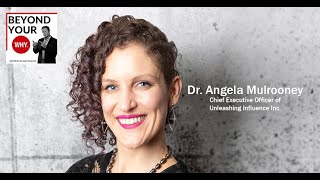
Dr. Angela Mulrooney went from pediatric dentist to personal-branding expert after focal dystonia ended her clinical career at 33. She built Unleashing Influence by coaching dentists, then pivoted to helping experienced professionals transition from corporate jobs to entrepreneurship through 90-day accelerators and brand archetype work.
Chapters
Welcome to beyond you'd why podcast, where we go beyond just talking about your why and actually help you discover and then live your why. You see, we believe that knowing your why, that driving force behind every decision you make and every action you take, is the essential first step to really knowing yourself. It allows you to move forward faster and have a bigger impact. If you're already a fan of the show, then you know that every week we talk about one of the nine whys, and then we introduce you to somebody with that why, so you can see how their why has played out in their life. This show will be more powerful for you if you've already discovered your why. If you still need to do that, head over to whyinstitute.com and discover your why today. It'll only take you about five minutes. Now, let's meet today's guest.
So this week we're going to be talking about the why of better way to find a better way and share it. So if this is your why, you are someone who is the ultimate innovator. You are constantly seeking better ways to do everything. You find yourself wanting to improve virtually anything by finding a way to make it better. You also desire to share your improvement with the world. You constantly ask yourself questions like, what if we tried this differently? What if we did this another way? How can we make this better? You contribute to the world with better processes and systems while operating under the motto, I'm often pleased but never satisfied. You are excellent at associating, which means you are adept at taking ideas or systems from one industry or discipline and applying them to another, always with the ultimate goal of improving something. And so today I've got a great guest for you. Her name is Dr. Angela Mulroney and I met her, I'm going to say, close to 10 years ago. She was a dentist and she is now a global speaker, best selling author and personal branding expert. She works with thought leaders around the world to clarify their message through their brand archetype while using various media platforms like LinkedIn, podcasts, and the Stage to drive sales. So these experts can change the world with what they know. So, Angela, welcome to the podcast.
Thanks for having me, Gary. It's nice to be back.
Yeah, exactly. So, in total transparency, Angela and I have already done this interview and I forgot to hit record. So those of you that have your own podcast podcast are probably smiling and laughing and thinking, yes, I've done that too. So this is round two. And, well, Angela, let's, let's go back in your life because What I mentioned was you were a dentist. So let's go back even before that. What were you like in high school?
What? I was. I went to high school in Regina, Saskatchewan. And for me, high school was torture because I was really, really shy and I was an achiever. So, like, I'd win these awards and then that would draw a whole bunch of attention to me. And, you know, people would steal my exam paper when we got our marks back to see if I was still top in class. And it. Yeah, I hated it. I just wanted to like, achieve what I want to achieve for me and then go do my own thing and drawing attention to myself. Well, I wasn't trying to draw attention to myself. I just wanted to be a wallflower and blend in with the scenery.
So let's talk about that for a minute. Why do you think you were so shy in high school?
I was.
Hold on.
Sure.
For those of you that are not able to see this and you're just listening Angela. If you saw Angela on camera right now, you would not think that she's shy. Based on how she's dressed and based on what she does. She's not shy now. So back then, why do you think you were so shy?
I think partly the way that I was raised in my family, I could never really do anything right. So I was always really self conscious about what I was doing and like, achieving in school made me feel confident. But anything outside of that, like there was a separation between the academic and the personal Angela. And personal Angela was really shy. Academic was like killer. If you were going to get my way, I was going to take you down. But it was. Yeah, there was this dichotomy in me and that lack of confidence made me very perfectionist. It made me always striving to get the top of everything. And I didn't know how to do that. In my personal life, that's always kind of been a lack. I've always been good at figuring out the game of achievement. But personal, there's not really those goal posts that you have compared to personal, compared to academic and professional, for sure.
In high school, did you look older than the other kids or younger than the other kids?
I looked younger.
So did that have anything to do with it by chance or not?
I don't think so. I. Part of it was my hair. Like, I have crazy curly hair. And at that point I didn't know but to brush it right. So I was like, I was always a fuzzball. I was like, I was well dressed because I worked on the weekends at the RCMP museum. So I had to be dressed nicely, and I just took my work clothes and wore them to school. So I stood out a little bit that way. And, yeah, and people knew that I was shy, so I kind of had a target on my back because that there was people who wanted to, like, tease me to bring me out of myself, and then there's the ones who want to tease me to put me in my place. But the funny thing is, like, when I would run into bullies or anything, if I saw a kid being bullied, I would step in, and the stuff that would come out of my mouth was surprising to people because I didn't really talk. But if there was a situation that needed. Needed to be diffused, I would step in and defuse the bomb, even if it meant that I had put myself in harm's way. And sometimes it turned out badly for me, but. But they always laugh because they're like, you turned into this, like, yelly little smurf that came out of nowhere, that no one was expecting it so that I could overcome it to protect someone else. But I had problems overcoming it just for me.
Gotcha. Gotcha. Okay, so graduate from high school, off to college. Where did you go to college?
University of Saskatchewan in Saskatoon.
Okay, so. And right now you're up in Canada, right?
I am, yes, for a couple more months, and then I'm headed back to Nicaragua.
Nicaragua. Okay, so what were you like? What was college like for you? What was that experience like?
Just as brutal.
Okay, yeah, still shy, Still a killer when it came to competitive stuff, but, yeah, generally pretty shy. But I. I started ballroom dancing, actually, in my first year of university, because that's what the biggest social club on campus was. There was 1500 members, which was the biggest ballroom dancing club in North America. And so I joined that, and after the first year, they asked me to become a teacher, and I'm like, no, no, I'm trying to get into dental school. Don't distract me. And then after the second year, I was like, please distract me. Dental school is going to be brutal. So I started teaching for the club, started performing, and then I turned pro as a dancer at 24 when I graduated dental school.
Wow. Okay. So you okay, graduating from college, then off to dental school. Where'd you go to dental school?
Same place? Yeah, I just did two years undergrad. We were still allowed to do that back then. So I got in after two years and finished my dental degree at 24.
Oh, wow. Okay. And so what was dental school? Like, for you, still torture.
Okay. You were still the shy kid that studied hard and got good grades and serious about what you were doing.
Yes. And I, I was like, there were some people in dental school that, you know, they got in and they're like, well, now I've made it. And I, I was trying to get scholarships. So I studied really hard. Like, I had really good boundaries with people like, don't call me after 8 o', clock, might be asleep. And it. I wanted to consume as much information as possible so that when I got out of dental school, I could be an amazing dentist. I didn't want to learn so much on the job. I'm like, I'm here to learn. I'm here to get as many scholarships as I possibly can and then be able to be amazing when I'm out.
Okay, so you graduate from dental school, become a professional ballroom dancer, and then tell us about your practice, or what was it like getting into dentistry for you?
Well, I decided to tell the people I was applying for jobs with that I really loved pediatric dentistry because with kids, I didn't have to have these uncomfortable adult conversations. I could just tell them stories about the different colored sugar bugs that I was removing from their teeth. And then I could just explain to the parents very briefly what had happened. And then the adults would go away and I'd be back to my next kid. So I did that. For the first four and a half years of practice, I stuck to children.
Does anybody like pediatric dentistry, or did you actually like it? Let me put it that way, because as a dentist myself, I know that is not what I like to do.
Yeah, I did like it. And it was any position I applied for. Like, I did treat adults as well, but when you're the one who wants to work with the kids, you get the job in every practice. Because no one wants to work with kids. No.
Okay, so you were a pediatric dentist for four and a half years. And then what happened?
Then I decided it was time to level up. And I wasn't sure what that was going to look like. I kind of plateaued. And I'm like, well, I either need to go and specialize in pediatric dentistry or something else has to change. And when you.
Make your mind up that something needs to change, oftentimes the perfect thing presents itself. And I ran into one of my old bosses that I had done pediatric dentistry for practice, and he was like, so do you want to pick up an associateship? I'm like, sure, why not? And he was working full time, replacing this 78 year old dentist and I was 28 and I was supposed to take like two days off of his hands. And by the end of the weekend after I talked to him, he's like, you know, I really don't like doing dentistry. You know this, why don't you just take the whole associateship. So I went from expecting to work a couple of days to working full time there and replacing him and this ailing dentist in the practice.
So. And how old was he?
He, the dentist who owned the practice was 78. So there was a five decade difference between us.
Okay, so then what happened after that? You're now the person running, doing the dentistry for a practice that was meant for two. Two dentists.
One dentist was meant for one.
Okay, and then what happened from there?
So the dentist was actually in the hospital dying of cancer and you know, they'd had a few different locums coming in and there'd been a few other people who wanted to buy the practice. And that was kind of his life. Right. That's why he was still practicing at 78. So he didn't really want to sell it. And then I walked in there and you know, the carpet was black from years of cigarette smoking and dirt because it had never been cleaned. So when we finally did like seven rounds of removing, like doing the water removal, then it was actually beige. So this was a broken down, really aged practice. But every day that I walked in there, it was just, I could see potential everywhere. And the view from the practice was amazing. It was the best view in Calgary. And so I decided that maybe this was my level up chance. So I went to the hospital and talked to the dentist and I had heard from his, his old team that he had sworn he would never sell to an excuse my language woman. And so I go in there and I'm like, well I've heard what you've said and I happen to be a woman, so do you want to sell it to me? And I knew he was like, he was potty mouth and he was this bigger than life kind of personality and I was still this shy person at that time. And he said, yeah, actually I've heard amazing things from the patients. They really like you. Because his patients were going to see him in the hospital. So they had heard, they had taken the word to him that things were working out really well with me. So he decided to sell it to me. He ended up passing away halfway through the deal. And then his son actually tried to sell it out from underneath me. So there was all this Weird chaos that happened with this practice, but in the end, it turned out to be one of the best things I had ever done as a dentist.
Okay, so you buy this old practice, probably had old, old everything, right? Old equipment. And I'm assuming you did not keep it old.
No, it took me three months. I lasted three months with the old equipment and then I shut the practice down. And in three weeks I found a contractor and he renovated the whole practice in three weeks. Which, to do a practice that fast is unheard of. Everyone's like, you're going to be down for like two months. I'm like, no, no. He promised me three weeks. And he kept his word. And I went in and helped and we got it done. So we turned it from this broken down practice to this beautiful high end, high tech practice. And from there it started attracting different kinds of patients. I leveled up my skill set as well because a lot of the patients were really broken down because he couldn't see properly. So his assistant did her best to be like, maybe you should go a little bit more to the distal. And some days he would listen, some days he wouldn't. So when I would show patients their X rays, they could see the big black thing underneath their bright white filling. So they knew that I wasn't lying about it. And the they often commented, I've never seen someone so excited about teeth. So they knew that I was really invested in their care. They knew I was doing a really good job and really want to make sure that they were taken care of. So that helped with getting them on board with higher, higher level care.
Okay, so at this time, what were you like as far as that shy little girl?
Still really shy. But I also realized that I had big boots to fill with his personality. And so I made a deal with myself that I was going to learn how to communicate. And I would sit in my operator chair across from my patient. Like my leg would be shaking and I'd be holding myself onto the chair, making myself stay and talk to the patient because they were so used to so much personality in the practice that I knew, yes, my technical skills would take me so far, but I needed that charisma as well built. And so I just forced myself to learn it.
And what was that like for you? That had to be terrifying. And then how long did it take you? Because that, then you went through a transformation, right?
Yes, it was torture. I hated it every day until I stopped hating it. Right. It's like learning anything new. You're a fish out of water until it starts to become second nature. And then that is what allowed me to actually start doing the higher level treatment that I did, because I went and finished the kois program in 13 months. I did my IV station, I did my implants, I did sleep apnea. And suddenly I had people accepting 40 to 60 thousand dollars treatment plans on first meeting with me. And then I started sending out referral pads because nobody likes to deal with people who are scared of the dentist. And this practice was full of people who are scared of the dentist, which is the same as working with little kids, except they're bigger and they say way meaner things to you. And so I started getting referrals from all over the city from dentists who were 20, 30 years older than me, who didn't realize I was that young because they weren't creeping on the Internet like we do now, and started building a referral based practice.
Okay, and so then when did you. Again, if you're not able to see Angela right now, you would, you know, expect from what we're talking about that she'd be wearing scrubs or being very conservative. And you're not. And so when did that happen?
That started to happen after. It was closer to the end of when my career finished. I just started to not care. You know, I ended up. I saw cool haircuts and I'm like, you know, I've got this crazy curly hair, like it's beautiful corkscrews. But I'm like, when it's all there, it's just like a lion's mane. So I decided to go and get it shaved on both sides. So I had this curly mohawk and didn't look like it was supposed to look. And patients used to come up and rub the side of my head and be like, cool hair document. And yeah, I started because the patients started to be playful with me. It allowed me to be more playful with myself and stop letting that perfectionism happen and stop worrying about what people were thinking about me, because they really didn't care. Right. They were thinking about themselves. But I was so caught up in trying to be great and be a professional. And once I actually let my hair down, it started to change everything.
Yeah. So you went from being just a very shy or maybe reserve dentist to give us a. Give us a description of what you transformed into.
I started to transform into someone who didn't really care and started to not take things so seriously. And the biggest transition point for that was really after I got injured and lost my ability to practice overnight. And that Was really life altering because six months after that happened, I was on bankruptcy's doorstep and didn't know what life was going to look like. I had my keys ready to hand over to the bank and realized, you know what? I've done everything right. Like, I did tons of pro bono in my practice, like a hundred to 150 grand per year. I was. I did everything right. I treated my clients well, I treated my team well, and yet I still got slapped out of the sky by the universe. So then I was like, you know, life is kind of a joke. Like, you can. You can be serious about this and do everything right, and it can still blow up in your face. So then I started to.
What happened to you? Because now you. I know you lost your ability to practice. So tell us about that.
So I ended up with a condition called focal dystonia. And so if you look at my two hands, like this hand, you can see there's, like, no muscle there. And if you look at the flexibility of my two hands, like, this one can bend backwards, this one cannot. And so what happens with it? If you have the genetic predisposition, if you overuse your fine motor dexterity, which is what we do all day in dentistry, then it actually damages the brain and reverses the chemistry. So what should relax contracts and vice versa for your fine motor skill. So I lost control of my hand. It actually fully went out in the middle of a major procedure where I had the patient flapped open. We were doing bone recontouring, and we were just about to sew her back up, and I reached over and picked up my suture, and my hand wouldn't actually pick up my suture. So I ended up saying to my assistant, well, you know the problem I've been having with my hand not working at all right now, so you are going to have to be my right hand. I'm going to use my left hand. You're just going to listen very carefully to what I have to say. But we need to get her sewn back up, otherwise she's going to be in trouble. So it happened to work out the case, turned out beautiful, and that was the last day I got to practice dentistry. Wow.
And so you went to the doctor, they told you, you've got this. This. Is it a disease or is it a condition or what is it?
I guess it would be a disease. And they didn't know right off the bat what it was. So I was being sent to specialists. And in Canada, specialists don't talk to each other. So one Person had a theory, another had a theory, and nothing fit together. And so by the time I was on bankruptcy's doorstep, I was like, you know, I got to throw a Hail Mary and try and save myself here. So I ended up getting down to the Mayo Clinic, and within a couple of days, they had me diagnosed because they put their heads together and, you know, they told me, you got to figure out what you're going to do with the rest of your life because you're not going to be a dentist. And I must have looked down at my left hand or something, because they said, and don't you dare try to train your left hand to do dentistry, because you'll lose that hand as well. So that was the final coffin or final nail in the coffin for my career, and it allowed me to start moving on to other things.
And you were how old at that time?
I was 33.
33. You're told you can no longer practice, and your practice is now. Tell us about your practice as you went through all this. What happened to it?
Well, I didn't know what to do. Right. And those six months until I knew what was going on, everyone was like, don't lose hope. You're going to be doing dentistry again like you're meant to be a dentist. And all that hope was actually awful because I really didn't know if that was what was going to happen. And I felt like I was torn between moving on and going back to dentistry, and it wasn't really up to me. So once they actually told me going back to dentistry is off the table, that was a relief, to start making plans in the right direction. And everyone was telling me, okay, you built this amazing brand in. In your city. Hire an associates. The problem is, I had a skill set that most dentists don't have, right? Having Kois having sleep apnea, IV sedation, and implants was not something most people had. And so I ended up having to bring in four different associates to cover off my skill set with the patients that I had. And none of them wanted to work with phobic patients, which is what I had niched myself into because I liked working with them. So it was. It was a battle. And then eventually I was like, you know what? I'm just gonna have to make this back into what it originally was, which was a bread and butter practice. And so I did that. And it was heartbreaking to see these dentists come in who were not as committed, who were annoyed by the patient base because they were scared. And when 2015 hit which was the oil crisis. My practice was in Calgary and the economy, I could see it going. And I had built the practice during the global financial crisis. So I decided it was time to let it go, Stop listening to what everyone else was telling me I should be doing and listen to what I wanted, which was to be out. So I sold it for half of its value and started moving on with my life.
Wow, that had to be a rough day.
It was actually, it was a liberating day. It was because those two and a half years, I'd been fighting with myself too, because everyone was shooting all over me. And then in my heart I was like, I hate coming in here because it was like ripping this giant scab off. And I was like, well, maybe they're right. Maybe it'll just get better. Maybe I can just be an owner. And, you know, I'd want to be a dentist since I was 2. So that was a big dream that I was watching burn down to ash every day. And it was, it was awful.
Okay, so you sell your practice and now what are you going to do?
So I decided to take a break from dentistry because anyone in the industry who knew me looked at me with pity because they knew what had happened because I'd been in a referral practice. So I decided to go back to professional dance and built Unleashed Dance Company and took a year to just kind of let the cards fall and start figuring out like, why did all this happen? And it was really interesting because it allowed me to see the pieces of what I could use for. From that experience, from going through a lawsuit with my team, from, you know, the owner dying halfway through to worst case scenario of losing my ability to practice and being able to just take that time away from dentistry. I built the company very quickly. I went from. In the first six months, I became the second largest adult based Latin company in our city. And it was, it was fun because I could just be in that creative mode and just let things flow through me. So what I figured out was, you know, with everything that I'd been through, I could, I could reach back in the industry and pull people forward. So I decided to build my business coaching company for dentists, which was originally called my business, Dr. Inc. Later became Unleashing Dentistry's potential and started to help people to figure out what their niche was, what they wanted to actually do, what was their passion in dentistry. So they actually would love going into work.
And you know, back when we first met, you were just a dentist trying to figure some things out. Who Had a lot of credentials and you know, how do I market my practice? And then over the years I would get tech or emails from you, not necessarily from you, but to your email list, which I was on. And I always would wonder now what the heck is she doing now? Why is she doing that? How does she get into that? And I never knew this story.
It's, it's, now it makes a lot more sense why you would go in the direction that you did and that you did it for yourself and you did it so incredibly fast. And now you're helping other people do the same thing with your unleashing. It's kind of like unleashing brand, right?
Yes.
Yeah. So you had unleashing dentistry's potential and then how, how did that go for you?
So I made a decision that that was not going to be brick and mortar, that was going to be a completely online company and I did not want to spend any advertising. So I took to LinkedIn and started talking about what I knew about dentistry and niching and passion. And in a year I went from 200 to 2 to 12,000 industry followers on LinkedIn. And then people went, how did you do that and can you do that for me? So I started dabbling with a few of my friends profiles just to see if I could replicate what I had done because I wasn't sure if it was a unicorn or a blip. That was a mistake with the algorithm. And what happened was I was able to replicate results. So about a year after I started dabbling, I officially launched Unleashing influence. That was January 17th of 2020, March 17th of 2020, the world around me shut down and I had two and a half full time team members at that point. And we had a meeting after the shutdown happened and they said, you know, everyone around us is getting laid off. If you need to lay us off, we totally understand. And I said, buckle in, we're going to take this to the moon. So by 10 months into the pandemic, we're, I had 14 full time team members and it had just grown by gangbusters because no one was able to have meetings. So they needed social media and building their personal brand to actually be able to build their pipeline in a way that they weren't used to. And getting them to be really good on camera was a skill that most of them did not have. So I, I was a busy, busy girl.
Wow. And so unleashing influence you did from Canada, right? From Calgary.
Yeah, I started it in Calgary and then I decided to Move to Nicaragua and took it with me again. I decided to make it so that was completely online so that I was portable to be wherever I wanted in the world.
And then of all the places in the world that you could have picked.
Why Nicaragua? Because I'm sure people are listening, thinking, isn't Nicaragua a little dangerous? I mean, couldn't you have picked someplace a little bit more safe or traditional? But no, you went to Nicaragua. Why did you do that?
Well, originally, my plan was to go and do international business development for unleashing influence. So I was going to go to South Africa and the UK And Australia, New Zealand. And every time I picked something on the map, Canada had a rise in Covid cases and the border got shut. So I was like, okay, well, that's not working. But I was determined that I was going to get out. So I put my house on the market. I got it sold by December of 2020 and was out the first week or the first month of 2021. I bought a flight down to Nicaragua just to see what it was like. And then five days after I arrived, Canada canceled all the tropical flights. They really canceled. Spring vacation was the point. And so I got stuck down there, and I was like, well, I think there's worse places in the world to be because I was in a small town. It was all tropical. Everything is open air, so you're not sitting breathing in other people's air during a pandemic. And I made the most of it, learned to surf, got learned how to ride a motorcycle, and did all these cool things that I hadn't done before in my life. Wow.
And so, for those of you that are listening, Angela's why, like we talked about, is to find a better way and share it. How she does that is by challenging the status quo, challenging what people think they can do or what she thinks she could do. And ultimately, what she brings are simple solutions to help other people move forward. And so you can see how we're definitely seeing this play out in your life. Right. You're always in search of a better way, but you're thinking different, thinking big, challenging what people think they can do, and then you're bringing them simple ways to get there. So does that feel right to you?
Yes. And when I look at what I do now, because after I arrived in Nicaragua, I realized I was working 100 hours a week, which is what I'd been doing in Canada, and that was what I was trying to escape and learn a different way. I realized I was wasting my time in paradise. Because I wasn't able to enjoy it. I was sitting inside instead. So I decided it was time to burn down what I'd built because it wasn't serving me anymore. So I divested my companies and just kept a little bit of unleashing influence that I did, which was teaching people how to pivot and leveraging their personal brand to support that. So that became my full time focus the end of October in 2021. And the interesting thing was everyone again was like, you shouldn't do that. You've built all these amazing things like get some managers in here or do something to keep these brands. And I was like, no, is not working for me. And I know if I burn these down and get super focused on my niche of mastery, I can take this to the moon. And it was interesting because three months after the final divestment, I made the most I had made since leaving dentistry. And so it didn't take long for that mindset shift to start bringing the right clients to me and allowing me to do the work that I really love to do.
So you have made some challenging and fascinating decisions over the course of just what we've heard. How do you, for those, how do you go about making those decisions?
I trust my intuition. And when I know that, when I hear myself think, what if? What would life be like? What if I did this? What if I did that? That's when I know something has to change. And when I consider what that possibility could be like versus staying in it. And when I think about staying in it, if I feel ill and my guts are really intense when it comes to my intuition, if I feel ill about it, I know something has to change. Even if it doesn't logically make sense to anyone else, even if they see it and think that I'm, you know, burning down something that shouldn't be burned down, if my intuition tells me I should do it, if I follow that, I win every time.
For the most people, that seems a little scary. For me, that seems a little scary, especially these decisions. You're already doing well and you say, you know what? I don't think I like this. Boom, blow it up and I'm gonna go do it again. That's a lot of confidence to be able to blow something up like that and start again.
But I wasn't really starting again. What I did was I took the best of everything that I had in each of those companies and pulled those skills in and then put it into a pretty package that people could understand in the marketplace. So I Wasn't leaving any experience, any expertise on the table. I was just pulling it in in a different way, but allowing myself to get deep into my niche of mastery.
I love that. So what are you currently doing now?
So all I do right now is help people to pivot. So I run 90 day pivot accelerators where I take people from. Some of them have already started being entrepreneurs, but most of them are not entrepreneurs. But they are leaving corporate. And so in 90 days I put them into pretty packaging, give them their claim to fame in their industry. I help them to build out their mastermind. I help them to learn how to do sales well, build the whole business behind it operations and automations in the marketing and teach them hunt. So really in 90 days they have a business in a box and they are launched into the world.
I love the word you use there, pivot. What do you mean by pivot?
So a lot of the clients that I work with have had massive success in, in the corporate world. Most of them are 20 plus years of experience in their industry and they've had enough. Maybe it was provoked by the pandemic. Maybe it's just their time in life. And they are not done. They're not done making a difference in the world. They're not done with their industry. They just want to do it differently. They want to have geographic freedom, they want to have financial freedom, they want time freedom. And they want to be able to reach back in their industry and pull people forward by sharing the experience and expertise that they've honed. And so that's where the pivot comes. So they're pivoting out of corporate into entrepreneurship and doing it really efficiently. With the program that I have, like there's no steps wasted, there's no fluff, as you may have noticed. I don't really. There's no fluff around me. So I get them there as fast as possible with extreme intention so that they are making their tuition back very quickly after they finish the program. And once they finish the program, they're invited to join the badass entrepreneurs club, which is continued education for them to keep leveling up what they're doing once they're launched.
Very similar to what we do in dentistry, right? Very similar path. You know, learn your skills and then join the study clubs and continue to learn, continue to grow. That's awesome. Who would be so people that are listening, who would be an ideal client for you?
Someone who is experienced and has expertise. I can't manufacture that for you. I can package it for you and Help you to put something together, but I can't manufacture it. So again, typically 20 plus years of experience is what I work with. Someone who is ready to actually do things different, who doesn't want to subscribe to 9to5 and who also wants to have that geographic freedom that's a big part of it. Like people, when they see that I have worked from different parts of the world and not skipped a beat, that is desirable. And it may not be that they want to live on the other side of the world, but they don't want to be stuck going in to speak in person or going into a business and having to work in person. They want to be able to do it from wherever they are on the hours that they want to have and wait and make way more money. Like a lot of times they're coming in, they're saying, well, this is what I made in corporate, so I'd like to work half those hours and make more money. And so we just reverse engineer what needs to happen for that to build their program and help them to achieve that.
What do you think is the biggest thing that keeps people from making the pivot?
Fear and people shooting all over them. Right. Because if you have had this career and you're making good money, like you've climbed the corporate ladder and you are going to be leaving that, people think you're insane because why wouldn't you keep taking those CIO positions or CEO positions in companies? Right. But they also have that intuition. They have that gut feeling that that isn't where they want to be anymore. They want something different and they know they can do it. They just need to have the right information to do it. But if people don't have that support, they will make a mess of it. Right. And when people are like a lot of my clients are 60 plus, they don't have time to mess around. They don't have time to make mistakes and figure things out. They need to pivot with grace and maintain their reputation and replace their income as soon as possible so that they continue to feel successful and also esthetically look successful to the world because they do not want to tarnish their reputation.
Wow. You know, it's fascinating when, when I take a step back and listen to your story, it feels like there was somebody above you just kind of toying with you to a certain extent. You know, hey, we'll give her a little bit of that. But now I'm take that away, I'll give her a little bit of that and I'm going to Take that away. And it, it's all been worked out for you very, very well in all the stuff you went through, because you didn't go through some easy stuff. Those are not simple little problems. Those are major life changing, life destroying problems you had to go through.
Yes.
But it equipped you and now you're ready, right? You're ready for anything.
Yeah. And the worst case scenario is I have to start again. Right. That's part of where my boldness comes from is I've been through worst case scenario. I lived out of my car like I lost my career. All these things happened to me and I'm still okay, and I still have my brains and I'm still able to rebuild and I know I can be successful at whatever I put my mind to because I'm tenacious. I will not. No one has my back, so I have to have my back and I have to succeed.
Wow. It's a lot of pressure as well.
It is.
When you went through and discovered that your why was better way, your how was a challenge and your what was simplify, how did that feel to you?
It felt very on, on brand with, with how I operate and how I feel about my work. And that's what I'm always trying to do for people is I don't like, I've been through programs where afterwards I'm like, why on earth did they make me do that? That made no sense. It made no difference. And you know, I've been through lots of high ticket programs. I've probably spent 150k on them since leaving dentistry. And I wanted to make sure that everyone got the best bang for the buck there they've ever spent in a program with my program. Because I want it to be simple, I want it to be efficient and I want you to get like two years worth of work done in those 90 days so that you are catapulted into your new future.
I love that. I remember when I was leaving dentistry, a friend of mine that was kind of mentoring me said something to me because he had left his career a few years earlier. He said, you know, Gary, six months from when you leave dentistry, you'll probably even forget you were a dentist. And I thought, what? There's no way. There's no possible way. But sure enough, six months after I had left dentistry, I didn't think about it at all. I, I almost forgot that I was doing dentistry. Did you experience that same thing?
No, I still have dreams that I wake up and my hand works and I get to go back and do surgery.
Oh, my gosh. Well, I did it quite a bit longer. I did it 32 years, so. And you got. How many years did you get?
Eight and a half. So I didn't feel like I was done with it at all. I thought I was going to drill to the day I died, but that wasn't what life had in store.
Well, last question for you.
Sure.
Angela, what's the best piece of advice you've ever gotten or the best piece of advice you've ever given?
Can I give you the worst advice I got instead?
Definitely.
Okay. So when I first started building Unleashing Dentistry's potential, I started creating content. And the person who built my website was like, gotta tone it down a little bit. Like, you gotta blend in before you stand out. Because I was building this company competing against guys who were in their 70s, very conservative old dentists who were guiding the world and had guided me in my practice. And so I was this young, punky looking chick who was sassy and said what she thought. And he felt like, that's not going to work, especially with dentists. Like, they're conservative. And so I decided to listen to him. And I had a shaved side of my head, so I pulled my hair over the shaved side and spoke more conservatively. And I did that for about three months. And every video I created, I got more and more uncomfortable because I felt like I was worried about my hair because, you know, curly hair has a mind of its own. I was not comfortable with what I was saying and how I was saying it. I'm like, this is not really me. And so one day I said, screw it. I'm just gonna be me. Put my hair over to the side, showed the shave, talked the way that I talked was as sassy as I wanted to be. And that was when I started getting messages from people in my inbox on LinkedIn saying, I really like what you have to say, you know? And I started getting contacted by the heads of dental companies across Canada saying, you know, I'd really like you to weigh in on this. I'd like you to come and speak to our team. And so when I started to actually just be me, which is not easy, but I started to just more and more let myself out, that was when things started to really change for me.
So then what's the best piece of advice you would give for somebody or that maybe you currently give to your.
Clients is be yourself. And it is a learned skill.
Well, most people have, you know, this dissonance between their personal life and Their professional life. And we're taught in dental school, like, you know, you got to be professional in front of your patients. And every professional college does stuff like that. And so when people are starting to put themselves out there, especially if they're older. Right. That's even more ingrained than in my generation. I'm turning 43, and so it's hard to actually put those two things together and be okay putting that out there. And a lot of the reason for that is it's vulnerable to be yourself on camera. If people don't like the facade that you've put up, not a big deal. Right. But if they don't like the actual you kind of hurts. But the thing is, if you're actually being the real you, what's going to happen is you polarize your audience. You're going to have people who love you, and you're going to have people who hate you. And the minute you get hate mail, you're probably doing something really right because you're probably being true to yourself because someone really doesn't like it. Someone really does like it. But if you try and walk that line of likability, people don't quite trust you. Right. They can feel that something is off, and people are more and more sensitive to really BS coming at them. And so they will feel it, and then they're going to go, don't quite trust this person. Moving on to the next thing. So the more you can be yourself, the more you can just talk the way that you talk, have your opinions, have your values, and let that be part of what you let stand for your brand. The more you're going to attract the right people. And it actually is so much easier to just be yourself instead of trying to measure in each situation who you're supposed to be.
That's really makes me think, how do you coach this sounds? This is going to sound terrible, but how do you coach someone to be themselves? Because they're so used to not being themselves.
Yeah.
So then become yourself. And what is yourself and that, you know? Do you know what I'm asking? It just.
I do.
That's been in the high position all those years, having to mute themselves or tone themselves down or whatever you want to call it. Be the.
Be the.
Play the part. How do you not play the part and play you and what is you?
So that's part of what happens when we do the crack you open bootcamp is we really dig into who people are. So I work with brand archetypes for that, and what it does it allows them to see how they operate in the world. It allows them to see the light and the dark sides of who they are. And once they realize, once they read it, and I package them with that, so I will give them their superpowers based on what they told me in their story and what I found out with their archetypes. And that's a revelation for people that they have something kick ass to offer the world. And before that, they may not have even realized that they may have been apologetic for being that way. And now because I tell them that's what they are, then they suddenly go, oh, okay. And then as we go through the accelerator, if they step out of that, what happens is it's not just me correcting them. Everyone else in the accelerator knows what this person stands for as well. And so they'll pull them, pull them back to what they actually are and call them on when they're not being completely authentic. So it's really quite interesting how everyone pulls together to keep everyone authentic.
So, like, what would be an example of when you're done with a crack you open workshop? Like, what would be the example of the outcome? I'm thinking of people listening to this, thinking, yeah, I would. I want to be myself, I want to be on camera, I want to start my own podcast. I want to just be me. But I don't know how to do it. What does it look like if I, if I went through the crack you open workshop with you, what's on the other side?
So you end up with a playbook. So I help you pull together, you know, what is your brand voice. So you can explain something 60 different ways, but we need to figure out what your way is that you can stay consistent with. So what are the key words that describe you? So if you decide to have a team helping you to do writing, they need to understand who you are, what you stand for, how you show up in the world, so they can represent that in the writing. Then they have to adopt that into the way that they're going to speak on camera so that they are living into their archetype and then with their superpowers. That's kind of the big summary of all the archetypes and how they operate in the world and what makes them really unique in their space. And I also give them their title in, in their industry. So they become the something in their industry. So they kind of have stuck their flagpole in the ground and said, this is me. And that just gives them so much confidence and it gives them that playbook to come back to. And, you know, when I wrote my playbook, it was funny. I was stuck at a speaking competition and I'd written my first speech, and it was really amazing. And I made it through the round, and I had, like 10 hours to pull my next speech together, and I was like, I don't know what I'm going to speak about. I have this idea, but I'm really stuck with how I'm going to frame it. And my friend who's beside me, she's like, you're the arsonist. You would burn this shit down.
So the speech became burn it down. And that allowed me to frame how I was going to approach the subject matter, because I was getting stuck in semantics. And once I put on that arsonist hat and started going for it, then everything became clear. All this information started to come at me as to how to write the speech and wrote itself in like 30 minutes.
No, I love it. So, Angela, I know we're out of time here, and if there's somebody that's listening to this and they want to get a hold of you, they want to follow you, they want to work with you, they want to go through the crack you open workshop, what's the best way for them to get in contact with you?
The best way would actually to find me on LinkedIn, so you can find me as Dr. Angela Mulroney. And what I suggest for first exposure really, is join a challenge. So you have five days with me. You can level up to VIP as well, which gives you an extra five hours to really dissect the information and make sure it's really customized, too. But that five days will give you a really good understanding of, you know, what you can do with your brand, how you can leverage LinkedIn, how you can pivot very, very well to what you actually want to do with your life.
I love it. And my team's doing it right now.
Yes.
So that's exciting. Awesome. Well, Angela, thank you so much for being here. Really enjoyed reconnecting and hearing the whole story, you know, for the second time, but hearing the whole story.
Thanks for being here.
My pleasure. Thanks, Gary.
Thank you so much for listening to the beyond your why podcast. If you've not yet discovered your why, go to why institute.com, use the code podcast50 and you can discover your why for half off.
You can.
If you love the beyond your why podcast, please give us a review and a like in whatever podcast platform that you're listening to. And I will see you all next week. Have a great week.
I really hope you enjoyed today's episode and that through today's guest, you heard how important it is to know your why and how impactful it can be in your life and the lives of those around you. Be sure to head over to why institute.com and discover your why today. Remember, the more you know about yourself, the more you'll know about others. I'm Dr. Gary Sanchez, and I'll see you on the next episode.
More from Dr.




Women In Leadership: A Need For A Greater Systemic Change With Belinda Clemmensen






