Making An Impact On The Lives Of Others Through Health And Nutrition With Cynthia Thurlow
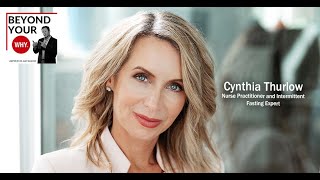
Cynthia Thurlow, a nurse practitioner trained at Johns Hopkins, left cardiology to focus on women's health and intermittent fasting after personal health struggles. She explains how intermittent fasting works, why women need different approaches than men, and which foods to avoid: processed seed oils and high-fructose corn syrup. Her TEDx talk on the subject went viral in 2019.
Questions this video answers
More than 14 million views.
Intermittent Fasting Transformation.
Approximately 150,000 downloads per month.
13 days in hospital; she performed the TEDx talk 27 days after leaving the hospital.
2016.
Chapters
Hey, today on my podcast I have a great guest, Cynthia Thurlow. She did the TEDx talk on intermittent fasting. Her book is called Intermittent Fasting Transformation. It had over 14 million views. She is a nurse practitioner, but man, she dives in deep as a nurse practitioner and knows a ton about health, heart and this subject. So you're going to love this interview. Her why is contribute. Her how is mastery. So she dives in really deep and ultimately what she brings are better ways. So I can't wait for you to hear this fascinating interview.
Welcome to beyond you'd why podcast where we go beyond just talking about your why and actually help you discover and and then live your why. You see, we believe that knowing your why, that driving force behind every decision you make and every action you take, is the essential first step to really knowing yourself. It allows you to move forward faster and have a bigger impact. If you're already a fan of the show, then you know that every week we talk about one of the nine whys and then we introduce you to somebody with that why so you can see how their why has played out in their life. This show will be more powerful for you if you've already discovered your why. If you still need to do that, head over to whyinstitute.com and discover your why today. It'll only take you about five minutes. Now let's meet today's guest. And so this week we're going to be talking about the why of contribute to contribute to a greater cause, add value, have an impact in the lives of others. So if this is your why, then you want to be part of a greater cause, cause something that is bigger than yourself. You don't necessarily have to be the face of the cause, but you want to contribute in a meaningful way. You love to support others and you relish success that contributes to the greater good of the team. You see group victories as personal victories. You are often behind the scenes looking for ways to make the world better. You make a reliable and committed teammate and you often act as the glue that holds everyone else together. You use your time, money, energy, resources and connections to add value to other people and organizations. So today I have a great guest for you. Her name is Cynthia Thurlow. She is a nurse practitioner, author of the best selling book Intermittent Fasting Transformation, a two times TEDx speaker with her second talk having more than 14 million views, and the host of Everyday Wellness podcast, averaging over 150,000 downloads per month. With over 20 years experience in health and wellness, Cynthia is a Globally recognized expert in intermittent fasting and women's health, and has been featured on ABC, Fox 5, KTLA, CW, Medium Entrepreneur, and the Megyn Kelly Show. Her mission is to educate women on the benefits of intermittent fasting and overall holistic health and wellness so they feel empowered to live their most optimal lives. Cynthia, welcome to the podcast.
Thank you so much for having me. I know it's taken us a bit of time to coordinate our calendars, but I'm glad to be here.
Yeah, we talked about this, what, few months ago? I don't even know how many months ago. It's been October.
Yeah. So more than five months ago. So for months ago, this is. This is what happens with entrepreneurs trying to coordinate calendars. It can be challenging.
So tell everybody where are you right now? Where are you located? And where did you grow up? You know what? Did you grow up where you are right now?
No, actually, I'm a Southern girl. I was born in South Carolina while my father was finishing his doctoral program, but actually grew up in New Jersey at the Shore, and then came down to the D.C. area for undergrad, and then I went on for more schooling in Baltimore. So I've really been in the mid Atlantic for most of my adult life, and right now live in central Virginia in the great state of Virginia, and live in an area now that is a little less populated. People are a little friendlier, and there's a lot less traffic. So it's been a nice quality of life change for us.
That sounds great. So take us back. Cynthia, what were you like in high school?
Gosh, I was the consummate good girl. Like, I learned very early on that if I got good grades and had nice friends, my parents didn't really pester me too much. I have divorced parents. Like a lot of listeners, my parents got divorced when I was 7. My parents both got remarried when I was 12. We moved to a new area. And my father really prioritized and valued education, and so good grades were very important. My mom did, too. But my father, I suspect, is on the Asperger's spectrum. So he's very intellectual, very cerebral. And so when my mom and stepfather got married, we went from a family of two kids to five. And so the way that I survived all the turmoil of what I was growing up in was to be the good kid. So in high school, I was, Gosh, I was vice president of my class. I was on varsity field hockey. I ran track. I was president of sad. I mean, it was this chronic kind of overachiever. Got good grades, was probably pretty quiet, but I had a very large group of friends and had a lot of fun in high school. And some of those friends are still my closest girlfriends to this day. So high school was definitely more about navigating the kind of trauma that I grew up in. And there was a lot that went on there. And then knowing that I was not going to go to college in New Jersey, I was going to get as far away as possible just to kind of get out of what I had grown up in. And so settled in the D.C. area and remained there over the last 30 plus years. And, you know, from my perspective, I think that a lot of us, you know, go off to college and come home and that's absolutely fine. But for me, it was getting out of what I grew up in and just experiencing new people, new things. And the college that I ended up going to, I mean, I think I had one or two people that had gone from my high school actually for sports scholarships. So from my perspective, I enjoyed going to someplace where it was a lot of other people weren't there and I was doing something that was different and unique. And I think that's characteristic throughout my lifetime is that I was not always taking the stereotypical path that a lot of my peers were and just really kind of, you know, leaning into what felt intrinsically right for me.
So now off to college. What college did you go to?
So originally I started at George Mason. So my parents didn't have a lot of money back then, and I wanted to go to law school. And so if I couldn't go to the very expensive private universities in the city, I wanted to go to the school that was closest to DC as possible so that I could apply to law school, which is actually what I did after being there for four years. And then I decided not to go to law school, which was probably the best decision I could have ever made because I don't like to argue. So wouldn't really make me an ideal attorney. So from my perspective, it was a great place to be outside of D.C. and just experience a totally different way of thinking. I was a poli sci major the first time around. This is back when you had to read the newspaper. There wasn't the Internet. I remember I had the Washington Post delivered to my dorm room every day that I had to read before I went to class because that was the expectation of our professors. But, you know, being in the Washington, D.C. area was really a great, a great place to be if I was, you know, in the kind of poly poli sci realm because there was just so much going on.
So poli sci law to then health and fitness. Now how does that happen?
Well, I mean, you know, for my parents.
There'S no terminal degree. Like you don't just finish undergrad and it's done. My parents expectations were professional school, graduate school. So if I wasn't going to law school, I worked for two years at a Fortune 500 company, which I absolutely hated. And while I was doing that, I started taking pre med classes. I honestly, I got a dog. I wanted a dog my whole life, got a rescue dog and that changed everything for me. I thought initially I wanted to become a vet, but I found out I'm allergic to cats terribly, to the point where I could barely work at a vet office, let alone become a vet. And then as I was taking pre med classes, my cousin, who's like a sister to me, was in med school and she said, don't become a physician. She was like, I think you would be better served becoming a nurse practitioner. I was like, I don't want to be a nurse. That was the first thing I said, I don't want to be a nurse. And she said, no, no, this is totally different. And so that kind of shifted my trajectory. And at that time I was volunteering at an HIV and AIDS center in Washington, D.C. and really the two top places in the United States for HIV and AIDS at that time and probably still are Johns Hopkins and ucsf. And I'm an east coast girl. So I applied to Johns Hopkins. It was a dual degree program. So you actually, if you're going to do an advanced practice degree in nursing, you have to have a bachelor's in nursing. So I did both a undergrad and a grad school program at Hopkins. But when I went there, I just got lit up. I mean, there was no doubt that's what I was really meant to be doing. I kept saying to my parents, I don't know if I'm going to be any good at this, but something's telling me this is what I need to be doing. And so I picked up and moved to Baltimore. And Baltimore back in the 1990s was not nearly as nice as it is today. My parents kept asking you sure you want to go to school here? And I loved it. I loved everything about it. I had amazing friends. And this is where I really think I was finally surrounded by students that were as serious as I was and were as conscientious. You know, we, we spent. All we did was study and when we weren't studying, we were doing clinicals, and we weren't doing clinicals and studying, we were taking exams, and it was very rigorous. And I'm grateful for that experience. But, you know, from my perspective, that's what really validated. This is where I'm supposed to be. Obviously, the population of patients in Baltimore are very different than Washington, D.C. in terms of who was impacted by HIV and AIDS. And this was really at the. At the. You know, the height of the crisis. And Baltimore was goodness. I mean, they had the highest teen pregnancy rate in the country, highest rates of heroin use, IV drug use, you know, had some of the worst HIV and aids. I mean, it was just every socioeconomic and social problem you can imagine. Abject poverty that I'd never seen before, multigenerational traumas and abuse. I mean, for me, being a suburban girl my entire life, it was really a baptism by fire. But I will say that intellectually, being at Hopkins was. Everything just came together for me. It was like I'm surrounded by people that are just like me, that want to learn as much as I do, that are hungry for information, that want to be intellectually challenged. And so that was the beginning of that next kind of pivot in my life. And I. I was an ER nurse. I'm a bit of an adrenaline junkie, I'll tell anyone that. And then kind of pivoted into cardiology as an MP and continued that for a long, long time. And I love everything about the heart. I think that at the point that I entered medicine in the late 1990s, this was still when physicians and nurses practiced very differently than they do now. And I think in a lot of ways, as managed care kind of stepped in and started taking power away from providers and putting it in the hands of non clinicians, I just started to see a lot of shifts that have continued over the past 25 years. But back then, I think people practiced a bit more objectively, whereas now I think people practice very defensively. They're concerned. They're concerned about, if I don't do X, Y and Z, I'm going to get sued. And I think a lot of technology and labs get overused out of that concern. So I feel really appreciative that I'm able to kind of objectively look back and forth and say, this is what I saw when I first started practicing, and this is all the fun I had. And so I stayed in Baltimore until 2003, and then I moved back to Northern Virginia when I met my husband and Got engaged and. And so we were in Northern Virginia for the next, like, 18 years and then relocated to central Virginia. But it's been a wild ride. A good wild ride.
It sounds like a lot of fun, actually. And then so you, in 2003, you moved out of Baltimore back to Northern Virginia. And what did you, like, Were you back into a cardiology practice? Were you.
What.
What did you do?
Yeah, so I started in Baltimore, run, if you can imagine, new grad. They had me running a heart failure program. That was interesting. I talk about, like, you know, I. I beat out people who had experience. And here I was this new grad and kind of stepped into that and loved it because I was mentored by one of the head surgeons and the head of cardiology at the hospital. And so I just learned so much. Again, baptism by fire. But when I relocated to Northern Virginia, I essentially went to work for a hospital again and oversaw a chest pain ops unit. But there was an NP service that we essentially rounded for cardiology patients throughout the hospital. It was 24 hours. You're working overnight again, which I hadn't done in a long time. I did that for a few years once I had my oldest. Then I went to work for a cardiology group. And I would argue they're the best cardiology practice in the Washington, D.C. area. It was really an honor to work with them. And this practice is big. They have.
Seven different hospitals that they cover and more than 10 offices. And I learned both inpatient and outpatient cardiology. And I think that having the ability to work in the outpatient environment, although to an adrenaline junkie, you think you're not going to get as much excitement. There's a whole lot more to be said when you make the decision about whether or not someone goes home or someone gets admitted. So a lot more autonomy. And one of the things that I really valued about this practice was the NPs functioned very autonomously with supervision, because back then, NPs were not autonomous in the state of Virginia, they are now, but back then they were not. And we had a lot of support, and when we needed it, we had the support. It was never an issue of not having it. So you learn a lot because you are functioning at a really optimal level. Like the way NPs are designed to be used in a hospital or an office setting, we were allowed to function at that level. And so I learned a lot. I will. I'll be the first person to say that I loved everything about being an NP in that environment.
And they were as Accommodating as I asked them to be, which I recognize as unusual. I didn't have to work full time, but when I had kids and they were super accommodating of a lot of different things. But I recognize not everyone is that fortunate. So that is a point of privilege that I have to say that I definitely, I didn't have the average full time pulling 40, 50, 60 hours a week that a lot of my colleagues do.
So for those that don't know, MP means what?
Nurse practitioner. So an advanced practice nurse. So advanced practice nurses, depending on what state you live in, can write prescriptions, they can admit patients, they can set patients up for procedures. In many instances, we were a safety net. If my doc was in the cath lab and I had to deal with emergencies, there's one hospital I used to work at before they had a cath lab if you had to call a chopper in because someone was having an so right ventricular infarct, which can be, they can be very sick and ship them to a hospital where they have the ability to have a surgical team and a interventional team available. I mean, that's, that's growthful, you know, as you're, you're, you know, you're panicked, you know, making sure you're not, you know, making any mistakes as you're packaging someone up. So, yes, nurse practitioners are a very vital part of the healthcare team. And for the right person, it's a great way to, you know, allow yourself to have a lot of autonomy and intellectual rigor. And then you don't have as much call and you don't work as many holidays as your physician counterparts, which to me was huge. You know, with young kids, I didn't want them to grow up, you know, knowing just the nanny. I wanted them to, to know their mom and have their mom be very hands on.
You know, what's so valuable about hearing your story is because there are different levels of everything in every, in every field, right? There's different levels of doctors, there was different levels of dentists, there's different levels of nurse practitioners. And not knowing, you know, just writing I was a nurse practitioner doesn't really do it justice. What you went through and the levels that you took it and the way you went after it and your adrenaline junkie aspect of that. Because now I'm hearing something totally different than even what I was expecting to hear based on, you know, for those of you that can't see Cynthia behind her, she has her book Intermittent Fasting Transformation. But on, you know, in your bio, you talk about being a nurse practitioner, but there's.
Yeah, no, it's something I'm very proud of. I think nurses are capable of doing amazing things. And I sometimes get criticized by other nurses on social media and they'll tell me, you don't talk enough about your nursing background. And I say I talk about it all the time. I just think in, in many instances, it's not how I lead anymore. It's not the only, it's not the only thing that I, I utilize, you know, those skills I use every day. You know, the ability to connect with others. We all know what our strengths are. And one of my strengths, probably one of my gifts, is my ability to connect with people. And so that's what allowed me to be a really, really good nurse practitioner. It's a lot. It's what allows me to have good interpersonal communication skills now. But I never downplay the MP part. I just think it's not the first thing I think about when I'm talking to people. And I think that's sometimes where people will, you know, perhaps misunderstand that I wear many hats, you know, sometimes a mom, sometimes I'm, you know, I'm always a wife, always a mom. But, you know, it depends on what I'm doing, in what context.
Okay, so you're working with the cardiology group, and then how do you get from there to being involved so heavily with health and women's health in particular?
Well, I mean, I've always been, you know, my husband's very fit. He paid, you know, he paid lacrosse in college. And I've always been very physically active. And so, you know, from my perspective, I just started seeing patterns in patients. I was like, I have patients that, you know, I was an NP in my 20s, so I have to remember that I was just watching, you know, you start to watch patterns, you know, patterns with men, patterns with women. Where are people getting stuck? Why are patients getting put on more and more medication? You know, what are we doing differently? What are we doing wrong? What do we, what do we not have enough time to do? And from my perspective, I was getting less interested in writing prescriptions. Although when I was at work, I was 100% towing that, you know, evidence based medicine line and stayed very current on research and all of those things. But after having a child with life threatening food allergies, and I read a book called the Unhealthy Truth by Robin o', Brien, who I had the honor of interviewing on my podcast two years ago, and I stay in contact with. Because I just feel so grateful. I read that book, and it changed my life. I started thinking very differently about food. I started thinking very differently about the food industry. And each chapter of that book I read, I was so angry, I could barely read the next. And so that started this pivot of where I started becoming a little less enchanted. I became disenchanted with the current medical model because it doesn't focus on lifestyle choices, and we don't have time to talk to patients about lifestyle choices. And so initially I was like, maybe I'll get my PhD. Because, of course, Hopkins kept saying we would love. They actually were like, we will work with you. We will help you get your PhD. You should have your PhD. You should be teaching. And as. As enticing as that was, I was 70 miles away from Baltimore, and I kept thinking, okay, wait a minute. So this is really back before the. The massive push to have online classes. I'm going to get in my car, I'm going to drive 70 miles. I'm going to be in Baltimore, where you can't just be on autopilot as you're driving through Baltimore. And Hopkins is not in the greatest area, although it's much better than when I was a student there. And then I've got these two little people that are in school, and then my husband travels a lot, a lot of international travel. I was like, I don't think it's the right decision. So then I looked at PhD programs closer to where I was. And I'll never forget this. My. My oldest son at the time, it was his first day of first grade. Every parent watching this, you know how those first days of school are for your kids at that stage. They're so excited to go to school, and you're so excited for them. You take photos, do all these other things. I missed my son's first day of first grade because it was the first day of this PhD program. And I'll never forget this. I drove into the city, and if anyone knows, Washington, dc, the traffic's horrific. Get to my class. I sat in my class, and there it was, like a bunch of bean counters. Meaning. And I don't speak of this disparagingly, but people who were in academia already or they worked for the federal government, and they were just getting that degree to get a little more money. There were no clinicians. There were no people that were actively practicing that were in that class. And I literally walked out and called the registrar and said, I don't want to do this. And so I took one class of one semester, went home and said, nope, that's not right. And then someone said, maybe do a wellness coaching certification. So I did that. And I was like, nope, that's not it. And then I read another book called Eat the Yolks. And I reached out to that author and said, where did you get your training? And she had done a functional nutrition program. And so the next day I signed up for that functional nutrition program. And that lit me up. I wanted to talk about food. I wanted to talk about how food influences health and disease and inflammation and oxidative stress. And so down that rabbit hole I went. And I never intentioned to be solely focused on talking to women. I mean, up until the time I left clinical cardiology in 2016, I wasn't focused solely on women. It's almost as if the universe gives you this gift. Most women that are listening, that are in their late 30s, early 40s, you hit a wall. At some point in perimenopause, you're going to hit a wall. And nothing had prepared me for it. Not my mom, not my gyn, not my girlfriends, because all these women, everyone just suffers in silence because that's just the traditional allopathic way. And so I hit a wall and all of a sudden I woke up exhausted. I'd never been weight loss resistant. I was so tired. I just felt like I was a shell of myself. And I was like, I'm not depressed. But everything I had been doing, my really adrenaline fueled lifestyle of, you know, having a demanding job, having young kids, husband's traveling. So I'm doing a lot of solo parenting, probably doing really in. Well, I was doing really intense exercise, probably not enough recovery time, probably not enough sleep, et cetera, et cetera, et cetera. I hit that wall. And so that was 2015. And by 2016, I was like, I, I'm, I'm not loving what I'm doing occupationally. I'm married to an engineer. He's very fiscally responsible and very fiscally conservative. And he was like, wait a minute, you're getting well paid. What do you mean you're going to leave this job to do what? And I just said, I know that I'm going to be successful. And of course I think he thought I was crazy, like I was having a midlife crisis. And I said, I just took this massive leap of faith. No business plan, no, you know, no business training whatsoever. And I took this massive leap of faith. And you know, I was right. I will say I was right. Because I'm a very hardworking person. But how did I get into the female health thing? I think it was I started attracting exactly the person that was struggling with the same things I had. And I had kind of widgeted it out. I'd figured out that intermittent fasting for me, removing anti, removing inflammatory foods, not over exercising, doing more weight training, getting more sleep, managing my stress, were all these things that other women needed to help managing. So my business became profitable really quickly. Just doing one on one work initially. And then that expanded into group programs, and then it expanded into wanting to do a TED talk because I wanted to challenge myself because I'm an introvert. And then the rest is really history because so many things came out of that. But yeah, that was 2016 when I, I took that massive leap of faith. And I'm not exaggerating, if you were to ask my husband right now, did he think I had lost my mind, he would say absolutely, positively yes. But I will say that 2019 validated that I had made all the right decisions. I mean, it was almost three years to the day that that talk went viral. And then my husband was like, okay, okay, I think there's something here for you.
So for those of you that are listening that know the yos. All right, Cynthia's why is contribute as we talked about, but her how, how she does that is by seeking mastery, diving in deep, looking for the little things, studying at a different level than most people will, looking for the little things that make the big difference. And then ultimately what she brings are better ways to move forward. So why is contributor? How is mastery her? What is better way? And we see that just coming through loud and clear. Right. Very few people dive in like what you've just talked about here in the last few minutes. And that's, it's fascinating how you've been able to do that. But the real turning point, you said was 2019, which was your TEDx talk.
Yeah, well, so before I did that second talk. So 2018, I started submitting applications and I wanted to share something that's funny because people ask me all the time, how did you get your talk to go viral? Well, here's the irony. So 2018 started applications. We submitted 80, more than 80 applications. And I finally got one talk in Canada, Toronto. And someone had backed out at the last minute. They were like, okay, she has something that's women's health focused. We'll let you do this talk. So I flew up to toront, did my talk, came back, and I was like, okay, I can do this. I can do this. And right around that same time, I was offered a second. And for anyone that doesn't know this, I certainly didn't before. You can't do two TED Talks about the same topic. And I looked at my husband and I said, what do I know a lot about? He said, intermittent fasting. And so I said, okay, we're going to write an application for intermittent fasting. It was that easy. And then they wanted me to do a slanted discussion talking about women, and it was that easy. But in February of 2019, which is a month before I was supposed to do the second talk, I ended up in the hospital for 13 days. So part of my mental recovery was saying to myself, I'm going to get out of this hospital to get home to my children, and I'm going to do this talk. And you, being a medical professional, you can appreciate and understand a ruptured appendix is not benign. And I had every complication you can imagine, which is what landed me into the hospital for 13 days and multiple procedures. And I actually did that second TED Talk with a ruptured appendix. I was too sick to take it out, so they sent me home with a drain. I mean, it was. I think about it now, it sounds a little bit strange and a little crazy, but energetically, it was meant to happen. 27 days after I left the hospital, I did a talk that changed my life. And the only intention that I set when I got on that stage was to show my kids I was okay. And so when people ask, what did you do to make that talk go viral? And I said, I really think. I fervently believe this. I'm a very spiritual person. I do believe that the universe gave me a choice. No one would have questioned if I didn't do that talk. And I did that talk purely to show my kids I was okay. And so every day, I'm so grateful that I stood on that stage and demonstrated to them that I was okay. Even though my brain had not caught up with my body, my body clearly was just debilitated. I lost 15 pounds. I mean, I was so. I was so thin and really tired. And I just said, I need to do this talk. It's really, really important. And then I went home and said to my kids, we're gonna have this great summer. I'm gonna unplug and take the summer off. And then my business exploded. And because it wasn't expected, you know, my website crashed. My team. My team and I weren't, you Know, at a position that we could even manage all the attention that, that, you know, kind of came from that. But yeah, it's, I think that on a lot of different levels, when the universe wants you to move, it gives you choices. And so I chose to move. I was like, okay, I, I'm taking, I'm taking all this information and I'm going to take a leap of faith and hope it all works out and the rest is really history.
Okay, so for those who have not seen the TED Talk, I have. But for those that who have not, what was your TED Talk about? And like, maybe give us, if you can, a synopsis of it, if that's possible.
Yeah, so the talk is really speaking to women in intermittent fasting and what makes this unique. So I kind of start talking about statistics and then talk about the science behind intermittent fasting. And as you stated before we started recording, you know, keeping a talk to 12 minutes is hard. And you know, as I was doing my talk, I realized, because they were very specific, if anyone went over them and everyone else, else got their talks delayed. And so I realized about 3/4 of the way through that I was, that I was three minutes behind. And so I had to jump ahead. And this is why it's so important to prep for your talks, because then you can, you can do that. You have the recall to be able to do it. So I talked about fasting, talked about women, talked about statistics, talked about the science, talked about a little bit of implementation, and then kind of left it, you know, dangling because I couldn't get to this, these other pieces. But it was very simple and very straightforward. The irony is I get criticized all the time about the fact that I was moving and normally, I don't normally move that much, but I had been sick, I didn't. You know, you're trying to kind of dispense all this energy that you're feeling and this, you know, just feeling stressed. And so I always look at it as an opportunity to, you know, challenge yourself. You know, you're on a stage, this is stadium seating, so I could see everyone. It wasn't, you know, this benign thing where it's dark and you can't see anyone. I could see everyone. The honors, the people who close their eyes, people who smile. And so it's always kind of a surreal experience, an out of body experience, if you will. But I, I remind people all the time, you know, when you get things recorded and, and they're seen by millions and millions of people, it just gives you an opportunity to improve upon your craft or improve upon what you do. But, yeah, that it was a very, I would say a very concise, succinct explanation of what intermittent vesting is, why women need to do it differently. I didn't delve into a lot of the intricacies because you just don't have the time.
Okay, so that was 2019. So that was three, you know, four years ago.
What have you learned about intermittent fasting from 2019 to today?
Oh, gosh, I feel like I knew. I knew so little compared to now because now I've written a book and I talk about intermittent fasting almost every single day. They're on podcast or summits or on across social media. I think that I understand it at a level, especially after writing a book, I understand at a level that I didn't. I wasn't even like. Let's just say I was flying at 30, 000ft back then, and now I can see everything. So I'm very versed, like, very invested in the research and what's coming up. And, you know, how rigid dogmatism kind of, you know, evolves itself even into intermittent fasting, how people can get fixated and stuck. But I definitely understand it at a much more substantive level. I thought I understood it. I thought I understood a lot, and I did. But now I understand a whole heck of a lot more. And it's why I look at intermittent fasting as just one component of metabolic health, and that's a continuum of that cardiology perspective, like, what are the things that we should be doing with the patient population? And this is just one of many strategies.
So for those who are not as familiar with intermittent fasting, what is it?
It's as simple as saying eating less often. It's a time in your schedule where you are either abstaining from eating where you are eating. It's really that simple. This is not starvation. This is not new or novel. This actually dates back to biblical times. It's in all the major religions. So sometimes I remind people, yes, right now it might be popular in the vernacular, but intermittent fasting is what is our birthright. Feasting and famine is what allowed us to be here as a species.
I think we've gotten so derailed in the United States in terms of meal frequency, what we're eating, our macros. And so this definitely is much more aligned with an ancestral health perspective, which I'm a huge proponent of, but also understanding that what we're not advocating for starvation, we are advocating for eating. I like to Eat. I like to eat a lot. So it's really just helping people understand that our bodies run much more optimally if we're not eating every two to three hours and eating lots of carbohydrates and not enough protein and too much of the wrong types of fats.
So is it more important what you eat or when you eat? Or is that a fair question?
It is a fair question. I think the most important thing is what we eat. So if you eat a standard American diet, which is highly processed, low in fiber, full of rancid seed oils, and probably a lot of high fructose corn syrup, we know that that's not going to be helpful. Even if you eat it in a little tight window. I would make the argument that when you eat is important. You know, daylight savings just happened. I think all of us are probably struggling a little bit. It's only a difference of an hour. But eating when it's light outside, not eating when it's dark outside, is aligned with our. Our biological rhythms in our body. You know, the whole chronobiology is an area of research that I find innately interesting. So I would say the caveat is understanding when to eat and what to eat are very. Both very important. But if I had to pick one, if it was only one and not the other, I would say what you eat is the most important thing. And I always say nutrition is the foundation of everything. And unfortunately, we've been conditioned by our society that we shouldn't know how to eat and we shouldn't know how to cook food for ourselves, and we should be dependent on the processed food industry. And I would say that would be to our detriment that it is important to get back to basics and to not get misaligned by all of the advertising the processed food industry does at our detriment. Really?
It's funny. I watched this video. I wish I could find it. But this guy was going through all the things that we can and cannot eat, right? And it was. It was hilarious because by the time he was done, there was absolutely nothing left that you could eat. Because coffee's good. Well, no, now it's bad. Cheese was good. Now it's bad. Everything's good and bad. And by the time. Even water, by the time you got to water, I mean, you can't drink water anymore. You got to have bottled water, but you can't have bottled water. I mean, it just was hilarious. And where do we go to get real information? Because, right. A few years ago, coffee was bad. I think and then it's good. I don't know what it is now if it's good or bad anymore, but it's hard to really tell.
Well, I think there's, there's a lot of misinformation. I think it's always in the context of who is it coming from? And I, you know, I don't ever let my ego, you know, make this decision for me. But if someone's a reasonable individual, I don't care what initials are after their names. There have been some vicious fights on social media as of late. Rigid dogmatism that I see. And, and I always say, I don't care what initials are after your name. If you're a jerk, you're a jerk. But if you have sound reasoning, if you can explain yourself, if you can provide some information. What drives me crazy is, you know, there's, there's anecdotal evidence and then there's randomized controlled trials. And certainly I will tell people as I was writing this book, there's not a lot of research, as one example, on women in intermittent fasting, unless it's in lab animals, which last time I checked, we don't have the same gestational cycle as humans or as on menopausal obese women. And everything in between was kind of like women's menstrual cycles are just, it's too problematic. We don't want to account for it. So we'll just do all the research on men and lab animals and obese menopausal women. And I would have to say, you know, sometimes we have to just say, this is anecdotal evidence. This is my N of 500. This has been my clinical experience working with X, Y and Z. So I think your question is a good one. I think there are plenty of people out there who are just smart and are well researched and reasonable. And I think anytime people become rigidly dogmatic, that's a problem. And there's a lot of that across social media that people say, unless you do carnivore, you're bad. Unless you do, unless you're plant based, you're bad. Unless you do low carb keto, you're bad. But if you can say, you know, let's agree to agree that sometimes a little bit of each one of these things may be beneficial. I was full carnivore for nine months after being hospitalized because my gut was just destroyed because of six weeks of antibiotics, antifungals, you know, a long hospitalization and surgery. My body was just wrecked but it took nine months. And so Carnivore for nine months worked well for me. Would I want to do that forever? No, because I like vegetables. But I think for each one of us, entertaining the possibility that maybe what we need is a little more variety and a little less rigidity.
Well, you and I met at a fitness health event. There was like 500 health practitioners there. And I found it fascinating because you had every different type of thinking. You had the carnivores, you had the, the plant based, you had the vegan, the. You mean everything. You could think of the keto group. There was all these different groups of people there. And of the group, one stood out to me from my untrained eye as the most healthy looking, most fit, most human looking group. Do you know which group that was?
Tell me, I'm curious to what your response is.
Carnivores, man, they just looked the most healthy and fit. They didn't look emaciated. They didn't look like they were ready to, you know, the wind to blow them away. They just look like kind of the sprinter versus the marathoner. And so I don't know if that's true or not, but that's what I saw visually and I don't know what that means, but it did seem like they were very healthy looking.
Well, I think, you know, it comes down to like, I just, I just spoke at an event with Sean Baker, who's one of the kind of leaders in the carnivore, the carnivore front. And he's very pragmatic, which I love about him. You know, he, he's like, listen, if this works for you, I always say I'm carnivore. Ish. I do have more, I do have more vegetables. And I, I like vegetables. I can tell you that when I was full carnivore, because I needed to be, I missed Brussels sprouts. I dreamt about Brussels sprouts. I thought about them all the time. And so I think that it's whatever is sustainable. So if you feel like you can eat just meat for the rest of your life and your blood work looks fine and you're otherwise healthy, that's great. But if you force yourself to be carnivore and you're miserable because you want to eat some vegetables or you want to eat a piece of fruit, I think even Paul Saladino now is eating honey and some fruit, which I'm glad to see that he's kind of expanding beyond kind of being very, very rigid about Carnivore. But it always comes down to like, can you sustain this for. The same thing that I love about intermittent fasting is most people are like, this is something I can do for the rest of my life. I feel good doing it. It works for me. If someone wants to do keto and they love it, that's great. If you want to do low carb, that's fantastic. I would say I'm not such a huge fan of just doing plant based because for most women that I work with, they want to lose weight and the carb to protein ratios can really be of issue. In fact, my team and I kind of hold our breath sometimes when we get questions because we want to be supportive, but we're like, it's really hard if you don't eat eggs or any dairy and you're just eating like beans and legumes. Although beans and legumes are delicious. Yes. If you're trying to lower your carbohydrate threshold, that can be challenging to get enough protein in. And that's a whole rabbit hole I want to avoid having a conversation about. But I do agree with you. I think what it really comes down to is eating a less processed diet is the key to, you know, being healthy and having plenty of energy and, you know, having the body composition you want and, and all those, those things that people think about.
So do, do people lose weight on intermittent fasting because they're just eating less? Because the reason I say that is I have a family member who is really into keto and really into intermittent fasting. And he and his wife look, look fantastic right now, but they went from eating, you know, three meals plus snacks a day to not eating at all on Thursdays and eating only two meals a day. And so I said, well, that's just a lot less eating you're doing. And I don't know how much of it is the keto or just not eating very often or eating very much. I would wonder what you think there.
I mean, there's probably several things going on. I mean, it could be, you know, they were, they were overeating, you know, when they were having the meals and the snacks and eating throughout the day. It could be upregulation of autophagy, it could be, you know, reduction in inflammation and oxidative stress. It could be that maybe in addition to these other lifestyles, they're sleeping better, their stress is better managed. You know, there's so many things. But when people just look at pure calorie restriction versus intermittent fasting, there's different Benefits that come about doing intermittent fasting. And so the autophagy, this waste and recycling process. In fact, I interviewed a sleep expert, sleep researcher on the podcast yesterday, and we were talking about the lymphatic system in the brain and what happens with this. It's kind of like flushing the toilet in the brain. He was giving this great analogy. And so I remind people that when we're eating less frequently, it allows our bodies to get rid of disease, disordered organelles, mitochondria, et cetera. And so I think it's, it's a multifactorial reason why they probably are healthier and probably, you know, their body composition has changed. But I think anytime people stop snacking, I mean, if you do nothing else, just stop snacking can make a huge difference. I think we just go through life just this mindless eating. We don't even realize we're doing it. In fact, I've had a lot of people lately in group programs and they're doing food diaries and we're looking at them, and all of a sudden when they have to start writing it down, they're like, wow, I really do. Or they're documenting it, they're like, oh, wow, I do really eat, like off my kids plates. And I'm snacking right before bed and I'm eating before I open up my feeding. Just all these little things that ultimately can add up and contribute to weight loss resistance.
Is this a fair question? What is the current best thinking on healthy eating?
It's a great question, I would say, based on, and I'm fortunate that I have the ability to connect with so many experts in the health and wellness space. And so I think it really comes down to less processed food avoiding things like seed oils and high fructose corn syrup. If you can avoid those two things, you're in a pretty good position not drinking your calories. I think that's important. There's a lot of, like, fatty coffees. Soda as an example. My youngest is in a different high school than his brother, and they were. He was overseeing a chess competition, and this was for volunteer hours. And he was told, if you bring a big bottle of soda, you'll get a couple extra hours of volunteer time. And I was like, I felt so conflicted because I was like, liam, if you look at this bottle of soda, how many servings are in this? Six. Each serving had almost 40 grams of sugar. And I said, it's probably high fructose corn syrup. So the poor schmuck who you give that to, if he and his friends drink it. I said, do you know what they are doing to their liver? I was like, I said, let's. And he's like, I don't want to hear anything about it, mom. I'm just handing it off. I'm not drinking it. So, you know, not drinking your calories. Having more animal based protein, we know that it's got a superior amino acid profile. Protein and fiber, I think are very important. Whether or not you tolerate carbohydrates or, you know, carbohydrates in general has a lot to do with your insulin sensitivity. So if you're someone who's insulin resistant, obese and diabetic, guess what? Less carbohydrates. If you're insulin sensitive, you're at the body composition, weight you want to be at, you can probably tolerate more unprocessed carbohydrates and healthy fats. Again, if you avoid seed oils and you lean into olives, olive oil, MCT oil, butter, ghee, etc. Those are going to be good options. I think that we make nutrition far too complicated. We get too dogmatic about it. I can tell you what works for me and what's worked for a lot of my patients, but the power of The N of 1 is undeniable. And I really encourage people and it scares people. They're like, I'm used to being told what to do and I'm like, that's great. I'm going to suggest that you do a little bit of experimentation and then tell me, come back to me and tell me how you feel. Because for me, it is much more helpful when someone has tried four or five things and then they find the one thing that works well for them. I would say as long as you're doing those things that I just mentioned, you're navigating things in a pretty good position. But I think the carbohydrates have even been demonized. And I, I actually have started eating more fruit. I, I tend to cycle my carbohydrates. I'm just being transparent. And lately I've been playing around with more berries and I even will eat a just green banana. And I'm like, you know what, I feel good when I do it and I'm insulin sensitive. And so I think it's important to not be really rigid with your diet. I, I will say, you know, the no seed oils, no high fructose corn syrup are kind of like absolutes. And then a lot of other things, it's very individual. Do you tolerate gluten? Do you tolerate grains? Do you tolerate dairy? Do you tolerate sugar? A lot of people are sugar addicts. Do you tolerate alcohol? This is a very triggering topic, so I have to navigate it carefully. That's a very personal decision. But I see a lot of people that derail really good diets by drinking too much alcohol.
Okay, last question. Cynthia, what's the best piece of advice you've ever given or the best piece of advice you've ever been given?
You know, I think the best piece of advice I've been given and that I talk about a lot, is through adversity comes opportunity. So irrespective of who you are, where you are in life, understanding that our challenges are our greatest gifts, and I fervently believe that I wouldn't be where I am if I hadn't gone through those challenging times. And I would certainly say the universe ripped the rug out underneath me in 2019, 2020. And I am so much stronger emotionally, intellectually, et cetera, for that experience. And I really think for me personally, it's what I try to share with my clients, my patients, people I talk to. Through adversity comes great opportunity to really step into the person that you are meant to be, person you are destined to be. And so instead of looking at it as a glass half full or half empty, you know, really understanding that distinguishing characteristic. If you can do that, you can navigate just about anything.
I love it. Cynthia, thank you so much for being here today. I know you're super busy and on all kinds of podcasts and shows, so thanks for taking the time to be here. If there's people that are listening that want to follow you, learn more about you, get your book, what's the best way for them to connect with you?
Yeah, connect on my website it's probably it's like one stop shop. So. Www.cynthiathurlow.com you can get access to everyday wellness. Some of my favorite things I do in my business, connecting with other like minded healthcare providers. Intermittent Fasting Transformation is my book. You can get that anywhere. Amazon, Barnes and Noble books a million give the ability to get it from a brick and mortar place of place. Buy from them. They've really suffered over the last couple years of the pandemic. I am on social media, I'm on Instagram, I'm on Twitter before warned. I can occasionally be snarky and then I have a free Facebook group called Intermittent Fasting Lifestyle Backslash. My name, it's men and women. It's a very supportive anti drama. I don't I can't tolerate drama. I don't tolerate drama. It's a really great place to come with questions. It doesn't necessarily have to be about fasting. We have people that ask all sorts of questions. In fact, my team, it like blows their mind. They're like, I don't even know how to respond to this. How do you want to respond? We get lots of great questions, but I'd love to connect with your community there as well.
Awesome. Thank you so much for being here and I appreciate you. I'll be following you. So thanks for being here.
Thanks so much for having me.
It's time for our new segment which is Guess Their why and I'm going to use the former First Lady Michelle Obama. So she has a Michelle Obama has a deep passion for health and wellness, which fueled her to start a national conversation around childhood obesity epidemic in the country. To drive the movement, Obama launched the let's Move campaign, which inspired children to eat healthier and incorporate more exercise into their lives. So what do you think Michelle Obama's why is? I'll tell you what I think based on what I've seen, which is not a lot, just what I see on television. I don't know her personally, but I believe that Michelle Obama's why is contribute to contribute to a greater cause, add value, have an impact in the lives of others. Just like Cynthia's is. She wants to help. She wants to be part of others success and she wants to use that to uplift kids that are struggling with obesity. What do you think Michelle Obama's why is? That's what I think. So thank you so much for listening. If you have not yet discovered your why, you can do so@whyinstitute.com you can use the the code podcast50 to take it at half price. If you love the beyond your why podcast, please don't forget to subscribe below and leave us a review and rating on whatever platform you're using to listen to the podcast. Thank you so much for listening and I will see you next week.
I really hope you enjoyed today's episode and that through today's guest, you heard how important it is to know your why and how impactful it can be in your life and the lives of those around you. Be sure to head over to why institute.com and discover your why today. Remember, the more you know about yourself, the more you'll know about others. I'm Dr. Gary Sanchez and I'll see you on the next episode.
More from Dr.




Women In Leadership: A Need For A Greater Systemic Change With Belinda Clemmensen






