Making Sense of Problems in Practical Ways
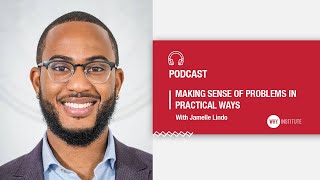
Jamel Lindo, an emotional intelligence coach, explains how self-awareness, empathy, and stress tolerance form the foundation of leadership. He uses the EQI 2.0 assessment, a 133-question survey measuring 15 competencies, then applies targeted practices like breath regulation to help clients strengthen specific skills toward their goals.
Questions this video answers
November 21, 2019
133 questions
About 20 minutes
15 competencies
Mississauga (suburban Toronto)
Chapters
This episode of beyond you'd why is brought to you by our why App. Head over to yinstitute.com to take the why app so you can discover your why today. Knowing your why is the essential first step in having the clarity to move forward faster and have a bigger impact.
Welcome to beyond you'd why Podcast, where we go beyond just talking about your why and actually helping you discover and then live your why. So if you've listened to my podcast, you know that every week we talk about a particular why, one of the nine whys. I go into detail about that why, and then I'll bring on somebody, I'll bring on a guest that has that why. And so today we're going to be talking about the why of make sense to make sense out of the complex and challenging. Now people with this why observe and take in elements of every situation they're in and make sense out of them. They can take complicated or what may appear to be complicated factors, problems and concepts and organize them to create solutions that are sensible and easy to implement. They're highly solution oriented and excellent problem solvers. In conversations with people that have this why, you might hear them say something like, okay, I got it. Given all that, let's do this. They're really fast at solving problems. And so today I've got a guest for you. He is a coach. His name is Jamel Lindo. He is an emotional intelligence leadership coach, trainer and speaker with over 11 years of diverse learning and development experience. In his experience, he has worked with hundreds of leaders, entrepreneurs and other kinds of professionals across Canada to help them level up through the practical application of emotional intelligence and mindfulness strategies. Now, Jamel is certified in the world's leading assessment tool for measuring emotional intelligence called EQI 2.0, and he uses this to establish a scientifically valid benchmark to begin the development journey. Jamel is also an official member of the Forbes Coaches Council, an invite only organization for successful business coaches, and has been published several times on Forbes.com for various thought leadership pieces. Ultimately, though, Jamel is driven by his mission to empower leaders and business professionals to realize their highest ideals, leading to a fully expressed and optimized human being who makes the world a a better place through thriving businesses. Jamel, welcome to the podcast.
Thank you so much. I really appreciate being here and I love that introduction. I feel that you completely nailed that.
Good man. Well, let's talk for a minute. Now tell everybody, first of all, where are you? Because we just had this conversation because I couldn't figure out where you were at. And then because I'm in the US and how did you get into coaching?
Yeah, absolutely. So first off, I'm in the city of Mississauga. And when I say that, especially for someone who is in America, they'll likely have no idea where that is. So I normally describe it as the outskirts of or the suburban part of Toronto. There's a city right in the outskirts about 20 minutes away. Most people are familiar with Toronto. If you're not, just take a look at the NBA, because we are NBA world champions right now. Throw that out there.
That's awesome.
Pretty sure that you know where we're from. We're very proud. And we also had Bianca, who crushed it at the US Open in tennis. So we're on a winning streak right now. That's where I'm from now. Yes. And so what I think about kind of, you know, my journey and what brought me in here, I think if I were to simplify it, it would have to be that I was really curious. In my professional world, I did 10 years in the corporate space around what makes an effective leader versus what makes an ineffective leader. And eventually my mentor at the time introduced me to the concept of emotional intelligence. And that's when I, you know, that's when everything lit up. That's when everything started to make sense for me and I made the connections and really, I've been absolutely hooked ever since.
So tell us what you did in your corporate world. How did you. Where'd you go to school? How did you get into the. Give us a little background on you. You grew up in Toronto as well, or outside of Toronto?
Yeah, so I actually grew up in Mississauga. My background and my history is a little bit different. I did it backwards. So I didn't go to school for what I do now immediately. I actually went right into the corporate space immediately after school. And I wasn't expecting to stay there, but what ended up happening was eventually I stumbled upon different kinds of opportunities, and I landed my first leadership role within six months. So I was working for one of Canada's largest telecommunications companies. And so it was a junior leadership role, which then led to another leadership role, which then led to supervisory roles, which then led to management roles, which then led to training. And so over the course of the next 10 years, I would kind of go on this roller coaster journey where I discovered my passion for coaching, for development, for speaking, for training, by working with different departments, from client care to technical care to human resources, which is where I kind of Landed closer to the end of my stint. And it was through all of that that I realized this is what I really want to do. So I went back to study coaching, then became a certified professional coach through the icf, the International Coach Federation. I also realized I love training. I want to do training. I ended up becoming a certified training practitioner through the Canadian Society for Training and Development. And then most recently, I realized I want to specialize and hone in specifically on emotional intelligence. So I became certified in the world's leading tool for assessing emotional intelligence. It's called EQI 2.0.
So it sounds like you moved really fast when you were younger. You just jumped in and people recognized you and said, we're going to move this guy up quickly.
Yeah, absolutely. It was very unexpected. It's not what I thought. I figured it would kind of just be a stepping stone to something else, and it was just not in the way that I expected.
So when you were. Let's just go back to high school for a second. When you were in high school, were you that guy that people came to to help them solve their problems? You were kind of a guy that was able to do things quickly.
You know what's really funny about that is I never saw myself as that guy. But it wasn't too long ago that I was actually meeting up with a friend from high school, and I was kind of catching her up on everything that I was doing. And she's like, oh, you know what, Jamal? That actually makes perfect sense. And I said, why? And she said, well, because I remember at lunchtime, I used to come to you and tell you about these issues that I was having, and you would kind of help and support me through it. So it turns out I was that guy in high school, but I didn't really know because I was focused on other things. I was focused on music at the time. I loved rap music, and I loved producing and singing. I was focused on athletics. I played basketball and I played football every single year all throughout high school because that's where I figured my life was going to take me.
Interesting. And what position were you playing? Basketball.
Basketball. I was a shooting guard, Sometimes point, sometimes point guard.
So, you know what's interesting about people with the why of makes sense is that again, they're really quick on their feet. They're really good at making decisions, at taking in information and helping people solve their problems. So they help people move forward by helping them solve their problems, which is what it sounds like you did and have done and are currently doing.
Yeah, Absolutely. And it's funny because even as you provided that description at the beginning of this conversation, I went back to some of the coaching conversations that I've had with my clients, and after saying something that ties many seemingly unrelated pieces together, I will often say, makes sense. Or does that make sense? It's actually a slogan that I use. So it's funny that you say that that is the type that I fall under, because I'm definitely true to that type. Yeah.
What's interesting about your why, and for those of you that are listening and that haven't yet discovered your why, your why is that thing that you just naturally do. It's that thing that you find passion. You find energy when you're doing it. And so for somebody like Jamel to be able to help people solve their seemingly complex problems is. Is a perfect fit for somebody with the why of makes sense. And when what you're doing is in line with why you do what you do, you will have passion for what you do. That's where passion comes from. So for you, Jamel, to have passion for coaching makes total sense, right?
Oh, it absolutely does, because that's literally the process. The process is, okay, well, where are we at right now? And then how can we make sense of this in a way that's part of practical. Right. So that we can move forward and progress towards whatever the intended goal is?
You are the perfect person for those of you that are listening and are looking for a coach. Jamel is like the perfect why for that coach if you're looking for solutions to your problems. And I'm sure, Jamel, maybe you've run into people that are maybe not even looking for a solution. They just want someone to hear them.
Right.
Someone to spend some time with them or listen to them versus actually solve their problem. I don't know if you have. You run into that.
Luckily, I have not. Although I do have some conversations where that seems to be what's happening. Although I haven't had people that have come to me specifically to say, well, this is what I want to do. And the reason for that is because I'm always clear at the very beginning about the difference between a therapeutic approach and a coaching approach. And so with therapy, it very much is about speaking about the past, revisiting the past, what has happened, why it happened that way, and living into that. And it's just you expressing it's more based on the past, whereas coaching is more about, where are we right now? What do we need to understand about the behaviors and actions that are occurring right now and what are the practical actions that we need to take moving forward to move us toward the vision or the goal. So it's more future oriented and it deals more with being progressive as opposed to regressive, if that makes sense.
Total sense. One's looking forward, one's looking back.
You got it.
First of all, tell listeners, what is emotional intelligence? I hear that. I don't get it. I don't know exactly what it means. What is emotional intelligence and what are mindfulness strategies?
Gary, thank you so much for asking that question because it's probably the most important thing and I'll tell you why. Number one, there's a lot of buzz, there's a lot of hype right now around emotional intelligence. We see it floating around, especially in the leadership world. And now we're seeing entrepreneurs that are very interested because they see it as something that can give them an edge, which it absolutely can. But the problem is when something becomes very popular, it also becomes subject to delusion and misunderstandings. So to be clear, the first delusion that I see with emotional intelligence is that people say it and they think that it's one thing. They think that it's one skill. And what I look to help people understand is that emotional intelligence is not one skill. It's actually an umbrella term that refers to many skills and many sub competencies that tie in to your emotionality. So how do we further simplify that? When people ask me how to simplify it, I normally just say emotional intelligence is the quintessential people skill. It is also the quintessential leadership skill because leadership is about influencing people. Now what are people skills? People skills are effective. Communication, empathy, being able to understand other people. It's self awareness, being able to understand yourself, your motivations, your drives, and to have some degree of control and access to those things so that you can create the results you want. So how are you communicating to people is the big one. How are you showing up in your day to day? Are you showing up confidently? Are you not showing up confidently? How are you showing up in social situations and social settings? How are you managing your emotions and how are you managing the emotions of other people? That is the lump sum really of what emotional intelligence is.
Okay, so I don't get it. And you know, I heard all that. I want you to simplify that down to me for one to one sentence. What is emotional intelligence? One sentence, that's all you got.
Emotional intelligence is your ability to understand the emotions that are happening within you as well. As understand the emotions that are happening within other people, to build effective relationships, to communicate effectively, and to create the outcome that you want in your business and in your profession.
I knew you were going to be able to do that.
I knew with the why of makes sense, you would be able to take all this and condense it down to one thing.
It's so funny, I was literally going to say at the end of it, does that make sense?
No.
So you said it's the understanding your emotions. Is that what you said? Understanding your emotions?
Yes.
How do we understand our emotions? What do you mean by that?
Yes, that's a great question. Well, first it starts with being able to recognize them and to know that they're happening and to know what they're causing. So it all starts with self awareness. And the reason why that's so important and the reason why that's a big conversation with emotional intelligence is because self awareness is the gateway in to all of the other skills that exist. So when it comes to understanding your emotions, it's about being able to reflect, what am I feeling at this given time and how is that informing the way that I'm showing up? So take for example, a salesperson who's about to go into a sales interaction. In that interaction, are they able to say, what am I feeling? Am I feeling nervous? Am I feeling anxious? Am I feeling rushed? If I'm feeling those things, then I might rush my client. I might miss details. I might not take the time to truly understand their needs. And if I don't do those things, then chances are I'm not going to be able to close the sale. So simply by identifying it and saying, I'm feeling rushed right now or I'm feeling accelerated or I'm feeling stressed. You can then use a mindfulness technique. For example, six deep breaths is a simple one to regulate that emotion so that you can approach that sales interaction, for example, the way that you want to.
Interesting. You know, when I hear you talking about this, I can. It immediately takes me back to athletics and to sports. And you're sitting at the free throw line now, needing to make two free throws to win the game. And the emotions that are rushing inside of you can be overwhelming, right? The nervousness, the tension, you know, what if I miss? What does it everybody going to think all, all that stuff can happen while you need to make those two free throws or you're going to getting ready to perform a recital. You know, you're going, you're pianist and you're going to get up to Perform, and there's all these emotions that go on in your head. But at that moment, how would emotional intelligence handle that? Is that a viable example?
It's a perfect example. So emotional intelligence says when. Right now, I'm in a state of anxiousness, and this state of anxiousness is affecting my ability to perform. Therefore, I have to manage it, but I can't manage what I can't see. 63% of people can't identify a triggered emotion in the moment when they're being triggered, which means that they're acting out of an emotion that they can't even see. They don't even know that they're having. So that's why you have people that say, I'm not angry, when in fact they're angry. So coming back to this example, if I'm at the free throw line and I can say to myself, what is my state? And I can see that I'm anxious, I now have the choice to, let's say, take six breaths or to reflect on something that's going to help me regulate. Once I'm in a regulated state, then I can take those free throws and my performance is going to be much better because I'm not affected by the nerves.
Yeah. It's interesting to think about what percentage of peak performance is related to emotions versus skills.
And really, it's a large part of it that's related to emotions versus skill. It's likely the majority of it. And of course, our emotions tie into our mindset and what we believe about ourselves and what we think that we're capable of achieving. For example, Bianca just won the World Open, and one of the key things that she said is that I visualized winning this. And that visualization helped her to become more confident in herself and in her ability to be able to do it. So that's one side of it. The other side of it is whenever we're engaging in anything, our emotions are always at play. Athletes deal with this on a daily basis. Entrepreneurs deal with this on a daily basis because there's stress, there's the environment, there are challenges, there is competition. And so if I'm the smartest person in the world, but I can't navigate any of those challenges which involve my emotions, then what I know becomes irrelevant. And that's the epidemic that we're seeing today, not only in leadership, but also in entrepreneurship.
So you're helping people that want to achieve peak performance identify the emotions that are holding them back or stressing them or not allowing them to be free so that they can then manage them in a way that allows them the freedom to be what they were meant to be.
Exactly. So it's helping them make sense of the complexity that is their thinking process and their feeling process, because they're both tied together, they're both connected. So now the question comes up of, well, how do you do that? And the easiest way to explain it is I use a psychometric assessment called EQI 2.0, and it's the world's leading assessment for assessing emotional intelligence. The good thing about this assessment is that it's all science based. It's based on research. It's created by a very reputable psychometric publishing company. They're called mhs and they do psychometrics for all different fields. Pharmaceutical, military, government, and now leadership. So they've created a tool that is very simple. All you do is answer 133 questions. It takes about 20 minutes. Then you get a report that tells you exactly where you stand in 15 different competencies. To give you a few examples, some of the competencies are assertiveness. A lot of people don't know that EQ involves being assertive. You need to be assertive, especially if you're in sales or an entrepreneur or a leader. Empathy, self awareness, decision making, impulse control, stress tolerance, and the list goes on. So that's why it's important to understand that EQ is a series of skills and that it can be measured. And then when you know where you stand in each category, it makes it easy to make sense of what's tripping you up. So for example, I just got off a call with a, with a client who's a real estate agent agent, and he has some opportunities and some deals that are coming in and he can't understand, well, why are these things not moving forward. And what we identify is that it's his lack of assertiveness. So an inability to take the next action, an inability to position himself as the expert and to advise his clients, of course, based on their best interest. But he has to take the lead to advise his clients on what the next best action would be, as opposed to being passive and not allowing for a decision to be made and allowing for the humming and the hawing and the we don't know and the indecisiveness. So just by giving him very simple strategies and practices to enhance his assertiveness. And in this case, it's literally, what's the next action? We're going to take the next action, we're going to come back, we're going to Reflect what happened, what didn't happen, how did it feel, what did you notice, what were the results, what were the outcomes? And in that way we can develop one component of EQ that has a very practical results based outcome in his business, which is closing the sale.
Interesting. So you're helping him to make sense of the reason he's not been able to move forward in that particular area.
Absolutely. And that is just one of 15 different areas. I'm speaking with other professionals who are low in empathy and they do client services. So you can imagine if I don't have the ability to connect with my client and understand what their needs are, I can't even get to the place where I can recommend the right solution because I don't know you. I don't know the depth of your problem, what you're experiencing, what your pain points are. I don't have the capacity to dive into that and to discover that because I've never developed that skill. But the good news is that eq, unlike iq, can absolutely be developed. It's proven to be developed and anyone can do it. So you can become more empathetic so that you're connecting more to your client. And when you know more now, you can offer more and bring more value to them.
So how is this different than. I mean, it almost sounds like focusing on your weakness and trying to bring your weaknesses up versus focusing on your strengths and enhancing those. That's an oversimplification, but that's kind of what I feel like I'm hearing. Hey, we're going to have you take this assessment. We're going to figure out what's not working for you and we're going to help you build, bring those areas up to a level that it'll work. You know, looking at your weaknesses and building them up versus focusing on your strengths and enhancing those.
Yeah, that's a great point. So the number one thing is it's not always that you're just trying to boost one thing. It could be that you're looking for a balance of two things, which could mean that something else comes down and something else comes up. So it depends on what your goal is and what you're looking to accomplish. And then we decide what area we're going to be focusing on. So I'll give you an example of what I mean by this. Let's say that you are working as a nurse. So if you're working as a nurse, then you're going to want to have really, really high empathy. You're not necessarily going to need assertiveness. The assertiveness could be a little bit lower. Your sense of independence can be a little bit lower. So if you're out of balance, if you're very, very, very assertive and you're very, very, very low in empathy, chances are your patients aren't gonna feel very cared for. And so from that perspective, we're gonna look at, okay, well, how can we dial back on the assertiveness and balance it more with the empathy? So you're not only looking at increasing certain things, you're also looking at finding a balance between things, depending on what your goal is, what you're trying to accomplish.
Yeah, that's a much better way to look at it. So what I think I'm hearing you say now is we're going to figure out what your goal is. We're going to figure out where you are and why you haven't been able to reach that goal. And if we adjust these different levels, we can help you get to your goal quicker or even achieve the goal that you haven't been able to achieve.
Right. So we're going to optimize all of these different things to better get you towards wherever it is you're looking to go. So have you ever been to a studio and seen, like, the mixing board with all of those different knobs?
Yes, that's exactly what I was picturing.
Yeah. So that's a beautiful way to think of it because if you ever talk to an audio engineer, you can ask them, well, why don't you just put all the knobs to the top, which is usually what people want to do with eq. They say, okay, I got my report, Jamel. How do we move all of these things to the top? And I say, well, that's not realistic. What are we trying to accomplish? And so for the audio engineer, it's what kind of music are we looking to mix to put together?
Right.
Because if it's a classical song, maybe you want your highs to be up there and maybe you want the bottom end to be a little bit lower. If it's a hip hop record, then you're gonna want for the bottom end, the bassiness to go up, and you're gonna want maybe your high ranges to come down a little bit. So you never have all of the knobs in one line, you never have them all at the top, and you never have them all at the bottom. You have to ask, what are we looking to accomplish and what is the right balance? How can we optimize this to get the right outcome Love it.
Yeah, that makes a lot of sense. And you know what's interesting, Jamel, is you listened to the podcast interview that I did with Anne, who is also an emotional intelligence coach, and I asked her to define it. Then her why is to contribute to a greater cause. Right. To add value, have an impact in the lives of others. And then I had you define it, and it's so different the way that you two have defined emotional intelligence. Can you hear the difference?
Yeah, absolutely. And it's interesting because there are so many ways to define it, and there are so many applications. For example, I could specialize just in one area of emotional intelligence, which is empathy. And believe me, there's enough work for me to do that and literally just say that what I do is I enhance the empathy within leaders or entrepreneurs. And from that perspective, my definition is going to be different. And then you have to factor in why it is that I do what I do, which is also going to impact my definition. And for me, the reason why I do what I do is because I genuinely believe that every single human being has the right, it is their birthright to experience the fullest expression of who they are. I also believe that the majority of us have not been given practical tools to do it. I also believe that the majority of us can do it if we're given those tools. And that's what I do. I give people those tools.
That's awesome. How I would define it is you help them make sense of their emotions so they can reach their full potential.
Exactly. I love that. That's exactly it.
And that comes directly from your why of helping people make sense out of things.
Literally. That's what it is. Yeah.
So that's where. And I'm curious how you would see the why, knowing your clients why, being able to help you. You don't know all the nine whys yet, because you just took the why app and discovered your own why of making sense out of things. But there's nine whys.
And.
And once you know somebody's why, you know exactly how to talk to them in a way that they would hear it. Because when I talk with you, I know it's so much about figuring it out, making sense out of it, taking this complex thing and making it understandable so that people can actually do something with it.
Exactly.
And so if I were to present things to you, those are the words and the language that I would use. But if you take that same language and use it to somebody like Ann, it wouldn't really resonate with her. Because that's not how she thinks, even though it's still accurate.
Absolutely.
Absolutely. So if you start with their why and know who it is you're speaking to, it gives you a kind of an unfair advantage on how you can connect with them because of using the words that they will actually hear.
Yeah. And it's really interesting that you, that you mentioned that. Now, I've never had, of course, the assessment that I've done with you is the first time that I've seen that. I think that it's an incredible tool. But what you're saying rings true for me because when I work with someone one on one, I always start with the why. And the approach is very different. So usually when you go to a coach, you say, okay, here's what I want to do, here's my goal. Okay. And then they start moving you towards that goal. But for me, it starts with, who do you want to be and why does this matter to you? Why is this important? Because if we're not clear on that, and if your why, and this may be a slightly different perspective from the one that you're recommending, but we'll just flow with it, if your why is not deeply connected to you at an individual level, then you may not have the drive, you may not have the motivation, you may not have the engagement in that goal to begin with. So I 100% agree in that understanding someone's why is key, and I think it can help you to communicate with them. And I also feel that it needs to be and should be and is with me a big conversation at the very beginning before you even start moving forward.
Exactly. And we are talking about a little bit different why's. I'm talking more about. The why that I'm talking about is more that inner motivation that you have to do everything versus a short term motivation of hey, I want to climb Mount Everest, or hey, I want to make this sale, or hey, I want to get into this dress for a particular wedding. So that's why I'm working out the way I am. What I'm talking about, like in your situation is why you do everything you do. What gift does Jamel bring to the world? And that's in helping people make sense of the complex and challenging things. This is more along the lines of why would I pick Jamel to be my coach? Yes, he has all these skills and all this stuff, but why would I pick him? A lot of people have been through the training you've been through, right? I mean, there's probably hundreds or thousands of emotional intelligence coaches. Correct?
Yes.
So the question becomes, why would I pick you? And now it becomes very obvious why I would pick you. Because you are that guy that will help me make sense of this very complex thing called emotions that have held me back. So that now, once I understand it, once I see it, once I'm able to utilize that board that you. That sound board to get the right mix, I can make the best music with my life. Does that make sense?
Yeah. Absolutely. Beautifully said. I love that.
And so that's the why that I'm talking about. So I know now exactly how to talk to you in a way that you will hear it like you just did, because I know how you think, right?
Absolutely.
So words that I would use for you are totally different than the words I would use for Ann because I hear it that way.
Yes, exactly.
Does that make sense?
100%.
And so very quickly, I'm able to connect and communicate with you in a way that I wouldn't have been able to. You know, it's taken me a long, long time to figure out what's really going on in Jamel's head. Yeah, yeah, I see what he's done. Yeah, I get that kind of stuff, but I really don't know what's going on in his head versus now. I know exactly what's going on in your head, and I know exactly what you're listening for and wanting to hear to help you move forward faster and have a bigger impact.
Absolutely.
So, anyways, well, listen for those of people that are listening that are trying to make sense out of their emotions, they're trying to make sense out of their challenges that are holding them back and they want to get a hold of you. They're looking for a make sense guy to help them with their emotional intelligence and to help them become an effective leader. How can they get a hold of you?
So the best way is just to reach me on my website, which is really simple. It's just jamellindo.com so that's J A M E L L E L I N D O dot com. And from there you can get a more wide understanding of what it is that I can do, what it is that I do. And then you can also book a really simple complimentary call with me and we can chat about what your goals are, what you want to accomplish and all of that. You can also get my social media links on my website as well, and you can connect with me on LinkedIn there, too.
Awesome. Yeah, there'll be a certain type of person that's looking for you, and they'll be that one that really wants someone to quickly get in there, quickly show them what's happening. Quickly say, okay, let's get these things evened out. Let's get the right mix in your life of how you handle these 15 different areas. And then you're going to be that person that can just rocket them forward, I'm sure.
Absolutely.
Well, awesome. Jamel, thank you so much for being here today. I really appreciate you taking the time to be on the call, and I look forward to staying in touch with you in the future.
Gary, thank you so much. It has been a pleasure to have this conversation with you. Just as enlightening as I figured it would be, and I look forward to continuing the conversation.
Thank you very much. Take care, Jamel.
It.
More from Dr.




Women In Leadership: A Need For A Greater Systemic Change With Belinda Clemmensen






