Manifesting My WHY
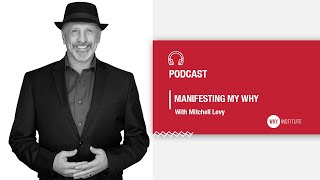
Dr. Gary Sanchez talks with Mitchell Levy about finding your why and using a book to establish credibility as an expert. Levy explains how professionals can become recognized thought leaders through publishing and understanding what drives their impact.
Chapters
This episode of beyond you'd why is brought to you by our why App. Head over to yinstitute.com to take the why app so you can discover your why today. Knowing your why is the essential first step in having the clarity to move forward faster and have a bigger impact.
Welcome to beyond you'd why Podcast, where we go beyond just talking about your why and actually helping you discover and then live your why. And so if you're a regular listener, you know that every week we talk about a particular why and then we bring on somebody that has that why so we can see how their why has played out in their life. And so today we're going to be talking about the why of challenge, to challenge the status quo and think differently. Now if this is your why, then you live outside the box. You don't believe in the norm or following rules or drawing inside the lines. It's far more natural for you to rebel against the stereotypical or classical way of doing things. You aggressively seek unique ways of approaching the world and finding solutions that no one else has considered. You like to create and innovate, especially in game changing ways. You have eccentric friends and eclectic tastes, a large variety of both. You may have diverse interests with little in common with each other. So as an entrepreneur you prefer to create a new market versus serving an existing market. You love to be different, think differently and challenge virtually anyone or anything that is too rote or conventional. So people with your WHY often accomplish amazing feats. When you say you want to change the world, you actually mean it. Pushing the envelope comes naturally to you. And so today my guest, he is a global credibility expert. He is a TEDx speaker and an international best selling author of over 60 books. As the AHA guy at AHA that he helps to extract the genius from your head in a two to three hour interview so that his team can ghostwrite your book, publish it, distribute it and make you an Amazon best seller in four months. He is an accomplished entrepreneur who has created 20 businesses in Silicon Valley including four publishing companies that have published over 800 books. He's provided strategic consulting to over 100 companies and has been Chairman of the board of a NASDAQ listed company. Mitchell has been happily married for 30 years and regularly spends time in Europe with his family and friends. With welcome to the podcast. Mitchell Levy how you doing?
Gary Sanchez Great to be here. It was fun to have you read the attributes that feel like me and they resonated really strongly. Very cool. That's awesome.
So for those of you that don't know. And none of you will know this, but Mitchell and I were talking and then he says, you know what, I'm not sure that I took the Y app and should I take that before we talk? And I was like, yes, for sure. That's kind of the whole point. So he went before our call just now and discovered his why, which came up to be challenge. And so Mitchell and I had had a previous conversation and I wasn't quite sure about his why, but now I'm very sure about his why. Because somebody with the why of challenge would kind of do it the way that you did.
Yeah, it sort of challenged the status quo. But, you know, it's beautiful. I've said this before in the green room, but I'm excited about who you are and what you've done and how you present yourself in a way that you've actually taken complex theories and thoughts and really made them very simple and now have practical ways to move forward.
See, that's exactly what I want to do. Because when you know your why, what you do has more impact and it has more meaning when it comes from the perspective of your why. So let's talk for a minute. You have a publishing company right now. Tell us a little bit about that.
The company is called Aha, that. And I'll tell you the value proposition or what we do. I call it the cpop, the Customer Point of Pain. We work with busy, successful professionals who recognize the need for more credibility. They want that credibility with a book and they have no time. Our solution is, imagine four months from today, we have ghostwritten, published, distributed, made you an Amazon best selling author and you've spent between five to 10 hours. So essentially we press the easy button for you to have the credibility you need so that your prospects can see you as a credible expert, can see you as a thought leader in the space that you play.
So would you say that the typical.
Way that everybody does it, I am very untypical? Oh, it's. You know what's been fascinating and for me personally, I hadn't quite found my why. So during the dot com days I found my why in it was to help companies, both the CEO and the VP of Operations, understand that there's this new technology company coming. And with that technology we're going to be able to talk to our customers. We're going to have to completely change the supply chain because we won't have to do the archaic things we've done in the past. And we now know what this technology is. It's The Internet. And so I was in Silicon Valley helping companies figure out how to do that. Then when the dot bomb came that the value of my why went to zero because nobody wanted to know about E commerce anymore. Or at least the value of the manifestation of my why. Right. Which is a different thing to my why. So I did a couple different things. And then in 2005, what I saw was the democratization of book publishing coming. And so between 2005 and 2017, I published over. And I use the word why and I'm sorry, I And we interchangeably. So it's really the team. We published over 800 books. But let's just make it the why. It's easier. So the I. It's easier. So I published over 800 books. And what I have to tell you is I was serving the wrong audience. So it took me a long time because I always thought it was, how do I make the process better? Right. So maybe this was the make better. So between 2005 and 2017, those 800 books, I was trying to satisfy me as a customer, which was, how does Mitchell Levy write a book quicker? And what ended up happening at the end of 2017, I did a TED Talk. And that got me thinking about the world in a different way. And I also found some empirical evidence that showed me the. That what I was doing was wrong. Can I tell you about the empirical evidence?
For sure.
So in 2016, I did a Kickstarter. The Kickstarter, it ended up hitting 250% of goal. And what it was is in the platform. Aha. That we have Aha. Messages. And what the Kickstarter was to build an automation tool so we could share those messages automatically on Twitter. Okay. And the reason we hit 250% of goal. This will be the hint for anyone listening is if you're doing a crowdfunding campaign and you want it to do well, you take a product or service you offer in real life, and you offer it at a discount. So what happened? One of the prizes was when somebody wrote their book, we would publish it. And so 20 people purchase that. So. And it was at a discounted rate to what we were selling it. So what was fascinating is I had taken the process of writing a book and narrowed it down to three steps and eight hours. I'm thinking, man, if 20 people paid us to write their book and it only took eight hours, one year later, I would have expected the number of people to have written a book to actually be 20. The shocker was it was two. So. And everyone had a good excuse.
So hold on, let me see if I got this right. So you took a process of writing a book and you took it down to three steps and 20 minutes.
No, three steps and eight hours. And eight hours.
Okay. Oh, 20 people. That's right. And so then you had 20 people that you expected to do it, but only two did?
Yes.
Okay, so it wasn't as desirable for them as you thought it would be.
No, actually, I'm not sure that's the right answer. What happened is everyone had a good excuse, okay? Either there was their parents were sick and they were taking care of their parents. They weren't completely sure about their why and it's changed a couple times, or. And then fill in the blank. There was always a good excuse. So what I ended up doing, Gary, is I ended up going to five of them and said, what if I wrote the book for you? So I'll just charge you my cost, I'll write it for you. One of them said yes. So now actually, I give everyone the benefit of the doubt. I say that three out of 20 actually wrote their book. But here's what it really says. 17 people couldn't find 8 hours in a 12 month period to do something they paid for that would be beneficial for them. So I, having talked to you, I know that this is not you, this is not me. That made me feel bad that somebody paid me for a product and they just never used it. Then I'm gonna make it worse. If that sounded bad, I'm gonna make it worse. So I have friends in the Internet marketing space. I have friends in the online learning space. And as I was talking to them about what happened, they said something that was so appalling to me that I said, listen, I gotta change my business. Here's what they said. They go, mitchell, do you realize that 3 out of 20 is a 15% utilization rate? That's fantastic.
And I'm thinking I'm in the wrong business. So what happened is that's when I realized what is my why in this particular case. My why is to put credibility in the hands of the authors I work with so that their prospects see them as a credible expert. And so in 2018, I built a writing school. And we've now graduated 50 people from the writing school. 2019, I've been continually deploying the school and actually bringing on other services. Because now that I know the Met and I say the manifestation of my why, now I know what I'm doing and I know the audience, I'm going After it's really easy to help the audience understand that. And so the thing is, if you pay me and we spend five to 10 hours together over a four month period and I give you your book and. But then you don't do anything with it, once again, I get paid. That's great. But if you're not using your book, it's not accomplishing what it needs to do. So what's happening is I'm now finding partners to play with whose their goal is to take you, the author or the thing called a book, or your credibility, your thought leadership, and put that in front of your prospects. And so I'm staying very focused on what I do well. And now partner acquisition and really easy because I've got a formulaic approach that gives you that thing. It's almost the same as getting a college diploma or a PhD, but you're only paying a small amount of money and spending five to 10 hours and you become that credible expert in the space because you have a book that's an Amazon best selling book. And Gary, I'm going to tell you the real purpose of a book from my perspective. And this is just painting the world in a different way. So let's say your company, you're a vendor, whether it's a consultant or a big company, and some other firm is thinking about using your services, well, what are they going to do? The typical way that they do stuff is they'll do Internet research, they'll come up with 10 potential competitors or 10 potential people in the field and then they're going to narrow it down to three and then they'll spend time extensively looking at the three.
By you having a book that's an Amazon best selling book, where the title of the book is the cpop, the customer point of pain you solve for your clients. What we typically see is that you'll be included. My clients are included as one of those three. So what is the purpose of the book? To be at the table when your prospects are actually wanting to dive into more detail of whether or not who's the right vendor to use or who's the right firm to help me solve this problem.
So I see it coming through loud and clear. You're thinking outside the box, right? You don't do things the typical way. You see things differently than the rest of us and you are able to create a market for that thing that you see differently, like being a thought leader, like being a credibility leader, like writing a book in four months or less, all of those things are different. Ways of viewing the world where. Which you've actually put to action and created so the rest of us can benefit from it.
Thank you.
Yes, yes, thank you.
Yeah, it really is. And you've developed better ways to do things by thinking outside the box. And that's a gift that you have that a lot of most of us don't have. Right.
It seems some of the stuff I talk about often just seems so obvious to me. And the reason my company is called Aha that, the reason that my incorporated company is called Think Aha is just simply that when I say stuff, people go, aha, I got it. And then what happens is when you actually hear a good Aha. By the way, these are not like once a year or twice a year, you have an aha moment. We have aha moments every single day. It's how we determine to receive and process them and transform who we are that determines how effective that Aha moment is for us.
Nice. And so you take one of the things you talked about is helping thought leaders get their message out to the world.
Right.
And so what do you define as a thought leader?
That's a great question. So the interesting part is that's changed over time.
Okay.
So in the old days, and what I'll say is, between 1920, the height of the industrial society, and today, we've only come 50% of the way towards where we're going, which is the social age. So in the industrial age, our thought leaders were brought to us by the recording companies who were telling us what musicians we need to listen to, by the broadcast media who was telling us what actors we need to watch on the three TV stations, and by the publishers who were telling us who the consultants were. We were going to read their books and then purchase their services. So what happened was it came from a small number of people who said, these are the thought leaders. These are people who are absolute experts in their space. These are the people you need to listen to because they could solve your problems.
So somebody filtered the information that we got, and those become our thought leaders.
Absolutely. So we got it by the people who could make money. So, you know, the broadcast, they want you to watch tv, they want you to go to the movies, you know, the artists, you know, they want you to go to their concerts, they want you to actually buy their albums. Right. And book publishers, they want you to buy the books. That's how they made money was they bought books. So they put a thought reader out there so that. And they told, this is the one person. So everyone Buy their book.
Got it.
Now that everyone has a camera, now that everyone has a microphone, what happens is that concept of thought leadership has really been merged into something completely different. And what I want to say is I use the word thought leader and the word recognize expert synonymously. Because what happens is, if I want to find my why, well, who am I going to talk to? Well, I could talk to the guy who sort of is cloned as the person who invented why, or if I talk to Gary Sanchez and spend money to get the app, you're going to do it quickly, efficiently, and you've made it available to everybody. I'm going to talk to you, right? And what happens is you now become my thought leader in understanding why, because you're my recognized expert. I don't care if you consider yourself a thought leader or not. You are, by the way. But what happens is, if you're the recognized expert, I'm going to go to you and I'm going to send people your way. So if you think about anyone who has, who has a service, right. What happens is, most of the time in today's day, word of mouth marketing is one of the best forms of marketing possible. So if you have your service and people understand what the service is, your friends are going to recommend you. Pretty obvious what happens if somebody has a problem. They don't have any friends who knows how to solve it. They're going to go to their friend Google, they're going to type in how do I solve this problem? And if what happens? Your book pops up because that's the title of your book and they see it's an Amazon bestseller. And then what we do on Amazon, not only do we have the Kindle and the paperback and a hardcover, our books, by the way, have color on the inside. Our books are comprised of aha moments. But we also have the audible book. So they see your page, it's focused on their C pop, their point of pain, and you've got all those elements. And then if they actually receive the book, it's short. So by the way, I'm going to redefine a concept of a book for you. We talked about what a book does, right? The book is at. Oh, and I will come back to thought leaders. Sorry, I'm traveling down a path. I'm rat holing. I'll come back.
No structure.
So what happens with a book is your goal of the book? If you want to be at the table, one of those three that we talked about, your goal of the book is to demonstrate and for those listening, I'm just going to. That's a hardcover book. I'm knocking. Doesn't that sound like it's got a lot of content in it? It does. And what happens when you look at a book is you look at the COVID you look at the inside, and, and a lot of times you see these books with 25,50,000 words in it. They're really dense. And you buy the book and then you put it in your bookshelf and when you go to open it, it's so painful to read. You never read it, but because everyone else bought it, you bought it. And then you read the synopsis and that's what you talk about. What I do is our books, for a formulaic approach may have seven sections. I call them sections instead of chapters. And inside each section is a picture. It's a summary of the section. It's a QR code that points to a video where the author's talking about that section. And then the section itself has aha moments. There might be 10 or 20 aha moments, short sound bites that capture somebody's attention. So now let's go back to what you said.
Hold on one second on that. So what, what you're saying is, who says a book has to be 20,000 words and 150 pages?
Exactly.
Yeah. Who says that? I don't think it has to be that way.
Well, what I say is I like books which are 120 pages because I just, I like the spine size, but it doesn't mean the page has to be full of stuff.
Yes, right.
So what I wanted to do is you started this rat holing conversation. I say, what is a thought leader? I did a book and I did a TED Talk, and it's called Being Seen and Being Heard as a Thought Leader. So if you googled Mitchell Levy TED Talk or if you googled Being Seen or being heard as a thought leader, you can see my book, you could see the TED Talk, and I want to read a specific aha message from the book because you could then see the power of an aha message. But more importantly, it will also help you understand what a thought leader is today. So I'm going to turn to the book and I'm going to share aha number four. And what aha number four says is good thought leaders are at the top of the mountain. Great thought leaders are at the bottom of the mountain, helping others climb up. So if you think about that, and by the way, I've been on 180 podcasts in the last 18 months. And often when people say, tell me about that. And I read that we could spend a half hour or an hour talking about how servant leadership or how thought leadership is more about servant leadership. It's more about having a community that follows you because they like who you are and they like what you say. And to have a community follow you. The best way I think about a thought leader or a recognized expert today, I think about the movie Miracle on 34th Street. Remember that one?
Yeah.
Kris Kringle is sending people outside of Macy's to other stores if the other stores have something better, but they're doing all the rest of their shopping at Macy's. So if somebody comes to you and says, what is the best way to solve a problem? Let's say you're a tax accountant and they come with a unique way that you just don't serve as this type of company, you're much better off by saying, you know what? I don't do what you do. But here are three people you can go to. What's going to happen? That person's going to recommend you to others. Whereas if you took on the client, you did a bad job, you're never going to get recommendations. So what happens is as a thought leader, as a recognized expert, your job is to understand the space you play in and know the other players in the space and be able to share who they are and what they do. What that means is you don't need to come up with original content to be the recognized expert in your space. If you're well versed in your area and you could talk about other people playing your area, that is what happens is people at the end of the day in today's world, because we have access to the video and camera, we want to talk to our recognized experts directly because we're all unique individuals and we want the answer that's relevant to us, not the answer that's in the book that applies to millions of people.
Awesome. Yeah, I see that. So when you use the word expert, an expert. How do you define expert?
It's somebody who's. I could go the dictionary definition. It's really somebody who's recognized with expertise in their particular field.
To me, it almost expert.
I use expertise in the definition. Yeah, that's really bad, isn't it?
Okay, well, you know, I kind of think about it as somebody who knows more than a little bit more than I do, and they become an expert.
That's a good definition, too. I'm going to, you know, since I'M by a computer. I'm just going to go to my friend Google and look@dictionary.com and come up with the, you know, exact definition that they have. It's a person who has a special skill or knowledge in some particular field.
That you don't have.
Well, that's yours.
That's mine? Yeah, that's mine. I just think of an expert as somebody, you know, if I'm looking for an expert to kill the bugs in my house, that doesn't I just call the bug man, Ernie, the bug man who comes over to my house, and he's my expert bug guy. But that doesn't mean he's the world's best bug killer. It just means that he knows more than I do.
Ding, ding, ding, ding. Absolutely. And by the way, let me even reframe that. Let's say, you know, as much as Ernie, for some strange reason, that's a hobby of yours.
Yeah.
The question becomes, do you want to actually execute the plan he's going to execute to debug your house yourself, or do you want to hire somebody else to do it? Because those are choices we have. We have access to almost any information we want in the world. We have access to people and experts who could solve our problem. So what it comes down to, Gary, is time and money. Do you want to actually go to Home Depot, buy all the equipment you need, execute on the plan to get the bugs out of your house, or do you call up Ernie and say, hey, Ernie, do this for me. And so it comes down to not just you want to find somebody who's good at what they do and they understand what's going on and going to save you time because your time is more efficiently applied somewhere else and has.
The ability to do it. Yeah. Awesome. So it sounds to me like you're looking for somebody who's looking for a different way to get their expertise to the world through creating a book that will be a best seller and allow them to do it in a very short period of time.
I want to say yes, but I'm going to modify that slightly because it doesn't have to be a different way. It just.
You create regular books as well.
Well, by regular, what I mean. Well, in terms of ghost writing, we really focus on the Aha. That format, because that's what I've trained my people to do. Oh, so that's what you meant, a different way. Yeah, we're creating a book that makes it easy for the person to demonstrate their credibility.
Yes.
And. And by the way, what what's very cool? What's not so obvious? If you have 140 aha messages. If you don't know what to say on social media, you open up your book to one of the pages you read, you turn on your camera, you read the aha message and then you talk about it for a minute or two. So I'm also giving 140 days of content. Are you doing a keynote speech? And the topic wasn't made. You pick three or four aha messages from your book. That's a keynote speech. Right? So it's in essence we're taking, if we go back to the word thought leadership, we're taking your thought leadership, dissecting it into the most atomic form. Aha moments, which you then piece back together to share with your audience so they recognize you as the expert.
I see. I love the way you're doing that. I mean, it really seems like it allows more people to get their message to the world in a way that's not scary. You know, the thought of writing a 150 page book is overwhelming for most everybody. On top of all the other stuff they're doing, on top of barely being, you know, their head is barely above the water, they're paddling like crazy and oh, here, why don't you read 150 page book? Like, holy cow, when am I going to do that?
That's a great thought. And here's what I realized when I realized who my audience was. This is where it's very interesting is it's not the people who want to write their books. So there's people in the world who, you know, many people want to write the great American novel. They've done great things in life and they want, they want to write. And what happens is I'm more interested in those people who want to serve their community. Because serving your community is not writing a book. Serving your community is being in front of your community and helping them. And so it's a time and money thing. It takes typically for 120 page book or 150 page book, it takes an hour page. So that's 120 hours if you're going to publish yourself. We spend about 200 hours. That's 320 hours. So what I do is going to take you 10 hours. So it's actually a place in the world that you can buy time. Now if you take that 310 hours and you do nothing with it, you squander it. It's not as relevant. But now here's what I'll say to you, Gary, if I'm putting in your hands after four months an Amazon best selling book that represents who you are and what you do, and, and you realize that you have 310 hours of your life you didn't have before. And you use those 310 hours in a way that you're getting that book in the hands of the people who need to see it. Think about how much grander you will be and how much grander your business will be.
Awesome. So, Mitchell, why do you care about this? Why is this important for you? Why are you doing this right now? There's a million things you could do. You've done a lot of things. You could be on a lot of different paths. Why are you on this path?
Well, you gave me my why. Yes. So when we first talked in the preliminary interview, I thought it was make it better. Right. But that's too constraining because that implies living in the world we live in today. So what I just happen to be particularly good at, and I always think everyone else is good at too, is I could see trends. So being in Silicon Valley, I could see what was happening with technology. So I, you know, I was on the Internet before the first web browser. So at that stage, because I was working at Sun Microsystems, at that stage, nobody knew. A very few number of people around the world knew what the Internet was. And as the technology started to become more proficient, I could see where it's going. And honestly, it's exactly where. I mean, there's some things more, some things less, but it's exactly where I saw it back in the late 1990s, the early 2000s. And so now I'm seeing what's happened with the fact that everyone has access to a camera and a microphone. And what does that actually mean? Well, and here's the other thing, and one of the things that hasn't happened is a great opportunity is the Yelp. And the Yelp type scores, they're not even close to where they need to be. Right. And so this is something that will happen over time. And imagine that you and I get introduced to each other and you decide whether or not you want to interview me. Well, there should be a Yelp score that says, all right, Mitchell has interacted with the guests of their show in this sort of way in the past. So imagine that. Imagine going to a cocktail party, you put on your glasses and you're looking around the room and you're seeing a score, and it's a personalized score. Of how people in the room have interacted with other people who look like you, but how they've interacted in the past. And you see whatever the score is, you're seeing two or three people who rank really high and you go, I gotta meet these people. Well, that technology is eminent.
Yep.
And so the question becomes, what do you do today to make sure that your ranking is higher? That goes back to the aha message I gave before you. You need to be a servant leader. You need to help those people in your community do better what they do. So for me, I guess I was diving into the weeds. I see the world where it's going to be 10 years from now or 20 years from now, and I see a path. And I'm just providing tools that help those people get to the path better. And Gary, I have to say, when I was doing the e commerce stuff, the problem I had at the time is the way I positioned myself and who I was. I knew that I had an end life. I didn't realize it was going to be during the dot bomb. I wanted another couple of years. I was making a ton of money. It was beautiful. So I realized I had an end life of what I was doing, what I'm doing now. I've set up this infrastructure in this approach that this is going to go along with where society is going. And it doesn't have that same end life. It'll continue to morph and do more over time. And so why do I do what I do? I. I see where the world should go with a positive set of lenses. There's a whole lot of negative locations. And you've seen enough science fiction movies to know where that is. So I've seen where the world can go with the technology we have. And my job is to put the tools in place so that individuals who want to be successful tomorrow know some of the directions, some of the things they can do to help them get there.
Awesome. How would you say that, starting your sentence with I believe? What is it you believe? I'm listening to this. I hear a lot about what Mitchell is all about. I see what he's doing. Tell us what it is you believe about getting your story out to the world. What you believe about writing your book, what you believe about getting your message and becoming an expert, a recognized expert. What do you believe about that?
I believe that every human is unique, Every human is beautiful. Every human has an opportunity to serve others. And I believe I've created an approach and structure that makes it easy for them to communicate their message in such a way that they attract those people that need to be in their community and then they could spend more time doing what they do.
Love it. I love that. That's perfect. That needs to be on your website by the way.
Thank you. I'm going to come back to this recording and put it up there.
So I know we're kind of running out of time here, Mitchell. So if people want, they're listening to this and they say, you know what, I need to talk to this guy. I need to find this guy. I got my idea. I've always wanted to write a book. I don't have the time but I want to be known as a thought leader so I can actually help the people that are looking for me. How do they get ahold of you?
You know, it's a single URL that I'll send you that. It's my name, Mitchell levy360.com so it's M I T C H E L l e v y360.com as soon as you get there, you can watch a two minute customer testimonial to see how we've helped others. You can connect to me on the social media platforms that are appropriate and if you're interested, you can then schedule a chat and book time directly on my calendar. So that's Mitchell Levy360.com awesome.
Hey, thank you so much for being here. This has been fascinating. I love what you're doing. I know you're going to have a huge, you're already having a huge impact and you're going to continue to in the future. So Mitchell, thank you for being here.
Kerry, thanks so much. You're an amazing, amazing human and I'm looking forward to watching you and seeing where you grow as well.
I appreciate that. Thank you.
It.
More from Dr.




Women In Leadership: A Need For A Greater Systemic Change With Belinda Clemmensen






