Marketing, Media And The WHY Of Contribute With Travis Brown
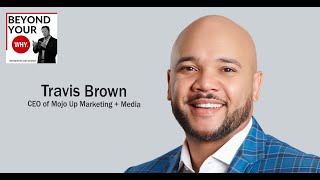
Conversation between Dr. Gary Sanchez and Travis Brown (CEO of Mojo Up Marketing & Media) about Travis’s life journey and how it shaped his purpose (why=Contribute). Key points: Travis grew up in Lafayette, Indiana, used sports to rise from poverty, attended Illinois State then Purdue (became a two-time college dropout), entered Amway and then a mortgage career, transitioned to motivational speaking, and ultimately founded Mojo Up in June 2019. Mojo Up is an MBE-certified, Black-owned full-service brand marketing agency that focuses on authenticity, storytelling, brand blueprinting, and diversity to help clients articulate their core and attract customers/talent. The firm weathered the COVID-19 shutdown after hires on March 1 (video/creative leads), pivoted to virtual work, and by the time of this recording had ~10 full-time and 3 part-time staff and a 5,000 sq ft office. Contact: mojoup.com and travis@mojoup.com. The episode emphasizes personal development, authenticity in marketing, and the practical value of storytelling.
Questions this video answers
Fishers, Indiana (near Indianapolis).
June 2019.
On March 1 (year implied 2020) Travis hired a video production manager, a CMO, and a head of graphic design; 18 days later COVID shutdowns occurred.
About 10 full-time employees, 3 part-time employees, and a 5,000 square-foot office.
Website: mojoup.com; Email: travis@mojoup.com.
Chapters
Welcome to beyond you'd why Podcast, where we go beyond just talking about your why and actually help you discover and then live your why. You see, we believe that knowing your why, that driving force behind every decision you make and every action you take, is the essential first step to really knowing yourself. It allows you to move forward faster and have a bigger impact. If you're already a fan of the show, then you know that every week we talk about one of the nine whys, and then we introduce you to somebody with that why so you can see how their why has played out in their life. This show will be more powerful for you if you've already discovered your why. If you still need to do that, head over to whyinstitute.com and discover your why today. It'll only take you about five minutes. Now let's meet today's guest.
So today we're going to be talking about the why of contribute to contribute to a greater cause, add value, have an impact in the lives of others. So if this is your why, then you want to be part of a greater cause, something that is bigger than yourself. You don't necessarily need to be the face of the cause, but you want to contribute to it in a meaningful way. You love to support others and you relish successes that contribute to the greater good of the team. You see group victories as personal victories. You are often behind the scenes looking for ways to make the world better. You make a reliable and committed teammate and you often act as the glue that holds everyone else together. You use your time, money, energy, resources and connections to add value to other people and organizations. So today I've got a great guest for you. His name is Travis Brown. He is the CEO of Mojo Up Marketing and Media. Mojo up is an MBE Certified Black Owned and Minority operated full service brand marketing agency that is made up of a diverse and talented team of marketing professionals and creatives. Their focus is to tell the story, shape the brand and guide the marketing future for their clients as they make their greatest impact by using their greatest asset, their own authenticity. Travis, welcome to the podcast.
Well, thanks for having me, Gary. I am excited to talk about how we make this impact in today's world.
Yeah, this is awesome. So where are you now? What city are you in?
So I live in Fishers, Indiana which is just right outside of Indianapolis here in the great area of Indiana. So it is starting to go from fall to cold and we are trying to gather ourselves here.
All right, so I have been to Indianapolis I think twice and something stood out to Me, which was the size of the potholes in the street. And I don't know if that was just when I happened to be there or what, but I had never in my life seen potholes like that.
It's amazing that with all the technology and everything that they figured out in this world, they have not figured out how to fix those potholes to last longer than one season. It's a heck of a business. I wish I was in that paving business. And because you never run out of potholes to fill.
But, you know, for people that have never been to Indianapolis, like, explain the size of those potholes.
I mean, they're like, you can step your whole foot in it, you know, it's. It will ruin your morning on the way to work because if your car hits it, you're on the side of the road calling your aaa, trying to figure it out. So they are significant for sure.
At least where I was, it felt like they were, you know, like the size of where I was at. They were like the size of a trash can or so. They were huge, giant. I was like the whole side of the road was gone. So anyways, that may have been just when I was there, but. Okay, so let's go back in your life. Where did you grow up? What were you like in high school? Travis?
Yeah, so I'm from Lafayette, Indiana, home of the Purdue Boilermakers. And so I grew up in that era, but, you know, in high school I was a three sport athlete and know, I would say 12 varsity letters, baseball, basketball and football. And my life was consumed with sports. I think it was the first place that, you know, I was able to get outside of our family's poverty. The fact that I, you know, grew up with just me and my mom, primarily to some of the dysfunctional things that were happening in our family. But sports gave me a way out. It gave me a place to excel. It gave me a place for people to see me as something, you know, that maybe that I, that I wasn't off the court. And I like that. And so spent a lot of time diving into sports and I was pretty good. And so it created a lot of opportunities and probably a more equal playing field for me, you know, as I navigated through high school.
Okay, so graduated from high school, then off to. Well, first of all, let's stay in high school for a minute. What were you like? What were you like as a friend, as a teammate? What would people have said about you back in high school?
You know what was really cool is that when you see People in your adult life that say you stood up for me or hey, you sat by me or you did something, you know, because of my athletic status, I had a level of influence solely because I was an athlete, you know, wasn't a very good student. But I still had something on the inside of me that just, it never sat right to watch people make fun of other people. Now I'm old, I'm 46 years old. So this was way before we talked about bullying the way that we do, you know, in today's environment. But you know, I was a kid who was willing to help people and do things that were different because I felt like I was different. You know, I'm a biracial child of white mom and a black dad and went to a school of 1500 kids that there was only like five people of color in that entire school. So we were different. And then you stack on poverty into that scenario. And so I always kind of felt like that outcast outside of sports. So I was the kid that just wanted to see everybody be, you know, be good and do it. Now I was ultra competitive, you know, so. So that probably drove some of the negative side of me just always competing, you know, every way, shape or form, unless it was with my grades because then it didn't compete with those. But, but outside of that, Gary, you know, I think I was a kid who, as people see me now in my adult life, you know, it's been great to hear him echo that. Man, you've always kind of been like that. Always been the motivational guy, always been that, the helper.
Yep, there we go. Right in line with contribute, right, what we were just talking about. So, okay, graduated from high school, did you go off to college?
I did. I accepted a college scholarship to play Illinois State, where I was going to play baseball and football. Found myself into an environment that wasn't conducive for me. And so I one night just packed up all of my stuff and quit in the middle of the night. Full scholarship, you know, going to school for free, living out what my dream was. And then before I realized it, there I was like, you know, trying to figure out what to do next in my life. I got a call from Purdue University, I said, hey, come walk on, we think you can still play here. So I did that. And then I did something that not many people have done in their life, Gary. I became a two time college dropout.
And so, you know, when you do that. So now you have no education. You know, I'm late 90s and you're trying to find your way. I was working at the pawn shop, and I remember asking myself this question, like, how did I get here? I'm not supposed to be here now. Maybe as a statistic I was, but not in my mindset. I was supposed to do something bigger and go on and to represent my family in a way that we've never been represented, which was a college graduate and a success. And, Gary, I was at that crossroads where I think every single person gets to in some way, which is, how do I get out of here?
So what did you do?
So, interestingly enough, I connected some people at the time that were in the Amway business. And the one thing that that business did for me is it helped me understand the value of continuing education. Tapes, books, learning, self development, empowerment. I learned how to stand in front of people and speak. And it fueled me to go, you know what? I don't have the traditional path of everybody else, which I never did, but I can still be something. And so it started me down the path of going, how do you help other people get what they want? How do you help motivate people to see there's more in life? How do you. How do you take your situation and turn it around? And that kind of unbeknownst to me, became kind of my life commitment to not only, you know, helping myself get into a situation that I wanted, but to be in, but helping other people.
And so through Amway, you got into personal development, personal growth.
Yeah, because, you know, that, that, that, you know, back in the late 90s, like when I was involved in that, it was all about listening to tapes, you know, dating myself, but it was like tapes, and there's just education. It was a personal development. How could you get better? It was reading the thinking to grow riches. And it was reading, you know, the power of thinking Big. And all of these books that I'd never wanted to read, ever. And now here I was, 19, 20 years old, just consuming all of this information and content, and it really set me up for really who I am today.
Isn't that fascinating when you think of. It is so common to hear the turning point for people that are not on the right path to getting on the right path, because being personal growth.
Being a book, I think it's either a book, you know, it's a connection, a person that does it. It's now, and nowadays it's a podcast, you know, or it's a social media clip that you just. You're scrolling and you watch it and it Touches you right? Back then we didn't have some of that stuff. So it was that book or that person who took a few minutes to just invest in you and your thought process and give you that good old, like, you can make it. It's your choice.
I love it. Okay, and so you start with Amway. How long were you with Amway and what happened to that career?
You know, it's funny because I just knew I was going to retire a gazillionaire through that business, and it didn't happen that way, but it led me to the connections that got into the mortgage business. And so at an early age, 21 years old, I was in the mortgage business, which I had a 10 year stint in that business led me to even starting my own mortgage company, which I sold and then became a VP at a large mortgage broker in Indiana and across the country. And it was at that point in time in my life that I was taking that whole personal development, the training acumen that I developed. But then I had to put my leadership style and stuff to the test. And when I was 25, 26 years old, leading 25, 30 people in an organization in a sales climate, you know, that kind of fueled this desire to really kind of go empowering people, but also creating opportunity for myself to make money like I'd never made in my life before, which is tough to handle. And there was some negativity with that as well, but it started me on that path and down the right direction.
So you went from Amway to mortgage. You were there for 10, 15 years, 10 plus years. And then what happened is this right when the mortgage business crashed or.
Yeah, right before that. I got out. I got out in 2007. And the reason why I got out was because I loved sales training. That was kind of my thing in the mortgage business. And I took a bunch of my guys to this sales training and the guy tried to bring people up in front and kind of embarrass them to teach them how they need to do sales training. Well, my guys were looking at me like, you got to go up there. So I go up front of my guys, I shut the guy down and we all kind of high fived and laughed about it. But it was that day that I realized, like, that's what I wanted to do. I just didn't know that that was possible and how to do that. Right. And so that's what led me to launching my motivational speaking career, which I did spend 10 years collectively and even today on the speaking circuit, traveling Entire country. It led me to a fun space for five years, did a passion project on anti bullying, became the most booked anti bullying speaker in the. And all of that was still part of who I am on helping impact.
People in their lives, continually helping others do better, pushing their limits so that they can have a bigger impact. Right.
And I think that's the warm fuzzy version of that, which is all true, but I was also battling that entire time, like, who am I? And you know, can I do this? And you know, the imposter syndrome that people often talk about, like, yeah, I'm in these rooms, I'm doing this, but I'm struggling financially, you know, different times. You know, I was working so much in the mortgage business at the time that, you know, cost me my first marriage. And understanding that, yes, you can have all this money, you can work yourself to death, you can, you can work in a bad culture, you know, but that has its life cycle. And I remember, you know, kind of going, well, I'm not the pawn shop anymore, but I'm actually at another place in my life where I'm going, how did I get here? Because this isn't where I wanted to be either. But I didn't know because the money which I was chasing alongside of this kind of burn to help people come along with me was, was reaching a boiling point. And now that was a tough time in my life for me to recognize, like, who are you? And really, when you grow up, grow up, who do you want to be?
So because you found success in business didn't get you, make you immune to all the typical problems everybody faces?
No, I mean, I think it just ran me faster right into them. You know, what's more dangerous than a 25 year old making several hundred thousand dollars a year who's never had money, who came from poverty, never saw his parents handle money, and now you go through a new rich phase where you're just buying stuff and, and you have cars and houses and Rolexes and money and stuff, because that's what you thought was success. And you've chased it, now you kind of want it, but you left so many bodies and baggage behind because you did it. I don't say the wrong way like it was unethical, but it wasn't family centered, it wasn't others centered. It was like I was helping people, don't get me wrong, to get what I wanted and to get me to a point where I was successful. And I think that's where a lot of people chase success. And, you know, I Think Zig Ziglar may have had the right mindset, which was, hey, if I can, you know, find help, as many other people get what they want, then I'll get what I want. But that gets misconstrued a lot to manipulation to get you to do what I need you to do for my own benefit.
Right.
And so before you realize that you're in a spot, you're making money, but you've had to sacrifice literally everything that you said was actually valuable. And people do this all the time, Gary. They say my family's my number one priority, but you don't see any resemblance of that. And growing up, you know, my father. My dad was a great guy, and he was a better dad to me than his dad was to him, but it wasn't very good. My mom was doing the best that she could, but I didn't have a lot of those examples of understanding, you know, money in its place and people and its place and how to save and value and do things that I'd never been taught. And there I was, just short of 30 years old, going, this is not what I thought it was going to be, and having to make another major decision at that time.
What was the turning point for you? Take us into that moment where you said, man, this is not it.
Well, it was right at the crossroads. Kind of like after I talked about that training incident where I had to decide what did I really want to do? And I knew that the mortgage could provide money, but it wasn't fulfillment for me. And so I left that behind to go chase my dream of being a motivational speaker. And it was a long, hard road of going from making a lot of money to trying to figure out how to build a business, how to learn the skill. I was traveling all over the place. Now, I was speaking and training, but I was developing something, and I was creating an opportunity for myself. And before I realized it, I'm like, this is where I was supposed to be. So all of that failure, and I'm a big believer that failure gets you places. You know, all of those setbacks, all those hard knocks, all those poor decisions has all brought me to this place that I get a chance that, Gary, most people don't get, and that is to rebuild it the right way.
So what was the best part of being a motivational speaker and what was the worst part of being a motivational speaker?
Well, the worst is easy. It's the travel. I joke with people and I say, listen, you don't pay me to speak. You pay Me to travel.
You come to my house on a Saturday afternoon, bring your whole team, show up on my back step, and I'll talk to you for 30 minutes for little to nothing. But if you want me to leave my family, get on an airplane, travel, stay overnight, deal with TSA and all that stuff, and be gone, you're paying me to travel. So that was definitely the worst part. And then just the loneliness of that, too, because it's not that glamorous. You know, I can think of all these wonderful places that I. That I got to go by myself without my wife or my kids. So, you know, that. That was never glamorous. But, you know, the most beneficial thing, I almost think almost every motivational speaker would probably echo this is it's about the one. What you quickly realize is when I walk into a room, an audience, and there's. Whether it's thousands of people or hundreds of people, and you're giving everything to it, you know, you can't change everybody. You know, you can't inspire everybody, no matter how great your message is. But there's always a one. And when they come up to you afterwards or, you know, down the road several years, and they were the one that, you know, in my world, they were thinking about suicide. They were thinking about, you know, walking away from a marriage. They were thinking about, you know, how could I go on? They were thinking about, they're not good enough, not valuable enough. And through my transparency of my own failure, encouraging people to do what they never thought they could do became this badge of honor for me to say, you know what? God didn't do all that stuff to me. He was just trying to do it through me so I could help other people on the other side. And once you realize that, oh, like, you feel so on fire for purpose that it just drives you to leave your family, get on those planes, and go do that for years.
And then what? Okay, so you did that for, say, 10 years. And then what was the turning point to say, okay, I'm done doing it, being a motivational speaker. Off to my next thing?
Yeah. So I have three beautiful kids, and I have an incredibly beautiful wife who loves and have supported me through all of this in the last 12 years. My oldest, who just turned 21 last week, and she is in college, so she was getting to be late middle school or freshman high school. I have two Littles that are now 7 and 9. And I had this epiphany one day, and this is really about my oldest, more so than my two Littles. But I am like, you know what? I don't want my kids to look at me and be like, my dad was amazing. He was out there trying to save the world, but he was never home for me. And that just hit me. And she didn't say it that way, but because I had to leave so much to go help other people and to speak. And I became enamored by the fact that, you know, I was on CNN and headline news and speaking everywhere, and I'm getting to do a lot of cool things, making an impact. But the one thing I said, when I rebuild this, I'm going to do it right. And so I just felt like there was too much sacrifice for my family. My wife was feeling like, man, she's doing a lot of it on her own. She's an executive herself. And so it was a crossroad, and I was tired. I was wore out. But my challenge was, I know this is part of my purpose. Like, I've got too many people's lives, hundreds and hundreds and literally thousands of people's lives that's been changed. So how do I stay committed to that but not have to leave my family? And so the one thing you learn quickly about the motivational speaking business is that you better be a really good marketer or you will starve. Because it doesn't matter how great your message is, is if nobody hears it or knows you exist, they can't book you, can't give you a check, and all of a sudden, you're broke, and you can no longer do what you're purposeful for. So I had developed a lot of marketing skills, had hired coaches, so I decided I wanted to transition out of that. A couple of buddies had a mortgage company, so I went back to the mortgage business, used now my marketing skills to help them build a division that was super strong in the Indianapolis market. So I didn't have to travel very often. I got to do what I love, which was still helping people and helping stor, and I got to be local. So it was kind of like a perfect storm coming. Like, okay, this is why you're supposed to be here at this point in your life.
Oh, awesome. And then, is that when you went on to start Mojo up?
Yeah. So I did that for about three years working for them and decided, man, I wanted to really tell stories. And so In June of 2019, I left and started MoJo Marketing and Media. Now, six, six, seven months later, we were right in the middle of Pandemic, which, you know, I had to shift and try to Figure out what does that mean? We had a video team and I had hired a. On March 1st, I hired a video production manager, I hired a CMO and I hired a head of graphic design on March 1st. And you know, 18 days later, we were all shut down. I was trying to figure out how to, how to make this all work.
And how did you make it work?
Well, I think, I think probably the word outside of COVID for 2020 and 2021 was pivot. You had to learn how to pivot. You know, you had to say, okay, well what can I do? And we did a bunch of virtual stuff. And you know, I think at that time I still was speaking some, but not very often. I was speaking to sell our company, speaking to pick up some check while I was building the business a little bit. But, you know, having to go back to virtual and, you know, I learned how to build strategy for people. And people were, we're trying to figure this out, like, what do I do and how do I pivot? And so we became a great arm for so many people to do that. And so 2020 was tough. 21, you know, kind of got things rolling. Now you fast forward. You know, I have 10 full time employees, I have three part time employees. We have a 5,000 square foot office here. We work with major brands to build and market them. And it's just been a journey that, you know, when I look at it, Gary, it's that all those things that I did all those years were just building blocks for what I do now, which is to help people tell their story through authenticity so that they can make their greatest impact. And every person you meet is different. But whether it's a nonprofit, it's a corporate entity, it's the city, they all have a purpose for existing and we get to be a part of telling that story.
So when you say you help people tell their story through authenticity, what do you mean by that? Give us an example of what you mean.
Yeah, so when you sit down with somebody, a lot of times It'll take people 20, 30 minutes to try to get out. Like, what problem are you solving? What really makes you unique? You know, what's your proven process? You know, super important to really articulate that, that, that brand value, if you will. And so we sit in a room, we have a thing called a brand blueprint where I sit in a room and I figure all that out for people. Literally figure it out, what that problem solving statement is. And that's all the content that we create that we use in Marketing, that use. We help people understand it, develop it, so they can use it to grow their business. And whether you're a coach or an author, entrepreneur, whether you're at the corporate realm trying to figure out the DEI space, all of them are still struggling with that same thing, which is, who are we? And when I sit in a room with people, it's easy for me outside. And it's just part of my own gifting, right? I would say God gave me two gifts. One, standing on the stage and speaking to people. On the other, sitting in a room and figuring out how to build a strategy that helps people. But when you put it together and people hear it, then they see the light bulb just kind of just goes off. They're like, I can say it that way. I've been struggling to share that. And I think the other piece of that is, see, as a speaker, the more authentic you are, the more vulnerable you are. The more people love you, the more they engage with you, the more real that experience is. And I learned that speaking. So now I'm working with brands, and not just personal brands, but companies, to go, hey, let's unpack your authenticity so people can actually see how amazing you guys actually are.
And, you know, when we look.
So for those of you that are listening, that know the yos, you know, Travis is why is contribute, but is how. How he does that is by making sense out of complex and challenging things. And ultimately, what he brings are simple solutions to help people move forward. So it tells us you want to help people have a bigger impact by helping them understand who they really are and then deliver it in a simple way where other people get it. Does that feel right to you?
100%. Because the brand identity. So in our world, we put brand in front of everything, right? Just makes it sound better. But brand identity, it's like, who are you at your core? You know, we have core values, as do many people, but most people don't really operate within core values. The reason why they're called core is because it's supposed to be who you are at your core. You hire to that, you fire to that, you reward to that, you punish to that. Everything is really about that and building a culture, right? Well, some people have done a good job at that. The world just doesn't know it. And so therefore, because the world doesn't know it, they can't monetize it financially, and they can't build culture that can do bigger and better things because people aren't attracted to that. And so that's A real thing that companies are struggling with is how do we do that? How do we find that space? And especially now, where we help companies a lot is in attracting talent. There's a war on talent, as they say. Your story is paramount to be able to attract that good talent. So we just touch it in a lot of different ways.
Honestly, Gary, how important is it to have the words to be able to articulate what makes your authenticity?
Probably the best way I can explain that is, first of all, it's super important, almost essential. And I know that because when I use the wrong words with my wife, it doesn't go very good, right? And I'm like, but that's not what I meant. And she's like, well, that's what you said or you didn't say, right? We all know that context is, if I say it well, people resonate with it, and they. They want to be a part of that. And when we don't say it or we say it wrong, you get the opposite when people begin to repel to who you are or how you represent. You know, one of the things I learned in my. My tenure of growth was that I don't believe you should compartmentalize your world. This is my own philosophy. That means the same Travis Brown you're getting on this podcast, the same one that's going to walk right out into his office with my team or go to have dinner with my wife and my mother, my kids and with my buddies. Right. I'm that guy all the time. Reason why it's so important is because in 2022 and 2023, in this area, the era that we're living in, the difference is companies and people don't want to buy companies without knowing who they are. Like, we will not buy something because of what the company stands for, or we'll buy a lot more because of what the company stands for. So that's why in today's environment, being able to articulate what that is is so important to the success or failure of your business.
So you walk people through a process to help them understand what they stand for at their core and then help them articulate it in a simple way where others get it quickly and can make a decision whether, I like you, I don't like you, I want to do business with you, I don't want to do business with you. I resonate. I don't resonate.
Yeah, exactly. And here, let me. Let me give you a little. Little clarity there. I think most people already know who they are. They're living it, but they just don't know how to articulate it in a way that other people go, oh, that's what you do. Oh, like, that's who you are. I had no idea. Like, there are people sitting next to you in rows in church or in baseball and softball games, you know, transit. And they don't know really who you are and what you do and how you can help them or help other people. So they don't, you know, and so there's so many businesses that if they just did a much better job articulating that, Think about that through their design, through their videos that ultimately show up on their website or social media or Media Buy, like, when they're able to really put that message in front of people and people can consume it, it's like, oh, yes, I want to work with you. I want what you have. I've been looking for it. I just didn't know that's what you did.
So the right message gets the right response. Gets the right.
Yeah.
Response.
And let me say this. You know, I think the one thing, one of the things that we can. We can take that. I think what President Trump taught us was, and every president, really, not just him, but what they all taught us is you still only need 51% of the vote. Right. And this isn't even a political statement. This just means that you just need to know who your audience is, and you really have to appeal to your audience. And when you get your audience to know who you are, whoever that is, it doesn't matter if the other 49% doesn't like you or doesn't engage with you. Now, I'm not a proponent of making them mad or doing bad things to them. I'm just simply trying to point out for people that when you understand your authenticity, it's okay to say, here's who we are and here's who we want and here's what we don't want. And when brands start to do that, man, does it. Does it propel them into greater success by just owning really who they are and not worrying about who they're not?
I bet that's kind of scary for companies to dive into because they just want to focus on what we're doing here. We don't want to know why we're doing it or what we are at our core. Let's just talk about our product over here.
Always. You know, they're like, hey, can we get to the end result? I'm like, yes, but let me tell you how we get There we got to do the strategy thing. Then we're going to do some design stuff and we're going to have to shoot some video around it and we're going to craft this message and then we're going to put it on your social and put it on your here and tell the story. You know, it's not an overnight fix. You know, it's not like, you know, you got to this point overnight. And so if you're trying to get out of this or you're trying to even, hey, we're doing good, we want to go to great. You know, there's not an easy button to push that just allows you to get there. And so, you know, one of the things that I think really good companies do is they understand their niche. And when you understand your niche, it allows you to double down on a specific thing that allows you to be known for that and people can embrace that. You know, maybe a lot. Well, not maybe a lot more than if you don't.
So it sounds like you use story quite a bit.
Yes. Well, if you think about what Walt Disney said umpteen years ago, he said, you know, a picture is worth a thousand words. And I think if a picture is worth a thousand words, a video with a great story is worth a million. It's just a culture that we live in, right. We want to understand the narrative. We want to understand who somebody is. We want to understand what a company believes. We want to feel it. Right. I mean, the movie industry has been a gazillion dollar industry for all of our lives. And what do they do? They just tell stories. For years we felt like, I think on an individual and a company level, that's not really our job. We just make a great product or service. They will come. Well, I'm telling you, there's been a lot of. There's been a lot of people that they built it and they didn't come right because it's the story around it. And if you think about the movie business, here's the power of the story. Most of the time we go watch movies based on a trailer. It's literally in a minute 30 version of this movie where they capture the who, the what, the where, the why, the suspense. They it's drama field, it's action packed. But you're compelled to say, I want more of that. And so then you go give them your $82 for you and one person to go get tickets to a movie and some popcorn to be able to see it all. But that story.
That'S the articulation of a story that's compelling, that gets people engaged. But, Gary, I think one of the things that is an obstacle for people, and this is what I dealt with when I was motivational speaking, is they don't believe they really have a worthy story to tell.
Interesting. And so you've got to work with them on figuring that their story out.
Yeah. Because, you know, I think most Americans in general, we've grown up in this ideology that we're not. We don't want to be arrogant. We don't want to brag upon ourselves. You know, most of us have been raised on that. Right. And marketing feels like, for a lot of people, bragging on themselves. Right. And so it's counterintuitive for them to now create a campaign. That's why it's very difficult for people to do their own marketing. Right. Because I'm gonna look at you and say, hey, Gary, man, this whole white thing, like. Like, you gotta do this and this with it. And you're like, I don't want to feel arrogant. I don't want to feel boastful. I'm saying I don't want you to feel that either. But if the world knows about it, they're going to engage. They're going to be on board with it. And so, yeah, we got to convince people many a time that that's a big component to this thing, you know, telling. And I'm using this phrase, telling the story, but it's just giving people some understanding of who you are and what you do and why you do it.
Yeah. You know, recently, I had on the podcast a gentleman who was voted the number one marketer in the world, you know, and he told me, he said, I can help anybody with how to brand and market their business, but I could not figure out my own. I had to hire somebody to come work with me. I felt like such a loser. He said, I'm supposed to be the expert. And I could not figure it out for myself for the life of me. And that's just the way it is, right?
Oh, 100%, you know. You know, for any of your listeners that have kids, we. The people that get kids that get it right, or even a spouse. You know, it's like you can tell your spouse something all the time, and it's like it doesn't resonate as hard as when somebody else does. And I think that's just the. That's just where we. That's where we all live. I mean, I take myself through the same process that I take everybody else through. And my coach taught me something a long time ago. He's like, listen, you got to be like, Mojo up. That's talking to Travis Brown on what you need to do. You can't go in the mindset being, well, I'm Travis Brown, trying to talk about myself in third person and come up with a narrative. It will feel too awkward for you to do that. And so most people have to hire an outside company, even the best of the best. And I've done it in spots where we've been stuck to to help them really think through it. But here's the thing. We get that in almost every other realm. That's why we hire a coach, you know, for our kids, for sports and somebody that's doing our weight training and somebody to do, like, X, Y, and Z. Because there are people that are really called and have a high level of skill to do something very specific that can help you. I just wish more people were willing to tap into that and say, I'm not good at this. My philosophy is I call it pay the man, or could be woman. Pay them to do something way better than I could. Because if I'm doing it, I'm going to jack it up. I'm not going to. It's not going to work right? And then I'm going to have to pay them anyway after I've already messed it up.
So tell us about the name Mojo Up.
So, yeah, so Mojo came from when I was speaking. You know, I had established this whole idea around the things that IT leaders did, right? So I felt like there was, like, leaders. Some leaders had it and some leaders didn't. And so I didn't want to go around and build a whole business off of speaking around the IT factor. So I just called it the Mojo factor. And then I had these factors of what great leaders did, others didn't. Great cultures had that, others didn't. And so that kind of became the basis for that. And it's funny, because I used to speak all the time. And one old lady in my front row of one of my public seminars one day, she's like, hey, Mr. Mojo Guy. And then another lady did it. And I thought, huh? And so that was the formation of Mr. Mojo, which was part of my speaking Persona that then rolled into our company, Mojo up as a speaking, coaching, consulting. And then when I went to marketing, it's funny, I was thinking about, what am I going to call my marketing company? I thought, well, why would I change exactly what I've already called Myself and the brand for the last 10 years. And so we stuck with Mojo Up.
So who would be an ideal client for Mojo Up? Somebody that, for the people that are listening, you know, who would you like to have connect with you? What kind of companies?
Yeah, we do three main type of services that connect with people. One is kind of more the small business brand refresh. You started down a path, you've been trying to do some stuff, you're successful, you know, and you may be doing well, but now you're ready to go to the next level and you realize that the logo that you initially did on Fiverr is not enough, or hey, your brother's uncle sister did something for you. The design is not enough. And by enough, I simply mean you're going after accounts now where people are like, you got to be on point and your stuff has to look great. Same thing with video, same thing with your social media and your website. So we come in from, we build that strategy and we turnkey all of it and say, here's a refresh of who you are and what you do and how well you do it. So that's client number one. Client number two is kind of more of a mid market with the corporate side of things. So now you're talking corporate C suite executives that are probably going, we have a story to tell, but we can't figure out how to tell it. And where you see a lot of this, Gary, for us is in the DEI area. We spend a lot of time helping people understand how to attract that talent, how to create that culture.
And really how to, how to, how to crystallize it so that people go, I want to work there. I want to be a part of that. And we've been. We have a whole group of diverse and talented team members, and we're very diverse in the way that we look, the way we think, the way we operate and age. And so we're able to tell a client's story because. Not because Travis Brown is great, but because Travis Brown has a team of people that are great, that have so many different vantage points that we can come together and build that messaging. So the second one is just really the enterprise level type client. The third one is just individual services. We have people that just go, I just need a. And it could be a logo, it could be a podcast show created, it could be a. And whatever that thing is, like inside the marketing realm, we have the ability to turnkey that solution for you.
So you have tapped into the power of diversity.
Yeah, I think when people Talk diversity, they're. It means a lot of things to people, but for us, I wanted to build what I wanted the world to look like, right? And so, you know, we have a lot of racial diversity that's visible to the eye, where people can see that, you know, we have some religion diversity that was very new to me to embrace, you know, very male, female diverse. But we have, you know, our youngest, I think recently college graduate, it's like 21 years old, who's phenomenally talented. And we got, you know, the 50 plus, you know, people in there. And so we have experience, you know, differences. And so if I just go down the line, you know, I could check all the boxes at some level and say, you know, we have this diversity. But why? Because it matters to our end clients. And it matters because they're trying to figure out how to market to all of us. And so, you know, if it was just me times ten sitting in a room, I'm so limited in thought, I'm so limited in perspective that I can't be as good as anybody else, you know, if I don't have people that come from my background. You know, like I mentioned earlier, the poverty, the driving, the money, the single. Like we have all of those things. And what that means to our clients is you have somebody that gets you, but equally as important gets your clients and can help you connect and engage.
Now, I don't know if this is a fair question or not, and I don't even know if you want to answer this question or not, but it popped into my head because of the way you described diversity. Would you be able to tell which type of diversity has been the most beneficial or most helpful for your company? Meaning has it been the racial diversity, the age diversity, the. The education diversity? Is that a fair question? And you can say no if it's not. That's okay.
Well, I think it's a fair question because people have it right.
Yeah, yeah.
So that's what makes it a fair question. I think the answer is, I don't think we could pick any one of those to really say it helps us create the value outside of here. Now, the easy answer is our racial diversity is what brings the attention. You know, number one, we're black owned marketing agency, so we're the largest black owned agency in Indiana. Two of our 13 people, we have six black males. Well, six black males don't probably exist in many companies in Indiana alone, let alone in a size of 13. Two black females, two people from Asian descent, white, like that. That is A visual makeup. You know, we have a galaxy who's Muslim. And so just by her outer appearance. Right. So those things create buzz around people looking at us and can noticeably see that diversity. Right. What I'm more excited about is, yes, that. Because it doesn't exist, but secondarily what that means. And that means we bring such an array of different thought that ultimately is what makes our product that we put out so different than the people that we're competing against in our market.
Yeah. It's interesting because diversity, like you said, has a different meaning for so many different people. And for some it's a positive, for some it's a negative. But the way you explain diversity was definitely a positive in the ability to think differently, to see differently, to connect differently. And sometimes you don't get that definition when you're talking about, like, high schools or middle schools. It's like a forced diversity versus, hey, we wanted to have different perspectives, different opinions, different insight. I don't know everything. I got to get. See it from different angles. And so I like the way you talked about it.
I think there's just so much scarcity around this conversation.
You know, and.
Transparently. Right. If you're in a majority, I understand some of that thought process, you know, of like, what is this going to mean for me? And what is this? What does this do? And. And I think our campaign in 2020 and 2023 is called Diverse and talented, not diverse or talented. And so, so many people had this mindset that if I'm choosing diverse, then that means I must be choosing less talented. And it's not the case. It's. It's. And. Right. It's about being able to have both. But for people that haven't had to look around and do that, sometimes that creates a little bit of fear. Sometimes that creates some unknown. And I think where our world is going is we have to be more receptive to things that are different. And I think we're starting to do a better job with diversity. The real scary thing for people is really equity, you know, so if you're talking dei, the equity portion is, are we willing to provide different sets of resources for different people to get them all to be at their best? That's the hardest shift that we're still seeing is. No, no, because we want. We think equality is the answer, but it's really not. It's really about equity, which means, you know what? I may have to do things. And parents, we know this. Like, if you're a parent, you already know this. I've got three kids. There's no equality to it. It's equity. Because this one I have to do this for, this one I do something different for, and this one I do something completely different to get them all to the same exact level. Well, that's what we're saying in the workplace, right? That's what it's going to take to create opportunities to make the biggest impact and really change our world.
I love that. So if. If there's people that are listening that want to get ahold of you, want to learn more about, Want to follow you, learn more about Mojo up, what's the best way for them to connect with you?
Yeah, it's easy. Mojoup.com so m o j o u p.com it's our website, but it's also all of our social media handles. You can reach out to me, Travis, brownojoup.com, feel free to email me. But I think if people go and they start to just watch what I do on LinkedIn, watch our Instagram, you know, see some of the things that I'm putting out, I think two things I would tell people. One, figure out, can you do that yourself? If you can do that yourself, then you do not need me or our team. Secondly is if you can't do it yourself, then the question becomes, what would it look like if I hired Mojo up or somebody like us?
Yeah. Love it. Well, Travis, thank you so much for being here. You know, talking with you reminds me of the quote from Steve Jobs, which is, you know, you cannot connect the dots looking forward. You can only connect the dots looking back. And you have talked about that a lot, right? There are so many things that happened to you. You didn't know why, but now that you are where you are, you can look back and say, ah, that's why that happened. And you have come an amazing way, and I love what you're doing, and I'm looking forward to staying in touch and following you. So I love it. Thanks for being here.
Well, thanks for having me, Gary. And, you know, I just want to encourage everybody that's on the call that you can make it, you can do it, you can be it. I've always loved helping people achieve things that they didn't think were possible. And although I may not be the one to lead you to it, there's somebody in your sphere of influence that can help you get to where you're going to go. You got to ask, and then you can get there.
Love it. Thank you, man. Thanks for being Here.
Thanks for having me.
Okay, so now it's time for the segment Guess Their why. And this is a person that some of you are going to know, and maybe not all of you are going to know, but his name is Joe Polish, and I met him recently at an event that I was speaking at. He was speaking there as well, and we got a chance to sit and talk, but I didn't know a whole lot about him other than I knew he was a good marketer. He wrote a book called Piranha Marketing.
But I found out after the fact that he is known as being the most connected person in the world. He knows everybody, he is good friends with everybody. And it just turned out that a couple days after I met him, a movie came out about him and it was called Connected. In fact, the book who not how was written about him in the Power of Knowing People and Connecting With People. And I did just send him the yos discovery. So we will know his yos. But I'm going to guess if you know him, then you'll appreciate it. But I'm going to guess that his why is contribute. His why is contribute to contribute to a greater cause, add value, have an impact in the lives of others because he cannot help himself from contributing to other success. When we were having lunch, there was other people at the table with us and he almost kind of went around the table and tried to figure out how he could help everybody. He just wants to help and he's very much about giving, be the giver, give first, give. And so I believe that his why is going to come back as contribute. So I'll get back to you and see if you know him. I'd love to hear what you think, but soon, in the next couple days, I'm actually going to know and I'll be back and let you all know what I came up with. So if you enjoyed our episode today, please make sure that you leave us a review on whatever platform that you are using now. If you've not yet discovered your why, you can do so@yinstitute.com and use the code PODCAST50. But please go to whatever platform you're listening to or watching and subscribe and leave us a review because it'll help bring this to more and more people. Thanks for listening. I'll see you next week.
I really hope you enjoyed today's episode and that through today's guest, you heard how important it is to know your why and how impactful it can be in your life and the lives of those around you. Be sure to head over to whyinstitute.com and discover your why today. Remember, the more you know about yourself, the more you'll know about others. I'm Dr. Gary Sanchez, and I'll see you on the next episode.
More from Dr.




Women In Leadership: A Need For A Greater Systemic Change With Belinda Clemmensen






