Passport to your Purpose
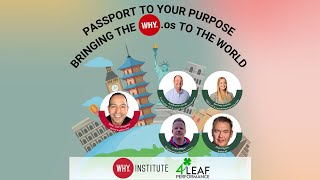
Andrew and Emma Lamb from Four Leaf Performance explain the YOS discovery tool, which maps your why, how, and what. Andrew's is better way, right way, contribute. Emma's is make sense, mastery, contribute. They show how it reshapes hiring, team communication, and career decisions.
Chapters
There's a certain kind of coach who believes what we believe.
Who leads people to greatness, who gets people unstuck, who unlocks all of your passion. A coach who helps people discover what drives them to tap into their superpowers.
Then knowing your why is the first step to untap potential.
To focus.
To breakthroughs.
A coach who's looking for a better way.
Are you that coach?
Hello and welcome. Hey, Andrew. It's so great to see you. I'm so excited to talk about passport to your purpose and talk about Four Leaf performance. Andrew, let me give you a little bit of an introduction. Andrew Lamb is the founder of Four Leaf Performance. He's a YOS certified coach. His YOS is better way right way contribute. And we're definitely going to talk a little bit about your yos, Andrew, but you've got a new venture that you've got going on. And, you know, I just love the fact that you found something that was better and you found a better way to do it. And you said, hey, I want to get this out to the world. And you've got a couple of people that you. You've brought along. So welcome. How are you doing, Andrew?
Thank you, Dan. I appreciate it. Glad to be here today and to share the why with the world. That's our purpose.
Absolutely. Well, Andrew, you know, we've known each other for a couple of years. We met. We met through. Through Action Coach. And you were one of the first people at Action Coach that said, hey, Dan, I really like what you guys are doing at Y Institute. I like the Y discovery. You took it, it resonated with you, and then you started sharing it with your clients. Tell us what led that jump from that jump to Four Leaf performance.
So I'm going to kind of wind it back a little bit because one of the things that I found with why when I met you, dan, and met Dr. Sanchez was to that point, I didn't know my purpose.
And knowing your purpose is really, really important. And I actually trace it back to why I left the corporate world. I left the corporate world because I was not able to articulate what I wanted to do, where I wanted to go, and how I was going to contribute. I was doing extremely well, Very, very well, meeting all my numbers. But I was just completely lost and frustrated where I was, and I was not able to articulate what that was. So when I met you at BizX there in Las Vegas, when I took the why, it resonated so well with me that we actually changed everything that we're doing so we actually started to build our organization based upon the why. And as you rightly said, my why is a better way. Right. I find a better way to do it and share it. And how I do it is processes and procedures and systems. And what I want to do is contribute value back. So when we sat down with the team here, we actually started to look at the business and go, what is our why? Why are we doing what we're doing? Right. So communicating from the inside out, as Dr. Sanchez says. Right. So we actually sat down and we resonated with. We believe there's a better way to scale individuals, teams and organizations to their full potential. And how we're going to do it is by processes and tools and systems that. That generate results because we're in the business acceleration mode. That's what we do. And what we do is deliver through growth. So I'm really proud to say that when we sat down as a team, not only did we look at that from a business model, but what are we doing? What are the tools that we've got? What are the things that we give back to organizations to make them better, to achieve their full potential? And when we started to build on that, then the snowball just started going downhill. It just started rolling. And now we are full bore presenting the why, engaging people with the why. Every one of my clients now knows their why every single day. We're talking about the why around the team. And to be honest with you, it just makes our life so much better because we can communicate at a level that literally I was never able to do in 25 years of executive leadership in my old company. This just gives a different level of communication that just resonates with everybody. And we joke about it here in the team all the time. Right. So. And by the way, and just doing it a better way in the right way now you can see over my shoulder now where we're located. Right? So bringing in the team and working with some great, great coaches around the world now. And we're just formulating this and moving it to the next level. So better way. Right way. Contribute.
Can't hear you, Dan.
How about now you can hear me about that little technical difficulty.
All right.
That's a nervous moment. Andrew thought he was going to have to host the rest of this hour. Let's bring in your right hand person.
Right.
We've got Emma Lamb here. And hey, what a great, what a lucky guy you are. You get to work with your daughter. She's the CEO of four Leaf performers performance and she, she's kind of running the show. Tell us a little bit. You know, Emma, I have a question for you because you and I had a chance to speak and one of the things you told me about and what's very interesting about you is what the YOS has done for you because you were, you were trained, you went to school to become a physical therapist. And this is very far from being a physical therapist. So I'd love for you to just share that quick fact.
Perfect. Can you guys hear me?
Yes.
Perfect. Got it figured out. Hi everybody. My name is Emma lamb. I'm the CEO of for the performance. Yeah, so I'm 22, 23 now, actually just had my birthday. So I graduated last May with a bachelor's of science in health professions with a minor nutrition. So went to school for physical therapy. Was definitely in that health field. Unfortunately, through my sophomore year to beginning of senior year, Covid had hit moved online. There was no human interaction at all. It was really hard to get into hospitals for internships and all that sort of stuff. So I kept pushing the dream that I had to become a physical therapist. And by the time I graduated, I kind of realized, you know, is this really what I want to do back? Let me reevaluate what I want to do. Right. So I basically came home. Andrew had I think just kind of spoken to Dan about the yos that was something new that he was kind of implementing with clients. And at first I was kind of like, no, like I don't want to do it. Like I already know what I'm going to do. Like let me just, you know, let me just go for it. And Andrew said, trust me, just take this. It'll, it'll take 10 minutes, just do it and we'll see what your results are. So I ended up coming out being a make sense mastery contribute. So basically it really aligned with what I was feeling. So that happens when I make sense of the complex and challenging. Right. So I do that in my everyday now. But with COVID I wasn't able to be in person for those anatomy labs. I wasn't able to work on those group projects. I wasn't able to get all that hands on experience in the actual hospital settings that I needed to really get that exposure to, then go on and do my, do my doctorate. So realizing that I was kind of like, wow, okay, it's not just me, it's not just what I'm feeling. It's actually based on my greater purpose. So now that I've been with Andrew and I, you know, I've learned so much, and I've been able to really hone in on my why with making sense and mastery and contributing. I'm always organizing stuff. I'm always making sense of complicated things that Andrew wants to get done.
Andrew's pretty complicated himself, isn't he?
Wants a better way. Right. He'll make. He'll make an Excel spreadsheet. I'll make it all nice and colorful and easy to understand, and then he'll come back and want to change the whole thing again. So it definitely dynamic. But I really. And honestly, I wouldn't be in the position I am today if I hadn't taken my why Because I probably would have just sucked it up and gone to physical therapy school and would have been unfulfilled five years down the line. So it definitely has changed my life. And I think it makes a really big impact in people my age. Just about to graduate, maybe not sure what career they want to go into. The YOS is such a great tool for things like that.
Love that. Well, Andrew, anything you want to add? Emma, you did a great job of introducing yourself and your role in what you're doing. Andrew, anything you want to add?
No, I'm just really proud of what Emma's done and where she's taking this business. For somebody of so young, she's just grabbed a hold of this and just ran with it. And it's not just because it's my daughter. Right. I'm always making sure that the team is driving and striving to what they need to get done. And Emma just knocks it out of the park every single day. So pretty proud of her as a Dolce. Pretty proud of her as a CEO. And. And she'll be one of those women in business to watch, I guarantee you that.
Well, Emma, we are. We are so excited to work with you. And I gotta tell you. You know what? I'm gonna highlight this because you have the same yos as Nikki, who is our EA here at Y institute. She's an amazing. She does. She handles our coach support. Makes sense. Mastery and contribute. And so one of the things I wanted to say before we got a couple more guests in the green room. They're just raring to go. I see Des is. He's like. He's having all those snacks that we put in the green room and he's got. He's got a glass of wine in his hand and I don't know what Luke's doing by the mirror. I think he's putting on makeup. But before we bring them on, let, let, let, let, let, let me talk about something you guys did. You laughed. And I, I, I like to point this out all the time when we know our yos. Right. When you know that no matter how hard you work on it with all your mastery, Emma, when you hand something to Andrew, he's going to try to make it better. There is no, you can't. He can't help himself. Right. That's his why. And so we're in the past, you know, that might have really. And you probably can remember this from growing up, right? Because you'd work on something to show it to dad and you'd work on it really hard and he'd say, huh, that's pretty good. But let me show you how to make it better. And so instead of being upset and saying, gosh, nothing's ever good enough, you say, ha, he's just being himself. And I saw you guys laughing. And we see that in teams all the time. And you guys probably see it when you do this with teams, too.
Yeah, yeah. And you can almost predict it. Almost. Right? Like, I know that, I know kind of the comments that he'll make. Like, I almost prepare myself. Right, right. Bringing things up. Sometimes I have to tell him, like, okay, this is where we're drawing the line and we can come back to it two weeks in advance. We need to change it for another client. Like, so it helps teams almost kind of predict the future. Right. You know, clarify, you know that they're going to have questions to ask. So you want to set time aside to make sure that you answer those questions for someone who needs clarification. So it help helps with the whole culture of the organization. It helps with the dynamic that we have. I mean, obviously father and daughter, that's very different than other businesses that we deal with. It does help kind of that prediction of things that are going on, especially when you want to hire more people. You know, hey, we need to contribute in this position. We need a clarifier in this position. So we kind of know who to hire for those things as well. So it's been a great tool, I think overall, both personally and professionally. I think our relationship as a father and daughter has definitely grown as well, because I think he understands me a lot more. When I first came to him telling me, telling him, I don't want to do physical therapy, I don't want to be in healthcare, I think Andrew was kind of like, what the heck are you doing? But I think when he finally, you know, took the YOS and made me take it and kind of understood that, wow, I actually do have a niche for business. He was kind of more understanding me. Like, wow, okay. Really? Let's take it by the horns and see where it takes us.
So I love that. Love that. Thank. Well, thanks so much for sharing that background because like I said, I love the ability for us to be able to do that. Now let's bring on. You just talked about clarifying. I'm going to bring on Luke because Luke is not only one of your coaches, but he also has this exact. So it's so funny you guys are mirroring the Y Institute. Luke Dillon has the exact same YOS as Gary Sanchez, our founder and CEO. So I work with an MLM and I work with a Luke Dillon. So, Luke Dillon, welcome. How are you today?
Hey, Dan. Hi, Emma. Yeah, great to see you then and great to be here.
All good.
Been sitting waiting for this all day. It's. We're in. I'm in South Africa at the moment. So it's. It's 8pm here at 7pm.
South African time. So good to. Good to be live with you all.
Well, Luke, you know what's really cool about you? You're, you're a team coach. You're a scrum master with Action Coach, You're a YOS certified coach and you're covering two whole countries for Four Leaf Performance, England and in South Africa. I know you recently went through the certification, so you've had a little bit of experience with yos, but tell me, why Four Leaf Performance for you?
Well, Dan, good question. Andrew and I were in class together. We were the same vintage at Action Coach and we got along well from day one and we've kept in touch ever since. So that was early 2020. And I reached out to Andrew. When was it, Andrew? Late last year, early this year. And said, let's have a chat and what are you doing? And that was when I was introduced to, to the Y Institute and got my first look at it. It hadn't reached my desk yet, so it was incredible to do the discovery and to experience the tool firsthand. And Andrew will tell you I was an immediate convert. And I was like, okay, I've got to get this to London and to South Africa as soon as possible. So I really, I found the experience, having used disc a lot coming out of the Action Coach environment and using that as a tool to understand team and team dynamics and really seeing how powerful understanding and knowing your why is.
You know, as, as an addition to any team is just, I think it's game changing.
Fantastic. And so, so I know you, Luke, because I work with one of you looking for a better way. You gotta have clarity and, and things have to be simple. So you know, I think for, for, for you and for Andrew and you, that, that's easy. You're both better way guys. You're always looking for a better way. You probably knew that about each other even before you took the YOS. It's, you know, you look at back at 2020, I love the fact that this, this is a relationship that started smack dab in the middle of the pandemic. Right. So were you guys classmates online or were you in person Online.
Online.
Yeah. Because that, yeah, I remember that's. And that's how y institute has become global because we, we, we had big dreams of growing in and by the way, for those of you that know, I'm in New Mexico, so we wanted to grow big in the southwestern United States and then we were going to take on the country and then the world and then the pandemic hit and we said, oh, I think we're going to have to go virtual. And all of a sudden it opened up the entire world to us. And it's so good to have somebody like you that's covering England and South Africa and bringing the message of what you do optimizing business through Four Leaf performance and through your certification as a Y coach. So that leaves one more person to introduce and this guy I know, I hope he hasn't had too many, too many drinks in the green room. But we're going to bring on Des Ryan. He's a leadership development specialist. Gold Plan act is his company. He's a wire certified coach for Four Leaf performance. His why is contribute his how is better way. You notice a pattern here, folks, and we can talk about that Andrew, a little bit. But people, the simple way to say it is your vibe attracts your tribe and the people that you're attracting have better way in their, in their yos because those are people that you work with really well. So let's bring on Des Ryan from, from Ireland. And, and if you guys thought Luke and Andrew had history, these two have a little bit of history. So Jaz, welcome. How are you?
Good evening. Good. Good morning. Whatever time it is with you guys, it's certainly evening here a little bit earlier than Luke. I think we're an hour an hour behind Luke. So yes, Dan, you're right. Myself and Andrew do go back a few years.
So how many years?
I mean, well, maybe you don't want to tell us how many years, but how old were you guys when you met?
I know we're probably 15 or 16. Were we 15?
16. Yeah.
So just 10 years ago, right?
Yeah, yeah.
A couple of years ago. Yeah, yeah, yeah. So.
Yes.
So Andrew obviously grew up in Ireland with myself, and we became very, very good friends and have stayed good friends.
For. Since then. And I suppose it was Andrew who introduced me to why late last year, I suppose we. We had a great session. He told me about this new tool that was available which was going to, you know, really get people in tune with who they are and what they do. And I've been listening, obviously, in the green room to. To what you guys are talking about. And again, for me, it was that kind of moment that I said, oh, my God, that just makes so much sense when I realized that my contribute.
Yeah.
My how Was better way. And, you know, trust is so important to me, and that's what I bring. So. Yeah, look, it. It certainly was something which I got straight away. And yes. Did it make me laugh?
It.
It did. And then it kind of. It's that kind of. Oh, jeepers. Wow. That makes so much sense. Yeah.
And I love the balance on the team. And so I. I'm. I'm gonna assume that Emma is the chief cat herder here, so she's. She's got it. She's got to deal with all of you. Emma, do you have. Listen, I don't even know why I'm asking this. With the how of mastery, I am sure you have a spreadsheet with everybody's why, how, and what you can. You can look at. It's somewhere very handy because you know what to expect. What questions you're going to get from Luke.
Yes.
What questions you're going to get from Des. What questions you're going to get from. From Andrew. How, how, how. Tell them. Tell me about it.
Yeah, so I guess, you know, we. I feel like every team has kind of a weekly meeting where everyone meets and have that a great dynamic. We have a little bit of banter at the beginning. I'm always there to kind of say, like, okay, what's going on? I'm always the one to kind of be like, okay, let's get back to the group. Let's get back to what we were talking about. But, yeah, I have. Even for all our clients, like, we have all of their yos. It's all on one spreadsheet. So every time we have an event that comes up or we have a seminar that we're hosting. I always have things prepared for kind of each client. So I know with Andrew or Clint, our other business coach, we have a client who's clarifying. I'm like, they're going to be asking you questions to clarify what went over. So please be ready for that.
Right.
Kind of the one that pulls the strings behind and kind of reminds them like, okay, this is a better way. Like, they're going to come with you with an Excel spreadsheet and say, oh, can you make this a word document instead? For me, even with the team, it's to be. I'll be honest, I'll be blunt. It would be annoying if we didn't know what our whys were.
I'll be right.
I think that dynamic would not work if, you know, we were just going in blind. But the fact that I know that Luke is a better way. Des is a contribute. Andrew is a better way. Like I can almost again what I said, like, I can foreshadow what they're going to ask me. I kind of know how things are going to go.
Right.
Really helpful for me to manage my time to manage, you know, the email send. I can prep emails before meetings and all that sort of stuff. So I know that, you know, Luke email a certain way when does. Well, it just really helps that dynamic. Where it would. It would be. It would be hard to do the work that we do if we didn't know what our whys was, if we didn't have that time. That team dynamic that. That we have without the why.
So, Andrew, let's talk about what Emma just talked about in terms of the team. Did you go out and look for these wise or you knew you wanted to work with Des, you knew you wanted to work with Luke and then this just helped you complete the puzzle.
I think it just helped me complete the puzzle. I knew Des. I've known Luke. I know what they bring to the table. And they're great, great people, great coaches, great leaders in their own right. And the way I was looking at it, I wanted to understand who they were. And again, I use the why for putting people in the right seat. So understanding all of their whys just reconfirmed to me why they're such great coaches at the end of the day how they're great leaders. It just filled in that puzzle for me. Now I will say what I do with clients today is we actually do hire to y so we are looking. We do look at what seats we're going to bring on the bus, who we're going to bring in. And we've. We brought a new dynamic to hiring which is not being seen before and is highly successful now, especially in the world that we're at right now, where it's pretty hard to get really, really good people. This is just another way to go through that process, identify who needs to be on the bus, what are the kind of traits you're looking for, and discover that inner purpose and how are they going to operate and what are they going to deliver. Then we layer that on with disk as well, around communications and making sure we've got compatible people as well as some challenging elements in there, because you don't want the same type of people because, you know, everybody will just follow the herd. But how do you take all that together and build that in? So it was by accident, but I knew that I knew these guys for a while, so I knew what they were bringing to the table. It was to understand at a different level. I did learn some new things about Des. And as you said, we've known each other for decades, but I never knew trust was. That was that high on the list with destination and what he was delivering. Right. But once I knew that, wow. Right. That was a. That was a change in how we communicate now. So I was able to go back and change some of my communications, some of the things that. That I try and do with Des because trust is. Is. Is so high on his radar. Right. And. And I've done that with a number of other people. I mean, I. Every time I see trust, that really is a big thing that I dig into for folks because it's. It's such an important part of. Of their makeup.
Hey, I want. I want to. So thank. Thank you for that, Andrew. I want to. I want to recognize. Hey, by the way.
Luke, you might. You might want to look for Raymond Camp. It looks like he's going to be in London soon. So he's. He's saying hello from. From Dallas, Texas. So I wanted to recognize Raymond because he's on. But you brought something important up. And I'm gonna. You know what, let's bring Emma in here, because here's a question. Emma, you got three better way guys, two guys whose why is better way, and Des who's. Whose why is who's how is better way. And you mentioned it a little bit. And one of the challenges that. That you have with these guys is you kind of have to put your foot down, because I can't imagine that when you guys have meetings. There's not a lot of ideas flowing all over the place. Right. Lots of better ways to do just about everything. It could be five leaf performance, seven leaf performance. What if it's three league? You know, that's just the name that I'm talking about. What are some better ways we can do everything? And. And so, Emma, as you corral. But corral this group, I know you figured out some ways to make it. Make it a. A more productive meeting. But how is DEZ different with a how of better way versus somebody who, like Andrew and Luke, who. Who lead with better way and. But Des is leading with contribute.
Yeah, See, I'm still.
Oh, we lost. We lost audio.
Emma, hear me.
Yes.
Okay. I'm definitely not a master yet. I have every meeting I go in, you know, kind of hold my breath.
No, we're starting to lose her.
We're starting to lose you a little bit. But, Andrew, how about you give us a little bit of a preview on that while Emma fixes her audio?
Yeah, I think it's, you know, the way that Emma interacts is she. She's always looking so. So she wants to master. Right? She. She's looking at that. How do we get this done? That's her role. So I. I think she's kind of corralled me and Luke in where it's like, hey, I know there's a better way, but it's all right now, right? Let. Let's. Let's not go down that. That rabbit hole. So she kind of parks us to one side and like, this is what it is. Let's get it done. Right? And then. But what Des delivers is in a better way. He believes success happens when he delivers a better way. So he's always looking at what is being delivered and how can we improve it from there. So we're thinking like, so Luke and I are looking at it from. Can we make it a better way? In a system in the future where Des is looking at it from a better way in delivering and operating it that way. So it's slightly different. But Emma is starting to master us. I've got to say, I'm going to.
Give Emma a hard time because were we not going to predict that she would say, I haven't mastered it. I've got so much more to learn. With the how of mastery, we're always wanting to learn more, always wanting to dig in a little bit more. So that was so predictable. Emma. And you talked about that predictability earlier, right?
Yeah.
Yeah. You're coming in and out.
Okay. I don't know why I've tried fixing things, but I would just say I kind of heard what Andrew was saying.
I say things before I even realize that.
But yeah, I think it's definitely like allowing everyone to.
You want to master. You want to master that sound there?
We're gonna have to master Evan's microphone.
I think we're having some problems in Houston.
Houston, we have a problem. Andrew.
We do.
Andrew, you know, you. Yeah. The other thing I wanted to talk to you guys about because you're. Let's bring Luke in here too. You guys are all familiar with disc, and as we work with coaches around the world, one of the questions they ask is, okay, so which is better, right? And we don't say one is better than the other. What we have found, and I'd love to get your thoughts on it, is that they're very complimentary because when you. When you talk about putting your why, your how, and your what. So let's go. Let's go through yours real quick.
Luke.
We've got. We've got yours here. So let's talk about yours. Your yos is better way. Clarify, simplify. What's your disk profile? Di. Okay.
Yeah.
So what did you learn from looking at your yos and your disk together? And then maybe I can ask Andrew, too, in terms of looking at working with Dylan.
Shoot.
Andrew.
Yeah.
Oh, no, no. I wanted to hear from you first. Luke.
I think. I think. Dan, I think the massive, you know, obviously disc gives you a great understanding of. Of your behavioral patterns, you know, when you stressed and, you know, those. Those drivers. Whereas your why really gives you a deeper understanding of yourself and why and how and what you do. So I think they're totally complementary, and I think you actually need both of them in a lot of ways, but as a team, to understand. If I look at Four Leaf performance and us all understanding each other's why I think that's so incredibly powerful. And I'm married to a. Makes sense. So I definitely understand Emma. And, you know, that's something that's. And I'm sure Des would understand it as well. Having better way in his.
Right.
You know, in his makeup is that when you look at better the better way profile, we very poor on a blank canvas.
Right.
We all. We can sit and stare at that for hours. Whereas an Emma with a make sense can really formulate something. We'll always think we can improve it. But it's great to have someone in the team who's strong enough to. To Start that and really give you something to then build off. And I think when you know who that person is in the team and Emma is, and she guides us because we will get off track, right. She's got, listen, this is where we need to be. These are the outcomes we're chasing. So I think it's so beneficial to understand that because when that person steps in and gives that leadership and that guide, you know where it's coming from.
Yeah.
Andrew, what did you learn when you put the, the yos and the disk together for Luke?
So, so I look at it from a wire, I mean straight to what Luke was saying, it's purpose, right? So we're looking at your why is purpose. But I look at disk more as a communication style. I mean I've, I've taught disc for 20 odd years around the world, right? And we literally have people around the office. When we did it, we're putting you know, the balloons of D and I and S around the office and you know, and the following day everybody's running over to the S person and giving them all the work. Right? So.
Because S's can never say no. But one of the things that I seen, it's, it is complementary, right. So the why I see is your first start, right? It's, it's discovery. It's not an assessment, it's not a test, it's a discovery. So when you take your why you're discovering why do you do what you do and then from there you build upon that. So I believe.
It'S a starting point. You understand your why, your purpose, your why, your how and your what. But your disk is how to communicate, right? So it's adding on top of that. So if you're, if you're an. I mean I'm an idiot, right? So if I'm having to communicate to a C, right. I've got to give a lot of information and a lot of details to a C type personality, right? And I'm. And I'm fast, right. So I'm an eye fast thinking, moving. I'm always looking at the future. And that's where Emma reigns me in, right? Because I'm better way and look to the future. We can do this in three years and you know how we're going to get there. And she's like whoa, slow your all buddy. Right.
Right. But, but again I see it as a come. It's not an or, it's an and.
Right.
So you do your why your purpose because that stays with you and disk does stay with You, I mean, of course, but it's an and. It's not an and or it's an and. Understand your purpose and why you're doing it and how you're doing it and then build that on top, right? With a communication. Understanding and disk isn't about just understanding you. It's understanding everybody else around you. So when you add those two elements together, man, how powerful is that? And literally all of my clients, when we sit down and start to understand that the conversations go from ground level to just aspirational levels, the conversations are so different, right? And some of them are hard conversations, right? They're difficult conversations. But now you can talk, now you can convert. You can have those insightful and engaging conversations that get you to a diff. To a better place. Better way, right? Better place. But that's what we try to do with clients. And honestly, every time I do it with them and every time I do it with groups, it's like, it's just this, wow, you see light bulbs going off. It's just incredible to just watch it.
You know, I'm gonna get. And it's so funny to listen to Better Way people. We did this. We had some fun with. With Brad Sugars at Biz X a few weeks ago, Gary did an interview with him. He was on the podcast and we counted how many times he said, better, better, better, better. In a one minute. In a one minute segment. This is better, better, better. And I just saw Andrew do it because that's exactly how you think. Emma, do you have audio back?
Can y' all hear me?
Yes. Excellent.
I hope it works. Now, I've tried, like, removing everything from the room, turned all the lights off, so hopefully it's not anything from. From the, from the phone. But yeah, I. I mean, I agree. I think I'm. Me too. I believe I'm a very high D. Andrew can attest to that. I'm very task oriented, very. You know, I do have emotions I'd like to add. I do have the human connection, but I definitely am task oriented. I wake up every day, I have a to do list of things I have to get done. And, you know, I get those things done every single day. And I'm ready to leave the office and have those things done. And I always walk in and Andrew's like, you're done already? And like, yeah, I got it all done and I'm ready for the next day. So definitely task oriented and all that sort of stuff. And I think that in turn goes to, you know, our weekly meetings Clients, I'm very like, you know, dot, dot, dot, and I'll make sure those things are done. And I think having all of our clients complete their discs and having, you know, you know, their wireless and all that stuff done, I think is even more insightful for them, right? Because in coaching, they're not going to be coached forever, right? They're going to get to the point where they're commercial, profitable, and they're ready to on and, you know, hopefully refer other people to us. But the beauty of the yos and the beauty of the disc is that, you know, for employees specifically, if they in turn, you know, maybe decide that job is not for them or they're moving careers or moving locations, like, they get to take that information with them. And that is something that is priceless, right? They can go into the next job and say, you know, this is my why, this is my how, this is my what I think Andrew can go in here, detail about my brother James. He's in college. He was ready to go into finance, he was ready to go into the stock market, and he was ready to go into all these things that you couldn't trust every single day. He took his yos and his why was trust. And Andrew was kind of like, well, that's great, but how are you going to trust the stock market every day? How are you going to go into that career and enjoy it every single day when it does not align with your purpose? So I think things like that are really helpful, especially for people that are younger, kind of probably more my age. I mean, Andrew, we work with predominantly women, predominantly young women who are female entrepreneurs just getting started, and they're kind of like, I have this big idea, but I don't really know where to go. The first thing is the yos are you aligned with what you're doing? And the same with college students. We're definitely trying to get into more of that educational sector because it's priceless information that you will walk through your entire life. Knowing your disc, knowing your why, just lights up the path and just knows, okay, I know exactly what job I want to go into. I know exactly what job I don't want to go into. Because you don't want someone to hire you for a career that you aren't really going to enjoy that much. I don't think that'll be beneficial on either side. So it really is such a priceless tool that people who leave coaching, people who are employees and leave employees, they'll take that forever for the rest of their lives.
Hey, Dan, I've got to get Emma to share with everybody her analogy with the.
United Nations. Emma, tell everybody how you describe the why in the United Nations.
This is going to be good. I love it.
So I encounter a lot of people at, you know, women's counter entrepreneurs events, you know, people who are not familiar with the Y Institute, the Y Golden Circle, all that sort of stuff. So I kind of relate it to the United Nations. So you have the most qualified people in the room. You know, everyone knows what they're doing. You know, they have the degree, they have everything going for them. Like they have that. But no one speaks the same language. Someone speaks French, someone speaks, you know, Italian, someone speaks Spanish. How is anything going to get done? You could have the most qualified people in the room, but if you guys don't speak the same language or understand that you guys are speaking a different language, nothing is going to get done. Or things might get done. Like 10 years down the line, like, it's going to take time to get things done. You're going to spend time trying to translate to each other, and even the translations are not going to go fully across. So it kind of explaining that to people, right? Because I think when people think of the why and the discovery, they're thinking like, oh, they're enneagram or their love language. Oh, there's just this thing that has no backing. And it's just like, oh, great. It changes when I take the test. So having that analogy, I think is really. It's easier for people to understand who maybe have no idea what the wire, the YOS does. But I think having that common language, or at least acknowledging that someone speaks a different language from you allows you to get a lot more work done, get a lot more things done more efficiently, and just really drive that productivity through the roof. Even from what we're doing here, we've grown so much. I don't think we can keep up sometimes. But that is purely because, you know, we have that common language in place. We're able to understand each other, and therefore we're able to go off and do all of our own things and be able to bring all these people in and share the power of the why and really able to drive, you know, that why that of us as a company.
Dan, I think Emma needs to go on the circuit. What do you think?
Me and Emma? That is a great analogy. I gotta bring Des and Luke in and then we're gonna. We're gonna. We're gonna get your thoughts on that. That's A great analogy. Not only do we have and what a great analogy for this company because we've got three countries represented here, four if we count Texas as a separate republic. Right. So.
Taking up on what Emma said there, you could have the most educated people in the room and everyone is talking a different language. She's right. You just don't get, you don't get the results, you don't get the speed. You just don't get people communicating properly. And as, as the old saying is true, communication is the response that you get. So often that response is, is not the one you want.
Yeah, yeah, yeah.
Hey, you got some kudos coming from former fleet Master Chief of the Navy Raymond Kemp says as someone who's been to the UN and NATO, this is brilliant. He spent a lot of time with some high level.
People, world leaders and if you guys have not had a chance to meet Raymond Camp, he says he's so using this analogy. Thank you, Emma. Amen. Yeah. So, so how about you Luke? What are your thoughts on that? I mean again, you're, you're in South Africa and, and in, and in London. Right. So.
Yeah, Dan, I think, I think the key thing is what I love about the why discovery is more specifically as a recruitment tool when you're thinking, when you're growing a big team and you've got a specific position in mind and what you need critically in that position for that people, that person to be successful. When you look at how much time and money is spent on recruitment and how often those that individual who's been put in that position, either through their own.
Lack of knowledge or through poor placement ends up in a position where they're unable to succeed or you know, if they've got a why of mastery and they're in a position where they need to make quick decisions, they're going to be perpetually frustrated and frustrate their leadership and other members of the team. So how do you build a happy and successful team if you're onboarding people into that group who a don't understand each other and who have a why that really doesn't suit the role. So as a recruitment tool, I don't think there's a better recruitment tool in the market than the wirelesscovery. And I really love it in that space because I love working with teams and taking them from poor communication into a space where they're really communicating effectively and honestly and thinking in the background obviously of Patrick Lencioni's, you know, five dysfunctions of a team. If you look at Those five dysfunctions. And you think where why fits in. And once everyone understands their why, how what. And the compatriots or team members.
Right.
That those communication channels, like Andrew was saying, just change to another level altogether. Where I think authenticity and trust is so quickly built that it enables performance.
So as I say, I don't think there's a better tool that I've come across for it. I think it's absolutely brilliant.
And if you're recruiting people, I think it's got to be the very first thing that, that deal.
Yeah. So.
So let's talk about this. So, so as you guys have implemented and as. As you. You've started working now globally, Andrew, what's. What's the biggest challenge that, that you guys have as four leaf performance? Or, or maybe that's a better question for Emma as you're working globally, obviously time zones are. Are different. Different, different currencies. But what's the biggest challenges as an organization you guys are facing right now? I heard you say growth is. Is important, is a challenge. But what's the biggest challenge you guys are having right now? I'll go with Emma and then Andrew.
Throw me on the hot seat. I don't know. I think growth is probably the biggest thing. I think all businesses are struggling with that in one way or another. But definitely just finding the right people for the right seat. Finding those people, you know, who do want to grow. And maybe I think everyone has that, that want to grow and whatever. It's just like unlocking that. It's just shining the light on like that little seed, planting that seed and telling them, you know, it's going to take time, but you just have to let it, you know, bloom and all that sort of stuff. Because I think everyone is very quick pace nowadays, right? Everyone's very like, I want it now, I want it yesterday. Things like, you know, growth in your business, growth personally, professionally, like, it takes time, right? The yos. Right. Like you. It's great that you know your why, but then you have to start implementing that. So I think finding those people who are open to that idea or open to the growth, I think has been difficult. I think everyone is struggling with that. But definitely, I think the time aspect of it, knowing that take time. You know, Rome was not built in a day, unfortunately. So knowing that, you know, you have to put things in place, you have to constantly, you know, be talking about your yos, be talking about, you know, your distal, so that things are done productively because it's great to be busy. But Are you productive? Busy? I think that's one thing that we always have to remind ourselves every day is, you know, busy worker. Am I actually doing something productive? So I would definitely just say that time is the biggest thing as well, because I would love things to be changed overnight, but it definitely is something that takes time. So.
Excellent, Excellent, Andrew. Biggest challenge.
Biggest challenge for us.
I think it's getting in front of the leaders, the executives out there that need to understand it. We're in tight times right now. Let's be honest, folks, looking at these types of things.
HR departments are looking at costs. They're looking at what the cost is. The lots of changes going on with organizations, and they're looking at maybe downsizing and cutting costs and all those things that go on. But what they don't realize is the cost of not understanding this. I think that's one of the, as Emma says, that's one of the things that we've got to invest more time in is making people understand what the opportunity cost of understanding people's why is. And again, I'm going to use, you know, from my personal experience, when, when I left the corporate world, I didn't understand my why.
Right.
I was probably one of the top performers in the organization doing what I was doing at the time. I was frustrated. I was, I was not. I was not being engaged the right way and I could not communicate that. And what happened, I left. And I know that it took them nearly a year to get that resource filled.
That resource, that role was not cheap. But what was even more important, the loss of revenue, the loss of profit that occurred because I was not in that role was in the millions.
Understanding your team, understanding what you're leaving on the table and not looking at just as a balance sheet, right? Because there's opportunity costs. And this is what we all talk to as coaches all the time. What's the opportunity cost?
Right.
Okay. What is in your team? How can you make this better and faster? How do you make sure you get the most out of your team members? And understanding them at best level is the most important and then building from there. But honestly right now is getting in front of leaders and breaking through that barrier. Because there is a cost element of doing this, right? There is. There's a commit, there's a time commitment to do it. And by the way, when you see it, you can't unsee it.
We talked about that, right? Yes.
Unsee it anymore. So now you've got to do something with it. So.
That'S one of the Challenges.
Yeah, absolutely. There's a, there's a quote that Gary uses all the time. Time. And he says, you know, everyone is a genius, but if you judge a fish by its ability to climb a tree, it's gonna, it's gonna live its life thinking it's stupid. You gotta put people in the right seat on the bus based on the talents that they have. You put the fish in the water, he's gonna swim like crazy. You put him to climb a tree, he's not gonna do so good. Right. And I think you guys have talked a lot about that. Luke, your thoughts on that? Because I think it was you who was talking about putting people on the right seats on the bus.
And lots of insights as well.
I think if you look at it, Dan, at the levels of disengagement in the corporate environment, when you survey big corporates, how few people are actually totally engaged and working in the position that they're in from the perspective that they happen to be there and they, they aligned with the business and the company's mission and vision and they're excited to come to work. That's a tiny percentage of the population. And I think one of the key drivers is so many of those people actually don't know what their why is. And it's, they're there to, to earn money and not to really make a difference. And that's such a big cost to a company to have dis. Disengaged people on your team. Not only because of how it fits the balance of the team, but because of the overall effect to revenue to the business. So when you look at the cost of taking a team or an individual through a yos discovery, why would you not invest that tiny amount? When you think of what it is as a percentage of the cost to company or the annual earnings, it's really. Then it's totally affordable, isn't it?
Yeah. And one. And Andrew was talking about that, right? He said, you know, let's, let's, let's talk about the, the cost of not doing it. So let's bring Andrew back. You know, the cost of not doing, not doing, not understanding. Imagine the cost, the personal cost to that person that, that thinks they're stupid because they, they're, they're in a role that they're not a fit for.
And Andrew, you, you dollarized it really well when you left that, that position. All of a sudden there was a void and it cost millions of dollars to not have that role filled, not have that person. When I think if I'm Hearing you correctly, had you known your why, you could have positioned yourself better so that you could have been in the right role.
Absolutely. I mean I, I could have, I could have gone in with a three line statement. Right. I believe there's a better way to do it. And how I do that is through processes and procedures. And what I deliver is value. I need a role that meets that. And then you're going to get 110% out of me. Right. Which, which organization does not want to understand that from their team members? Right. And again, I think parts of the problem is being able to communicate that. And again, I'm not putting the onus back on, on the company. The onus is on the individual to be able to communicate. So think of it this way. You're now able to communicate literally 99.9% better than anybody else can because you know your why, your how and your what. And again, I'll give you another example. My son went off, he's doing an internship. He actually used this in the internship interview. Interview. And they were so blown away that they've got this kid now going off and doing something that he shouldn't be doing for another 18 months because he was able to communicate it at a level that nobody else could communicate.
And it's a discussion that we had actually during the week on our weekly session that Emma mentioned. You know, we discussed this and the power of people knowing their, their why. Like there's lots of people maybe between jobs, between careers, who, if they knew their why, are they on the right path? Do they need to change? Do they need to look at a totally different sphere? So I know we've spoken about recruitment from a company perspective, but even before that, from an individual's perspective, to know, actually I'm, I'm not, I'm, I've been on the wrong path for so many years. At least I know what my why is now. And just to, to go back on what Andrew was saying, I remember talking to Andrew, I don't know how many years ago it was, but when, when he was in that role that he was in and you could see he wasn't living, he just wasn't living. His why he was frustrated that he stressed he was in the wrong seat and yet he couldn't verbalize that and get across that I, I'm, I need to change seats here because this is absolutely killing me. And it was, and it was a difficult conversation, difficult time. But in fairness, he, he got out the other end of it. But at what cost? As he said himself to, to both the business and to him at the time.
And, and I think that's an organizational challenge in a way, isn't it dez? Because and for everyone, you know, there is that element of fear in that discovery or that you take a team through that discovery process and you've got a challenge in the wrong seat or you've got a trust. And that realization might mean that some people deselect themselves or that you're going to have to shuffle the team in order to get the right people in the right place. And change does scare both organizations and individuals. So I think it's coaching them through that process and showing them that the end results will make, you know, maybe some change and discomfort initially valuable.
Well, skills I think, you know, I think we all know skills can be taught, skills can be learned, but what drives you can't be changed. Right the way, the way you think. I was talking to someone yesterday was talking about, about this from a neural nlp, neuro, linguistics, programming point of view though. It's how you process information. Emma is going to process information. She's going to take stuff and she wants to make sense of it, she wants to solve it. You're going to take it and you're going to try to make it better. You and Andrew are going to try to make it better. Des is going to, Des and I are going to look at it and say how can we use that information to help others? And that's just, that's the filter that it's going to go through. And I'll give you guys another example. I'd love to hear your thoughts on this one. Because we were talking about the why of right way, following the process, following the rules and the why of challenge. What we have found is those two people can be looking at the same document and have completely different view of it. One person, the right way person is going to say hey, we can't do that. That document does not say we can do that. And the challenge person is going to say where does it say we can't? Right. And they're looking at the exact same document with a completely different perspective. And does that mean they can't work together? No, it just means they have to understand the perspective. So back to Emma's u n analogy. It's if you understand the language that they're speaking, then you can at least have grace and understand. Huh? That's where he's coming from or she's coming from. So now I can, I can look at it through their filter versus my.
Just my filter and just having that deeper understanding, right? Like when we, you know, when Des and Luke and we all, you know, decided to do this whole thing, like, no, we didn't go straight into, like, what's their why, Right? Like, we kind of have even said, okay, he's a contribute. He's a better way. Like, how can we make this work? Right? So it's not even just about, oh, he's a challenge. We got to fire him, right? It's not even.
No, don't fire the challenges.
The beauty of it is, it's the deeper understanding of, like, knowing what that person is going to do. So you are able to predict how you go into those meetings, how you go into those calls, how you deal with clients. Because, you know, I think a lot of people on these calls, you know, sales is part of it, right? If you know the person who you're talking to, you know that they are a contributor. You know that they are a high D or a high S or whatever. You go into that call knowing what they want to hear, right? So you're able to use that to your advantage as well. So I think the YOS is even just that deeper understanding of being able to foreshadow conversations, being able to know how to structure your calls and your agendas and your meetings better. It just helps with the overall flow of the group than just the whole, like, let's shuffle everything around. Yes, sometimes that does need to happen, right? Sometimes there is that absolute wrong person, the wrong seat. You know, they're challenging everything. You know, they're making a mountain out of a Mohill, we like to say. But the thing is, is having that deeper understanding, I think is just so important because it allows you to have that flow that's better, has that structure that's better. I think it just helps. It really helps in that way that. That a lot of organizations maybe that are going through a lot of turmoil right now are thinking, oh, my gosh, what am I going to do? Like, I have no idea what I'm doing. No one's communicating with each other. It might just be. Be because they cannot understand each other. That might be the only.
So. So Emma. Emma brought. Emma brought up a great point there with regards to customers, right? So again, we've been talking about employees and teams, but imagine going in to a customer into a prospective customer, not only knowing their why, but their disc how to communicate. You have an unfair advantage over everybody else.
All right, are we all back?
Can you hear me, Emma?
Can you hear me?
Yeah.
Yeah.
All right, we're back. We lost signal for a little while, but I think we're all back here. So what I was going to say is one of the things that, that we, that, that we know and, and better way people, the better ways in the room, which is three of you. One of the things you talked about, Andrew, is one of the challenges is that blank sheet of paper, right? Give you some, a blank sheet of paper. You can't make it better because it's blank. But those challenge people, boy will they have ideas, right? And so one of the things when we, when we debrief on that, why specifically I always like to say, hey, if you put that person in a box, they're gonna wilt. You put them in a place where they can be creative, share their ideas and think outside the box, they are going to be just so happy and they're gonna, they're gonna, they're gonna do amazing things, right? And so we want to take advantage of those things. And, and I think that's, that's the, the beauty of knowing the people that you work with. So we've got three minutes. Can you believe it? We've been here almost an hour. You guys have done a great job of keeping the conversation going. Biggest takeaway that you've had or biggest breakthrough you've had, either yourself or with a client. We're going to go around the room. We're going to start with Luke, then Des, then Emma, and then we'll end with Andrew. Biggest, biggest breakthrough you've seen, either working with a client or with yourself or even within the organization. Go ahead, Luke.
Thanks, Dan. I think the biggest breakthrough I've seen was working with a client and a fellow coach recently who had the, the wife make of. Of right way. And funnily enough, he qualified as a medical doctor and he's been through the disc process, etc, etc, and I chatted to him and said, you need to do this discovery. It'll change your life. And, and he looked at it and he, when we discussed it, he was. Luke, everything makes sense to me now. You know, I understand what my drivers are and why I get so frustrated in certain environments, you know, now at work.
So, so for him, I mean, he's a, he's a radical convert and I think we all do some great work together and was a great discovery. And just for me personally, Dan, it was, it was, it really was something that made me look at what I do and helped me understand the blank canvas because so often in the work that I've had to do has been starting off something or the desire to start something and stare at this blank canvas until someone else starts the work. And then I feel like I have the space to contribute. So I think those are the big standouts for me.
Love it. How about you deserve.
Yeah.
Very similar actually to what Luca said there. I did a session actually I did two discoveries with two people within a global training organization and interestingly enough, they work very closely together. They share their why it makes sense and they share a how of mastery. But one of them had a challenge or what of challenge and one had a wad of clarify and it was amazing. You know, one was thrown it outside of the box and thinking outside the box and trying out all these ideas and it was the other person's role was to bring it back and clarify it so it made sense. Everybody else and it was amazing, you know. And again it was the same person who also had the because I had said as a better way person, don't give me a blank piece of paper. And she said, I hate people like you. I love blank pieces of paper. She says they're amazing. That's how I get all my good work.
Right.
When you know someone's why and when you know what makes them good at what they do, it's just incredible power to have, you know. So yeah, great stories and it's great to see people getting it. And she's had the same experience. She says I've done, she's done disc and she's done all these other different assessments that are out there and she says nothing was so on the money as our Yoshi.
So fantastic. Thank you for sharing, Des. How about you, Emma?
Yeah, I would definitely, I'll definitely take a personal approach. If I had not taken my yos I would be probably in the middle of a three year program where I was not fulfilled. I would just keep doing it just because I was already knee deep in it in school. So I would not be in a position where I'm feeling fulfilled. I feel like I can go to work every day and make a difference and have, you know, the make sense mastery conference. So I definitely wouldn't be where I am today, I think without that discovery and having Andrew push me to even take that discovery. So I'm really grateful for that.
Love that. And Andrew, we're going to give give you the last word.
I think the biggest impact that I've had is on me knowing myself better than I've ever known myself, where I need to focus, where I need to grow, how do I need to develop? And then knowing my family at a different level, and I can't emphasize that any greater. I know my family now at a greater level than I've ever known them before, and knowing that is more fulfilling and we get more done and we have more fun. And yes, we still have the conversations. Right? But I think just from a personal level, it's grown us all just to the next level. And I know that this is impacting team members and it's impacting clients that we have. And I even have clients now bringing their spouses on and going, we need to do the why together. Right? So maybe we're saving a few marriages out there and building some better relationships. So I just think from a personal perspective, this is just hands down the best way of understanding others at the most fundamental levels. And you can't have a better purpose than that.
Well, this has been so much fun. Thank you for being on. Andrew, Luke, Daz, Emma, to. To all parts of the Republic of Texas and South Africa and Ireland and all the way from New Mexico. It's been so fun to spend some time with you guys to share your message, share about Four Leaf performance, share about the breakthroughs that you've had. This is. This is so fun for me. I love hearing, hearing your success stories. So thank you very much and extra credit to Andrew for wearing his Y Institute hat. We gotta get. We gotta get one of those over to Des and Luke. Maybe when you come to the conference in October. Guys, have a great rest of your day. I really appreciate you being on. Until next time. We'll see you guys on why not Wednesday, next Wednesday. And Emma, Andrew, DEZ and Luke, have a great day.
Thank you so much.
More from Dr.




Women In Leadership: A Need For A Greater Systemic Change With Belinda Clemmensen






