Purpose-Based Recruiting: A Better Way Of Finding Talents With Max Hansen
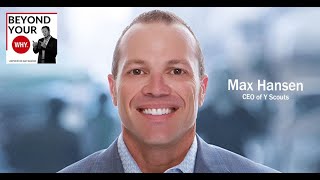
Max Hansen built Job Brokers for 13 years, then started Wise Scouts to match leaders with companies based on shared purpose and values instead of job boards. The firm focuses on three traits: relentless learner, develop others, drive results.
Chapters
Welcome to beyond you'd why Podcast, where we go beyond just talking about your why and actually help you discover and then live your why. You see, we believe that knowing your why, that driving force behind every decision you make and every action you take, is the essential first step to really knowing yourself. It allows you to move forward faster and have a bigger impact. If you're already a fan of the show, then you know that every week we talk about one of the nine whys, and then we introduce you to somebody with that why so you can see how their why has played out in their life. This show will be more powerful for you if you've already discovered your why. If you still need to do that, head over to whyinstitute.com and discover your why today. It'll only take you about five minutes. Now let's meet today's guest.
Welcome to beyond you'd why Podcast, where we go beyond just talking about your why and actually helping you discover and then live your why. So if you're a regular listener, you know that every week we talk about one of the nine whys, and then we bring on somebody with that why so we can see how their why has played out in their life. And so this week we're going to be talking about the why of better way. So if your why is better way, then you are the ultimate innovator and you are constantly seeking better ways to do everything. You find yourself wanting to improve virtually anything by finding a way to make it better. You also desire to share your improvement with the world. You constantly ask yourself questions like, what if we tried this differently? What if we did this another way? How can we make this better? You contribute to the world with better processes and systems while operating under the motto I'm often pleased but never satisfied. You are excellent at associating, which means that you are adept at taking ideas or systems from one industry or discipline and applying them to another, or always with the ultimate goal of improving something. So today I've got a great guest for you. You're going to love this guy. His name is Max Hansen. Max has dedicated the last two decades of his life to providing the best hiring practices in leadership search and consulting. He graduated with a Bachelor's degree from Northern Arizona in Business Administration and was fortunate to start working immediately with the Fortune 50 recruiting firm allegiance Group and Aerotech. This experience provided him with a solid foundation for understanding both best in class business systems and selection processes. In January of 2002, he founded his first recruiting search firm, Jobs Brokers, Inc. That went on to hire more than 30,000 people across a wide swath of industries including engineering, manufacturing, education, health care, distribution, mining, finance, technology and apparel. Somewhere along the line in 2010 or 2011, the traditional contingent hiring model wasn't allowing organizations to solve the deeper rooted issues they were facing around their hiring practices. Max's desire to help organizations with the root of their challenges pushed him to create the first ever purpose based leadership search firm called Wyscouts. In 2015, he sold all of his interests in three traditional recruiting companies to more aggressively pursue building Building Wise Scouts and Purpose Based Leadership Search. He enjoys helping them and their organizations continuously improve and succeed as higher performing cultures and teams. The root of his work goes deeper towards individual purpose, building true relationships, relentless learning, love and their ultimate intersection. Max, welcome to the podcast.
Thank you, thank you. I appreciate the intro. Sorry to send you such a long bio, but honestly, during the bio, two things were happening while you're reading it, as I felt old thinking about two decades, not a bad way. And then the other one was, holy shit, I think the better way. Like I can't wait to unpack this a little bit with you. Just as I you talked about the background, I could start to think about how much better way has really been impactful in the decisions I've made and why I've done a lot of the things that I've done.
So you and I met at a really strange way. So let me. I'll give my version of it real quick. So Max and I were together at a, at an event called the Genius Network. And we were sitting at different tables and I kept looking over at him. He didn't notice this, I hope, but I kept looking at him and I kept thinking, man, I know that guy. I know him from somewhere. I don't know where, but I know I know him. And so when the event was over, I got up and said, hey, what's your name? And you said, max, Max Hansen. I said, max, man, I know you from somewhere. And you said, yeah, you look familiar to me too. And so we kind of went back in our lives through all the possible connections and didn't really run into anything until the next day when we had lunch together. And you said, okay, now tell me what you do. And I started telling you about the WHY Institute. And you're like, ah, this is why we were supposed to meet. And so that's my version. Is that what you remember?
100%. I can't believe it took us so long to figure out that we existed in the first place, just based on the things that we're pursuing and the interest. I mean, when I had lunch with you, I couldn't believe. Like I said, I couldn't believe that we were existing, coexisting in this world that didn't know each other. But it's been awesome to meet you and I didn't notice how creepy you were gazing over at me that night.
But.
But, you know, it was. It was awesome to meet you and I'm glad we finally figured it out. So that the. The end of that is that. That's how I remember it. But the end of it is, Gary, we kind of gave up because I live in Arizona. Phoenix, Arizona is where I'm based, Scottsdale. And it's like the. It's the biggest small city you'll ever, ever live in. You know, business wise, you kind of have. You meet everybody. You know, I would say There's. I've got 10 close friends and they know everybody or we know everybody in some shape or form. So I always walk around and I try not to say, hey, where do I know you from? Because then our whole entire conversation consume me that. So Gary led with that and I, you know, let it go. But he did figure out that there was another guy. He's about a foot taller than me, but he reminds. We look alike, I guess, and I really want to meet this guy one day. I think he lives in Albuquerque with Gary. So he did find the guy and he did put to rest why he thought I looked like why he thought he knew me. It's because I looked exactly like one of his other friends. I was about a foot taller.
Yeah, exactly. So we figured it out. But. All right, Max, so let's do this. Let's go back in your life a little bit. Where, where were you born in, like, what were you like in high school?
Yeah, yeah. So I was. I was born in Spokane, Washington, which is an interesting place. I've got lots of family still there. I still summer in Coeur d', Alene, Idaho, which is close to. Close to Coeur d'. Alene. What I was like in high school. I was the biggest jock and athlete you ever met. I mean, I loved, I played, I lettered in four sports. I love to compete. You know, it's. It was just. It was my thing. It was how I like. It was. It was my love language was competing in sports and, you know, really locking arms with a group of guys and a lot of times being the captain of the teams, which I, you know, proudly wore that badge and, you know, did everything I needed to do and that we needed to do to win and enjoy doing it and have fun doing it. So that was my past. I'd say, you know, the things that in high school, things that stuck out. I think football was really the sport that really sung to me that really kind of pulled out, you know, everything I had. I'm not the biggest person, but back then, the rules were different, and using your. The crown of your helmet to hit people was. Was not frowned upon. And honestly, you know, that's what I did. And I hit a lot of people a lot of times very hard. And that was, you know, what I was known for. But. But I enjoyed my high school experience was absolutely amazing. I went to a Catholic. I went to Catholic schools my entire life. I wore a uniform to school. And I was an altar boy when I was younger, up until when I played baseball in college. So I, you know, I. I like wearing almost the same thing every day. Still to this day, I'll have, like, job broker shirts and stuff. Sometimes I'll wear them and. And I have to remind myself, like, I don't have to wear a uniform anymore. So that's what I was like in high school. Very much on the athletic side.
And so then off to college. Northern Arizona. How did you pick Northern Arizona? And I think what, you played sports for them as well?
You know, I was playing baseball at Glendale Community College, and, you know, like I said, I think this was, you know, one of the pivotal points in my life. I decided to play baseball, and I had only played high school baseball for two years, and my dad pitched at Gonzaga, and he. All of us had really gifted right arms. My son has a really gifted right arm. My brother in. And he played four years of college football. So I played two years of college or high school baseball. And I think it was just a really good time. I was in the right mindset. I caught and I let off, and I went to a smaller school. I batted.520 when I was a junior and.560 when I was a senior. So I thought my path was go to play baseball just because it was in my family lineage. But I got to Glendale Community College and I learned a lot. I learned that I didn't love baseball. I mean, these guys that, you know, would take 200 cuts a day and really love baseball, you know, it was. It was different. It wasn't, you know, the whole time I just yearned to go, want to put a helmet on and hit somebody rather than, you know, sit there and think about how I'm going to, you know, take a crow hop or take a step or even take a swing. And so I ended up going to NAU and I was going to play football. And once I got there, I, you know, kind of had a change of heart and ended up just going to school there. So that's kind of how I ended up there.
That was the end of your sports career and then off into business.
It was, it was. And you know that it's funny that we're jumping into this because I think I would say, you know, we do lifelines and, and ypo and stuff like that. We talk about high points and low points. I would say quitting sports was like this, like one of the lowest points of my life. Just because that's, you know, like you asked earlier, is how I define myself. I know you, you know, you're pretty athletic and you play a lot of sports and compete. But for me, when I, when I quit, it was, it was kind of funny. And I remember this now because I want to make sure that I treat my son and my kids. My 17 year old played sports and just quit playing basketball this year, which was a big deal because he was, he's a good athlete and he chose. He didn't want to play anymore. And I totally respected that because when I quit, I had this like, I had this like, thing built up in my head, like I was going to let somebody down or let a bunch of people down because my parents have been watching me play sports my whole entire life. And when I told my parents I wasn't going to play baseball anymore, they were like, that's okay. Like, they were totally encouraging. And there was no, there was nothing they harbored. No, it was all in my own head. And so, so, so I moved on and went to college. And yeah, honestly, those next couple of years, I obviously had a great time, had a great college experience. I would say this is no knock on nau. I didn't really learn a lot in college. I went to the College of Business and this was, you know, I graduated in 98. This was NAU, which is in Flagstaff, Arizona, for those people. And I'm sure it's a lot better today. But for me, my experience was I got about two or three years in the College of Business and I started asking myself the question of like this guy up here, just generally, you know, just kind of generalizing. This guy or professor has been in Flagstaff teaching school, you know, the business to students for 25 years. What is what do they know about, you know, business? And so I started to kind of ask myself that question. And, and I think that was true. I mean, they're a bunch of hippies smoking weed up in Flagstaff. I, I think that they were teaching you out of the textbook, but I don't know how applicable it was. I'm sure they're. The college of business now is much more focused on, you know, real world business. And, and I'm sure it's better. But for me, the best classes were entrepreneurship and, and from there I was able to, you know, figure out I wanted to move to San Diego and did that for a while. And then I ended up in the staffing business as you talked about. And that's where I'.
So, you know.
I wanted to, before we leave this.
I wanted to know what was that moment? Take us into that moment when you realized you were done playing sports. What was the thing that told you that, hey, I can no longer do this, or I no longer want to do this, or what was it?
Yeah, I mean, I think that quitting baseball, because I never really quit anything in my life, you know, it just wasn't really encouraged in my family. But it also wasn't like discouraged. It's just that was, you know, that was what I expected of other people never to quit. And so I think it was like a two, two. There was two, two different points that I, you know, that kind of hit me when I quit baseball. I kind of got over this hump where I like realized, like, there is life after sports. And then I actually. And at the end of high school, I was part of this all Arizona team. We went to Brisbane, Australia. We played in the down under bow, was super interesting. We were, what we were the first U.S. national team to play another Australian national team in football and gridiron football, which is obviously different than their football. We played in Lang Park. It was, it holds 80,000. There's probably, I don't know, 40,000 people there, but it was a rush running out in a Stadium with 40,000 crazy Australians ready to watch. You know, the first American football team they had played and which is even more interesting is they were all ages, we were all 18. And these were grown men that we were playing against that we hung out with for the entire week. And they're rugby players and really good athletes. So I came off of that high and came in, I played baseball, quit baseball. And since I already had been through, you know, kind of the realization that, you know, I was going to have to Move on. And I wasn't going to play professional sport, which I know this sounds silly, especially being 57 and being as short as I am. I honestly, when I was younger, I thought I was going to go play a professional sport. Like I had no, there's no doubt in my mind, like that's what I was going to do. So quitting baseball and then, then, then the guys that I played in the down underbowl with, there was a lot of them that went to NAU and played football. So they recruited me to go up there and I got all the way up there and I signed up for all my classes and then I went and met with the defensive back coach because I was a safety. And he told me after doing all the work to get in my classes that I was going to have to redo my schedule and go, you know, start over again. I don't know what it was, I just, I wasn't feeling it. They also, he was talking about possibly red shirting me. So this is a, you know, I'm coming from, I'm going into my sophomore year, going to be red shirted with a bunch of people that I was already friends with that I already played a year. So that was when I, it was, it was an easier decision just to say, hey, you know what, I think I'm ready to hang it up. And you know, I finally hung it up and moved on from there. But I think that wasn't as painful as the first time quitting baseball and kind of walking away from, you know, where I was playing baseball at. Yeah.
The reason I'm asking you that, it's, it's funny because my why is better way as well. And so as I'm listening to you talking, I'm hearing myself listening to you. Because that's very similar to my story and what I was going through at that same time and kind of my how, how it played out for me as well, giving up racquetball, you know, because I was going to be a professional racquetball player. That's what it was back when I was in college. It was the fastest growing sport. And, and then I was in a motorcycle wreck and I realized that I don't want to put all my eggs in that basket. And I remember having to think, gosh, I thought this is what I was going to do. And now I got to go in a different direction. I got to find something better. Right? I got to figure out a better way. And in my mind, that's when I went off to dental School. But back to your story. So, okay, you finished college, and then you start right into recruiting. Did you think you were going to go into recruiting? Was that kind of your plan?
No. I mean, honestly, I wish I had a better, more elegant story, but I knew that I needed to get out of Flagstaff, Arizona. And not because Flagstaff is a bad place. Flagstaff is actually an incredible place. But there's one thing that I knew and I had seen. You know, Flagstaff is beautiful. I snowboarded 50 times a year when I was there. We got a. A lot of snow. They're getting a lot of snow this year. And I saw people that got stuck in Flagstaff because it's such a lovely little city. You can just get stuck there, and then the next thing you know, you're, you know, 30 years old and you're, you know, starting over still. And so I knew I didn't want to do that, so I intentionally set a date. I packed a car, I drove to San Diego, where my brother lived. My brother graduated from the US Merchant Marine Academy in Long island, which is a. It's called Kings Point. It's. It's the same. Same. You have to do all the same stuff to get in at Kings Point or the US Merchant Reading Academy that you would. The Naval Academy or the Air Force Academy. In fact, he had senatorial approval to go to the Air Force Academy. So he had a really good job in San Diego. So I drove out there, I stayed, slept on his couch, and started looking for a job in San Diego. Learned how to surf. So I wasn't really in a rush. I. I was enjoying the moments. He had a big surfboard, he worked all the time. So I decided somebody needed to ride that surfboard, so learned how to surf, and I actually interviewed for jobs. I don't know if I've ever. I've talked about this much. I mean, I'm. I'm an open book. But I actually interviewed an enterprise, Rent a Car, and didn't get the job. My bro, my buddy, worked there, and I never understood why I didn't get the job. So. So. So I. I felt like I was looking for other stuff. I interviewed a few places, and then I didn't get that job. And then one of my buddies called me from Arizona. He said, hey, we're hiring. And I work for Aerotech, which is a large, you know, staffing and search firm. He's like, why don't you come out here and interview? So I came and interviewed, got the job, and then, you know, settled down in Arizona. So that's, you know, kind of how I ended up in the, in the recruiting business. I didn't necessarily choose it. Maybe it chose me through my friend, I don't know. But that's how I kind of ended up in there ultimately.
Okay, so you were there for how long?
I was there probably only a few months. Oh yeah. So it wasn't, you know, it wasn't an extended time. It probably felt like that for my brother and his wife because it was a one bedroom and I was sleeping on the couch.
But you were with Aerotech for how long?
Oh, I was with Aerotech. I was only with Aerotech for about two years. A little over two years. And so we're getting back to, you know, the better way. So I was at Aerotech and I, I loved Aerotech. I think I, I would say it's one of the best things that ever happened to my life. I got exposed to a bunch of sophisticated process and systems and, you know, things that they did that made a lot of sense. Stephen Bouchotti, the one of the founders of Aerotech, he owns the Baltimore Ravens now. Probably one of the more successful business stories that I know of. Everybody went and got training in Baltimore where they're based and, and I, I work with some really cool people. I keep in touch with many of the people that I've, you know, was working with. We're in. And interesting enough, I worked in telecom, like our division was telecom. We did a lot of different types of work, but for the most part I was telecom and what they were building in telecom, when I tell people this, especially younger folks at work on my team, we were, we were helping, we were building the Internet. So it was the, the phone carrier was, you know, in a race against the, the cable companies to like put in the, the Internet infrastructure and building out the pops where they, you house all the, the computer systems and stuff to run the Internet. And you know, obviously everybody knows that both the telephone company and the, and the cable company won. They both obviously run the Internet now. But that's what, that's what I did there. And I was only there for a little over two years. And these people were awesome that I work with. Granted, there was in the winter, I remember going in with when the sun, when it was dark and I remember leaving when it was dark. But like, I didn't care. It was like a time in my life when I could grind. We had to wear a tie every day. And so there's this passion I had, there's things That I have a love hate relationship. And there was, you know what, one thing when I was like, when I get to do this, when I get to do it my way, a better way, we're not wearing ties. And so I don't like the formal dress. Like the only people that I see now that are wearing ties are bankers and lawyers. And if you're in one of those rooms, it's either a good situation or it's a not a good situation. But so I, so there is a lot of good, great people where I start decided to move on just that where I didn't. Aerotech was a very structured place where everybody was willing to put in the work. And I could see the natural line to be promoted based on like nobody was going to give up their position. Like, as long as you were there from like, you know, from when it was dark in the morning and when it was dark at night, you maintained your position in line to be promoted. And yeah, there was, you know, there's some people that perform better and they've kind of moved them up in line. But it was, it was a situation where I just knew I didn't have the time or patience and I wasn't going to be able to find a better way there very quickly. So I left and went to a small company. It was like jumping off an aircraft carrier and then being in a dinghy. It was a small, you know, probably about a 8 person firm in Tempe. We did, it was called Hunter Technical and we did a lot of technical staffing, we did a lot of like trades, recruiting. I learned a lot. But you know, again, thinking about, you know, kind of my way, my, my why of better way I was there and what I had learned at Aerotech, all the things were super applicable. I mean this place was super behind the times compared to Aerotech. Aerotech, you know, has had probably, I'm just taking a guess, 10,000 employees. And you know, now I'm at a company that has eight that just barely got computers, it felt like. And so I knew I could just apply what I had learned and we could do it better there. The challenge I had there was I didn't, I didn't like the culture. There were some issues. I really wanted to be in a leadership role and I, you know, kind of was. The owners were cool. I had direct access to the owner. So I was telling them, like, I think I can make some stuff happen here, you know, let me, let me run the office. So finally they kind of gave me like, okay, you can like, run. It wasn't a very official process. We're like, okay, go ahead and take over now. And. And then 9, 11 hit. And. And so there were some things that happened, you know, that. That I. I started to think about, and I knew I didn't know a lot. I was maybe about 26 years old, and I was there for two years. So we did, you know, I was able to, you know, develop some business. I was able to kind of, you know, use my skills that I had learned and kind of sharpen my saw a little bit. But I. I knew that I didn't like the culture, and I knew I couldn't change what the owners thought and how the owners interacted and how. And so I decided, as, you know, little as I knew, I knew that if I wanted to do it my way, I was going to have to do it on my own and not knowing a lot. So I actually started a conversation. I walked over to one of our competitors that was like two buildings over, and he was also in the recruiting business. And I started the conversation with him. I said, hey, do you ever think about starting your own company? He said, yeah, sometimes. I'm like, well, let's meet, like, every month or so. And so we'd met regularly, and then we decided to start our own company. And it was really based off of, you know, to. To maybe one of the points that. That better way drives home is really because I. I felt like if I wanted to do it different and better, you know, than. Than where I had it then, then I was just going to have to do it from scratch. And so that's what we ended up doing.
And what was that one?
Cause that.
Was that jobs.
Job brokers. Yeah. Which is, you know, ironic because I would say in all the work that we've been doing, and I'd include you in this because you're kind of in this ethos. This ethos now, of course, purpose and. And really figuring out, you know, what. What drives people is the thing that I've learned after, you know, this many years that we. I was in that business for 13 years before selling it was that nobody wants a job and nobody wants a broker involved. But the name actually worked really well. People liked it. In fact, somebody would, like. I would hear people often use the name like, oh, are they a job broker too? Like, they'd coin it. Not quite like Kleenex. I'll tell you, it's not like that. Didn't. We didn't do that great of a job, but it was. It. It the name stood out and you know, we did well with that brand. We, we grew fast. It was an incredible ride. I still look back at that and, and it was a fun time, you know, it was. I, I remember I, I finally got this guy to start the business. And we didn't know this back then, but he was, you know, I was more of a BD and kind of outward facing guy and he was more of a operations guy. And he was probably a little bit better or was better at recruiting. I was better set up to do sales. So when we partnered up, I remember I quit my job first and then he came over a week later. And I remember the feeling I was sitting at my debt like in a cube. And, and the way we started is we had two guys that were running another business. It was actually my business partners, one of his clients and, and he was in there the week before in my business partner, his client who ended up being our business partner. He asked me, he's like, who? Like how many people work at your office? He's like, I don't know, four. He's like, why don't you just do it on your own? He's like, if you want to start a business, just come talk to me and we'll figure it out. So he puts us together and we drink two beers and the guy asked me, he's like, how much money do you think you need to start this business? And I honestly didn't really know. I was kind of taking a stab in the dark. I'm like 150,000. You know, that's how much you had need over a period of time before we started making money. And so we started a business and I was the first one there. And so we were in his office, they already had an office. It was an ACH processing credit card processing company. And so I started there and I remember the day I had a computer and a phone book. We hadn't even named the company yet. So I started the process of naming it, putting together a logo with, you know, some, some of my, you know, some of the other people that I know that do branding and that type of work. And so we were off and running and it was an incredible journey. It was right after 9, 11. So you know, when, when I think about this in context, I think this has really kind of helped me with, you know, these. Everybody kind of talking about a recession coming in. I think, you know, I started a business right after recession. It was tough. You had a scratch and clotting a business. You had to Do a lot. And it was. Everybody was counting you out because it wasn't a good time to start a business. It turned out that that was the greatest time to start a business because we, you know, kind of learned how to be disciplined and really scratch and claw and really earned everything we got and took advantage of it the best we could. And then the years became a lot better from, you know, that was January of 02, the ensuing years, I think we did a half a million our first year. And yeah, we were struggling a bit and it, you know, it was definitely a little bit of a slogan. But then we did a million, then we did two and a half, then we did five, then we did 10, then we did 20. And then it just kept ratcheting up till we were doing about 50 million. So it was an incredible ride. It, you know, job brokers and I learned a lot.
And so that was a 13 year run.
That was a 13 year run. Yeah. It ended officially in 2015 is when I officially sold it. But you know, that said, and this is like when I, when I was reading through, you know, kind of my why just recently and then right before this call it really like what, what I want to make sure that comes out. As we talk about, like how I. How I ended up in WY Scouts, I was really figuring out that I wanted to do it a better way like I had. So when I started job brokers, really what I wanted to do is I wanted to work for myself. That was my dream. Nobody in my family.
Was an entrepreneur. I mean, my grandpa did some stuff, but he was a police officer. Then later in life he owned some restaurants and some properties. But so I don't know what it was with me. I just really felt like I wanted the freedom of working for myself. And then the next thing I know, over some long years of hard work, I was with the business partner. We were both making seven figures. And I started to ask myself the question, like, why? What am I doing this for? What am I going to be known for? What are we doing? Like my business hat was also saying, like, is this the model that I trust to feed, you know, my. At the time I had one son, he was about five. And I was starting to think about this, like, is this the business model that I, you know, want to, you know, continue to feed my family with? And the answer that I got to was no. I think there was three things in the old business. And this is no knock on staffing companies or contingent because they have their place in this world. It Just I, I did that and after a while of doing it, what it felt like to me was I felt like we were preying on the ineptness of company's ability to hire. Meaning, like, I'll give some examples. And this is no knock on these companies like the University of Phoenix. They needed to fill a contact center full of people and you know, they just, they weren't as good as recruiting as we were. So we went in and we hired, you know, thousands of people for them over several years. Same with like Goodrich Aerospace. And that was okay at the beginning of my career, but as I got older I started to think about like the problems of. Because when you think about the contingent, you know, the contingent model is if you have a company that has just enough turnover where you're just continuing to fill the same role because it's 90 days contract to hire. So if the person makes past 90 days they can take them on full time. But if they don't, you get a, you get to fill that seed again, you get to make money on it all, you know, over again. So that, that was kind of, I started to think about it and again, you know, I just started to think about the problems upstream beyond the people I was working with and you know, what, what it would mean for me and that company if we could really figure out the challenges and the problems as, as to why they're having all this turnover in the first place that was given giving us all the business and interesting enough I, and this, you know, kind of always tying back to a better way. There was a, there was like a, there was a straw that broke the camel's back. I was at home working. It was probably 2009 and I remember my son was probably 5 years old at this point. I'm a single entrepreneur. I'm having the time of my life like I'm coaching all his teams. I'm like, feel like a great dad. I'm spending, you know, half my son half the time and, and everything's great. And he walks up to me and he's with my nephew. And to put it in context, my nephew's dad or my brother in law is a police officer. And so they walked up to me and they said, what do you do? And so back to this like, you know, back to like the, the why and, and I was like, I, I find people jobs, I help companies hire people when they need them so they can, you know, continue to do whatever business or product or service they're in. And they're like, they're you know, 5 and 6 and they're like giggling and they're like, no, no, like, what do you actually do? I'm like, what do you mean? Like, no, what do you actually do? And I'm like, well, I, I talk to people on the phone and meet with them in person. And they looked at me, they go, that's all you do. And I remember I had been going back and forth with like, why am I, like, why am I doing this? Like, it's just not, it's not something that I want to be known for. It's not going to leave a legacy. And so that was kind of the last straw. I was already like, kind of ready and I went and talked to my partner and I said, hey, I need to, you know, we need to start unwinding this business a bit. But we are, what we able to do is during that time, I did start Wise Scouts, which I think is important to understand. While we were running this other business and while it was kicking off a bunch of cash, I, you know, and when you're able to start a business, when you're, when you, you don't absolutely have to drive money to the bottom line. And that was the case. It's like, we got to tinker with like, would this work? What would people think if, you know, we did purpose discovery on them and we really started to ask them about, you know, why they want to work and like, what means, you know, if they could exchange, if they could get paid the same what they're doing now and do anything, what would they do? Like, those types of questions, you know, that, that was really, you know, what, what helped me in us really, you know, test like these different things that we do now and really play them out. In fact, you know, back in the day when we started Wise Scouts, the other company, the job brokers, and there was a company called True Path that came out of that. And then there was a company called Sky Staffing that we also ran. And then we also had this JBI Energy company as well. So there's a few brands wrapped up in there. They were just rolling along and like, they were almost like making fun of WY Scouts. Like, I had, we're in the same building. We had a group of people that were, you know, founding this company and they were just kind of like making fun of it. Like, you just don't even make any money. Like, you don't even produce any revenue or income. And so, you know, we kind of had to overcome this, like, black cloud of, you Know, people kind of ridiculing us for starting something so different, but obviously it ended up getting some legs over some time.
So you, for those of you that don't know, it's why, as in the letter Y. And why did you go with just the letter Y?
Yeah, yeah. So, you know, we went. This is an interesting question. And again, it brings me back to. So we were thinking, you know, I brought on a guy's close friend of mine. He came into the business, I think we hired him as like a VP of growth for job workers. But our intent, like him and I agreed, were like, let's figure out a way to do this different. He was from the job board business. He worked at jobbing. Great guy. He's still, still around today. He's running another business. But so we decided we're going to just do this different. And so what we decided was we wanted to figure out a way to align people and understand their purpose and reason for work. Like to like get for deeper meaning and really align people based on that. And since he was in the job board world and I was in the staffing world, we started to understand, like the technology of job boards. It somewhat broke the hiring process and still is today in our opinion. Meaning what we were seeing a lot of is a lot of people were posting jobs and then people were applying. They're rewriting the resumes according to the job posting and sending it in and putting all the, like the keywords on their resume. So it went, you know, they gamified it so they go to the top and then they would get hired and then they'd ultimately end up not working out. And we saw this play out over and over and over, even in our own, you know, in the own work that we were doing. So we decided this might be a long answer to your question. So we decided this, it was going to matter. We wanted to make sure that we align people the right types of people that wanted more meaning in their work. And so we started thinking about it and obviously it was this, this concept of purpose, like we want to, we want to figure out. And so we knew we were doing purpose based recruiting. So we were in the conference room and I remember googling purpose based recruiting. And the first thing that came up was the Boy Scouts Institute. Like nobody had even used that term in hr, consulting, recruiting, staffing. And that was the first moment we're like, well, I think that we're onto something. So we started to, you know, think about, you know, our first tagline was what's Your why? And so why Scouts? How we came up with the name is Y. The letter Y stands for the word Y, just like your company, the Y Institute. It also stands for a fork in the road. Like when you're going up a Y and you have that fork, you got to make a decision. And for us, we were standing for something different. Like, we wanted to align people that wanted more meaningful work. There's going to be some people that were going to still exchange time for pay, and that's okay. That's their path. Our path was the people that decided they're going to quit doing that and they're going to do something more meaningful and something that, you know, really aligned to them. And so we were going to. We were going to stand for that. So that was the fork in the road. And then there's a theory. And I don't know if I shared this with you, but you probably know this. There's X theory and Y theory and X theory, just like kind of shorthand, it come. It stems back to some studies that the US government did. But X theory, I think McGregor is the guy's name that did it. X theory is based on the premise that people will only do stuff for money. And Y theory is the premise that, like, people can be led and motivated to do things for more than just money. And so that was another indicator. And then the word scouts, we took a. We took the companies, the 10 companies that we thought were our competitors back then. It's changed over the years. And we did a word cloud, and the word scouts wasn't in there once. And it also tied back to my sports background. I started to think about a scout sees talent before anybody else does. And that was something that we, you know, pride ourselves in as being a leadership search firm and hiring great leaders and being a beacon for great leadership.
So when you sold. Okay, so that makes a lot of sense. I didn't know that. I didn't know that's why you picked.
Why. I don't think we had.
That's ever come up in our conversations. But you were. So you looked at. Was it the job boards that really was the reason that you wanted to go towards purpose? Because people were just getting hired to get hired and then wasting everybody's time turning out bad. That kind of thing, or.
Yeah, I think, yes, that. That angle of like, you know, when you think about it, everybody, you know, the job boards were set up where you could go apply to like, 100 jobs in like five minutes, you know, so it was. It became less Meaningful for people to apply. Like it's. Everybody was just applying to everything. So that was one of the drivers for us was to, you know, try to fix that. I mean, the interesting part is still to this day, we don't ever post jobs. And the reason why we don't post jobs and what we tested back then was when we reach out to leaders now and that we do all work in a C suite, we take everybody through purpose discovery before we actually tell them what the role is, the company and the details of the actual role. Now if you're a cfo, you probably know that, you know, you're getting called about a CFO role. But the way we address it is we've been retained and it, we're exclusive by a company that cares so much around purpose, values and your, you know, your ability to do the job that we want to take you through a discovery process before we get into the details of the role. Are you cool with that? People actually love that. So we tested that and when we start testing it early on, we thought people are going to be tell us to go pound sand. And now we're realizing like, the response rate that we have through our outreach is much higher. I mean, we have got a lot of brand equity that we've built up as well. So when people look it up, they're like, well, shit, this is interesting. But, but yeah, so we, we started doing, you know, discovery work. The other problem. So we, we were addressing problems that we still do. We feel like we, we address it through our process. The other problem that we were addressing that I went through and, you know, Brian, being at the, the job board was, is how job descriptions are written. So like, anybody will, you know, anybody that's listening that has to write a job description. They know how job descriptions are written. They caught, they Google it and you know, figure it out. Now you could probably use AI, it might be a lot better. But back in, you know, over, you know, over time, people would just Google and find a job description, copy, paste it and then pass it around so you already have like this is kind of a, you know, kind of what this person's going to do. And then everybody would add a bunch of stuff to the job and it would make it so complex that would be almost impossible to interview somebody too. So One of the R3 uniques is our role visioning and success outcome design process. So we really help clients define what success looks like in the role and through the stakeholders that are the most important the company. So that was another thing that we are addressing and then great leadership. So then we do the discovery process that I talked about on the candidate side to make sure that they're aligned to those success outcomes, key responsibilities. And then we have a leadership model for hiring and we believe the best leaders on earth according to our leadership model which we claim and tell everybody it's open source, you're welcome to use this is we look for proof points and how much somebody's been a relentless learner, how much they've developed other people and how have they driven results. So when you really break it down and you, you actually take the time recruiting is actually there. There are some things that really don't make sense, especially for somebody like me. That's kind of a quick start mentality when you're hiring a senior level role. I always encourage people to interview, you know, candidates, high potential candidates, even if they don't have an open role. But when you know you're going to have an open role, you got to break yourself down and to go fast, you have to go slow and really be intentional about figuring out what. So we really built a system to address like all the challenges we were seeing and we were really, we're still helping on, on being non traditional. Like I think that you know, recruiting has been around forever and it's, there are some staunchy like traditional search firms out there and, and we stand for, you know, kind of the opposite of that.
And, and our other companies are looking at you as the innovator. Right. And they're, they're wanting to have you come in and like help them revamp even what they're doing.
Yeah, absolutely, absolutely. We, so when we go take a company through our process, just helping them define the role, we give them everything that we do. So I mean like for one thing that's interesting and I think a little bit counterintuitive for most people that think about recruiters is they think that most recruiters, you know, they're just trying to take all their work and you know, spit out these people out of a black box. You know, we're a little bit different. I, you know, did do that for many years and they'd give me all their recruiting needs. And we've, we've in some cases hired thousands of people for companies. But a big win for us would be helping somebody even with one role, taking them through a process and then taking a couple things from our process and implementing it in their own process. So every hire moving forward is better for them. And if they never needed us again after one Hire. That would be a huge win, and they would never quit. Referring us to other people.
I love that. All right, so, Max, tell us what was the toughest job you've ever had to fill?
Man, that's a. All right. Yeah. I mean, also, this is one of the toughest jobs that ended up being a really good opportunity for us, and I would never do it again.
So back in. In the early 2000s, there was a Motorola facility in Arizona, and they needed to decommission it, meaning that, like, they needed to knock it down and rebuild it. But if, you know, from semiconductor manufacturing, there was, like, pipes that had, like, pretty hazardous chemicals, like, running, you know, miles of pipes, this whole place. And so this company hired us. I don't even know how they talked me into this, but they hire us, and they're like, we need you. I think it was, like a risk thing. They wanted the risk to be on somebody else's payroll. We need you to hire these people. They need to be hazmat certified and respirator certified. So they had to wear these respirators and cut out these pieces of pipe in foot pieces. And it was going to take, you know, it took probably 40, 50 people, you know, almost a year to do. And so I would take back, then we'd take the checks to go pay these people. So it was tough because when we started, we had to first figure out, like, we have to find somebody that's willing to wear a respirator all day. Not to mention there's probably, you know, the heat in Arizona. So, I mean, I. I went there and paid, you know, paid him a couple times. And there was guys, like, on the roof, inside tanks, like, sawing tanks off. I'm like, this does not look safe. But I'd say that was one of the more tougher roles to fill. And then another one was.
Back in the day, there was a company called Orbital Sciences, and they launched. They would launch things into space, satellites into space. And they brought me in in a. In like a clearance. And I think it's okay to talk about now, but they told me we needed to hire a person that was going to help build a system to shoot down a. A missile out of the sky that they were. The government was going to, you know, build. So it was like this stealth mission. So that was an interesting one to fill as well. Wow.
So, like, what's going to be the future now of recruiting and staffing? As with all the AI that's coming out? Is AI playing a bigger and bigger part in It. Yeah, I think so.
I mean, I think that's one of the things that fascinates me the most is like, I think AI will aid certain things like we were just talking about. I think aid people in actually writing job descriptions possibly that are more on point because they can use more keywords that have to do specifically with what they need versus copy and pasted from somebody else. And this machine can base it off of, you know, more keywords. But I, I don't, you know, I think it'll aid, I don't think it will ever, that I can see in the near future.
It will ever take over, especially at the Leadership search. I think that that's one thing that fascinates me most in this day and age is with all the technological changes and advances, the need for great leadership is still at an all time high. And I think the only way you uncover great leadership is through face to face conversations. There might be again some tools to help aid somebody, but at the end of the day we have to find great leaders and we have to trust great leaders and, and so that's, you know, that, that's always going to be, that's why we're in Leadership Search now on the lower levels and on maybe technical jobs and stuff. You know, it may, it may help, you know, from a sourcing standpoint and help in some different ways to automate some processes, you know, especially, you know, especially the way people apply and you know, kind of how they pre screen them. Like there are some, some tools and some bots that are already making that a much more efficient game.
So now you only, is this, right? You only work in hiring or placing leaders. That's kind of your thing is just leaders.
Just leaders, yeah. In fact that, that's the cutoff. I mean every once in a while one of our clients will ask us. Most of the time the answer is no. But that's, that's the first, you know, question. Is this a leadership role? We're a leadership search firm. We stand for great leadership. In fact, when we started we, we Executive search, the name bothered us and bothered me. Like now I've, I've learned to get over it. But when we started I'm like, you know, the reason why executive search doesn't make sense is like executive, not every executive is a leader. And so we tried to use leadership Search, not executive search. And I know there's, you know, everybody's like, what's the difference? But for us, we took a lot of pride in it because we're, we're a leadership search firm. And we stood for great leadership. So you're absolutely right. We, the process we built is meant to really figure out whether or not somebody's a great leader. And the reason why we did it in the first place, you know, kind of back to a better way is impact. We wanted to, we wanted to create a business where we would positively impact as many people as we could. In fact, Brian Moore, one of the, you know, co founders of Wise Scouts, his, his purpose and why is to positively impact everybody he meets. Now, I don't know what it would be on your, your system, but. And so we, we chose leadership because we started to think through these companies and we really targeted purpose and values driven companies that cared about purpose and cared about the why. And so we wanted to, we wanted to work with leaders and we wanted to align leaders that, you know, could have an impact, you know, in companies and have it cascade down and really impact as many people as possible. And we're talking about, you know, what I started to see and what we started to really care about was not only the people that work in the company, but when you have a great leader, the people that you lead, they go home and they treat their family different, they treat their kids different. You know, a great leader can impact people directly in the company, but it's everybody outside the company, everybody around them, everybody they mentor and everybody they come in contact with. So that, that was, you know, one of the things that was important to us is really to have the biggest positive impact and focus on leadership search. And that's one area that we're really continuing to figure out is how do we take our leadership model that we feel has covers a lot of ground of being a relentless learner, of developing others and driving results. When you look at those three things and somebody's past, if you look in every single role, the people that are able to do that are the best leaders out there. And I know it's a simple model, but those are also our internal core values. That's how much we believe in that, that leadership model.
What, so relentless learner, is that right?
Yep.
Building others and driving results. So have you found leadership to be something people can learn or is it.
Something they just have 100 they can learn it. You can, you know, if you. So that model using that is if you only had to pick one, you'd pick a relentless learner. But they're also. And I don't have all the answers to this, but it resonates with a lot of people. And I'M sure it will with a lot of your listeners. And you is everybody kind of knows people in their lives or people that they work with that are relentless learners. Like, they, they want to learn. You know, they want to be. They, they'll, they'll learn, they'll read, they'll develop. And then they like to work with other people, like to develop other people. So they got those in space, but for some reason, they just don't drive results. And so I, there, there. I don't know why that is. I'd love to figure that piece out, because if you have somebody that's a relentless learner and cares about other people, to your point, they should be able to learn how to drive results. But not everybody does. So again, I'm not sure why that is, but in that model, that's where I wouldn't say it breaks down. That's where people break down when you put them up against that model.
How do you teach somebody to be a, someone who drives results? Do you know?
Well, I mean, yeah, I mean, it's a big question. I, I think, you know, people that drive results, I think it starts, you know, it starts in their personal life. I think it starts with habits. I think it, you know, and then it spills over into their professional life. And, you know, you stack a bunch of good habits together and, you know, you start measuring progress and, and you make it happen. So, you know, it's just some people are able to get it done and some people aren't. I, I, again, I don't know why. I think it's, it has a, it's desire, it's wants, it's their ability to, you know, set goals and, you know, measure progress. And then I always think, you know, when I was thinking about, you know, better way is like, like, you know, your system talks about is the problem with better way, and I run into this all the time is it's never good enough. You know, nothing's ever good enough for me. And I've had people tell me that, like, you just always don't even stop to, like, say, hey, this is great. You're just like, you just keep moving. And that can be, you know, obviously a bad thing because you never give people, you know, you never compliment people to the, to the extent that they, that they need it. So that's, you know, there can be some, some pitfalls in that. But I always like to use the term, you got to figure out how to do the right things and then, and doing things right. So it's that combo you know, I try to strike the balance in that, and I think it all breaks down to, you know, the advice I have and I often give myself is you just got to move to action. Nothing happens unless you start moving forward and you start doing action. I mean, if you, if you've done all the research you, you know, you need to do, and then you're ready to take action, you probably waited way too long.
Figured out on the way. That's funny because the next question and the last question I was going to ask you is, what's the best piece of advice you've ever given or you've ever received?
Yeah, I think it'd have to be, you know, all around that in that spirit of, you know, you just got to take action. I think, you know, once you take action, once you have a little momentum, you can figure stuff out and you can iterate. But overthinking and not taking action I think is what, you know, kills people and, and freezes them and, you know, physically, mentally, and, you know, professionally. So I think taking action and not overthinking stuff is probably the best advice that I've ever gotten.
That's hard for a better way person to do, typically, because we're always looking for what's best. Right. Well, if I pick this one, if I move on this. Well, what about that over there? That might be better. So I'm curious how you've been able to overcome the paralysis by analysis.
Yeah, I think, I think one of the ways that I have has been, you know, kind of tying back to where this conversation started. I think playing sports and, you know, working out and staying active. Like when I was stuck professionally, like the first year I talked about, I just breezed over it. But, you know, it's kind of hard. I mean, I had business partners that were kind of like, are you gonna make like, is this working or not? Like, we're, we're gonna cut you off soon. This is almost done. And when I was young, I thought I'd, you know, maybe you should just be in the office, like cold calling, trying to build a business. But instead I just went to the gym. And so, like, that was, you know, physical action that I was taking. And so that's, that's kind of, you know, maybe one of the things that helped me overcome not getting, you know, stuck. And I still to this day, I'd say all the, this, the success that I've been fortunate enough to have through the teams that we've built is it. It kind of mimics how physically Fit I am. I know it sounds pretty cheesy, but, like, the times in my life when I feel really good and I'm staying very disciplined and eating good and, you know, doing all the things that I like to do because I like to find a better way to stay in shape, it seems to mimic, you know, how things are going professionally for me.
So the physical mimics the mental?
Yeah. For me, it has almost, Almost my entire career. In fact, I can't think of times in my life when I was in the best shape of my life. I never was in the best shape of my life, which is getting harder and harder because I push it pretty hard. But when I'm in the best shape of my life, things on the professional side are just going. They're going crazy. They're going great. And I can't think of a time when I was in the best shape of my life where things were miserable. And I'm sure maybe it's coincidence. I'm just sharing with you that that's been my personal experience.
Have you had a time in your life where you weren't in great shape?
Oh, yeah. I mean, I, I went through a. When I quit playing sports when I was in college, you know, for a couple years, I worked out a little bit, played intramural sports, but, you know, I drank, I smoked cigarettes. Like, you know, I did all the things that you do. And even when I got a little older, you know, I, There was a, There was a few years that, you know, I, I, When I was working, I was more focused just on work and got away from it a little bit, but not for very long. I, you know, kind of came back to it. And that was kind of my, that to your point, that's kind of how I kept, I think, moving forward was staying physically in action.
So what is next for umax and what's next for why Scouts?
Yeah. So, man, we're, I feel like we're. We're just starting to make hay. Like, I mean, we've been at this for 10 years. Which, granted, for the first three years, I was still running the other companies, but we had great teams working on this problem. For us, it's, you know, continuing to pursue our purpose of transforming how people and companies connect to work that matters. So continuing to change the game and feeling different and performing different and executing, you know, search different in order to align leaders on purpose and values and professional competencies and continuing to do that. You know, our, Our, you know, one of the way we talk about, you know, kind of Our, our, you know, our, our bhag or a 10 year is to have done purposeful hiring in over 10,000 companies. And so we're, you know, probably not even, probably 10 there. I haven't done the math. But so for us, we want to continue to, you know, push this. We feel like there's, we feel like we stand for something different. We feel like, you know, we want to start, we're competing more and more with the, the big, you know, four or five, however you want to look at the Hydrican struggles, the Spencer Stewarts, Russell Reynolds. We want to start just continuing to, you know, build our business and, and take over, you know, take over the US we started to do some international stuff. So we'll continue to build this. We, we recently just built out our research function. We've got a lot of tools and access to stuff that helps us source more effectively and just find people and you know, solve problems and, and you know, really find, figure out and find people that, you know, you just can't do unless you have these tools and the team and the process that we have.
I love it. Max, thanks so much for being here. If there's people that are listening that want to get a hold of you, want to follow your company, want to hire you guys, what's the best way for them to connect with you?
Yeah, why scouts.com it's y s c o u t s dot com and then I'm pretty active on LinkedIn. I post quite a bit. So if you follow me on LinkedIn, it'll be a good way to interact with me as well.
Awesome. Thanks so much for being here, Max.
You got it. Thanks.
So it's time for our newer segment called Guess their why. And this is with famous people that all of you know. And so I want you to think about Elvis Presley. What do you think Elvis Presley's why was? You know, how he danced, you know, the songs that he came up with, you know, his history. If you saw his movie that just came out six months ago or so, you got to learn more about how he grew up and the way he learned to sing and his inspiration and then how he passed away. And so I'd love to know what you think his why is. And for me, I'm going to guess that his why was better way only because he was always finding better ways to do things. Better way to dance, better way to sing, better way to move. Could also be challenge, could also be challenged to think differently and challenge the status quo. Think outside the box. But the more I watched the movie, the more better way came to me. So I'd love to know what you think in whatever platform you're using.
If there's a way for you to.
Write it in there, let me know. And thank you so much for listening. If you've not yet discovered your why or your yos, you can do so@yinstitute.com you can use the code PODCAST50 and take it at half price. If you love the beyond your why podcast, please don't forget to subscribe below and leave us a review and rating on whatever platform you're using to listen to our podcast. So I'll see you next week. Thank you for listening.
I really hope you enjoyed today's episode and that through today's guest, you heard how important it is to know your why and how impactful it can be in your life and the lives of those around you. Be sure to head over to whyinstitute.com and discover your why today. Remember, the more you know about yourself, the more you'll know about others. I'm Dr. Gary Sanchez and I'll see you on the next episode.
More from Dr.




Women In Leadership: A Need For A Greater Systemic Change With Belinda Clemmensen






