Revolutionizing Success with the WHY of Contribute - The Power of Natalie Ledwell's Mind Movies
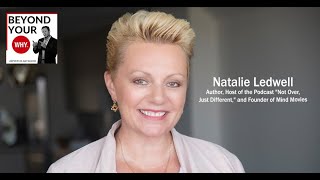
Natalie Ledwell built Mind Movies, a digital vision-board tool that made $700,000 in its first week and reached over 10 million users. The app combines images, present-tense affirmations, and music to trigger emotion and align thoughts with action. She now runs Personal Growth Studies, a social-emotional learning curriculum in schools including pilot programs in Liberia and Texas.
Questions this video answers
May 24, 2023
$700,000 (week-long launch)
$97
October 2018
Knighthood by the Orthodox Order of St. John
Chapters
Welcome to beyond you'd why Podcast, where we go beyond just talking about your why and actually help you discover and then live your why. You see, we believe that knowing your why, that driving force behind every decision you make and every action you take, is the essential first step to really knowing yourself. It allows you to move forward faster and have a bigger impact. If you're already a fan of the show, then you know that every week we talk about one of the nine whys and then we introduce you to somebody with that why so you can see how their why has played out in their life. This show will be more powerful for you if you've already discovered your why. If you still need to do that, head over to whyinstitute.com and discover your why today. It'll only take you about five minutes. Now let's meet today's guest.
And so this week we're going to be talking about the why of Contribute to contribute to a greater cause, add value, have an impact in the lives of others. So if this is your why, then you want to be part of a greater cause, something that is bigger than yourself. You don't necessarily want to be the face of the cause, but you want to contribute to it in a meaningful way. You love to support others and you relish successes that contribute to the greater good of the team. You see group victories as personal victories. You are often behind the scenes looking for ways to make the world better. You make a reliable and committed teammate and you often act as the glue that holds everyone else together. You use your time, money, energy, resources and connections to add value to other people and organizations. And so today I've got a great guest for you. Her name is Natalie Ledwell. She is a best selling authority, host of the podcast Not Over, Just different, co host of the cable TV show Wake up and founder of Mind Movies, the hugely successful revolutionary online personal development company that has reached over 10 million people worldwide. Right now she has launched her groundbreaking social and emotional learning curriculum entitled Personal Growth Studies into Schools here in the US which is designed to empower youth from ages 5 to 18 years to to live fulfilling and successful lives with high self esteem and a vision for a bright future. In October 2018, Natalie traveled to Liberia where she met with government officials and launched Personal Growth Studies into a number of schools which is now in its second year working with over 1000 students. In 2020, Natalie had the immense honor of being knighted by the Orthodox Order of St. John, a humanitarian group recognizing individuals who are who are not only doing great work but who have a big vision of the work they want to complete in the world, helping others. And she has also been awarded one of the top 50 women leaders in Los Angeles. Natalie, welcome to the podcast.
Well, it sounds like from my bio that that is absolutely my. Why.
Picks me like a dirty nose, as we say in Australia. Exactly.
Contribute to a lot of areas, but in a very meaningful way. Yes, that is a very impressive bio and we are going to jump into that here in a little bit. But first, Natalie, tell everybody, you know, where are you from? Where did you grow up? What were you like in high school?
Wow. Okay. So I actually grew up in a country town in Australia. The town is called Orange. I'm one of eight kids from a big family. I had a fun upbringing in such a big family like that. And high school, actually, all the way through school, I was always, you know, a top student. I was the star of the athletics team. I was on the debating team. I was in the school plays. I was choreographing the, you know, the dance numbers in the plays and so forth. So I was definitely an overachiever.
Was good at a lot of different things and loved excelling. Like, I loved to sort of be in that role. So. But I also, when I think about it, would champion different causes as well. Like, I remember the school, high school that I went to, our school uniform, because in Australia we all wear school uniforms, was this black box, pleated, heavy tunic that we would have to wear. And. And in summer it was unbearable. It was just awful. And I remember, you know, starting a petition so we could change our school uniform. You know, I remember also wanting to do, like, one of the school sports. Elective sports was weight training, but it wasn't available for the girls, only for the boys. Well, I was not having that.
So I started weight training at school for sport, which was interesting because that led into my first career. Because I ended up leaving school at 15. My parents couldn't afford to keep me at school to do my high school certificate. So I left at the end of year 10. And one of my first jobs and careers was working in the fitness industry. I always wanted to be a teacher, and so I became a ropes instructor and, you know, and a trainer. And we started managing fitness clubs when I was 21 years old. So that kind of led into that. And I left home when I was 17. I left my hometown when I was 18 and moved to Sydney, which was the big city near me. And then, yeah, like I said, I started managing clubs when I was 21 and met my husband around the age of 25. And then we had a whole series of businesses which we, you know, we're still in business together now. So. Yeah.
So for those of you that are familiar with the nine whys.
Natalie's why is to contribute to a greater cause. Her how, as you're hearing, is to challenge the status quo and think differently. Not to follow the rules, not to follow the typical and traditional. And her what is make sense to bring solutions that make sense. So for wise to contribute to a greater cause. How she does that is by challenging the status quo. And ultimately, what she brings are solutions that make sense. And so we already see that coming out in the way you went through high school, so you took on so many things that people needed help with, challenged how things were being done or said they had to be done, and you came up with better solutions that made sense.
Yeah, absolutely. Well, that's one of my. I used to call it my stupid human trick, but I now I call it a gift because I can look at something like how I created my success or how I built my business or anything like that, and then be able to structure it in a very teachable way. You know, the same thing has just happened. Like, when I started mind movies, you know, I fell into that by accident. And, you know, a friend approached my husband at the time, and I. With this idea of creating these little slideshows, you know, affirmations and photos and music. Like, it's like a slideshow of, like. Like a vision board of what you want your future to look like. Now, at the time, we didn't know anything about the Internet. Glenn could hardly turn on a computer. We already had four businesses. So it. I don't know whether we can go into this. And we're 40 years old, so, you know, at that age, I'm having to learn how to, you know, write emails and set up autoresponders and edit videos and all these skills that were outside of my comfort zone. But the gift or the. You know, what I think has really helped us in that is that we didn't know what we were doing, so we're kind of figuring it out. So we didn't have a preconceived idea of how it should be done, you know, so we went, okay, this is our past business experience. These are some programs that are teaching us how to do this. So we're gonna. We're gonna do it in a way that we, you know, know well or that. That we will learn. So we were one of the first companies that had a personal development product online that had massive success. Like. Like our first launch of my movies in 2008. We. We. During the economic CR 2008, we did a $700,000 week.
Wow.
Selling a little $97 product because we went, okay, well, we're bringing our flavor or our experience to. To, you know, to these systems that exist. But we're doing it in a way that's like no one else has done.
It before, you know, so $7 product.
97.
A $97 product. Okay, so let's talk about this for a minute. So you. You two were struggling through four. You said four other businesses.
Yeah.
Like, what kind of business? How did you get into those? So out of. Out of school, you got into fitness? Out of that, you got into running gyms. And then what was your first business that you started?
Well, the first business I had with my husband was a nightclub.
Okay.
Back in the 90s. And it's, you know, you think about that nightclub life. That was the epitome of that. You know, we. It was dance music, 6am license. It was crazy times. You know, when I was working in fitness, I felt like I was making a difference. I felt like I was, you know, doing something positive. Like, I was actually on stage lecturing to club owners from all over Australia on how to systemize their business and how to manage their teams. That was my wheelhouse. I was 24 years old. And then we ended the nightclub, and I'm like, ooh, I don't know if I'm meant to be here. What is this? And I had to really wrap my head around it and go, okay, well, everything I learned in this service industry of fitness, I can apply to this service industry of nightclub kind of thing. So we had great success with that. And then we kind of went through what I call my beige years, which was like, a lot of different businesses. Coffee franchises, advertising companies, property development. We were just kind of going through the motions. We, you know, we. We were good at business, so it didn't matter what kind of business. But once we had our friend approach us with this idea of setting up the website with for mind movies, and we started getting all these emails from people going, this is changing my life. It, like, it lit that back up again in me. I'm like, oh, now I feel like I'm making a difference again. I go, boys, we need to really put our effort into this. Like, how do we figure out this Internet thing? Let's do this. So that was. That was that journey into that. So I think I had enough time where I'm like, I don't feel like I'm doing anything great to. Okay. I feel like I can make a difference again. Let's make sure we do this.
That makes a lot more sense. So you had these other businesses that were making money, and some were not making money, but they weren't really making.
A difference, and they weren't fulfilling. Yeah, exactly. Yeah.
And so then when you started. So let's go. What got you interested in doing your own vision board?
Well, we had just seen the movie the Secret.
And this. Well, we'd seen it a little while before, so we understood the importance of being able to visualize and be able to see and feel what it's like to be in that future. But then the Secret was on Oprah. So we had seen the movie maybe six months before that. And, you know, we're handing out this movie to all our friends. Go, you got to watch this. It's amazing. And everyone's like, I didn't get it. I'm like, seriously? And then, of course, it was an Oprah. And, like, everyone's like, oh, I get it. And, like, whatever. But so. Because there was this big wave, and people all of a sudden were starting to understand. I mean, we were ahead of the curve on the understanding part of it. That's why when this opportunity came along, like, even though we had no idea about the Internet, the only reason I used a computer is for banking and bookkeeping. I spent no time online. But we understood how. How amazing an idea this was. And because of all of the. Even though the beige years, like, we were going through the motions, there was something that we picked up from every one of those businesses that we applied to my movie. So we were ready for it. So, you know, sometimes, even though I felt like I wasn't completely happy in those years, it just kind of felt like I didn't have any significance or meaning or fulfillment. It was building, obviously, so that I was prepared for this particular opportunity when it came along.
So you took the concept of a vision board. So I've seen the movie the Secret. In fact, John Assaraf was one of my coaches for a while, and so I'm very familiar with vision boards.
But you took it and then turned it into something that was a movie, and why was it important that it become a movie?
For a number of reasons. Number one, the affirmations are basically you being able to sit down and drill deep on what it is that you want your life to look like. Okay? So, but. And the. The way that you're using the words around it, which are important because words carry energy. You're using positive language, you're describing it in present tense, which makes it easier, once you read those affirmations, to see it as if it's happening in your mind. So that was really important. Having the visuals meant that if you found it difficult to visualize a future like this, it gave your mind image to start with and to build on. But the secret sauce is the music. Because it's not just what you see when you visualize, but you have to feel the emotions that you will feel when you experience that moment for reals, you know, so you could be feeling joy, happiness, gratitude, relief, accomplishment, whatever that is. But the music helps you to feel that emotion. You know, it kind of helps to get you there. So the combination of all three of those things, you know, and really getting clear about what you want your future to look like. Because we can all say, I want to be happy and I want to be wealthy. But what really helps you to crystallize that is, well, what does wealth mean to me? What does my life look like when I have all the money that I want? Or when I'm truly happy? What does happiness mean to me? And what does my life look like when that's happening? And, you know, I also get people when they're making in my movies, go, well, why. Why do you want this? What's your why here? And for some people, especially people who have a why, like me.
If your why is something extrinsic outside of you, it really motivates you a whole lot more than if it's something that's, you know, personally for you.
You know, we didn't. For those of the. Those that are listening that are not familiar with a vision board, tell them, what is a vision board? Because we should have probably started there. What is a vision board?
Well, if you saw the Secret, and, you know, John Astro, that was his. His part in the movie. So a lot of people would cut out photos of the kind of house they'd like to live in, although. Or the car that they want to drive or the vacation they want to go on. So that when they looked at that board and looked at those pictures, it was easier for them to be able to see themselves on that beach, will see themselves driving that car in their mind. Now, the reason it's important that we see it in our mind and we're able to visualize this is because, you know, thoughts become things. And what helps us to Become a vibrational match or like a frequency match to what we want is, number one, our thoughts, number two, our emotions, and number three, our actions, right? So when we can have this very clear vision in our mind and, and not necessarily seeing ourselves in a movie, but, you know, imagine yourself actually sitting in the car. Feel the seat underneath your bum. Like, you know, see your hands on the steering wheel. You know, what's the logo that's on the steering wheel? You know, when you put your foot on three foot put down on the accelerator and feel the car take off. Like when you are creating and utilizing all of your senses as you're in that visualization, and then you're feeling the thrill and the excitement of driving a car like that, that's what you're going to be feeling, and that's what you'll be seeing when you're in that moment. So the more real you can make it, the subconscious mind doesn't really know the difference. It actually thinks it is something that's happening right now. And so what naturally happens, you start to create these new neural pathways in your brain. And, and we, all our thoughts travel along these neural pathways. Well, these new neural pathways have thoughts that are in alignment with this reality that the subconscious mind thinks is happening now. Now these thoughts automatically, positively influence your actions. You know, so now you start to notice more of those cars. You start to, you know, take action. You, you go to a dealer, you sit in the car, you, you know, you, you do the math to see whether it's something that you could afford. You figure it out. So that's why visualization is most really important when it comes to, you know, manifesting what it is that we want.
So once you have a vision board, then how does that change into a mind movie?
Well, the mind movie is like a step up from that. Now, you may use the same images or the same photos that you would use on a vision board, but now you're adding your story, your narrative, which is your affirmations, and then you're adding your music. So the music is already going to like, for example, I met my partner during COVID.
I had a mind movie about the type of person I wanted to meet. The things that we do, what our relationship looked like, how I felt in this relationship. And of course, I used a love song for that, my movie, because that's the emotion that I want to be feeling when I'm in this relationship. Actually, when I, I met him In August of 2020, it was about three months later that I showed him my Mind Movie. And he was like, okay, first of all, that's creepy because that is us. I'm like, exactly. You know, I knew exactly what I was looking for. So on our first date, when we walked for an hour because it was Covid, I recognized him straight away. I knew it was him because I was very clear about what it is that I wanted and that showed up in our, in our first date.
So did, did he have a mask on at that time?
No, we were outside. So yeah, yeah, we were a little bit apart and we were walking outside in the sunshine. So.
Yeah, yeah, exactly. So the. And. But then the music plays a completely different role as far as the intensity of it is. Is that what it is? Is the music gives you the intensity or gives you more of a feeling or how does the music work?
And then it elicits an emotion and the emotion that you want it to elicit is the one that you are going to feel when you are experiencing that. That's why I chose a love song for that particular My movie. The mind movie that I have around the Personal Growth Studies project is a song called Beautiful by Christine Yaguilura. Now when you listen to the lyrics of that song, it's all about, you know, it doesn't matter what people say, you're beautiful. And it's, you know, talking about building the self esteem of, you know, of children and of people. Well, that's what the program's all about. Actually. I get goosebumps when I talk about that. So. So that's a perfect song for that mind movie. It's like, what's that? What's a song that could be a theme that really, you know, illustrates that. Like my original, my movie. Back in 2006, I made my original. My movie was a song called Clocks by Coldplay. And again, I'm all about the lyrics. So part of that song is about, you know, am I, Am I part of the cure or am I part of the disease? Like, am I making a difference? What is, what am I doing in this world to make things, you know, a different thing. So I can't hear that song and not be brought to tears. Because that my movie was the beginning of everything that I have in my life right now, which far exceeded anything I could possibly have dreamt up for myself.
So you had a mind. So let's go back to when you guys.
Did your first mind Movie. I think you said it was a friend that suggested it or gave you the PowerPoint and the music and whatnot.
Yeah.
And then you were able to bring that to 10 million people. Now how the heck did that happen? A lot of people listening to this that have a great idea, but can't get it to 100 people, much less 10 million.
Right. Well, that, that is over a 12 year period. And, and like I said in the beginning, we went, how do you do this Internet thing? If you've got a great idea like this, how do you get that out into the world? And so the first thing we did was buy a program online that taught you how to, you know, do this marketing thing. We came across a guy called Frank Kern who lives in San Diego. He's one of the legends we, you know, obviously he's good at what he does because we found him online when we were just searching. We implemented one idea from that program and made our money back that we, that we paid for the program, which was like $2,000, which at the time was a lot of money. And then he announced he was doing a live event in San Diego in April 2008. So we came across, we went to that event, we got accepted into his mastermind group. So now we're sponges. All the friends that we met, they're all Internet marketers. We're in this, you know, marketing mastermind. We're getting access to Frank. We're meeting all of his mates, which are the Jeff Walkers, and all the other, you know, big Internet marketers as well. So we were so intent and so focused and again, we had a mind movie for the launch of our program as well. What that looked like, how many people we were reaching, our monetary goal, what life looked like on the other side of it. We were very clear about what it is that we want. And we watched it every single day, you know, to keep us on track. So, you know, we went, okay, this is a digital product. Let's figure out how to blow it up. Which we did like, you know, six months in, $700,000 launch. So when we went back to Australia, then we came back the next year, I mean, we were getting emails from Jack Canfield and John Assaraf and Joe Vitale going, hey, we'd love to work with you guys. We're like, okay.
So you did, sounds like you did a lot of joint ventures.
Yes. Oh, absolutely. Well, that's how we got started. You know, we, we hired, we got a couple of guys who came in as our JV managers. They reached out to anyone who had a program online or had an email list in the personal development space and, you know, a few outside of that and that's how we, we got that first launch happening. That's, that's how we got that great success.
Okay, so your first launch, you.
700,000 for that. So, you know, $97 person has 70,000 people, something like that, which is a huge number. Huge number by any standards. That's a huge number.
Yeah.
Now you gotta. And then, so how did you go from there to continually adding and adding and adding? Was it more launch type things or did it just happen organically or how did that take place? Cause I know there's people that are listening to this that are, that's in their mind. They're like, all right, well, tell us what you did.
Yeah. Cause that's, you know, not only did a lot of people mail for us and promote us and we paid them commission for that, but then, you know, part of our, you know, offer to them is like, well, if you mail for us, we'll mail for you. Now we've got this hot new 80,000 list. Our list went from 8,000 to 80,000 in that launch. And so now we're all working together. We're collaborating with sort of, you know, all boats are rising. And also part of that is, you know, because a lot of people will give out affiliate prizes and we had no money. Like, even the JV managers, we had to promise them a percentage of the launch because we couldn't pay them upfront. You know, how these guys believed in us, I don't know. But, you know, we were convincing. And, and so part of the affiliate prize was like, we're going to do a party because we're thinking, what are we good at? What can we do that's not going to cost a lot of money? We'll throw a party. And we're good at that. So a lot of our affiliates got to meet in person for the first time. And so for the longest of years, we would make sure that at least once a year we'd all get together, we'd share all the latest stuff that was working for us. Because we know that in an environment like this, if my stuff is converting and we're getting to reach more people and you're promoting me and we're serving your people and vice versa, then we all win. Everybody wins. The, the people that we're serving and each other as well. So we were always very open and like, this is what's working for me. You know, make sure that you do that. Like, it's, it was an amazing way to do business, to be honest with you. We absolutely love it. To this day. And we still have affiliates that we, you know, promoters back in that original launch that we still do business with. So.
And I can't imagine. I mean, I can imagine that everybody that went through your program and actually did a mind movie saw some results and probably some pretty amazing results.
Oh, yeah.
What's been like your favorite story of somebody that you've worked with that has created a mind movie and seen it come to life?
You know, I. I mean, we have hundreds of thousands, especially over the years. The ones that I love the most, especially from people who didn't believe that this was going to work, you know, they came in pretty skeptical.
And went, look, you know, I'm going to do this. And. And maybe, you know, they've a little bit technically challenged and. And thought that maybe they wouldn't be able to even create the mind Mimi in the beginning.
But they went through that. They've watched their mind movie and it's like they send me these emails going, you're not going to believe what happened. I'm like, I bet you I do.
Yes.
You know, and especially when they're. It's. It's not like they're asking for outrageous things. You know, they're asking for, you know, a safe place for them and their family to live. You know, they're asking for, you know, you know, environment where they can write a book or they can step up and serve in their own way. You know, that's, you know, those are the ones that really make my heart sing. Because I understand maybe a little like I can't completely understand or comprehend the ripple effect. Yeah. Of what that looks like and what that is and how. When people make their own mind ev. And how that influences not just the immediate people around them, but the ripple effect out from that as well. It's just mind blowing. So when I think about 10 million people who've made a mind movie and how that's positively influenced them and the people that they love, that just blows my mind.
Wow.
One of the things I remember back to when I was creating my vision board with John Asaraf, and the hardest thing for me was to figure out what I want. How do you help people figure that out? I mean, I just. There's an unlimited menu of things you could pick. So how do you decide this is what I want with my life? Or is there a way to narrow it in or focus it in to say, maybe it's just what I want. Want a year from now? Or maybe it's just what I want a year from now in this area of my life or how does that work?
Yeah, well, and I think people get a little immobilized by that thought because really, we can manifest anything we want.
So I do break it down into areas of life. And I always say, remind people, this is what you want for now. That doesn't mean that you're not going to create something else down the track. You know, let's just focus on this for now. And there's a lot of people who go, look, I. I want to have a life where I've got my own business, where I'm making, you know, I'm financially free. I don't have to worry about money. But I don't know what that business is. I don't know. I don't know. Have no idea what that could be. You go, that's fine. This is the perfect place to start. And so when I get them to set an intention or to start to make a mind, maybe I go, you don't have to know what the business is yet, but describe what your life looks like. You know, I have an outrageously successful business. I get to help people all over the world. You know, I work a certain amount of hours per day. I earn a certain amount of money per month. And this enables me to, you know, travel and take my family on vacations and send my kids to college and do all these kind of things. That's all you need to do is start from there. And then once you kind of feel what it's like, okay, yeah, you know, you're visualizing in your mind, you're waking up when you stop sleeping, you're having an easy morning, then you're doing some work. And even, like, what I often do is, especially if people want to help others, I go sit. Because when you're visualizing, I go, don't visualize a ton of different things. Just visualize one moment.
So sometimes that moment could be sitting across from somebody else and they've got tears down their face and they're holding your hand and they are thanking you because what you taught them or what you gave them or the program or whatever, that you have changed their life and it changed the life of their children. How are you going to feel in that moment? What does that feel like? And when you can make that real, what happens is that the emotions and the thoughts that you're sending out are really in alignment with that moment. And so what happens is that things that were going to help you to create that moment in the reality that we're Living in right now start to naturally gravitate towards you. So. And you're kind of leaning into it like, okay, well, if it could be a business, what am I good at? What have I done in the past that I've liked? If it could be anything, what do I think I can do? You know, and then you start to research, well, what does that look like? How could I do that? Are there courses that teach me? And. And as you lean into it and take these little steps forward and you keep seeing yourself in that moment with this person just absolutely undyingly grateful for, you know, how you help them, then things start to fall into place. And that's kind of how it works.
Is there a common theme that you see in mind? Movies? I mean, you've seen so many of them now, probably. Do you. Is there like a trend or a theme or something that you kind of see over and over where you can help people at least get going?
Yeah.
Get on a road. And then once they've started, then, okay, you know, you can't move a parked car or you can't steer a parked car. So you get them going and then you can steer it as they go.
Yeah, yeah. So I mean, I normally break it down and go, okay, choose a life area. One area of life to focus on. Because when I'm teaching not just how to make a mind baby, but all the other mechanics of applying the law of attraction and then releasing your limiting beliefs and then working on who you are and how you show up, you know, there is. The common things that come up are obviously wealth creation, like how do I create more money? How do I create a business or a career that I feel passionate about that I feel like is making a difference. Health is a big one as well, because we have, you know, so many people that are suffering in pain and disease and different conditions and love. So they're the main common themes that come through. And I know some people are like, oh, but I want everything. I want to love and I want to feel good and I want some money and I want to start a new job. You know, it's like, it's okay, just focus on one. But you'll find that as you navigate through life and you know, one of the foundations that I teach on how to. To be in this process of creating what you want in life is you really have to be in a high frequency, you know, our emotions and our thoughts, the frequency we send out into the universe. And so we want to be in high frequency emotions. So things like, you know, Happiness and joy and gratitude and accomplishment and pride and willingness and courage and. And those kind of emotions. And the more we hang out there, the easier it is for things that we need or things that we don't realize we need to be able to. To be attracted to us. Yeah. But if we're focusing on our debt or our pain or our loneliness, then all we're doing is creating more of that. And we kind of need to, you know, consciously and purposefully and intentionally step out, step outside of that and get into that higher frequency.
So by higher frequency, you mean just set your focus or intention on positive things versus negative things.
Yeah, and. And, you know, be in a state of gratitude.
Okay.
And do things that make you feel good. You know, that could be playing music that, you know, helps you dance around the house a little bit. For me, it's taking Bella out for a walk along the marina. I have a convertible. Sometimes it's, you know, driving in the car with the roof down now, I feel so grateful. The car that I drive here in the US I could never afford in Australia. So I feel very affluent when I drive that car. And especially if I'm driving up pch, that's the road that you see in all the movies. And I'm like, I live here and I drive this car and this is my life, and I get to help these people. I'm like, you know, I'm crying with gratitude, you know, and. And noticing all those kind of things, you know, doing. Paying people compliments, you know, during random acts of kindness, whatever. Whatever that is. But if you can pepper these little activities throughout the day, then you're kind of getting these little positive injections. It's kind of keeping you in that higher frequency.
I love that. You know, let's talk about this for a minute, because there's a. There's a lot of confusion, misconception about the Law of Attraction because a lot of people saw the movie the Secret, and they got the feeling that I don't really need to do anything. I just need to sit here and think about something positive and my mailbox going to fill up with checks. And let's talk about more of the reality of the Law of Attraction.
Yeah.
What have you seen as far as the. I don't know, the myths or the misconceptions versus the reality.
Yeah. So there's a couple of things. I mean, when I teach how to manifest, like, the. The Law of Attraction formula for me is, number one, the foundation, which is, you know, being a happy place, you know, being that High frequency. As often as you can, you want to set an intention, which for me is like a line in the sand. Like, I am going to, you know, I have an outrageously successful business. I, you know, whatever that is. And I say it was such conviction that I'm like, no matter what this thing is going down. I'm. I'm. This is my intention, which already gets to start, you know, things to start moving. Then I get really clear about what I want, which is when I make my mind moving. So I think about, you know, what it is they want. I think about what life looks like, you know, once I have it. I think about why I want to do this. I also think, you know, are there any actions or things I need to do? You know, I kind of add that to my mind maybe. And then I also think about how I need to change the way I think. So if our thoughts and emotions are the frequency that we send out, and we want that to be the same frequency as, you know, what we want to, you know, to create what we want, you know, our thoughts have created the reality that we have now. So it's like, okay, well, if I'm not happy with my reality now, how do I need to change the way I think? So I become really aware of any negative thoughts that come up, any old patterns, behavior patterns, old limiting beliefs, you know, and go, okay, well, I'm going to replace those with these thoughts so I can, you know, remind myself of that. And then obviously, you know, visualizing. And I mentioned before how you want to really elicit all of your senses when you are visualizing and just visualize one moment, one scene, and make it as real as possible. Of course, you know, actions is the next one after that. And you want to be taking as much consistent action as you can, like every day. Go, what am I doing today to move forward? What. What do I need to. What phone calls do I need to make? You know, do I have to get my website built? Like, what is it that I need to do? But be conscious of always doing something that's moving you forward. And then the last step, which is kind of the hardest one, which I think a lot of people with the secret, they again, they kind of miss that I actually have to do something to make it happen. I mean, it was in there, but people were just so smitten with the. Oh, I just have to think it in it and it happens.
Is that you have to let it go. You know, you have to get to a point where you can't be married to what it's going to look like when it shows up or how it's going to happen. Because, you know when you do that, you're shutting yourself off to all these amazing different ways that you could never think of on how this is going to come to fruition. But you've also got to not just understand, but live from a place where, where you know that everything's happening in divine timing exactly when it's supposed to. Now, I'm a very impatient person, so this has been a difficult thing for me to master because, you know, like the, the kids program I've been working on for years. Years. You know, I was ready for Covid, you know, and then Covid hit and I'm like, seriously.
But now it's the perfect time for, for a program like this. And, you know, we've got a couple of big school districts in Texas that we're working with now. And so it's, you know, it's divine timing. You know, it's. And we, you kind of have to release that. You kind of. If, if we're desperate and we kind of, you know, impatient and frustrated, there is, these are low frequency emotions. They're not moving us forward. So, yeah, you've got to do all of that and then go, all right, we'll see. We'll see how it happens. Let's see what you know and be open to the surprise.
Yeah, you touched for sure on the part that a lot of people missed when they watched the movie, which is you got to do something. I mean, you got to take some action. It's not just a matter of, you know, sitting under the tree with positive thoughts and waiting for someone to drop some money in your lap. Right.
It's.
And I heard people say that type of stuff, which, you know, it's possible it could happen, but the odds are that it's not. And then they're frustrated. Oh, this is just a bunch of bs, right?
Well, remember the, really, the trifecta is your thoughts, your actions and your emotions. If you have all three of those in alignment with what it is that you want, you can create anything you want, honestly.
Yeah. So let's talk for a minute then about the kids program that you have.
Now. What is it? Why did you get involved with that? How did that happen?
Yeah, it was a, it was a download. Like, it was an idea that came through to me in, in one of my meditations and I created a, like a little 12 lesson program. But I didn't really, I didn't really felt like I was qualified. And you know, my little inner voice was like, you know, who are you? Like, I don't even have kids. Like, why am I doing this? And a couple of things happened. I had a colleague of mine who has two master's degrees, she's working kids in trauma around the world. And she approached me and said, come on, let's do this together. I'm like, all right. And I remember seeing a news article about a 10 year old girl who had committed suicide because she was being bullied. And I'm like, I know I can make a difference here. Like, I know I can move the needle in, in this area. And so, yeah, I mean, believe me, a couple of times I've tried to walk away from this thing. And of course now I'm in my 50s, like at 40, I'm stepping so far out of my comfort zone. There was no comfort zone when I restarted my movies. And now I'm doing it all over again. At 50, I'm like, Nat, what are you doing? But obviously that's, that's part of my makeup and who I am. So. So yeah, and I've been able to attract some incredible people to this project. And you know, our first two school districts in Texas, over a hundred thousand students, you know, that we get to impact. And this is just the beginning, you know, so.
Or what is it? What is the program mostly around?
Yeah, so it's psychology based and science based. So yes, we do have things like meditation and yoga and, and we, and common things like gratitude and empathy and you know, self love and, and so forth. But we're also teaching kids how to self regulate their emotions, you know, tapping into what makes them feel good, you know, setting their own personal standards, figuring out who they are, how they want the world to see them and you know, how to be part of community, understanding what their sense of belonging is in the world in which they're in. You know, when I actually saw a 60 Minutes story just recently, and part of the challenges because of the pandemic that a lot of kids are facing right now, and we have 8 year olds right now who have a suicide plan. This is outrageous. But part of it is because they don't know how to control their emotions. They feel like they're alone, they don't understand their sense of belonging and they don't feel good about themselves. So, you know, this program really addresses all of that. You know, when we talk about bullying and suicide prevention, it's like we don't specifically go, you know, we do have a lesson about Bullying, but. But it's like, no. What causes bullying? Where does that start? So that's a lot of where we come in and we look at the foundation of where that begins and start to deal work there. That's where we work. So we can hopefully be preventative as well.
I love that. Well, Natalie.
Last question.
What's the best piece of advice that you've ever gotten or the best piece of advice that you've ever given?
Well, I make a point of surrounding myself with very intelligent people.
And I think someone told me once that I want to strive to not be the smartest person in the room.
So I do. Really. I am a member of several different masterminds and groups where I don't feel like I'm the smartest person in the room. Yes, I feel like I can contribute. Um, but, you know, I. If I'm the. The smartest person, then I'm not learning, you know, so that was one of the smartest, you know, most. Most memorable pieces of information which I have really, you know, adopted and I live my life by. So Covid's been an interesting two years. The longest and shortest two years of my life.
But, you know, because I'm part of these groups that. That really helped me to get through as well. So, yeah, I would say that. That that would be the piece of information.
And masterminds have been a big part of your success.
Massively. Yeah, massively. Because if I'm. If I'm stuck, you know, I have a network of people I can go to. If I can get great ideas, you know, I can share different ideas, I can have fantastic collaborations, and I'm always in a, you know, an environment of learning.
I don't ever want to stop learning.
That's the fun part, right?
Yeah. Yeah.
So if somebody's listening, Natalie, and they want to get a hold of you, they want to learn more about mind movies. They want to learn more about the program you're doing with kids. What's the best way for somebody to get a hold of you?
Yeah, so mindmovies.com is the main website. You can access the podcast there. We've got some free mind movies you can download there. You can find out about all of our programs there as well. And if you are interested in having, like, a social emotional learning curriculum at your school or your child's school, please go to personal growth studies.com and you can email me and connect me through to me through there. And, you know, we can have a chat and I can send you some information. So be wonderful. Let's help support the kids and the teachers.
Yeah.
Natalie, thank you so much for being here today. I was looking forward to our conversation and I really appreciate you taking the time to be here.
Thank you so much, Gary. Always great chatting with you.
Thank you so much for listening today. If you have not yet discovered your why, Please go to why institute.com you can use the code podcast50 to discover your why or your yos at half price. If you love the beyond you'd why podcast, please don't forget to subscribe below and leave us a review and rating on whatever platform that you're using to listen to our podcast. Thank you so much and I will see you next week.
I really hope you enjoyed today's episode and that through today's guest, you heard how important it is to know your why and how impactful it can be in your life and the lives of those around you. Be sure to head over to whyinstitute.com and discover your why today. Remember, the more you know about yourself, the more you'll know about others. I'm Dr. Gary Sanchez and I'll see you on the next episode.
More from Dr.




Women In Leadership: A Need For A Greater Systemic Change With Belinda Clemmensen






