Self-Healing Through Storytelling
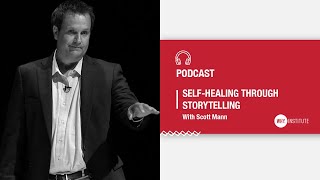
Scott Mann, a retired Green Beret, created a one-person play called Last Out to help veterans process trauma through storytelling. His nonprofit Hero's Journey teaches breathing and narrative techniques that let people access and regulate emotion during difficult transitions.
Chapters
This episode of beyond you'd why is brought to you by our why App. Head over to yinstitute.com to take our free why app and discover your why today.
Welcome to beyond you'd why Podcast where we go beyond just talking about your why and actually help you discover and then live your why. And as you recall, every episode we talk about a particular why. And this episode we're going to talk about the why of contribute to contribute to a greater cause, add value, or have an impact in the lives of others. So if you remember, these are people that use their time, their money, their energy, their connections to help other people move forward. They don't necessarily have to be the thing, but but they want to be part of it so that they can have an impact in the lives of others. But what's interesting is when you put somebody with the why of contribute in a leadership position, they actually do extremely well because they help the people around them do better. And so today I've got a very special guest for you. I'm going to just read you his bio so that you can see all that he's done. Now. His name is Scott Mann. Now, Scott spent 23 years in the United States army and 18 of those years as a Green Beret in Army Special Forces where he specialized in unconventional high impact missions all over the world including Colombia, Ecuador, Peru, Panama, Iraq and Afghanistan. Scott's problem solving abilities were honed during long deployments in places where trust was absent, conflict rampant and only seconds to make real connections with local communities. And using his head, his heart, and when threats closed in against these communities, his hands. With those skills, Scott now helps organizations gain a better understanding of their internal culture and their external relationships while exposing the potential for conflict that exists when trust has deteriorated. In the same way, he empowered local tribes in Iraq and Afghanistan to make transformative decisions using very few resources. Scott teaches corporate leaders and special operators, law enforcement and high performance entrepreneurs and their teams to create strategic opportunities through the relationship building techniques that drove so many of his successful Special Forces experiences. He is the author of two Amazon number one international bestsellers, Game Changers, Going Local to Defeat Violent Extremists and Mission America Straight Talk about Military Transitions. Scott appears frequently on cnn, Bloomberg, Fox and Friends, Fox Business News, Newsmax, and dozens of syndicated radio shows including National Public Radio, Wall Street Journal Radio, Fox News Radio, and the Jim Bohannon Show. His OP EDS have appeared in the Tampa Tribune, Washington Post, and Small Wars Journal. Scott lives in Riverview, Florida with his wife Monty and his three sons Cody Cooper and Braden Scott, welcome to the podcast.
Hey, Gary, thanks for having me, man. Good to talk to you.
Yeah, you know, I just. So I met you a while back through another Y coach, a good friend of both of ours, Jerry Lujan, and I got to hear you speak. What was that about a year ago here at the Canyon Club?
I think it was longer than that, Gary. I think it might have been a couple years ago.
Wow. And then I got to see you. You know what's not in your bio there, Scott, is your play.
Yeah, yeah. I'm now a playwright and an actor. How's that for a midlife crisis?
Well, so for all of you listeners, I saw the play about two weeks ago. It opened here in Albuquerque, and it was awesome. And I walked in, Scott, with my pockets filled with Kleenex. I knew I was gonna cry.
Yeah, it's a fast moving play. Last out Elegy of a Green Beret. And it hits you right between the running lights. Doesn't matter if you served or didn't serve. When you leave, you will feel like you did.
Yeah. Tell everybody a little bit about it and why did you do it?
Yeah, so I wrote the play starting about two years ago, and I, you know, I actually, as a public speaker, I was taking acting classes, and several of my coaches and mentors advised me that I should think about writing about my experiences in the war and putting it into a play, if nothing else, just for my own healing. And. And so I started kind of doing that. I'd done some short one person shows as part of my acting classes, and I really liked it. I liked the way it felt. I liked the truth that I was able to put into it. And there was something about the live stage, Gary, that just really resonated with me. And I thought, man, if we could get this story of how the war, you know, everybody knows the story of the Navy Seals and the Marines that go in first and, you know, do all the stuff, but no one really knows about the last out the men and women and their families who just keep going year after year after year after year, in some cases for decades. And so I wanted to put. To tell a story like that that had been my life and others, and that's how it came to be. And then once I saw the emotion in it and how raw it was and how much it involved things like post traumatic stress, and then I felt like I needed to be the guy on the stage along with other veterans. And that's what happened in November 11th of 2018. We rolled it out for the first time, not knowing how it would land. And it brought the house down in Tampa. And everyone was like, man, this thing's got to go on. Every civilian in America needs to see it. So first stop, Albuquerque. That's what we did.
And I agree, everybody does need to see that because it brings to life something that none of us really think about. And that's the family.
Exactly. Yeah. There have been other plays. Gary Dunn about the war. Arthur Miller did All My Sons brilliantly after World War II. Post World War II play. John de Fusco did an amazing piece called tracers in 1980, performed by Vietnam veterans about the war in Vietnam. But from what I've been able to tell, no one has done a play about this long 20 year war. And so last out was overdue. And I think more than any other live theater performance has ever done. You will really feel what it is like for the spouse and the children who have to fight the war on the home front. Year after year. You will see a side of the war that you've never seen.
It was uncomfortable and it was powerful, and it was emotional. And just looking around the audience, it was interesting to see the reaction, you know, from the people that were served and then the families, because there was a lot of people that served that were in the audience that said, hey, this has to be told. This story has to be told.
It was so cool, man, because, like, one of my biggest fears on telling the story that I think many of us fear when we write a book or we put ourselves out there is our peers, and certainly in the military, you know, the special operations community, the Green Beret community. I didn't want to get that story wrong. And I was really wondering, how will my brothers take this story? How will the Gold Star moms and Gold Star sons receive this? And what's happened is, it's so neat, is the validation that they feel as they sit in that. In that audience and watch basically their life unfold on the stage and see the nobility of their struggle. I mean, one Green Beret said it best that Saturday night when he watched it. He said, this is spot on. I'm bringing my family tomorrow. And he did. He went back home, he brought his whole family in, and his sister stood up in the Talk back on Sunday and said, thank you for showing me what my brother has been trying to tell me for years. And it just meant the world to me.
You know, when you came and spoke to the board, the Hispano Chamber board before you, when you were just Telling people about it. You were. Your wife was there with you.
Yeah.
And when you started talking about her is when I got very emotional. You know, I hadn't thought of it in those terms.
Yeah. And she's such an amazing woman, and I love her so much, and she's given so much to our family without any recognition. You know, I could come home from the war, Gary, and I could lose it and blow up or whatever and have my moment. And everyone kind of expected me to. But, you know, Monty, my wife, like so many other spouses, she had to keep it all together if she had a moment, you know, she had to go in the closet and yell or she could not show any kind of loss of control because she had boys to raise. And she had to keep it together for me so that I didn't go over there wondering how she was doing and end up getting hurt or killed. And so I didn't even know until I wrote this play, Gary, that how much impact the war had had on my wife and my children. And it was in the creation of this play and in consulting with my wife that I really saw the impact on her and other spouses and family members. And it's why I probably get more emotional on that than anything.
You said something when you were there that day that really struck me, which was saying goodbye. And I don't know that I'd ever really considered that. You know, I don't have a military background, so I never consider saying goodbye to somebody. 17 times, I think you said 17.
Times in 10 years was the, you know, to the best of my. I went back and looked at it. That was the number of times that I did it. And they were always for pretty long departures, some as long as a year plus. And I will tell you, there's. There's men and women probably listening to this podcast that have gone more than that. And that was. Is what I really want to get across to civilians who maybe don't fully understand the impact of this war, which is like, because the war has lasted so long, you know, you're saying goodbye over and over again because it's the same men and women who are going over to fight this thing. It's less than 1% of the American population, and most, it's an all volunteer force. So it's the same people. And, you know, after a while you start, you know, you start really wrestling with these goodbyes because, you know, it can almost lull you into a false sense of security. And I have so many friends that didn't come home that I think would have much rather had a better goodbye than what they had. And good goodbyes are a big part of military life and they never get any easier.
You know, I didn't just until right now. I mean, just a few minutes ago, I didn't really understand what last out meant. You might have talked about it, but I didn't hear it, let me put it that way, because now I get it. You're saying you know who went in first, but you don't know who was there at the end and what happened to those people and what they had to go through as the last ones.
Out of the war. Absolutely. And guess what? They're still there. I mean, you know, my son Cody, who's my oldest son, he was three years old when the towers fell. And next year he'll be commissioned as an army lieutenant and most likely within that year will find himself probably in Afghanistan fighting the same war under the same strategy that I had. And, you know, this is the first time in American history that our children have gone off and fought the war that we didn't finish. And so, yes, the notion of last out is a very, very important topic for all of us. Because if we don't understand the impact of war, Gary, and the cost of it, and if we continue to think that we can just throw some Navy SEALs at a problem or some Army Rangers or Marines at a crisis without fully understanding the impact and how we take care of the force over time, we are going to obliterate a national treasure which is our military men and women and their families who have been run for two decades now. And now it's our kids that are going over there.
Wow. You know, in the play, it opened my eyes to a lot of things that, you know, maybe I heard on the news or maybe someone talked about, but I didn't get it until I saw it. And your play is not just talking about it. It's the emotion and the. You're in the moment with you. And when you talked about the relationship that you formed with the people there and then you were forced to break promises, that was pretty painful.
It was. And I will tell you, we've done it. And I, you know, I've talked about this on Fox News and cnn. And one of my promises to myself when I retired from the military Special Forces was that I was going to be a voice for doing what's right and really being an advocate for. Because this is not an anti war play. I mean, war, unfortunately, is a necessary thing. But I do Think the way we've prosecuted this war, Gary, and the way that we've basically approached local populations in these rough places like Syria and Afghanistan and Iraq, we have really squandered the relationships and trust and social capital with the people who live in these places. When we first told them, we're with you, we're going to work with you at a community level. And then when it became politically inexpedient, just like Vietnam, when we left the Montagnards, we bailed on these people, and they were slaughtered. And to think that that does not come at a cost strategically and internationally is delusional.
Gosh, like I said, people can talk about it, but until you actually see it there and you hear it, I see things differently now. And I'm sure that's part of the point of the movie. I mean, the point of the play.
It is. And it's. You know, one of the things I wanted to come at was I didn't want just exposition. Right. I didn't want to stand up on my soapbox. And frankly, some plays do that, and I didn't want to do that. I wanted to tell stories. I wanted to tell stories that were true. You know, for example, so, like abandoning those locals. It is told through the lens of the main character, Danny Patton, a career Green Beret who's frankly, kind of a hard case in the beginning and finds the utility in working with locals over time. And then as soon as he builds a deep relationship with an elder, that rug is pulled by the powers that be, and he finds himself being forced to abandon a man who's like his father. And I think it's through those local personal stories that are. That are, frankly, based in truth, Gary, that civilians and people in the audience can really appreciate the emotional depth and seriousness of these topics.
So everybody listening, please go see it. It'll be so worth your time. And it'll be, bring Kleenex in your pockets like I did, but bring friends that are in the military, aren't in the military, families. You know, I brought the local colonel of the Air Force base here.
Absolutely. And that was so cool of you to do that. It's for civilians, military family members. Some people brought their kids. I would say if you're going to bring your kids, my recommendation would be teenagers. Although these kids were younger and they did fine, and their parents were right there talking to them about it. In fact, they participated in the talk back, which was beautiful. It's lastoutplay.com though, and if you go there, we have our whole Tour schedule listed, and we're probably coming to a city that's fairly close to anyone listening this.
Yeah. So what else are you doing? I know you're doing the play. I know you got a lot on your plate, and let's talk about some of the other things you're doing.
Yeah, so I appreciate that. You know, the production company that is actually putting the play on is called the Hero's Journey. You know, that's a nonprofit, Gary, that my wife Moni and I founded. My transition from the military six years ago after retirement was pretty bad. I didn't go well. I thought it was going to go well. I had a plan. I had a book to write. I had real estate and all these other things. And frankly, I was retiring, you know, under my terms. But within a couple of days of retirement, it was really not healthy. I found that my identity was left behind and I just was. It was like changing planets, coming from a world of military life into this, you know, very, very foreign civilian world. And. And I struggled, and it went to some pretty dark places. And it was through a couple of mentors on the civilian side. Bo Eason, football player and actor turned storyteller, was one of them. And he helped me use storytelling to get back, to find my purpose again, to find my voice again, to be fully expressed and to tell the stories of my brothers and really start to heal myself from the stage. And I fell in love with the process. And Monty and I thought, you know, if we could help other warriors and family members find their voice and tell their story, that could be a great tool in transition for talking to an employer about, you know, how your leadership in Iraq translates into Walmart, or talking to your kids about post traumatic stress, or your wife having a conversation with her maybe you've never had before in a real story kind of way. So we founded the Hero's Journey, and that has been the coolest thing. We spend two thirds of our life. You know, you talk about contribute. That is my why in this space, helping people learn how to tell their story. Mainly veterans. And so that's where I spend a lot of my time. We just got back from doing it in Chicago.
Yeah, let's talk about that. That was fascinating. Tell everybody a little bit about what you did there.
I teach storytelling. That's my thing. So in my for profit world, I have a rooftop leadership company and I teach the power of storytelling, where I learned that as a Green Beret. Using story, active listening, interpersonal skills to make better human connections, relationships, and then inspire people to take action, you know, one rooftop at a time. And I've translated that into the, into the. Into the veteran community through our 501c3, the Hero's Journey. And so basically we use books. I've written a book called Mission America. I've written kids books. Daddy Keeps Us Free, Mommy Keeps Us Free, the Play. I have an online video series about storytelling. And then we do live workshops. And all of it revolves around finding your voice and telling your story as you come home from military service. And we just did this workshop up in Chicago, Gary, with this foundation called. Or this nonprofit called Oscar Mike stands for on the Move. And they are all paraplegics, quadriplegics, amputees from military service. And they are extreme athletes, rugby players, skydivers, they fly airplanes, dune buggies. I mean, Spartan race. These guys are amazing. And gals. And they keynote. They go around giving inspirational talks. And so I spent two days showing them how they can use their struggle, the injury that they actually had, and repurpose it into a story that helps other people see the. The possibility for their life in spite of their struggle. I call it the Generosity of Scars. But it's a really cool workshop that we do. And it was so neat to see these extreme athlete, these. These injured heroes take the most traumatic moments in their life and turn them into the most beautiful stories you've ever heard.
Wow, I bet that was amazing. I love the way you talk about the military as a treasure. And in the last couple of months, I've gotten to spend some time out here at Kirtland Air Force Base, working with the. The military there, the Air Force, helping them discover their why. So I work with big groups of them and help them discover their why as they're getting out of the service. Because once they get out now, they've got to go into the civilian world and figure out what to do, right? And I know that's a big transition. It's a big challenge. And what's interesting to me is, you know, if they just talk about what they've done, then they have to compete with everybody else about on what they've done. But that puts them kind of at the bottom of the totem pole, whereas they should be starting at the top of the totem pole. They got 20 something years, in many cases, of leadership skills, of so much training. And to start them at the bottom of the totem pole doesn't seem fair. It doesn't seem right.
It's so cool that you're doing that. I think you're really onto something. Jerry Luan and I have had a similar conversation, and I will tell you, Gary, that the reason for my darkness in transition, number one, was I got away from my purpose. I got away from my why. You know, when I was in the military, even though I wasn't conscious of it, I was fully expressed, and I was living that contribute life every day. Even on the bad days when my boots hit the ground, I was fully expressed, nested in my identity, and I knew who I was. And then when I moved away from the military and that contribute factor was taken away from me, or at least it felt like it was, and I didn't know what it was. I was lost, and I was. I got caught up in the what, and I was doing what everyone else wanted me to do. And the other thing that I will say it's really interesting to me is, like, in the military, we understand the power of purpose. In fact, if we give a mission statement, if I'm a, you know, I'm a lieutenant colonel and I give a mission statement to my Special Forces A teams, or if there's a mission to drive F16s into, you know, northern Iraq or even a truck convoy, the two things that every mission statement has is a task and a purpose, a what and a why. And I've interviewed soldier, Marine, SEAL after a big firefight, dozens of times for valor. And I asked them, you know, why did you do what you did? They'll always say three things. One, I'm not a hero. Two, I didn't want to let my buddies down. And three, I knew why I was there. And you could walk that back all the way to Audie Murphy. When we give the American warrior purpose or a why, they will run through walls. They will do anything. And most militaries on the planet don't tell their people that. They just tell them the task. They don't give them the why. But we do. But yet when we leave the military, we don't do that. And so that's why. I think what you're doing with the why is not only so fundamentally important, but I've seen evidence of how it works in life and death. And when you have that why, you'll accomplish amazing things.
I love what you're saying. And one of the things I'm working on with the servicemen getting out of the Air Force is putting together their resume, because what they were doing is just writing down all the what's. This is what I've done. And so what we've done is restructure it. Around their why. This is why I do what I do. This is how I've gone about doing it. Now this is what I've done. That's proof of why I do what I do. It separates them from everybody else. Just talking about their whats, you're absolutely right.
And I will tell you, you know two things on this. You know, I teach human connection at Fort Bragg, North Carolina, at the Special Forces School. I teach it to federal law enforcement. And one of the first things that you learn as a Green Beret is, look, humans are meaning seeking, emotional social creatures. That's who we are. It doesn't matter, you know, our ethnicity, our religion, our socioeconomic status, or how civilized or advanced we think we are. We are very primal in that sense. We are a meaning seeking, emotional, social creat. We absolutely. Our identity is built around purpose. Without purpose, we die. Without purpose, civilizations and organizations cease to exist. We are driven by meaning. And I've seen it all over the world, man. And if people or organizations are not connected to purpose, they just cease to exist in a range of ways. And that's number one, like what you're doing is so solid, it's all backed in science and social reality. Number two, I just wanted to tell you I've got a book called Mission America that our nonprofit put out and in that is, you know, it's about transition. And it's got a lot in there about the importance of purpose and passion. And I wrote it before I met you and Jerry, but I'd love to get you a copy of it and even make extra copies available to those folks you're working with because it is straight talk about transition. And I think it would play a nice position for what you're doing. I'd love that.
I would love to be able to give that to them as they go through the process of discovering their why, how and what. So I take them through the why, how and what, develop their message so they're clear on who am I now, what direction should I go, where I can live my why. Because when you live your why is when you have purpose for what you do. And you are such a perfect example of that. I mean, when you started all these things that you've started, it wasn't because you needed money, Right?
Right. I mean, everything on the outside, Gary, was going fine, but on the inside was completely just devoid of purpose. I mean, I was doing what everyone else wanted me to do. And when I started to get into the storytelling and getting on the stage on the outside, it made no sense. Because it wasn't putting food on the table. I was giving speeches for free. I was paying people to go travel and talk. But I knew that it's what I needed to do. And then most recently when we did the play, you know, I had to go to New York City and learn how to act. I've never acted a day in my life at 50 years old. You know, I'm going to these somatic therapy classes on how to access emotions that I've bottled up for two decades. And the reason someone asked me, they're like, in one of the talk backs at the very beginning, why are you doing this? Like, why are you putting on a play and traveling around the country at your age trying to figure this out? And I said, without even thinking about it, if I don't, I'll die. And I meant every word of it.
Wow. You feel it for sure. You know, it's funny you're saying that about taking the acting classes, because one of the things that went through my mind as I watched you is, number one, how seasoned you look. And number two, how the heck did you keep it together? I don't know how you didn't just break down in the middle there. I don't know. How do you do that?
Well, you know, one of the things that comes out of this whole thing, which is so cool, Gary, is that actually we're very. We're working very closely with psychiatrists and breath therapists throughout and counselors through every aspect of the play, before, during, and after. And we actually do workshops on somatic breathing and, you know, yoga. I mean, we're doing all these alternative therapies basically to allow us to access the emotions of these memories because they're all true. And so we know we're going to get triggered by it. And then what happens is you learn how to use breath to regulate your level of arousal in that moment. And then you just let the emotion wash over you like a 90 second wave. In fact, that's what I teach speakers to this day is like, if you're going to talk about something that is connected to purpose and why and emotion, you better believe that you're going to get emotional. That's not a problem. Just keep breathing. Let the emotion wash over you like a wave. It'll dissipate in 90 seconds and the audience will actually root harder for you when you do that.
How do you keep the tears from flowing?
I don't. I let them flow because it is my body's way of metabolizing an emotional Experience that's already happened, and it's necessary. I think that's part of the problem today in our society is that we condition our speakers and our leaders that they're not supposed to show any emotion. And the reality is, you know, when we lead and when we tell stories, they are emotional, and we need that access to an emotion. Now, I'm not saying you go into a job interview and start dumping and have therapy over your interviewer, right? But I believe emotional access to the miles we've run and the scars that we've accumulated and our struggles is necessary. I'll get up in front of Capital One Retail bank and tell a story, and I will cry if it happens, if it hits me and I don't run from it, I just keep breathing. I go for the ride, and it just connects me that much deeper to them.
That would be challenging, I think, for many of us. You know, recently I had kind of this health thing that happened to me where I almost died about, you know, a few months ago. And as a result of that, I. While I was in the hospital, I got blood drawn 45 times from my left arm. And, you know, over nine days. So your arm looks kind of like hamburger by the time you're done. And every time the phlebotomist would come in to draw blood, they would put the tourniquet on and say, big Pokemon, and then poke me. And some of them would come into the room, like Seinfeld on. I mean, like Kramer on Seinfeld, and just wake you up and cause all kinds of commotion in the middle of the night. So as a result of going through that, I went and I spoke to the phlebotomy school on what I experienced as a patient on the other side of the needle. And, you know, because I get. As a dentist, I've probably given a half a million shots, but there's ways to do it that are not painful versus what I experienced. But as I was telling my story to them, you know, I was only out of the hospital for a few days, but as I was telling my story to them, I got quite emotional, and it was uncomfortable.
Yes. And it needs to be. I know I sound different than a lot of speakers when I say that, but the reality, Gary, in my opinion, is that most of us are inundated with these spit and polished, highly refined speakers who, frankly, are not landing on us at all because they have no emotional connection to what they're talking about. About. It's recited, it's academic. It's in their head. And so there's no emotional resonance. I mean, it might be entertaining, it might be enlightening, but it's certainly not emotionally connective. When you tell a story like you did and you have, that's called the generosity of scars, you have the courage to tap into your struggle and repurpose it for the service of others, so you access those emotions and that pain and that story so that you could help these phlebotomists better do their job and more importantly, not cause that pain to other people. That is the generosity of scars, and it requires a certain access to the emotions that come with that story. And if you'll do it, it won't feel comfortable, but it will connect you to the people who are listening. And so I'm going to ask you now, what was the response of those folks when you got through that story?
I rocked their world. I know that for a fact.
Absolutely. And that will happen every time. What I promise you is this. It will always feel as clunky and crappy as it did when you did that, because.
You went to the emotional aspect of the story, and that's the power of it.
Yeah. It's a little challenging then, to get it back after you get emotional. At least it was for me. And maybe the more times you do it, the less of a struggle that is.
But, yeah, try this next time. Try three deep belly breaths in the moment, you know, where you expand your belly on the inhale and just kind of drop on the exhale, or even one in that moment, just a deep belly breath and take a step to the left or right. Hmm.
I will try it.
Yep. And it will still hit you, but it will dissipate much quicker, and you will find yourself right back where you need to be.
Okay, perfect. That's great. Now I learned something new. I'm going to give that a try.
If you get nervous, if you. If you get emotional, what I tell folks is just go for the ride. Don't try to hold what ends up happening if we panic and we hold our breath. And then what happens is we just forget where we are. So I tell people, keep breathing. Take a big, deep breath. Take a step to the left or right. Go for the ride. It'll pass in less than 20 seconds.
That's a good way to think of it. Yeah. So what have I not asked you that you'd like people to know?
Well, you know, I really appreciate, I was telling you earlier how much you have done to advance this notion of why, and now where you're going with the why. How what? I really love it. I think it's such a service to folks. And, you know, I will just tell you, as a guy that's out there in the trenches right now, you know, two thirds of my life is spent in the nonprofit space. I work with veterans who are often in some very bad places. I still teach Green Berets and law enforcement who have to go into these really bad places. And I never miss an opportunity to talk about you and what you've built with the why and how you're building that out, and do everything I can to push them in your direction. Because I believe what's happened with me and where I am in my life. I mean, I'm six years retired. I was in a very dark place where I didn't think I was going to come out of it four years ago. And now I can honestly say that I'm at a point in my life where I'm living my life as fully expressed, if not more than at the pinnacle of my Green Beret career. And I attribute that largely because I know what my why is. I know what it is, and more importantly, I know when I'm not doing it. And I. And I know how to true back to it. And that has just been such a gift. And I feel like that gift has allowed me to contribute. Right. And to do what I was put on this earth to do. And so, you know, in all seriousness, I appreciate what you do, what you. What you teach with this. And anyone listening to this, I would tell you, take it seriously, live into it and let it occupy you. Because when you're fully expressed like that, connected to your why, there's just no ceilings in what you can do.
You're just such a perfect example of that. I mean, it blows my mind just to see from the outside what you've been able to do by just taking the switch and saying, okay, I'm going to find a way to make a difference. I'm going to find a way to contribute. I'm going to find a way to help these people. And you have found many different ways from storytelling to creating the story.
Yeah. And I think it's just a matter of once you connect with that why and you open up to it, you then, you know, I believe that a lot of this is gifted to you. It's been gifted to me. Like, I can't take credit for really any of it. It just seems to just be gifted to me. The more I follow my why. The other thing I would just say too, Gary, and I would Share this with your folks is, you know, it's a gift and a curse in the sense that, you know, I lost 23 friends in the course of my career, and most of them way too early in their life, and all of them thought they would have more time. And a couple of them, you know, I held them in my arms in those final moments, and, you know, so I've seen buddies leave this world way too soon. And, you know, most of them, they took very full breaths when they took that last breath. And you could even see a life fully lived, the life fully expressed and no regrets. But there were a few times when I saw grown men take very shallow breaths at the end of their life, almost like this horrific realization that they hadn't lived to the degree that they wish they had. And I am not doing that in my life. I have no intention of doing that. And it has been a reminder to me every day. You know, my ultimate metric is that last full breath and having connection to my why and knowing what it is just the most amazing gift. Because even when I'm screwing up, and I do that a lot, I know I'm in alignment with my why. And as long as I'm doing that, it's all going to work out, you.
Know, Let me ask you another question on that. What do you see as the reason, or maybe if you can't answer this, what do you see as a reason that people don't live that life?
You know, I think a lot of it is because we have to feel right. It gets back to what we were talking about earlier. I believe that to truly be connected to your why and live into it, you have to allow yourself to really feel the emotional aspects of that why. I mean, you know, so much of the work you've done has borne out the reality of the connection between the why and the motion. And I think, frankly, it's uncomfortable to feel a lot of the stuff that goes with the development of your why and living into it, especially in the beginning, because it's frigging hard, you know, I mean, it's very hard to do. Just because you know what your why is doesn't mean that it's going to be, you know, a golden road to get it done. In fact, for me, it's been immensely hard. The same way that becoming a Green Beret was hard. Going to combat was hard. Losing friends was hard. Being away from my family was hard. Writing a play was hard. But what's fulfilling is that it fills my cup. I know it's my inner compass pointing in the right direction. But I think for a lot of us in society, we're conditioned not to do that. Stay in the bleachers, don't go in the road. You'll get hurt. Play it safe. The what and the how is so much easier, right, to just do what you're told to do or what you think that you know you ought to be doing and tapping into that. Why, man, that's the great unknown. In many ways. It's ambiguous. It's kind of scary, and I think in this day and age, we shy away from it.
Wow. Scott, I could keep going for hours with you. I can tell right now, and I would love to. So I got to have you on another time sometime, and I'd love to find a way that I could help you or help the. The servicemen that you're working with. Maybe after the podcast, we could talk a little bit about that, because there's so much we could do together to make the process easier for them.
I think what our nonprofit is doing and what you're doing, we definitely need to find a way to work together. Even if it's you and me on stage riffing together in front of some warriors, that'd be a lot of fun.
I think that's great. I would love to do that. So, Scott, thank you so much for being here. Everybody needs to go to Last Out Play.
And look at where's your next show at.
The next show is in Orlando, March 30th and 31st. And then. Then we're all over the country. Tampa, Washington, D.C. on Memorial Day, west coast, you know, and try to get to see it because it's a special, special story.
Scott, thank you so much for being here. I really appreciate it.
No, thank you, Gary. And thanks for what you do.
Take care of.
More from Dr.




Women In Leadership: A Need For A Greater Systemic Change With Belinda Clemmensen






