The Art Of Deejaying: How A DJ Can Touch Your Soul With Steve Olsher
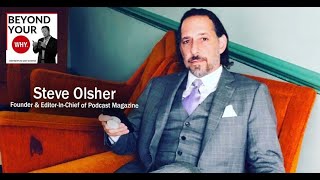
Steve Olsher talks about his path from DJ and nightclub founder through liquor e-commerce, real estate, and podcasting, and why he's launching the One Voice Unity music festival. He explains how DJing is an empathic craft, the power of skill-stacking across careers, and why five-year windows matter for intentional choices.
Chapters
Welcome to beyond you'd why Podcast, where we go beyond just talking about your why and actually help you discover and then live your why. You see, we believe that knowing your why, that driving force behind every decision you make and every action you take, is the essential first step to really knowing yourself. It allows you to move forward faster and have a bigger impact. If you're already a fan of the show, then you know that every week we talk about one of the nine whys, and then we introduce you to somebody with that why so you can see how their why has played out in their life. This show will be more powerful for you if you've already discovered your why. If you still need to do that, head over to whyinstitute.com and discover your why today. It'll only take you about five minutes. Now let's meet today's guest.
Welcome to beyond you'd why Podcast, where we go beyond just talking about your why and actually helping you discover and then live your why. And so if you're a regular listener, you know that every week we talk about one of the nine whys, and then we bring on somebody with that why so you can see how their why has played out in their life. And today we're going to be talking about the why of contribute to contribute to a greater cause, add value, or have an impact in the lives of others. So if this is your why, then you want to be part of a greater cause, something that is bigger than yourself. You don't necessarily want to be the face of the cause, but you want to contribute to it in a meaningful way. You love to support others, and you relish the success of the greater good. You see group victories as personal victories. You are often behind the scenes looking for ways to make the world better. You make a reliable and committed teammate, and you often act as the glue that holds everyone else together. You use your time, money, energy, resources and connections to add value to other people and organizations. And so today, I've got a great guest for you. His name is Steve Ulsher. He is the founder and editor in chief of Podcast magazine, creator of Club Pod on Clubhouse, the largest podcast group on all social media platforms. He's the creator of Pod Expo, original chairman and founder of Liquor.com, online pioneer who launched on CompuServe's electronic mall in 1993, New York Times bestselling author of what Is yous Discover the One Amazing Thing youg Were Born To Do. He's a real estate developer, creator of the New Media Summit, host of the number one rated podcast Reinvention Radio International keynote speaker and an In Demand media guest who has appeared on cnn, the Huffington Post, the COVID of Founder magazine, and countless other media outlets. Steve, welcome to the podcast.
Thanks, man. I appreciate you having me.
Man, that is quite a resume right there. You got to be, what, about 90 years old or something?
86.
Well, hey, take us back through your life a little bit. Where were you born? What were you like as a kid growing up? And kind of take us on your path on how you got to where you are today, because that's a lot of different things that you've done.
Yeah. Born in Chicago, raised in Evanston and Skokie, just north of Chicago. And, yeah, I mean, even from a young age, I think I've been pretty entrepreneurial. Always tried to figure out how to rub a couple of dimes together and make a quarter from as long as I can remember, just doing things like raking leaves.
Shoveling sidewalks and driveways, you know, just really doing whatever I could.
To try to put some money in my pocket. So.
It started out as a, you know, from a really young age of doing the entrepreneurial stuff for sure. And that led to music and the DJing, and opened my own nightclub when I was 19. And then I got involved in the catalog world very early and the world of dot com and real estate, writing, speaking, podcasting, doing live events, et cetera, so. And now, you know, just because that's what you do. My wife and I own a funeral home here in San Diego.
Yeah, I was kind of looking. If you're watching this, then you can see behind Steve there. It looks like a casket.
It is, actually. That would be our provincial casket. Exactly. But underneath that, that one is the. That is the T. Taylor midnight blue casket. So there you go.
You know, I almost asked you about that because when you came on, I wasn't quite sure what I was looking at. It looked a little bit like a big briefcase or maybe I couldn't quite tell. So now I know. It's a casket.
Yeah, it is a briefcase of sorts.
Yes, I guess it is true. Okay, so let's go back. You started doing a lot of different things from a very young age. Why was that important to you back then? When you think back to those days, what was your motivation to jump in so early and start making money?
Yeah, I mean, I'd like to say that there were altruistic thinkings behind that or something that.
Is a little more palatable, but I think at the end of the day, it really Just boils down to scarcity, I think, just having.
After my parents got divorced and we had to get out of the big house that we lived in, and then, you know, just kind of watching mom struggle and do what she had to do. I think, yeah, there was. There was definitely a lot of scarcity talk. You know, I mean, it was the don't set the thermostat. My stepfather came on when I was 10, and it was, you know, don't set the thermostat above 68 degrees. You know, we can't buy this or we can't buy that, that sort of thing.
So, yeah, I think there was a lot of scarcity that went hand in hand there and just wanted to make sure that.
Push came to shove. At least I had a few dollars, if need be.
Were you at that time, like, contributing to the family? Was it mostly for you?
Yeah, it wasn't that formalized.
But it was definitely more of just a mindset, you know, things that kind of kicked in. You know, hey, this is. This is what I need to start thinking about, right? Which is just how do I take care of, you know, myself and I guess, if need be, help out with mom and the family. But it seemed like, you know, generally speaking, the, you know, the fact is they. We had enough to get by, but I always felt like we needed a little bit more. Like, I'm not sitting here saying, you know, I went without meals, because I didn't.
But I just felt like it always would be good to have a little more on hand.
So those of you that are regular listeners, Steve did his whyos, which is his why, how and what. So Steve's why is to contribute to a greater cause, like we were talking about. But how he goes about doing that is by challenging the status quo and doing things differently, right? Not following the typical or traditional, but following his own path. And ultimately, what he brings are solutions that make sense, that are doable and get results. And so we can start to hear that now. And you didn't follow a typical, hey, I'm just going to go to school, play on the sports teams, run off to college, and do the fraternity deal and all the rest, like the typical path, right? You did your own thing.
Yeah, I mean, I did go to school.
Wasn't much of an athlete, really. I mean, I did a few things here and there, but, you know, I'd mess around playing basketball or, you know, those sort of things with friends. But, you know, I wasn't starting on the varsity squad or, you know, playing, playing any of those games really at a higher level. But I did know that I wanted to go to college mostly to have, you know, the college experience, and mostly just to get out of the house, you know, just. That's. That was really the thing. I remember actually sitting down with my guidance counselor in high school when we were talking about going to college, and she's basically giving me all the examples of the different schools and different types of schools and whatnot. And I remember her talking about how if you pay in state tuition, you can pay a lot less than you would pay if you go to a school, because we live in Illinois. If I went to a school in Illinois somewhere, it'd be a lot cheaper than going to a school in Michigan or Ohio or California, wherever. Wherever else. And I was like, okay, so what? What are my options? And she started going through some stuff, and then she talked about Southern Illinois University at Carbondale, which was about 330 miles or so from Chicago. And she said that SIU, Southern Illinois University is farther away from home than any of the big ten schools, and you can still pay in state tuition. So I was like, that's cool. So I can go far away, as far as I can go farther than any of the big ten schools and still pay in state tuition. You know, sign me up. So that's. That's why I chose siu. It was far, and I could pay in state tuition.
Isn't that weird, the reasons we pick the schools that we go to? I mean, I went to University of Colorado in Boulder just because some of my friends that I had fun with went there. I mean, for really no other reason, just went up and hung out with them, and, hey, this seems like a lot of fun, so I'm gonna go here.
Yeah, smart.
It turned out. Okay. So what did you study while you were at siu?
Well, I studied nightclubs.
I djed in a lot of nightclubs, so I studied those for sure.
But no, I studied speech communications, and I had a minor.
In journalism. Yeah, so speech communications was the major, and I had a minor in journalism.
But really what you were doing is.
Figuring out the nightclub world a little bit. I mean, I was really enjoying DJing, and I liked being a part of the party without actually kind of being in the middle of the party. So it was like my. It was my opportunity and my way to be there without actually having to kind of be in the middle of it. And while everybody else was, you know, was spending money, I was there making money.
What got you into DJing?
Well, I played drums for, I mean, gosh, nine years or something like that. And so I've always loved music and rhythm and whatnot. That's just always been, you know, really a big part of who I am on a soul and cellular level. So after I just got wind of the whole DJ scene, I was like, yeah, this is, this is something that I want to be doing. So I, so I traded in my drums for some turntables and started buying records. And back in the day we actually had the vinyl and we were carrying the vinyl around. So it was a little different than it is now with the usb. But you know, there you have it.
And so you started DJing at the different clubs and then take us what happened after that. So this is while you were in school?
It was, yeah, I DJed in a number of clubs during college and then by the time I hit my senior year, it was just like I built up a pretty decent following and it just kind of seemed like, you know, hey, this is something I should do in terms of, you know, contemplating having my own spot because.
I would play and the folks would show up and so I was like, well, maybe I'll just open up my own spot. And at 19 I put together the business plan, went out and raised money and actually opened up a non alcoholic nightclub, if anybody's wondering. Yes, it was non alcoholic, which actually seemed to make a lot of sense because all the bars had to close early because they served alcohol. And for the folks that didn't want to go home at 1:30 or 2:00', clock, they now had a place to go. And you know, we charged them, cover charge and for non alcoholic drinks and some food and.
Did pretty well for a while.
That's pretty smart. And then, okay, so then from there, what happened to you after that?
So from there I ended up going back to Chicago and my mom invited me to come and join the family business. My grandfather had started Foremost Liquor Stores.
Back in the, in the 40s. And so I.
Knew that the family business needed some help and wasn't my first choice in terms of like, hey, this is what I want to do for a career. I didn't really have any love for the liquor business. I'm not a big drinker. I'm, you know, haven't been a big drinker ever.
But I saw that there was an opportunity there to help really grow things. And there was a small piece of the puzzle which was called Foremost Liquor by Wire, which is basically, if you think about FTD in terms of how FTD uses the Network of retail florists for the delivery of their flowers. And that's basically what Liquor by Wire was. Was. We would have a network of retailers.
So basically anybody could call us and say, hey, you know, this is Gary Sanchez. I'm in New York. I want to send a bottle of champagne to my friend John Davis, who just closed his deal in la. So they call us, and then we'd take care of that whole process. And that was Liquor by Wire. Now I just kind of felt like, hey, this is a pretty cool thing. It wasn't doing a lot of business. There was maybe a call or two every couple days. We didn't do much business at all. But I felt like it had a lot of potential, so I focused on that and helped us to launch a catalog in 1991. And then when I was in the grocery store seeing the AOL and Prodigy and Copuserve discs and all that, I was like, well, this looks pretty interesting. Let me see if I can go ahead and get a store for us up on one of these malls. And that's what ended up happening. And eventually that became liquor.com and I bought that domain in 98. And there you go.
That would be worth a lot today. Right. Do you still have liquor.com?
We sold that to berry dealers, IAC in 2019.
Okay, so you were in the liquor business for what, 10 years?
I was actively in it from 91 to 2000. We had the S1 filed. We were ready to go public, and everything imploded at that point. Right. So couldn't get out public. Markets dried up. I had signed away management rights because Wall street wanted to see more advanced leadership. But when it just became very clear those folks had no idea what they were doing, I walked away and literally just walked away from the entire company. Oddly enough, after they closed shop and whatnot, the domain kind of languished for a while in just sort of limbo. I was able to reclaim the domain in 2005 and put together a team out of San Francisco who ran it from 2006, 2007, 8, 9, something like that, whatever it was that we launched officially until we sold it to Barry Dealer. So, you know, I didn't actively have involvement other than a board level for that second iteration. But, you know, in hindsight, I probably should have just ran the damn thing and we would have done even better. But that's. That's a different story.
And so, okay, so then sold it. And then was that when you started getting into podcasts or podcasting and I.
Caught that bug around 2009.
I'd been doing real estate development from around 2000ish, technically 98 when I first did my deal. But around 2000 I started getting involved with it more full time. And so from 2000 to 2006, 7, 8, 9, I developed about 50 odd million dollars in real estate. Unfortunately in the crash, lost a few really good properties, had to give them back to the banks. And that hurt, you know.
That was a hurter for sure. And just kind of woke up one day in 2009. I was just like, you know, I've been doing a lot of stuff that's good for me and those closest to me, but really no one else. And I need to figure out how to do some things that can help more people. And that's when I started writing and started my first episode of POD of my first podcast episode of Reinvention Radio.
And then I kind of got the bug for podcasting, left it alone for a little bit and got back into it for a good solid seven year run, six year run starting in 2015 and did a lot of events around podcasting, launched Podcast magazine. So yeah, it's definitely been a trek as far as podcasts are concerned.
So you were able to.
Impact more people through podcasts than through real estate and DJ and all the other things, you know, just seems like you've progressed larger and larger and larger.
Yeah, yeah, I mean, I think that's a safe way to put it. I'm, you know, I'm in the process right now of really just trying to kind of come full circle and see if I can impact more people through, through music. So just kind of interesting how things, you know, I'll come for a full circle like that.
What do you mean, impact more people through music?
I'm actually gonna be doing my own music festival here at some point. Probably may even get it off the ground here in 2022. But I'll start DJing again and just get back into music because, you know, it's just, it's, it's part of who I am. It's, it's just in my, it's in, you know, it's just in my bones. Yeah.
You know what's interesting about knowing your why now and your how and your what is when we first got on the zoom call right now, and I just look at you visually, I wouldn't have any idea that it's about helping, making a difference, impacting more people.
I wouldn't know that. Right. I would just kind of.
Wonder, make up my own narrative around what I think I'm seeing. Especially with coffins in the background.
Yeah, for sure.
You know, maybe. Who knows? If I had really, really realized those were coffins, I'm not sure where my.
Mind would have gone. Yeah, right. Yeah, sure.
Did you just get out of that coffin? Do you sleep in the coffin? I mean, I couldn't tell if you're in a hotel room or kind of even where you're at. But I wish all of you could see what I'm seeing.
Yeah.
Because there's a. There's kind of like a curtain in the background and then there's an open coffin with Steve right in front of it. So I would. I wouldn't know what I was looking at. But now that we hear more about your journey.
Yeah.
I mean, it's obvious that as you progress, you're impacting more and more and more people. First it was your family, then it was your college family, and then it just kept getting bigger and bigger and bigger and. Tell us more about the music festival that you're looking to do.
It's, I mean, look, it's. It's really very much a work in progress.
I just know that for me, there's, there's very, very few things that.
That move me in, in terms of just really impacting my, my soul. Right. I mean, it's, it's where I feel.
Most alive. And so, you know, outside of the relationship that I have with my wife and you know, the fun stuff that we can do there, you know, there's very few sort of out of body type experiences that I have on an ongoing basis. And when that music goes through, you know, my soul and then you just hear the music and you get a sense of just the rhythm and the tribal beats or the, you know, just the vocal range of someone who can just really, you know, just touch it. Touch your. Touch your soul with their voice. Right. I mean, there's nothing else like it. So the original name that I was, that I was coming out with for this was One Voice. And the idea is it would be the One Voice Unity Festival.
And it's really all about raising our consciousness through, through expression. Right. Whether that's through movement or through voice.
But, you know, collectively we really are one voice that moves together.
Humanity is really intertwined, much more so than I think many would like to admit. What you do impacts what, you know, what my life is like. And there's just, there's no denying that. So.
So collectively, there's nothing quite like.
Just being in unison With a crowd. And so that positive energy.
Really can change lives.
So most of us will never be a DJ on the big stage playing to the big crowd.
What is that like? Take us through what it's like to walk out on the stage, what it's like to start, what it's like. I mean, yeah, what is that like? I watch Bohemian Rhapsody, and of course that's not a dj, but watching in that giant stadium, watching Queen play is an emotional experience, even though I'm not on the stage.
It is very much, you know, it's.
It is very difficult to describe, but I'll do my best. When.
It'S almost as if you were sort of a conductor and you have the ability to.
Impact and influence mindset and behavior based on your actions, but in a way where, like, if you're having a conversation with an individual person and you kind of break through with them and you can see them kind of light up, you know, it's. It's a beautiful experience, right? But if you magnify that by 500%, by 1,000%, by 10,000%, it's there, there. There truly is nothing more magical than when a collective group taps into sort of that same emotion, into that same way of being. And as the conductor, to really be able to just influence and orchestrate that emotional roller coaster, so to speak.
It'S pretty powerful in ways that almost nothing else in life can compare to.
Are you taking your audience on a journey?
That's exactly right. Yeah, that's exactly right. I mean, it's. It's an emotional, cathartic.
Just full body and soul journey and experience. And that's why those who are really good at it. And there's, you know, thousands of great DJs out there who can do this.
But that's why the best of the best get paid what they get paid. Because.
It is a skill and it is an art that requires. It's funny, you talk about skill stacking, I'm sure you've heard the term, where you take a lot of the things that you've done over the course of your career and you look back and you go, oh, yeah, I can see how this is connected and how this helped me to do this. And.
You know that. Also there's also a stacking of innate abilities and just understanding, you know, who you inherently are and how you're naturally wired to excel. And so you can't teach someone how to be empathetic, to have empathy, right? You just. You kind of have it or you don't. And you have it on various levels, just depending on the person, Right? So.
For me, I've always been an empath, and I can really get a sense of how people are doing, you know, what. What they might be struggling with. I can see through people's bowl, you know, pretty quickly. My friends call me the truth teller. And so there's, you know, there's a lot to be said for that on a level of DJing and. And playing music, because you almost have to have a sort of a sixth sense, so to speak, of kind of where they are, what their mood is collectively. And you'd be amazed at how a crowd can have a collective mood, right. And to be able to just stand in a position of compassion and empathy and really move them in a way that they need to be moved. So as an empath and as someone who. Who really has sort of that unique ability to understand people, it lends itself really well to the DJ booth.
It's interesting we're having this conversation because as I've said this, people have asked me that question. When you're speaking to a big audience.
What is that like? And how do you take them on the journey?
And.
To me, speaking is the closest thing I know of to competing at a high level, like sports at a high level. You got to prepare. You don't know really what's going to happen. The show must go on, and you gotta feel your way along as you go. Right. And so what I find very challenging is exactly what you're talking about is how do you.
Move them? What is it that makes the difference between the DJ that moves the audience and the DJ that's just playing a cool sound? What do you think is the difference?
I think the difference is, number one, it's just like a comedian who tries to, you know, perfect their set, right?
If you follow the comedic space at all, you know that oftentimes what the comedians will do is they will. They'll start working on stuff, have their material, and then bit by bit, they'll just kind of show up at different places, right, and see if they can get a little bit of stage time and start working it out. And then it's like, okay, this worked well on paper, but in. But in reality, you know, that just. It just didn't land right. So just start working on it until they know their material from back and center. And by the time these guys get to a Netflix special as an example, I mean, they're so dialed in with every. Every piece of that, there's nothing that's. That's left to chance, right? So that's, that's a big part of it too, in this, in this world is, you know, just, you know, big audiences. And this is, this is applicable for anyone. And Gary, you can appreciate this, I'm sure, but, you know, big audiences start as small audiences. You just don't get an invitation to speak to 50,000 people or whatever in a stadium until you've spoke to, you know, to 20 people 500 times. Right. It just, you know, it's just obviously the numbers are. Use your own numbers on this. But you get, you get my point. And it goes back to, you know, gladwell and the 10,000 hour rule too, right? I mean, you just, you literally have to put in the time. But it's also a matter of just like, again, with your, with your speech or with whatever you're. You're doing. I mean, you could be, you could be a salesman and you're selling a particular product. It's a matter of really knowing your product and being able to overcome any objection and be able to talk about that, you know, that product, like it's just a part of. And a piece of who you are. So that's the other side of it too, is really just knowing the music. And the DJs, a lot of them, what they'll do is they'll pick pieces or components or elements of the music. And, you know, that may just have a certain resonance to those pieces that aren't actually the typical way that someone would play that song. So they may actually take those pieces and splice them together and create their own track using elements of that song that are really the elements that really move people. So it's just a matter also of knowing the material. I mean, I guess that's really what I'm saying.
How much practice do you do to be who you are as a dj? I mean, is it an everyday thing? Is it a once every now and then kind of thing? Is it a natural ability to know how things fit together and you don't need as much practice? Or are you saying I got to practice every day to be who I really want to be?
Yeah. So the answer right now is.
Zero, right? In terms of I actually. And this is why, you know, the act and just sort of the art of public declaration, you know, is so, so important, right? Because for me, I haven't been in front of a crowd in probably.
I guess it's probably been over 20 years since my wife and I last DJed a wedding together. That was the last sort of Set of things that I did on the DJ side.
I've got a lot of work to do and I've got a goal, you know, my goal is to take the stage at my own event.
And so in order to do that, you know, I got, I got a lot of work to do. So it'll, it'll become an everyday thing for me here.
Next time we talk, I'll, I'll already have started that ritual.
How exciting. I mean, you getting to do what you want to do at the level that you never thought possible, maybe.
And you're gonna create it and I'm gonna create it. Yeah, exactly. And you know, and part of the creation of doing the event is going to be getting back to honing the craft. I mean, you know, it's been a long time since I put together.
Selections and so on. I've got a pretty, you know, that's one of the things is I think I've got a pretty good ear for music and I always have. But, you know, getting the selections dialed in and putting together my sets and starting to play smaller festivals, like I said, you know, before, we're going to do our own thing. It's like, you know, it's the room full of 20 people. Like I got to do, you know, three, four, 500 of those, you know, before I can, you know, really get to the point of feeling like, okay, it makes sense for me to have a stage of 3, 4, 5, 10, 20, 50, 100,000 people. Right. So there's a lot of smaller stages. I just got to start playing.
Who are some of your favorite DJs? Who do you follow? Who's kept you interested in it?
Yeah, it's interesting. So back in the day, being from Chicago, I mean, I was really interested in the whole world of Chicago house music, which has a very distinct, soulful, melodic, vocal based sound. Right. And so when I first started DJing, that's all I would play. But over time I've become, you know, really appreciative of a lot of the, the newer DJs who mix the best of what's old with what's new and then actually do their own remixes of some of the material as well. The best guy in this case, he's a guy. The best guy that I follow right now who I just have just the utmost admiration for is a guy who goes by the name of Purple Disco. So the Purple Disco Machine. He is a machine and he tours everywhere, but he's got a really great, like, if I were to model someone from, from A selection perspective. He and he and I are really aligned with what he plays.
I am going to look him up. It's funny. See, when people ask me what my favorite kind of. I was asked on a podcast weeks ago what would be if I could only go see one group right now, who would I like to go see? And I said Daft Punk because I would love to see them. Obviously they're not together, you know, they broke up.
Yeah.
I don't know if you ever got to see them, but that's who I would really like to see.
Yeah. You know, and it's interesting too because obviously from an electronica standpoint, a lot of people don't really chalk them up to being artists and you know, they just kind of push a button and dance around or do whatever. But you know, a lot of the guys, Daft Punk included, I never had a chance to see them other than just some video stuff. But they would actually create on the fly right there on the live sets. So that no two live sets were ever really the same. Obviously a lot of crossover and a lot of similar things that would take place, but because they would play along with the music and create on the spot, and that's something that a lot of people just don't do. We actually had a concert last night, DJ and producer. His name is Oracles W R O K A L S.
And he was doing a lot of that live stuff as well. And I think it's super cool for the people that not only can DJ but can actually play an instrument and go along with it. Just makes for a really cool experience.
So are you already starting to get nervous?
You know, nerves? Not so much. I don't really get nervous about things. I mean, I have the opportunity to interview some pretty cool people at the magazine, you know, the Paris Hiltons of the world and you know, just some Katie Courics and just, you know, some pretty awesome, well known people.
You know that I don't really get the nerves around that and I don't really get the nerves around. Around music. You know, it's. It's just. Just something I love sharing.
That's gonna be awesome. Well, I can't wait to, you know, real. How far off do you think the.
Your event is right now? The One Voice?
Yeah, it's a good question.
Again, it's about the public declaration. So I will just. There's. There's a couple options, right? So we can do something on a smaller scale. I think it's. I think doing smaller scale events is something I'LL do here in 2022. Probably get two or three of those under my belt that I throw. Just smaller events, bring in a couple people just to kind of hang and do, you know, some sort of music, something together. We've got a lot of space here in the funeral home, so we may actually. Actually just end up doing something here, believe it or not, because it's like an event center. You know, it's an event space. We got like 15,000 square feet here, so we may do something here, but in terms of sort of a larger scale, one, you know, one Voice Unity festival.
Event that may have, you know, a couple thousand people or more. That's definitely a 2020, 2023 thing. So maybe for the summer festival season in 2023. Awesome.
You know, I haven't even asked you about the obvious. How did you get into the funeral business from any of that into caskets and funerals?
Yeah, my. My wife has been a funeral director on Embalmer for the last dozen odd years. So she's. She's the one who's really been in this industry, and she's the licensed funeral director and managing funeral director here in Embalmer. So she's. She's known from a very young age. This is what she wants to do. And so she went back to school basically when she was around 40 or so younger than 40, but, you know, roughly around that time to get a degree in mortuary science after having been a Chicago public school teacher and. And then raising our kids and stayed home with our kids for eight years. And then towards the end of that, she's like, you know, I think I want to do this thing in the funeral industry. And so she got her degree and started working for some of the bigger corporations. And now it just. It was time for her to have her own place. So I'm here doing my best to help her. And, man, it's an interesting business because it's not like you just open shop and everybody starts running in here. It's, you know, it's a different scenario. Getting the phone to ring for sure.
Interesting thing to market for, right?
Yes. And there's a lot of opportunity here as well. And so, you know, again, you go back to the skill stacking. You take a look at what I've done in the online world and marketing and, you know, PR and podcasting and live events and so on. There's a lot of things we can do to help leverage those skills that have been acquired over quite a bit of time and apply that here to this World, for sure.
Last question. What's the best piece of advice you've ever given or the best piece of advice you've ever gotten?
I mean, best piece of advice that I've ever given. I would say that it just simply boils down to reminding people that you want to take on activities, that the you of tomorrow can look back on the you of today and give thanks, right, for those. For those actions taken. And so.
That'S really just about understanding the concept of ye know, which is just a fancy way of saying yes, no, and recognizing that every moment, really, almost every moment, represents a kind of a moment of truth where you have to be consciously aware of what you say yes to and what you say no to. And your idea, ultimate idea here is to stack those yeses in a way that leads you towards whatever those defined goals and objectives are. And ultimately, like I said, you know, five years from now, you want that version of yourself to be able to look back and just say, hey, you know, thanks for doing the hard work. Thanks for putting the time with the, you know, with the missus, thanks for coaching the kids football team, you know, whatever it is, and just really be able to look back and give thanks. So I would say that's the, you know, the best piece of advice that I consistently give to people. And then in terms of the best advice that I've received.
I would say that it is.
A bit of advice that my grandfather gave me back in, say, the early 90s, like around 91, 92, before his passing.
And he said, because we were thinking about selling a piece of business. And I just asked him, hey, is this really what you want to do? Do you want to hold on to this and whatnot? He said, you know, look, in business, we don't build monuments. And, you know, his point was we're not looking to create something that we have to hold on to forever. You know, when the right opportunity comes along, you take that opportunity and you move on to the next thing, whatever that next thing might be.
What is it that. I guess that wasn't my last question. I got one last. One more last question. What is it that keeps you going and keeps you. I mean, these are not. It's not a little thing you're about to take on.
Yeah, yeah. I mean, it's. That is a great question. And. And I'm 52 now. And so the fact is, I've been doing Brazilian Jiu jitsu for over 20 years. And one of the things that I always say is, you know, you just can't teach 20 year old strength, you can have all the technique in the world and, and whatnot, but at the end of the day, you can't teach 20 year old strength. I mean, it's just is there, it's there or it isn't, right?
So it is really for me about movement and keeping in motion. Because with movement, energy is created, right? So you have to stay moving in order to stay fresh, in order to stay vital in order to really be able to have the energy to keep going. Because.
There'S a lot of reasons why it's easy to say no to doing the hard work. You know, it's, it's a lot easier to find a reason to say no most of the time than it is to find a reason to say yes, especially as you get older, you know. And so, so what really keeps me going, what keeps me driving is not only movement and you know, through jujitsu and running and you know, take supplements and make sure you got your, you know, get your hormones checked, you know, especially if you're an older guy, older gal, you know, you gotta get your hormones checked, make sure that, you know, that stuff's in line. But you know, the other thing that I really do believe in is just understanding the whole concept of five year windows. And I try to live within the time frame of those five year windows, understanding that to really get something built to the point where it has any meaningful traction, you're probably gonna be dedicating five years of your life to it, especially when you're an entrepreneur, right? And so just understand that, you know, if you go just full out for those five years, good things can happen. Obviously, the older you get, the less five year windows you have. So you have to be a lot more selective about what those five year windows are. But I think that's, that's been a big part of it as well, is just understanding, you know, hey, this, this is a five year window play and I, and I need to go all in and do whatever I can do to make this thing work. And so the combination of those, of those things really, really does help for sure.
Love it. And Steve, thank you so much for being here today and being on. I really enjoyed getting to know you, hear your stories. You got a lot of great stuff you've already done and I can imagine that your one voice is going to be something amazing when it finally hits the biggest stage. So I got to have tickets. Just let me know, I'll buy some tickets and I'll be out there.
Sounds good, man. And Yeah, I still have the real estate bug. So I got one more really good real estate trick up my sleeve. Something that's to be going. Going to. Something that's really going to change the game in terms of the market here because it's been a pretty archaic system for a long time. So the opportunity to disrupt the world of real estate and finally give people another option other than owning or renting is well overdue.
And I don't know if you want to dive into that or maybe the time isn't quite right for it.
Yeah, when we get up and running, we'll come back and have another chat.
Awesome. So, Steve, if there's people that are listening, that want to follow you, learn more from you, be part of your podcast empire, how should they get a hold of you?
Definitely subscribe to podcast magazine, podcastmagazine.com free is the best place to go there to get a free lifetime subscription and then, you know, pretty much all the channels. I'm at Steve Olsher. O L S H E R awesome.
All right. Thank you so much for being here. I really appreciate it.
Sounds good, man. We'll talk soon.
Did. Awesome, man. That was great.
Thanks, bud. Yeah, appreciate it.
Yeah, yeah, thanks, man. Appreciate it.
I do, you know, but it's a thinning plate and then we'll fill it back up again.
You fill it and then move away the ones that don't quite meet the standard.
Yeah, yeah, exactly, exactly.
Awesome.
Thanks, Gary. Appreciate it.
And what's I going to tell you if there's. Now, do you still have a pretty good following with your podcast magazine for the magazine?
Sure. Yeah, for sure.
Because we're good. If you. If you know anyone that you think would. If you have an audience that you think would benefit from knowing about the yos and discovering their why, how and what, let me know. We're going to be doing a lot of JV type things here coming up, so I don't know if that's in your wheelhouse or not, but that's kind of where we're headed. Yeah, a lot of people that you know that are going to be promoting it and talking about it and all that.
Yeah, Good, good. Yeah, just keep me posted.
Okay, sounds good.
Good. All right, thanks, man.
Thanks, Dean.
Bye.
So, for our last segment, it's time for Guess the why. And recently I've been watching the documentary about Elizabeth Holmes and Theranos. And so if you've had a chance to watch it, it's called the Dropout. I'm curious to hear what you think her why is I have a sense of what I think it is. And I know the people that she's followed and the people that she wanted to be like, which was Steve Jobs.
People like that Richard Branson. I believe that her why that Elizabeth's why is to challenge the status quo and think differently. She's not going to follow the rules. She's not going to do it like anybody else. She's going to think outside the box. She's going to see things the rest of us don't and push the limits, push people just like Steve Jobs did. And so I believe that Elizabeth Holmes why is to challenge the status quo. Watch your movie. Let us know what you think. But that's what I think, just being able to watch the documentary. So thank you so much for listening. If you've not yet discovered your why, you can do so@why institute.com with the code PODCAST50. If you love the beyond, you'd why podcast. Please don't forget to subscribe below. Leave us a review and rating on whatever platform you're using so we can bring this to more people and I will see you next week. Have a great week.
I really hope you enjoyed today's episode and that through today's guest, you heard how important it is to know your why and how impactful it can be in your life and the lives of those around you. Be sure to head over to whyinstitute.com and discover your why today. Remember, the more you know about yourself, the more you'll know about others. I'm Dr. Gary Sanchez and I'll see you on the next episode.
More from Dr.




Women In Leadership: A Need For A Greater Systemic Change With Belinda Clemmensen






