The Art of Influence: Small Things That Make a Big Difference Dr. Robert Cialdini
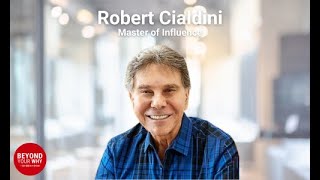
Dr. Robert Cialdini discusses his research on influence and persuasion with Dr. Gary Sanchez. The conversation covers principles of influence and how they apply across different contexts, drawing on Cialdini's background and practical examples of influence strategies.
Chapters
You are going to love this episode of Beyond. You'd why? Because I get the opportunity to interview Dr. Robert Cialdini. He is the Godfather influence. And in this episode, this is going to be a two part series. So in the first episode he's going to share with you how he went from easy target, people that were easy to sell to, to learning how to study that. Why was he so easy to sell to? And then he's going to go into the art of influence and share with you the seven principles of influence. And he'll give you so many examples in studies to help you implement that into your business right away. And then in the second episode, he's going to dive into Pre Suasion, his next book after the Art of Influence. And then he's going to share with you the small bigs. The small big. The small things that make the big difference. You're going to love this and you're going to be able to take what he shares with you and implement it right away. Because we've done that, you'll be able.
To do it too.
I look forward to seeing how much you love this episode.
Welcome to beyond your why podcast where we go beyond just talking about your why and actually help you discover and then live your why. You see, we believe that knowing your why, that driving force behind every decision you make and every action you take, is the essential first step to really knowing yourself. It allows you to move forward faster and have a bigger impact. If you're already a fan of the show, then you know that every week we talk about one of the nine whys, and then we introduce you to somebody with that why so you can see how their why has played out in their life. This show will be more powerful for you if you've already discovered your why. If you still need to do that, head over to why institute.com and discover your why today. It'll only take you about five minutes. Now let's meet today's guest.
So this week we're going to be talking about the why of contribute to contribute to a greater cause, add value, have an impact in the lives of others. So if this is your why, then you want to be part of a greater cause, something that is bigger than yourself. You don't necessarily need to be the face of the cause, but you want to contribute to it in a meaningful way. You love to support others and you relish success that contributes to the greater good of the team. You see group victories as personal victories. You are often behind the scenes looking for ways to make the world better. You make a reliable and committed teammate and you often act as the glue that holds everyone else together. You use your time, money, energy, resources and connections to add value to other people. And so today I have a fascinating guest for you. His name is Dr. Robert Cialdini and many of you, I'm sure, have heard of him. He is a thought leader in the fields of influence and persuasion. He has spent his career publishing scientific research on what causes people to say yes to requests. The results of his research and ensuing articles and his New York Times best selling books have led to his election to the National Academy of Science and the American Academy of Arts and Science. His seven principles of persuasion have become a cornerstone for any organization serious about increasing its influence significantly while doing so ethically. As a keynote speaker, Dr. Cialdini is renowned for his ability to translate the science of influence through valuable and indelible stories that lend themselves to long term business applications. His books, including the New York Times best selling Influence and Persuasion, have sold more than 7 million copies in 44 languages. As a result, he is frequently regarded as the godfather of influence. Dr. Cialdini, welcome to the podcast.
Hello, Gary. I'm very pleased to be here.
Well, this is going to be fun. And so let me start before I get into to you, which is why everybody's here, I want to just start with how you and I connected because we met, we were both speaking at a Genius network event and I came up to you at lunch and asked you for help. Right?
Well, yes, we talked about a particular influence challenge that you had. And, and based on some of my.
Research and writing, I thought there was a pretty good answer for you.
Yeah, I was having trouble trying to figure out how to get people to share their yos and what would be the appropriate question or comment or thing that I would need to add. And so you came up with something really good. And then you were speaking right after me. And this is, this is when I knew I had to have you on the podcast because you were getting ready to speak. And if for those of you that are listening, that are speakers, you know what it's like to be getting ready to go on stage. And so you were getting ready to go on stage and instead of, I don't know how you did this, but you came running up to me right before you went on stage and you said, hey, you know what I told you, I forgot to add one word to that. And then you told me what that word was. And that just so impressed me that you could be Thinking that way as you're getting ready to go on stage. So that was very impressive.
Well, you know, I think there, there's an interesting lesson that actually comes from that, which is you are right just before you speak in any kind of a public setting, it doesn't have to be on stage. It could be going around a table at a meeting. And each person is asked to provide their solution or their contribution to a particular issue that's being constructed. And there's something called the next in line effect in psychology, which is if you did that, if you went around the circle like that, and then afterwards you asked people what did various individuals say around the table, they won't remember what the person said immediately before their talk or immediately after their presentation. Right. Because the person going immediately before you're not thinking about that person's presentation. You're not thinking about that information. You're thinking about rehearsing your own. Right. And then after, you're kind of reviewing in your head how you did what you said, and, oh, I should have said it this way or that way, and so on. So I always give an advice. So if you, if you have a such a situation, you're sitting in a. Around a table and there's somebody you really want to hear what you say because you think you've got a really important contribution to make. We typically go sit next to that person, and that's a, that's a mistake. Next, those two places next to that person, he or she is not listening to you. They're into their own internal dialogues. Right.
Sit across from that person.
Because that will make you sufficiently distant from him or her. They'll be focused directly on you, not on their own internal presentation. Yeah.
Oh, I love that. You know, I would have never thought of that because just like you said, you want to be right next to them so you can, you know, make sure that they're listening to you. But obviously they're not precisely right.
They're proximate, but not focused on. On your presentation, on or on you.
Which makes it even more impressive to me that you were able to.
Think in terms of, hey, I forgot to tell him one word that would make it that much more powerful. And that, and what struck me is how critical each word is.
This is kind of my business. I, I'm. I study persuasion, the process of arranging people to move in our direction.
More frequently based on what we say to them, how we communicate to them, not based on changing the merits of what we have to offer. We have a case, we have A case to make. And very often that's. It's not easy to change the features of that case, but we can change the features of how we present that case so that people hear it differently, they process it more deeply and respond to it more favorably. As a consequence. It's about the words that we use to. To make our case optimally. Just because we have a good case to make doesn't mean that we've made it. Well.
Yeah, that interaction with you.
Really.
I mean, made me think for the whole. Well, that actually, now that I think about it, you were the next speaker. So then I couldn't help but pay even that much more attention to you because I knew the value of each single word. And so what we were talking about, for those of you that are aware, is when you discover your yoshi and you go to our dashboard, there's a place there for you to share, and we're not getting as good a results in the sharing area. And so that's when I saw Dr. Cialdini and we said, and we started talking and I said, what is the. What is the question? What is the comment? What should I put before the share button to make it more likely that they're going to share? And do you remember what you came up with?
You know, I, I'm kind of blinking on it, but what did it have to do with the number of people who are already sharing?
And you were saying, yeah, you know, you were saying, who is it that you know that would most benefit from knowing their yos?
Right.
And then you were missing one word. And so right before you came up, you ran over to me, said, hey, you need to add one word. And I was like, well, what word is that? And it was, you need to say, who do you know personally that would most benefit from knowing their yos?
Right. So they could imagine sending that message to somebody who they care about, somebody who they have a connection to, somebody in their network that there's already an exchange with who they can benefit, who will, of course, be in a position to benefit you in return because you've done something positive for them. Yeah.
So let's, let's go back in your life. Where were you born? What were you like in high school?
This is really a good question. I, I grew up in Milwaukee, Wisconsin, and I always say.
That I was raised in an entirely Italian family in a predominantly Polish neighborhood in a historically German city in an otherwise rural state.
And I realized that when you move from one of those groups to another, the norms and customs changed, sort of the what were the. The ways in which people were most receptive to information change when you moved from one of those groups to another. And I recognized, oh, there's no one single best way to say something to get people to move in your direction. You have to harmonize with where they're coming from in the first place, what their standards are, what their preferences are for the way that they receive information. And that was a very important insight for me. That made me think, well, that would be a fascinating thing to understand and recognize how we can adjust our communication strategies so that they fit with the. And there's a match with the preferences of the group in terms of how they like to receive their information and which things they like to see prioritized within that information.
So.
Dr. Cialdini's why, as we mentioned, was to contribute to a greater cause, add value, have an impact in the lives of others others. How he does that is by seeking mastery and understanding, diving in, looking for the little things that make a big difference. And ultimately what he brings is a better way to move forward. So his why is contribute is how his mastery and his what is better way as you're going to see play out here. And so can you give us an example? Well, first of all, when did you notice that reality or when did you see that? Was it when you got older and look back or when you were in the middle of.
Was probably reflecting on it over the expanse of situations and experiences I had and recognizing how important it would be to have the kind of knowledge and credentials mastery of the situation, to be able to change how people respond so that you've made a difference in their lives so that you've increased the outcomes that they've experienced as a result of your communication. It's not just to get people to say yes to you for selfish reasons, and it's to get people to say yes because you have something to offer them that truly enhances their experiences and they get better outcomes from it. If you can do that, then you really do contribute. You really do have a chance to. To make a difference.
So when you were in high school, were you always very inquisitive or. Yeah, tell us what were you like in high school?
So here's an interesting thing. I was always a good student, but I was a better student in high school than I was in elementary school and I was a better student in college than I was in high school and I was a better graduate student than I was an undergraduate and I was a better professional than. Than a graduate Student now trying to think of what was it about.
Those changes that. Right. I was, I improved at each of those levels and I think it was in each case I was freer to be myself. In grade school, you're just given a set of rules to come, you know, and to memorize the multiplication tables, you know, and, and then in high school you got more elective classes to take. And then even more in college and graduate school you were, you pretty much are told, okay, you've kind of proven to us that you can think well now think about some problems that you think will make a contribution, will really make a difference if you can solve them. And in each of those cases, people stepped away from giving me constraints on this. And so I thought that I. And that I got better by being allowed to be more creative in and. And true to my own strengths and, and preferences. Yeah.
And when did you start to become interested in the art of influence, even thinking about influence? When did that become important to you?
Now, that was early on. That was something that came about when I recognized that I was an easy mark, an easy target for various salespeople or fundraisers who would come to my door. I would always find myself buying things I didn't really want or contributing to causes I had never heard of. And I remember thinking to myself, oh, well, this is interesting. It must be something other than the features of the offer, because I didn't want those things.
It must have been the psychology of the way those features were presented to me that engaged me, that got me interested in them in this secondary kind of way. Isn't that worth studying? Don't you think that would be worth studying? For one reason, out of self defense. They could understand better what I go through. But people in general would be interested in knowing about the psychology of persuasion. What are the things that lend themselves to ascent when you hear an offer or a request or a proposal or a recommendation.
And so once. How do you study something like that?
Originally it was in my laboratory. When I became a professor of psychology, I would arrange situations where we would bring GR students into a laboratory at the university and give them a message for a particular action that we wanted them to take or a belief that we wanted them to adopt. And we would construct a message asking them to do that for half of them. And for the other half of them, we'd make one change in the method message. We would change the. The. The.
Instead of saying, you know, people would be happier if they were moved in this direction to say, you know, you would be happier if you moved in this direction. Right. And that would cause a change, they would be more likely to say yes, given that they believe the credentials we had in giving them this information.
Just to implicate themselves personally. And it has to do again with that advice that you recounted at the beginning of our exchange. Just adding something like the word personally engages.
People'S attention and interest to a much greater extent.
And so word.
Yeah. So you studied this over and over and over again and notice patterns or.
Patterns always looking at changing something else besides that word. What? So, for example, we didn't do this study, but there was a study in which if you, if you precede.
A request that you make of somebody with the word because.
And add a reason. Right. You get it. You get yes, significantly more often. Right. Even if the reason.
Is not especially a good one, the word because.
Implicates the idea. Well, this person has a reason, and people need to have reasons for what they do. So they are much more like. I'll give you the study itself. It was a study done at Harvard University at the library. And researchers went to a line of people waiting to use the copy machine. And for one group of them, they said, excuse me.
Could I jump ahead of you? I have five copies to make. And under those circumstances, 60% of people said yes. If they said, excuse me, I have copies to make, I have five copies to make, can I jump ahead of you? Because I'm in a rush now, 94% of them. So they added a good reason. So you would think that the reason people said the difference was because I'm in a rush. Right. It's a good reason. But there was a third group. They said to the people in line, excuse me, I have five pages. Could I skip ahead of you because I have to make copies.
Well, that's not.
Everybody needs to make copies. Of course you need to make copies if you're going to be in this. 93% of them said yes. It wasn't the. It wasn't the reason. It was the word because that signaled here's going to, here's coming, here's about to come a reason. And people deferred to the reason. So these are the kinds of things I like to study. You change one small thing and you get an enormous difference from 60% to in the 90%. Even when the merits of the thing don't re. Aren't especially powerful in your reason, the fact that it's a reason is enough.
What's interesting about that is it seems like you could be tempted to think you know, what happened, why it happened, and make your conclusion based upon what you think you saw. But what you think you saw wasn't actually what you saw.
Exactly. Right. If all you had was the first two. I need to make copies. 60%. I need to make copies because I'm in a rush. And you stop there. You would get it wrong. You would think, oh, it's because I said I'm in a rush. No.
You had. You need that third reason that showed that. Just use the word because and that's enough.
So when you went to. So you went to. Where did you go to college?
I went to the University of Wisconsin.
Okay.
Yeah.
And then you graduated graduate school at.
The University of North Carolina in Chapel Hill. And then I was a postdoc at Columbia University before I started my professional career.
And your professional career, did you start out in private practice or did you start out with research right off the bat?
Research right off the bat. I came to Arizona State University, where I began my career as a researcher and teacher and scholar, essentially. Who has to write articles that describe what you found in your research in order to get tenure, in order to get promotion. I was in that rat race early on and was in my laboratory doing a lot of this research. And then, Gary, something happened that changed my perspective. It was that I said to myself, wait a minute, what am I doing in this laboratory?
Studying persuasion. What I really want now is not what is persuasive on a college campus in a psychology department laboratory. I want to know what's persuasive in the world outside of that constrained space. What's the most effective. What are the most effective strategies for getting people to say yes in the, in the real world we live, I mean, we're, we're in. Every day we're engaged in an influence battle between where people trying to influence us and we're trying to influence them. That's where I need to. To go to learn more about the principles of influence that work in, in the. The naturally occurring influence situations that we all face.
And how do you define influence?
It's the ability to change someone's.
Mind or perceptions or beliefs or actions. And that's the one I've chosen to emphasize, right.
By how you communicate your requests, proposals, or recommendations to them.
So there's power which you can use to get those changes. You can coerce people into moving. You can pay people, you can punish people, you can even trick people into. But for me, the key is to simply inform them properly into the change that will be good in for their. Their own interests.
So as you studied influence, you found multiple ways to do that.
Multiple.
You had seven different ways that you could do that. Is that correct?
Seven universal principles of influence, which I claim if you put one or another into a message, into a persuasive message, you significantly increase the likelihood of ascent to that message. Now, what's important is the word likelihood here. There are no certainties in human behavior, but you. You. There are probabilities and odds and likelihoods. And if you can increase the probability that somebody will say yes to you by making a small change in how you make that request, you'll beat your rivals every time over the long term.
Can you give us some examples of what you mean by maybe pick one of the seven universal principles and give us an example of how that would play out?
Certainly. Here's the one I like to start with, because it's so fundamental to all human cultures. It's the rule for reciprocation, right? Which says that we are obligated to give back to others who have first given to us.
Somebody invites you to a party, you should invite them to one of yours. Somebody remembers your birthday with a card. You should remember theirs with a card. And if somebody does you a favor, Gary, you owe them a favor.
And the research is very clear. People say yes to those they owe.
Here's the implication.
We have to give first.
Instead of using the standard kind of economic model where we say, okay, you do something, you buy our product, you adopt our idea, you make yourself available for our service, you sign this contract.
And we will give back to you something that you will be very satisfied. That's that. I mean, that works. There's no question about it. It's just different from what the rule for reciprocity advises. That also works. And because in those cases, you're asking other people to go first.
If you give first, if you give value, if you give benefits, if you give information, you give positive attitude, those things flow back to you. There was a lovely study done in McDonald's where researchers had the people behind the counter, or excuse me, let me say it this way. Every family that came in during one week, the kids were given a balloon.
Half of them were given a balloon as they left as a nice thank you, thank you for, you know, patronizing McDonald's. Here's a balloon for your kids. Nice kid, right?
The other half were given a balloon as they walked in. The kids were given the balloon first. The parents bought 25% more food.
If the kids were given the balloon first.
And here's the interesting thing. If you look into the re. The data.
In that 25% more food, the parents were buying 20% more coffee than they usually sell. Why you do a favor from my child, you've done a favor from me, and I owe you.
And it mattered who went first.
And here's another example that makes the point a little differently. This was in a candy shop in Southern California. One week, researchers arranged for the manager to greet each customer warmly as they entered and then escort them to the candy counter where they could make their choices. Half of them got that, and that's all. The other half were greeted warmly.
And given a small piece of chocolate.
Those people were 42% more likely to buy candy.
Because they were given something. Now you might say, oh, well, maybe they just like the chocolate, so they bought some more. If you look into the research, that's not what happened at all. The great majority did not. Did not buy any more chocolate. They bought other kinds of candy. So it wasn't what they received.
It was that they had received.
From that manager and they had an obligation and they gave back. Right. So small thing like that. Right. Go first.
It. It makes you wonder why McDonald's ever stopped doing the balloons.
Yes, it was a. Well, I'll tell you. The. The studies were done in the country of Brazil and the country of Colombia, and I think they are doing the balloons there. Why haven't, why haven't they learned this? So here's the thing I love about research like this. To communicate it, to get it out, which I hope to do in my books and, and programs, allows people who never heard of this to be able to use it.
So, so when people that are listening to this, let's say they're, you know, they're coaches or CEOs or, you know, business owners.
It. Find a way. I guess the, the lesson would be find a way to give your prospect or your client something first, whatever that is.
It can be information that will help them make a choice. It shouldn't be information that will help them make your choice, just information about the situation. It can. It can be.
Various kinds of advantages or benefits. Here's a free sample. Or something like this. But it could also be.
Giving them.
A lot of effort in what you provide to them first. So people will give back to you the level of effort you give to help them first.
Yeah, and the other thing, Please, go ahead.
I was going to. No, go ahead and finish. I was just going to ask you. Let's go through some of the other Principles.
But there's a, here's the, here's an implication that we often miss. We drop the ball when it comes to the reciprocation process. Let's say you've just done something above and beyond for a client or a customer or a prospect. You, you've gone, you know, they asked for your help and you have given them more than they could have expected. Right. And they say, thank you, Gary, thank you. You know, we don't normally get this from our, our, our, our partners, our business partners.
I appreciate that so much. Here is what I often hear people say, oh, don't think anything of it. No big deal.
It'S all right. Just part of the job would have done it for anybody, no problem.
That's wrong headed. You've got one of the most powerful influences on the influence process that we know and you've just diminished it. You've just denied that it, you, you slapped it out the window with the back of your hand. What you did do, that favor you did, you're entitled to the gratitude for it and you just dismissed it as nothing. No, no, no, don't do that. Here's what I would recommend that you say. First of all, here's what you don't say. You don't say, yeah, and you owe me one now sir.
Because that's going to produce resistance and resentment if it's somebody inside your organization.
Here's what I would say. I was glad to do it. You know, it's what we do for one another here. In other words, you, you put it on the map. You don't deny that it's there. You don't dismiss its, its importance. And then you tell people this, what we do. So when you need something from that person.
You have now significantly increased the likelihood that they will say yes to you. Because it's what we do for one another here.
Wow, that's such a better way to answer that. Because I, I could see myself saying, yeah, no problem. I just. Exactly what you said not to say. I could see myself saying that.
I used to do it all the time. Yeah. Just to be polite.
Yeah.
Right. Now suppose it's somebody from outside of your organization. You can't say it's what we do for one another here, here's what I would recommend you say. Of course I was glad to do it.
I know if the situation were ever reversed, you do the same for me.
Once again. You put it on the map and so that they're ready readied. Now when it's a request or a Favor that you need to provide that in return because they're the kind of person who, you know, I'm sure you're the kind of person do this. Now, one more small thing you were talking about words.
Differences. I'm not going to recommend that you say, if the situation had been reversed, I know you would have done the same for me. That's in the past. That will never occur.
But if you say if the situation.
Would be reversed, were ever reversed, I know you'd do the same. For now, you've arranged for a future opportunity for that gift or service or favor that you've given.
To have traction.
I love that. You know, before we go on, could you go through.
The seven principles so that we know what they all are?
Yep, glad to. We've already talked about reciprocation. Another one is one that nobody will be surprised to know. Right. I'll do this briefly and we could go back to them, as you see, but nobody be surprised to know. It's liking. We prefer to say yes to those we like. That's not surprise. There are two things we can do, though that are very small, that increase the sense to which people like us. One is to point to genuine similarities that exist between us because people like those who are like them. The other is to give genuine compliments.
Praise, because.
People don't just like those who are like them, they like those who do like them and say so. So find genuine similarities. Find truly commendable things and mention them. Bring them to the surface before we try to influence people. Next principle is the one that we could call authority. We live in a very uncertain world. And one way to reduce our uncertainty about what we should do in a situation is to see what the authorities, the experts in that arena, are saying about what is the best thing to do, the people who are most knowledgeable. What are the expert voices saying on this? So one thing we can do is if we can recruit from the Internet or all the information.
Testimonials from experts who are, who have said things that fit with what we're proposing. Right. And we, we greatly increase.
Compliance with our request because we've greatly reduced uncertainty about what people should do. It's what the experts are doing. There's another one that's similar to this. When people are uncertain, not only do they look at authorities, they look at what their peers are doing, what the people around them, like them in the situation, are doing. Right. So another thing you can do is provide evidence of what others have done or are doing that is consistent with what you're asking people to do now, other people to do that reduces their uncertainty to know that, oh, this is, this is your most popular model or this is your most popular payment plan, what, whatever it is that popularity increases its popularity as a result. Yeah, yeah. So those two, authority and social proof, we call them so social proof, those two work by reducing uncertainty.
So then we, then we have the principle of scarcity. People want more of those things they can have less of. So if things, if you have something that's truly unique or uncommon or dwindling and availability and you tell people honestly that that's the case, that thing becomes more attractive. The evidence is very clear about that. There's a sixth principle. It's called consist, commitment and consistency. People want to be consistent with what they have already said or done, especially in public or in our presence. Right. They don't want to seem to be wishy washy or saying one thing or doing another thing. They, they want to be seen as con consistent.
So they will, if you can arrange for them to take a small step in your direction.
They will now become significantly more likely to say yes to a larger request in your direction as long as it is consistent with what they've already said or done.
Ah, okay.
So just asking them, for example, what, so what, what do you want to achieve here? What's, what's your long term? And get them on record as specifying what their goal is, what their purpose is, what their end state is. And then you can ask them to do things that are consistent with that.
Because they've said so to you. And you can just remind them of the congruency between what you're asking them to do and what they stated as a commitment to what they want to do.
And then the last one is the principle, it's a new principle, the principle of unity.
The idea that people.
Are significantly more likely to say yes to those that they see as having a we relationship with people in the same identity category. People who share a personal or a social identity, it can be a.
A business.
Relationship, it can be a local identity, it can be a religious one, ethnic one. You know, all kinds of possibilities.
And if they can see you not just as similar to them, but one of them.
Influence barriers fall.
I'll give you a quick example of it. There was a study done on a college campus. Researchers took a young woman who was about college age, dressed like a college student, would had her stand in front of a table for the United Way, a charity table. And as students walked by, she asked them to give a contribution to the United Way. And because she was similar to them.
She was getting some contributions. Good, good number of contributions. But if she added one sentence before she asked for the donation, she increased contributions by 450%. So what was the sentence? It was, I'm a student here too.
I'm one of you.
I'm not just like you, I'm of you.
And people say yes to those who they feel a sense of we ness with.
So I've got reciprocation, liking, authority, social proof, scarcity, commitment, consistency and unity.
Right?
Of those.
Is there such a thing as the strongest versus the weakest or. It doesn't work that way.
It doesn't work that way. The one that's going to be most powerful and the most ethical for you to use is the one that you can find already there in the situation with its engine running, waiting for you to engage it. Do you have true scarcity with regard to mean? You have something that's truly unique, nobody else has that or some combination of things that no, no rival can really, you know, match. Do you have something that is only going to be available for a short period of time or a limited period of time that's dwindling? You just point to it.
If you have true popularity for a, you know, market share or popularity in terms of a particular product or service, mention that. If you have authorities who really are consistent with what you're claiming is the best thing for people to do, you may so you use the one that's there and that allows you to harness its power and feel absolutely good about yourself ethically because you're, you're informing people into a sense, you're not tricking them in any way. Now I'm going to qualify what I just said as follows.
Since the advent of the Internet, one of the principles has risen to the top not in terms of its power, but in terms of its usability.
It's social proof. It's the idea that you can get evidence of what a lot of people like you have been doing or thinking or saying about a product, a service, a company, an individual. Right? You've got chat rooms, you've got product groups, you've got four, five star rating systems. You can find people everywhere just by going into the Internet that you would never have had access to. And it's so available.
That I saw an article that said that people who buy on the Internet regularly, that's, that's what they do, they almost always buy on the Internet, 98% of them first, check the product ratings.
98%.
We can't get 98% of the people to believe that the earth is round.
But we get 98%.
Rushing into this one place.
The evidence from what others like me are saying or doing with regard to it because it's so available now. So that's the, that's what I would say is the one that's just jumped up in terms of its accessibility for use.
Okay, so you studied influence for many years and figured out the seven principles. Now how is that? Because you've written multiple books, right? How many books have you written now?
Well, five, but two of them I'm the sole author on. But yeah, and influence is the first one.
Influence is the first one. And I know pre suasion came after, right?
Yes.
How do you differentiate influence from pre suasion?
Thank you for joining us on this fabric fascinating journey in part one of our two part series with Dr. Robert Cialdini. So get ready because next week is even more powerful. You're going to uncover the secrets behind the distinctions between influence and persuasion and discover how you can harness this power to gain the upper hand in any situation. Trust me, this is where Dr. Cialdini really unleashes his brilliance. So mark your calendars because we can't wait to have you back for another powerful episode of Beyond. You'd why I'll see you next week.
I really hope you enjoyed today's episode and that through today's guest, you heard how important it is to know your why and how impactful it can be in your life and the lives of those around you. Be sure to head over to whyinstitute.com and discover your why today. Remember, the more you know about yourself, the more you'll know about others. I'm Dr. Gary Sanchez and I'll see you on the next episode.
More from Dr.




Women In Leadership: A Need For A Greater Systemic Change With Belinda Clemmensen






