The Better Way to Face Fear and Succeed: 10 Lessons from Dr. Betty Uribe
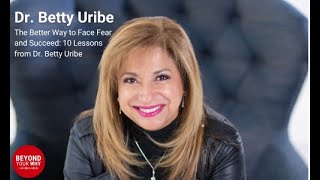
Dr. Betty Uribe, who immigrated from Colombia and rose through leadership roles at Wells Fargo, Comerica, and JPMorgan Chase, shares how she overcame personal trauma and built a values-based approach to leadership. She discusses her book Hashtag Values and practical habits like early-morning routines and reframing fear as a tool for success.
Chapters
Welcome to beyond you'd why Podcast, where we go beyond just talking about your why and actually help you discover and then live your why. You see, we believe that knowing your why, that driving force behind every decision you make and every action you take, is the essential first step to really knowing yourself. It allows you to move forward faster and have a bigger impact. If you're already a fan of the show, then you know that every week we talk about one of the nine whys and then we introduce you to somebody with that why so you can see how their why has played out in their life. This show will be more powerful for you if you've already discovered your why. If you still need to do that, head over to whyinstitute.com and discover your why today. It'll only take you about five minutes. Now let's meet today's.
This week we're going to be talking about the why of better way to find a better way and share it. So if this is your why, then you are the ultimate innovator and you are constantly seeking better ways to do everything. You find yourself wanting to improve virtually anything by finding a way to make it better. You desire to share your improvements with the world. You constantly ask yourself questions like what if we tried this differently? What if we did this another way? How can we make this better? You contribute to the world with better processes and systems while operating under the motto I'm often pleased but never satisfied. You are excellent at associating, which means that you are adept at taking ideas or systems from one industry or discipline and applying them to another, always with the ultimate goal of improving something. So today I have a fascinating guest for you. Her name is Dr. Betty Uribe. She is a best selling author and industry expert in leadership. For over two and a half decades, Dr. Betty has been a catalyst for transformation in business, culture and individuals, earning her recognition as an esteemed expert in business and culture turnarounds. She brings together academic models, strategic intelligence, corporate experience and humanitarian efforts to affect positive change with a diverse portfolio of entrepreneurial ventures including real estate, investments and renovations, biomedical engineering and manufacturing, automotive repair and maintenance, and corporate transformation. Dr. Betty is a true value centered leader blending entrepreneurial, corporate and academic expertise in finance, strategy and human behavior. Her unique background enables her to understand various industries, governments and businesses both nationally and globally. Dr. Betty has a passion for educating entrepreneurs and business leaders about generational transfer as she herself inherited her father's transportation company in her native country of Colombia, South America, a company she ran from the United States while serving as an executive in financial services, Dr. Betty is a Fortune magazine top 50 most powerful Latina globally. Recognized as a leading expert on values based leadership and cultural challenges for women and minority leaders. Her her techniques create massive sustainable results and have been shared with governments, corporations, universities and business leaders globally who aspire to become transformational leaders. Dr. Betty has been featured in trade publications, radio and television media globally and she is known to grace the global stages in places like Dubai, United Nations, Europe and the Americas. Her book Values the Secret to Top Level Performance in Business and Life was endorsed by the Vatican, Stephen Covey and the Pentagon and it was named Top 60 Best Business and Leadership books written by women by Inc. Magazine. A mother of three, she and her husband reside in Los Angeles, California. Dr. Betty, welcome to the podcast.
Thank you so much Dr. Gary. It's so good to be here today.
Well, that was a mouthful and we are going to dive into that because very exciting stuff that you have done currently are doing but I really want to dive in. Dr. Betty, back to your let people get to know you, right? Because you have a pretty darn interesting background, how you got where you got right.
So let's do that. Yeah, let's do that. Let's, let's go back. Where were you born and what were you like growing up?
I was born in Colombia, in Bogota.
In the capital of Colombia, South America. Not Colombia, the United States of Colombia. South America. I wasn't supposed to live when I was born. My father, who was a very successful businessman, there was a deep dark secret in the family and that seems to stem through many families nowadays.
I hear my father was an alcoholic.
And he used to come and beat up my mom. And so he beat her up while I was in utero. And so that's why I wasn't supposed to live.
So that's why I know that there.
Is a reason for me to live. And that's where my journey began. Because I was a fighter. The doctor told my mom to get the funeral arrangements made. Fast forward 12 years. At the age of 12, my mother sat us down, my three brothers and I, and said, hey, you have a choice and you can come to the United States with me.
We won't have anything but we'll have peace.
Or you can stay with your dad.
And you'll never need anything in your.
Life for the rest of your life.
We all chose peace and we all.
Chose to come to the United States.
So in an airplane ride I became Cinderella. Very poor, clean houses, babysat. And I became an adult at 12.
I was raising my little brother.
And I vowed that I would retire my mom. But that's basically how I came to.
The United States and where I was.
Born and how I grew up. I grew up with a silver spoon.
I was a conceited little girl. I had the best house in the neighborhood with everything that a little girl.
Could ever possibly want.
I also grew up watching my mother.
And my father be altruistic and generous.
My mother would bring the cleaning people.
And the street sweepers to the table.
And she would cook for them, not the maids.
She would cook for them, and she.
Would sit them at the main table.
Not the kitchen table where the maids would sit.
And then she would go to my.
Room, and my whole wardrobe and toys and everything was transformed Every year I got brand new everything every year.
And so right after we got brand.
New everything every year, she would bring the cleaning people and she would bring the sweepers, and she would say, here are the clothes for your daughter. Here are the toys for your daughter. Here are the clothes for your wife, for your husband, for your family.
And so she would give only the very best.
And I learned that from her. My father was the oldest of 12, and he pretty much started his transportation business by being a truck driver. He had one truck.
And then he continued and he said he really helped his entire family. And then he would help all of.
The drivers and their families in the community and so forth. Eventually, my father left alcohol and apologized and became just an incredible human.
But just gives you kind of a.
Concept of where I grew up and how I grew up and then some of the trials and so forth that got me to. To really take a second look and third look. And throughout my career, looking deep into my life and my purpose.
So what was that like for you? Going from having whatever you wanted to take us through, arriving in the U.S. what was that like for you? You was you, your mom and two brothers.
Three. Three, three.
Three brothers.
I was 12, so the ages were 6 12, myself, 14 and 18.
Okay. And you land where?
We land in downtown Los Angeles, because we couldn't afford. My Aunt Ruby was the one that.
Actually sent us the airline tickets.
And my. My Aunt Rosanna, aunt Ruby, today's 88. My aunt passed away at the age.
Of 101 last year.
And so they.
Between the two of them, we came. So they gave us the airline tickets to get to Miami, and then we.
Took a Greyhound bus from Miami to Los Angeles where a lot of lessons.
Were received because we didn't speak the language and try to take A Greyhound bus for four days and nights, try.
To eat, try to communicate, try to.
Even go to the restaurant without knowing the language or anything. With four children. My mom was 45, so a lot of lessons.
So arriving in Los Angeles.
Was interesting.
Because we arrived, remember, at the Greyhound bus station, downtown Los Angeles, and there.
Was my Aunt Ruby in her little coat waiting for us. I remember.
Growing up thinking about the United States and having the United States in my mind was like a Disneyland.
Where every dream came true. That's what we grew up thinking about, the United States.
My story's a little different because we were very rich and we came to.
Be very poor in an airplane ride. And normally it's the other way around. You're very poor, you really want a better life. And we came here to be poor.
So very difficult for a 12 year old who has had everything.
And who grew up with a silver spoon, even learning to make my own bed. I'd never made my own bed, but I'd never done anything. And I remember my brother saying, I.
Want a cup of coffee.
And I said, I don't know how to make coffee.
He said, well, I don't care.
I want a coffee made by my sister.
And I put like five tablespoons in one little cup of coffee. And he looked, you know, he threw in, he says, what is this? I said, do you wanted coffee? There you go, there's my cup of coffee. And so I was a feisty little one and I was a determined individual. As I think back. I had an English, I bought English Spanish dictionaries and I put them everywhere. I had one in the bathroom, I.
Had one in my bedroom.
I had one by my bed. I had one everywhere. And so I remember devouring the dictionary in and wanting to learn the language.
So perfect that people would not even know that I was Colombian or that I was foreign. Refrigerator was the toughest word.
And I sat in front of the mirror and said it over and over.
Until I finally got it.
But growing up here and coming to.
The United States and seeing the streets were so beautiful, the buildings were so beautiful.
My, my Aunt Ruby took us to the Rose bowl and that was like a wow.
Really.
Fast forward however many years.
Today I'm the first woman to be on the Rose bowl legacy board in the history of the Rose Bowl.
So things that were like, almost unattainable, completely impossible, like way out there are now here. And it's kind of surreal for somebody because statistically, somebody like me shouldn't be.
Where I am, statistically.
And I You know, and I always think how humbling it is and what.
A blessing it is to be here now.
So that that's what it was like.
To, to grow up. I didn't speak the language. The kids, I remember the kids were brutal. And kids are just so straightforward.
I remember them looking at me, treating me differently, people speaking really loud because.
They thought I didn't hear when it wasn't. I just didn't speak the language.
But I also remember in three months.
Time being able to communicate very well with people and picking up the language so quickly because that was my purpose was just to revisit, get quick because I had a purpose. I needed to retire my mom and.
That was my goal and I wasn't gonna, I knew that it would take a lot of work and studying and.
Working hard and so forth to do that.
So, so okay, you, you, you land. You don't speak the language. You start learning the language, you start working right away. You're going to high school. Now down. Where did you go to high school? And, and if we saw you right now in high school, let's say in, you know, 10th, 11th, 12th grade, what would we see? What was Dr. Betty like in high school?
Okay, so I was in my, I'll tell you. In my senior year I was the.
President of the gym, the gymnastics, the president of the music club. I was first soprano in choir. I was a gymnast, competitive gymnast.
I had a part time job. I was in a beauty pageant and.
Was Miss Congeniality, the beauty patent.
I was the youth pastor at church.
All of these things.
And my gymnastics coach, in our last.
Shindig that we did, she gave us a poster of a gymnast. And in the poster she wrote busy Bettina, will you ever take time to slow down and smell the flowers?
So that kind of gives you an idea. I had my little brother was now, now I graduated.
I had enough credits to graduate at the age of 15.
And so I had a son who.
Was my little brother because I pretty much raised him because my mom used to have to get up at three in the morning to go to the factory.
So it was me. And so I also studied at night.
And I memorized the lessons during the evening. And so in the morning I would wake up and I got really good grades in school regardless. So it was a very busy life, very busy life.
But it was very satisfying also.
Like I was voted.
Homecoming queen and I didn't even know what homecoming queen was. I was very popular in school because I made a lot of friends.
But I remember Coming in, and I.
Was supposed to be wearing this beautiful dress, and they crowned me and they sat me down and there were all the.
And I'm like, okay, whatever this is, this feels really good. But I didn't really know what that was. So it was kind of this dichotomy between being popular and not knowing.
Feeling like my little voice was like.
You'Re not good enough. You're not American enough, and you're new. And yet people just loved me and just embraced me. And so this imposter syndrome was very.
Big in my life. I started working in an engineering department that eventually ended up being the why of my first business.
But, you know, it was this imposter syndrome of a very, very busy individual.
Who was, you know, had no childhood, really. At the age of 12, my childhood was cut off.
But I also didn't know that we were poor. I had no idea that we were.
Poor because my mom raised us with.
This incredible attitude of gratitude for everything we had.
And so the youth would come to.
My house on Friday nights. We would sing and play and play games. And the party was at Betty's house from church. And, you know, it was that.
That was kind of my life in high school.
So what was the turning point for you in going from, you know, outsider, kid that nobody knows, kid that doesn't speak the language.
You know, for those of you that can't see Dr. Betty, well, how tall are you?
I'm five. Three. Five, three. When I'm standing up really tall, I'm really more like five, two and a half. But, you know, when you're really short, that half means a lot. But yeah, I'm very. I'm not very tall at all.
So you're not going to walk in the room as this big, imposing figure.
Because you're not. Because you're, you're, You're. You were on the smaller side. So what was the turnaround for you where you went from? Nobody knows you. Kid that doesn't speak the language. Outsider to. Everybody knows you involved in everything, Homecoming queen, all the rest of the.
I think that.
You know, when you're a youth pastor at the age of.
13 years old, like, and you're standing.
Up there in your.
Your preaching and you're talking about how God has moved in your life.
And.
Then you have a responsibility to bring home the bacon because you're also working and you're also raising your little brother, you become a grown up very quickly.
And you don't have time to think.
You're just moving at a Very fast pace.
I think the turning point for me coming into the United States didn't really happen until after I graduated from high school, even though I graduated from high school with very good grades so much.
That I got a scholarship for college.
And by the way, my.
My counselor told me that when I went to ask him what college I should be going to or what university, he says, oh, honey, now you need to go to an occupational center, not a university. That's not for you.
And I remember that way after those.
Things, you don't remember until after you start thinking through your life. I think.
Being able to get a job at a bank after my first.
Company.
You know, I never realized in my life, and I don't think about.
This, I never realized that I did something sooner or younger or that I was the youngest.
I never look at it as I.
Broke a record or I am the first or any of that.
I. My mother always raised me to. She always said, you are super intelligent and you are the princess. My Aunt Ruby said, you can be.
The President of the United States if you want to.
You can do anything in life that you want to everybody. And I remember distinctly my Aunt Ruby saying, the only difference between you and very rich people is the amount of debt they have in how complicated their life is. You have very little debt because you're going to grow up having little debt and they're going to have a lot of debt. Your life is going to be simple.
Their life is going to be complicated.
That's the only difference. There is no difference. Age doesn't matter, Color doesn't matter. And so I grew up. When I first came, I was so.
Different because I didn't speak the language.
Once I knew the language and once people used to think that, oh, you weren't born here, you weren't born. And I'm like, yeah, listen to me. If you speak with me for a.
Long time, you can hear a little.
Bit of the accent. And I don't get the jokes because.
I wasn't here before 12.
So outside of that. So I think there were two moments.
In my life that are impactful.
One, getting a $10,000 bonus as a.
Banker in calling my mom on her break and saying, today's your last day. Go tell your boss that you're never going to work again in your life and pack your bags because you were going to Mexico and spending $10,000 on my mom, which today, I mean, that's outrageous. And that was a long time ago. That was a moment when I realized, oh, my gosh I can do this.
I just retired my mom.
I get very emotional because it was a goal that I had to take my mother out of poverty. And I knew that this was a generational shift. If I could do that.
What else could I do?
So that was a big shift. Another shift in my life was when.
My oldest brother died of a glioblastoma. And that was a big shift as well.
There were many shifts in my life. Right. So that was five years ago. But way back when, when my father.
Passed away and I was an executive with Wells Fargo bank at the time here in America, and I took over, my brothers decided, okay, you're the one that deals with businesses, so you're it. You take care of the business. And so my father's transportation company, I got to make the trips and I.
Got to hire and fire and I.
Got to just pretty much run the company.
And this is a mail run company.
It'S transportation, it's semi trucks.
And I'm tiny and I had a full time job here. So, you know, dealing with, even though.
I'm known to be able to do.
A lot of things, grappling with, keeping.
Those balls in the air and doing.
It in a way that my father.
Would be proud, that was a big deal in really showing my core values based on my own actions because I had two little girls and.
I was a single mom for a long time. So dealing with so many different things, those were paradigms for me.
Yeah. Well, let's go back. Okay, so you graduate from high school, off to college. Where do you go to college?
I went to my first college that I went to was El Camino College.
And you probably remember that from south, from Southern California.
Yep.
And then I went to La Pierce.
College and graduated from El Pierce College.
With my baby in my arms.
And that was my associate's degree because I didn't know to go to a university, so I just went to a college.
And then I had my bachelor's from.
San Diego State University, and that was in psychology and business. And then my first master's was from Pepperdine. My second one was from University of Virginia was Hyperdine, was in business, it was an MBA in finance and strategy. And my second one was from University of Virginia. It was a professional master's and it was in banking, how to be the CEO of a bank. They taught us how to do mergers and acquisitions and all of that. And then my doctorate is in organizational leadership back at Pepperdine University.
That's a lot of school.
And.
That'S a lot of time learning. So I take it that was not one after the other after the other. That was over the course of many different years when the need became. When you had the need, then you.
Went back to school when the desire. It wasn't a need. I think for me, learning, if you.
Were to look at how many books I'm reading, I'm reading about five books, and I always read about five books at the same time, I'm always. I'm an eternal learner.
I didn't get a formal other PhD.
But Dr. Mary Heleni Mordino Young from USC, she's the head of neuroscience and psychology. She's got a neuroscience lab there. I went to her and said, I.
Think I'm going to get a PhD.
Can you advise me? And she said, you don't need to get another PhD. You can work for me. So I learned neuroscience from Mary Helen.
I am always learning. I am an eternal learner. The education is just a formality so that I can learn faster and deeper and create the context for what I feel are natural gifts that God has given me. And so, like, when I look at what I've done in my life, it's been intuitive, a lot of it or something that my father taught me how to be an entrepreneur. Well, I had to learn business so that I could understand the finance part of it. But being an entrepreneur was inherent in me. Transformations are inherent in me because that's just the way I'm wired, as you know, from the wide os. And so, you know, some of the.
Things that I do, all I have done is just align my life with.
My core values and with my strengths.
And that's, I think, why I've been.
Able to catapult in a way that I have in my life.
So let's talk about that for a minute. So.
Betty, Dr. Betty's why, as we talked about, was to find a better way and share it. How she does that is by making sense of the complex and challenging. Right. She can take in a lot of. Of information and quickly synthesize it. Ultimately, what Dr. Betty brings is a way to contribute, add value, have an impact in other people's lives because when they do better, it feels like. Like you do better, right, Dr. Betty?
Yeah, yeah, very much so.
And so, okay, you graduate.
From. Let's see your. So you probably went. Did you go all the way straight through San Diego State or.
San Diego State?
Yes, it was two years at San Diego State. So it was my junior and senior year at San Diego State.
Okay, now you're done. What's your first job? That's after college.
I had been working part time at.
Applied Microwave Plasma Concepts and we did research in plasma physics.
We broke up the cell into the neutrons of the protons and we created atomic energy.
And so that, that was my very.
First job where I was working in the office, working with these physicists.
And then my very first real full.
Time job was as a personal banker at Wells Fargo. I came in and I funny story, just to show you my chutzpah, it's kind of crazy.
I walk in and I say, okay, so I've been accepted to a four.
Year PhD program at California School of Professional Psychology.
And so how long until I'm a branch manager here?
Because if I don't do it quick enough, then I'm wasting my time.
That was my interview.
And they hired you?
And they gave me a choice of two branches. They said, which one would you like? We want to. And I guess they wanted somebody who would, who would, who wanted it bad.
Enough or who was.
I don't know, I. Whatever I said in the interview, they.
Gave me a choice of two branches. And so I took the El Toro branch and I became number one in six months in Southern California.
Wow.
I didn't know what an equity line was.
You know, I.
This is how I did it, people. The phone would ring and I pick it right up because I knew the people were calling that were buyers in motion, right. They needed something. They were calling the bank. This is Betty, how can I help you? And they would say, yeah, do you do equity lines? Absolutely. Hold on just a moment. What is an equity line like that? I had no idea. And so that's how I did it. And I've always genuinely cared about people, like a real genuine care to make.
An impact in people.
And so I had a line out the door of people waiting for Betty, and the other bankers had nobody in their desk.
And the bankers would even come and.
Ask, hey, can I help you? And they would say, no, thank you.
We'Re waiting for Betty.
Because they knew that I really and.
Genuinely cared about them.
And so you were with in personal banking for how long?
A year and a half.
A year and a half.
Branch manager within a year and a half?
Yeah, they told me it was five years. And I said, I will give you.
Guys two years because if not I'm wasting my time. So I did it in a year and a half.
Okay, now you're, now you're a branch manager. How long were you a branch manager?
Oh, if you ask me about time. I don't have a really good sense of time. But I can tell you that when.
I was pregnant with my daughter, my oldest daughter, there was a regional director position. And I didn't apply because I was pregnant. I didn't think I was going to get the job. I was my own.
Obstacle.
22 months later, I was pregnant again. I said, I'm not going to do that again. So I finally got the job.
I think I was a branch manager for a good one, two, maybe three.
Years before I became a regional.
But as a branch manager, I volunteered.
To help manage other branches. And that's what got me the experience of managing from afar.
And I always volunteered because nothing was good. Like I needed to be busy. And by the time I put together.
The systems for one branch, it was.
Like rinse and repeat.
And I was bored.
I wanted more, so I wanted another one and then another one.
So I would manage three branches and then we all went to Hawaii. We all were like the top performers.
And then, okay, now I wanted more.
I used to call myself the quicker picker upper.
Quicker baker up for. I love that.
Yeah.
And so, okay, now you're regional branch manager. What's the next step after that?
As a regional, I managed 26 branches.
I was pregnant with my. With my last girl.
And it was interesting because I always wanted their worst.
I would say, give me your worst branch, give me your worst region.
So they gave me the worst one. In California.
I was pregnant.
I had the baby in the morning. By the afternoon, I had my assistant at the hospital.
And in between breastfeedings, we put together a campaign that took us to number one in six months, 26 branches. And I created just a process where everybody would just move. While I was in my maternity leave.
That role I had, and for, I.
Want to say, a couple years, I had different areas in different places where we just kind of turned things around.
And then I got my.
I was getting my master's and there was a position that was being built, and it was a business strategy director for 300 branches in Southern California. My boss at the time, Lynn pike, she was creating this role for the right person. And so I applied and got the job. So this was because it was a.
Brand new role in the company, period.
As a whole company. We had 162,000 team members back then at Wells, I got to pretty much put together my own role.
A lot of learnings.
I made some mistakes and thank goodness she was forgiving, but I learned a lot. And that position was a paradigm shift in my career because I put together a strategy. There were some outside consulting, an outside consulting firm. Mark Renfro was one of the consultants that I learned so much from. Dear friend today. And I got to completely transform the profitability.
And really understand the data of.
How do you take something from here all the way to way up here.
In a relatively short period of time?
How do you study it and then.
How do you spread it throughout the organization? And from that, I went to a national role where I created just. I didn't.
I had.
I always had a really good team, and if I didn't, you know, I coached them into being a good team. So, you know, usually it was just my people just did a fantastic job.
Okay, so you were the business strategy director for how long? And then what came after that?
Business strategy director, I did for a.
Couple of years, three years maybe. And then I ran Merchant Payment Solutions.
Out of the business bank west of the Mississippi. I did strategy for them also. We did a hostile takeover inside of the company where we had. I won't name the names of the company, but part of internally that we had merged with another organization to fulfill some of the products that we needed.
I noticed in the. In the agreement that there was a breach of agreement and some things were happening that required us to either terminate the agreement or do. Or take over. So I organized. Helped organize a hostile takeover inside of the company. We took it over. I was given California, which is always the, you know, the golden Bruce you will. The eggs from the golden goose or the crown jewel better. And so I took it in the middle of.
A poison pill, and we were able to completely transform it across the nation. This particular line of business went from being the worst to the very best line of business in the company.
Wow, okay. And then you were there for. For how long? Where does this take us?
Up to about three years. I was there for about three years.
And then I got.
I got recruited out of the firm after 19 years. Okay.
And I remember I was thinking, gosh.
I'm like talking to the other man. Like, I can't be talking with somebody else. I belong here. And that was another paradigm shift, Gary, because my identity was Wells Fargo. I was Wells Fargo. And so much so that in a transportation company, in the transformational arena, my brother asked me, hey, this weekend we're going to this family affair. I have a stretch for you. He said. I said, what is it? I love stretches. And he said, don't mention Wells Fargo.
That tells you where I was in my Head. I was identified with Wells Fargo. And so when I left to do a turnaround at Comerica bank, and that was a business bank that wasn't capitalizing on their consumer business. And so my job was to transform that. They were at a loss. The consumer business was in the red, and I needed to transform that, which I'm sure that was another three years.
Yeah, yeah.
I'm gonna start calling you Three Year Betty, because it's like three years. Three years. Three years. Three years. Three years. Okay, so you were Comerica for three years, huh? And then what came after Comerica?
It was California bank and Trust.
California bank and Trust was a different kind of a turnaround. And at California bank and Trust, I was there for seven and a half, almost eight years. And that was a different kind of a turnaround. This one, they had merged with a different company and they still had the same title.
The cultures were not merged yet. Even the names of the banks, they.
Still had the same name. And I'm like, wait a minute, the community knows you as something different. But long story short, it was a different turnaround.
The Comerica bank was important. Let me back up to Comerica bank because the corporate executive board noticed what.
We did at Comerica, and they wanted to do an outside independent study on what we did.
So they talked to my finance, marketing, hr, everybody, and they did an independent study that is public, that talks to how did we do this turnaround? And then what key lessons do we.
Have for other banking institutions, for other entrepreneurial institutions? And so it's public.
And they always wondered, because we met.
Three times or four times a year, and they did a lot of research all over the world, and they always.
Left me for last. They would ask, so what are the new trends?
And I would say, well, what did.
You hear from my peers? And they would say, well, this is what we hear from your peers. And I would say, well, it's a little bit different.
Let me just walk you through what really is happening. Here's what's really happening.
And so I would make it nice.
And simple for them, and they were.
Like, oh, okay, would you mind talking at the next meeting and sharing and so forth. So it was just a lot of fun.
So that. That was Comerica bank, that turnaround, that.
Was actually by an outside independent third party that actually solidified and put the stamp of approval on Dr. Betty as a turnaround expert. And that was many, many years ago.
So I went to California bank and.
Trust, which was a commercial bank. So I went from a business bank to A commercial bank running commercial, the lower end of commercial banking. And that was a different kind of a turnaround because I had to learn commercial banking while I was doing the job. And that was a lot of fun.
And.
I, and I was doing that.
While finishing my doctorate, which made it really interesting.
And that's when I learned just how much I can put on my plate.
And still be successful. Yeah.
Which is a lot. You can put a lot on your plate. And okay, so from after California bank and Trust, keep taking us along your path, I want to go through your path so everybody can see all the different places. And then let's go back and see like, how did you do this turnaround? Like, what is a turnaround? But we'll get to that. So.
Okay, okay.
After California Banking Trust, California Bank Interest.
I was tapped on the shoulder. I wrote a book, a hashtag, values.
And it was endorsed by the Vatican and forward written by a general from the Pentagon. And the book went crazy.
And so I was now speaking a.
Lot in my last two years of.
California bank and Trust, getting paid a lot of money, 10, 20, $30,000 for a one hour keynote and traveling all.
Over the world speaking about values. And my intention was to get values into the heads of states across the world.
And so because the general, because I studied in, interviewed generals that took me to the White House, that took me to the Pentagon, that took me to those arenas and I got well known there, it was because of that that.
I got tapped on the shoulder to be the U.S. treasurer. And this is not on social media, this is not anywhere. And actually this is the very first time that I bring it up in a podcast.
And so I was a finalist, I came to be the finalist.
I spoke with Ivanka, I spoke with Mnuchin and they read my book. Things were moving very quickly and that the President got impeached.
The other piece was I was speaking all over and I knew that I needed an exit strategy. So I talked to my CEO and.
We agreed on an exit strategy unbeknownst to my people.
So it was a one year exit.
Strategy because I needed to prepare them to continue to create sustainable results while I was gone. And so we created this exit strategy.
Now I'm leaving and I'm going to be speaking all over and I'm getting tapped.
And so the, of course the, the.
Treasury didn't come through, but coming back.
From a speaking engagement, I heard on.
The plane that Italy was closed.
And I got. That doesn't make sense. Long story short, the pandemic happened And.
I thought to myself, I'm going to look back at this time, this is a season.
I'm going to look back at this time.
Am I going to be proud of.
Myself or am I going to regret that I didn't use my gifts called.
The U.S. treasury because I now knew.
The people I had interviewed with all these people.
And I said, hey, I'm looking at.
All this news and social media about ppp. What is the real thing?
Can I help? Long story short, I was the self.
Proclaimed ambassador for the Small Business Administration.
Started working from 3 in the morning.
Until 11 o' clock at night helping educate entrepreneurs across the Nation on PPP. My first conference call with the number two of the Small Business Administration have 500 people, 500 entrepreneurs. And then I started just fielding deals.
And getting directly to the Small Business Administration. That was a season of about three.
Months time where I was literally three in the morning until 11 o' clock Monday through Sunday, every day. It was just a season.
And then I got a phone call.
From a friend of mine from JP.
Morgan Chase saying hey, would you be interested in something? And I thought it was an entrepreneurial something.
And she said, well you know, JP.
Morgan California, I looked it up and I thought 250 billion in assets, 10,000 people, I don't want to do that, no way. She said, would you just, please just talk to Stevie, Stevie Baron, who was.
The head of retail at the time.
I said, okay, I'll talk to him, but that's it.
And so I talked to him and I said, you know, I would have to fall in love.
Let me do a cultural study.
I would like to speak to the.
Heads of legal compliance, HR marketing, you name it.
You know, all of these people. I came up with 13 people.
I said, let me talk to these.
13 people and then let's talk.
So I did.
I did a cultural study on the organization.
It took me six months to, to finally say yes because I really needed to make sure. It's such a big organization with so.
Much at their fingertips, I thought what.
Can I do to help them?
And then I realized oh my gosh, they can. I can really help.
And so when I knew that I could add value.
In a lot of.
Different ways, that's when I said, oh gosh. And I actually really like these people. And I, oh my gosh, I fell in love. And the people were just amazing humans who were working entirely too hard. And there were some things that I could actually help.
That's, that's. So I was at JPMorgan Chase for two and a half years.
Nine months after I started with JPMorgan.
Chase, I got the biggest award they've ever given to people that they ever give.
I have it here for a different.
Conversation, not for this, but I'll show it to you. He is the champion of Chase Award.
And one of my direct reports had.
Just received one and she had been with the company for 30 years.
The text messaging.
After I received that, I mean, they flew in a private jet to present this to me. It was just beautiful. It was because of the cultural shift. Nine months later that had happened and they said, you broke a record. Well, I didn't set out to make a record. I didn't even know what the Champion Chase Award was.
I had just given it to my direct report.
But I was too fresh in the company, had no idea I had just broken a record.
So I stayed at JPMorgan Chase for.
Two and a half years. I spoke at the National Prayer Breakfast last.
February.
And right after Queen Rania, I spoke.
I was the only non government official who spoke.
And my life changed because when I.
Came down from the podium, leaders, you know, there were kings and queens and presidents and members of parliament, congress, you name it.
And people were coming up to me saying, Dr. Betty, you changed my life.
You just, you touched my soul. Can you come to my country? That's when I knew this was the right move. And so I retired from banking again. And.
Now I've been making an impact and doing transformations across the world and speaking and helping governments and helping different people move in the right direction. And I have this passion project where we elevate people. I bought a place in Cartagena. I take people there and to different places and, and help elevate them, anchoring them on where their 80th prostate toast what it is and helping them get there sooner than later.
So let's talk about that. You help elevate people. What does that mean?
Well.
If I were to ask you.
What your 80th first day toast is.
I've asked this question of thousands of people, thousands, all over the world, why does your 80th birthday toesday like 80? I'm not there yet. Why would I even think about that? Well, because at 80 we're living longer. So you still have some Runway to shift and people are living longer.
So some people 90 or 100 or whatever, but what is your toes going to be?
So that tells me a lot. Where is it going to be?
That tells me a lot.
If it's sunny, if it's snowy, if it's where and who's going to be.
There with you, that tells me what kind of relationships you have with your loved ones.
If it's only your husband and wife and that's all you want, and you have children, then what's going on there? So I take a holistic approach to everything I do. When I look at a turnaround, I speak to the CEO and I ask, how many hours are you working?
What do you do for fun?
And tell me about your family? I, I don't look at only one part. So when I say elevate, I mean once you understand your whole wheel of life, what you're doing in your personal.
Life, in your business life, in your, in your altruistic giving community piece, in.
Your education and fun and health and.
Wellness and your children, your relationship with your children, what's your legacy going to be, your spirituality, all of those things.
Because we're not just myopathy folk.
We're not supposed to be.
We weren't made to only work. We were made to be a whole being. And if we don't take care of our entire being, we're going to get to be 80 and we're going to be spent. We're going to be in our deathbed and we're going to have so many regrets. Like 99.9% of the people have, 95% of the business owners. So those of you who are watching, if you're a business owner and there's 10 of you or 100 of you, 95% of you will not have a plan in the United States of America. Only 5% statistically have a succession plan. So when you die, only 5% of your children, 5% of you will have.
Your children, will know what it is that you're going to do.
And the same thing in a personal life if we really want to get there. Fifteen years ago, I did my 80th birthday toast. Do I look 80? I don't. I'm living my 80th birthday toast now. So I'm doing redoing now, my 80th birthday toast. Because I've already met everything that I.
Said I was going to do at 80.
How did I do it? I planned, I was very focused and I completely aligned. And when you do that, when you.
Manage to do that, this is what my clients are doing.
And that's what I mean by elevating you. You elevate your life, you elevate your business.
Everybody around you, the people that are around you become different. It's you elevate yourself and everybody around you.
That sounds very intentional. Right? So there's an intentionality to it versus a hope it happens.
Yes, yes.
So you take. Now what you're doing is you take leaders, well, pretty much anybody, and take them through a process of elevating their life.
Yes.
Okay, let's go back for a minute because I have your book sitting over here on my. The table. And let's talk about your book, hashtag values. Because fascinating book and I would love to. Why was it written? What was it written about? Who was it written for?
I wrote the book very on purpose so that high school people can read it, college people can read it, heads of state can read it, family members.
Can read it, fathers purchase it for their daughters.
And then they send me a message.
And say, you changed my daughter's life with your book.
Mothers purchase it for their husbands.
It is a universal book.
Why did I write it that way? My intention was to put it in the hands of every head of state in the world.
And so it's now sitting in a.
Place outside of the White House where.
Where dignitaries come to visit the President. I have a set of books there that is given to people when people. It's in the library.
So that's a little bit of what it fulfills.
It's also being used as a textbook.
In universities for leadership. And so I get asked to come and to be the guest lecturer on the book. And a lot of questions for college students around leadership.
I interviewed value centered leaders from the.
White House, from the Pentagon and from business.
For the purpose of understanding what kind of values do. What do they have? How do they permeate those values through their organization and create sustainable results?
You can have great values, but if you're not completely aligned, you're not going to have sustainable results. And what I mean by sustainable is when I get a phone call from.
One of my senior executives from 10 years ago and they say we're still at the top of the list. Betty, thank you so much. That's sustainable, right? So how do you create sustainable results and permeate those? So the conversation around values is.
At every age, if you can read and.
Comprehend the newspaper, you can read and comprehend my book.
It's my dissertation study, but I watered it down so that it's at seventh.
Grade reading, which is most newspapers, most magazines, everybody reads kind of. It's an easy read.
And so it's filled with stories that underscore the life and leadership lessons of leaders that are living according to their core values, that have permeated those values.
Through their families, through their organizations, through their communities, and are creating sustainable results.
How do you define leadership?
I define it as.
The ability to.
Inspire others to move in a certain direction. Leadership is not telling people what to do. Leadership is inspiring others. How do we inspire others by our way of being. Talk is cheap. You can say something, but if you're not aligned, then you're not going to be inspirational.
Yeah, that's. And it's. You've done this, as you can see, over and over and over through every.
Stop, every three and a half year stop, you have done the same thing over and over. And you know what? What would you say has been the secret to the success that you've had at every step along the way? Obviously, you've made mistakes, we all have. But overall, there's so many wins along the way from high school all the way to the current time right now. What's been the secret, if you will, of that success?
I think there's two things.
Joe Polish asked me this not too long ago at the Genius Network meeting.
One of the things that I do.
When I am with someone this morning I had two meetings with two different.
People and one of them needed help.
And I reached out to her and I said, I can help you. Let me put.
Let me make a deposit in heaven.
And help you plan your life because you just got diagnosed with an illness and you need some help. Let me help you. Another one was a disrupting conversation. I said, why are you having no men at a women's conference? How in the world are the women supposed to learn? Why don't you just have this person, this person, this person and do it this way? Let's just disrupt this thing. Let's stop having a bitching session.
So how did those two things happen? So in the conversation, just like I.
Am sitting with you right now, we're doing a podcast, you have some people that are watching. This is really important because many people are going to be watching this and hopefully people will get some value out of this.
But if you and I were only talking, and you and I were only talking not too long ago about this.
Podcast, I wasn't looking at the phone, I wasn't reading. I wasn't looking to make my to.
Do'S, I wasn't thinking about anything else. And I think I just have the.
Ability to just be absolutely focused on.
You and the way that I approach.
My interaction with anyone, the Uber driver.
The cleaning people, the concierge downstairs, whomever I approach them in a way that, okay, how can I add value to you? And my brain immediately goes to, okay, what's my arsenal?
What are my gifts? Who do I have available to me?
And who can I introduce so that I can. When you leave my presence.
Whether it's a passing convert, just an I, or a passing conversation, if I'm walking really fast, I want you to feel good about the interaction. And my intention is to make sure that when.
This is going to sound corny, but.
I'm going to say it, because this is real. When I go to heaven, I want.
God to say, good job. You made me proud. You used your gifts wisely.
I don't have a second to spare. Five minutes is a long time. I can answer one minute. I can answer three phone calls in one minute. So.
What I. The way that I approach life is as if these five minutes or this hour that we have together, the time that you and I have together, I can pour out everything I've got, everything abundantly and unconditionally.
To you and to your audience so that they learn and so that they get the most out of my life. Like, we squeeze every inch of value out of my life so that it's worth it, that I was here for you and for your audience. So I think, because I take that and I am able to reduce a lot into very little, poignantly, my first 60 seconds. In my last conversation with my new.
Team, it was 10,000 people.
And I told them about my alcoholic father.
I told them I came from Colombia.
I told them about my retiring my mom. I told them about my values, God.
Family, job, education, health and community.
When I got Covid, I almost died.
So else went to number three.
But I told them all of that in 60 seconds. 60 seconds. And all of a sudden they're like, oh, my gosh, is she for real? I've never met anybody like that. People don't carry themselves. People are not authentic like that, not.
By the most part. There's a lot of fear of what are they going to think about me.
And all of that. I have a purpose, I have a mission, and I don't have any minute to spare. So I'm here to add value. And if you don't want it, that's fine. That's different. But most people really appreciate having a moment to just stop the clock and think for themselves. And receiving a gift unconditionally that can't.
Be bought.
Then, yeah, I felt that from you the second I met you. You know, when we were at Genius Network, there was a lot going on, but I didn't feel like there was a lot going on. I felt like you were in that moment with me. And.
That'S a gift that. How do you do that? Because. And maybe it's conscious, maybe it's not, but I can think back in my life to a lot of people that I've met.
That have done some amazing things but never felt like they weren't fully present with me. What are your. What's your advice on being able to do that?
Focus.
It's really easy to allow the little. I call it my committee to allow.
My committee to speak and to say.
Look at Dr. Gary Sanchez. He's so successful and he's been able to do this. Why os that is a phenomenal test that can actually predict or put together in such a simplistic way and be able to articulate who you are and why you do what you do. What is he going to learn from me or what is it? Why would he want me in his life? That would be a conversation, right? The other conversation is, I'm going to focus on Gary the human.
Not Dr. Gary, but the back of that business card.
Who is he? The father, the husband, the person who is spending quality time, who chooses to.
Spend quality time, and how can I.
Add value to him and to his audience, right?
So if I'm focused, we focus on what matters. So grass is greener where you water it.
So if you matter to me and if I'm spending time, time is a commodity that is more than money. You can buy. You can get money. You can't get more time.
So if I look at time as a commodity that cannot be bought or sold, it is just like water is the biggest miracle, right? Time is the same. If I look at, I only have however many years I have on this earth, and tomorrow I could be hit.
By a car and I could die.
Tomorrow I want to die knowing that I made an impact. And I gave every single person in front of me or around me my very best. It's not about me. When we take ourselves out of the picture and we make it about others.
It'S like right before I got up.
There, I spoke to the National Prayer Breakfast, the most powerful group I've ever spoken to.
I remember standing up there in my, you know, your heart begins to pump. My heart was thumping about an hour before I did. And I thought, okay, Betty, you're making it about yourself. Stop it.
What are you going to give to them? These leaders are heads of state from different 91 countries.
What do they all have in common. And how can you bring them together as one in a very quick speech in a very fast way? And I started really focusing on what they were all talking about. I was the last speaker because I was wrapping it up, and. And I thought, oh, my gosh, everybody has been a child.
So I brought him there. I said, close your eyes. And I was 100% with them. I didn't take any notes. I spoke from the heart. And it was as if it was a st. Scripted. I said a prayer. And I just. Believe it or not, I just let God do the talking.
And brought them right back to their childhood. So I study the person that is.
In front of me.
I ask, very inquisitive. I understand.
Okay, so tell me about you.
If they don't. If they can't, tell me that I've got 60 seconds of. Of the dirty laundry of Betty. And I'll give you my 60 seconds of dirty laundry to break down the wall so that you can tell me about you. So that you can see it's okay.
To tell me about you.
Now that I know you, I can see where I can add value. And then we can have a common. We find the commonalities between us, and then we can together be stronger. And so that's pretty much how being present means to me. It's just being right there. Forget about the bills. The bills are not going to get paid. The dog's not going to get fed. If I'm here with you 100%, I'm.
Going to be here 100%.
That's awesome. And it's not like you don't have other things to do.
Right.
It's not like you don't have a million other things going on yet you're able to focus on and be present. And that's super powerful. And so that was the first thing I said. The se. You said secrets to your success. You said two things. The first one was the, you know, focus on you and be present.
What.
What's the second one?
Alignment.
It's very simple. It's always simple. It's not always easy, but it's always very simple. So alignment means what are my core values?
So I said God, family, job, education, health, and community. That's six. Six things that are most important to me. Right.
So if I align everything that I do, and that becomes the umbrella. If I align everything that I do around those values, and I align every person I am sitting here with you.
Gary, because your values align with mine.
And so I've spent quite a Bit.
Of time with you in time, again, is a commodity.
And so how can I add value.
To you is my question. Right.
And so the people that I surround.
Myself with, and this is why Genius.
Network, and I said it at the last meeting, this is my tribe. Why? Because it's a tribe of givers. It's a tribe of very successful businesses, leaders, and it's a tribe led by.
Someone like Joe Polish, who is real, who's wrong, who just brings himself to the table and who's all about, I.
Mean, that hug he gave me after I said a few words, that I.
Felt it, it was real.
And then I said, come to Cartagena.
Let's spend two days together.
And we're spending two days together just talking. Who does that? First meeting.
So the people that I choose to.
Align myself with.
All of a sudden, the people that are not aligned begin dropping off all by themselves because it's not for them. It's easy. It's really simple. So alignment. Remember it took me six months to say yes to JP Morgan Chase alignment. I wasn't sure if they were aligned. I had to study the people, the culture, and then I needed to make sure that it wasn't a way to make a few million dollars. It was a way to add a lot of value. Does that make sense? So what leads? What trumps, no pun intended, what trumps is the values and the alignment in everything.
So it's those two things. Focus, because you don't have time to lose.
And by the way, I focus on having fun. Like my husband and I, I travel and I come home and I am 100% his and he's 100% mine and we have a blast together. We have a fantastic relationship. So I don't just focus on when I am at work. I took my granddaughter, baby Luna, and she touched the sand for the very first time in her life. And right before my daughter was taking her shoes off and almost I said, stop, stop, stop. Let's capture that moment. I recorded it and I put it in two days ago. Yesterday, I think it's in my Instagram. It's life and leadership lessons from a.
Two year old touching the sand for the very first time.
I captured that moment and then I thought, oh my gosh, what do I have to learn from that? And I broke it into pieces and it was like, oh my gosh, look at this. So I stopped the clock and I'm able to focus on that little frame of time when things are happening and then I get the most savor in Flavor out of that moment. Again, I don't have a moment to waste.
Capture it all.
You text me something the other day that I don't want to let go.
I don't want it to go unnoticed. And you said.
You didn't want to have our call at 6am because you wouldn't want to have any human.
Going that early. And then I said, well what time do you wake up? And you said what? 3:40 or 2:40 or what time do you wake up in the morning?
2:50. Normally my this is my internal clock wakes up really early and I have.
A morning routine that I don't break.
2:50Am So I don't know many people that willingly get up at 2:50am first of all, why do you get up so early? And secondly, let's are you comfortable sharing your morning routine?
Yeah, of course, of course. I started waking up around 3ish a long time ago. And I remember.
Little Willy G, if you remember na na na na na na na na na na na na na na na.
That's little Willie G and his wife.
He married us and his wife is in the prenuptial conversations. I told her just by chance, hey, I wake up at three in the.
Morning and I can't go back to sleep.
And she says, could that be God telling you to wake up and pray?
And I'm like, oh wow. She says, you know, that is the prayer time.
I'm like.
So the next day when I woke up, instead of trying to go back to sleep, I woke up and I said thank you God. And I just started saying a prayer and I am wide awake by the way. When I wake up, I wake up and I immediately get up. I don't sit in bed or yawn.
Or snooze or any of that. I'm just wide awake.
So I got up and I started praying. So and I noticed a difference in.
My life when I started refocusing like that many, many years ago.
I mean we've been married.
We'Re going to celebrate our 14th anniversary this year. So it tells you how long. So 15 years or so I've been doing this or been doing it on purpose.
So here's my morning routine. So I get up, I spend an hour on prayer meditation.
I did Vipassana 10 day silent meditation retreats when my brother passed away. And so that's the kind of meditation I do. I can feel the cells in my body vibrate all over my body and I just focus on my body. So I know myself really well and I Can focus. I learned how to focus because I used to go.
I can go a hundred different directions.
100 miles an hour. And you can, too. You and I share a lot of this. I learned how to stop the clock and how to mentally stop my mind and just focus.
So I do that before I do.
I make my bed because everybody saw the video. Make your bed. I make my bed.
It gets my mind already in tune.
With something's going to happen today because I'm going to make it happen. So I make the bed.
I like it nice and neat.
I make the bed. I sit and meditate. I pray.
I read, write, read something that edifies me.
Write a journal, a gratitude journal.
In one of my executive coaches a.
Long time ago, I wasn't working, but.
I had a coach and I was just writing to. I'm like, there's so many things to be grateful for. He says, just write three things. That's it. Just three. So that's what I did. Just write three things. So I start with three things, and.
Then, you know, those three things, going to all kinds of different things.
I exercise.
I have a glass of water. Long, big glass of water.
And then I take a shower.
And then I start my morning routine where, you know, you just kind of shower, you get ready, you make the cup of coffee, you sit and you read, or you sit and you catch up with a child or do a. My. My girls also wake up early, so it's easy for. Because they saw me waking up early. So they just kind of do sometimes. Most of the time they do. And so I'll catch up with family or I'll catch up with other countries, because the other countries, like New Zealand is like 19 hours, you know, London is nine hours, you know, Dubai.
So the other countries that I have.
Either team members or people at, I catch up with them early in the morning. So I have my early morning people that I catch up on. And then later in the. Later in the day is America, so that people can go home and be husbands and wives and whatever in decent time and so that I finish at a decent time so that I can. I love cooking breakfast. Sorry, cooking dinner. I love breakfast, too, but I love cooking dinner for my husband and having. Having dinner for him.
So if I'm at home, I will.
Cook dinner and I will have it ready.
And I tell him, tell me when you're off the freeway, tell me when you're getting in, because I like it nice and hot and ready to go.
With a nice glass of wine or whatever. And that's our time.
So once he walks in, all bets are off.
I am 100% his.
It's really cool.
Yeah, you're 100% a lot of peoples, and that's a really powerful place to be. And what. Have I not asked you that? Others have asked you that you think our audience would like to hear other lessons you've learned, stories that really have impacted you.
You know, I'm going to share something, one more thing that I started to.
Share very recently as a result of some trauma training that I got from Dr. Dahn from Genius Network. And I'll be talking more about this. And this was a traumatic experience I had, and I've never shared it in a podcast. This is the first time I share.
This, and you haven't asked me because.
You didn't know to ask me.
But I am going to share this because I know that people will get.
A lot out of this.
One out of every.
I think it's one.
It was one out of every five women are sexually assaulted.
And I was assaulted by a very close relative when I was younger.
And this was very traumatic for me.
Because this particular relative I got to take care of when they were dying.
And I moved them into my house.
And I had conflicting feelings.
And being sexually assaulted is one thing.
But being drugged and kept in a position when you can't even move overnight.
It really messes with your head.
And you got to understand. I did crisis intervention counseling for domestic.
Violence, sexual assault, suicide, and child abuse when I was a senior in college for three years.
So I am equipped to handle these.
Kinds of situations with other people.
Not with me. And so I never dealt with that. I went through therapy for relationships.
I went through therapy for all kinds of different things. I went to school, but it didn't.
Dawn on me that I hadn't really.
Worked on this until I was talking.
To Don and I went to Florida.
To take a look at what he does with trauma.
And he asked me, he said, how many? Why don't you think of three places.
Where you've had trauma? And I thought, well, these two I've worked on, so I'll give them to you. But I said, you know, this one I've never worked on.
And so the. So the bottom line is.
It'S what.
I found from working with dawn is.
Your body is not a different bot. It's a different body today than it was back then. You are a different person today than you were back then.
And just like my alcoholic father, who.
After alcohol, became just a kind, loving man, this individual who was a drug.
Addict.
Drugged me after drugging himself. And this happened in the midst of the drugs. So the individual is a different. Wasn't a different individual. And so I was able to get past it.
And there are answers and there are.
Places where you can go when you've had a traumatic experience.
I stood in Berlin last year around this time at the National Prayer Breakfast in Germany.
It's coming up next month in June, mid June. And I stood there and I listened.
To people from all over the world.
Who had been assaulted, who had seen their entire family slaughtered right before their eyes, who lost everyone in their village.
In a different part of the world.
A woman who came to me and.
Said, Dr. Betty, oh my gosh, what you said.
And I shared a lot out of a lot of my life because it's all I could do but to just meet them where they were at and they realized, oh my gosh, if Dr. Betty got through it and she's where she sat, I can get through it too.
So I think the message from.
From this particular experience I've had is.
You know, sometimes we hold things very.
Close to the vest because we don't know how to deal with it. And so we hold them to the vest. I've had a lot of things happen in my life.
I said, domestic violence, sexual assault, suicide, and child abuse. I've had all four in my life. I'm still alive. So I didn't try to commit suicide, but I've had family members try to commit suicide. And I thought about it in one split of a moment when my mother passed away, I had a gun in my hand and I had that split of that moment. And for, you know, God saved me.
From this one also.
And so every single thing that we have in our life, every situation that happens in our life, in my mind, the way that I see it, it's an opportunity to learn, decipher, and share.
And it's, you know, the why Os.
Showed that this is how my mind is made up. This is how your mind is made up as well. Right.
So we learn, we take it on. And for me, these are very tough situations.
And not. But. And the tougher the situation in front of me, I have a incredible friendship with fear.
If I am afraid, I lean in. Why? Because when I lean into fear, I see that I am pushing the envelope on my paradigm, on my current paradigm, and I'm about to go into a different paradigm. And we as humans are very. Make it really easy to stay nice and comfortable. Well, if you're going to stay nice and comfortable. The little chicken would never come out of the egg.
It would always be an egg. You got to break that shell to be able to get out. The butterfly would never come out of her cocoon or the cocoon and become this beautiful butterfly. Likewise, those are just lessons for us. So what is your relationship with fear? Your relationship with fear is directly proportionate to your success.
If you look at very successful people, and I've studied them all over the world at the highest. At the highest places, the moment I get somebody that's successful, I'm sitting in.
Front of them and asking them a lot of questions. I want to know how you did it. I want to know why you did it.
I want to know. Tell me your fear.
What.
What is your biggest fear? And how did you get through it? And so when you are afraid, like.
You said, what is it that I haven't asked you?
And I keep going through nothing, nothing, nothing.
Ah.
It'S a big one.
It's a big one.
In my life, it's the first time I ever shared in a podcast. But I know that people that are.
Listening to this will have a tremendous.
Breakthrough because of it, because you are.
Not what has happened to you.
You are who you choose to be. And you choose your values, you choose the direction that you go in. You choose the people that you surround yourself with that elevate you to a different paradigm.
And then what happened to you or for you was created so that you.
If you choose, can create breakthroughs for yourself and for others.
Boy, I love that. So powerful. You know, Dr. Betty, thank you for sharing that. Thank you for sharing it on this podcast. And. And my audience is going to really love learning that from you. I love that the. What's your relationship with fear? Hadn't really thought about that. But now as you bring it up, it's easy to start looking at those fears that all of us have.
For what we're trying to accomplish or who. And then what is it that's holding us back? And. And it's fear, right?
It is. It's fear. And I. I tend to spend a lot of time on that with my clients because where. When they're hesitant to go to a.
Place, that's where the break. The biggest breakthroughs happen. And that's where you just. Oh, my gosh, you see the faces of people. And when we do that in our.
Own lives.
What'S on the other side of it should pull you through that fear. I tell my children, and they know this.
The only way to get to the other side is through, not around.
You can get around it and evade it, but eventually it's going to come up. So I want to come up now. I want to go through it now. And I just, I bear down and just grow roots and go through it. As tough as it is, I go.
Through it because what's on the other.
Side is freedom, relief, expansion, success, joy, homeostasis. And isn't that what we're looking for?
I love it. You know, last question for you, Dr. Betty. What's the best, and I don't even know if you've been with all the advice you've given or been given, but what's the best piece of advice you've ever given or the best piece of advice you've ever been given?
Candy Saints in his deathbed, he was.
An older gentleman, and we used to have our conversations at 3 in the morning.
He was another early riser, very successful.
Gentleman, community leader in Southern California.
When he was in his deathbed, I said, candy, if you had to do your life over, he was dying. He died the next day.
This was the last conversation I had with Candy when he said to my.
Husband, you take care of my little Betty.
I said, candy, if you had to.
Live your life over, what would you do differently?
He said, and I quote, I would.
Take risks sooner.
I would dive in.
Deeper.
And I would take different, differently. My fear.
That was his advice to me.
So ever since that conversation, I've taken risks sooner, I've taken deeper dives in.
My relationship with fear has completely changed.
Well.
Very powerful. Wow. Dr. Betty, I know we've gone way over of what we thought we were going to do, but I'm so glad that we did. And, and if there are people that are listening that want to connect with you, want to follow you, want to go to Columbia with you, all the different things that you're doing, what's the best way for people to follow you and find you and connect with you?
Thank you. You can go to my website, Dr.bettyuribe.com and the best way to get a hold of me is through LinkedIn. And so if you send me a message, but you need to qualify that message because anybody that is your audience will take priority. So if you just put Dr. Gary and then give me your message, then.
You will go to the top of the list.
That's so awesome. Thank you so much for being here, sharing your wisdom, sharing your stories, sharing your life, and I look forward to staying in touch with you. I know we're going to and and thanks so much for being here.
Absolutely, Gary. Truly my pleasure and an honor to be with somebody like you. You are a true jewel and a true gift, and I'm so humbled and grateful and blessed to be part of your life and to have you in my circle.
Thank you.
I really hope you enjoyed today's episode and that through today's guest, you heard how important it is to know your why and how impactful it can be in your life and the lives of those around you. Be sure to head over to whyinstitute.com and discover your why today. Remember, the more you know about yourself, the more you'll know about others. I'm Dr. Gary Sanchez, and I'll see you on the next episode.
More from Dr.




Women In Leadership: A Need For A Greater Systemic Change With Belinda Clemmensen






