The Deep Diving Personality
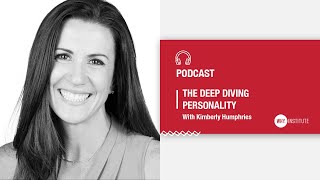
Kimberly Humphries, a Straumann account manager with a rare Mastery personality type (4.7% of people), has spent 22 years in dentistry and learned four languages. She talks about how the drive to master everything can paralyze her with over-preparation, and what actually helps: deadlines, spreadsheets, and mentors.
Chapters
This episode of beyond you'd why is brought to you by our why App. Head over to yinstitute.com to take our free why app and discover your why today.
Welcome to beyond you'd why podcast, where we go from just talking about your why to to actually helping you discover and then live your why. So, you know, if you've listened to the podcast that each week I bring on somebody with a specific why, first we talk about that why, and then you get to meet somebody that has that why, and you get to see how their why has played out in their lives. Because every why has great things about it and every why has challenges that come with it. So we delve into that and and see how it's played out in their life. And so today we are going to be talking about a very rare why. In fact, only 4.7% of the population has this why, and it's the why of mastery. To seek mastery. Now, the characteristics of this why are these are people that have an insatiable thirst for knowledge. They seek information over a broad variety of topics and typically not at a superficial level. So you will often pick a specific subject and begin to learn about it and find out that they have even more knowledge about that. Because they love to learn. For the sheer joy and curiosity of knowing something new, they gather and retain substantial knowledge in multiple areas, many of them seemingly unrelated. They are typically viewed as an expert in numerous disciplines by others. Although they insist that they have yet to truly master anything. They find pure enjoyment in the sheer act of immersing themselves in something new. They're fearless when it comes to new ideas and subjects. And they're cautious with expressions of their thought even though they know so much. So today I have a special guest for you. Her name is Kimberly Humphries. She's a senior account manager with a company called Strauman Straumann's in the dental industry and I will let her tell you a little bit about that. She currently works closely with one of their large strategic education partners to make sure that everything runs smooth and they have a great relationship between the two companies. And to help Strauman sales teams utilize the resources the best way with their partnership. Kimberly began her career in the dental industry 22 years ago, working as a clinical assistant in an orthodontic office. After working clinically for both general practitioners and as well as prosthodontic office, she made the jump in her career into sales. Back in 2008, she earned her spot as a top three sales performer for three out of four years in her territory and is part of the sales training team. She relocated to the US in 2014. She now enjoys spending time hiking and staying active with her dog and her partner. She loves learning and has spent time learning Mandarin, Cantonese, French and Spanish. Kimberly, welcome to the podcast. Thanks for being here.
Thanks for having me, Gary. It's a great privilege.
Well, let's start first to educate our listeners a little bit. What is Straumann, what do you do for them? And how did you get involved with Straumann?
Yeah, sure. So Strauman Group itself is the world leader in mostly dental implant solutions or originally, although now it's spread to digital and regenerative and a full portfolio of dental solutions. But they started as a dental implant company so replacing teeth roots and to help regenerate the body and restore function. I got involved with them because at the time I was working clinically for a prosthodontist. He was a speaker for Straumann and so he used to put on hands on courses for other local dentists, helping them learn and refine techniques. I had a knack for running hands on programs and so Straumann actually contract hired me to run the hands on portions of those continuing education programs. And then slowly I just jumped ship and started working for Straumann directly. And I've been with them for the last 10 years now almost.
That's awesome. And for those of you that don't know a prosthodontist is. Well, what is a prosthodontist? Kimberly?
Well, a prosthodontist is a dentist who's done extensive additional three to four years of additional training to focus their specialty on the fixed rehabilitation or the of the mouth. And so they do all the advanced trouble, difficult, high end, beautiful cases typically.
So if you're somebody listening that has had a lot of dental problems, then you probably know what a prosthodontist is. If you haven't, it's somebody that really a general dentist would send their very challenging cases, they're very challenging situations to a prosthodontist because they have a little bit of extra training or actually more than a little bit, a lot of extra training in that area. And so there's somebody that would would use a lot of implants, right?
Sometimes a lot of prosthodontists will focus on the restorative side. So they use lots of the implants, parts and pieces and then they'll work in an interdisciplinary team with a surgeon or a periodontist A lot of the time.
So what interested you in the first place in getting into dentistry?
Originally I wanted to be a dentist and honestly, I'm not certain why. I had a good friend of the family who was a dental assistant and I just. That really interest me. However, I grew up in a very, very strict background when it came to continuing education and secular education. And so I grew up being encouraged to have a quick sort of community college level course one year perhaps after high school, but then really to focus on kind of religious entities. And so I wasn't going to university and getting a college degree wasn't, wasn't an option for me. So that's why I didn't pursue that.
So you, you know, we talked briefly the other day. You and I met, you know, through your partner. And he and I had just worked together at a, at a retreat up in Seattle. And it was great that he brought you on. We were talking and her partner's name is Kevin and he says, hey, I need you to meet my girlfriend. She's her. Why is mastery? And so it just kind of worked out perfect that we got a chance to meet and talk. And you mentioned something at that time about, and you don't have to talk about which, which religion it was, but you said that you, you were quite involved with it and that you went very deep into that subject.
Yes, yes, I, in the organization that I kind of was, was raised with, study was so encouraged. And what I loved is each week you were given assignments and I would love to deep dive into cross referencing biblical scriptures and pulling ancient posts out. And it just, I really enjoyed that aspect of it. I loved studying it and comparing all of the different ways that words were used in different parts of the Bible and trying to figure it out. That part of it was very interesting to me, which now makes a lot more sense now that I've understood what my why is.
Exactly. And how many years do you think you spent deep diving?
Oh wow. Really deeply deep diving. About 15 years. I became separated from that organization about 10 years ago. So I would say all through my teens and early twenties, I was very, very involved in studying.
And so if I were to have asked you back then, you know, do you know a lot about this subject? How would you have answered that?
Oh, I would have said absolutely not. There's so much to learn. I'm just scratching the surface compared to person X, Y and Z. I am a baby. I'm just learning. I enjoy it. I. But I'm just learning.
And that was after at least 10 years of study.
Exactly.
So that's pretty common. And then what about it made you. How did you determine that you needed to switch course?
In the end, what I was learning, although I was enjoying it and a lot of it could make logical sense to me, in the end, my gut wasn't there. It didn't feel true and authentic to me. And I really wanted to spend my days being as authentic to myself as I could and being really honest. And while I was good at playing that role, and while I enjoyed the study side of it, the application of what I was learning didn't feel congruent with how I wanted to live. So made that separation and choice.
And so then you switched from that direction to getting into the dental industry.
Well, I'd been in the dental industry the whole time those overlapped. So the whole time I was clinically involved in assisting, I was also involved with the church. And so then it just. Those were parallel. And then, oddly enough, as I switched to working for Strawman, was around the same time that I parted ways with the organization.
So how would your. The dentist or even the orthodontist, originally you started in an orthodontic practice, you said, I did in a practice that does braces. And how would that dentist, how would he have described you back then?
Oh, gosh, that's funny to think about. I worked with him for seven years. He said he always knew I was smarter than what I was doing. So when it came time to leave, he said, I knew it would happen.
Did you know a lot about orthodontics?
Well, I'll say this. By the time I left, I definitely, I can, with hindsight, I can look back and see that I took a more active role in learning about the treatments and the reasons for versus just, you know, sterilizing instruments or chairside assisting. I was always more interested in why we were doing certain things and almost treatment planning along with the orthodontist. And so again, with hindsight, I could see that at the time I thought that this is just how everybody worked.
Now, you know, it's not that way.
Now. I see it from the other side. But at the time, it never occurred to me to not want to know exactly, you know, everything that the dentist knows.
Yes, exactly. And so then from there you went into worked for a general dentist or a prosthodontist.
I worked for a general dentist for a short stint in between. That was while I was in my transition in my personal life. And then I worked for the prosthodontist after that.
And I can imagine at the prosthodontic office, you knew quite a bit about that as well.
Well, that was, again, that was like a joy to work with that prosthodontist because it's taking restorative dentistry and deep diving into it from a practice perspective. And so again, I worked for someone who was very generous with sharing their knowledge and wanting to elevate me and my skills and my knowledge. And so it was an absolute joy to work with that person.
So what happens in your mind when you start on a new journey? So now you're, you're going. It's, it's not completely new, but you were working in the, in the dental field, and then you start with a prosthodontist and then what kind. Take us through how your mind works and what you think when you start on a new journey like that.
Oh, man. Okay. So when I, if I think back to, you know, switching from, with the prosthodontist into the sales side anytime, it's, it's sort of, there's been a new transition. There's an elation of excitement, of wow. All these things that I don't know yet that I get to learn. I just recently started an online course through Colorado State. And just like buying the textbooks and downloading the syllabus, like it's an elation, like it's, it's an excitement that is palatable about learning and setting a schedule for when I'm going to study and when I'm going to look. Excitement and elation would be the words that would come to my mind. Like it truly is exciting for me.
Which then leads you to do what, what? I mean, do you just like, plan your time around your learning or how are you able to gain so much knowledge?
Well, I'm not as probably organized as some other people that, that will fit into this category, but I will get into zones where I become like a tunnel vision. I've learned some tips and tricks of how to get myself into that zone. I really have to remove a lot of dist. But once I'm in it, then it just sort of happens. And I know that's a terrible answer, but I'll just start working and then all of a sudden I'll look up and six hours have gone past or just start reading or studying and it just sort of happens. And so, yes, I have to have a general timeline, especially when it comes to an online course where you have team members to work with and you have to be kept on schedule, which is helpful for me. A lot. Just forcing you to send stuff before you think it's ready. But I more or less have an idea of how I want my week to look. It doesn't always work out exactly as planned, but I do have a very clear idea of what I want it to look like.
So it sounds like you've had to become very structured and very organized, at least with your time over the years.
Yes, and that's something I've learned about myself because naturally, I am a bit more of a free spirit that way. And so I've had to force myself to become more structured, give myself deadlines, really have the checks and balances listed so that I can. So that I can just get things done and not end up just dreaming away an afternoon or brainstorming away an afternoon, or deep diving into a subject that has nothing to do with where I want to go at the end.
So what was it? What did you think when you took the Y app and it came up as mastery and you started to read about it? What. Tell us, you know, what was that like for you? Did you initially say, now, that's not me, or did you. Did it right away seem like you? And how does it feel now?
Okay, so I'll admit that when I first took it, I thought, no, like I should be something about collaborating or trust or, you know, that's more of me. And then as I really started to read it, especially when it talked about learning and feeling like you're never the expert when you probably know a lot more than many others, those resonated so clearly. And then honestly, listening to the podcast that you do, I can't recall his name, but a year and a half ago.
Jason.
Jason Rogers. Yes. Yeah. Well, while I'm no Olympian, a lot of the techniques that he was. That he spoke about using in order to help keep himself on track, I've recently realized that for myself as well. And so the more I talk about this and I think about where I've come from in my history, with studying and wanting to learn languages and dog training or whatever it is, it's making more sense as the time goes on.
Yeah. So why are you learning these languages?
Well, it's mostly interest in high school originally, of course, I learned French, and I took it to an advanced level in high school in Canada. Yeah. And I just. It's something that relatively came pretty simply for me and I found a lot of fun. I also love to connect with humans, and I found that if you can speak a few words in their language the way the Walls drop down very quickly. I love that feeling. And so it was a little bit so that I could connect with other humans and it's just fun to learn it. The Mandarin and the Cantonese, I learned specifically to be involved with the religion. It was so that I could preach to people who recently immigrated to the Toronto area. And that's why I spent four years learning those languages was for that specific purpose.
Yeah, I can imagine that you will know those languages well and at least by other people's standards. And there's a, There's a friend of mine that I've known since he was. He's actually one of my daughter's friends and I've known him since he was a little, little kid and he's a very avid golfer. In fact, he played for the University of New Mexico golf team here. So he was a very good golfer. And one day I ran into him and I saw that he was sitting in a corner studying for, you know, I was there for a couple hours and he there studying for those hours. And then he finally came over and we started talking. I said, so what are you doing? He said, oh, I'm getting ready for a test. And I said, well. And I knew ahead of time that his why was mastery. Okay, so I already knew this about him. And so I said, well, when, how long you been studying? He goes, well, I've probably got another six hours to go. And I said, well, when is your test? He says, oh, it's about three months from now. And I'm like, how could you be studying six hours now for a test in three months? And he says, oh yeah, I put in six hours a day. And I just couldn't even fathom that. But for him that was just the way he thinks. I don't know, how would that, something like that feel to you?
Well, I strive to be like that. I'm much more of a procrastinator.
But he's young and doesn't have much else going on at this stage, so.
I would love that.
He's going to the MCATs. Yes.
Yeah, that's a goal.
Much more of a procrastinator than that for sure. However, the idea of long study sessions is definitely something that I can relate to, maybe not quite as far in advance.
It just blows me away that he's able to think like that. I mean, he's studying for his medical, you know, zemcats and I asked him how his classes are going and you know, of course he's topping his class and he out studies everybody. That's just how his mind works as well as in golf. You know, I would see him out on the practice range for hours. I mean, you know, eight hours on the practice range practicing his golf. And just loves the thought of learning the intricacies and the nuances of what he's involved with. And how does that resonate with you?
Yeah, that definitely feels a little more natural. Maybe it's, you know, obviously being involved with athletics in high school and then.
What kind of sports?
Well, I know this is crazy. I'm a. I'm a tall lady. I'm five nine. I did some basketball, volleyball, the traditional. But I also was on our high school gymnastics team, which is a strange thing, but I just. I've always loved to dance and gymnastics and so practicing over and over to learn a new move or to get refine certain things or loved floor exercise was my main event that I would enjoy. And I would actually love playing with the music to ensure that the music was perfectly fitting what I was doing. And I would spend hours just cutting it just so so that it would fit perfectly for what I needed. That definitely resonates with how I feel. And then the same when I was in band practicing instruments over and over and over to have it just come so smoothly and learn how to read music faster and better.
So what are some of the ways that if I'm listening to this and my why is mastery and I'm struggling with going, you know, so deep that it kind of slows me down to a very slow pace. What are some of the ways that you found to help you be able to move forward, be able to kind of get unstuck or get out of your own way?
Yeah, I appreciate the question. And I will be completely honest. I get stuck a lot. I will want to know something so perfectly before I take that first step of. Before I write those few words down on a report or on a proposal that I will be fully paralyzed because I feel like I'm not good enough to be able to write or do or present or whatnot. However, recently I've had a change in who I directly report to, and he has kept me to task with specific hard deadlines. My entire life is on a spreadsheet now where I will have very specific broken down into individual tasks with deadlines. And honestly, I feel so at peace. I'm more productive than I've ever been. And I would actually. I'm encouraged to send things and with my closest person that I. My closest colleague that I work with will share things before they're really ready for other eyes. She's particularly good at it, so I'm learning from her with that of just like, let's share in the creative process versus in the past, I would have wanted it to be just perfect and buttoned up before anyone even looks at it. And so it's. It's uncomfortable for me, but it's definitely helping. I'm meeting deadlines and I'm not losing track of things. And it's definitely helping with. For me to control that. That creative brainstorming and then packaging it into, you know, deliverable just to work in the corporate world.
So what exactly does the spreadsheet do for you? How does that explain that to me? How does that work? I'm not quite getting it.
Yeah, no, I'm sorry. It keeps me organized from the sense of very clear tasks with clear due dates and not even just due dates, but where I should be in the process at a certain timeline. And so it allows me to make sure that I'm fulfilling my deliverable even early to get the buy in of the people I'm working with before going too deep on it. Jason said the same thing is like, I'll go deep dive and make it perfect, but if I've missed the mark, then not only have I wasted colossal amounts of time, but it also is like a punch in the stomach a little bit because it's hard. You put so much heart and soul and you've worked so hard on something. So getting that early buy in prevents me from wasting time, which allows me to be more productive overall. And just the way my brain works, that spreadsheet is the best way for organizing that for me.
Oh, I see. So you've broken it down into smaller chunks so that you can accomplish each one. You know, if you follow that structure, you'll be okay in the end.
Exactly. Yeah, exactly.
Okay. And so now that makes a lot more sense to me. And which is a little bit about what Jason said as well, which is, you know, he said that he needed to have strict timelines to move forward. And that's where. What I found, Kimberly, is people with the why of mastery. If they were athletes, at some point, then they almost had to deal with deadlines that anyways, because as a gymnast, right, you can't analyze every step as you're performing to see how you can do it better. You have to go to the next thing, Right? It's like a whole bunch of. A whole bunch of deadlines you have to meet. And you can't just stop in the Middle.
Yeah, exactly. And you can't change the weekend that the meet or the competition is going to be on. And so you do have those hard. It's got to be ready by then. And. Yeah, and so that helps. Having those deadlines really helps prevent the paralysis because you have to have something to show, like, I'm going to lose my job if I don't end up with that deliverable. And so those deadlines moving up to the big one really, really help that paralysis that I experience by wanting it to be too perfect.
And what about mentors? Have you had mentors on your journey?
Oh, gosh, I've had many, many mentors. Now I'm going to look at it, actually. I'll probably want to go back and look at this differently now, understanding about these different whys and different motivations and what I've gained from different people that stand out in my life. But I do think that people who professionally have been so impactful for me have either really empowered me with knowledge, like, I think of that orthodontist and that prosthodontist that I worked with definitely stand out because I learned much from them. They were so generous. And then professionally, I worked. I've worked with a few really incredible women who taught me about structure. Yeah. Is that what you were asking, or did I go off basically?
No, no, no. Well, kind of. One of the ways that a mentor can help you is like, what you talked about. It sounds like you've almost created your own way of doing it. But what one of the things that. There's an analogy that I. That I've heard that if you hand somebody a Rubik's Cube that doesn't know what it, you know, doesn't know how to solve it, and you ask them to solve it, it could take them up to 30 years to be able to solve that. But if you give somebody a Rubik's Cube and you stand over them, you know how to solve it, and you stand over them, and every time they make a move, if all you did was say yes or no, they could solve that Rubik's Cube in about eight minutes. And so it's the value of having someone you can just look at and say, yes, am I on track? Am I not on track? Am I going the right way? Am I not going the right way? And so that's one of the things that Jason was talking about, is that having someone that you trust, that can keep you on your path and keep you on going in the right direction because it's easy to get off course, right?
Very. Yeah, yeah, absolutely. Yeah. You see? Oh, that shiny, interesting thing. And off you go.
And then three days later you're like, whoa, what am I doing over here?
Exactly.
Have you had someone that you can look to to just get a yes or a no recently?
Yes, that. And I think that's where I've noticed my own. My own. My own work has improved quite substantially recently. And my communication skills have improved at work because of that. Because there is someone who is really kind of looking and mentoring and encouraging me to get out of my own way. Like, I've actually. I had those words said to me.
Can really. You get in your own way a lot? You know, I minimize what I do a whole bunch of different things. And so that's really helpful to have somebody say that to you because it helps. It helps snap you out of it, and it helps kind of guide and direct and keep bumpers on you a little bit.
Yeah, that's. I can see how that would, you know, it's helpful for all of us, but especially helpful for someone with your why. And so how has your. Has Kevin, your partner, reacted to knowing that your why is mastery? Because he learned a lot about the different why's the retreat that we did a few weeks ago.
Yeah, it was funny at first. He said, oh, of course. And then I think it scared him a little bit. And then as the two of us have been chatting about it again, it's like, oh, this now makes sense. Or this thing that we've been struggling with between ourselves, like, we're trying to train the dog. And of course, I want to deep dive into every YouTube video, and I follow a billion trainers on Instagram. And he's like, why don't you just try it already? I'm like, I'm not ready to try it on the dog yet. I'm not ready. But having conversations now that we can speak this same language is really helpful in moving forward because then we're able to understand. And then he can help, since he understands it so well, really help guide and get the needle moving and prevent that paralysis in our relationship in these little, you know, irritations that can become big.
Sure. And, you know, one of the things that Kevin can help you with is asking just a simple question. What are you going to need to know in order to be able to move forward? Right. So that there is. Allows you the opportunity instead of him coming in and say, okay, you know, enough. You know, enough, let's go. You're like, wait, wait, wait, wait. What do you mean I don't know enough? I haven't got this figured out yet. I can't move forward yet versus okay, Kimberly, what is it that you need to know in order to feel comfortable so that we can move forward? And then gives you the opportunity to say, well, I'm going to need to know this and this and this. Okay, well, let's go do that then, so that you can move forward. Does that make sense?
It makes like so much sense. So much sense.
Yeah. Because otherwise, if he leaves it up to you, it will never end.
Correct?
Yeah.
And your dog will be 14 years old before you start training.
Yes. Sounds about right. Sounds about right.
And that's where knowing each other's why is very helpful in relationships. And what's interesting about you two is he has one of the only whys that would be a great match for you.
That's awesome.
There's many that don't fit well with mastery, but there's some that do fit really well. Now if I were to ask you, here's another question that I have. If I were to ask you, based on what you know about yourself and your history and your career so far and your why, what kind of jobs, careers do you think would be good for somebody that has the why of mastery?
I'll say definitely, you know, athletics, if you can, but then you can get involved in coaching athletics. I think that people with whys make really great coaches and mentors because sometimes you can see things so clearly in others and that paralysis that we feel, not other people feel, so you can share that knowledge and then they go and do it. And so they can honestly be more successful in things than we've been able to do because we're in our own way a little bit. Well, speaking personally.
Yeah.
Whereas I've been able to teach and coach people to do things and they've been far more successful in that than I would have been. And so that would be actually, yeah, that would be my.
Coaching teaching you definitely now, right? I do, I do. I do a lot of. Actually I do a lot of coaching and teaching. With our new hires. I'm part of the sales training team and I, and I coach them on using partnerships and having different discussions with their clients. And so that's part of what I do. And then from a clinical standpoint, I'm involved in, with our education partner of the clinical hands on training of parts and pieces in clinical dentistry. And I just love it.
I could see that and I could see if I started working with Strauman, that I would. And I needed knowledge, I needed information, I needed to know, you know, what's really happening here. What's really the truth that I need to come to you.
Well, you're more than welcome to.
Isn't that what people do over at Trauman?
Yeah, a lot of the. Because of where my particular history and the partnerships that I've had, I have a niche knowledge on a few things in our portfolio. And so the other sales team members definitely are always welcome, and they often do call me for. For help on figuring a technical issue out, which. Which I enjoy a lot.
Do you think it would be valuable for your. The people that you work with to know your why?
Yeah, definitely. You know, it's funny, even as we. When we were first doing this, I was like, oh, I want. I want everybody on my team to do the why app to find out, because I think the more we can understand about how our brains, our motivation, how we're wired and how we work and what motivates us, what keeps us on track, what's important to us, it can only make us work better. We're whole people. We're not what we do. We're not our job titles. We're not anything. We're whole people. And I think the more we can understand about what makes someone tick, it helps us all work together better.
You'll be surprised, and I think you'll enjoy how people respond to you and communicate with you and appreciate you and value you once they know your why. So as your team, if that moves forward and you're able to have your team discover each other's why, and they learn about the nine whys, so that when you talk about the why of mastery, they know how you think. It'll be fun for you to see the appreciation they have for you and the way they communicate with you because they know your why, does that make sense?
Yeah. And I agree. I think that it makes me excited to do this with the team just because I'm curious what everybody else's are. Because I think sometimes when there's little rubs, if we understand. Just as you gave that advice with how Kevin and I can work together, the same with your team members. Just understanding that, asking questions versus pushing versus whatever, we can figure it out.
Yeah. Because for some people, it's not having more knowledge. Right. For some people, it's not knowing more. For some, it's just knowing how to connect or knowing how to be in the same space with somebody. It's not always about knowledge. Even though for you, knowledge has been A wonderful thing.
Yeah.
So. Well, very good. Well, Kimberly, you know, I know we're probably running out of time here and I just wanted to thank you for coming on especially short notice like this. Especially not having any idea what I was going to ask you or what we were going to talk about, because I know it can be nerve wracking, especially if you wanted to study up on what we were going to talk about. But it's very helpful for the rest of us to hear from somebody with your. Why? Because A, it's so rare, B, it's very interesting, and C, it helps us communicate even better with you. So thank you for taking the time to spend your Thursday here with me.
Oh, my pleasure. This has been a really a great honor. And thanks for pushing me out of my comfort zone. I needed it. I needed the short deadline, otherwise it never would have happened.
You'd have been studying for it, huh?
Totally.
Well, that's great. Well, thanks. Thanks again for being here. If a dentist is out there listening and wants to connect with you at Straumann or how would something like that work? Or would they connect with you? How would that work?
Yeah. No, if anyone's curious for more information, they can certainly connect with me at Strawman and I can always, you know, connect them with the right person at Strauman if they need. And so my email address is just kimberly. Humphriestraman.com or you can find any of our information@strauman us.
Awesome. Well, thank you for being here. I'm sure I'll be in touch with you more.
Okay, perfect. I know we will. Thanks so much, Gary.
Thank you.
More from Dr.




Women In Leadership: A Need For A Greater Systemic Change With Belinda Clemmensen






