The Path to Cash: The Door Opening Strategy with Caryn Kopp
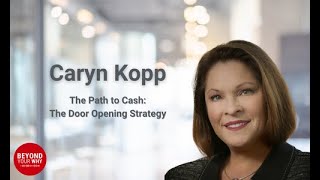
Caryn Kopp, founder of COP Consulting, shares her five-step door-opening strategy for reaching the right prospects. The framework covers target selection, messaging using POPgap, handling objections, hiring senior prospectors with the right DNA, and executing a multichannel cadence. Kopp built her consulting firm around these principles over 25 years.
Questions this video answers
Bedminster, New Jersey.
Babson College (marketing & communications) and NYU (MBA, marketing).
The Path to Cash; Biz Dev Done Right (Amazon bestseller).
Almost 25 years ago (from interview date).
1) Right target; 2) Right messaging; 3) Right answers for objections; 4) Right door opener; 5) Right execution (right actions).
Chapters
In today's episode, I have the chief door opener for you. Not that kind of a door. I mean a business door. So if you're somebody that's trying to open the door to get more business, then you need to meet Karen Kopp. She is going to share with you the five planks of door opening success and she'll go through them one at a time and show you how to make more sales by opening more of the right doors. You're going to love this episode.
Welcome to beyond you'd why Podcast, where we go beyond just talking about your why and actually help you discover and then live your why. You see, we believe that knowing your why, that driving force behind every decision you make and every action you take, is the essential first step to really know knowing yourself. It allows you to move forward faster and have a bigger impact. If you're already a fan of the show, then you know that every week we talk about one of the nine whys and then we introduce you to somebody with that why so you can see how their why has played out in their life. This show will be more powerful for you if you've already discovered your why. If you still need to do that, head over to whyinstitute.com and discover your why today. It'll only take you about five minutes. Now let's meet today's guest.
This week we're going to be talking about the why of contribute to contribute to a greater cause, add value, have an impact in the lives of others. So if this is your why, then you want to be part of a greater cause, something that is bigger than yourself. You don't necessarily want to be the face of the cause, but you want to contribute to it in a meaningful way. You love to support others and you relish successes that contribute to the greater good of the team. You see group victories as personal victories. You are often behind the scenes looking for ways to make the world better. You make a reliable and committed teammate and you often act as the glue that holds everyone else together. You use your time, money, energy, resources and connections to add value to other people and organizations. And so today I have a I have a great guest for you. Her name is Karen Kopp and she has been dubbed the Chief Door Opener because she gets her clients in the door with their prospects. Many business leaders and sellers say that when they're in front of the right decision makers, they close the sale most of the time, but they just can't get in front of enough of the right prospects. Karen's team of senior Business development developers known as top door openers, find the right opportunities and secure initial meetings for their clients. So as a best selling author, nationally recognized speaker, and an expert in business development, Karen can be seen in the ink in Ink, Fortune magazine, Forbes and Newsweek, and has been interviewed on the Wall Street Journal morning radio show. Karen is also the sales messaging coach for the scaling of coaches worldwide. She's the author of the Path to Cash at the words you need to bypass those darn prospect objections. A go to book for getting in the door with prospects. Karen, welcome to the podcast.
Thank you very much. It's great to be here.
This is going to be fun. So, so where are you right now? Where are you located?
Right now I'm in Bedminster, New Jersey.
New Jersey. Okay, now let's go back in your life, Karen. Where, where were you born? Where did you grow up and, and what were you like in high school?
I was, I was born in New York, but I grew up in Edison, N.J. and life in high school was really interesting. I was the co captain of our gymnastics team as competitive individual, but I was also somebody who liked it when everybody won. And so that's kind of unusual for competitive people. I was looking forward to a career in business, which I ultimately did. And we spend eight months of the year in Florida right on the ocean and four months in Bedminster, New Jersey.
Well, I don't hear any accent, so how did that happen?
So I lost the accent when I went to school in Massachusetts and everybody there said I was a marketing major. So I kind of lost the coffee and talk. And then they sent me from there. I was hired by Sylvania and they sent me out to Chicago. So between the Massachusetts and Chicago, I just kind of lost any accent. So I became basically a mutt.
And how about the rest of your family? Do they have an accent?
My mother does. She grew up in Brooklyn and she definitely has the Brooklyn accent mixed with coffee and talk. And my brother does not have an accent as far as I know.
Okay, great. All right, so you graduated high school. Where did you go off to college?
I went to Babson College. I wanted to study business. I double majored there in marketing and communications.
Okay, then you.
Got out of college and what was your first take us kind of through your career, what did you do when you got out?
Well, in college it was very common for the students at Babson to have their own businesses on campus, which I did. I sold neckties twice a year, once at the holidays and then once for interviews and father's day. And what was really interesting about that is I had my first experience with. With hiring employees because I learned that if you hire somebody to sit there with the box of ties, I could be in class making money while they're selling the ties. So that was a very interesting experience to begin with. Then I wanted to go into PR and live in New York. But then I realized that if I worked in PR with what they paid, I could never live in New York, that I would have to be living at home with my parents in New Jersey. And I didn't want to do that. So then I started interviewing for the different jobs that were left, which was sales. And so it was interesting because my father owned his own business and he was in sales. And I wanted to do anything but that. I did not want to own my own business, and I did not want to be in sales. And all roads led me here and signed. Now lease sales. I own my own business. And it just kind of the way it happened. But when I started interviewing for the jobs, I got a job with Sylvania, and they sent me out to Chicago. And I didn't know anybody in the Midwest. I knew nobody. I could get in the car and drive to go see. I knew nobody. And I was the youngest by far in my territory. And so I got the accounts that were really far that the other people did not want to drive to, and they would give it to the young kid. And. And so I. I got a taste of that and sales and account management and things like that. It came very easily to me. And then I switched into marketing after that, and then I moved back to the east coast. And then I went and got my MBA at nyu, where I majored again in marketing, Went out into brand management, consumer packaged goods, and then went into sales and business development, calling on brand managers, of which I had been one. And by doing that, I got to really understand the power of sales messaging. Because when you say certain things to certain people at certain times, magical things can happen. And I have a great story about that from when I was 11, but I'll let you lead the interview.
No, that's fine. Let's hear it. So at 11 years old, you learned about sales messaging.
At 11 years old, I had my first cold calling job. So the family I babysat for had a lawn doctor franchise. Do you remember them? Lawn Doctor. They would put the seeds down and do your lawn. So they would have their callers call residences for free lawn evaluation. So the mother said to me one day, you have a good phone Voice. Why don't you go to one of the cubicles in the basement and pick up the phone book, remember those? And start calling to see if anybody is interested in a free loan evaluation. So I started doing that, and I found it really interesting. It was easy for me to book these appointments. And then she said to me, here's this big book. It was huge, of all the answers for the objections, and this is how you use it. She said, when you face an objection, when you're on the phone, you go to the tab in the book, open the page, and then scroll your finger down to the place on the page and then start reading. It took me about two calls to realize that was never going to work. You have to know these objections cold. You have to be able to be in the moment with the prospect and weave to the left and weave to the right in these conversations. I found it fascinating that when I change the cadence of my voice, it could change the outcome with the prospect. I found it fascinating that if I changed my answers, I changed my language, I would also be able to change the outcome. And that started this. This fascination with language and sales language. And I've since written books about that with answers for objections that you could really use. But you have to know the answers as well as the. The book that you didn't mention today, which is the Amazon bestseller Biz Dev Done Right, which is all the blind spots in the sales process that keep the business leaders from the success they should have. I actually have it right here. I could share it.
Is Dev Done Right Right?
Because too many people do it wrong and then it costs them all sorts of time and opportunities when there is a right way to do things, and if you only knew how to do it right, you wouldn't waste the time doing it wrong.
Ah, well. So what made you write that book? Well, let's hold on a second. So let's. Let's go back. So out of school, you went into working with Sylvania, Then you got into marketing. Then why did you go back and get your mba?
Well, when I went back into marketing, I was working for a smaller company, and I didn't feel like I was getting the training that I really needed in order to be an excellent marketer. And my husband was also in brand management, had already gone back for his mba, and he said, if you want to go into consumer packaged goods and get classical brand management training, you need the mba. So I went back and did the mba. It was really interesting because it was very similar to what I studied at Babson, except for I was years older and I was able to really grasp the concepts in a way that at, at 18 years old, like at 18 year old and microeconomics is not the same thing as a 26 year old and microeconomics because you have some, some business experience to make it relevant. And I found that I got a lot more out of what was very, what were very similar courses, but I just got more out of it when I did it when I was a little older.
That makes sense. And so then as you went through brand management and marketing, that's. Is that when you wrote, you wrote your first book?
No, I wrote the first book years later. Okay. Because after I worked for the company where I was calling on brand managers, I started my own company and the COP Consulting where we're best known for the door opener service. And that company I started almost 25 years ago today. Wow.
And was it originally started to be a door opener?
That's how it worked out. It was just a great idea I had in the bathroom of a gym one day where all good ideas come from. I was working out, I go in to the bathroom and somebody calls out, hey, I have a promotion agency. Does anybody want any part time work? And I had been staying home with my second child for about a year, year and a half and I was starting to think of business ideas. I was going, when he went to nursery school, I was going to start something, I wasn't quite sure what. And business development always came easily to me. When she did, when she called that out, I said, well, let's have a conversation. And she really wanted to hire somebody that was more administrative. And I said, well, here's something I could do for a consulting rate. And then it just came out of my mouth. I said, how would it be if I got you in the door with your prospects for the first meeting? And the response was really incredible. She just looked at me and she said, you would do that? You would do that for me? And I said, yeah, I can do that for you. And she said, when can you start? And then at the pool, a month or two later, before I started the business, it was the same thing. Somebody I knew had a business. And he said, what are you going to do with your free time now that your son's going to nursery school? And I said, well, I've had this business idea. I was thinking I could get my clients in the door with their prospects for the first meeting. Same reaction. He dropped his jaw and he said, could you do that for me? I said, okay. And he became my first client. And it just kind of went from there. Then when I had more clients than time available, I had to make a big decision, which created the foundation for what this is now. Do I hire low level people and then I have to train them and hire them and manage them and fire them and do it all again? Or do I hire somebody senior like I was? Somebody with more than 10 years experience in business development, was professional, knew how to get the job of door opening done, and importantly, loved this part of the sale, which most people don't. Most people would rather put a stick in their eye than do this part of the sale, which I really appreciate because that's kept us in business for a really long time. So who do I hire? The low level folks or the high level? The senior folks. And I realized that if I hired the senior level people, I could still work my own account and I can hand those people an assignment and they would know what to do and I would need very little management. So the first person I hired was the person who replaced me in my last full time business development job. And it just kind of became the business model from there. It was much easier to do it that way.
Makes a lot more sense when you explain it the way that you did. Because you're starting out, you know, you could start with a run instead of starting with a crawl and trying to get them to run right.
Well, and that's the thing. There are two parts of it. One is that there are certain people who will do the job of door opening who don't want to do the job of door opening. If you think about the business developers that are out there, and when companies go to hire hunters, they're typically hiring somebody who has end to end sales experience. But they may or may not be gifted at the role of opening the door and they may not want to do that part of the job. That's a big blind spot for people who are hiring salespeople. They just hire the wrong kind of hunter because they didn't realize that within the world of hunters, there are different kinds of hunters. There are some who are great at the meeting and developing the relationship through the curve. We call, in our world, we call them a poser. And then there are other hunters that are intuitively great and they have it in their DNA to open up conversations with people they don't know. They don't have to be at a networking event in order to open these doors. And they love this part of the job. Those are the openers Those are the only kinds of people that we hire here. But then we couple that DNA and the desire to do this part of the job with the experience. So it like we have to recreate 10 years of what to do when somebody says not now or not interested or I already have a vendor for that. These people have, have gone over this over and over again and they know exactly what to do to navigate to get to those right meetings. And even though that was more expensive for me when I was hiring those people and, and it's more expensive for our clients when they hire us versus when they hire companies that hire low level people, we're able to get the job done the right way the first time, especially when it's with the executive level prospect.
So what's the secret to opening the door?
Well, there are five planks of door opening success. This is one of my signature seminars. When people say to me that they are not getting in as many doors as they think they should, there's typically a problem in one or more of these five planks. And our job when we start with a new door opener client is to build these five planks for our clients so that the doors open predictably. The first one is the right target. That's a big offender. A lot of times when people aren't getting in enough doors, they're spending too much time targeting prospects that never deserve their time and attention. And so when we start working with a client, it's often 25% of anybody's prospect list does not deserve to be on your prospect list. So we're very deliberate when it comes to leading our clients through who belongs on their prospect list. We want to understand who, which kinds of prospects are going to be closer to a buy cycle. Who would be feeling urgency around having a meeting with our client because they're going to say yes sooner. One of our core values is to create important wins for our clients because not every win is an important win. But if you populate your prospects list with only those kinds of prospects that represent an important win, then you're more likely to get the doors open with the right people and, and shorten your sales cycle.
Yeah, and it's such common sense. But when people go to put a prospect list together, data can be lots of fun and you can have lot, but those prospects are people. And every one of them, if they have a need, they have a vendor, so why should they listen to you? That's the sales messaging, which is the second plank, which is the right messaging. And you'll Notice, in front of every single one of these planks is always the word right, because there could be a message, but it may not be the right message. And if it's not the right message for the right prospects, then you just lost that plank, and whole bridge falls in if you can envision what that bridge might look like. So. So the right sales message is important enough, a blind spot, too, because some people think that your marketing messaging is the same thing as sales messaging, and it's not, because the marketing messaging is meant to be broad. But sales messaging needs to be narrow. It needs to create a dialogue and create curiosity for the person that you're trying to meet with. And if it doesn't do that, then you need to go back to the drawing board and take a look at the words and the phrases that you're using and identify whether they're landing for those people. But when I talk to people about messaging, they talk to me about value propositions. That's a marketing term. That's not sales language. That's marketing. So this is a big blind spot. When you say the right things to the right people, doors open. When you say the wrong things to the right people, doors stay closed. Do you have a question?
Yeah. Give us an example of a situation where they had the wrong messaging and then what you changed it to that became the right messaging.
Usually the wrong messaging is just too wide. They'll say, this is what we do, but they won't say, this is why what we do matters to you in a way that is of more value to you than what you're currently doing. Whether it's with another vendor or whether it's something that they're doing internally, they. They don't think about that. People always want to say why they're different. And I have a big bucket of ice water for everybody that they could pour in their heads. Nobody cares why you're different. Nobody. Nobody cares. If you want to use that in marketing, maybe it will help you, but in sales, it does not help you. Nobody cares why you're different. They only care why you were of more value to them. And if you can explain that in plain English, in words that are relevant and compelling to the person who hears them, you win. And if you can't, you lose. And in fact, Terry, I've seen it over and over again where companies really deserve to win, don't win because they don't have the right words. And companies that they compete against who don't deserve to win do win because they have better words. So when it comes to figuring out how to open up conversation with prospects, it's really important to consider the words and how they're going to land with someone. And I'll give you a quick little one word example. And I do this in my seminars too, where I do word pairs and people can get the hang of this. But let's say you say to someone, I can show you how this works versus I can prove how this works. The difference is show and improve. The difference is an intensity where prove may land in a way that show never can. But now as business leaders, we, we are at 30 to 50,000ft when we think about concepts and when we're talking about a one word difference, that's right around 1,000ft. And the leaders don't always think at 1,000ft. But if they don't think at 1,000ft, then their salespeople won't either. And therefore their salespeople may be running around with words that aren't going to serve them well. And nobody's saying, hey, wait a minute, maybe we should change something about our sales messaging to make it more impactful.
And how do you go about changing your messaging to make it more impactful? What's the thinking, the process that you go through to, to, to bring the right words out?
So if you think about, if you want to meet with somebody, why should they meet with you? If, as I said before, if you have a need, you have a vendor or you're handling it internally, why should somebody meet with you anyway? What is that reason? What is the reason that meeting with somebody who you haven't met with before is going to be the best decision you make this week? So if you start with that, you have to have something pretty compelling. Just saying something about what you do is probably not going to do it. It might be interesting for the person to know that, that this exists, but that doesn't mean they're going to knock three people off their calendar and make room for you. So what is it that you can say that's so compelling? We have two trademarks in sales language. One of them is called the popgap method of sales messaging. And what it does is it makes all of your competitors right here on one area, one level playing field. And you are up here. The difference is value. It's not why you're different, it's value. That's the gap in terms of what everybody else is saying will do versus what you deliver. And the gap is value. And the, the value gap is going to be different for each of the individuals with whom you speak, because everybody's different in what they want. And yes, you can have a Persona, but that's also a marketing term. Persona is not who you're talking to. You're talking to a person. So you have to do your research on the individual, understand where you are in the relationship with that individual, and then you can choose your words. So this gap method of sales messaging is three sentences. It's fill in the blank, and it's helped people to recraft and reframe why they are of more value to the person they're speaking to. And here are the sentences. Anyone can, and you fill in the blank, but not everyone can. And you fill in the blank, and then, for example, and you fill in the blank. So for us doing the executive level appointment setting, we might say that anyone can say they can get you some appointments, but not everyone who says that gets you the right appointments. For example, for the last 25 years, we've been helping our clients get in the door for the first meeting at the executive level. That's what we do. So that's just an example when to do this right. When you fill in the blank on the second sentence, but not everyone can. The person who hears it has to nod along in agreement. That's how you know you're on the right track. And it should create an aha moment if it's done well.
That's the second plank. So right target. Yes. Message. I got three more planks if you're ready for them.
I'm ready. No, this is really good.
So the third plank is the right answers for objections. Not everybody thinks about the objections they're going to face before they face them. And in fact, when we're putting together messaging, one of the things we do is we think about the objections, which ones are going to be most common, and then we adjust messaging to address the objection so that our clients don't receive those objections in the first place. We call that the objection makeover. Objections are a big constraint for people, and while they might have a playbook, when was the last time they took those objection responses for a test drive to see if they're really making an impact and getting them to the next place. So that's what we're doing. We're removing the objections that we can remove, and then we come up with very strong answers for the objections we'll still face. Then the fourth is the right door opener. We talked about this before for a little bit. It's the right person who has the right DNA and the desire to do this job, they want to spend their time doing this. Which doesn't describe a lot of salespeople and certainly not a lot of hunters. In fact, somebody once told me that only 1% of all the hunters on the planet are great door openers. And I said to them, that's right. And they all work here in my company. So that's the fourth plank. And then the last plank is the right execution. Once you have the right target, the right message, the right answers for the objections, the right person doing the work, then that right person has to do the right things. Is it a phone call, is it an email, is it a LinkedIn? What do you say on the third try, the fifth try, the 20th try with that right prospect to help that person understand why this meeting is so important to him or her. The other part of execution is how much time you're spending weekly pursuing the group of prospects that you selected for a reason. A lot of times when we start working with a company, we have them keep track of time over two week period in quarter hour increments and really identify how much time they're spending pursuing net new prospects. Most of the time the salespeople are really busy with reports for their management or training other salespeople or sending proposals or closing sales and they have very little time to spend on pursuing net new prospects. And what that does for a business is it creates unnecessary peaks and valleys in revenue creation. Because when you're working prospects that are mid to bottom of funnel, that's where the hunters get paid. They get their commission on that. They're going to spend their time there at the expense of filling the top of the funnel with new sales, conversations and new relationships. And that's where we come in and we protect that. So those are the five planks. If people aren't getting as many appointments as they think should, there's a problem with one or more of those planks. And that's what we fix. But we do it mostly in a done for you service. So we'll create the planks that are right, we'll fix whatever isn't working and then we will staff the project with our door opener or door openers and get the prospects, the conversations with the prospects going and land the meetings for our clients. So let me just, I'll stop there and see what questions you have.
Well, so you said the right target, right messaging, right answers for objections, right door openers, then was the last one.
Right action, right execution.
Execution. Okay, there we go.
And which of Those. Do you find that there's mostly a breakdown for the typical client?
There are breakdowns in every single one of those planks for the client. Every. The most common one is that they don't have the right door opener, or if they do, that right door opener for them has filled the funnel and is busy closing, so they don't have time to open. So that's very common, and that's usually what leads them to us in the first place. But once they hit our doorstep, they start to realize that the prospects that they have on the list may not be the right prospects. Or the language they were using to try to get the doors open wasn't right. Or even from an execution standpoint where they might have reached out two, three times, but then they get busy and they don't reach out anymore. But they might as well have not started it in the first place because it takes time. The prospects are people you're developing. A relationship takes time.
How do you feel about a door opener used on you?
A door opener? When somebody calls me. Is that what you mean?
Yeah, yeah, somebody's a door opener. And they're calling. Yes, calling you to get you in touch with somebody else. How do you like it?
Well, it depends on how good they are. If they do a good job, if they've done their research on me and they've done a good job, they know what to say to me. To pique my curiosity, I'm a business owner. I have needs all the time in a variety of different areas. So if they have done their research, they call me, they email me, they might reach out on LinkedIn. There are certain ways to go about doing this that develops a relationship. But what I find is that most people who are reaching out don't do a good job with this. They'll just email over and over and over again. Well, I don't know about you, Gary, but I get about 250 emails a day. I can't read them all. And if it reeks of a cold call, I'm not interested. No call should ever be cold. It should be warmed up with research. Then there are people who might call once, but they don't know what to say if I answer the phone. And then they're just stammering and they can't get past that initial dialogue. They don't know that there's a difference between leaving a voicemail versus what you say when you reach someone live. Voicemail, six sentences. Reach someone live. It's two sentences and a question. But if they don't know that. Then they can't get me into conversation. When I give my seminars, I ask the executives, I'm like, if somebody who didn't know you wanted to have a meeting with you, what would it take? It's kind of like what you're asking me. And they all say the same thing. People have to do their research. They can't just email me. They have to call too. Because that's when I know that they really care. It's a human behind it. But if they call, they have to say something meaningful. And then they can reach out on me, to me with LinkedIn, but not the kind of LinkedIn where they just want me to make a connection. Then they try to sell me something because I ignore that. So this is a relationship building approach. And I'm like, okay, that works with me too. Now let me ask you, what are you doing? What are your salespeople doing when it comes to reaching out to your prospects? And then they laugh because they know they're not doing this well. And then they wonder why they're not getting the meeting. It's not all about the sales. Well, my jersey just came out. Well, it's not all about the salespeople. It's about the process, too. It's about the messaging too. All those things have to work together.
What part does referrals play in this?
Referrals? Very similar. I mean, we, we don't do the referral piece of it for our clients, but the referrals is a very important part that our clients should be doing for themselves. But similar to the fact that only certain prospects belong on your list, only certain referral sources are going to refer you to the kinds of clients that you want. But that's a big blind spot for people too, that they think a referral is a referral is a referral or a referral source that they might have worked with years ago is a good referral source now, but that may not be true. You want to look for and spend time with the kinds of people who can refer you to the kinds of clients you really want, but that may not be the kinds of clients you have now. I guess my point is that it's important to be deliberate wherever you're spending your time, even when you, when you pursue your own referrals.
I think too back to when will I answer or look at an email or look at something on LinkedIn and I don't look at it at all unless it comes from somebody I know, right? If it's somebody just reaching out that, I don't know.
Probably won't look at it. It's because, like you said, we get so many of them now. I'm wondering, are you finding it harder and harder to utilize email?
No, I find it easier actually, since the pandemic, it is significantly easier not just to utilize email, but to reach. To reach people. Think of the hybrid work environment now. People are used to. Decision makers are used to answering their cell phones with people who are calling, who they don't know. Whereas before people would. Would never answer their cell phone. It was something somebody they didn't know. But now they're used to getting calls from people they don't know. And so it has become an effective method of being able to reach somebody. We don't suggest that people reach out to somebody on their cell phone at the first try. Definitely work email, work phone, and then you can switch to the cell phone after that. But the thing is, it has to be well done. And most of the emails that come in are part of an email marketing initiative. And there's nothing wrong with that from, from an awareness standpoint. It's just that people have to understand that email marketing and a sales initiative are two different things. One builds relationships with people. There's continuity there, there's personalization there. As I said, not to the Persona, but to the person. And building a rapport over time that includes not just email, but email, phone, LinkedIn, all well done. All in a way that creates curiosity on the part of the prospect. We find that it takes usually 8 to 12 touch points before you get a disposition as to whether somebody is interested in meeting. But it has to be well done too. And they may not be ready to meet. They may say, I'm in the middle of three other initiatives. This doesn't crack my top 10 right now. You need to contact me in a couple of months, but in that time period, what are you doing to maintain continuity and increase the relationship over time until that person is ready to meet? Most people don't think about that. I think I'm on somebody's rotation where they contact me for three months only by email. They never call, and my cell phone's right next to me all day long. They could text me, I could read it. I might not be able to answer it, but I can read it, I can respond. But they don't call, they just email me. And then at the end of every three months, they send me a breakup note. Well, we haven't heard from you. I assume you're not interested. Bad assumption. I may need what they have to sell, but I'm not going to answer based on just an email campaign. I have awareness that that did its job. That's a marketing job. But if they want a relationship, that's sales.
You know what I'm hearing that is.
Seems to me most important is.
Two words. Well done.
Yeah.
And it's. Yeah. You see it done all the time. You see it done all the time. But there's a big difference between doing it and doing it and well done.
Well said. That's right. One of the things I say is closing a sale is a simple executional detail of business development. Well done.
Most people don't do well done and therefore it creates a lot of pressure on the close, mostly because those prospects weren't the right prospects to be done with.
So if you follow the right process, you know, it's the application of information in the right sequence that yields the results, right?
Yes.
And it's. It's just like anything as when I was a dentist. I mean, yeah, there's a filling and then there's doing it right. And something white in the back of your mouth versus something that just looks absolutely perfect. You can't tell anything was ever done. Totally different animals to totally different levels of skill.
Right.
And price points.
Yes. And you can say that anybody can say they're a dentist, but not everybody who's a dentist does it. Well, does it not? Right. Yeah. For example, we can write that. That's the gap messaging right there. But not another thing that we should talk about here, because this has to do with Target. Not everybody's going to pay for value. You just brought up something about value, but not everybody's going to pay for value. You can convince them all you want. You can have the best logic in the world. You could put numbers in front of them and it doesn't matter because certain people will never, never, never pay for value. So the earlier in the relationship that you can find out whether somebody is more likely to pay for value if you sell on value, the more efficient your sales process. So we do that in targeting. We do a lot of qualification in the targeting portion. The very first plank, before the execution even begins, before anybody has received a call. Because if we can identify that people are likely not to pay for value and our client sells on value, let's not put them on the prospect list and waste any time. There's.
One of the things that really stood out to me as, as a dentist. Kind of like the most important thing for a new patient walking into My practice was to figure out if they were ready because you could do the most incredible. And I'll use dental terms, exam presentation, you know, we'd call it a review of finding. Do everything perfect. And if they're not ready, they're not going to move. But if they are ready, you don't even have to do a very good job of anything. And they're ready to go. So how do you judge whether somebody's. And do you, do you look at that at all? Is that. And, and if so, how do you figure that out?
Yeah, well, we would term that as likely to be. Be ready, likely to be closer to a buy cycle. And we do that with filters with trigger events that are going on. What would make somebody closer to being ready to make a decision? Because there are all sorts of people who need the solution that our clients have, but not everybody who needs the solution can and will spend time and money to have it. So part of the targeting is which ones are more likely to spend time and money to have it. And then the next piece of it are which ones of those are ready to do so. Some of them we can identify, they're ready to do so because of trigger events that are going on in their industry that are causing them to have to do something. The easiest example of that could be legislation. That's an easy example. But there are a lot of other examples of things that are shifting that would make certain companies, certain decision makers have to do something. And if we can identify what that is, we can also leverage it, first of all for Target and second of all for messaging. That's a very different message than somebody else who's just calling to say, this is what I do, right? So if we're leveraging that, even if there's more than one prospect list and more than one message, but each one is a slam dunk for the other. That's one way to go about doing that is to find out if he's going to be closer to being ready to make a decision. And then of course, our philosophy is top down, but we'll go up to the top because that's where the decisionaries and the solution of the idea is. And they can influence people who work for them. When you bring them an idea that they hadn't thought about before and why that's so important to them not to put that off, they can then think to the next person down, let's take this moving and we'll utilize that philosophy as well.
Well, I, you've got many years of experience in doing it well. So you know all the paths and the way to do it. So if. Last question for you, Karen. What's the best piece of advice you've ever been given? And what's the best piece of. Or the best piece of advice you've ever given?
Well, I'll answer the second question first. The. The best piece of advice I've ever given to somebody going into business, somebody who's going into a new business environment, is sell something that people will pay to have. There's a lot of good ideas out there, but not every, every idea is something people will pay to have. And it's certainly a lot easier. Business development is not easy, but it's certainly a lot easier if there are people who will willingly pay to have the idea, the service, whatever. And so the best piece of advice I was given is to enjoy the journey because it's really interesting getting to know the prospects, getting to know the clients and what they really want. And by doing that and enjoying that journey, we can actually come up with better processes, better messaging that not only help our clients, but it helps their prospects too to buy things that are better for them, that served them well.
I love it. Yeah, it takes a certain. Seems like it takes a certain amount of time in doing things wrong to figure out how to do things right. And you've already figured out how to do it right.
Yeah. Well said. And that's one of the reasons why we hire people with that level of experience to work here. People have to have a minimum of 10 years experience in end to end business development. But the people who work here, more, they, more of them have 15, 20, sometimes 25 years in business development. So they have already, on someone else's dime, done the wrong things and come to the conclusions about what's right. And then we create the messaging and just train them on what is it, the themes that they can say that the prospects will react to sooner.
Hmm, awesome. So Karen, if there are people that are listening and they want to work with you, want to get to know more about what you're doing, what's the best way for them to get in touch with you?
They can get in touch with us through the website, which is www.copconsultingusa.com k o p p consulting usa.com and just contact us and if you have any questions about outsourcing, executive level appointment setting or sales messaging, or how you can do a better job with your own team and get better results, just reach out and I'm happy to have a conversation answer any questions.
Awesome. Karen, thank you so much for being here. This has been fascinating. I love what you're. What you're doing, and I love you taking it to, like, an art form of how to open doors. So I love what you're doing.
Oh, thank you so much. You make the interview very easy.
Well, that's how it's supposed to be. That's the right way to do it. Right.
Well done.
Thank you for contributing to other people's success, which is in totally in line with living your why.
I really hope you enjoyed today's episode and that through today's guest, you heard how important it is to know your why and how impactful it can be in your life and the lives of those around you. Be sure to head over to yinstitute.com and discover your why today. Remember, the more you know about yourself, the more you'll know about others. I'm Dr. Gary Sanchez, and I'll see you on the next episode.
More from Dr.




Women In Leadership: A Need For A Greater Systemic Change With Belinda Clemmensen






